
“When I don’t feel hungry, I don’t eat. Sometimes, I end up consuming less than 1000 calories per day. I know this is not healthy, but I feel great despite it. Are there any signs that you are not eating enough that I should be aware of?”
In a world where the conversation around food often revolves around diets and restrictions, it’s important to remember a fundamental truth: food is nourishment; it’s the fuel your body needs to thrive. Recognizing the signs that you are not eating enough is not just about addressing a physical need. It’s also about nurturing your overall well-being.
If you’re reading this, you’re likely concerned that you or someone close to you might not be consuming enough food to meet their body’s needs. This article is a safe space for you to explore those concerns. I’m here to offer you not just information but understanding and support.
Acknowledging the issue is the first step to better health and well-being. As you read through the signs I discuss, know this is about caring for yourself and honoring your body’s needs. Your physical and mental health is a priority, and ensuring adequate nutrition is a crucial part of that.
Let’s explore these signs together with compassion and an open mind, keeping in mind that seeking help is a brave and positive step towards a healthier you.
This article will walk you through five signs that you are not eating enough so you can motivate yourself or your loved one to start eating enough.
Some Warning Signs That You Are Not Eating Enough
1. Your Wounds Won’t Heal
If you’ve accidentally cut yourself and noticed that the wound won’t heal or takes significantly longer to heal than it should, this could be because you’re not eating enough. The parts of your body all work together – if your digestive system hasn’t absorbed enough nutritional substances, your immune system won’t have what it needs to heal you.
Think of your body as a machine. If one part breaks down, it will affect the rest of the process.
2. You Feel Irritable
Irritability is a tough thing to deal with. Not only is it an unpleasant feeling to be irritable, but it also affects those around you. If you’re irritable, you might be cycling between periods where you’re annoyed at everything and upset that you snapped at your loved ones.
An inadequate appetite can cause irritability. It’s no wonder that babies cry when hungry: they’re trying to get other people’s attention to feed them. If you’re irritable, it could be your body telling you to feed yourself.
3. You Are Always Tired
Low energy levels are among the most common signs that you are not eating enough. Many things can cause constant fatigue, but it’s something to be especially mindful of if you’re worried about your food intake. Your body needs the nutrients it gets from food to fuel you; if it doesn’t get them, it won’t be able to run properly.
Keeping a variety pack of snacks in your bag or at your desk makes it easier to eat something small when your energy dips.
4. You Are Not Hungry
Paradoxically, not eating enough can also result in a loss of appetite. This can start a vicious cycle: you don’t enough so you don’t get as hungry, you don’t get as hungry, so you don’t eat enough.
Making yourself eat more little by little might be the best way out of it. There are also other options — like multivitamins — to make sure you get the nutrients you’re losing until you reach adequate nutrition levels. Taking multivitamins could help kick off your metabolism and get you eating right again. (After one unexplained tired week, I took a daily multivitamin and felt like a new person after three days.)
However, depending on your specific circumstances, it may be better to take individual vitamins, like vitamins C and D, for instance, rather than multivitamins that contain multiple types of vitamins.
Check out this guide to discover whether taking a multivitamin or individual vitamins is the best option for you.
5. You Are Cold
You might want to check your diet if you’ve been feeling cold lately, even during warm weather. Once again, your body is like a machine, and if it doesn’t have the proper coal, it won’t be able to fuel the furnace.
I Want To Eat More – Where Do I Start?
The simplest way to start is to try planning your first week of meals. It doesn’t have to be complicated – the key is to create a simple routine that would bring eating normalcy back to your life. Check out this video for a quick introduction:
A set of glass meal prep containers makes planning those first meals so much easier, because everything is ready to grab.
A Food Diary Can Help
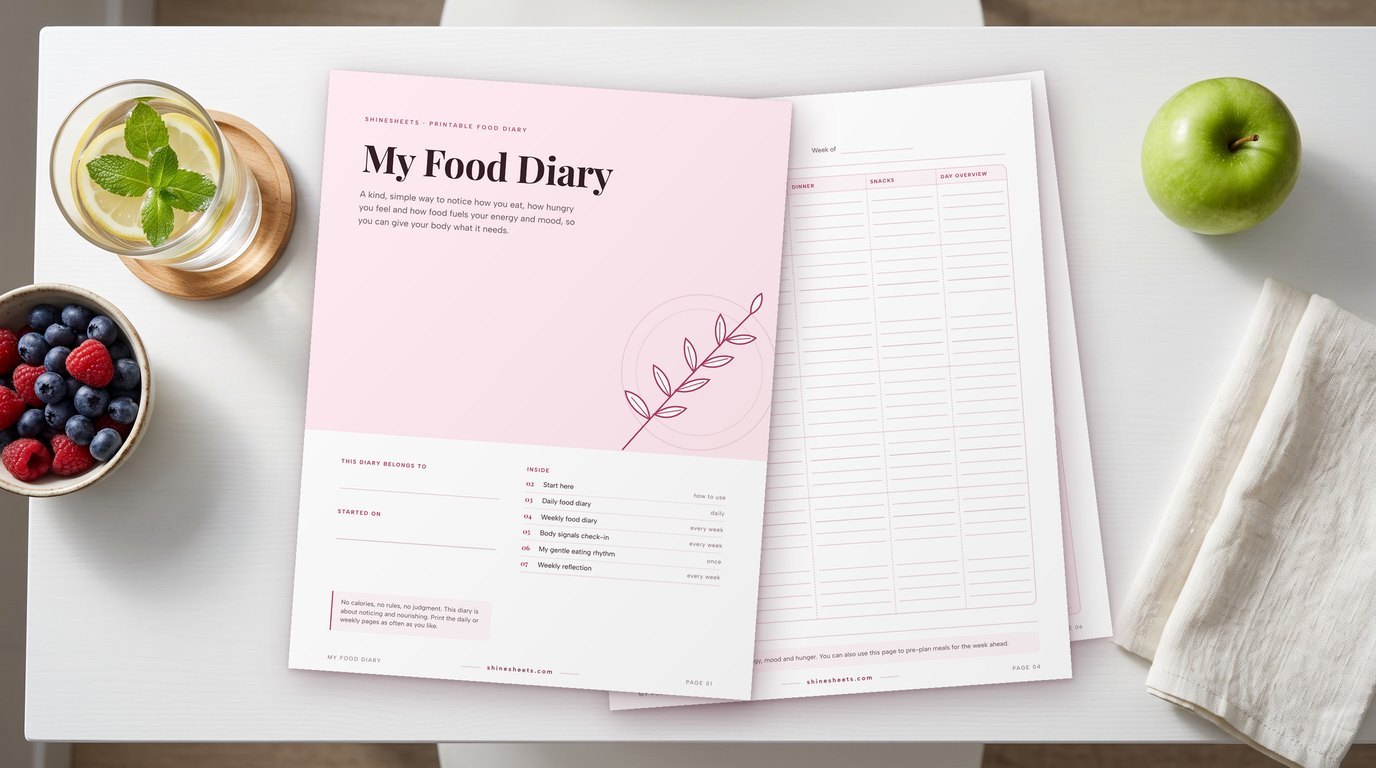
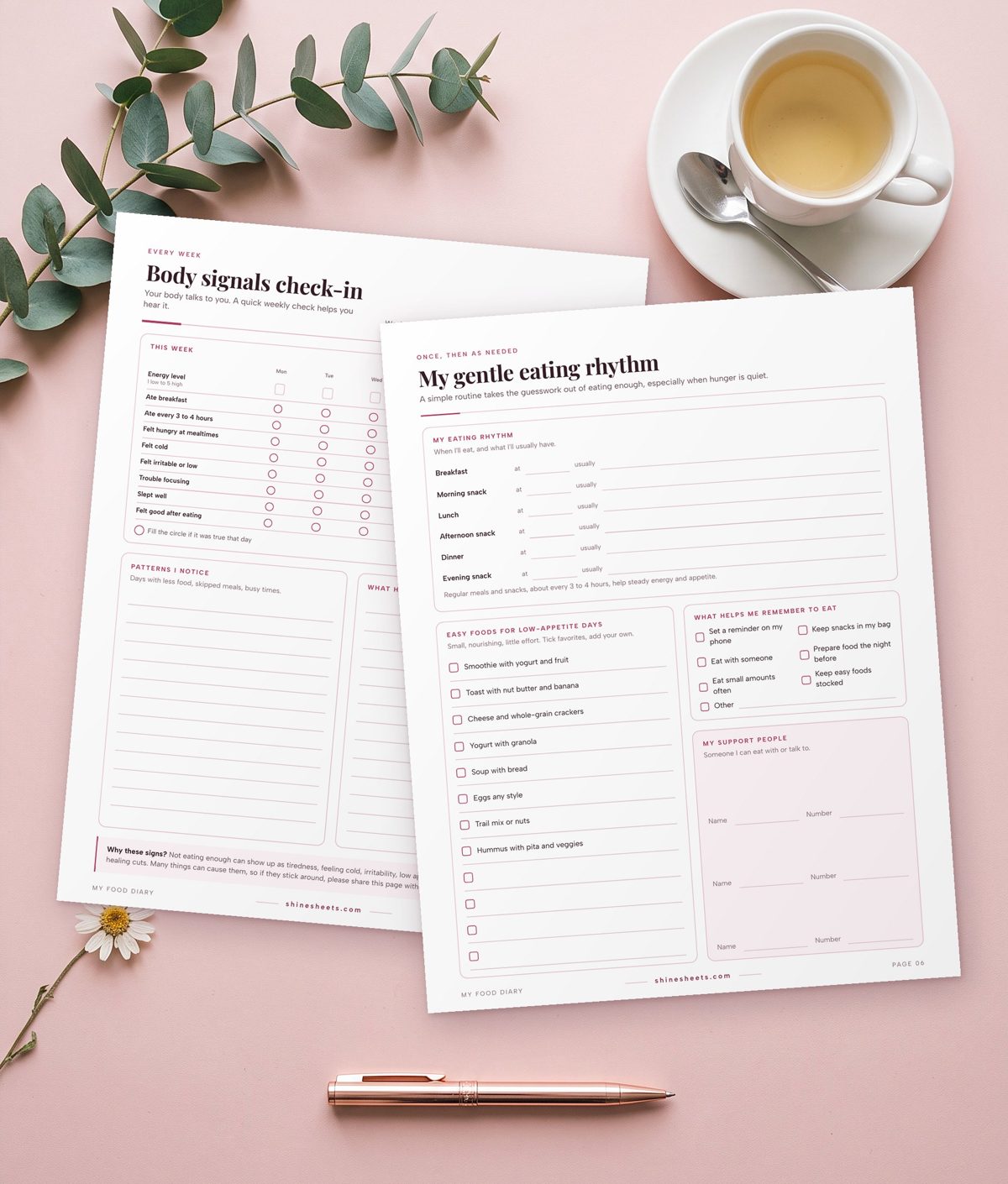
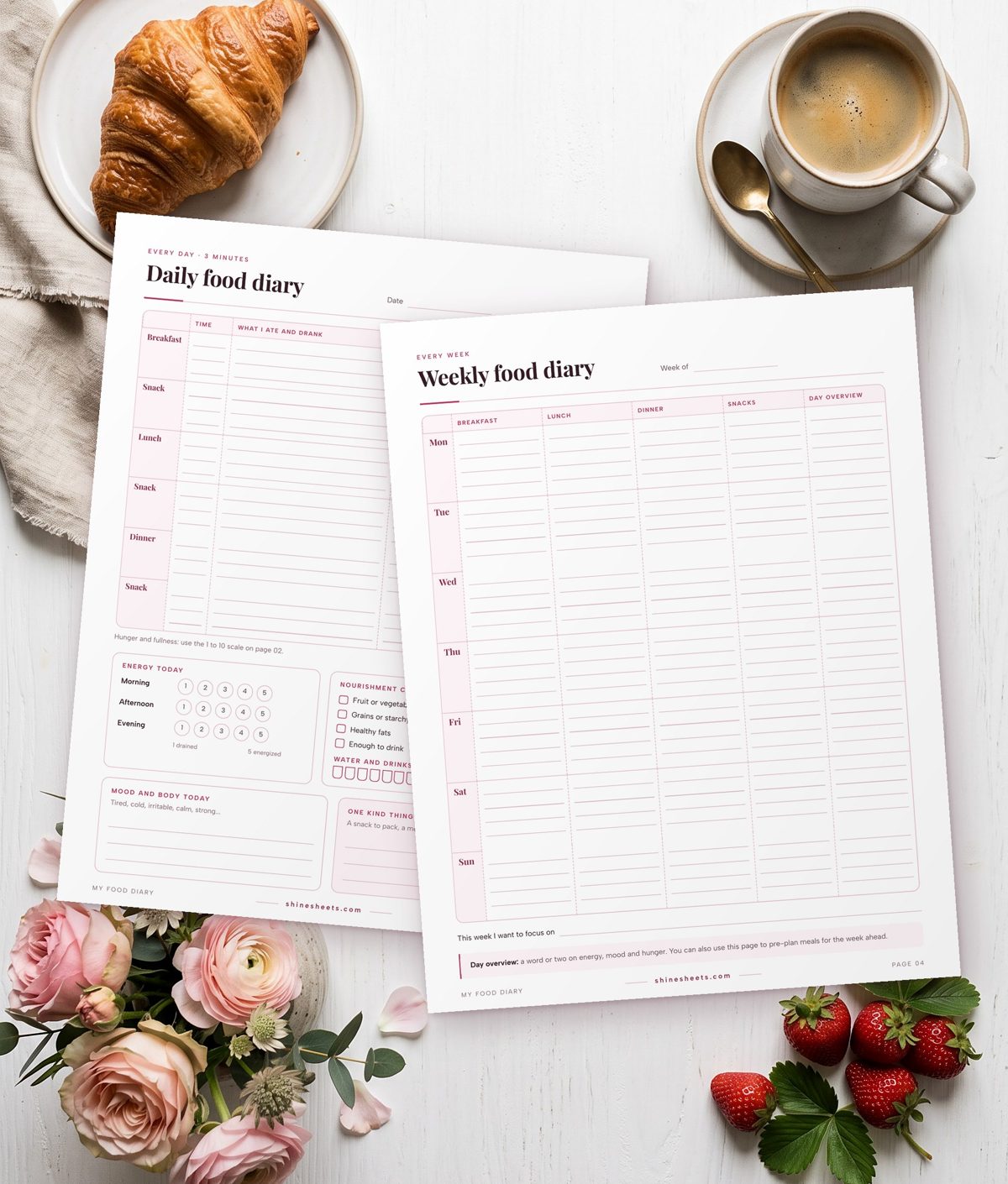
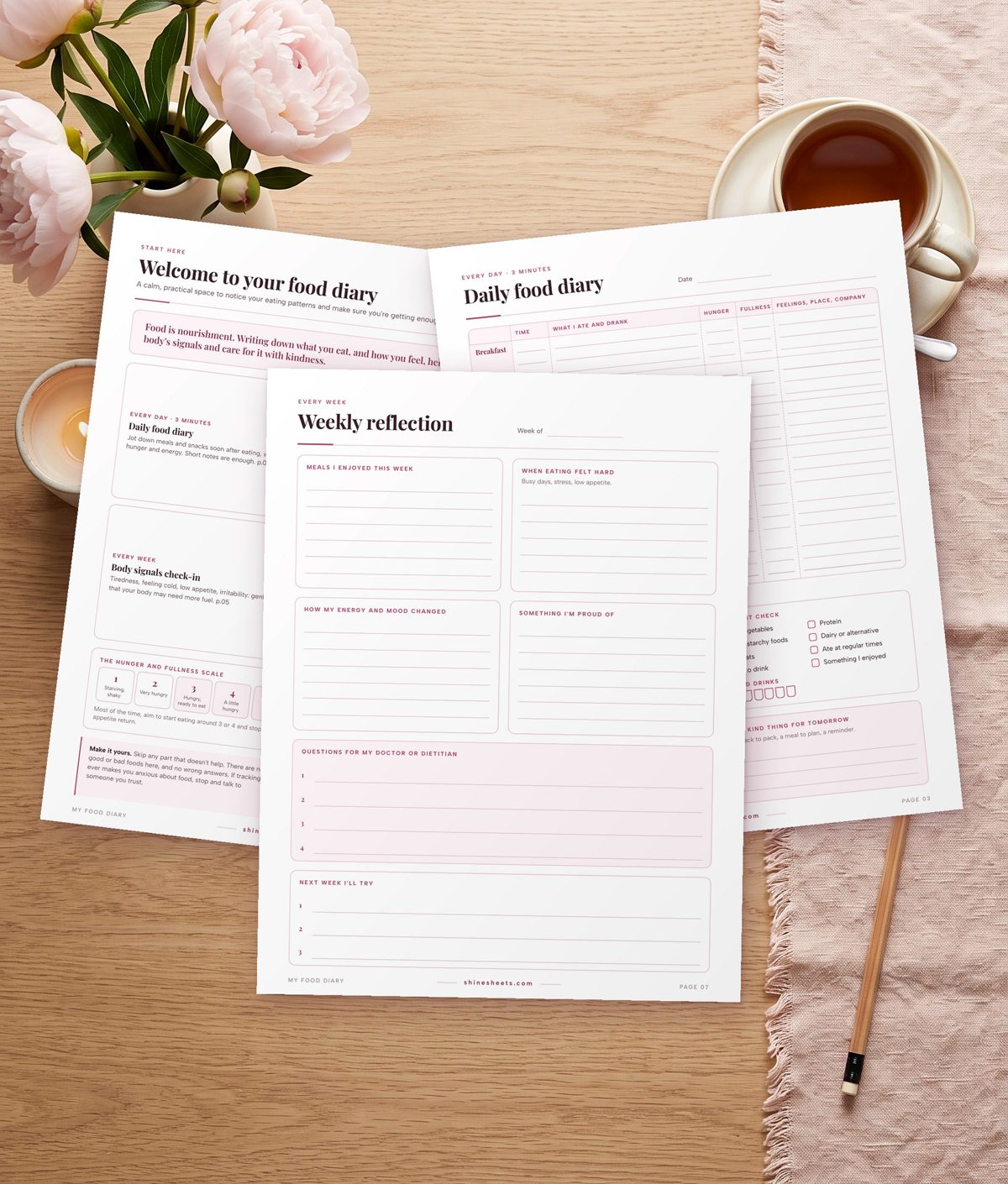
If you doubt if you are eating enough, using a simple printable food diary can be helpful – and I’m giving one today to you for free. This gentle 7-page food diary can be used to notice your eating patterns or to pre-plan regular meals. It includes daily and weekly pages with a hunger and fullness scale, a weekly check-in for the signs in this article (energy, feeling cold, irritability, appetite), an eating rhythm planner with easy foods for low-appetite days, and a reflection page with space for questions for your doctor or dietitian. No calories, no rules, just kind attention. It’s undated, so you can reprint it for years, and its minimalistic style fits most people.
If thinking about food or eating feels distressing, please reach out to a doctor or an eating disorder support line in your country.
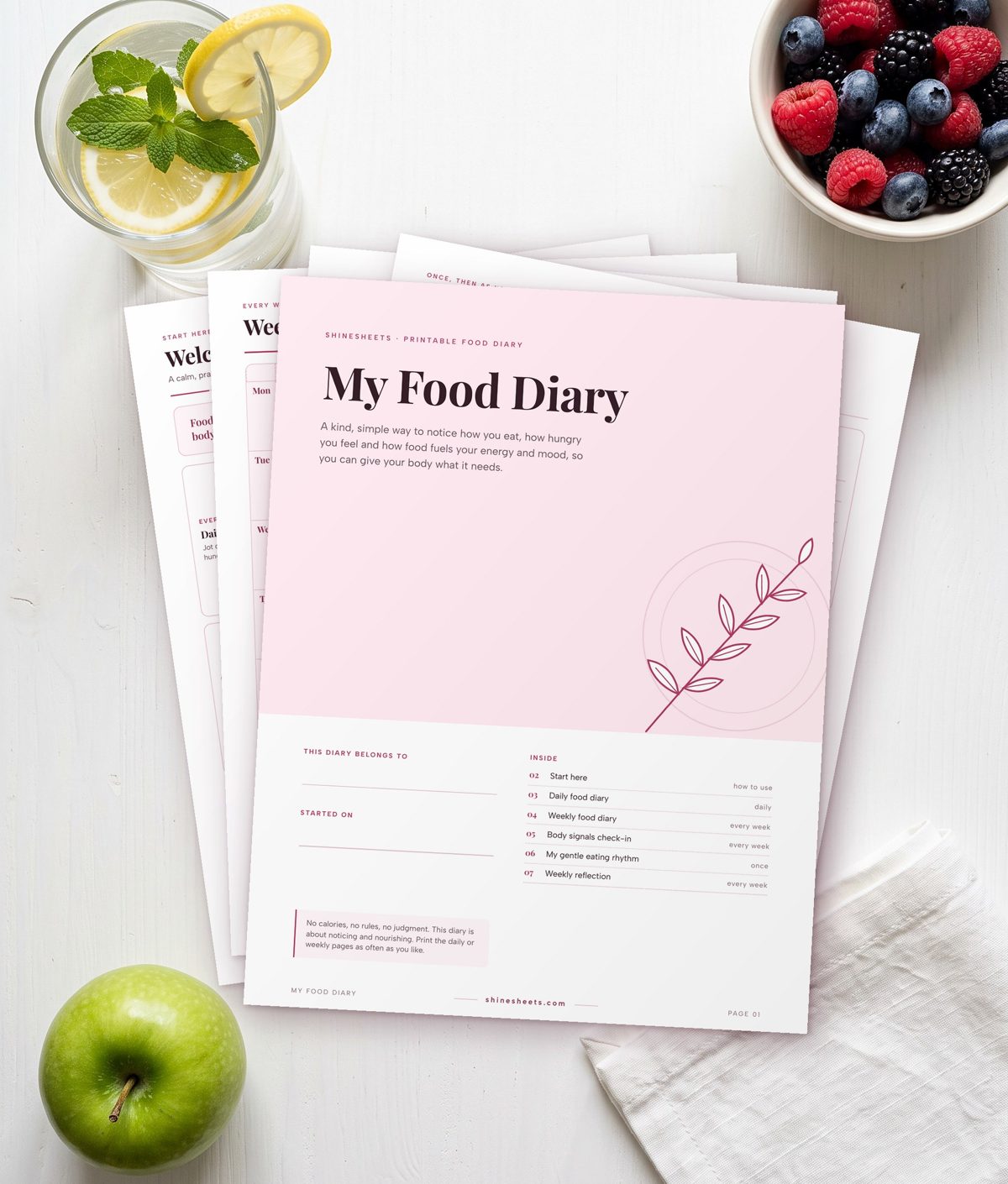
To grab your free printable food diary, choose the appropriate size below:
Food Diary Printable ShineSheets – in paper size US LETTER
Food Diary Printable ShineSheets – in paper size A4
*Personal use only.
What’s Next
As I conclude this exploration of the signs that you are not eating enough, it’s important to reflect on what you’ve learned and consider your next steps. Remember, recognizing these signs is a powerful act of self-awareness and care. It’s a sign that you are attentive to your body’s needs and are willing to take action for your health and well-being.
If you identified any of the signs discussed, know that this realization is the beginning of a journey towards better health. It’s not about criticism or fear but about nurturing and caring for yourself. Nutrition is a vital part of life, and ensuring that you are consuming enough is a key aspect of self-care.
If you want to rebuild a kinder relationship with food, Intuitive Eating by Evelyn Tribole and Elyse Resch is a well-loved book on listening to your body.
Please consider reaching out to a healthcare professional for personalized advice and support. Nutrition is deeply individual, and professional guidance can be invaluable in finding the balance that’s right for you.
Lastly, remember that you are not alone in this journey. Whether it’s friends, family, or a community of supportive individuals, there are people who want to see you healthy and thriving. Embrace their support and know that taking care of your nutritional needs is a profound act of self-love.
Let this be a stepping stone to a healthier, happier you.