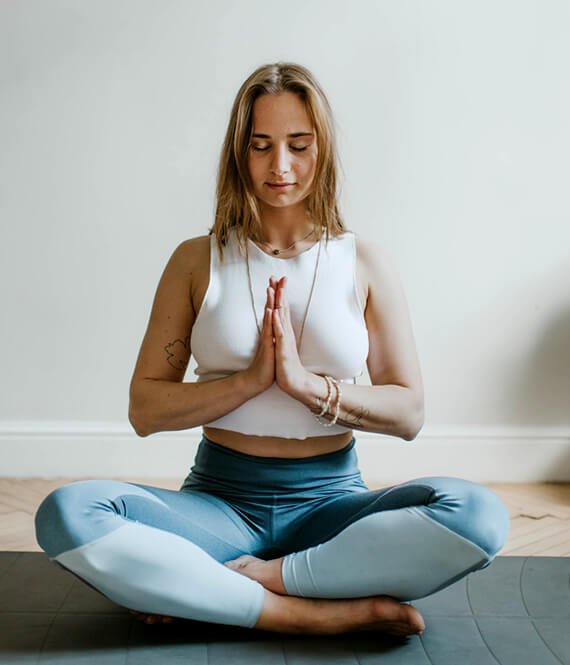
Did you know that meditation is one of the best things you can do for your mental health and overall wellness? If that’s news to you, or if you’re someone who is just starting to be interested in this awesome habit, this simple guide will tell you why it’s worth meditating, how to meditate as a beginner and how to make it a part of your daily life.
Let’s jump right into it! (I swear, meditation changed my life.)
Why Meditate
There are literally dozens of meditation benefits such as:
- Increasing your overall happiness.
- Helping you overcome stress and anxiety.
- Eliminating cravings and bad habits.
- Releasing tension and stress.
- Enhancing your ability to be mindful.
Meditation can even help you to awaken spiritually! Not only that, but it also has physical benefits, such as lowering your blood pressure.
Ultimately, meditation will allow you to deal better with the stresses and strains of modern life, which I’m sure you have a lot of, as everyone does.
The end goal of meditation is complete relaxation and mindfulness. This means that you become the witnessing presence of your thoughts – you learn how to stand apart from what’s going on in your mind and kind of “look at them from a side”. By being mindful you can learn how to quiet and ultimately control the thoughts and feelings that are racing through you.
A lot of people already know how good meditation is and that they should be doing it… They just don’t know how!
If you’re one of these people this guide will help you get started.
Meditation is a lot easier than most people think and even staring at the wall can be a form of meditation. Just as long as you sit still, focus on your breath and quiet your mind.
How To Meditate
One of the easiest types of meditation is something known as Vipassana meditation – or insight meditation. This is one of the oldest meditation practices in the world and was originally created by the Buddha. (That being said there is nothing religious about this form of meditation.)
It’s extremely simple and perfect for beginners. All you have to do is sit still and observe yourself breathing. I usually do this kind of breathing meditation while listening to rain sounds on my phone.
To practice this type of meditation follow these steps:
- Start by setting aside a period of time when you will not be disturbed. 10 to 15 minutes is good for beginners. You can use a timer or simply stop when you feel that you’ve had enough. If you find this difficult – and most people will – you can build up to it.
- Next, begin by sitting quietly. It’s not important that you sit in the traditional cross-legged lotus position… Most beginners will find this hard. It’s easier and simpler to sit erect in a chair. Or even lie in bed if you want.
- Close your eyes. You can also sit with your eyes open. There is no rule that you have to close your eyes, but for some people, it just helps to focus.
- Begin breathing in and out. Concentrate on the rims of your nostrils and the sensation of your breath. Focus on the exact place where your breath goes in and out. How your breath moves in through your nose, down into your lungs, and then back out again. Think of it as a carpenter sawing wood. As the blade moves up and down, so your breath moves in and out.
- If any thoughts arise in your mind, simply witness them. Observe them neutrally, and allow them to drift away of their own accord. Your thoughts are not intrinsically bad, they are simply part of the thinking process. Also, don’t strain yourself or try to purposely block your thoughts. It’s natural and normal that your mind will drift off. Every time it does, simply bring your awareness and focus back on your breathing.
- As you go on, your thoughts will become still. You can think of this as throwing a pebble into a pond. When you throw it, there is a splash and ripples move outward, but as time goes on these ripples eventually fade away and the pond becomes still again. In the same manner, your mind will eventually still itself.
- Eventually, you will lose awareness of there being two separate breaths. Your breaths will eventually seem to join together. This is the point that you are working towards. Focus on reaching this point, and staying in it for the rest of the time that you meditate.

When you’re finished or you’ve had enough, simply bring yourself back out of this state. You should feel relaxed, refreshed, and reinvigorated.
Make Meditation Your Daily Habit With a Free Printable Meditation Tracker
The best thing you can do is to make a daily habit of practicing meditation. The more you practice the better you will get, and the more relaxed, content, and strong you will feel (you can read more about this: how daily meditation benefits your mental health).
Set aside time to meditate every day. If you want, you can read my simple guide on how to make new habits stick, and even use my free meditation tracker to stay accounted:
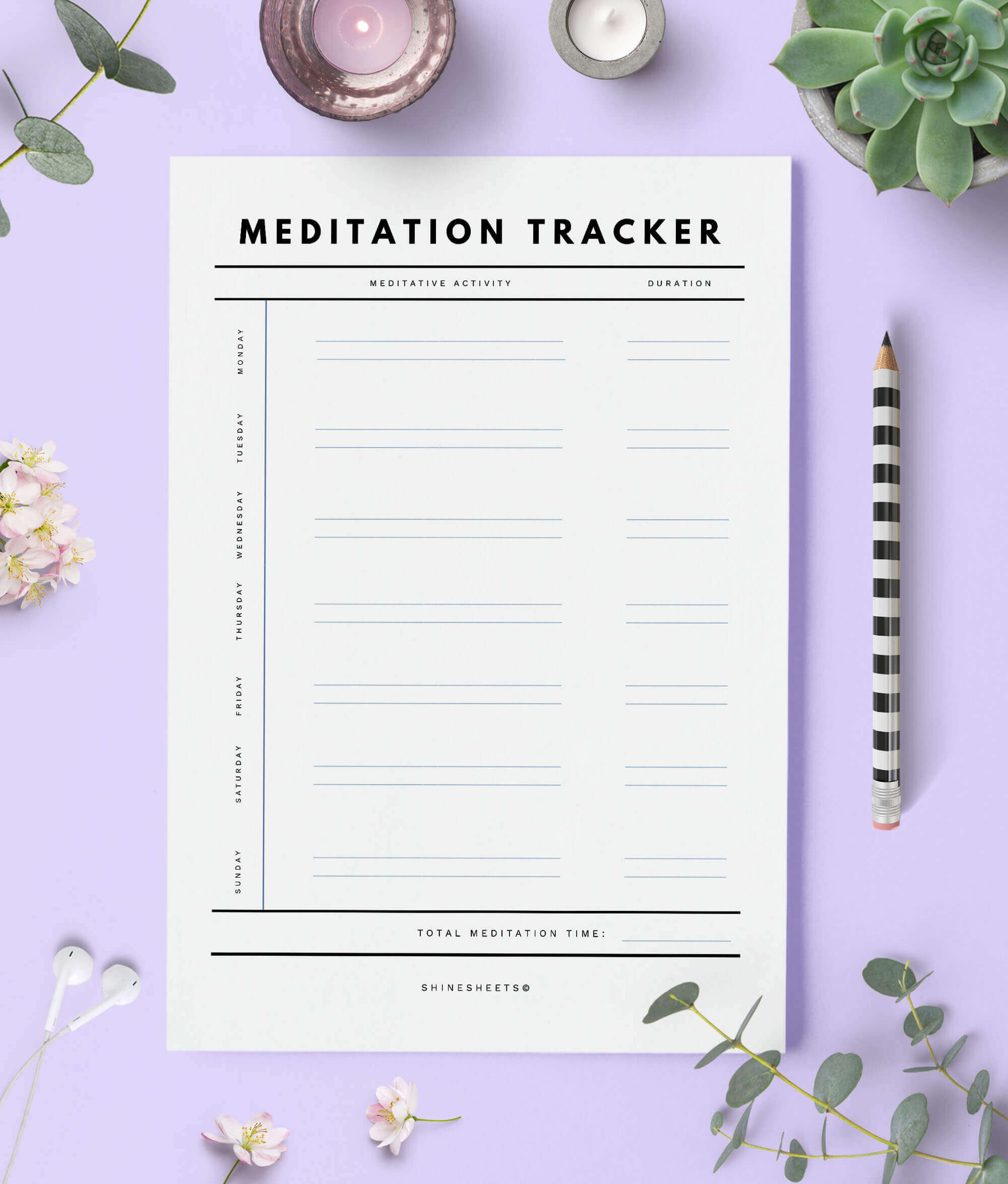
Grab this Free Meditation Tracker in size LETTER
Grab This Free Meditation Tracker in size A4
*Personal use only.
You can meditate either in the morning when you wake up or before you go to bed at night. You can even do it twice a day for maximum effectiveness!
After a few days or weeks of doing this, you should begin to notice positive changes in your life.