I have a confession that will make every hair care fan wince: for years I slept on the scratchiest cotton pillowcases imaginable. Bargain-bin sets, washed so many times they'd gone a little stiff. Every morning I'd wake up with a halo of frizz at the crown, a pillow crease across one cheek that took until mid-morning to fade, and a vague sense that my face cream had mostly ended up on the fabric.
So when silk pillowcases started appearing everywhere, promising smoother hair, fewer creases and "beauty sleep," I was curious and a little skeptical. A pillowcase is a pillowcase, isn't it? And some of them cost as much as a lovely dinner out. Is a silk pillowcase genuinely worth it, or is it a pretty indulgence with good marketing?
The honest answer is somewhere in the middle, and that's what this guide is about. You'll find the realistic silk pillowcase benefits for hair and skin (and what's hype), a silk vs satin vs cotton comparison table, the word "momme" explained in plain English, how to choose a good one, gentle care steps so it lasts, and who will probably love one and who can happily skip it.
No miracle promises. Just what a smoother surface can and can't do while you sleep.
What Is a Silk Pillowcase, Exactly?
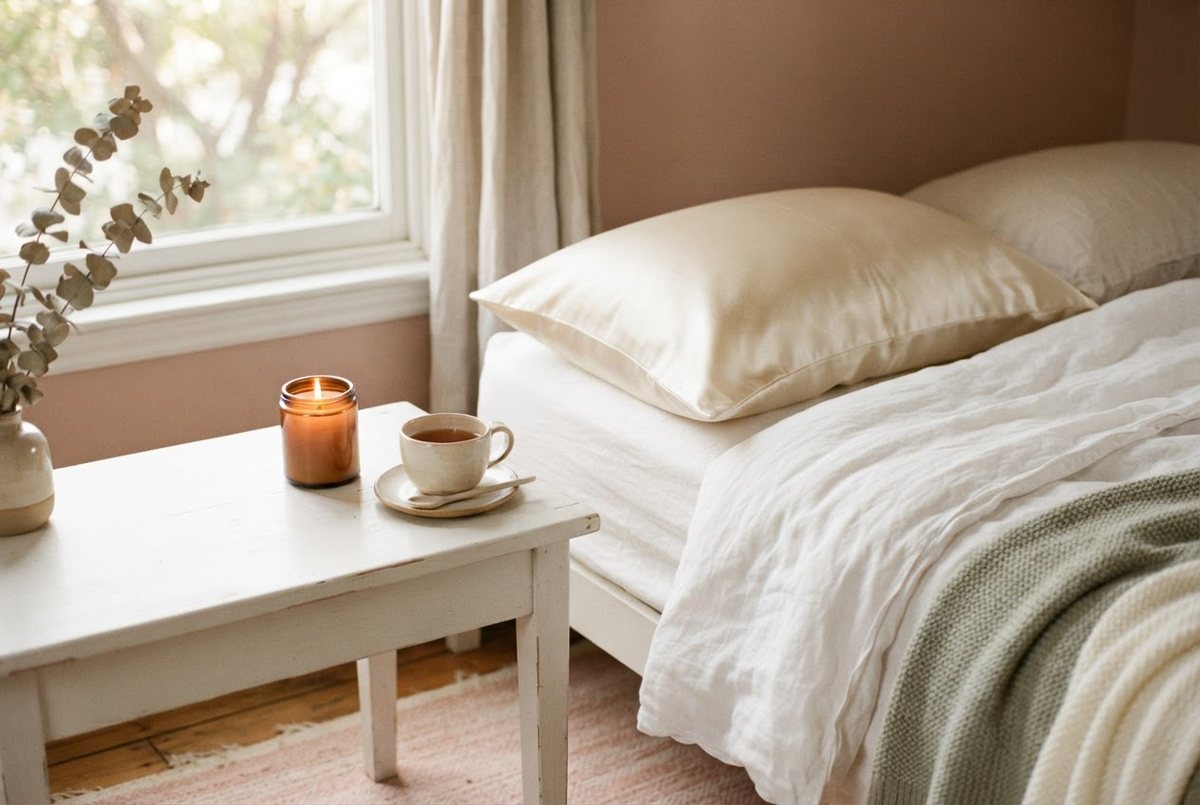
Real silk is a natural protein fiber made by silkworms. Most silk pillowcases are made from mulberry silk, which comes from silkworms fed only on mulberry leaves. It produces long, even, very smooth fibers, and that smoothness is the whole point.
When people talk about silk pillowcase benefits, they're really talking about one thing: less friction. Cotton, even soft cotton, has a slightly textured surface with tiny fibers that grip your hair and skin as you move. You turn over dozens of times a night, so that little bit of grip adds up. Silk lets your hair and face glide instead.
Silk is also less absorbent than cotton. That has a few small knock-on effects, which we'll get to. And it feels cool and soft against your skin, which, let's be honest, is part of the appeal.
Silk Pillowcase Benefits for Hair
This is where silk earns most of its reputation, and where the logic is the strongest. Here's what you can realistically expect:
- Less frizz in the morning. Friction roughens the outer layer of the hair strand, which is what makes hair look fuzzy. A smoother surface means less roughing up overnight. If you wake up with a frizzy crown, this is probably the change you'll notice first.
- Fewer tangles and knots. Long, fine or curly hair tends to knot at the back of the head while you sleep. Less grip, fewer knots, gentler brushing in the morning.
- Less breakage over time. Every tangle you brush out risks a little breakage. Fewer tangles mean fewer snapped strands, especially for fragile, color-treated or bleached hair.
- Blowouts and curls may last a bit longer. Smooth hair stays smooth longer when it isn't rubbing against cotton all night.
- Less moisture pulled from your hair. Cotton absorbs some of the moisture and oils in your hair. Silk absorbs less, which can be especially kind to dry or curly hair, or if you sleep with a little hair oil on your ends.
Here's the honest part: there isn't a big body of scientific research on silk pillowcases specifically. Most of the benefit comes from basic physics (less friction is gentler on hair) and a lot of real-world experience from people with curly, fine and fragile hair. It won't make your hair grow faster or repair damage. It simply stops making things worse while you sleep.
If frizz is your biggest frustration, a pillowcase works best as one part of a bigger picture. My guide to smoothing frizzy hair and my winter hair care tips pair nicely with this one, especially when dry indoor heat makes everything more static.
Silk Pillowcase Benefits for Skin
The skin claims are a bit softer, so let's look at them carefully:
- Fewer sleep creases in the morning. Skin slides on silk instead of being pulled and folded, so many side and stomach sleepers notice fewer pillow lines when they wake up. This is a temporary-crease benefit, not an anti-aging treatment.
- Less tugging on sensitive skin. If your skin is easily irritated (mine flushes if you look at it wrong), a smooth, cool surface can simply feel more comfortable.
- Your night cream stays on your face a little more. Because silk is less absorbent, slightly less of your moisturizer soaks into the fabric. It's a small difference, but if you've just applied a lovely night routine, it's nice to know it's working on your skin, not your pillow.
- A cooler feel. Silk regulates temperature well and feels cool to the touch, which some people find soothing on warm or flushed skin.
What silk won't do: it won't erase wrinkles, cure acne or treat any skin condition. And while some people find their skin calmer on silk, the biggest acne-related pillowcase factor is simply how clean it is. A fresh cotton pillowcase changed twice a week will do more for breakouts than a silk one changed once a month.
Some people also mention puffiness and under-eye creases. A smooth pillow can reduce morning creasing around the eyes, but it doesn't change the causes of dark circles. If that's on your mind, my guide on how to get rid of dark circles breaks down what actually helps each type.
Silk vs Satin vs Cotton: Comparison Table
This is the question I see most often: do you need real silk, or will satin do? First, a quick clarification. Satin is a weave, not a fiber. It can be made from silk, but most satin pillowcases are made from polyester. They're smooth and shiny like silk, but the fiber behaves differently.
| Mulberry silk | Polyester satin | Cotton (percale or sateen) | |
|---|---|---|---|
| Feel | Soft, smooth, cool, slightly matte sheen | Slippery, shiny, can feel a bit synthetic | Crisp (percale) or soft (sateen), slight texture |
| Friction on hair | Very low | Low | Higher |
| Breathability | Breathes well, regulates temperature | Can trap heat and feel sweaty | Breathes well |
| Absorbency | Low to moderate | Very low | High |
| Price | Highest | Budget-friendly | Budget to mid |
| Care | Gentle: cool hand wash or delicate cycle, air dry | Easy: machine washable | Easiest: machine wash, tumble dry |
| Lifespan | Long if cared for, fragile if not | Can pill or lose shine over time | Long, softens with age |
| Who it suits | Curly, fine, fragile or color-treated hair; sensitive skin; hot sleepers | Anyone curious about smooth fabric on a budget; trying before investing | Easy-care lovers, very sweaty sleepers, anyone not bothered by frizz |
My honest take: if you want to test whether a smoother surface makes a difference for your hair, a soft satin pillowcase set is an inexpensive way to find out. If you love the difference and want the most breathable, comfortable version, that's when a mulberry silk pillowcase starts to make sense.
Momme, Explained in One Minute
You'll see the word "momme" (pronounced "mommy") on every silk product, and it confuses almost everyone. Here's the short version:
- What it is: a measure of silk's weight and density, a bit like thread count for cotton.
- Higher momme means more silk per square inch: thicker, more opaque and usually more durable.
- 16 to 19 momme: lighter and more affordable, fine for trying silk, but thinner and quicker to wear out.
- 22 momme: the sweet spot for many people, a good balance of softness, durability and price.
- 25 momme and up: luxurious and long-lasting, with a higher price tag.
Screenshot that card for when you're comparing options. If a listing doesn't mention momme at all, I'd be a little cautious, since it's the first thing a good silk maker wants you to know.
How To Choose a Good Silk Pillowcase
Once you've decided silk is for you, these are the details I'd look for:
- 100% mulberry silk. Not "silky," "silk-like" or a blend, unless you're intentionally choosing satin.
- Grade 6A silk. This is the highest grade of raw silk fiber, with the longest, most even strands.
- 19 to 25 momme. 22 is a lovely middle ground for daily use.
- Silk on both sides. Some cheaper versions use cotton or polyester on the back to save cost. That's fine if you only ever sleep on one side, but most of us flip our pillows.
- A hidden zipper or envelope closure. Silk is slippery, so it can slide off the pillow without one. A hidden zipper also keeps metal away from your face.
- The right size. Check standard, queen or king to match your pillow. Too loose and it bunches; too tight and it strains the seams.
- Safety certification. An OEKO-TEX Standard 100 label means the fabric has been tested for harmful substances, which is reassuring for something you'll press your face against every night.
- A color that's easy to live with. White, cream, blush or champagne look elegant on any bed and show less makeup or oil residue than very dark colors show lint.
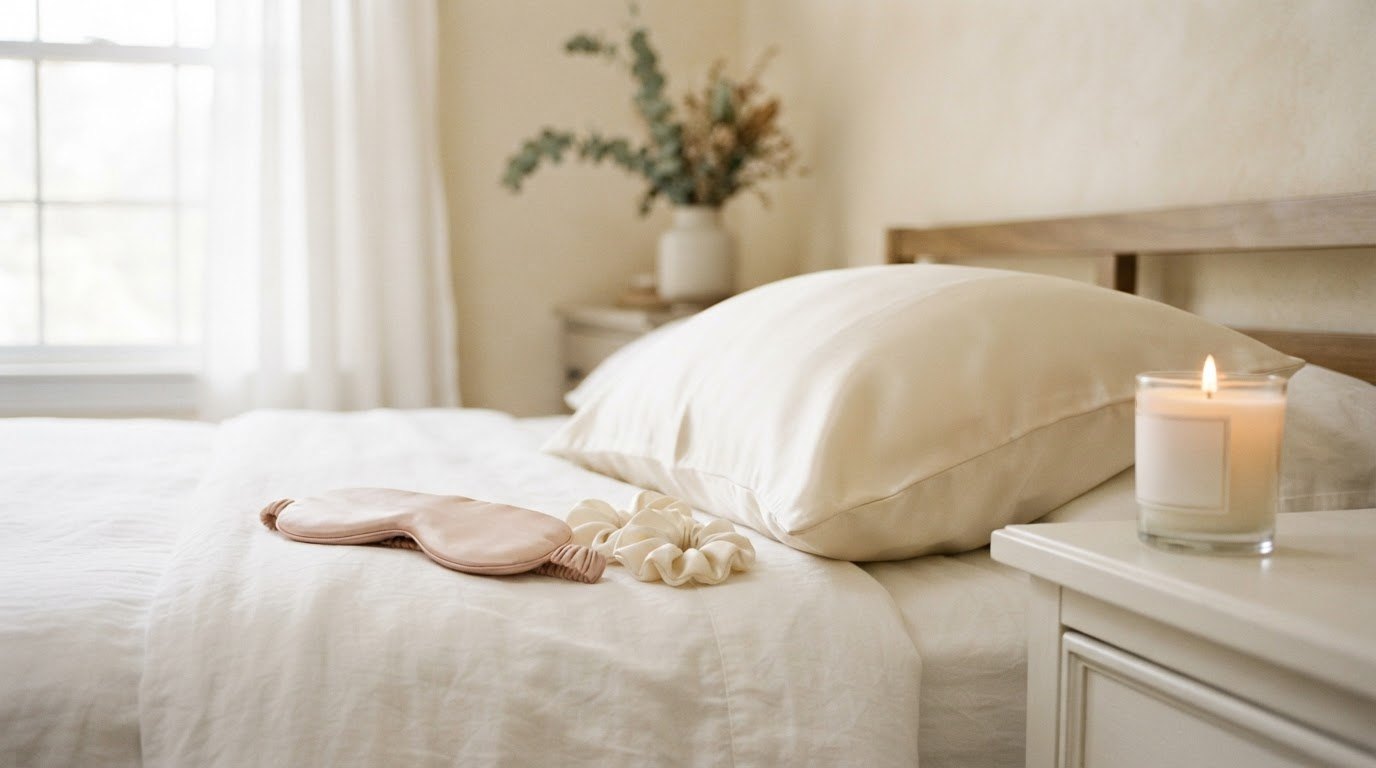
That last point is partly practical and partly just my love of a calm, Old Hollywood bedroom. A cream silk pillowcase on crisp white bedding looks like a hotel suite from an old film, and if you want the rest of the bed to match, my hotel bed at home guide walks through the layers.
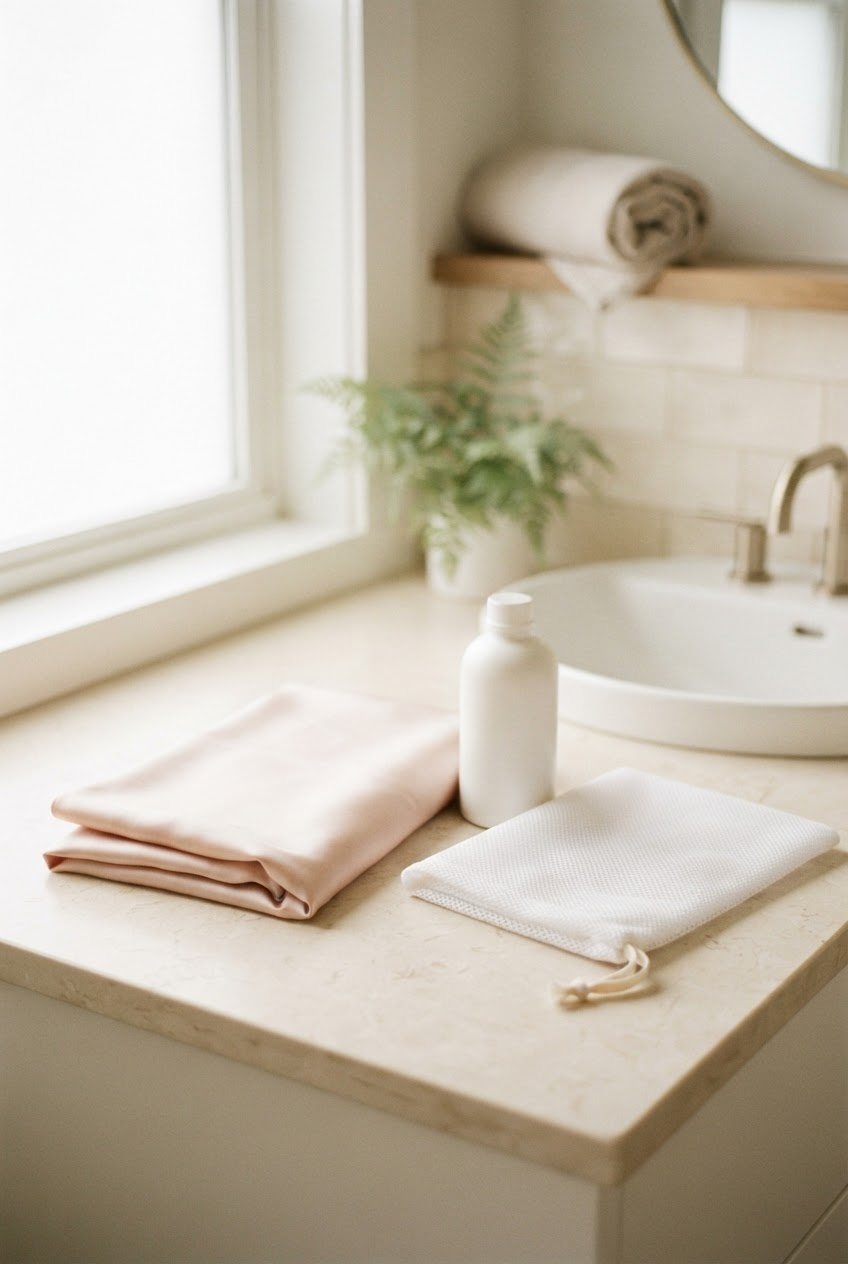
How To Care for a Silk Pillowcase in 7 Steps
Silk is wonderfully durable when it's treated gently and surprisingly quick to look tired when it isn't. These seven steps will keep it smooth and shiny for years:
1. Wash It Once or Twice a Week
Your face and hair leave oil, sweat and skincare on any pillowcase. For skin's sake, aim to wash it as often as you would a cotton one. Many people keep two silk pillowcases and rotate them.
2. Use a Gentle, pH-Neutral Detergent
Regular detergents, especially ones with enzymes or bleach, can break down silk's protein fibers. Look for a delicate detergent made for silk and wool, and use just a small amount.
3. Wash Cool, Never Hot
Hand wash in cool or lukewarm water, gently swishing for a few minutes. If you prefer the machine, turn the pillowcase inside out and use the delicate or silk cycle with cold water.
4. Protect It in a Mesh Bag
If it goes in the machine, a mesh laundry bag for delicates stops it snagging on zips, hooks and buttons. Wash it with other soft, light items, never with towels or jeans.
5. Skip the Fabric Softener and Bleach
Silk doesn't need softener (it's already soft), and softener can leave a coating that dulls the sheen. Bleach will damage it permanently.
6. Air Dry Away From the Sun
Don't wring it. Gently press out the water by rolling it in a clean towel, then lay it flat or hang it to dry away from direct sunlight and radiators. Heat and sun can yellow and weaken silk. No tumble dryer.
7. Iron Low, Inside Out
If you like it crisp, iron it on the lowest silk setting while it's still slightly damp, inside out. A press cloth between the iron and the silk adds extra protection.
For more on keeping delicate fabrics and bedding fresh without ruining them, my laundry tips have a few extra tricks.
Silk Pillowcase Myths, Gently Busted
Because silk pillowcases are so popular, a few claims get repeated so often they start to sound like facts. Here's the calmer version of each:
- "It prevents wrinkles." Not really. Wrinkles form over years from sun, genetics and natural changes in collagen. A smooth pillow can mean fewer temporary sleep creases in the morning, which is lovely, but daily sunscreen does far more for long-term lines than any fabric.
- "It clears up acne." There's no good evidence for this. What helps is a clean pillowcase, whatever it's made of, changed often enough that oil, sweat and old skincare aren't pressed into your skin every night.
- "Silk is antibacterial, so you don't need to wash it as often." Please wash it just as often as cotton. Silk may be a little less welcoming to dust mites, but your face still leaves oil and product on it every single night.
- "Satin is just as good as silk." For friction on hair, polyester satin comes surprisingly close. For breathability and comfort, real silk is noticeably cooler and less sweaty, especially if you run warm at night.
- "More expensive always means better." Not always. Look at the details (mulberry silk, grade 6A, momme, silk on both sides, a hidden zipper) instead of the price tag or the packaging.
- "You'll see a difference after one night." You might notice less frizz quickly, but changes like less breakage show up over weeks and months, not overnight.
None of this makes silk less lovely. It just means you can buy one, or skip one, with clear expectations instead of hoping for a miracle.
Is a Silk Pillowcase Worth It?
Here's my honest verdict, split by who you are.
It's probably worth it if:
- You have curly, coily, fine, long or color-treated hair and wake up with frizz or tangles.
- You notice breakage at the back of your head or around your hairline.
- You're a side or stomach sleeper who often wakes up with pillow creases.
- Your skin is sensitive and feels better on smooth, cool fabric.
- You want your blowout or heatless waves to last an extra day.
- You simply love the feel, and a small luxury at bedtime makes you happy. That counts too.
You can probably skip it if:
- Your hair is short, thick and rarely frizzy or tangled.
- You know you won't hand wash or use a delicate cycle.
- You sweat a lot at night and prefer the absorbency of cotton.
- Your budget is better spent elsewhere right now. A clean cotton pillowcase and a gentle routine are perfectly lovely.
And if you're in the middle, satin is a wonderful, low-risk way to try a smoother surface first.
Other Silk Sleep Extras Worth Knowing
If you like the idea of silk but aren't ready for a pillowcase, a couple of small extras give you some of the same benefits:
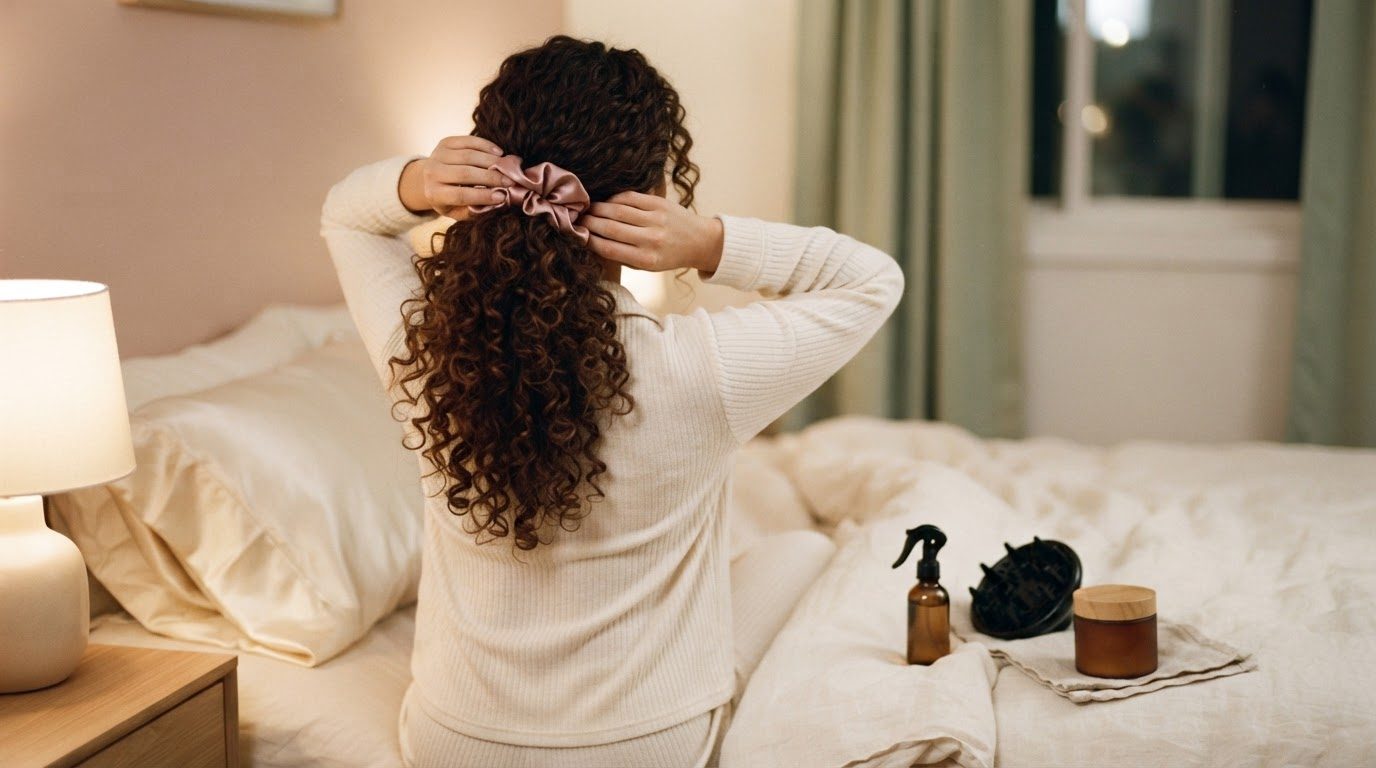
- Silk scrunchies. Regular elastics grip and crease hair, especially overnight. A set of soft silk scrunchies holds hair loosely with much less tugging, and they're pretty enough to wear on your wrist all day.
- A silk sleep mask. A mulberry silk sleep mask blocks light and keeps the delicate skin around your eyes on a smooth surface. Look for one that's adjustable, with a wide band that doesn't press on your eyelids.
- A silk hair bonnet or wrap. Especially helpful for curly and coily hair, since it keeps every strand on silk no matter how much you move.
Any of these fits beautifully into a simple evening hair care routine: detangle gently, a drop of oil on the ends, a loose silk scrunchie, and bed.
Final Thoughts
A silk pillowcase isn't magic, and it won't transform your hair or skin overnight. What it does is quieter and, in a way, nicer: it stops eight hours of friction from undoing the care you give your hair and face during the day. For curly, fine or fragile hair and sensitive skin, that small difference can really show.
Choose 100% mulberry silk around 22 momme, wash it gently, dry it away from the sun, and it can last for years. Or start with satin and see how you feel. Either way, a smoother, softer place to rest your head at night is a lovely little kindness to give yourself.