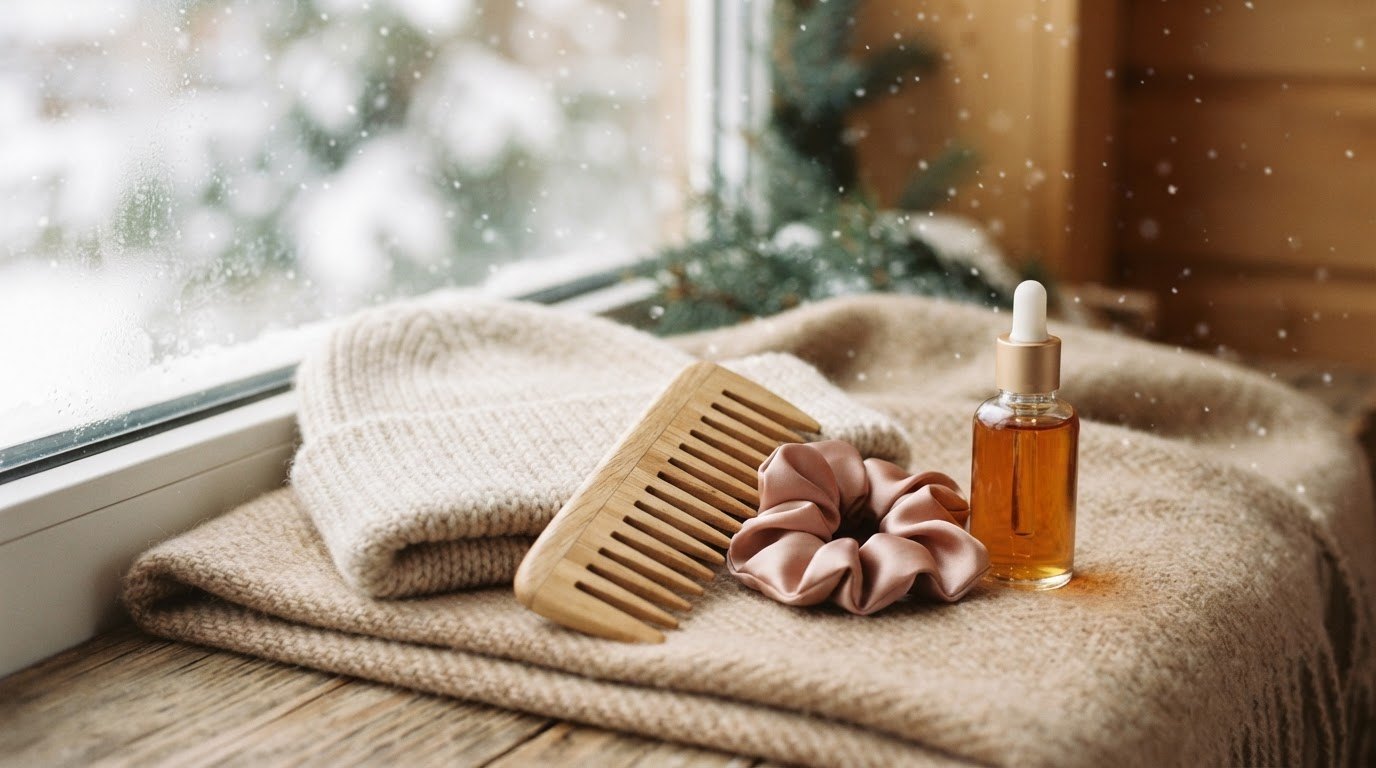
You know the moment. You walk into a warm café after a cold walk, pull off your knit hat and… your hair lifts off your head like it's trying to follow the hat. Static halo on top, a flat dent around the crown, and ends that feel like straw against your scarf.
Winter hair isn't a mystery, and it isn't a sign you're doing everything wrong. Cold air outside, dry heated air inside, wool rubbing against your hair all day and hotter showers all pull moisture out of your strands at the same time. Dry hair holds a static charge more easily, flattens more easily and splits more easily.
So this isn't a hairstyle guide. It's a winter hair care guide: quick fixes for the three biggest winter hair annoyances (static, hat hair and dry ends), the small habits that stop them coming back, and a 3-minute fix table that tells you exactly what to do – and what to keep in your bag – when your hair misbehaves halfway through the day.
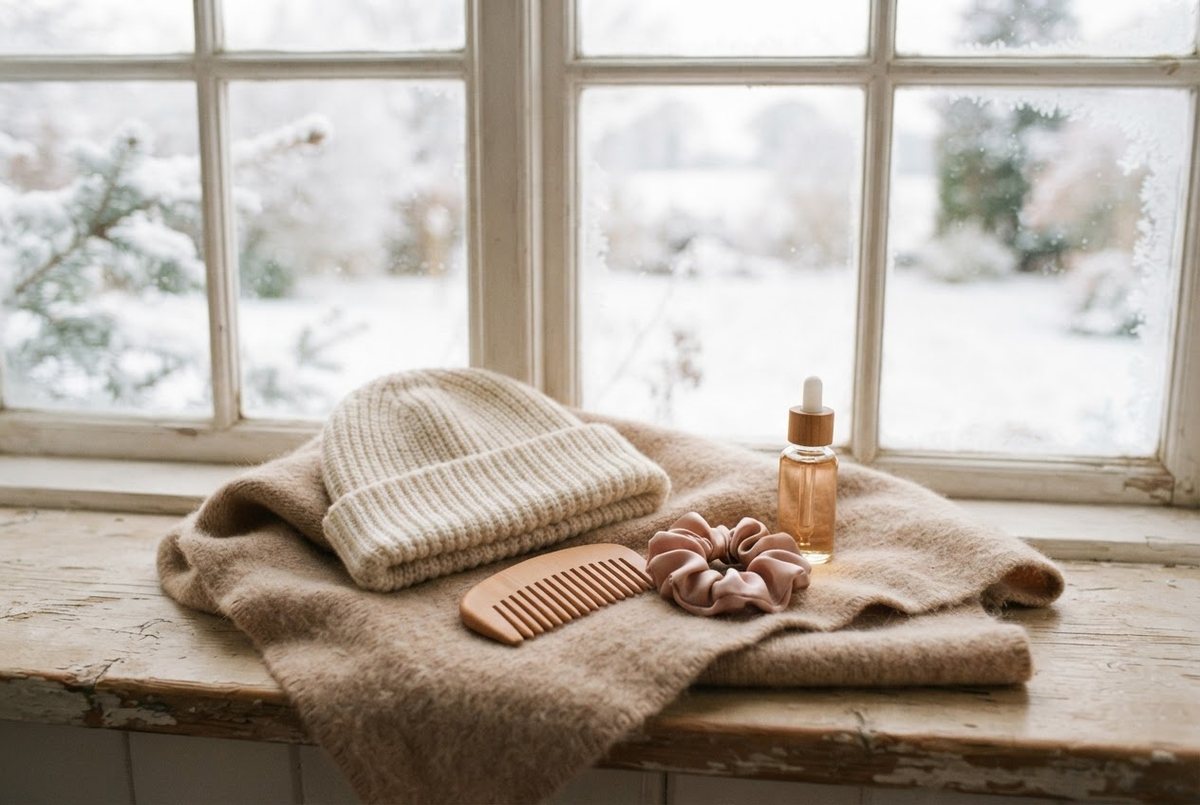
Why Winter Is So Hard on Your Hair
- Dry air, inside and out. Cold air holds little moisture, and indoor heating dries the air even more. Your hair loses water to its surroundings, especially the oldest, most fragile part: the ends.
- Friction from wool and synthetics. Hats, scarves, coat collars and sweaters rub against your hair all day. That friction roughs up the outer layer of each strand and builds up static charge.
- Hot showers. A long, steaming shower feels wonderful in January, but very hot water can strip your scalp's natural oils and leave lengths dry and frizzy.
- More heat styling. Hair takes longer to air-dry in winter, so most of us reach for the blow dryer more often – and nobody wants to go outside with wet hair in freezing weather.
The answer is the same for all three problems: more moisture, less friction and a little bit of smoothing at the right moment.
How To Stop Static Hair: 6 Quick Fixes
Static happens when your hair picks up an electrical charge – and dry hair in dry air is the perfect setup. Each of these works in under a minute.
1. Smooth With a Drop of Hair Oil
Rub one or two drops of hair oil between your palms until they're barely shiny, then lightly press your hands over the flyaways from the top down. A classic, well-loved argan-based hair oil adds a thin layer of moisture and weight that calms static fast. Start with less than you think – you can always add a second drop.
2. Use Your Hand Cream
No hair oil in your bag? A tiny amount of hand cream rubbed thoroughly into your palms and smoothed over the surface of your hair works in a pinch. Keep it to the very top layer and the ends, never the roots. (Your hands get dry in winter too – my winter hand care routine means there's always a tube within reach.)
3. Swap Plastic Brushes for Wood or Bristle
Plastic combs and brushes tend to build up static. A wooden wide-tooth comb or a boar-bristle brush is much gentler, and a wide-tooth comb also detangles without tugging fragile winter ends.
4. Mist, Then Smooth
A light mist of leave-in conditioner (or even a little water on your hands) adds just enough moisture to break the charge. Spray onto your palms, not directly on your head, then smooth down. This is the fastest fix if your hair is fine and oils feel heavy.
5. Don't Skip Conditioner
Static is a dryness problem first. Conditioning after every wash in winter – even if you sometimes skip it in summer – keeps the hair surface smoother so it holds less charge from the start.
6. Watch Your Fabrics
Wool, polyester and acrylic hats and scarves are static machines. Choose cotton, silk or satin layers closest to your hair when you can, and take your hat off slowly instead of pulling it off in one quick swipe.
How To Fix Hat Hair: 5 Tricks
Nobody should have to choose between warm ears and nice hair. Here's how to fix the flat, dented crown – and prevent most of it.
1. Put Your Hat On Over Dry Hair Only
Damp hair dries in whatever shape the hat presses it into. Make sure your roots are completely dry before you put on a hat, even if the lengths are still a little damp.
2. Choose a Satin-Lined Hat
A cream satin-lined beanie is the single best winter hair buy. The smooth lining means less friction, less static and less frizz, and the hat still looks like a normal knit beanie from the outside. Slightly looser fits leave fewer dents than tight ones.
3. Flip and Shake
Once the hat is off, flip your head upside down and gently shake out your roots with your fingertips for 10–15 seconds. Flip back up. It brings back most of the lift in seconds.
4. Revive Roots With Dry Shampoo
A little dry shampoo at the crown adds grip and volume to flattened roots. A travel-size dry shampoo fits in any bag. Spray from about 6 inches away, wait 30 seconds, then massage in with your fingertips.
5. Move Your Part
If the dent won't budge, switch your part to the other side or zigzag it with your fingers. The roots that were pressed down by the hat now lift up instead. It takes five seconds and nobody will know.
How To Save Dry Ends in Winter: 6 Habits
Your ends are the oldest part of your hair, so they feel winter first. These habits keep them soft and help stop splits from traveling up the strand.
1. Seal Ends Every Day
A drop of oil or a pea-sized amount of leave-in cream pressed into the last few inches of your hair every morning protects them from dry air and scarf friction. On wash days, apply it while your hair is still damp.
2. Use a Leave-In Conditioner
A lightweight leave-in conditioner spray after washing makes detangling easier and adds a layer of moisture that lasts until the next wash. Focus it from mid-lengths to ends.
3. Treat Yourself to a Weekly Mask
Once a week, swap your conditioner for a richer hair mask and leave it on for 10 minutes. Put on a shower cap or wrap your hair in a warm towel while it works. If you want to turn it into a proper pampering evening, my guide to a hair spa day at home has the full ritual.
4. Tuck Your Hair Inside Your Coat (Carefully)
Ends rubbing against a wool scarf or a rough coat collar all day get frayed fast. On very cold or windy days, tuck longer hair loosely inside your coat or under a smooth silk scarf.
5. Lower the Heat
Blow-dry on medium heat, keep the nozzle moving and stop when your hair is about 90% dry. Always use a heat protectant before hot tools, and switch them off and unplug them as soon as you're done.
6. Trim When It's Time
No product can glue a split end back together. If your ends are see-through, tangly or split in several places, a small trim of half an inch to an inch is the kindest thing you can do. My guide on how to fix split ends explains how to tell when it's time.
Your 3-Minute Winter Hair Fix Table
Here's the whole guide in one table. Find your problem, do the fix (each one takes three minutes or less), and keep the little item from the last column in your bag so you're never caught without it.
| Problem | 3-minute fix | What to keep in your bag |
|---|---|---|
| Static flyaways | Rub 1–2 drops of oil between your palms, press over hair from top to ends | Mini hair oil or a travel-size hand cream |
| Static after taking off a hat | Mist palms with leave-in or water, smooth down the surface | Small leave-in conditioner spray |
| Flat crown / hat dent | Flip head upside down, shake roots for 15 seconds, switch your part | Nothing – just your fingertips |
| Limp, greasy-looking roots | Dry shampoo at the crown, wait 30 seconds, massage in | Travel-size dry shampoo |
| Dry, crunchy ends | Pea-sized leave-in or one drop of oil on the last few inches | Mini hair oil |
| Tangles from your scarf | Hold hair above the knot and comb out from the ends up | Wooden wide-tooth comb |
| Frizz after snow or rain | Blot with a scarf or tissue, then smooth with a tiny bit of oil | Silk scrunchie + mini hair oil |
| Hair stuck in your collar | Gather hair loosely to one side over your shoulder and secure with a soft tie | Silk or satin scrunchie |
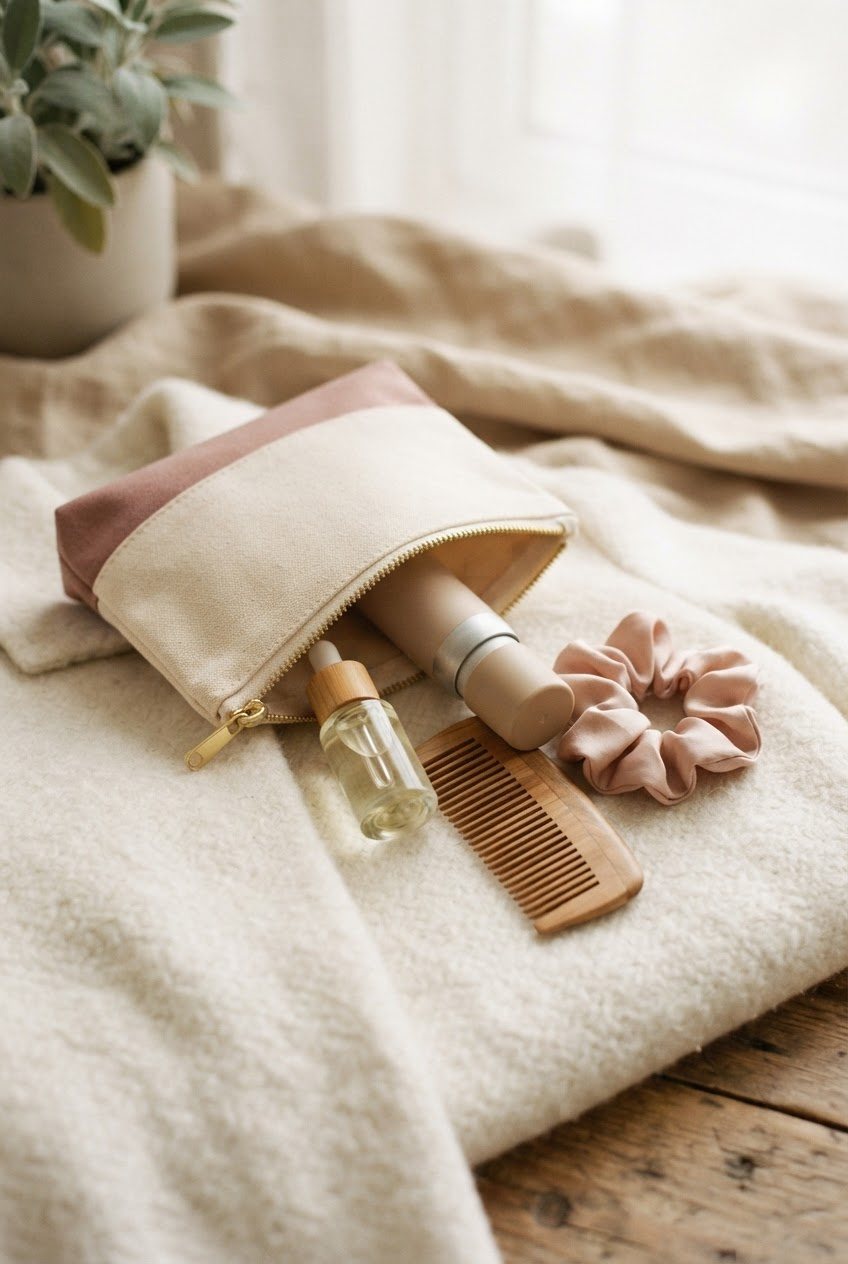
Put the whole kit in a small pouch – a mini oil, a dry shampoo, a wooden comb and a scrunchie – and leave it in your everyday bag from the first cold day until spring.
Winter Wash-Day Adjustments
A few small changes to how you wash can make every one of the fixes above work better.
- Turn the water down. Rinse with warm, not hot, water. Finish with a few seconds of cooler water on your lengths if you can stand it – it helps your hair feel smoother.
- Shampoo the scalp, condition the ends. Massage shampoo into your scalp only and let the suds run through the lengths. Put conditioner from mid-lengths to ends, where hair is driest.
- Consider washing a little less often. If your scalp isn't oily, stretching an extra day between washes leaves more natural oils on your hair. My guide on how often to wash your hair based on hair type helps you find your rhythm.
- Pick a moisturizing shampoo for winter. If your current one leaves hair squeaky, switch to a gentler, hydrating formula until spring.
- Squeeze, don't rub. Gently squeeze water out with a soft microfiber towel or an old cotton T-shirt. Rough towel-drying creates frizz before you've even started.
- Never go out with wet hair in the cold. It's uncomfortable, and wet hair is more fragile and more likely to snap. Plan wash days for evenings when you're staying in.
Don't Forget Your Scalp
Dry, heated air affects your scalp too. Winter can bring tightness, itchiness and small white flakes. A few gentle habits help:
- Massage your scalp with your fingertips for two minutes while shampooing to loosen flakes and feel instantly relaxed.
- Avoid scratching – use the soft pads of your fingers instead.
- Try a soothing scalp serum or a few drops of a light oil on dry patches the night before wash day.
- Keep hats clean. Wash or air out your beanies regularly, since they hold onto oil and product.
Persistent flaking, redness, soreness or noticeable hair shedding is worth a visit to a doctor or dermatologist – it can be a scalp condition that needs a specific treatment rather than just more moisture. This guide is general hair care information, not medical advice.
Winter Hair Care by Hair Type
The basics work for everyone, but your hair type changes how much product you need and which fix works best.
Fine or Straight Hair
Fine hair shows static and hat dents the most, and heavy products weigh it down quickly. Use oil sparingly – one drop, ends only – and lean on leave-in sprays instead of creams. Dry shampoo at the crown is your best friend after wearing a hat. A looser beanie leaves fewer dents than a snug one.
Thick or Wavy Hair
Thick hair takes longer to dry, which means more time with the blow dryer or more chances of going out with damp roots. Start wash day earlier in the evening, squeeze out water gently and let it air-dry most of the way before finishing with medium heat. A leave-in cream on damp lengths helps waves stay soft instead of frizzy in heated rooms.
Curly or Coily Hair
Curls are naturally drier because oils from the scalp travel down the strand more slowly. In winter, go richer: a creamy leave-in, a sealing oil on top and a weekly deep-conditioning mask. Refresh curls with a mist of water mixed with a little leave-in instead of re-washing, and protect them overnight with a satin bonnet or pillowcase.
Color-Treated or Bleached Hair
Lightened hair is more porous, so it loses moisture faster and feels the cold the most. Use a gentle shampoo made for color-treated hair, never skip conditioner, and give it a weekly mask. Be extra careful with heat, and keep ends tucked away from rough scarves on windy days.
Overnight Winter Hair Care
Night is when you can undo a whole day of dry air and friction. Three small habits:
- Sleep on silk or satin. A blush silk pillowcase reduces friction against your hair, so you wake up with less frizz, fewer tangles and less static. It's gentle on sensitive skin too, which I always appreciate.
- Tie hair loosely. Long hair tossing around on the pillow gets tangled at the ends. Gather it loosely on top of your head or at the nape with a soft scrunchie. A set of pastel silk scrunchies won't leave dents or snag fragile strands.
- Add a little moisture to the air. If your bedroom is very dry, a humidifier helps your hair, skin and lips at the same time. Keep it clean following the instructions.
A Simple Winter Hair Week
If you like a plan, here's how all of this fits into an ordinary week without taking over your evenings:
- Every morning (1 minute): one drop of oil or a little leave-in on your ends, then a smooth comb-through with your wooden comb.
- Before heading out: check that your roots are dry, put on your satin-lined hat and tuck long ends loosely into your coat.
- During the day: use your bag kit only when you need it – static, a hat dent or a tangle.
- Wash days (2–3 times a week, or what suits your hair): warm water, shampoo on the scalp, conditioner on the ends, squeeze dry and leave-in spray.
- Once a week (10 minutes): a rich hair mask instead of your usual conditioner. I like to do mine on a quiet evening with a candle lit and a cup of tea, so it feels like a treat rather than a task.
- Every night: silk pillowcase, loose scrunchie, lights out.
That's it. Small, repeatable and gentle – which is exactly what dry winter hair needs.
5 Winter Hair Care Mistakes To Avoid
- Pulling your hat off quickly. One fast swipe creates maximum static. Lift it off slowly instead.
- Using heavy oil on your roots. Oil belongs on the lengths and ends. At the roots it just makes hair look flat and greasy, which makes hat hair worse.
- Brushing dry, tangled ends from the top down. Always start at the ends and work up, holding the hair above the knot so you don't pull.
- Turning up the heat on your tools. Higher heat isn't faster care – it's faster damage. Medium heat and a protectant every time.
- Skipping care because hair is "hidden under a hat." That's exactly when friction does the most damage. If you're dealing with frizz most of the time, my tips for smoothing frizzy hair are a good next step.
Final Thoughts
Winter hair doesn't need a complicated routine. It needs a little more moisture, a little less friction and a tiny kit in your bag for the moments when the static halo appears anyway.
Seal your ends in the morning, choose a satin-lined hat, sleep on silk and keep that 3-minute fix table handy. Your hair will feel softer by the time the first snow melts – and you'll walk into every warm café looking just as put-together as when you left home.