Co-washing isn't about skipping cleansing. It's about cleansing more gently, so your hair keeps the moisture it naturally struggles to hold on to. For some hair types that small switch is the difference between frizzy, thirsty lengths and soft, happy ones. For others, it leads to a heavy, itchy scalp within two weeks.
That's why I'd never tell you co-washing is "better" than shampoo. It's a tool that suits certain hair beautifully and frustrates other hair just as much. The trick is knowing which group you're in before you change your whole wash day, and keeping a simple reset in your routine so things stay balanced.
This guide explains co-washing from the beginning: what it is, where it came from, who it suits and who may struggle, how to co-wash step by step, how it compares with regular conditioner and low-poo, the signs of buildup, why clarifying matters, and a gentle starter schedule. You'll also find a table that matches each hair type with how well co-washing tends to fit and how often to clarify.
Whatever your texture, you're welcome here. There's no right kind of hair, only the right routine for yours.
What Co-Washing Actually Is

Co-washing is short for "conditioner washing." Instead of cleaning your hair and scalp with shampoo, you use a conditioner-based cleanser to do the job. That cleanser still lifts away sweat, dirt and some product, but it does it much more softly than a typical shampoo.
The best option is a cleansing conditioner made specifically for co-washing. These formulas contain very mild cleansing ingredients alongside the conditioning ones, so they actually clean. Regular conditioner can work in a pinch, but it's designed to stay on and soften, not to wash. (More on that difference below.)
What you won't get with co-washing is a big lather. That's normal. Foam isn't what makes hair clean; massage and rinsing are.
Where Co-Washing Came From
Co-washing grew out of curly and coily hair care. Textured hair tends to be drier along the lengths because the natural oils from your scalp have a harder time traveling down a curl or coil than down a straight strand. Shampooing often, especially with strong cleansers, could leave curls rough, frizzy and prone to tangling.
So curly and coily communities started cleansing with conditioner instead, and it caught on. Over time it spread to wavy hair, color-treated hair and anyone whose lengths feel dry after every wash. Brands followed with dedicated co-wash formulas, which is why you now see them on drugstore shelves everywhere.
Who Co-Washing Suits Best
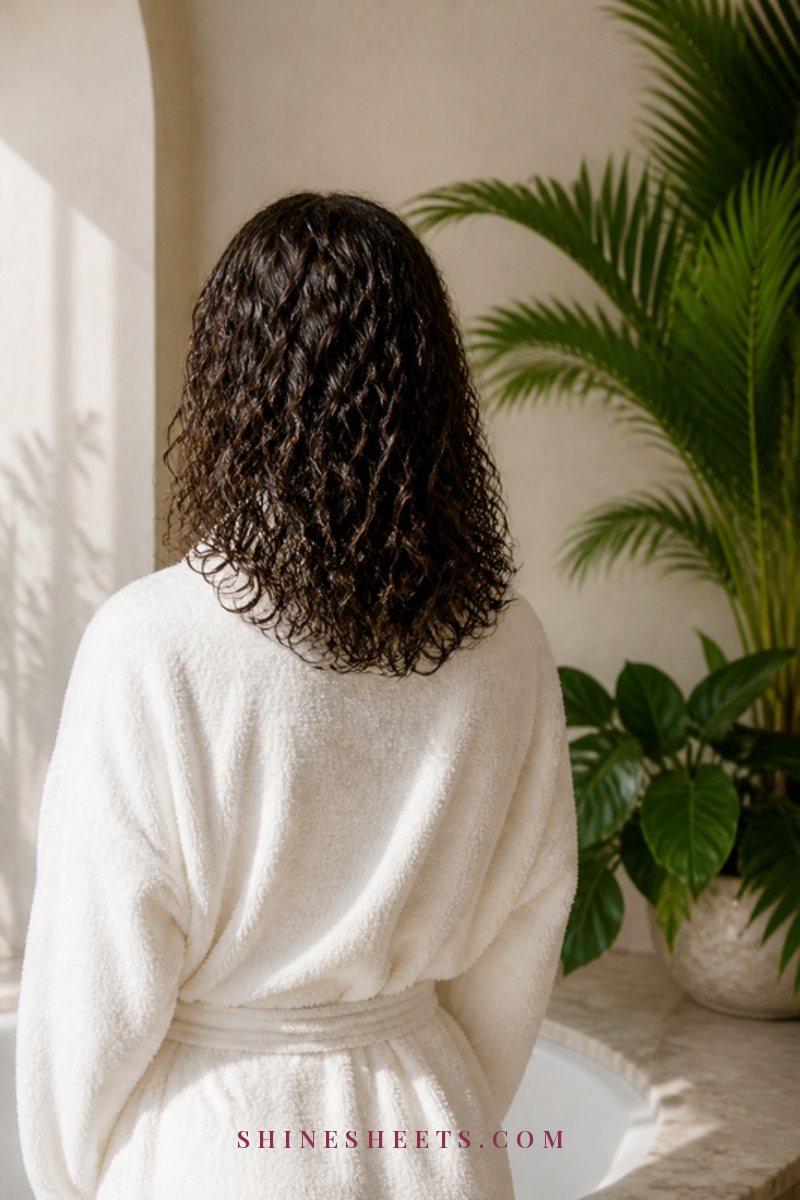
Co-washing tends to work well for:
- Wavy, curly and coily hair: the hair it was made for. Many people notice softer curls, less frizz and easier detangling.
- Dry hair of any type: if your lengths feel like straw the day after you shampoo, a gentler cleanse can help them hold moisture.
- Color-treated hair: a milder cleanse can be kinder to color-treated lengths than a strong shampoo.
- People who wash often: if you rinse your hair after workouts or swim several times a week, co-washing on some of those days is less drying than shampooing every time.
- High-porosity hair: hair that soaks up water fast and dries fast often loves the extra conditioning. If you're not sure where your hair sits, my guide to finding your hair porosity is a helpful place to start.
If you're still learning your curl type, my sister guide on the hair type chart explains the common categories, with the gentle reminder that the chart is a guide, not a rule. Plenty of heads have two or three textures at once.
Who May Struggle With Co-Washing

Co-washing can be frustrating if you have:
- Fine or straight hair: conditioning ingredients can weigh it down, so it looks flat or limp by the next day.
- An oily scalp: a gentle cleanser may not remove enough oil, leaving roots greasy faster.
- Heavy product habits: lots of styling creams, gels, dry shampoo or silicone-rich serums build up quickly without a stronger cleanse.
- A flaky or itchy scalp: if you already deal with flakes, adding more conditioning ingredients near the scalp can sometimes make it worse.
A simple split routine works well for many people in this group: shampoo just the scalp with a gentle cleanser, then smooth a co-wash over the lengths only and rinse. Your roots get a proper clean, and your ends get the extra softness they've been missing. It takes the same time as a regular wash and is one of the easiest ways to test co-washing without risking flat, heavy roots.
It also helps to look at your styling habits. If you wear a lot of gel, mousse or dry shampoo, plan on clarifying more often, around every 2 weeks, so the gentle cleanses don't have to fight through layers of product.
None of this means you can't co-wash at all. Many people with fine or oily hair do well co-washing only the lengths, or co-washing once a week and shampooing the rest of the time. You get to mix and match.
Co-Washing by Hair Type
Use this table as a starting point. Your hair might need a little more or less, and that's completely fine:
| Hair type | Co-wash fit | How often to co-wash | When to clarify |
|---|---|---|---|
| Coily, very tight curls | Usually an excellent fit | Most wash days, or every wash | Every 2 to 4 weeks, or when curls feel coated |
| Curly | Usually a great fit | Most wash days, with an occasional gentle shampoo | Every 2 to 4 weeks |
| Wavy | Good fit for many, but can weigh waves down | Alternate co-wash and gentle shampoo | Every 2 to 3 weeks |
| Straight, thick or dry | Can work well | Once or twice a week between shampoos | Every 2 to 3 weeks |
| Straight, fine | Often too heavy | Lengths only, or skip it | Every 2 weeks if you co-wash |
| Oily scalp (any texture) | Tricky | Co-wash lengths, shampoo the scalp | Every 2 weeks |
| Color-treated (any texture) | Good, gentle on color | Alternate with a color-safe shampoo | Every 3 to 4 weeks, with a color-safe clarifier |
Screenshot it if you like, then adjust as you learn how your hair responds over a few weeks.
How To Co-Wash Step by Step
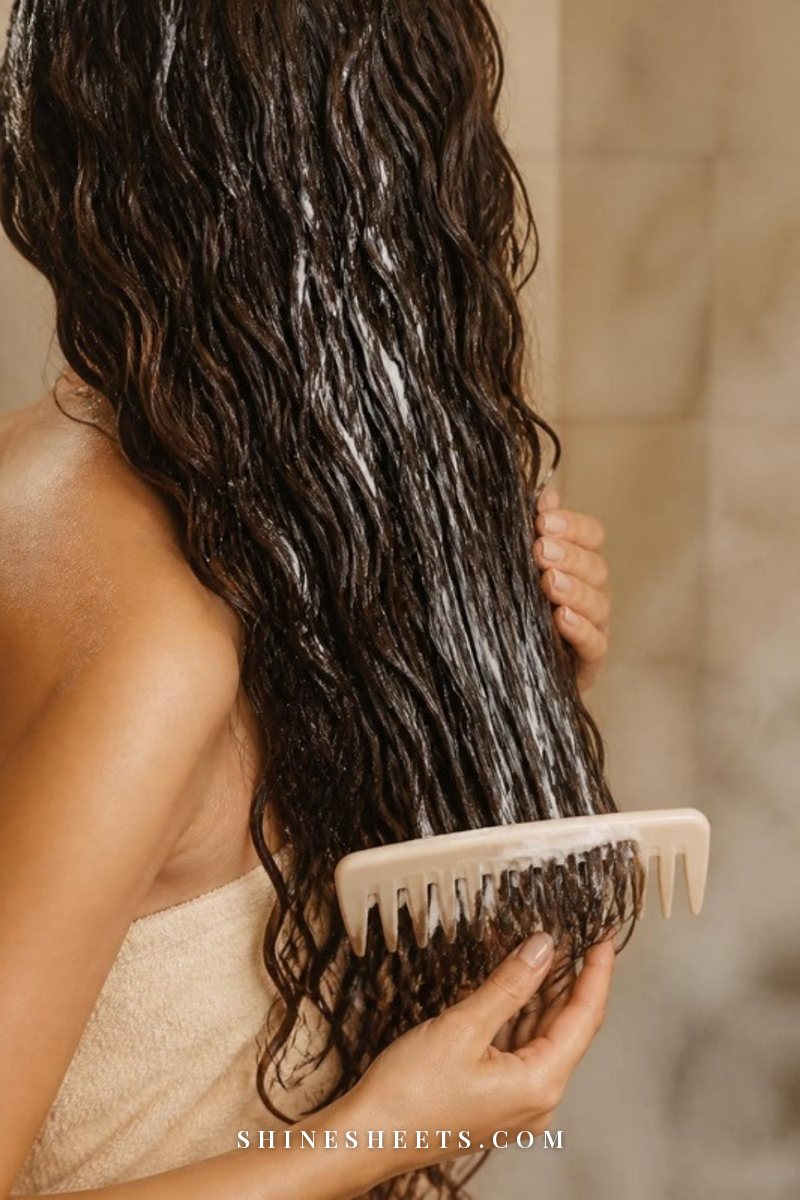
Co-washing takes a little more time than shampooing, mostly because the massage does the cleaning. Plan on 5 to 10 minutes in the shower for the whole thing, a little longer if your hair is very thick. Here's the full routine:
- Soak your hair completely. Use lukewarm water and let it run for a full minute so every strand is saturated, especially with thick or coily hair. Water helps the cleanser spread.
- Section if your hair is thick. Split it into 2 to 4 sections with your fingers so you can reach the scalp everywhere.
- Apply a generous amount to the scalp. Co-washing needs more product than shampoo. Start with a palmful per section and add more if it doesn't spread easily.
- Massage your scalp for 2 to 3 minutes. Use the pads of your fingers (not your nails) in small circles, front to back. This is the cleansing step, so don't rush it. A soft silicone scalp massager can make it easier and feels lovely.
- Work it through the lengths. Smooth the cleanser down to the ends and gently detangle with your fingers or a wide-tooth comb while it's on.
- Rinse thoroughly. Rinse for at least a minute longer than you think you need, lifting sections so water reaches the scalp. Leftover cleanser is the main cause of buildup.
- Blot gently. Squeeze out water and wrap your hair in a white microfiber hair towel instead of rubbing it, then style as usual.
If you want a full curly wash day with styling steps around this, my curly hair routine for beginners fits co-washing right into it.
Co-Wash vs Regular Conditioner vs Low-Poo

These three get mixed up a lot, so here's how they differ.
Co-Wash (Cleansing Conditioner)
Made to clean. It contains very mild cleansing ingredients plus conditioners, so it washes your scalp while softening your lengths. Little to no lather. This is what you want for true co-washing.
Regular Conditioner
Made to soften and detangle after shampoo. Most regular conditioners have no real cleansing ingredients, so using one to "wash" mostly moves dirt around and can lead to buildup faster. It's fine for a quick rinse day, but it isn't a full cleanse.
Low-Poo
A gentle, low-lather shampoo, often sulfate-free. It cleans more than a co-wash but less harshly than a classic shampoo. A gentle low-poo cleanser is a nice middle ground for wavy hair, fine hair or anyone who finds co-washing too heavy. My guide on whether sulfate-free shampoo is worth it explains how these gentler formulas compare.
Many people end up with a mix: co-wash on most days, low-poo once a week, and a clarifying wash now and then.
Signs of Buildup and How To Reset

Because co-washing cleans gently, product and oils can slowly collect on the hair and scalp. Watch for these signs:
- Hair feels coated, waxy or heavy, even right after washing.
- Curls or waves look limp and lose definition.
- Your hair takes much longer to dry than usual.
- Products stop absorbing and seem to sit on top.
- Your scalp feels itchy or looks greasy sooner than normal.
- Hair looks dull instead of shiny.
Why a Clarifying Wash Every 2 to 4 Weeks Helps
A clarifying wash is like pressing reset. A clarifying shampoo uses stronger cleansers to remove the layer that co-washing leaves behind, so your hair can absorb moisture and products properly again.
For most co-washers, once every 2 to 4 weeks is plenty. Shampoo once, focusing on the scalp, rinse well and follow with a rich conditioner or mask so your lengths don't feel stripped. If your hair is color-treated, look for a color-safe clarifier. My full guide on when and how to use clarifying shampoo covers it step by step.
A Gentle Starter Schedule

If you're new to co-washing, ease in rather than switching overnight. Here's a simple four-week plan for someone who currently shampoos two or three times a week:
- Week 1: replace one shampoo with a co-wash. Notice how your hair feels on day two and day three.
- Week 2: co-wash twice, shampoo once. If your scalp feels oily, keep the shampoo focused on the roots.
- Week 3: co-wash for most washes. If your hair is curly or coily and feels great, you can co-wash every time.
- Week 4: do your first clarifying wash, then continue the rhythm that felt best.
Hair often goes through a short adjustment period, so give it the full four weeks before you decide. A few lines in a journal after each wash day (how it felt, how long it stayed fresh) make the pattern surprisingly clear. I'm a journaling-after-tea person, so this part feels like a treat to me, but a note on your phone works too.
How To Choose a Cleansing Conditioner
Co-wash formulas vary a lot, from light and almost milky to thick and creamy. A few simple criteria make shopping easier:
- Match the weight to your hair. Thick, coily or very dry hair usually likes a richer cream. Wavy or finer hair does better with a lighter, more fluid formula that rinses out easily.
- Look for the words "cleansing conditioner" or "co-wash." That tells you the formula contains mild cleansing ingredients, not just softeners.
- Check where silicones sit. Heavy, non-water-soluble silicones near the top of the ingredient list can build up faster with gentle cleansing. Lighter or water-soluble ones are usually easier to manage.
- Go gentle on fragrance if your scalp is sensitive. A lightly scented or fragrance-free formula is a kinder starting point for reactive skin.
- Buy a size you can test. Give a new co-wash at least three or four wash days before deciding. The first wash rarely tells the whole story.
There's no single perfect product. The right one is the formula that leaves your scalp feeling clean and your lengths feeling soft by the second day, not just right out of the shower.
What To Expect in Your First Few Weeks
Switching from shampoo to co-washing can feel a little strange at first, and that's normal. Here's what many people notice:
- Week one: hair often feels softer and easier to detangle, but the scalp may feel slightly less "squeaky clean." That squeak was partly your natural oils being stripped away.
- Weeks two and three: curls and waves often look more defined and less frizzy. If your roots feel greasy or heavy instead, that's a sign to add a shampoo day or co-wash only your lengths.
- Week four: your first clarifying wash usually makes everything feel light and bouncy again, and you'll have a clear sense of whether co-washing suits you.
If your hair feels worse rather than better after a full month, that's useful information, not a failure. Plenty of people end up co-washing only once a week, or only in dry seasons, and that's a perfectly good routine. Hair care is allowed to be flexible.
Scalp Care While You Co-Wash
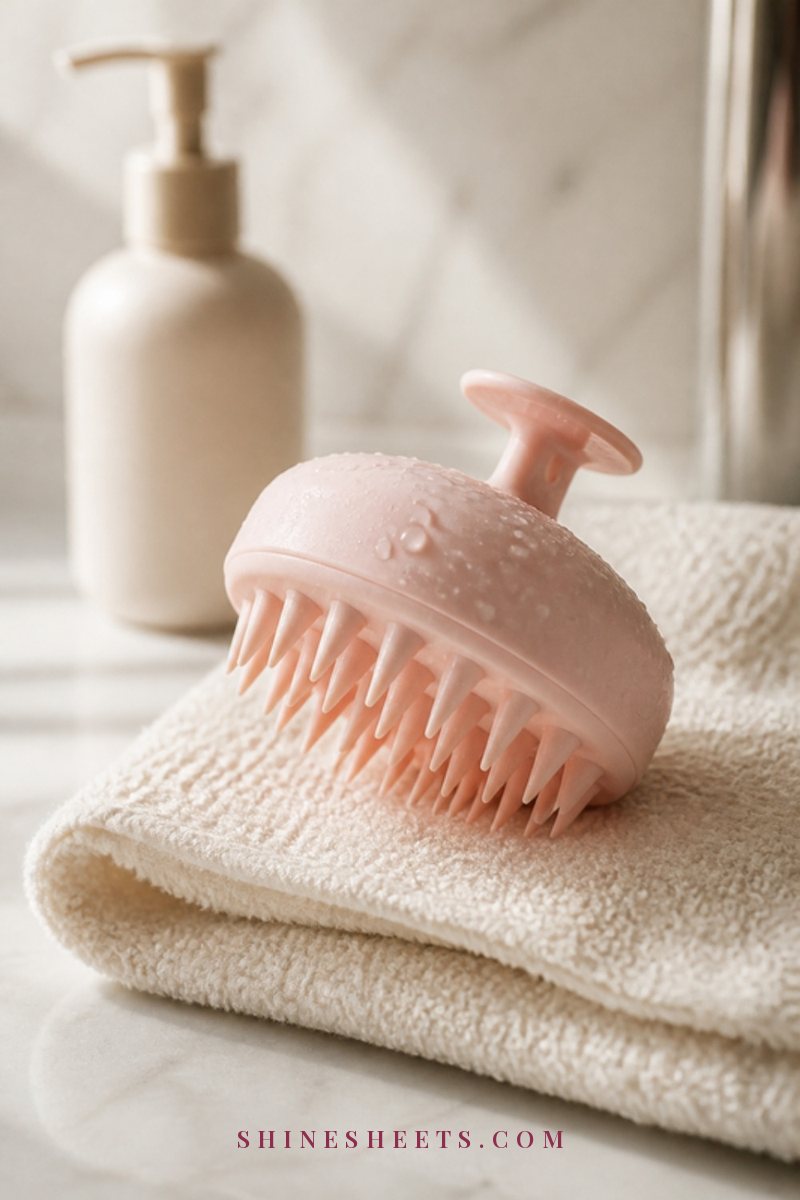
Your scalp is skin, and it deserves the same calm attention as your face. A few simple habits keep it comfortable:
- Spend the full 2 to 3 minutes massaging every time you co-wash.
- Keep heavy oils and styling creams off your scalp and on your lengths.
- Let your roots dry properly instead of tying damp hair up for hours.
- Patch test any new cleanser on a small area first if your skin is sensitive, and wait a day before using it all over.
On the days you do reach for shampoo, the basics still matter: lukewarm water, shampoo on the scalp, conditioner on the lengths. My guide to washing your hair the right way is a good companion to this one.
A kind safety note: if itching, flaking, redness or soreness on your scalp keeps going even after you've clarified and adjusted your routine, pause co-washing and see a dermatologist. Persistent scalp symptoms can have many causes, and a professional can help you find the right care.
4 Common Co-Washing Mistakes
- Using too little product. A small dab won't reach your whole scalp. Be generous, especially with thick hair.
- Skipping the massage. Without 2 to 3 minutes of scalp massage, the cleanser can't do its job.
- Rinsing too quickly. Leftover conditioner is the fastest path to buildup and itchiness.
- Never clarifying. Even the gentlest routine needs a reset every few weeks.
Final Thoughts
Co-washing is a gentle, moisture-friendly way to clean your hair, and for many wavy, curly, coily and dry heads it feels like a small revelation. For fine hair or an oily scalp, it may work better as an occasional step than a full replacement, and that's perfectly okay.
Start slowly, massage well, rinse longer than you think, and keep a clarifying wash in your rhythm. Your hair will tell you what it likes within a few weeks, and the routine you end up with will be the one that truly fits you.