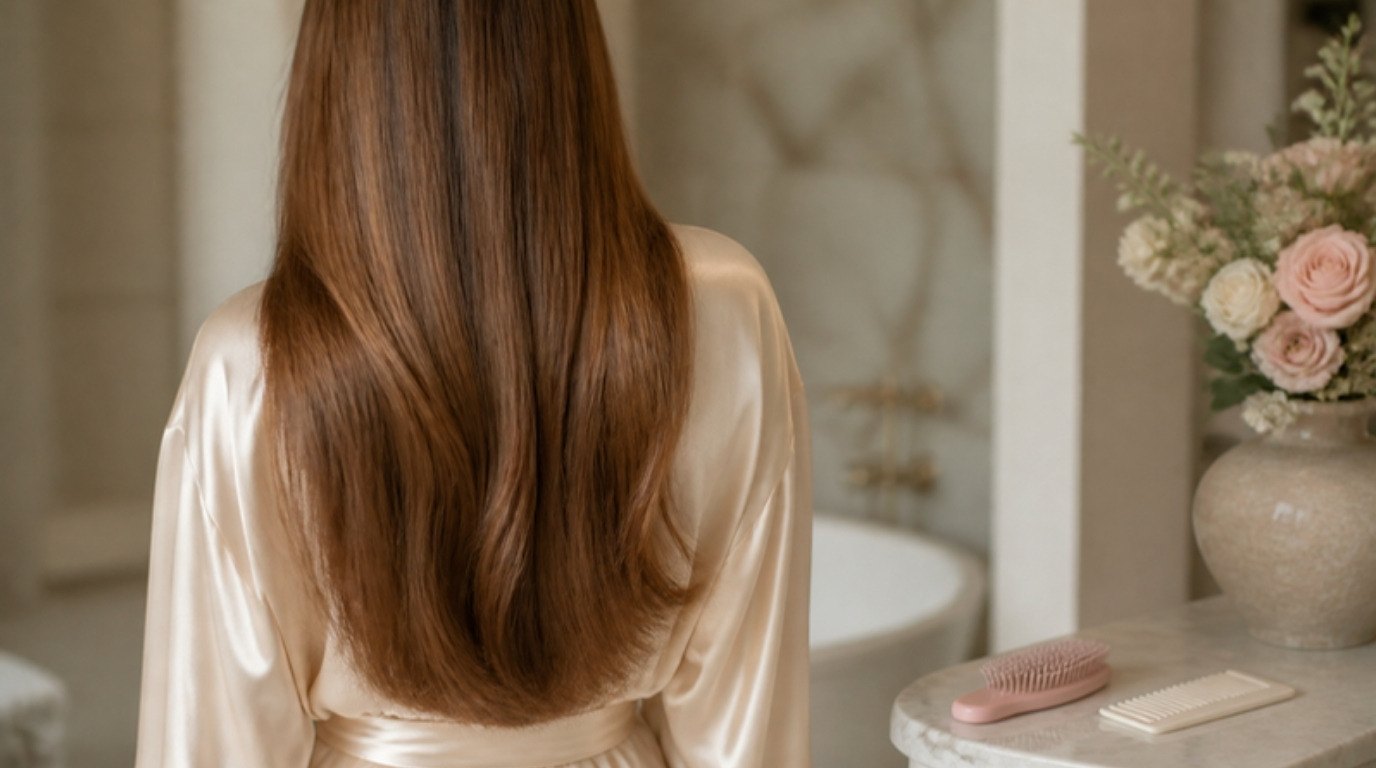
Your hair spends about a third of its life on a pillow. Every toss and turn rubs it against fabric, every hair tie presses into the same spot for hours, and every night you go to bed with damp ends is a night of slow, quiet damage. The good news is that those same eight hours can work for your hair instead of against it.
An overnight hair routine doesn't need to be complicated. A few minutes before bed (brushing, a little moisture on the ends, a gentle way to gather your hair, and a smoother surface to sleep on) can mean fewer tangles, less frizz, less breakage and noticeably softer hair in the morning.
This overnight hair care guide covers everything you can do before bed for healthier hair: detangling, oils and leave-ins, when overnight masks make sense, protective ways to gather your hair, silk and satin pillowcases and bonnets, gentle hair ties, why you should never sleep on soaking wet hair, a night routine by hair type, and a quick morning refresh.
It's one of the easiest self-care rituals to add to your evening, and you'll notice the difference within a week or two.
Why Your Hair Needs a Night Routine
During the day, your hair deals with heat, sun, wind, styling and dry indoor air. At night, it deals with something less obvious: friction. When you move in your sleep, the outer layer of each strand (the cuticle) rubs against your pillowcase. Over time, this roughs it up, which shows up as frizz, dullness, tangles and split ends.
Night is also a wonderful window for care. Your hair isn't being styled, brushed or exposed to the elements for several hours, so a light treatment has time to soften it without you having to sit around waiting.
A night routine helps with:
- Fewer morning tangles, especially for long, thick or curly hair.
- Less frizz, because the cuticle stays smoother.
- Less breakage, from friction and tight hair ties.
- Softer ends, thanks to a little overnight moisture.
- Longer-lasting styles, so you need less heat and fewer washes.
If your hair is already snapping or splitting more than usual, my guide to hair breakage explains the most common causes and how to calm them down.
Your Overnight Hair Care Routine, Step by Step
Here's the full routine. It takes about five minutes, and you can do it while your evening tea cools.
1. Brush and Detangle Before Bed
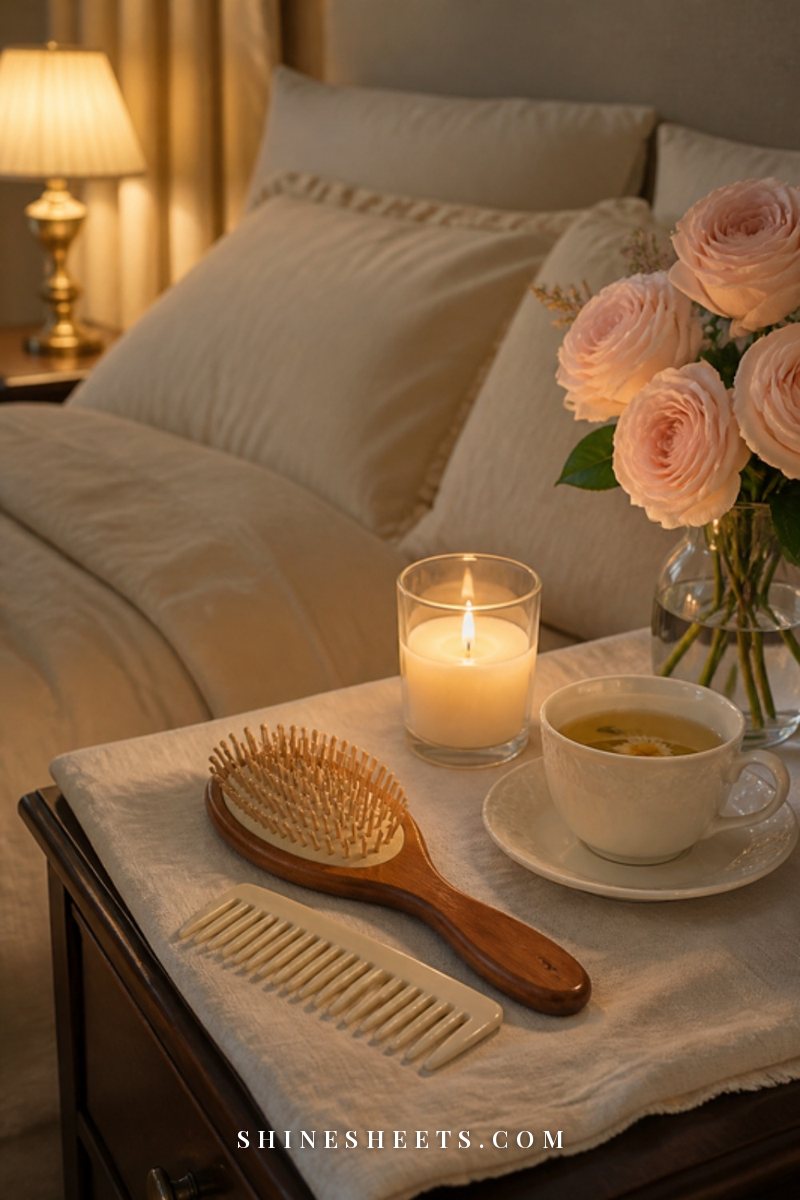
Going to bed with tangles means waking up with knots. A quick, gentle brush before bed separates the strands so they don't twist around each other overnight.
- Start at the ends and work your way up, a few inches at a time.
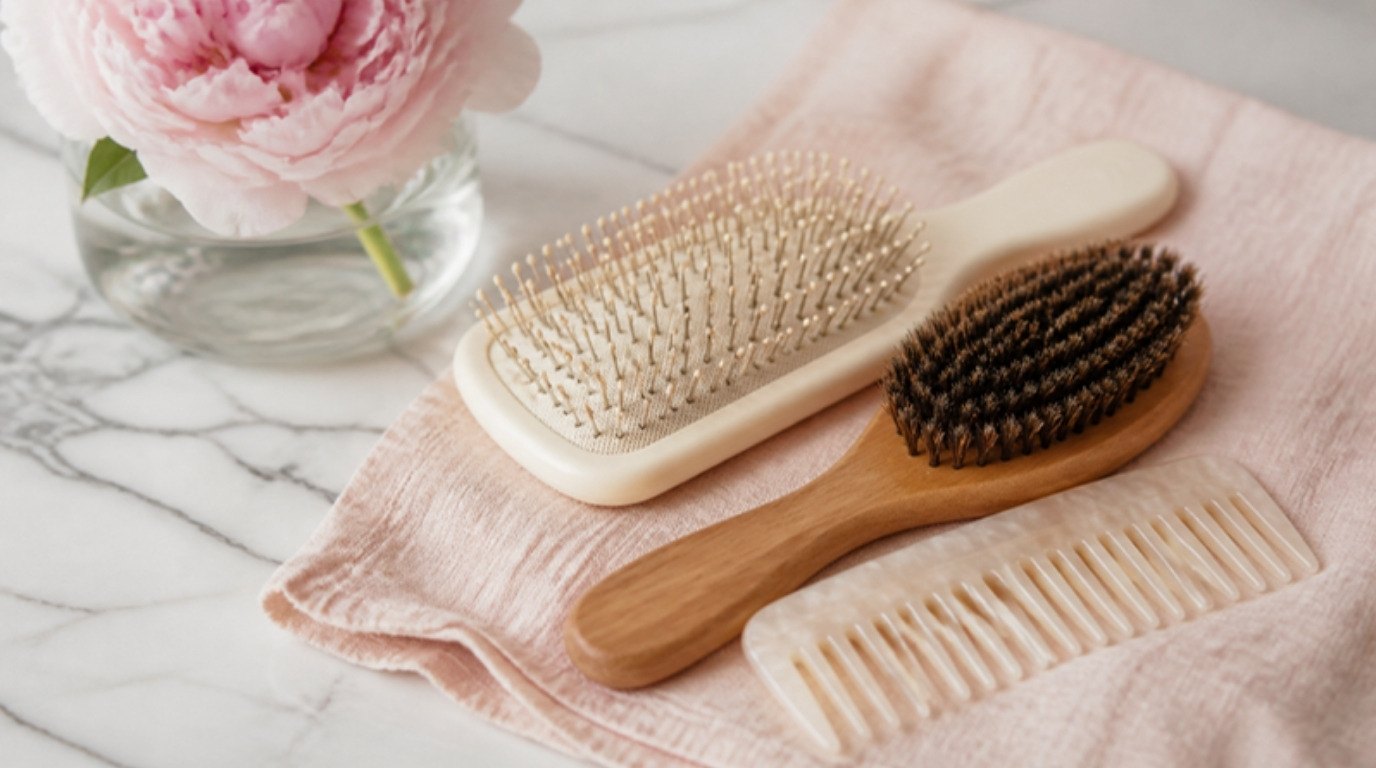
- Use the right tool: a boar bristle brush is lovely for straight and wavy hair because it gently spreads your scalp's natural oils down the lengths, adding shine. For curly or coily hair, skip dry brushing and finger-detangle or use a wide-tooth comb on hair that's slightly damp with leave-in.
- Take one or two minutes, not twenty strokes in a hurry.
- Be extra gentle at the nape, where tangles tend to gather.
Brushing also gives your scalp a soft massage, which feels wonderfully calming at the end of the day.
2. Give Your Ends a Little Moisture
The ends of your hair are the oldest and driest part, and they're the part that rubs against the pillow the most. A small amount of moisture before bed keeps them soft.
Choose one of these, depending on your hair:
- A light hair oil: one to three drops of a lightweight argan hair oil warmed between your palms and smoothed over the bottom few inches. Fine hair needs just one drop; thick or curly hair can take more.
- A leave-in cream: a pea-sized amount for fine hair, a little more for thick or coarse hair, worked through the ends.
- A leave-in spray: a few mists on the lengths if your hair is fine and gets weighed down easily.
The key word is little. You want soft ends, not greasy pillows.
3. Use an Overnight Mask (When It Makes Sense)

Overnight hair masks are richer treatments designed to be left in while you sleep. They're wonderful once in a while, but they're not an every-night step.
When an overnight mask makes sense:
- Your hair feels very dry, rough or straw-like.
- You've had a lot of heat styling, sun or color recently.
- You're planning to wash your hair the next morning anyway.
How to do it:
- Apply an overnight hair mask to dry or slightly damp hair, from mid-lengths to ends. Keep it off the scalp unless the product says otherwise.
- Comb it through gently so it's evenly spread.
- Gather your hair loosely and cover it with a satin bonnet or wrap to protect your pillow.
- Wash it out in the morning with your usual shampoo and a light conditioner.
Once a week is plenty for most hair, and once every two weeks is enough for fine hair. If your hair starts to feel limp or overly soft, take a break. My guide to hair masks has more on choosing the right type for what your hair needs right now.
4. Protect Your Hair While You Sleep
Loose hair spread across a pillow gets tangled and rubbed all night. Gathering it gently keeps it in place. This isn't about creating a hairstyle. It's about protection.
A few gentle options:
- A loose braid: one soft, loose braid at the back or side keeps long hair from tangling. Keep it relaxed, never tight.
- A high, loose gather: especially lovely for curly hair. Loosely gather your hair on the very top of your head with a soft scrunchie so curls aren't crushed while you sleep.
- A low, loose twist: for medium hair, a gentle twist secured with a soft tie at the nape.
- Leave it down: if your hair is short or you're on a silk pillowcase, letting it down is perfectly fine.
Whatever you choose, it should feel comfortable and never pull at your hairline or scalp. Tension night after night can stress the hair at the roots.
5. Choose a Silk or Satin Surface
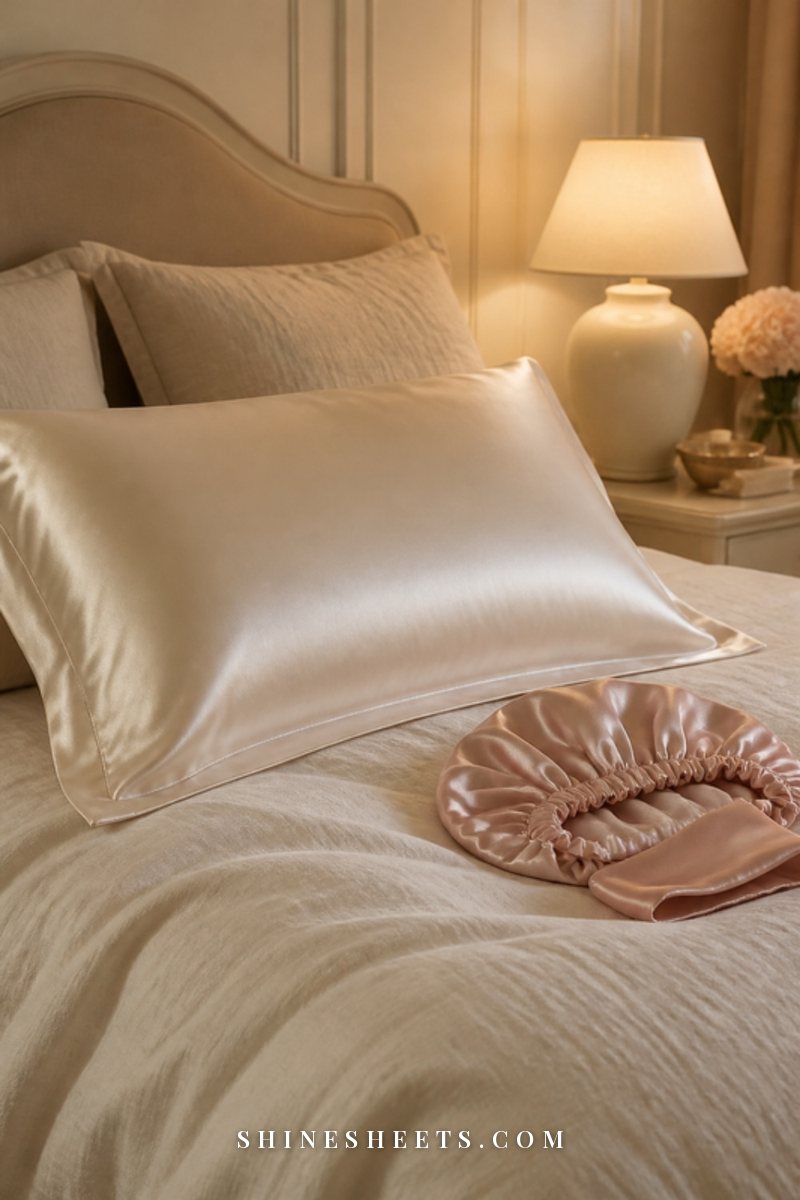
If you only make one change, make it this one. Silk and satin are much smoother than cotton, so your hair glides over them instead of catching.
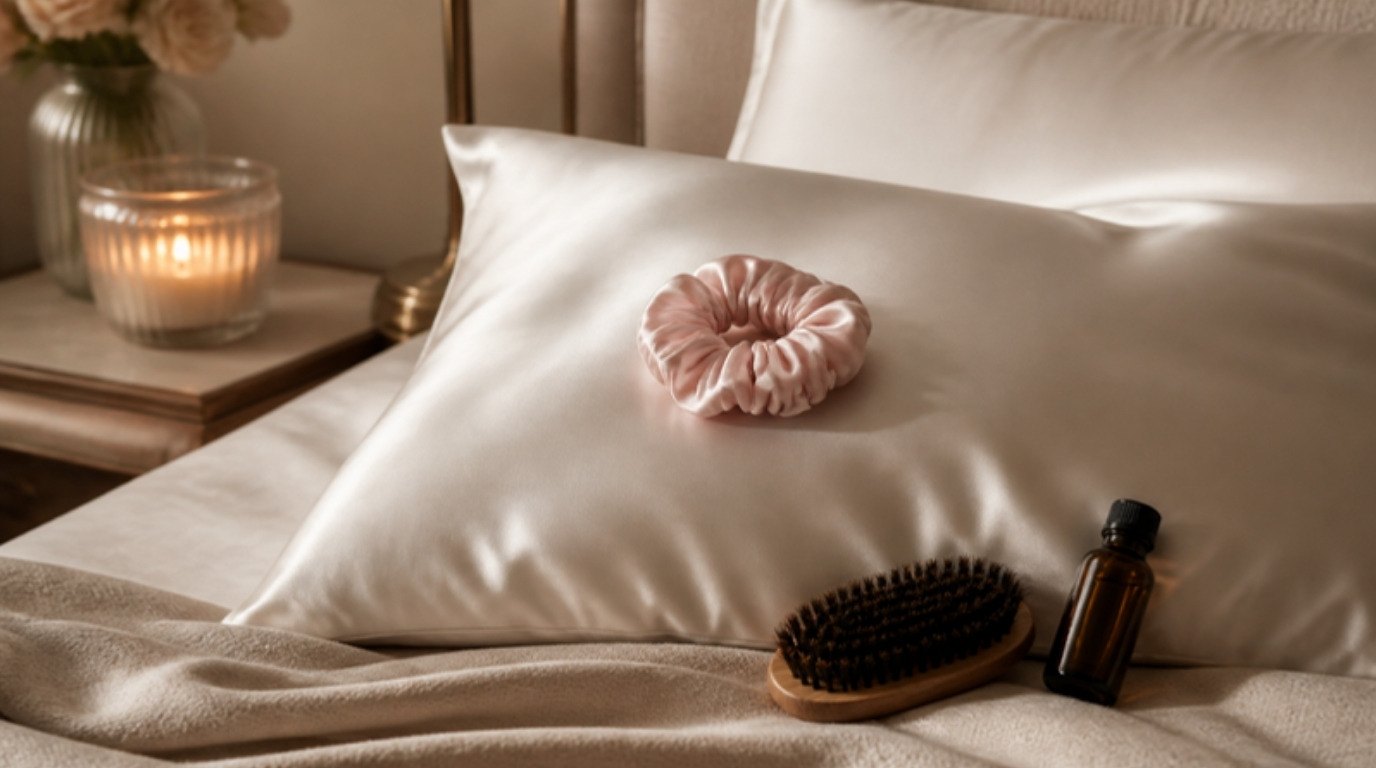
- Silk pillowcase: a mulberry silk pillowcase is soft, breathable and gentle on hair and skin. Look for a smooth, tightly woven silk and a hidden zipper or envelope closure.
- Satin pillowcase: a more affordable option with a similarly smooth surface. Satin describes the weave, so look for a soft, slippery feel.
- Satin bonnet or wrap: perfect if you move a lot at night, have curly or coily hair, or want to keep an overnight treatment off your pillow. A satin bonnet with a soft, adjustable band stays on comfortably all night.
Many women use both: a silk pillowcase every night and a bonnet on mask or oil nights. If you're curious about everything silk can do for both your hair and skin, read my guide to silk pillowcase benefits.
6. Use Gentle Hair Ties Only
Tight elastic bands with metal clasps are one of the most common causes of breakage at the same spot over and over again. At night, when you're lying on them for hours, they do even more damage.
- Swap them for silk scrunchies, which hold hair without gripping, pulling or leaving a crease.
- Choose oversized scrunchies for thick hair, so you don't have to wrap them too many times.
- Change the position of your hair tie from night to night if you can, so the same strands aren't stressed every time.
- Never sleep with clips, pins or anything with a hard edge in your hair.
Never Sleep on Soaking Wet Hair
This is the one rule I'd love everyone to follow. Wet hair is more fragile and stretchier than dry hair, so it's much easier to tangle, crease and break when you lie on it.
Going to bed with soaking wet hair can also:
- Leave your scalp damp for hours, which can feel uncomfortable and lead to a musty smell.
- Create deep creases and tangles that take a lot of brushing (and more breakage) to fix in the morning.
- Make your pillow damp, which isn't ideal for your skin either.
If you love evening showers, try this instead:
- Wash your hair at least an hour or two before bed if possible.
- Squeeze out water gently and wrap your hair in a microfiber towel for 15 to 20 minutes.
- Let it air-dry while you do your skincare and make your tea.
- If it's still very wet, rough-dry it on low or medium heat until it's at least 80 percent dry, especially at the roots.
Slightly damp ends are fine, especially for curly hair. Soaking wet roots are not.
Don't Forget Your Scalp at Night
Overnight hair care isn't only about the lengths. Your scalp is where healthy hair starts, and a calm evening is the perfect time to give it a little attention.
- A two-minute scalp massage: using the pads of your fingers (not your nails), make small, slow circles from your hairline back to the crown and down to the nape. It feels soothing, helps loosen any product near the roots and makes a lovely wind-down ritual.
- Keep heavy products off the roots: oils, butters and masks are best kept to the mid-lengths and ends, unless a product is specifically made for the scalp.
- Loosen everything: take out tight hair ties, clips and headbands as soon as you get home, so your scalp gets a break for the evening, not just the night.
- Dry your roots properly: a scalp that stays damp under a pillow for hours can feel itchy or uncomfortable.
- Keep your pillowcase fresh: a clean surface is kinder to both your scalp and your skin.
If your scalp is persistently itchy, flaky, sore or red, it's worth checking in with a dermatologist rather than trying to fix it with more products at night.
Night Routine by Hair Type
Every hair type has slightly different needs at night. Here's a simple overview of what to focus on. Screenshot it and keep it for when you're building your routine.
| Hair type | Key night step | Product to look for | How to gather it |
|---|---|---|---|
| Straight, fine | Brush gently, keep products very light | One drop of light oil or a leave-in mist on ends only | Loose and down on a silk pillowcase, or a low, soft scrunchie |
| Straight, thick | Detangle thoroughly to prevent knots | Light oil or leave-in cream on mid-lengths and ends | One loose braid or a loose gather with an oversized scrunchie |
| Wavy | Protect the wave pattern, avoid frizz | Light leave-in cream or curl cream refresher | Loose high gather or a loose braid |
| Curly | Keep curls from being crushed | Leave-in conditioner, a few drops of oil on ends | Loose high gather on top of the head with a satin bonnet or pillowcase |
| Coily | Lock in moisture overnight | Rich leave-in cream plus an oil or butter to seal | Loose twists or a gather, covered with a satin bonnet |
| Color-treated or bleached | Prevent breakage and dryness | Overnight mask once a week, leave-in on other nights | Loose braid with a silk scrunchie |
If you have curls, my curly hair routine goes deeper into wash days, styling products and refreshing curls between washes.
Overnight Oiling: How To Do It Without Greasy Pillows

Leaving oil in overnight is a traditional practice in many cultures, and it can make dry hair feel incredibly soft. It just needs a little planning so you don't wake up with an oily pillow or face.
- Only do it the night before a wash day, since you'll need to shampoo the oil out.
- Use a small amount, about one to two teaspoons for medium-length hair, and focus on the mid-lengths and ends.
- Keep oil off your face and hairline if you're prone to breakouts. Oil on the pillowcase can easily transfer to your skin.
- Cover your hair with a satin bonnet or wrap, and lay an old towel over your pillow for extra protection.
- Shampoo twice in the morning to remove the oil completely, then condition as usual.
Lighter oils like argan, jojoba and sweet almond are easiest to wash out. Heavier oils like castor can feel very thick on fine hair. My full guide to hair oiling covers which oils suit which hair types and how long to leave them on.
Overnight Care for Color-Treated and Fragile Hair
If your hair is colored, bleached or simply more fragile than it used to be, nights matter even more. Lightened hair is often more porous, which means it loses moisture quickly and tangles easily.
- Make a leave-in a non-negotiable step every night, focused on the ends.
- Choose a bonnet on top of a silk pillowcase if you move a lot in your sleep.
- Keep the gather extra loose, and avoid sleeping on the same side of a braid every night.
- Pick an overnight mask made for color-treated or damaged hair, and use it once a week.
The Morning Refresh
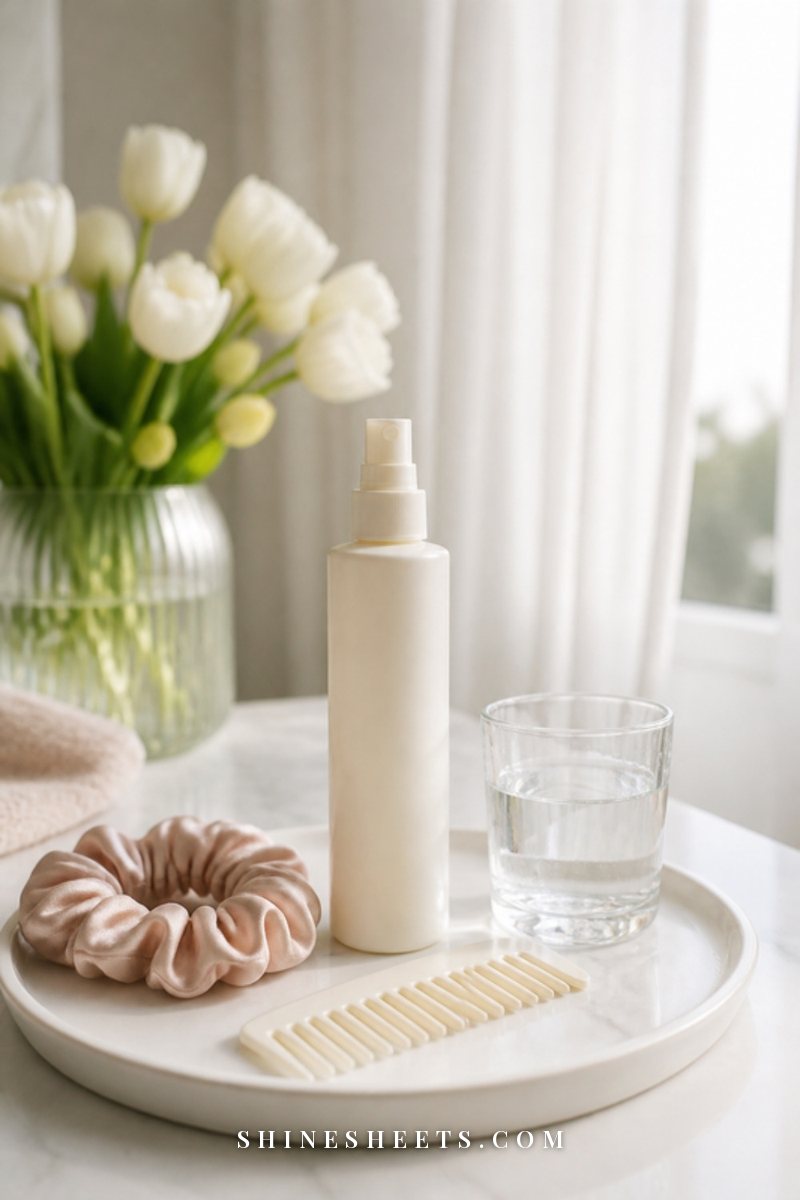
A good night routine makes mornings so much easier. Here's how to wake your hair up gently:
- Take your hair down slowly. Remove the scrunchie or untwist the braid gently, and let your hair fall naturally.
- Shake it out at the roots with your fingertips to bring back a bit of volume.
- Mist lightly if needed. A little water or leave-in spray brings back waves and curls and smooths flyaways.
- Detangle gently with your fingers or a wide-tooth comb, starting at the ends.
- Add a tiny drop of oil to any ends that feel dry.
- Use dry shampoo at the roots if you want to stretch your wash day another day.
On mask or oil nights, simply rinse and wash as usual in the morning, then enjoy how soft your hair feels.
Common Overnight Hair Mistakes
A few small habits can undo all your good work. Watch out for these:
- Tight ponytails or buns at night. They pull at the hairline and create breakage at the same spot over and over.
- Too much oil or product. It ends up on your pillow and skin instead of in your hair.
- Sleeping on wet hair. It's more fragile and tangles easily.
- Rough cotton pillowcases. They create friction that leads to frizz and tangles.
- Using an overnight mask every night. Too much richness can leave hair limp and heavy.
- Forgetting to wash your pillowcase. Oils, products and skincare build up. Change it at least once a week, more often if you use hair oil.
- Brushing aggressively in the morning. Be just as gentle in the morning as you were at night.
A Simple Week of Overnight Hair Care
You don't need to do everything every night. Here's a gentle rhythm that works for most hair:
- Every night: brush or finger-detangle, a little moisture on the ends, a soft scrunchie, silk or satin surface.
- Once a week: an overnight mask or oil treatment, the night before a wash day.
- Once a week: change your pillowcase and wash your scrunchies and bonnet.
- Every few months: replace hair ties that have lost their softness, and clean your brushes.
Pair it with the rest of your evening routine, like tea, skincare and a few pages of journaling, and it becomes a sweet little ritual rather than another task.
Final Thoughts
Overnight hair care is one of the gentlest, easiest things you can do for your hair. You're asleep anyway, so you might as well let those hours soften and protect your hair.
Start with the simplest swaps, a silk pillowcase and a soft scrunchie, then add a drop of oil or a weekly mask when you're ready. Within a couple of weeks, you'll wake up to smoother, softer hair that's so much easier to love.