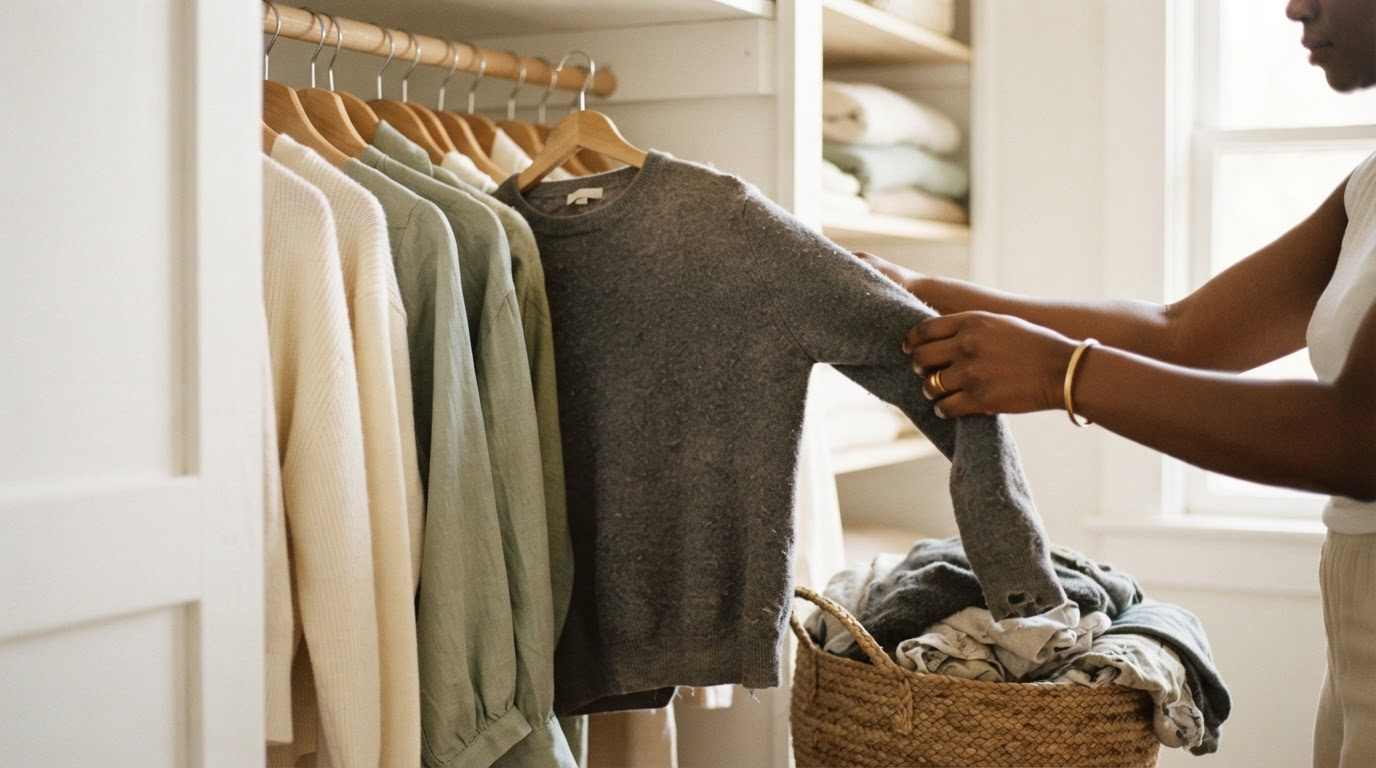
There's a very specific kind of heartbreak that happens at the laundry basket. You pull out the soft cream sweater you bought just a few months ago, and it's suddenly fuzzy, a little smaller and somehow sad looking. Or your favorite white tee has gone quietly gray. Or your black jeans have faded into a color I can only describe as "tired charcoal."
For a long time I assumed clothes just wore out, and that was that. Then I started paying attention to what actually happened to them between wearing and folding, and it turns out most of the damage isn't from wearing at all. It's from too much heat, too much friction, too much detergent and too little time spent reading that tiny label stitched into the side seam.
So this is the guide I wish I'd had years ago. You'll find 20 laundry tips that keep clothes looking new for longer, a care label decoder that finally explains those mysterious little symbols, and a sort-wash-dry cheat card for the four things that cause the most laundry drama: sweaters, delicates, whites and jeans. Nothing fussy, nothing expensive, just small changes that add up to a wardrobe that stays soft, bright and shaped like it did on day one.
Why Clothes Start Looking Old So Fast
Before the tips, it helps to know what you're fighting. Almost every faded, pilled or shrunken piece of clothing comes down to one of these five things:
- Heat. Hot water and high dryer settings shrink natural fibers, set stains and break down elastic. It's the number one culprit.
- Friction. Clothes rubbing against each other (and against zippers, buttons and the drum) cause pilling, snags and that worn, fuzzy surface.
- Too much detergent. Extra soap doesn't rinse out fully. It leaves a dull film that makes whites look gray and colors look flat, and it can make fabric feel stiff.
- Overloading. A packed machine can't move clothes around, so they don't get properly clean or rinsed, and they come out more wrinkled.
- Skipping the label. Wool, silk, rayon and some blends simply can't handle a regular warm cycle, no matter how sturdy they look.
The good news is that every single one of these is fixable with habits, not money. Here's how.
20 Laundry Tips To Keep Clothes Looking New
1. Read the Care Label Before the First Wash
I know. Nobody reads the label. But the first wash is where a lot of pieces get ruined, especially sweaters and anything with rayon or viscose. Before a new piece goes into the basket, take ten seconds to check the symbols. If you're not sure what they mean, the care label decoder further down in this article covers the common ones. A good rule: if a label says "dry clean," it usually means dry clean is safest. If it says "dry clean only," believe it.
2. Sort by Color and by Fabric Weight
Most of us sort by color (lights, darks, brights), which is a great start. The step people skip is sorting by weight. Heavy towels and jeans tumbling with a thin blouse act like sandpaper on the lighter fabric. Try four simple piles: whites, darks, lights and brights, and heavy stuff (towels, jeans, sweatshirts). If you only have enough for two loads, split by weight first, then color.
3. Turn Clothes Inside Out
This one tiny habit protects the "public" side of your clothes. Friction and fading happen mostly on the outside surface, so flipping garments inside out means the inside takes the wear instead. Do it for jeans, dark tees, anything printed or embellished, knitwear and leggings. It takes about thirty seconds per load and makes a visible difference within a few months.
4. Zip, Button and Empty Every Pocket
Open zippers have tiny metal teeth that snag knits and lace. Undone buttons stretch their holes and can tear off. And one forgotten tissue can cover an entire load in white fluff (we've all been there). Before washing: close zippers, fasten hooks on bras, unbutton shirts (buttons are actually happier unbuttoned so the holes don't stretch), and check every pocket.
5. Use Mesh Bags for Delicates
Mesh bags are the easiest upgrade on this list. They keep bras, tights, lingerie, silky camis and fine knits from twisting, stretching and getting caught on other clothes. Look for a set of mesh laundry bags in a few sizes with fine mesh and a zipper that tucks under a little fabric flap so it can't snag. Use a small one for bras (hooks fastened), a medium one for tights and underwear and a large flat one for a single sweater or blouse.
6. Use Less Detergent Than You Think
The cap on most detergent bottles is far bigger than the amount you actually need, especially in a modern high-efficiency machine. Too much soap leaves residue that dulls colors and traps odors. Start by using about half the line marked on the cap for a normal load, then adjust up only if clothes don't come out clean. If your clothes feel stiff or slightly slippery after washing, that's usually leftover detergent, not dirt.
7. Wash Cold Most of the Time
Cold water is kinder to almost everything: it prevents shrinking, keeps dark colors dark and doesn't set protein stains like sweat or makeup. Modern detergents are designed to work well in cool water. I'd keep warm or hot water for towels, bedding and very dirty items only. For everyday clothes, cold or 30°C (86°F) is plenty.
8. Don't Overload the Machine
Clothes need room to move through the water. A simple test: after loading, you should be able to fit your hand sideways on top of the clothes in the drum. If you have to push things down to close the door, take some out. You'll get cleaner clothes, fewer wrinkles and less wear on the machine too.
9. Choose the Gentle Cycle More Often
The regular cycle spins hard and long, which is great for jeans and towels and a bit much for everything else. For tees, blouses, leggings and anything soft, try the gentle or delicate cycle with a lower spin speed. Clothes come out slightly wetter, but they keep their shape far better and need less ironing.
10. Treat Stains Within the Day
The fresher the stain, the easier the fix. The general formula that works for most everyday spills is simple: blot, rinse cold from the back, treat, wait, wash. Blot (don't rub) to lift what you can, rinse with cold water from the back of the fabric to push the stain out, dab on a little stain remover or a drop of gentle detergent, let it sit for ten to fifteen minutes and then wash as usual. The most important part: check the spot before it goes in the dryer. Heat sets stains, sometimes permanently.
11. Wash Jeans Less (and Wash Them Smarter)
Denim doesn't need washing after every wear. Every few wears is plenty unless they're visibly dirty. In between, air them out over a chair overnight. When you do wash them, turn them inside out, zip and button them, wash cold with similar colors and skip the dryer if you can, or tumble on low just until they're slightly damp and hang to finish. Your dark denim will stay dark for so much longer.
12. Keep Whites Truly White
Whites go gray when they're washed with colors, washed with too much detergent or dried in high heat. Wash them only with other whites, use a detergent with enzymes for body oils, and once a month or so give them a soak in warm water with an oxygen-based whitener (follow the package directions and check the label first). Drying whites outside in the sun is an old trick that still works beautifully. This also goes for white bedding, if you're after that crisp hotel-style bed at home.
13. Skip Fabric Softener on Towels and Activewear
Fabric softener coats fibers with a thin waxy layer. That's lovely on some fabrics, but on towels it makes them less absorbent, and on stretchy workout clothes it traps sweat smells and can break down the elastic over time. Wash activewear cold, inside out, with a little less detergent and let it air dry. If your towels already feel crunchy or smell musty, my guide on how to deep clean towels walks you through resetting them.
14. Hand Wash Your Most Precious Pieces
Hand washing sounds like a chore, but it takes about ten minutes and saves silk, fine wool, cashmere and lace. Here's the simple method:
- Fill a clean sink or basin with cool to lukewarm water and a small squeeze of gentle or wool wash.
- Submerge the piece and gently press it under the water for two to three minutes. No scrubbing, no twisting.
- Let it soak for about five minutes.
- Drain, refill with clean cool water and press again to rinse. Repeat until the water runs clear.
- Press the water out with your palms, then roll the piece in a clean towel like a burrito and press to absorb the rest.
Never wring. Wringing stretches fibers and that's how a sweater ends up longer on one side.
15. Dry Sweaters Flat
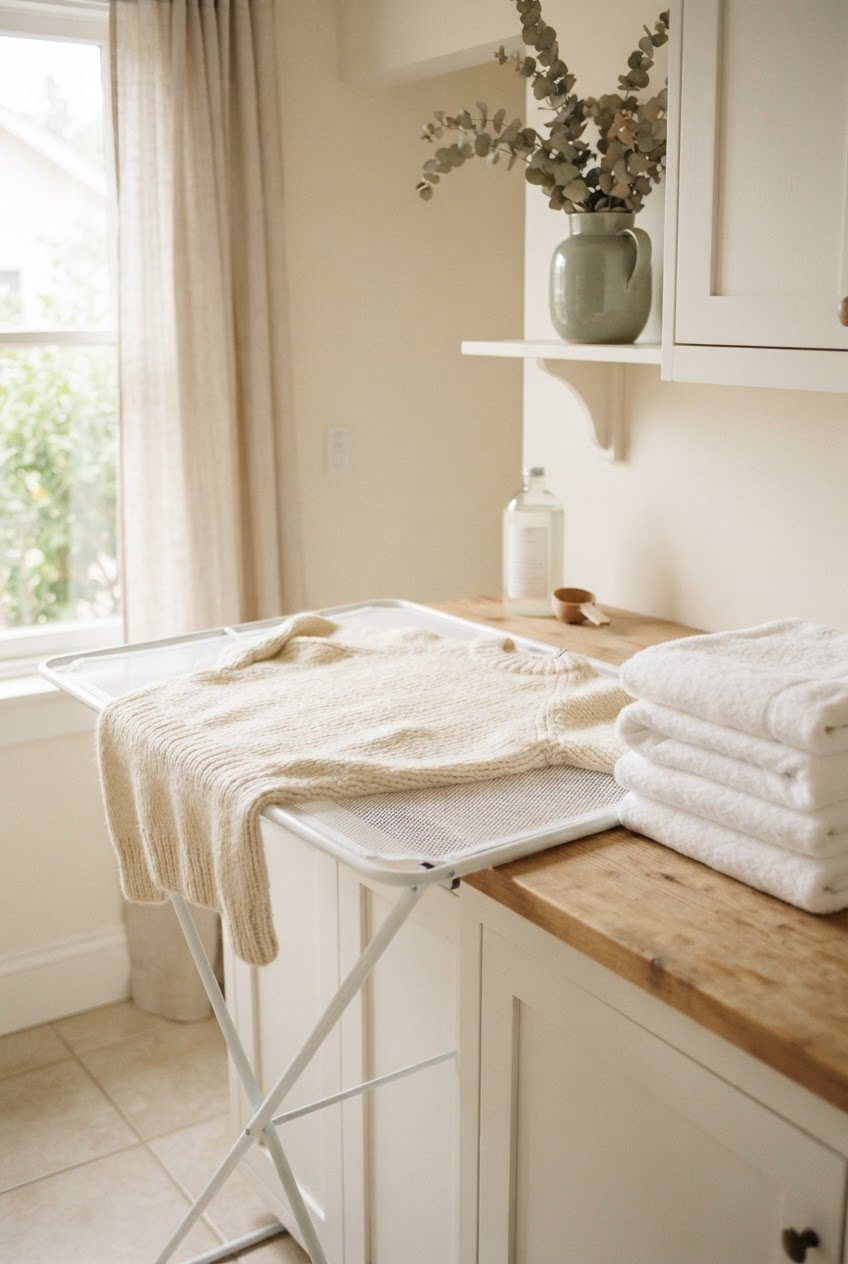
Hanging a wet sweater lets the weight of the water pull it longer and stretch out the shoulders. Instead, lay it flat on a towel or a rack, gently reshape it with your hands (match the sleeves, square the hem) and let it dry away from direct heat. A white foldable drying rack with a flat mesh top is ideal for knits, and it can hold delicates and leggings on the bars below. Flip the sweater once halfway through so both sides dry evenly. It's worth it for those soft knits you reach for in your winter outfits again and again.
16. Turn Down the Dryer Heat
The dryer is where most shrinking and fading happens. Use low or medium heat for almost everything, and keep high heat for towels and sheets only. Take items out while they're still very slightly damp and let them finish on a hanger or rack. If you'd like to cut drying time and skip dryer sheets, wool dryer balls bounce around the drum and help separate clothes so warm air moves more freely. Look for ones made from tightly felted wool that won't shed. A couple of drops of a lavender essential oil on them gives a soft scent (let the oil soak in for a few minutes before tossing them in).
17. Take Clothes Out as Soon as the Cycle Ends
Wet clothes sitting in the drum for hours start to smell musty and set into deep wrinkles. Dry clothes left in a warm dryer wrinkle too. Set a phone timer for the end of every cycle and move things straight away. Give each piece a sharp shake before hanging or drying; that one snap of the wrist removes so many wrinkles you'll iron far less.
18. De-Pill Sweaters Instead of Giving Up on Them
Pills are tiny balls of tangled fibers, and almost every knit gets them eventually, especially under the arms and on the sides where your arms rub. They don't mean the sweater is ruined. A fabric shaver glides over the surface and trims the pills off in a few minutes. Lay the sweater flat, hold the fabric taut and use light, circular movements without pressing down. Look for one with an adjustable height guard so you can go gently on fine knits. Do it every few weeks and your sweaters will look new for seasons.
19. Hang the Right Things and Fold the Rest
Hanging is perfect for blouses, dresses, shirts and trousers. It's terrible for knits, which stretch on hangers and get those little shoulder bumps. Fold sweaters, cardigans and heavy knits, and hang everything woven. For silky blouses and slippery dresses, slim velvet hangers in blush pink keep things from sliding off and leave no marks. Bonus: matching hangers make your closet look calmer instantly. If your closet needs a bigger reset, here's how to organize a closet in one afternoon.
20. Give Laundry a Weekly Rhythm
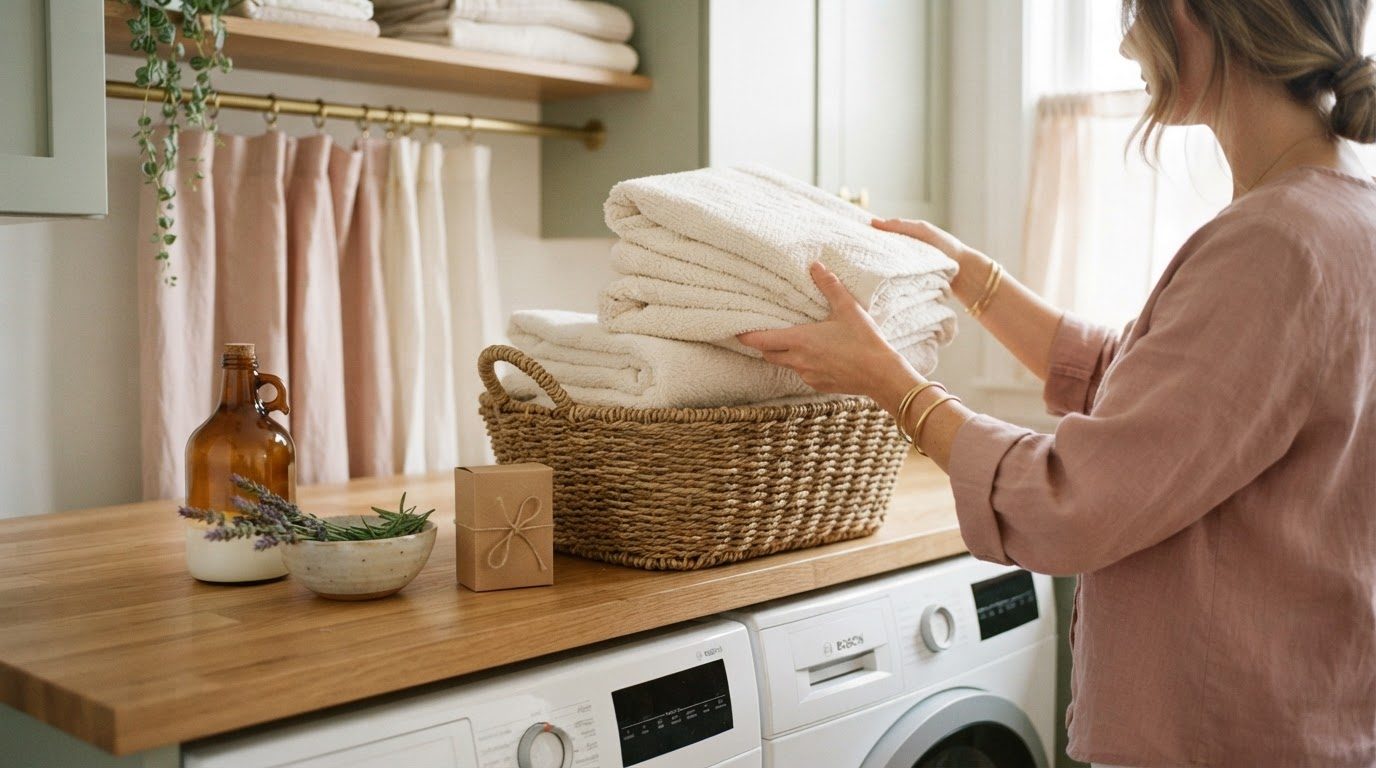
Laundry feels endless when it piles up into one huge Sunday mountain. It feels light when it has a rhythm. Try something like this: whites on Monday, darks on Wednesday, towels and bedding on Saturday, with delicates done by hand whenever the mesh bag is full. A three-section laundry hamper in beige lets you sort as you undress, so wash day is just "grab a section, press start." It's one of those tiny habits for a neat home that takes weight off your whole week.
Care Label Decoder
Care labels use a small set of symbols that combine in different ways. Once you know the five basic shapes, everything else is just a variation. Screenshot this and keep it handy for the first few weeks.
- Tub of water = washing
- Triangle = bleaching
- Square = drying
- Iron = ironing
- Circle = professional cleaning (dry cleaning)
An X through any symbol means "don't." Dots mean heat: one dot is low, two is medium, three is high. Lines under a symbol mean gentleness: one line is a gentler cycle, two lines is delicate.
| Symbol | What it means | What to do |
|---|---|---|
| Tub with one dot (or 30) | Wash cold, about 30°C / 86°F | Cold cycle, perfect for most everyday clothes |
| Tub with two dots (or 40) | Wash warm, about 40°C / 104°F | Warm cycle is fine, but cold is usually kinder |
| Tub with one line underneath | Permanent press / gentler cycle | Choose a gentler cycle with a lower spin |
| Tub with two lines underneath | Delicate cycle | Delicate cycle, mesh bag, low spin |
| Tub with a hand | Hand wash only | Hand wash in cool water, press, don't wring |
| Tub with an X | Do not wash | Usually dry clean only; spot clean between |
| Empty triangle | Any bleach is okay | Bleach allowed when needed, diluted, following the bottle |
| Triangle with two diagonal lines | Non-chlorine bleach only | Use an oxygen-based whitener, never chlorine bleach |
| Triangle with an X | Do not bleach | No bleach of any kind |
| Square with a circle and one dot | Tumble dry low | Dryer on low heat, remove slightly damp |
| Square with a circle and an X | Do not tumble dry | Air dry only |
| Square with a horizontal line | Dry flat | Lay flat on a towel or mesh rack, reshape |
| Square with a curved line at the top | Line dry | Hang on a line or rack |
| Iron with one dot | Iron on low | Low heat (silk, synthetics), press through a cloth |
| Iron with three dots | Iron on high | High heat is okay (cotton, linen) |
| Circle with a letter (P, F or A) | Dry clean | Take it to a dry cleaner |
The Sort-Wash-Dry Cheat Card
These are the four categories that cause the most laundry mistakes. Here's exactly how to handle each one, from basket to closet.
| Item | Sort | Wash | Dry | Keep it new |
|---|---|---|---|---|
| Sweaters | On their own or with other knits, inside out, in a large mesh bag | Hand wash or wool/delicate cycle, cold, wool wash, low spin | Roll in a towel, then flat on a rack, reshaped | Fold, never hang; de-pill every few weeks |
| Delicates | Bras, lingerie, silk and lace in small mesh bags, hooks fastened | Hand wash or delicate cycle, cold, gentle detergent | Air dry only; hang bras by the center, not the straps | Rotate bras so each one rests a day between wears |
| Whites | Only with whites; no "almost white" pieces | Cold or warm (check label), enzyme detergent, less soap | Low to medium heat or line dry in sunlight | Monthly oxygen whitener soak if the label allows |
| Jeans | With darks or other denim, inside out, zipped and buttoned | Every few wears, cold, regular or gentle cycle | Hang to dry or low heat until slightly damp | Air out between wears; spot clean small marks |
A Quick Laundry Safety Note
Laundry products are everyday things, but a few of them need respect. The big one: never mix chlorine bleach with ammonia or with vinegar (or with other cleaners, for that matter). Combining them can release harmful gases. Use one product at a time, rinse well between products and keep the room ventilated when you use bleach.
A few other small habits keep wash day safe: keep detergent pods and bleach up high and away from children and pets, clean the dryer's lint filter after every single load (lint build-up is a fire risk) and leave the washer door open between loads so it can dry out and stay fresh.
Final Thoughts
Keeping clothes looking new isn't about owning expensive pieces or spending your whole weekend at the washer. It's about a few gentle habits: cooler water, less soap, a little less heat and a lot more care with the things you love most.
Start with just two or three tips this week. Flip your jeans inside out, lay one sweater flat to dry, put your bras in a mesh bag. Then watch how much longer your favorite pieces stay soft, bright and exactly the shape they were when you first fell for them. Your wardrobe deserves that kind of care, and so do you.