Going to bed with wet hair now and then is not the hair disaster the internet sometimes makes it sound like. Your hair won't fall out, and one damp night won't ruin a good routine. What it can do is make your hair a little more fragile for a few hours, and a few gentle habits take care of most of that.
The real difference comes down to how wet your hair is, how you protect it and how often it happens. Hair that is dripping and twisted into a tight bun on a cotton pillowcase has a rougher night than hair that is mostly dry, loosely braided and resting on silk.
This guide answers the big question, is sleeping with wet hair bad, in a calm and honest way. You'll find why it happens, what can go wrong (gently), when it is mostly fine, a quick table by hair type, six ways to do it more safely and how to refresh your hair in the morning. If you only change one thing tonight, keep a soft white microfiber hair towel wrap by the shower, because it does a surprising amount of the work for you.
Is Sleeping With Wet Hair Bad?
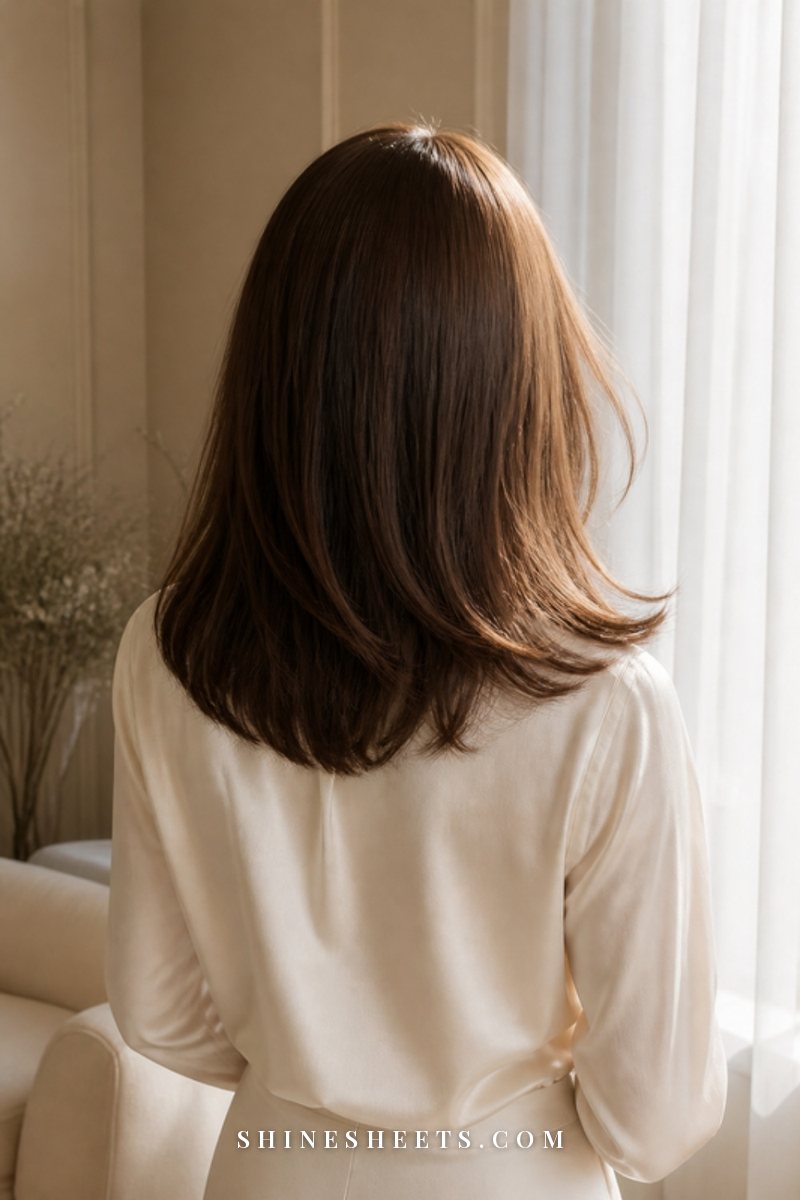
The short answer: it's not ideal every night, but it is not dangerous either. Occasionally sleeping with damp hair, especially hair that has been blotted and is mostly dry, is fine for most people.
The longer answer is about friction. Hair is at its weakest when it is wet, and a night of tossing and turning means hours of rubbing against your pillow. That can lead to more tangles, frizz and breakage over time, especially for fine, color-treated or already fragile hair.
A helpful way to think about it: one damp night is like one day of skipping your heat protectant. It won't undo anything on its own, but if it becomes a nightly habit with no protection at all, the small wear adds up. The good news is that the fixes are quick, cheap and easy to fit into a sleepy bedtime. Most of them take less time than choosing a show to fall asleep to.
It also helps to separate wet from damp. Hair that is still dripping is the most fragile and leaves the wettest pillow. Hair that has been blotted, has dry roots and just feels cool and slightly damp at the ends is a completely different story, and that is the version this guide helps you reach.
Why So Many of Us Go to Bed With Wet Hair

If you wash your hair at night, you are in very good company. Evening showers are one of the nicest parts of the day. They wash off the day, help you unwind, and (for me, with candles lit and tea waiting afterward) they are a big part of how my anxious brain switches off.
Common reasons people end up sleeping with wet hair:
- Mornings are too rushed for a full wash and dry.
- You want to avoid heat styling as much as possible.
- Your hair takes hours to air-dry, so it simply isn't done by bedtime.
- You work out in the evening and shower late.
- You are just too tired to stand there with a hair dryer.
All of these are completely reasonable. The goal isn't to stop washing at night. It is to give your hair a softer landing.
What Can Happen When You Sleep With Wet Hair
None of these are emergencies. They are small things that can add up if wet-hair nights are an everyday habit and your hair gets no protection.
Wet Hair Stretches and Breaks More Easily
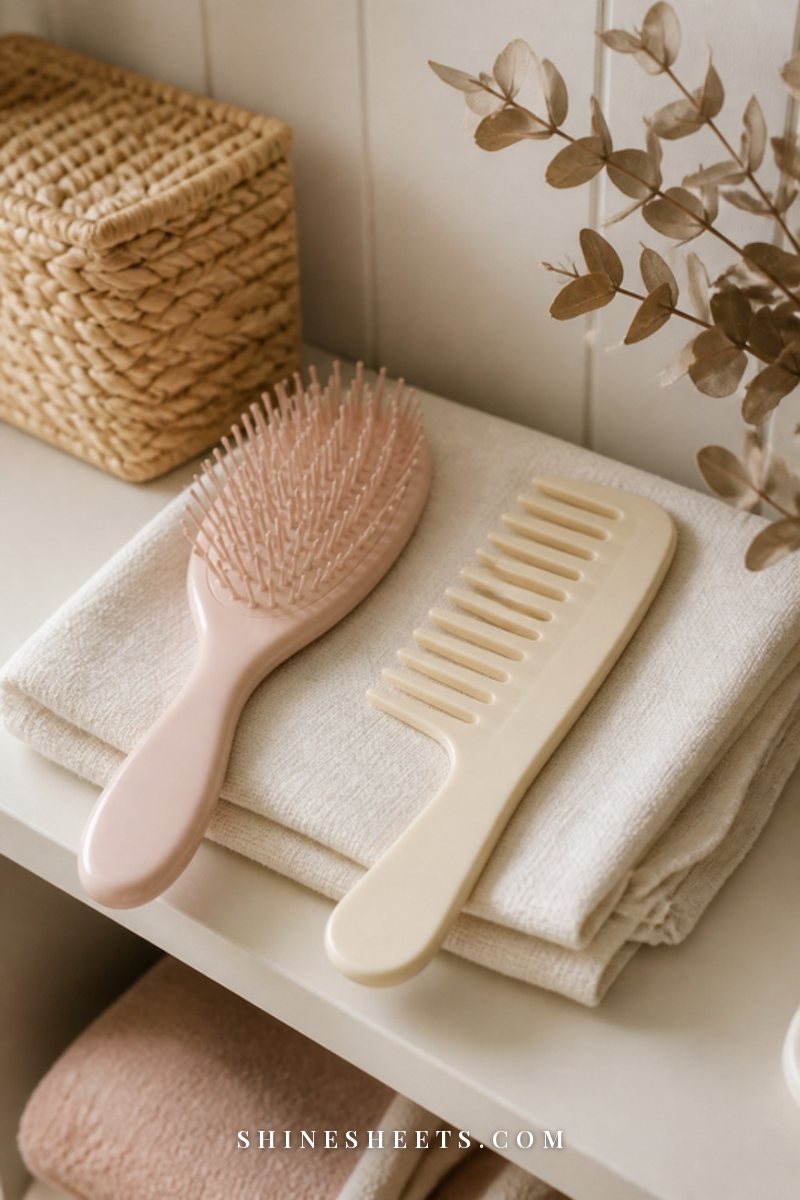
When hair soaks up water, it swells and becomes more elastic. That stretchiness makes it easier to snap when it is pulled, pressed or rubbed, and a pillow does all three. Over time, this can show up as short broken pieces around your crown or ends that look thinner. My guide to what causes hair breakage and how to stop it goes deeper into the signs.
Tangles and Frizz
Damp hair that moves around all night tends to knot at the nape and dry in odd, bent shapes. The outer layer of each strand (the cuticle) gets roughed up by friction, which shows up as frizz in the morning. Wavy and curly hair often notice this most, because the pattern can dry crushed on one side.
A Damp Pillow
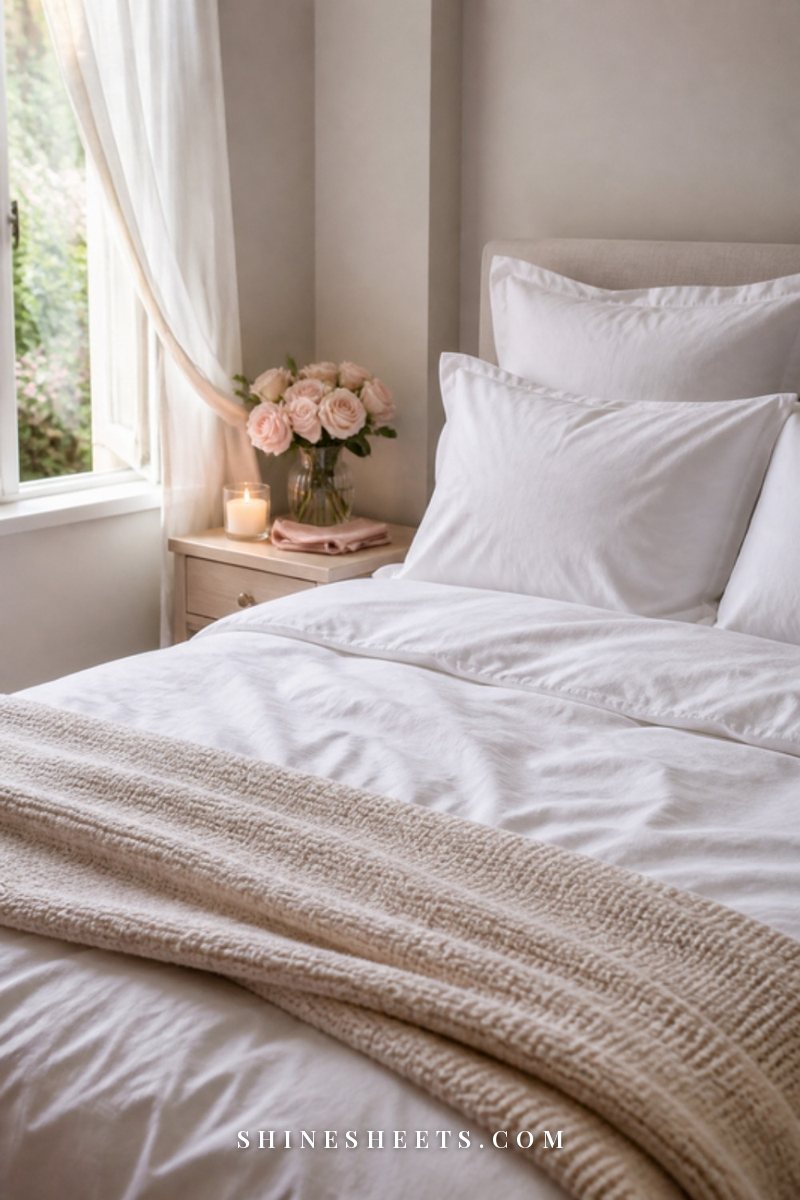
A wet head means a wet pillowcase, and a damp pillow simply doesn't feel or smell as fresh. It can also leave you feeling chilly. Changing your pillowcase every few days and letting your pillow air out in the morning keeps things feeling clean.
A Scalp That Stays Damp for Hours
When your roots stay wet all night under a warm pillow, your scalp doesn't get much air. For some people that leaves the scalp feeling itchy, oily sooner or just less fresh the next day, and it may be more noticeable if you are already prone to flakes. This is the main reason I always suggest drying your roots first, even if the rest stays damp.
When Sleeping With Damp Hair Is Mostly Fine
You can relax about it if most of these are true for you:
- It happens occasionally, not every single night.
- Your hair is mostly dry (roughly 70 to 80 percent) and just slightly damp to the touch.
- Your roots and scalp are dry.
- Your hair is loosely protected, not twisted tight or rubbing against rough cotton.
- Your scalp feels comfortable, with no ongoing itching or flaking.
If that sounds like you, you can let go of any guilt. A bit of dampness in the ends is not something to lose sleep over (literally).
Sleeping With Wet Hair by Hair Type
Different textures handle a damp night differently. Screenshot this table for a quick guide. If you are not sure which texture you have, my hair type chart from 1A to 4C can help you figure it out.
| Hair type | Okay to sleep damp? | How dry first | Best protection |
|---|---|---|---|
| Fine or straight | Occasionally | Roots fully dry, lengths at least 80% dry | Silk or satin pillowcase, hair loose or in a soft scrunchie |
| Thick or straight-to-wavy | Occasionally, if roots are dry | Roots fully dry, lengths mostly dry | Loose low bun or loose braid, satin scrunchie |
| Wavy | Yes, with care | Blot well, roots dry, lengths slightly damp | Loose braid or hair loosely gathered on top of the head, silk pillowcase |
| Curly | Yes, with care | Blot and let air-dry about an hour, roots dry | Satin bonnet or loosely gathered curls on top of the head |
| Coily | Yes, with care | Roots dry, lengths damp but not dripping | Satin bonnet, ends sealed with leave-in |
| Color-treated or bleached | Rarely | As dry as possible, roots fully dry | Leave-in on the ends, silk pillowcase, no ties |
| Prone to an itchy or flaky scalp | Rarely | Scalp and roots completely dry | Breathable silk pillowcase, change it every few days |
The pattern is simple: the more fragile your hair or the more sensitive your scalp, the drier you want your roots before bed.
6 Ways To Sleep With Wet Hair Safely
You don't need all six every night. Pick the two or three that fit your hair and your energy level, and you will already notice smoother mornings.
1. Blot With a Microfiber Towel

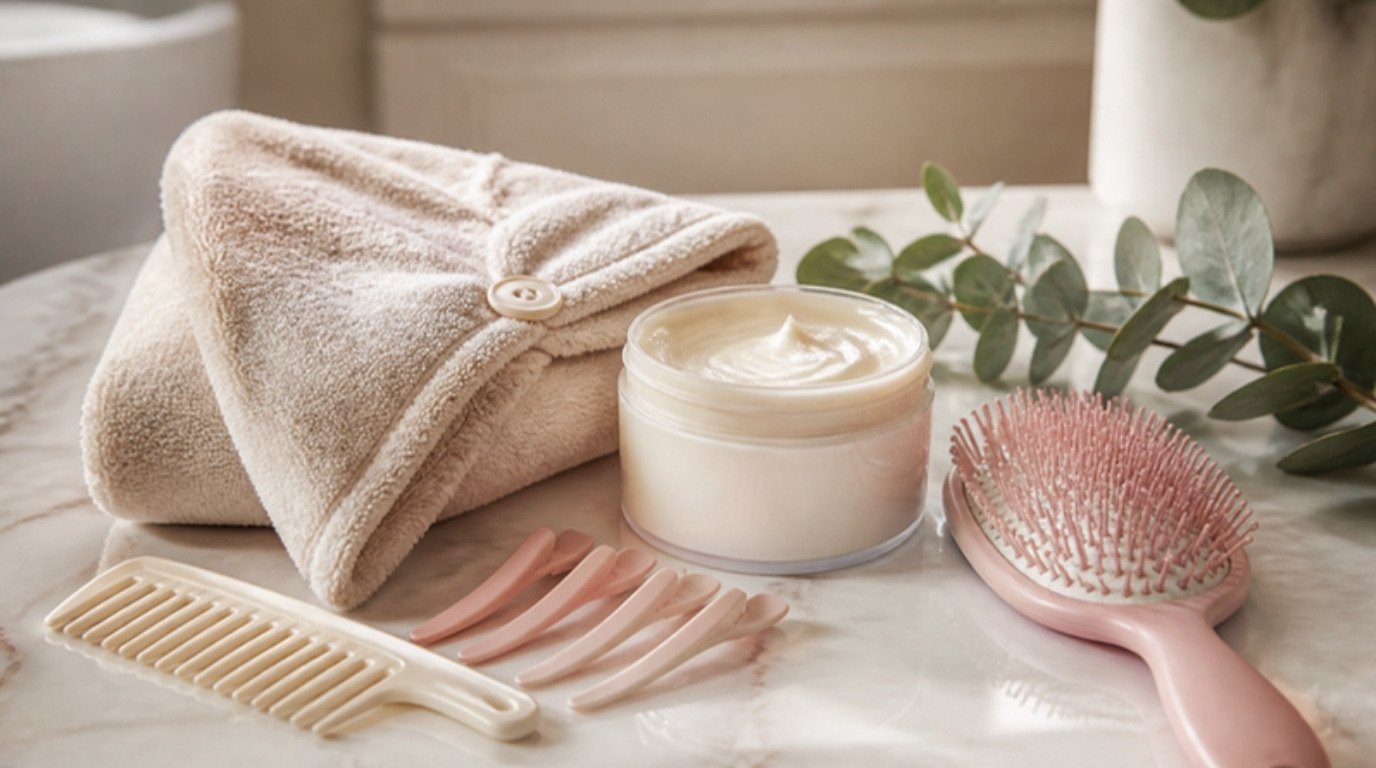
As soon as you step out of the shower, squeeze the water out gently with your hands, then wrap or press your hair in a microfiber towel for 10 to 15 minutes. Microfiber soaks up water faster than terry cloth and is much smoother, so it causes less friction. Press and squeeze, never rub back and forth. If you only do this, your hair will still go to bed noticeably drier.
2. Dry Your Roots First
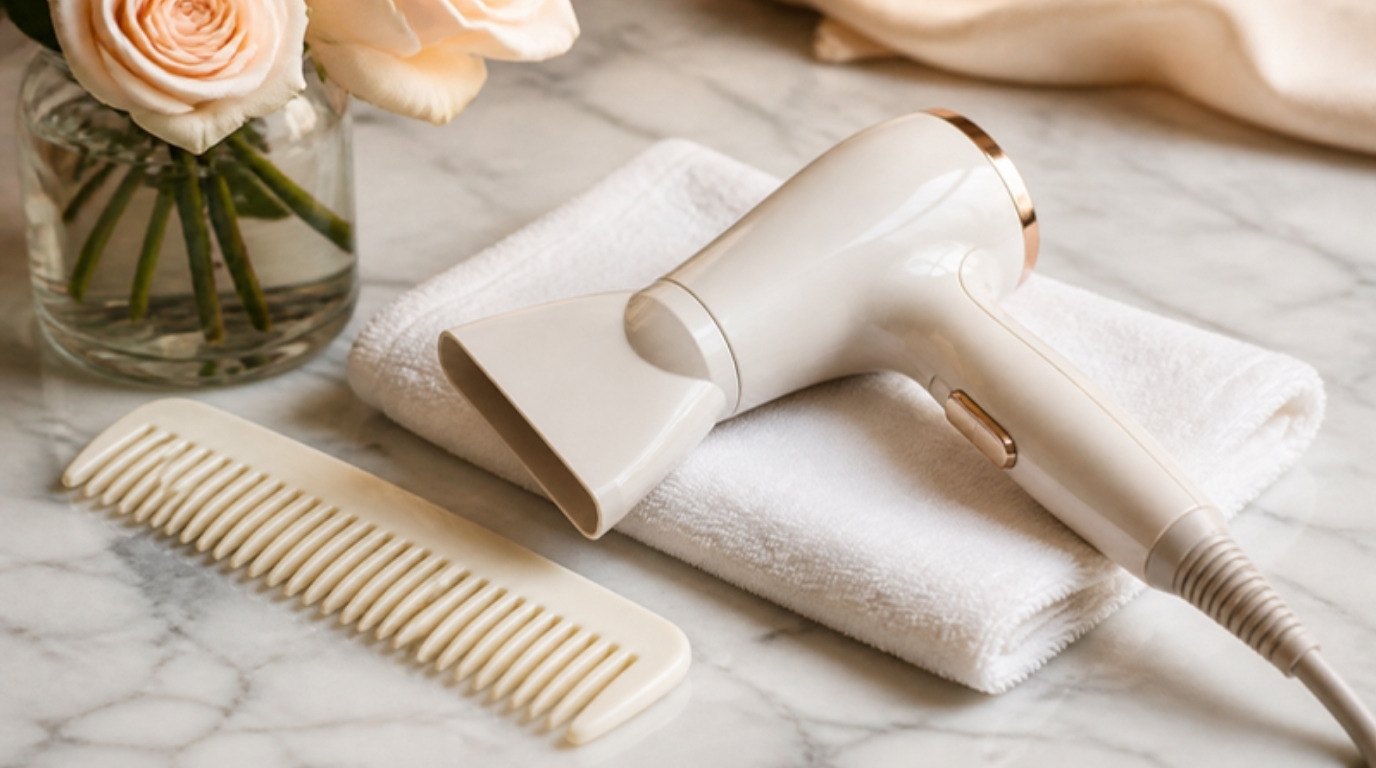
This is the one habit I would never skip. Use a hair dryer on a cool or low setting for 3 to 5 minutes, aiming only at the roots and scalp while lifting the hair with your fingers. Your scalp stays fresher, your hair dries faster overall and you avoid that cold, damp feeling on your pillow. My guide to drying your hair without damage has more tips on low-heat drying.
3. Apply a Leave-In Conditioner
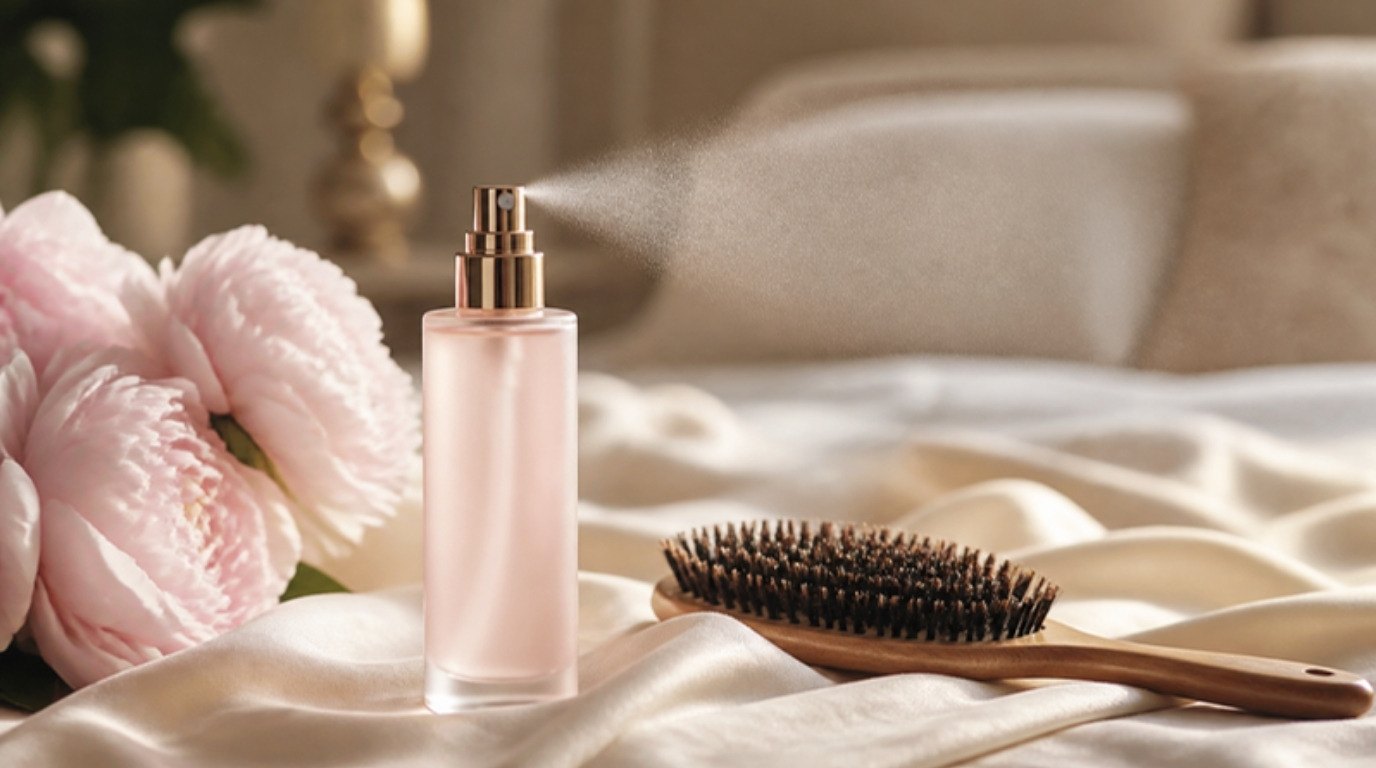
A light layer of leave-in on the mid-lengths and ends adds slip, so strands glide over each other instead of tangling. It also helps smooth the cuticle so friction does less harm. A lightweight leave-in conditioner spray is easy to mist over damp hair: start with 3 to 5 sprays, comb it through with a wide-tooth comb or your fingers, and add more only if your ends still feel rough. Patch test any new product first, especially if your scalp is sensitive.
4. Try a Loose Braid or a Loose Low Bun

Gathering your hair keeps it from rubbing against the pillow and knotting at the nape. One loose braid down your back or a loose low bun is enough. The key word is loose: you should be able to slip two fingers easily under the braid or bun. Tight styles pull on wet, stretchy hair and can leave dents and breakage. Curly and coily hair often prefers being gathered loosely on top of the head or tucked into a bonnet instead.
5. Sleep on a Silk or Satin Pillowcase

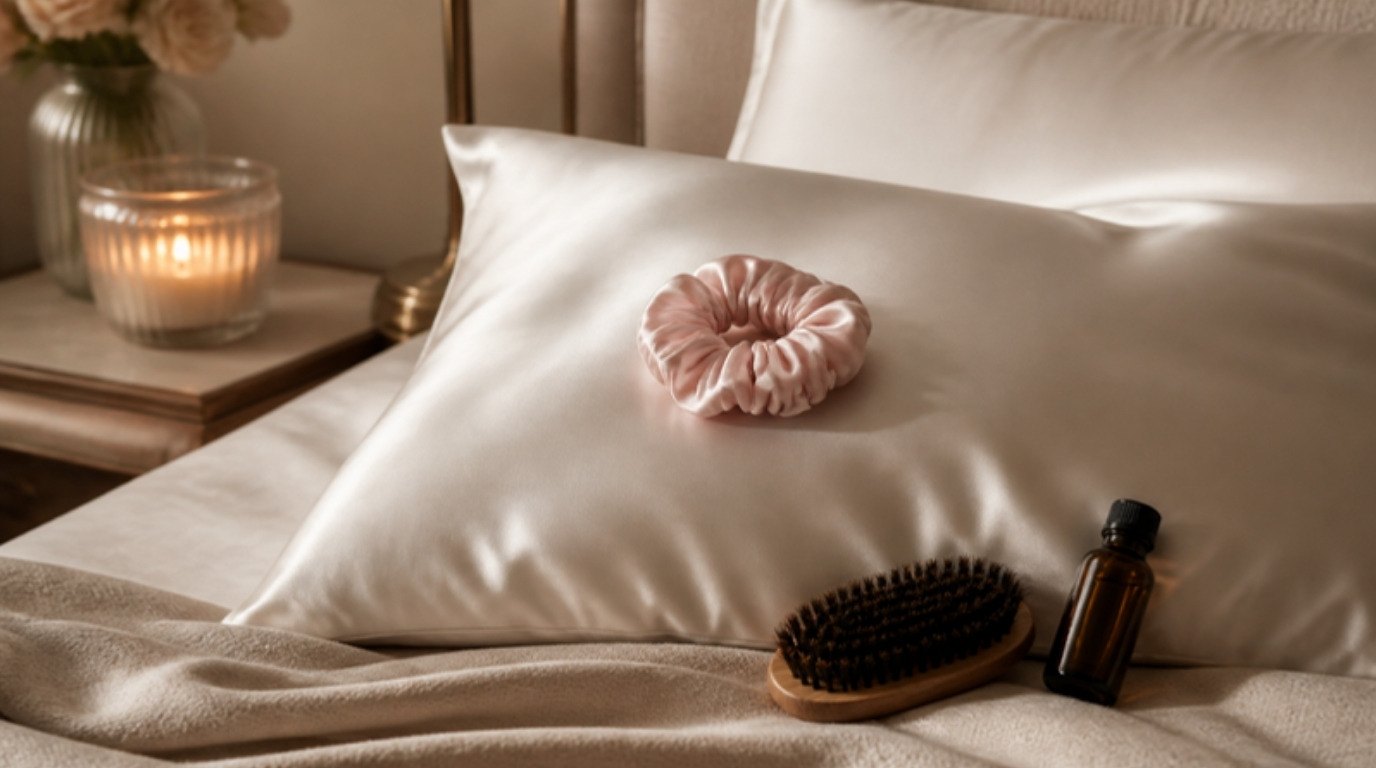
A smooth pillowcase lets your hair slide instead of catching, which means less frizz, fewer tangles and less breakage. Silk also doesn't soak up as much moisture as cotton. A blush pink silk pillowcase is a soft upgrade if you often sleep with damp hair. If you prefer to keep your favorite cotton bedding, an ivory satin hair bonnet gives you the same protection, and it is a lovely choice for curls and coils. For more on why the fabric matters, read my guide to silk pillowcase benefits for skin and hair.
6. Avoid Tight Hair Ties
Classic elastic hair ties grip wet hair hard and can snap strands as you move in your sleep. Choose soft fabric scrunchies instead, and keep them loose. A set of blush satin scrunchies is gentle on damp hair and won't leave sharp creases. Skip metal clips and claw clips for sleeping, since they press into your head and can catch on hair.
A Simple 15-Minute Wet-Hair Bedtime Routine
If you like a clear order, here is how the six habits fit together on a busy evening. Start it about 30 minutes before you want to be asleep:
- Minutes 0 to 2: Squeeze out water with your hands while you are still in the shower, then wrap your hair in a microfiber towel.
- Minutes 2 to 12: Leave the towel on while you do your skincare, brush your teeth or make your evening tea.
- Minutes 12 to 13: Remove the towel and mist leave-in over the mid-lengths and ends, then detangle gently from the ends up.
- Minutes 13 to 15: Dry your roots on a cool or low setting, lifting sections with your fingers.
- Right before bed: Gather your hair into a loose braid, a loose low bun or a bonnet, and lie down on your silk or satin pillowcase.
On nights when even this feels like too much, do only steps one and four. Blotting and drying the roots cover most of the benefit, and that is plenty.
Common Myths About Sleeping With Wet Hair
A lot of worry around this topic comes from old warnings that don't quite hold up. A few worth clearing up:
- "Wet hair at night makes you sick." Colds and flu are caused by viruses, not by a damp head. Feeling chilly is uncomfortable, but it doesn't make you ill.
- "Sleeping with wet hair makes your hair fall out." It doesn't affect the roots in that way. What it can do is add to breakage along the lengths, which is a different thing and much easier to prevent.
- "You should never go to bed with any dampness at all." Slightly damp ends on a protected head are fine for most people. Dry roots matter far more than bone-dry lengths.
Knowing the difference between a real downside and a scary rumor makes it much easier to choose what matters for your own hair and let the rest go.
Night Shower or Morning Shower?
If you are deciding when to wash, there is no single right answer. It depends on your hair, your schedule and what makes you feel good.
- A night wash suits you if your mornings are rushed, you love the wind-down feeling, your hair air-dries in an hour or two, or you want to skip heat styling most days.
- A morning wash suits you if your hair is very fine and goes flat overnight, your scalp tends to feel itchy when it stays damp, or your hair takes most of the night to dry.
Many people find a middle ground: washing a couple of hours before bed, so the hair has time to air-dry partly before the six habits above take care of the rest. Even an hour of air-drying on the sofa with a cup of tea makes a difference.
How To Refresh Your Hair in the Morning
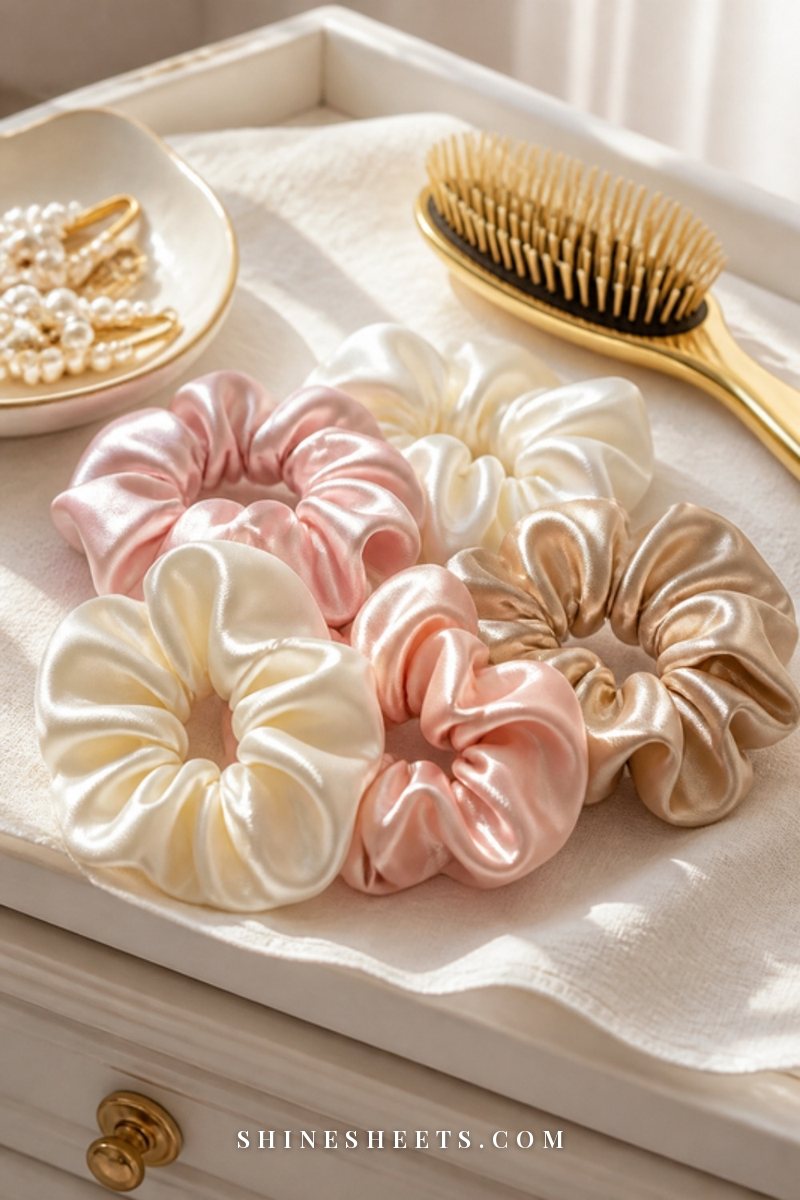
Even with the best habits, damp-hair nights can leave a few bends and flat spots. A quick 5-minute refresh fixes most of it:
- Undo your braid or bun gently. Use your fingers first and work out any knots from the ends up.
- Mist any odd kinks. A light spray of water on the bent sections lets them relax and reset.
- Smooth with a tiny bit of leave-in or oil. Rub one or two drops between your palms and glide over the ends to calm frizz.
- Lift flat roots. Flip your head forward and dry the roots on a cool setting for a minute.
- Air out your pillow. Fold back your duvet and let the pillowcase dry before you make the bed.
Wavy and curly hair can be refreshed by misting each section and scrunching gently, rather than brushing. For a full night-to-morning routine, my guide to overnight hair care for softer hair pulls it all together.
When To See a Dermatologist
Most people can sleep with damp hair now and then without any trouble. It is worth checking in with a dermatologist if:
- Your scalp itches, flakes or feels sore for more than a couple of weeks, even after you start drying your roots.
- You notice red patches, bumps or a scalp that feels tender to touch.
- You see more hair shedding or breakage than usual and can't tell why.
A dermatologist can look at your scalp and help you find the real cause, which is much kinder to yourself than guessing. In the meantime, a simple weekly scalp care routine is a gentle way to keep things fresh.
Final Thoughts
Sleeping with wet hair is not something to feel guilty about. Your evening shower is allowed to stay a calm ritual, and your hair can come out of it just fine.
Blot it, dry the roots, add a little slip, keep everything loose and let silk or satin do the rest. A few small habits are all it takes for your hair to wake up soft, smooth and ready for the day.