A linen closet rarely gets messy because you fold badly. It gets messy because it holds too much. When every shelf is packed with sheets that don't fit any bed you own and towels you stopped liking years ago, even the neatest stack slides over the moment you pull one thing out.
The fix is pleasantly simple: edit first, then fold, then group, then label. In that order. Skip the editing and you're just organizing clutter into prettier piles (I've done it, and it lasts about a week).
This guide walks you through linen closet organization from start to finish: a table that shows how many sheets and towels you actually need, step-by-step folding for fitted sheets and towels, how to zone your shelves by room and size, and the small habits that keep it neat for good. Set aside one afternoon, put on something calm, and let's make this the closet you actually like opening.
Why Linen Closets Get Messy So Fast
Before you buy a single basket, it helps to know what's working against you. Most linen closet chaos comes from four things:
- Too many "just in case" pieces. The twin sheets from a bed that left years ago, the beach towels with frayed edges, the stack of mismatched pillowcases. They take up the best shelf space and hide what you actually use.
- Loose sheet sets. A fitted sheet on one shelf, its flat sheet on another and the pillowcases who-knows-where. You end up pulling everything out to make one bed.
- Different folds. When towels are folded three different ways, the stacks lean, collapse and never look tidy no matter how often you refold them.
- No home for anything. If things don't have a set spot, they get put back wherever there's a gap.
Every step below solves one of these. You don't need a big closet, and you don't need matching everything. You need fewer pieces, one folding method and a clear spot for each category.
Step 1: Edit First – How Many Sets You Actually Need
Take everything out. Yes, everything. Put it on a bed or a clean floor and sort it into three piles: keep, donate, and rags (worn-out towels make wonderful cleaning cloths, and many animal shelters gladly take old towels and blankets).
Then use the table below to decide how much to keep. These numbers are generous but realistic: one set in use, one in the wash, and a little extra where it makes life easier.
| Item | How many you need | Why this number works |
|---|---|---|
| Sheet sets | 2 per bed (3 if you change sheets twice a week) | One on the bed, one clean and ready. More than that usually sits untouched. |
| Pillowcases | 2–3 per pillow | Pillowcases get changed more often than sheets, so a spare helps. |
| Bath towels | 2 per person | One in use, one in the wash. |
| Hand towels | 2–3 per bathroom | They get damp quickly and are worth swapping mid-week. |
| Washcloths | 4–6 per person | Small, cheap to wash and easy to run out of. |
| Bath mats | 2 per bathroom | One down, one in the wash. |
| Beach or pool towels | 1 per person | Seasonal, so they go on the highest shelf. |
| Guest sets | 1 sheet set per guest bed + 2 bath towels, 1 hand towel and 1 washcloth per guest | Enough for a weekend visit without borrowing from your own stash. |
| Extra blankets | 1 per bed + 1 throw for the sofa | Covers chilly nights and guests who run cold. |
| Duvet covers | 2 per bed | Same logic as sheets: one on, one ready. |
Screenshot the table and keep it on your phone. It's handy the next time a sale tempts you to buy a fifth set of sheets.
When you're deciding what stays, keep the pieces you reach for first. If you have a set that feels like a hotel every time you use it, that one stays (and if you want your bed to look that way too, my guide on how to make your bed look like a hotel bed walks through it step by step). Let go of anything scratchy, stained, pilled or in a size you no longer own.
Step 2: Wash, Check and Freshen Before Anything Goes Back
Once you've edited, give everything a quick check before it goes back on the shelves. Linens that sit folded for months can pick up a stale smell, and stains set the longer they wait.
- Wash anything that smells musty and dry it completely. Even slightly damp linens folded away can grow mildew.
- Refresh tired towels. If your towels feel stiff or don't absorb well anymore, it's often buildup from detergent and fabric softener. My guide on how to deep clean towels shows how to bring them back.
- Wipe the shelves with a damp cloth and let them dry with the closet door open for an hour.
- Check for moisture. If the closet shares a wall with a bathroom, keep the door open after showers when you can, so the air doesn't stay humid.
For washing temperatures, softener-free tricks and keeping whites bright, my laundry tips cover the details so your newly organized linens stay soft for longer.
Step 3: Fold Everything the Same Way
This is the step that makes the biggest visual difference. Matching folds mean matching stacks, and matching stacks look calm even when the closet is small. Choose one fold per category and stick with it.
How To Fold a Fitted Sheet in 8 Steps
The fitted sheet has a reputation, but it's really just a rectangle with elastic corners. Here's the method that works every time:
- Hold the sheet lengthwise with the inside facing you. Slip one hand into each of the two corners on a short end.
- Bring your hands together and tuck the right corner over the left one, so the corner pockets nest inside each other.
- Reach down and find the next corner on the same long side, then tuck it over the corners in your hand, matching the seams.
- Do the same with the last corner. You'll now be holding all four corners stacked inside each other.
- Lay the sheet flat on a bed or table. You'll have a rough rectangle with a curved, elastic edge.
- Fold the elastic edge in toward the center so all sides are straight.
- Fold the sheet in thirds lengthwise, smoothing as you go.
- Fold it in thirds again (or in half, depending on your shelf depth) until it's about the size of a large book.
It might take three or four tries before your hands remember it. That's normal. After a week, it'll take you under a minute.
How To Fold Bath Towels in 5 Steps
The tri-fold is the one you see in hotels and pretty shops, and it hides the uneven edges:
- Lay the towel flat, long side facing you, and smooth it out.
- Fold it in thirds lengthwise, bringing one long edge to the middle and the other over the top.
- Fold it in half from the short ends.
- Fold it in half again (or in thirds for a narrower shelf).
- Place it on the shelf with the folded edge facing out, so you see one neat, smooth side.
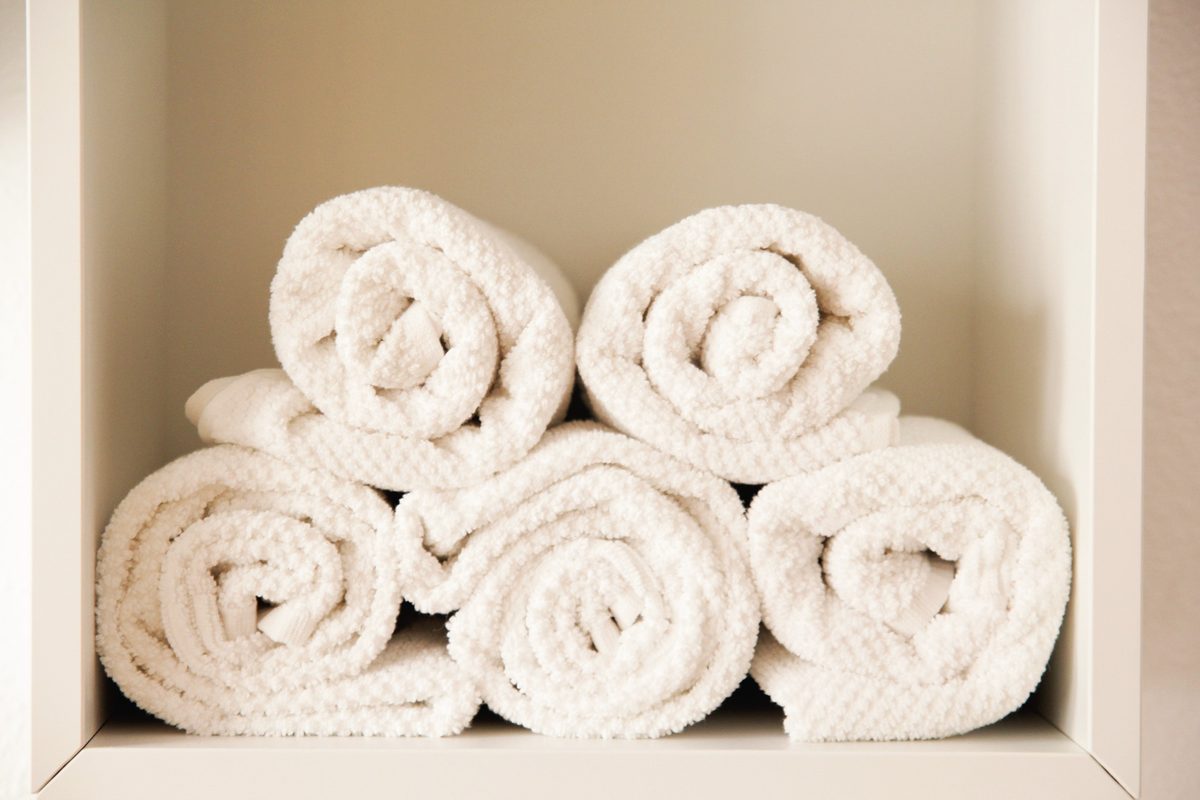
Hand towels get the same fold, just one step shorter. Washcloths can be folded in thirds and rolled, which looks lovely in a basket and makes it easy to grab one without toppling the rest.
The Pillowcase Pocket Trick
This is the one habit I'd keep even if I forgot everything else in this guide. Fold the fitted sheet, the flat sheet and one pillowcase, then tuck all of them inside the second pillowcase. Now the whole set lives in one soft bundle. When it's time to change the bed, you grab one thing, and nothing gets separated again.
Step 4: Group by Room and Size
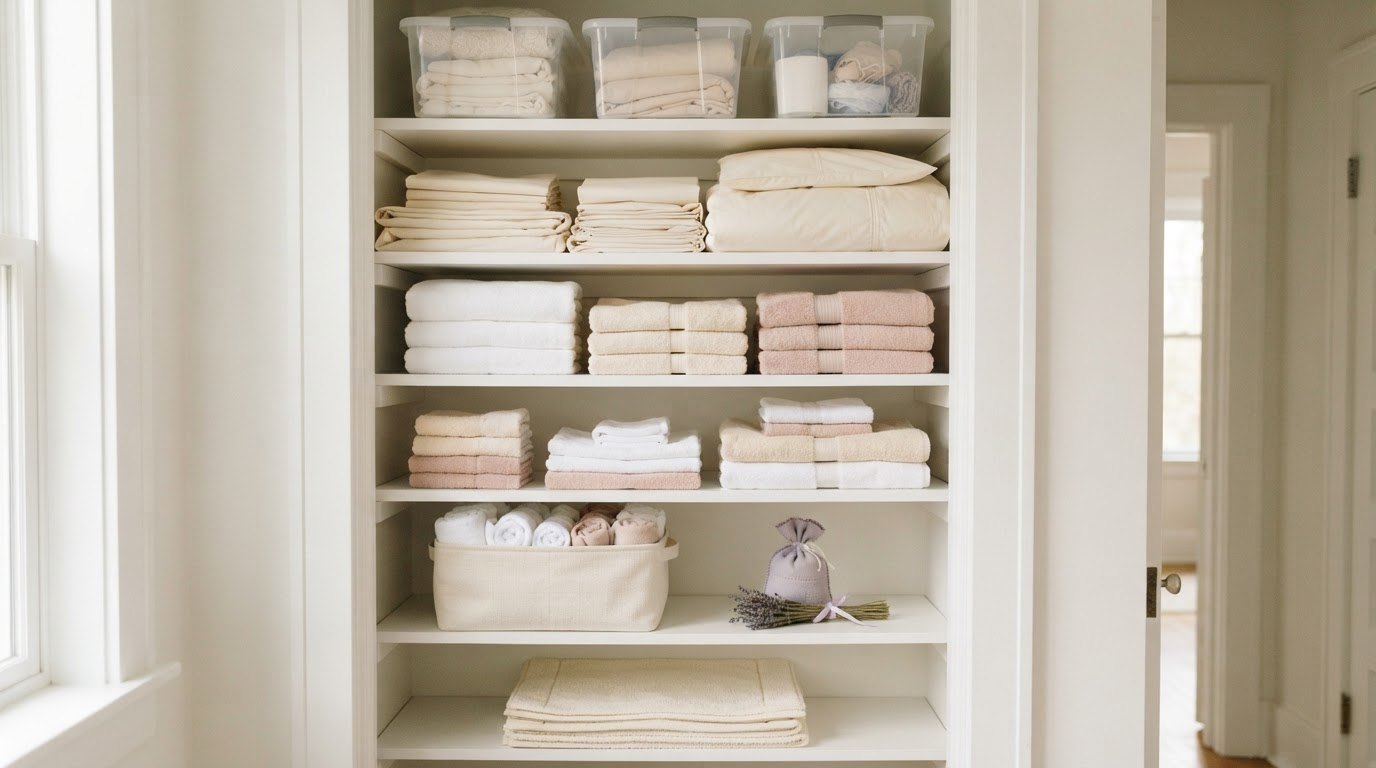
Now give every shelf a job. The idea is simple: what you use most goes at eye level, what you use least goes up high or down low.
- Top shelf: seasonal and occasional items like beach towels, extra blankets, spare duvets and picnic blankets. Store them in lidded containers so dust doesn't settle on them.
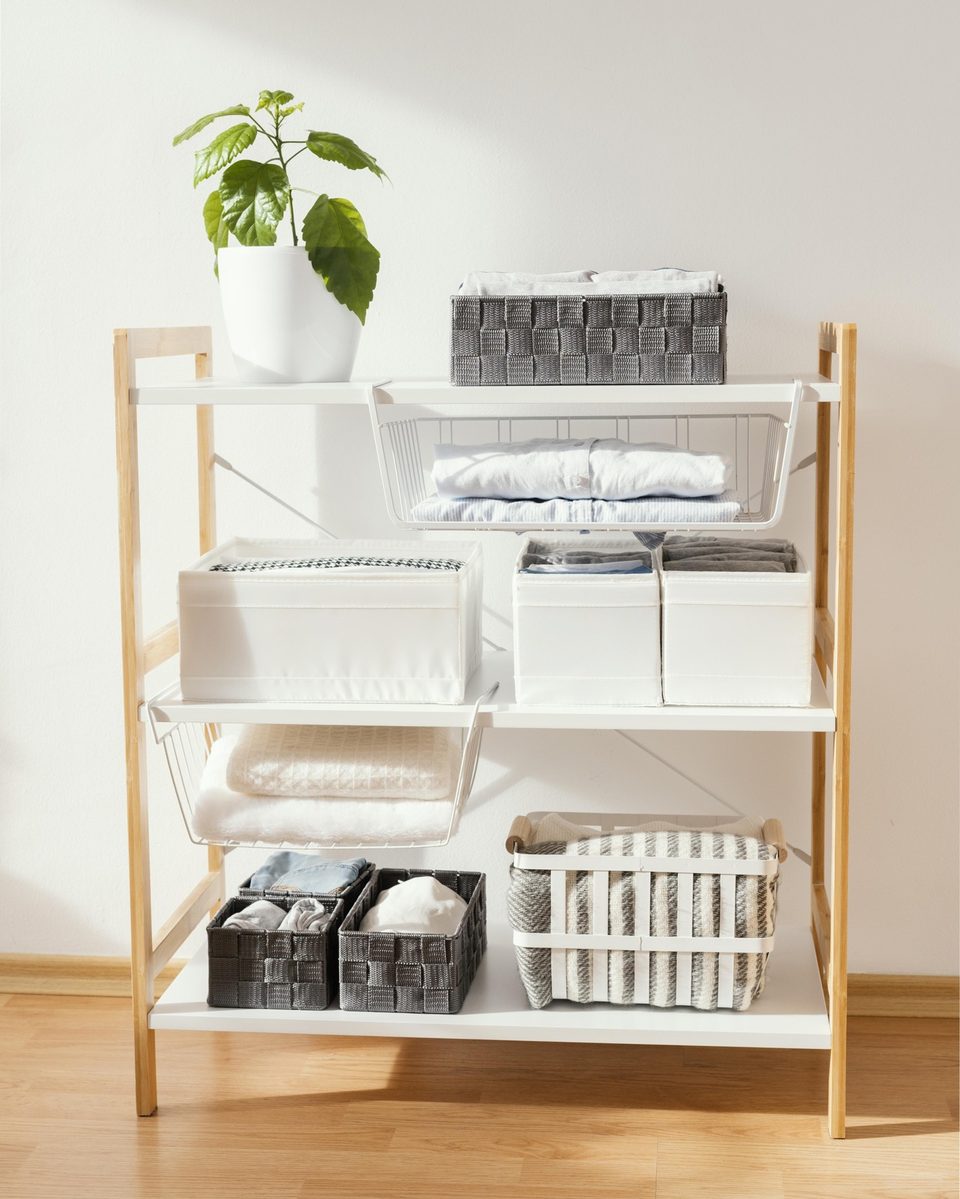
- Eye level: everyday bath towels, hand towels and the sheet sets for the beds you sleep in. Group by bathroom or bedroom if you have more than one.
- Middle shelf: washcloths, bath mats and guest linens, kept together so getting ready for visitors is one quick trip.
- Bottom shelf or floor: heavier things like spare pillows, cleaning cloths, or a basket of toiletry backups.
Within each shelf, group by size too: queen sets together, twin sets together, large towels in one stack, small towels in another. If you have kids' or guest beds in different sizes, this one move saves a surprising amount of frustration.
Keep the guest shelf especially easy. A stack of one sheet set, two bath towels, a hand towel and a washcloth per guest means you can pull everything at once. If you're preparing a room for visitors, my cozy guest room ideas help you finish the space so it feels welcoming, not just tidy.
Step 5: Contain and Label
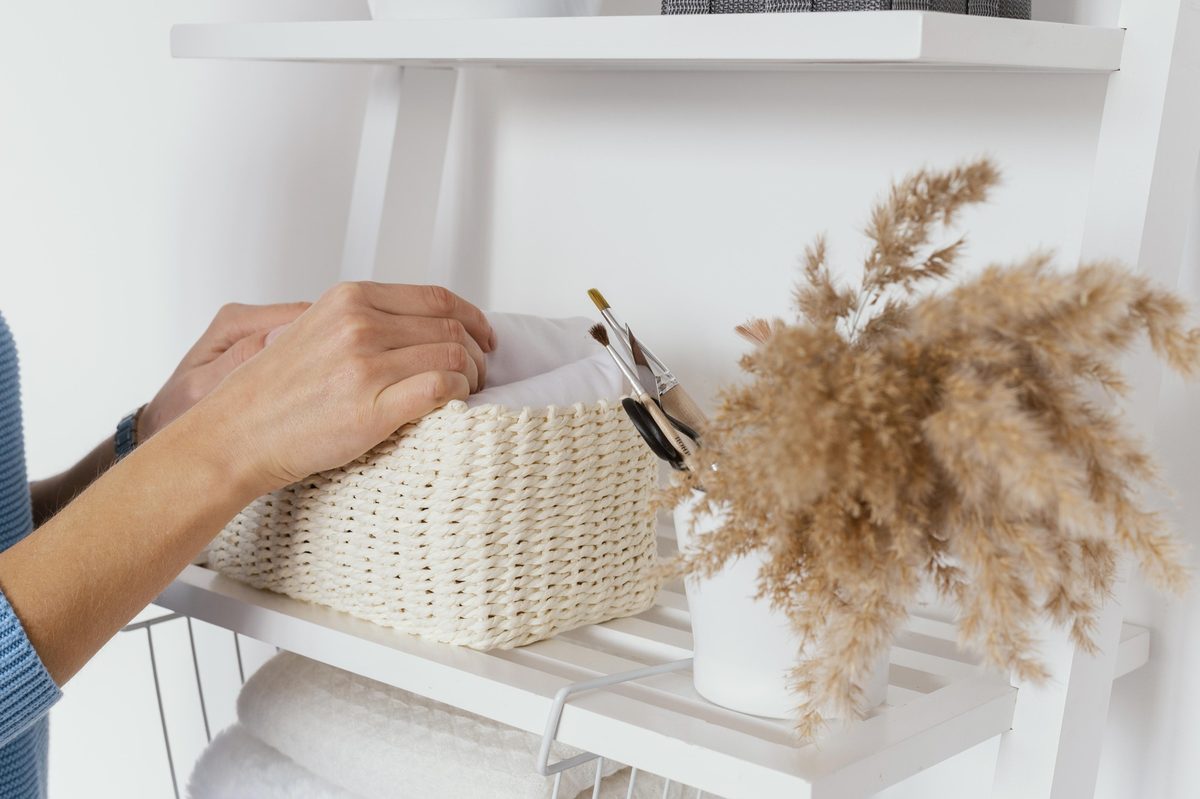
Stacks work well for towels and sheets. For everything smaller or softer, containers keep it all from spreading. You don't need a full matching set of bins, just a few pieces that solve the problems you noticed while emptying the closet.
- For the top shelf: clear lidded bins keep dust off seasonal blankets and let you see what's inside without pulling them down. Choose ones that fit your shelf depth with a little room to spare.
- For loose small items: soft fabric baskets in cream are perfect for washcloths, rolled hand towels or spare pillowcases. Look for ones with handles so you can pull them off higher shelves easily.
- For tall stacks: clip-on shelf dividers stop towel and sheet stacks from leaning into each other. They're especially helpful on deep wire shelves.
- For labels: simple white labels on each basket and shelf edge ("Queen sheets", "Guest towels", "Beach") mean anyone in your home can put things back in the right spot.
Labels sound fussy, but they're the secret to a closet that stays neat when you're not the one putting the laundry away. Use short, clear words. A shelf labeled "Main bath" works better than a pretty label nobody can read.
10 Little Habits That Keep It Neat for Good
An organized closet is easy to create and easy to lose. These small habits keep it looking the way it does today:
- Put clean linens away the same day. A basket of folded towels sitting in the hallway is how stacks get mixed up.
- Put fresh sets at the bottom. When you put clean linens away, slide them under the stack and take from the top. Everything gets used evenly and nothing yellows from sitting too long.
- Keep the one-in, one-out rule. New towels arrive, the oldest pair goes to the rag bin or donation bag.
- Refold anything that falls. It takes ten seconds now and saves a full refold later.
- Do a five-minute tidy once a month. Straighten stacks, check labels and pull out anything that's started to fray. If you like rhythms like this, my cleaning schedule shows where it fits with the rest of the home.
- Freshen the air. A light mist of a soft lavender linen spray on the closet shelves (not soaked into the fabric) keeps everything smelling clean. Let it dry before closing the door.
- Tuck in a sachet. Small lavender sachets between stacks add a gentle scent and are a nice alternative to sprays if you prefer something quieter. Squeeze them every few weeks to wake the scent up.
- Leave one shelf a little empty. A bit of breathing room makes the whole closet easier to keep tidy and gives you space when guests bring extra things.
- Review twice a year. Spring and fall are natural moments to swap heavier blankets for lighter ones and let go of anything worn.
- Keep it for linens. If the linen closet slowly becomes the spot for wrapping paper, light bulbs and cleaning sprays, carve out a basket for those or find them a different home.
Linen Closet Ideas for Small Spaces
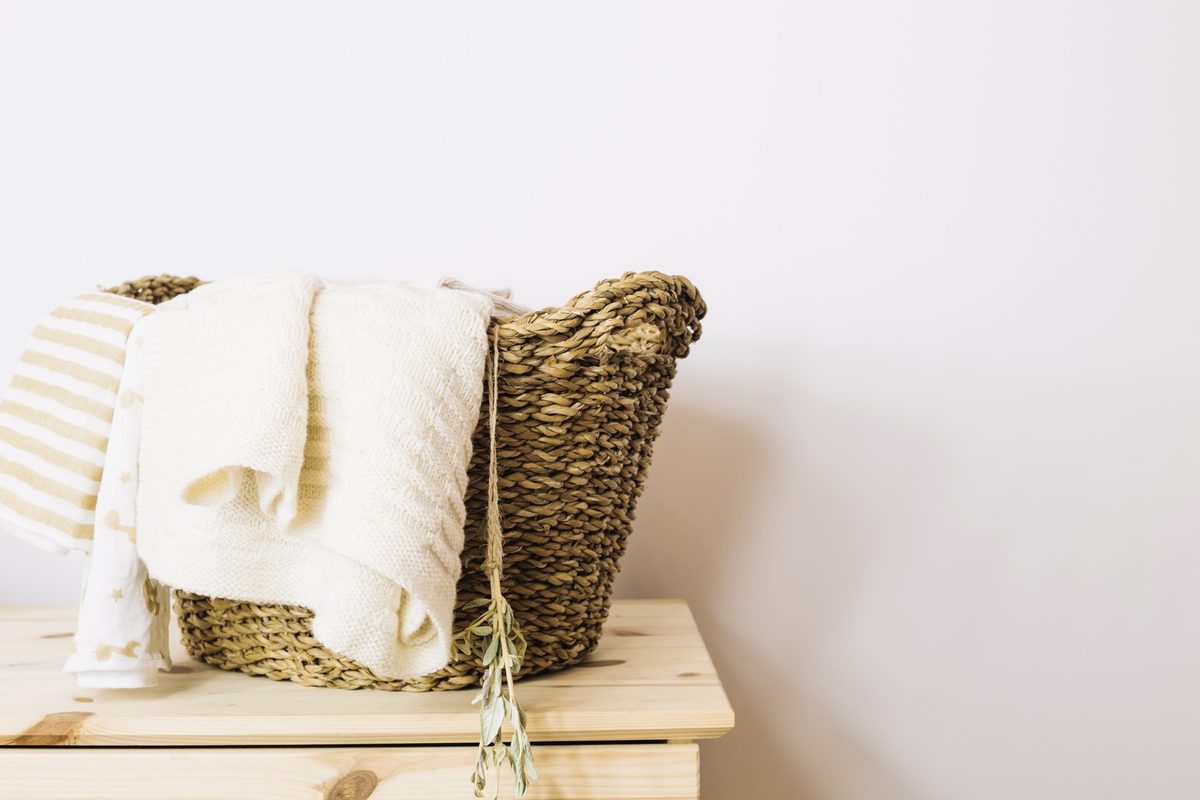
Not every home has a proper linen closet, and that's completely fine. Some of the neatest linen storage I've seen lives in places you wouldn't expect. A few ideas if you're working with less:
- Store sheet sets in the bedroom they belong to. A drawer, a basket under the bed or a lidded box on a wardrobe shelf keeps them close to where you use them.
- Keep towels in the bathroom. A small shelf above the toilet or a narrow cabinet can hold two towels per person, which is all you need once you've edited.
- Use the back of a door. An over-door rack with shallow baskets holds washcloths, hand towels and spare toiletries without taking any floor space.
- Try under-bed storage. Flat zippered bags are perfect for the guest set and the spare duvet.
- Display a little. A neat stack of rolled towels on an open shelf can look like a spa. Just keep it to the pieces that look nice and are used often, so it doesn't gather dust.
If closet space in your home is tight in general, my guide on how to organize a closet in one afternoon uses the same edit-first approach for clothes.
A Quick Linen Closet Reset Checklist
Here's the whole process in one place. Work through it top to bottom on your organizing afternoon:
- Empty every shelf completely.
- Sort into keep, donate and rags.
- Edit down to the numbers in the "how many you need" table.
- Wash anything musty and dry it fully.
- Wipe the shelves and let them air out.
- Fold fitted sheets, flat sheets and towels using one method per category.
- Bundle each sheet set inside its own pillowcase.
- Assign shelves: seasonal up high, everyday at eye level, guest linens in the middle.
- Group by room and size within each shelf.
- Add lidded bins, baskets and dividers only where you need them.
- Label every basket and shelf edge.
- Add a sachet or a light mist of linen spray.
Most people finish in two to three hours. If that's too much for one go, split it into two sessions: edit and wash on day one, fold and organize on day two.
Common Linen Closet Mistakes
A few things trip almost everyone up the first time. Knowing them ahead of time saves you a redo:
- Buying containers before editing. You'll buy too many, in the wrong sizes. Edit first, measure your shelves, then shop.
- Stacking too high. Stacks taller than about 12 inches tend to topple when you pull from them. Two shorter stacks are better than one tall tower.
- Storing linens in plastic bags. Fabric needs a little air. Bags can trap moisture, so use breathable baskets or lidded bins with a bit of space.
- Putting away linens that aren't fully dry. It's the quickest route to a musty smell. If in doubt, give them another ten minutes in the dryer.
- Organizing for a perfect photo. A closet that looks lovely but makes it hard to grab a towel won't stay organized. Function first, pretty second.
Final Thoughts
A linen closet doesn't need to be big or perfectly styled to feel calm. It needs fewer pieces, one way of folding and a home for each thing. Once those are in place, keeping it neat takes only a few minutes a month.
Start with the edit, even if it's all you do this week. The rest gets easier the moment there's less to fold, and opening that door will feel like a small, quiet reward every single day.