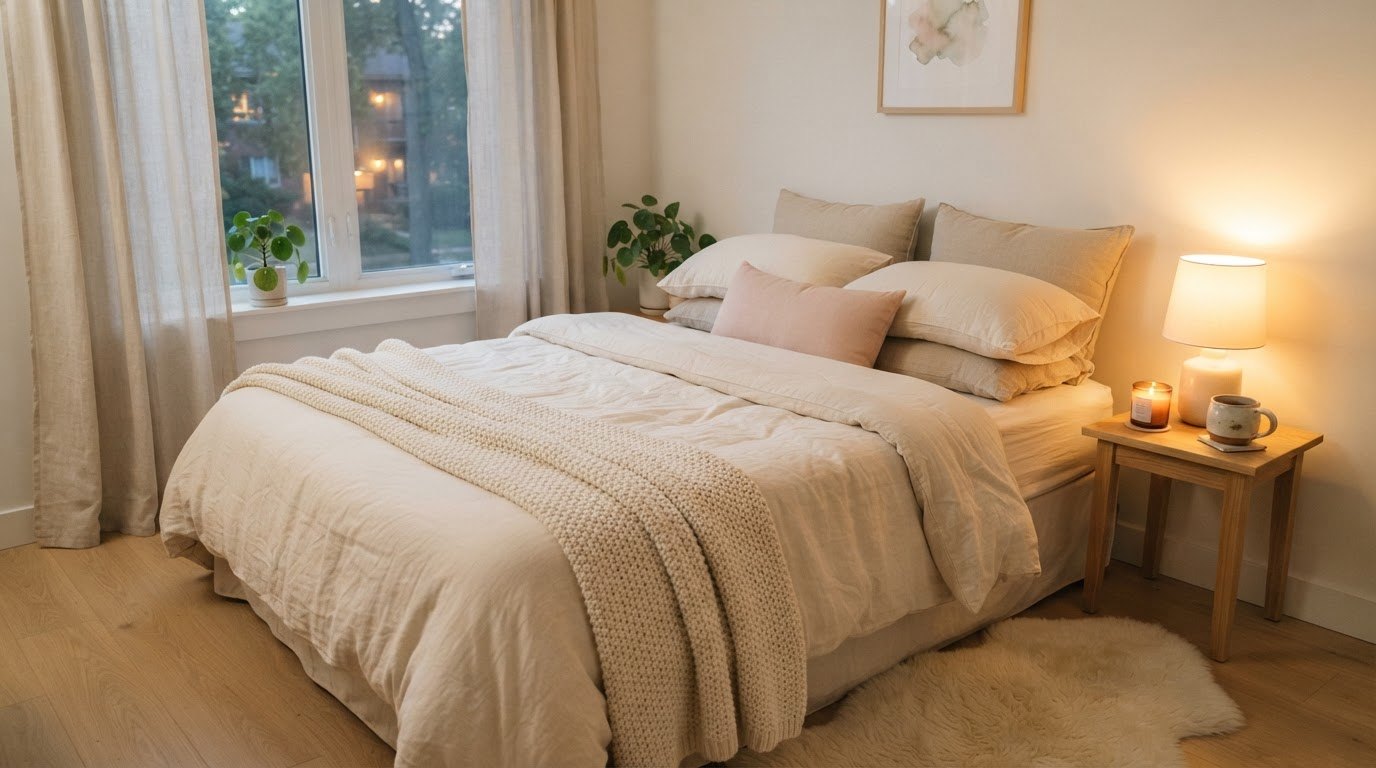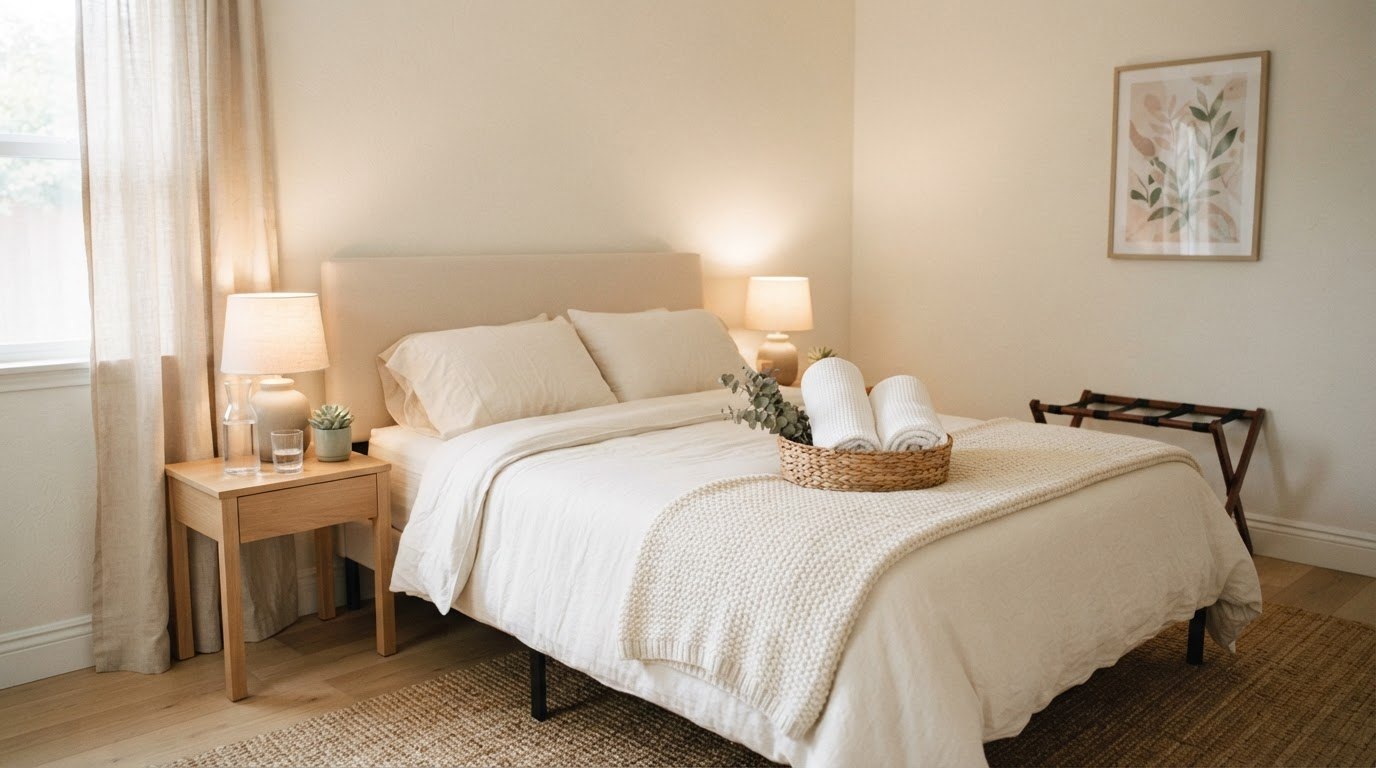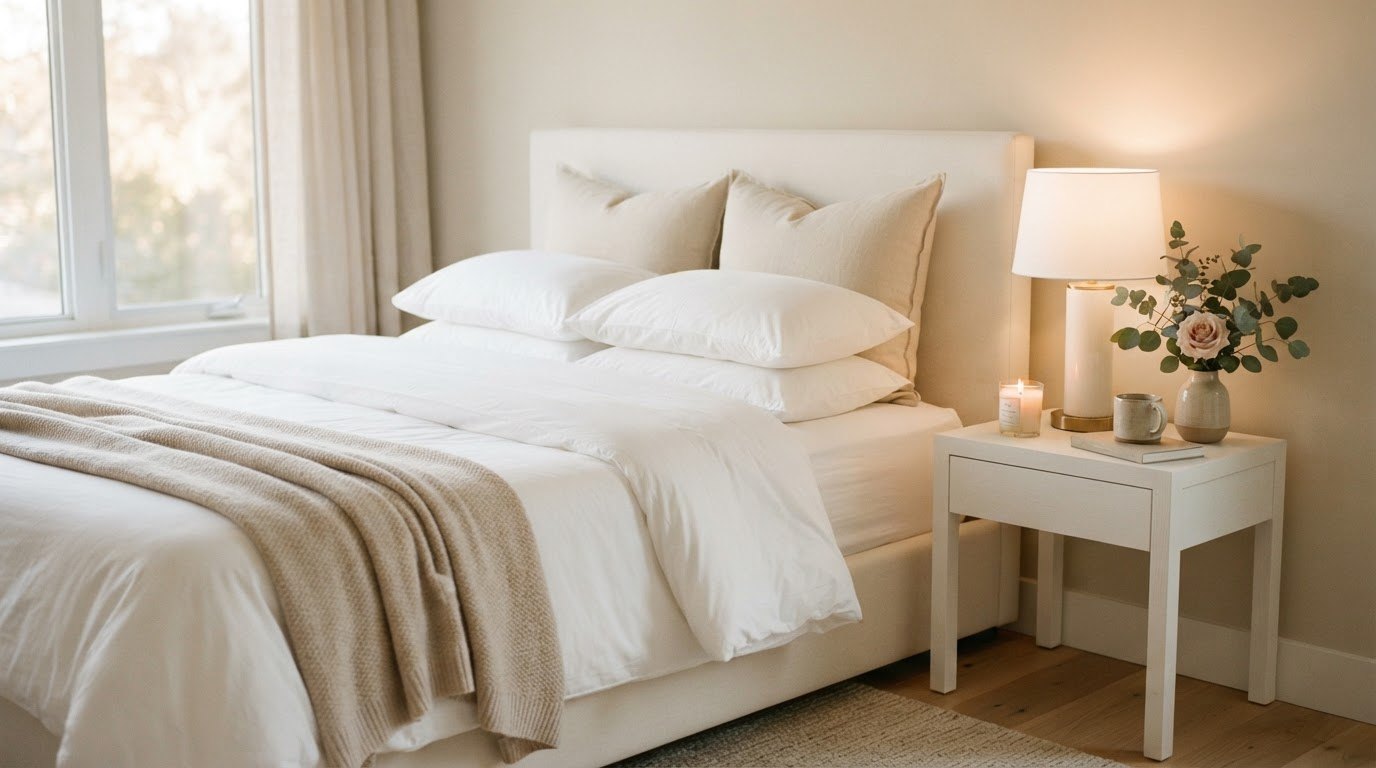
You know that moment when you walk into a hotel room, drop your bag and just look at the bed? Crisp white sheets pulled tight, a fluffy duvet folded back at the top, a little wall of pillows, and somehow not a single wrinkle. I always want to fall straight into it. And then I come home to my own bed, which, on a normal Tuesday, looks like it lost a small fight.
For years I assumed the secret was expensive sheets. It isn't, not really. Hotel beds look the way they do because of a few clever layers, a very tight tuck and a calm, simple color palette. Once I understood the system, making my own bed look hotel-ready took about the same time as making it the messy way.
This guide shows you exactly how to make your bed look like a hotel bed at home. You'll find a layer-by-layer bed build (from mattress topper to throw), a ten-step guide, the "hotel tuck" that keeps everything smooth, three pillow arrangements, a sheet fabric comparison and a five-minute morning routine to keep it looking that way. All in soft whites, creams and beiges, because that's where the hotel feeling lives.
Why Hotel Beds Look So Good
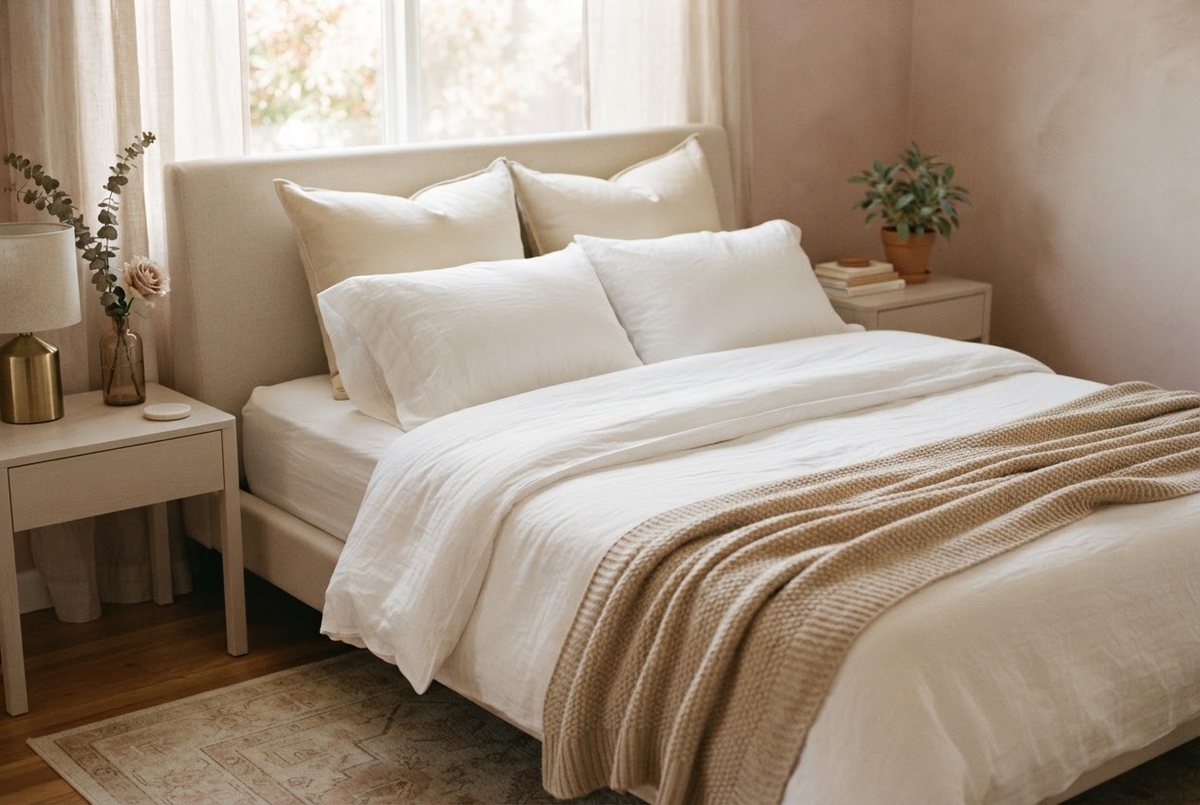
Before you buy anything, it helps to know what you're actually copying. Hotel beds share five things, and almost none of them are about price:
- Height and plushness. A topper and a full duvet make the bed look generous and inviting, not flat.
- One color family. White, cream and soft beige. No busy prints, no mismatched sets. Calm colors read as clean and expensive.
- Tight, flat sheets. The flat sheet is tucked firmly on three sides so the top surface is smooth.
- Layers you can see. The duvet is folded back to show the sheet, and a throw or runner sits across the foot of the bed.
- Lots of pillows, arranged on purpose. Not thrown on. Lined up, plumped and layered from back to front.
The good news is that every one of these can be recreated with regular bedding and a few minutes of technique. You don't need a hotel budget. You need a hotel routine.
The Hotel Bed Shopping List
If you're starting from scratch or refreshing a tired bed, here's what to look for. Stick to white, cream or beige for every piece so they all work together, even if they come from different places.
- A mattress topper. This is the quiet hero. It adds softness and height and smooths out any dips. A white mattress topper about two to three inches thick is a good place to start. Look for a removable, washable cover.
- A mattress protector. Thin, washable and fitted. It protects the topper and mattress and keeps the base layer smooth.
- Crisp sheets. A fitted sheet, a flat sheet and pillowcases. For that classic cool, crisp hotel feel, I'd choose a white percale cotton sheet set. (More on fabrics below.)
- A fluffy duvet insert. Plump and lofty, slightly larger than your bed if you like a generous drape. A white down alternative duvet insert is easy to wash and a kind choice for anyone sensitive to feathers.
- A simple duvet cover. Plain white, maybe with a subtle border, a single stitched line or a waffle texture.
- Pillows, more than you think. Two sleeping pillows per person, plus decorative layers. A set of white hotel-style bed pillows in a medium fill gives you that plump, upright look.
- Euro shams. These big square shams stand at the back and make the bed look tall and finished. Cream euro pillow shams add warmth against white sheets.
- A throw or bed runner. The final layer across the foot of the bed. A beige knit throw blanket adds texture and keeps the look soft rather than clinical.
The Layer-by-Layer Hotel Bed Build
This is the whole bed, from the mattress up, in the order you'll build it. Think of it as a diagram in words: each layer sits on top of the one before, and each one has a job. Screenshot it and keep it on your phone for the first few times.
| Layer | What it is | Its job | Hotel detail |
|---|---|---|---|
| 1. Mattress topper | 2 to 3 inch soft layer on the mattress | Adds plushness and height | Centered, corners straight, no bunching |
| 2. Mattress protector | Thin fitted, washable cover | Protects and smooths the base | Pulled taut over topper and mattress together |
| 3. Fitted sheet | White, deep pockets | Smooth sleeping surface | Seams lined up with the mattress edges |
| 4. Flat sheet | White, pattern side facing down | The crisp layer you slide under | Tucked tight on three sides with hotel corners |
| 5. Duvet in a white cover | Plump insert in a plain cover | Warmth and the "cloud" look | Folded back about a third to show the sheet |
| 6. Sleeping pillows | Two per person, white cases | What you actually sleep on | Plumped, openings facing away from the center |
| 7. Euro shams | Large square pillows in cream or white | Height and a "headboard" effect | Standing upright against the headboard |
| 8. Throw or runner | Beige knit or cream textured layer | Texture and a finished edge | Folded across the bottom third of the bed |
Read from the top down, it looks like this: throw, euro shams, sleeping pillows, duvet folded back, flat sheet, fitted sheet, protector, topper, mattress. Every layer visible from the side is white or a soft neutral, and that's exactly what gives the whole bed its calm, hotel look.
How To Make Your Bed Look Like a Hotel Bed in 10 Steps
Here's the full process, start to finish. The first time might take fifteen minutes. After a few rounds, you'll get it down to five or six.
1. Strip and Start Fresh
Take everything off, all the way down to the mattress. If it's been a while, this is a good time to vacuum the mattress surface and flip or rotate it according to its care label. A fresh start makes every layer sit better.
2. Lay the Topper and Protector
Place the topper so it lines up exactly with the mattress edges. Then pull the mattress protector over both together. This keeps the topper from sliding around in the night, which is one of the main reasons beds look lumpy by morning.
3. Put On the Fitted Sheet Corner by Corner
Start with the top corner on your side, then the diagonal opposite corner, then the remaining two. This "diagonal" method stretches the sheet evenly so it doesn't twist. Run your hands across the surface to smooth out any ripples.
4. Lay the Flat Sheet Upside Down
Here's a hotel trick that surprises most people: the flat sheet goes on pattern-side or finished-side down. When you fold the top edge back over the duvet later, the pretty side faces up. Line the top edge with the top of the mattress so it reaches all the way to the pillows.
5. Do the Hotel Tuck
Tuck the flat sheet tightly at the foot of the bed, then fold neat hotel corners on both sides (full steps in the next section). This is the single biggest difference between a regular bed and a hotel bed, so take your time with it.
6. Add the Duvet and Shake It Out
Lay the duvet in its cover on top, centered so it hangs evenly on both sides. Hold the top corners and give it a few good shakes to spread the fill. A duvet that's slightly larger than the bed drapes beautifully; one that's too small looks skimpy.
Quick tip for stuffing a duvet cover: turn the cover inside out, reach in and grab the two far corners, then grab the duvet's corners through the cover and flip it right side out. It sounds strange, but it's so much faster.
7. Fold the Top Back
Fold the top of the duvet back by about a third, so the bed shows a smooth band of duvet, a band of white flat sheet folded over it, and then the pillows. Some hotels fold it into thirds at the foot instead. Both look lovely; choose whichever feels more inviting to you.
8. Plump and Place the Sleeping Pillows
Before placing each pillow, hold it by both ends and squeeze it a few times like an accordion. Then give it a gentle karate chop on top to make a soft dip. Lay sleeping pillows flat or stacked two high, with the open ends of the cases facing toward the edges of the bed, not the center.
9. Stand the Euro Shams at the Back
Prop euro shams upright against the headboard behind the sleeping pillows. On a queen, two usually fit; on a king, three. They create the "wall of pillows" look and hide any messy headboard area or wall behind the bed.
10. Finish With the Throw
Fold your throw lengthwise into thirds and lay it across the bottom third of the bed, letting the ends drop evenly on both sides. Step back. Straighten anything that's crooked. That's your hotel bed.
The Hotel Tuck, Step by Step
Hotel corners (also called hospital corners) are what keep the flat sheet tight and smooth all night. Once you've done them twice, they become second nature. Here's how:
- Tuck the foot. With the flat sheet laid evenly, tuck the bottom edge under the mattress at the foot of the bed, all the way across. Pull it firm as you go.
- Lift the side. On one corner, grab the edge of the sheet hanging down the side, about twelve to sixteen inches from the foot of the bed.
- Make a triangle. Lift that edge straight up and lay it on top of the mattress at a forty-five degree angle. You'll see a neat diagonal fold forming at the corner.
- Tuck the hanging part. Tuck the bit of sheet still hanging below the triangle under the mattress, smoothing it flat.
- Drop the triangle. Let the triangle fall back down over the side of the mattress. It will form a crisp diagonal line at the corner.
- Tuck the side. Tuck the rest of the side edge under the mattress, working from the foot toward the head.
- Repeat and smooth. Do the same on the other side, then run your hands from the center out to remove any wrinkles.
If you like a little room for your feet, loosen the foot tuck slightly before you get in. You keep the crisp look without feeling wrapped up like a present.
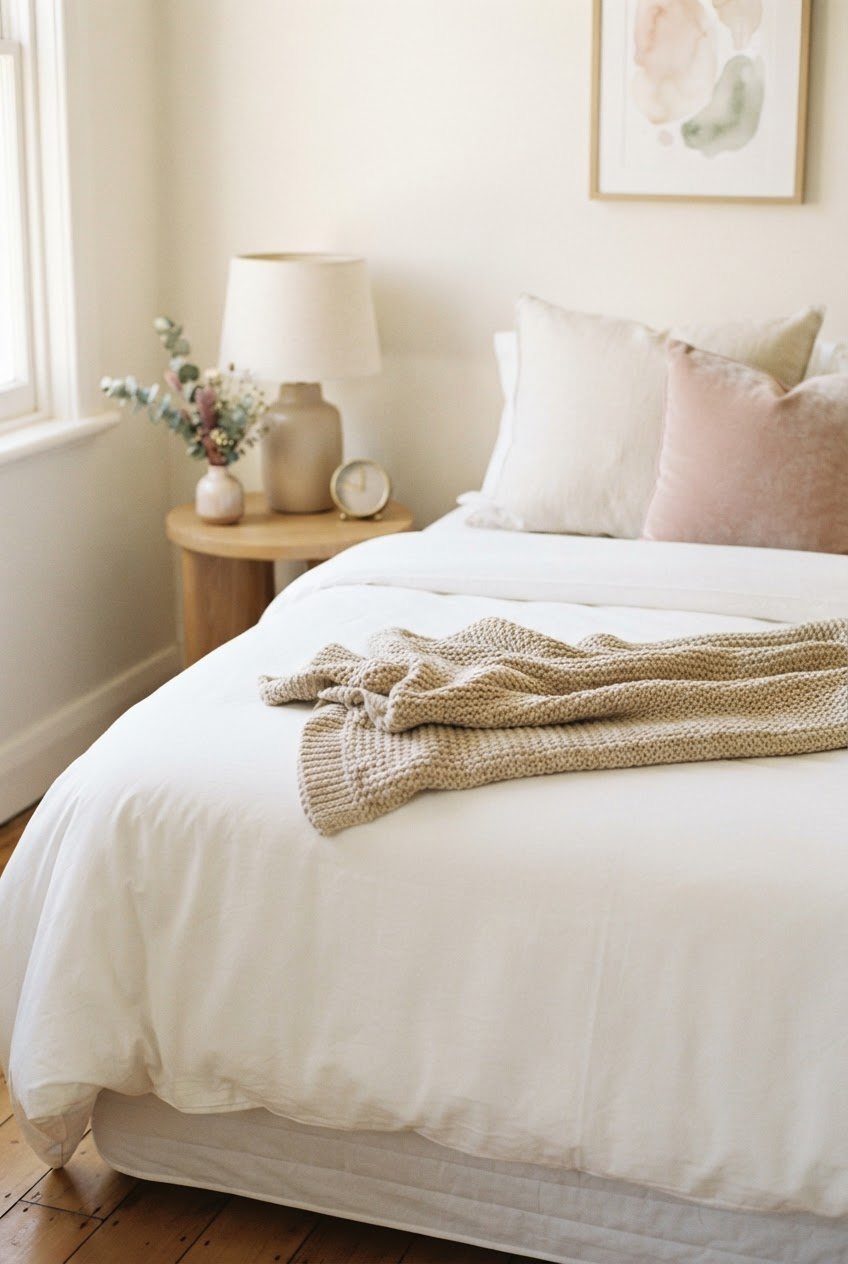
Three Hotel Pillow Arrangements
How you arrange the pillows changes the whole mood of the bed. Here are three simple looks, from easy to extra:
The Classic Two-by-Two
Two sleeping pillows per side, stacked, with a white case on each. Clean, simple, and perfect if you don't love taking pillows off every night. This is the look most city hotels go for.
The Layered Hotel Look
Two euro shams standing at the back, two sleeping pillows per side leaning against them, and one long lumbar pillow centered at the front. It's the look you see in boutique hotels, and it photographs beautifully.
The Grand Wall
Three euro shams across a king (or two on a queen), two sleeping pillows per side, and two standard shams in cream in front. It's a lot of pillows, so keep a basket or bench nearby to hold them at night. Very Old Hollywood, and I love it for a guest room.
Speaking of guests, if you're getting a spare room ready, my cozy guest room ideas and pre-guest cleaning checklist pair perfectly with a freshly made hotel bed.
Percale, Sateen or Linen? Choosing Your Sheets
Sheet fabric makes a big difference in both how the bed feels and how it looks. There's no single "right" choice, so here's a simple comparison to help you pick:
| Fabric | Feel | Look | Best for |
|---|---|---|---|
| Cotton percale | Crisp, cool, matte | The classic "hotel" finish, like a fresh shirt | Warm sleepers, anyone who loves that crisp feeling |
| Cotton sateen | Silky, smooth, a little warmer | Soft sheen, drapes nicely | Cooler bedrooms, a slightly luxurious look |
| Linen | Textured, breathable, softens with every wash | Relaxed and lived-in, never perfectly smooth | A softer, more casual hotel look |
| Microfiber | Smooth and soft, can feel warm | Resists wrinkles well | Budget refreshes, guest beds used occasionally |
A quick note on thread count: higher isn't always better. Somewhere around 200 to 400 for percale and 300 to 600 for sateen tends to feel lovely. Beyond that, the quality of the cotton matters more than the number on the package.
How To Keep It Hotel-Fresh
A hotel bed doesn't just look good; it smells and feels clean. A few habits keep it that way:
- Wash sheets and pillowcases weekly. Use a gentle detergent and skip heavy fabric softener on percale, which can dull that crisp feel.
- Keep two sets of sheets. One on the bed, one in the closet. Laundry day becomes a quick swap instead of a waiting game.
- Remove sheets from the dryer slightly damp. Smooth them out and put them straight on the bed, or fold them flat. Fewer wrinkles, less ironing.
- Wash the duvet cover every week or two and the duvet insert a few times a year, following the care label.
- Air the bed each morning. Pull the duvet back for a few minutes before making it so moisture can escape.
- Use a light linen spray. A gentle mist of something clean and soft on the pillows makes the bed feel extra special. Patch-test first if your skin is sensitive like mine.
And let the rest of the room support the bed. A clear nightstand, a soft lamp and a glass candle (blown out before sleep, always) make the whole space feel like a little retreat. For more ideas, my guide to cozy bedroom ideas and these ways to make your house look expensive are lovely next reads. If your bedroom is on the small side, my tips on how to organize a small bedroom help the bed stay the star.
The Five-Minute Morning Hotel Make
Once the full bed is built, keeping it hotel-ready each morning is quick. Here's the routine:
- Air it (1 minute). Pull back the duvet and open the curtains while you make your tea or coffee.
- Re-tuck and smooth (1 minute). Pull the flat sheet tight and re-tuck any loose sides.
- Shake and lay the duvet (1 minute). Shake it out by the top corners, lay it straight and fold the top back.
- Plump the pillows (1 minute). Accordion-squeeze each one and put them back in your chosen arrangement.
- Straighten the throw (1 minute). Fold it neatly across the foot of the bed and step back.
Coming home to a made bed changes the feeling of the whole evening. Pair it with the gentle wind-down from my winter sleep routine and getting into bed starts to feel like a small reward.
Final Thoughts
A hotel bed isn't about expensive sheets or a fancy room. It's about a few thoughtful layers, a tight tuck, plump pillows and a calm, soft palette. Build it once with care, keep a second set of sheets ready, and give it five minutes each morning.
Tonight, when you slide between crisp white sheets and sink into something soft and smooth, you'll get that same little hotel feeling, right in your own room and with no checkout time at all.