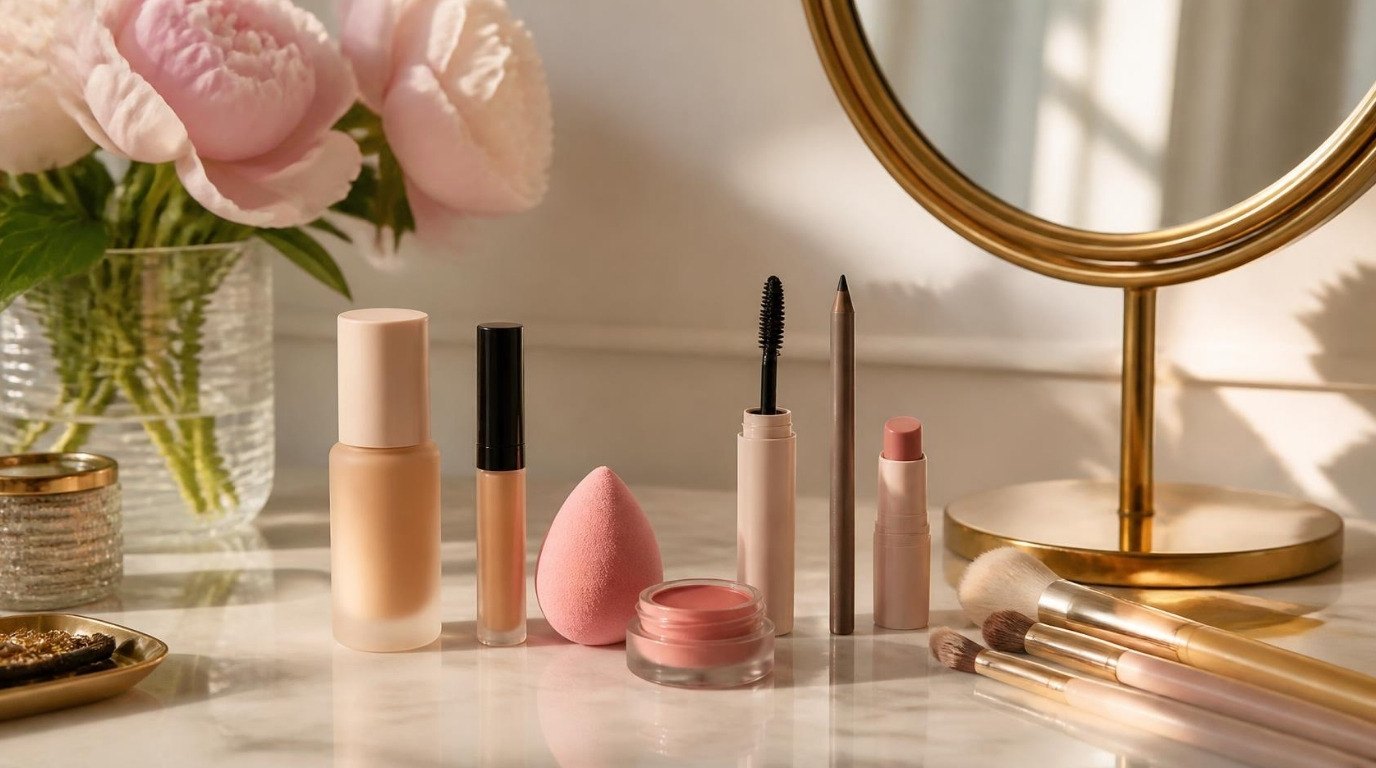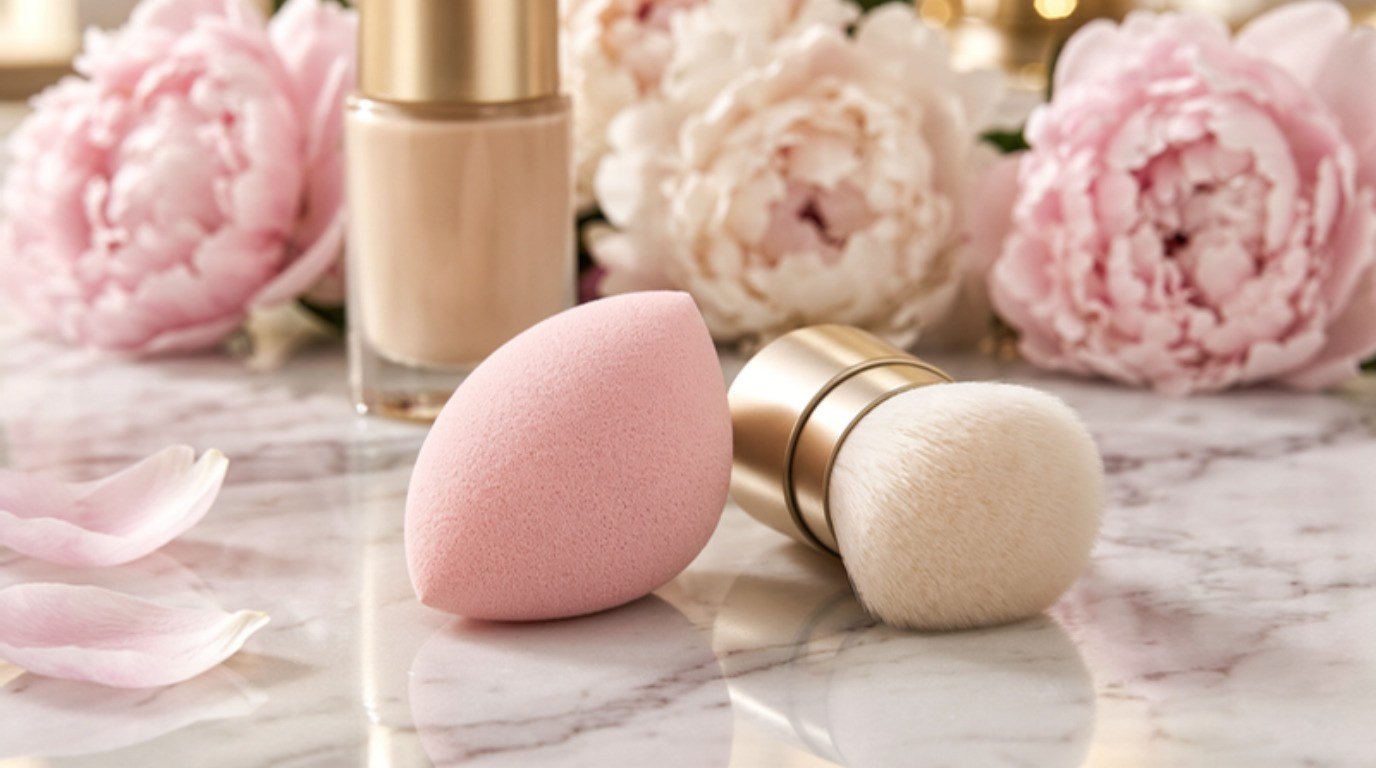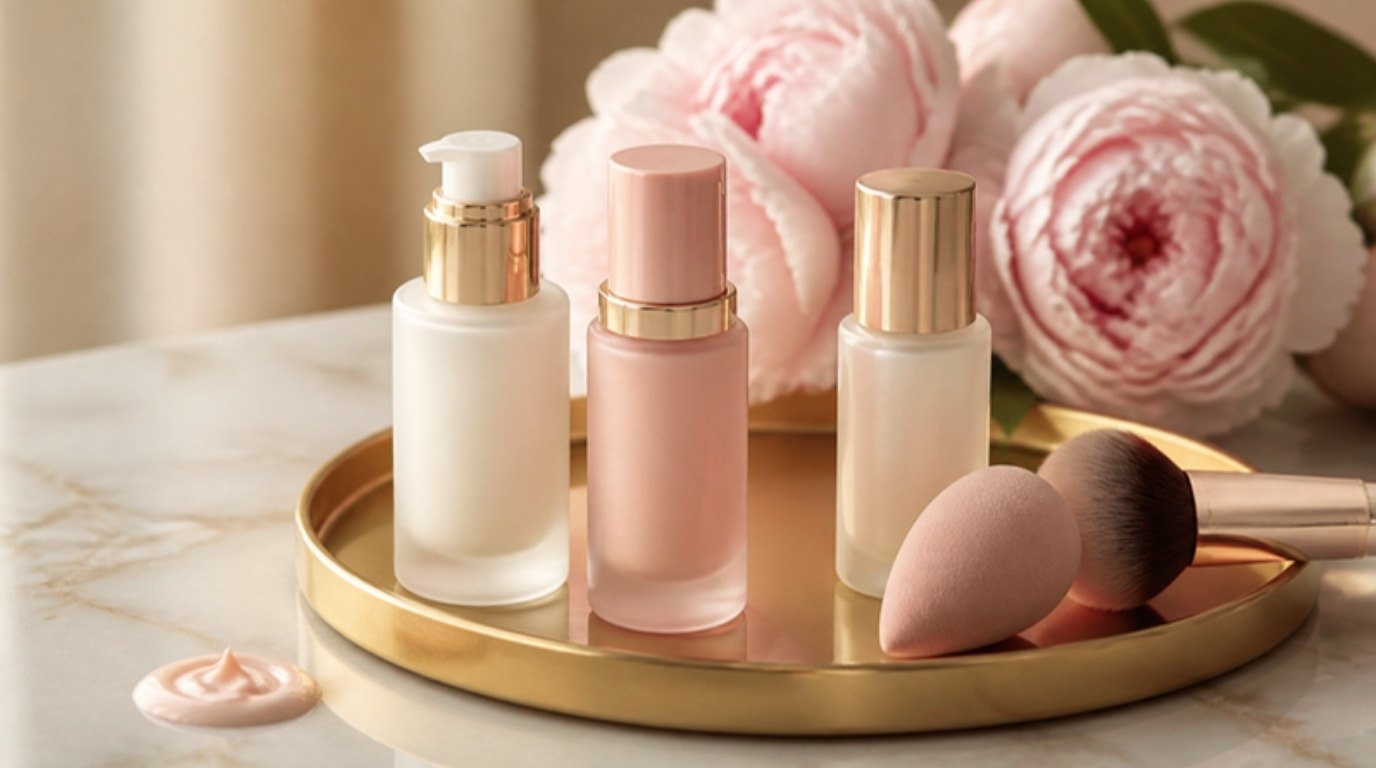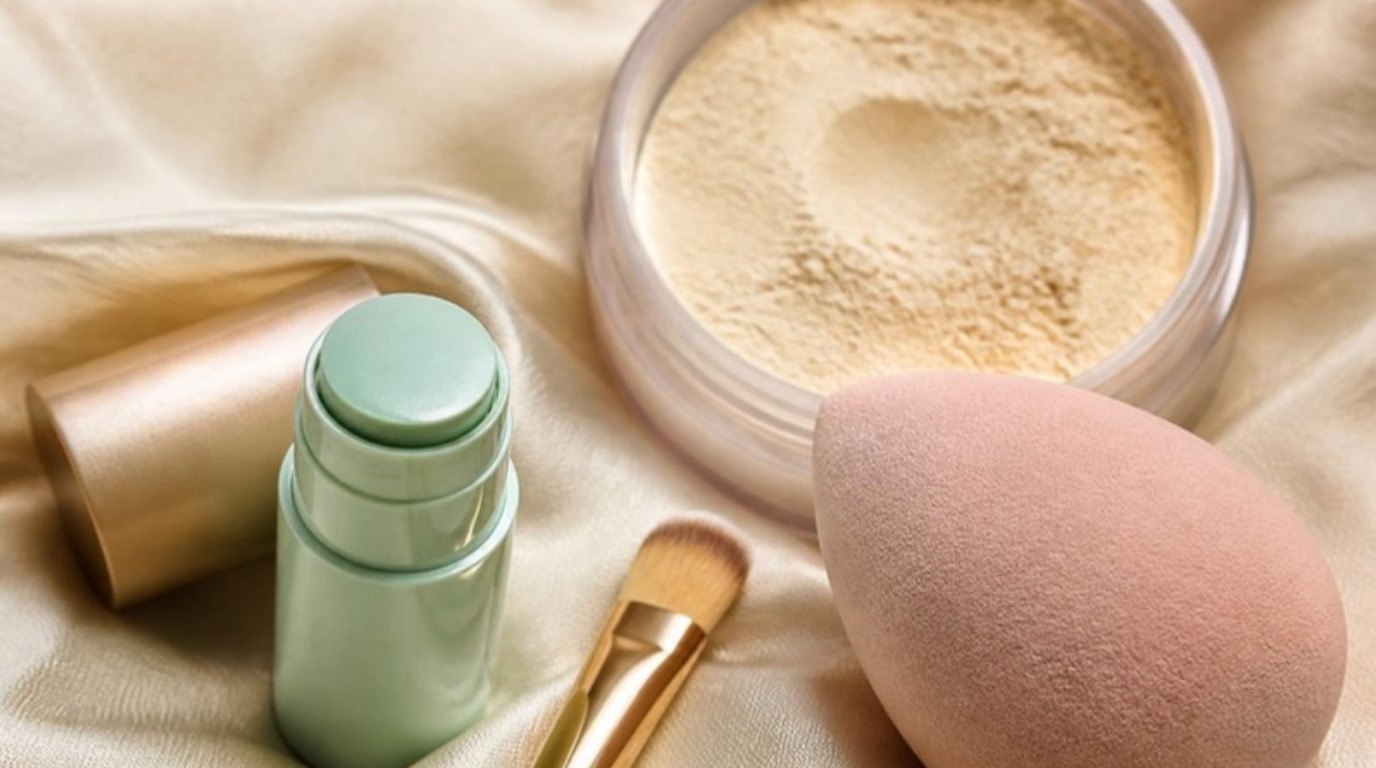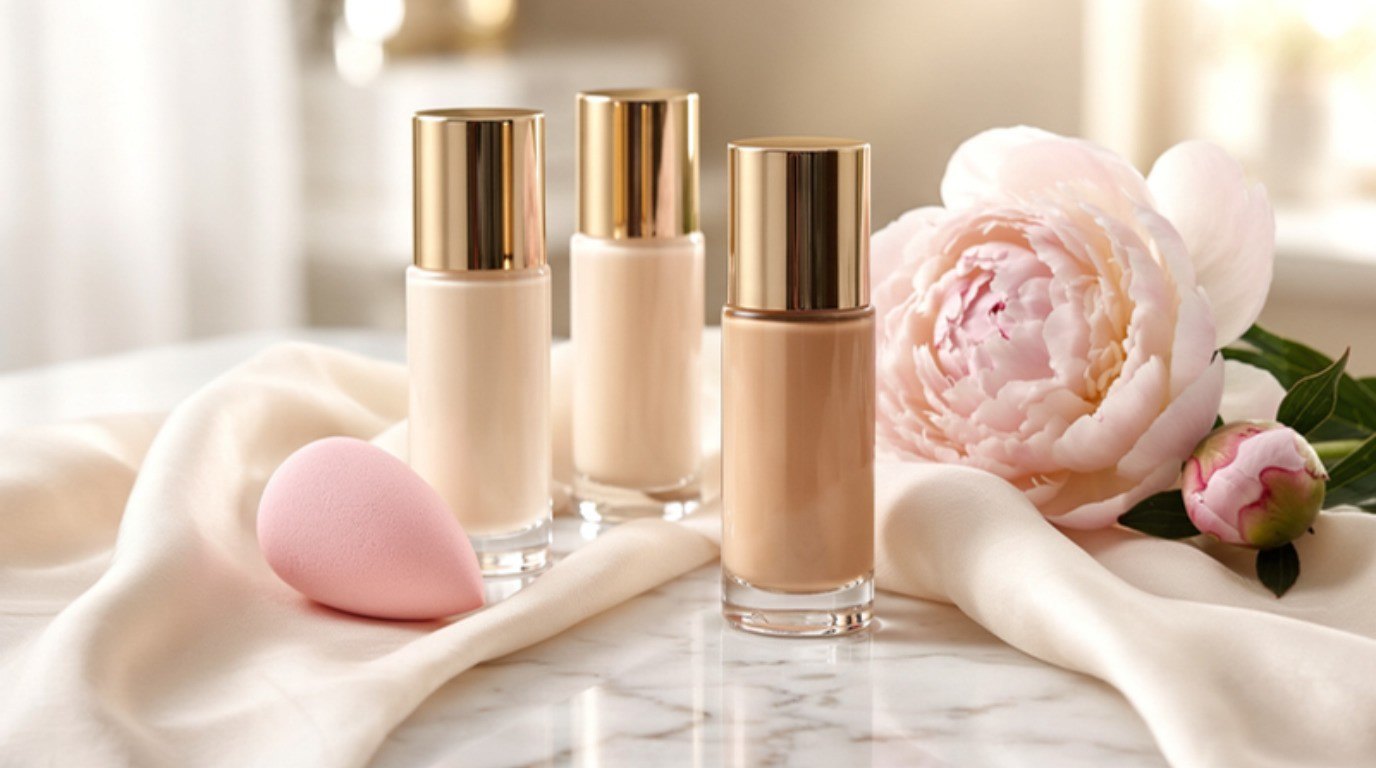
Choosing a base gets so much easier once you stop asking "which product is best?" and start asking "how much do I actually want to change?" Skin tint, tinted moisturizer and foundation all put a little color on your face. The real difference is how much they cover, how they feel and how long they hold up, and none of them is better than the others in general. Each one is simply better for a certain kind of skin and a certain kind of day.
That is good news, because it means the right choice isn't about being "good at makeup." It is about matching the formula to what you want to see in the mirror at the end of the day, and to how your skin feels by mid-afternoon.
This guide breaks down skin tint vs tinted moisturizer vs foundation in plain words: what each one is, who it suits, a side-by-side table, six questions that help you choose your coverage, how to apply each one so it looks like skin, a short note on SPF and how to match your shade in daylight. It took me a while to admit that my combination skin wants different things in winter and in summer, so you'll also find a few ideas for switching between them through the year.
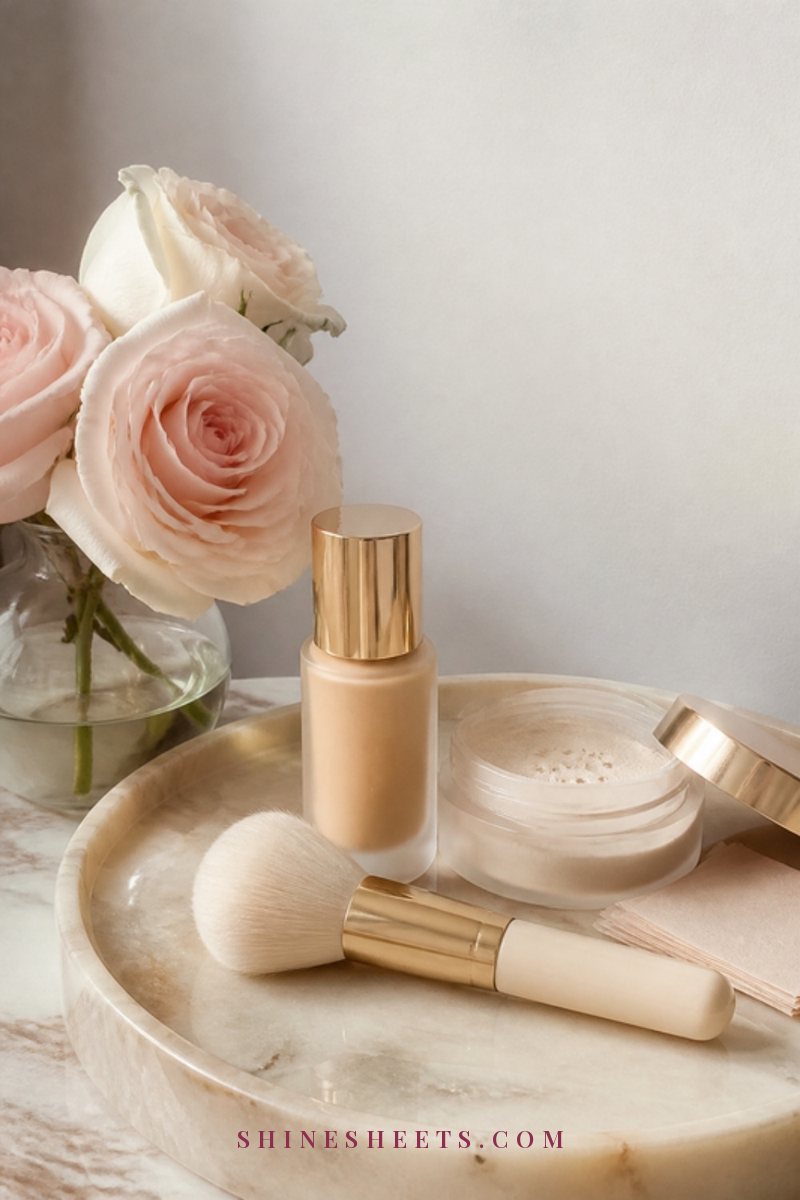
The Quick Difference in One Sentence Each
If you only remember one part of this guide, make it this:
- Skin tint is a watery, sheer layer of color that evens things out a little while your freckles, texture and natural skin still show through.
- Tinted moisturizer is a moisturizer with pigment added, so it hydrates first and covers lightly second.
- Foundation is made to cover, with more pigment that can hide redness, spots and uneven tone, and it usually lasts the longest.
The lines blur a bit between brands (some "skin tints" are almost light foundations, and some foundations are sheer), so read the texture and coverage description on the box rather than trusting the name alone. A lightweight dewy skin tint should feel almost like a serum when you rub it between your fingers. A tinted moisturizer feels creamy. A foundation feels a little thicker and sets more as it dries.
Skin Tint vs Tinted Moisturizer vs Foundation at a Glance
Here is the side-by-side table I wish someone had handed me years ago. Screenshot it for your next shopping trip.
| Product | Coverage level | Finish | Best skin type | Wear time |
|---|---|---|---|---|
| Skin tint | Sheer (evens tone slightly, freckles show) | Natural to dewy | Normal, combination, fairly even skin | 4–6 hours, fades softly |
| Tinted moisturizer | Sheer to light | Dewy, cushiony | Dry, normal, dehydrated skin | 4–6 hours, can slide on oily areas |
| Foundation (light to medium) | Light to medium, buildable | Satin or natural | Most skin types, depending on formula | 8+ hours with good prep |
| Foundation (full coverage) | Medium to full | Matte or satin | Oily skin, redness, spots, long days | 10–12 hours |
Two quick notes on the table. Wear time depends a lot on your skin and your day, so treat those numbers as a rough guide, not a promise. And "best skin type" means the easiest starting point. Someone with dry skin can absolutely wear foundation, they just need to prep a little more.
What a Skin Tint Is (and Who It Suits)
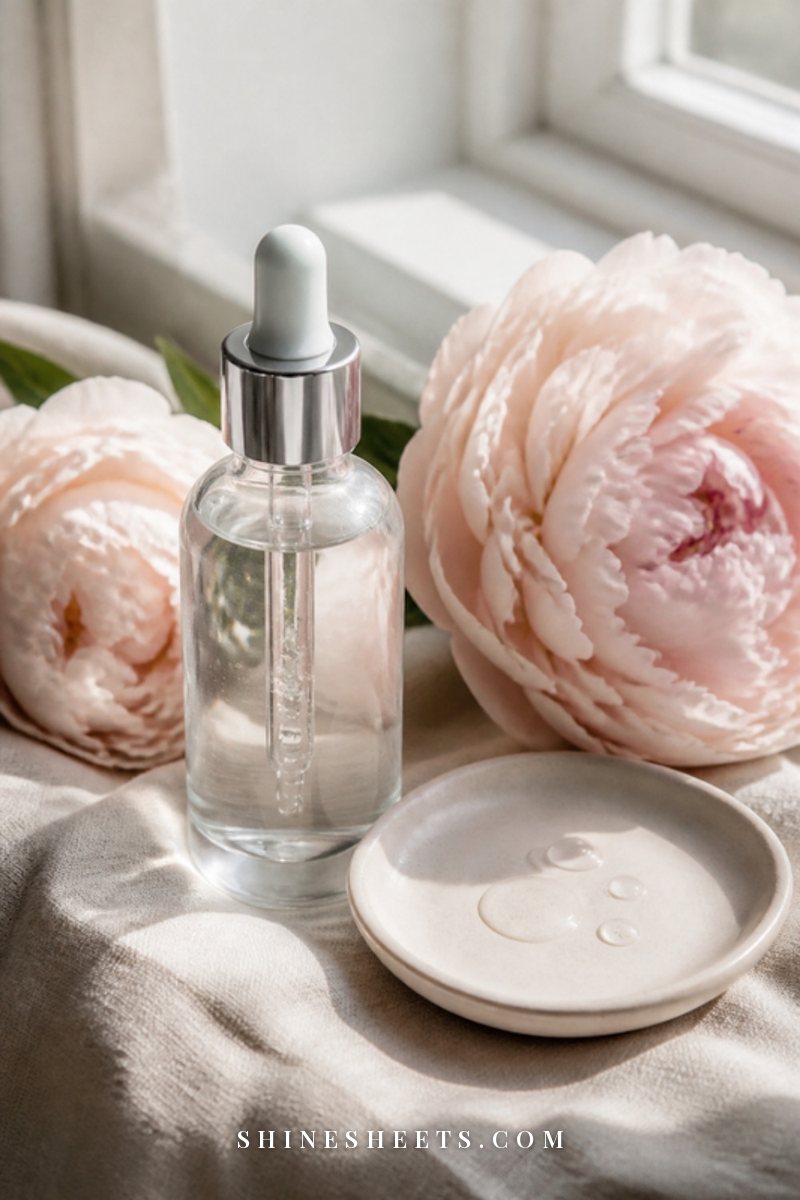
A skin tint is the lightest of the three. It is usually water- or gel-based, comes in a dropper or small squeeze tube and spreads so thinly that it looks like your skin on a well-rested day. It won't hide a breakout or a red patch, and that is the point. It takes the edge off sallowness and slight unevenness and leaves everything else alone.
A skin tint suits you if:
- Your skin is fairly even and you mostly want to look a bit fresher.
- You like seeing your freckles and texture rather than a smooth "finished" surface.
- You wear makeup for errands, working from home or weekends, not for twelve-hour days.
- You don't mind adding a dot of concealer where you need a little more help.
The trade-off is staying power. Because it is so sheer, a skin tint fades gently by afternoon rather than breaking up dramatically. Most people find that charming instead of annoying, but if you want your base to look the same at 6 p.m. as at 8 a.m., this one will feel too light. If the barely-there look is your goal, my clean girl makeup routine builds a full face around exactly this kind of sheer base.
What a Tinted Moisturizer Is (and Who It Suits)
Tinted moisturizer starts from the skincare side. It is a cream or lotion first, with a little pigment mixed in, so it gives you hydration and soft color in one step. Coverage is similar to a skin tint or a touch more, and the finish is usually dewy and cushiony.
A tinted moisturizer suits you if:
- Your skin is dry or normal and drinks up moisturizer in winter.
- Your base tends to look flaky or settle into dry patches.
- You want a quick, two-minute morning with fewer layers.
- You like a soft, healthy sheen on your cheeks.
Where it can struggle is on oily areas. On my combination skin, a rich tinted moisturizer looks lovely on my cheeks and slides off my shiny T-zone by lunch. The fix is easy: a light dusting of powder down the center of your face, or a lighter formula in warmer months. A hydrating tinted moisturizer with SPF is a nice pick for dry winter mornings, as long as you remember the sunscreen note further down. If dryness is the main thing you're fighting, have a look at my guide to makeup for dry skin for prep tips that keep any base from flaking.
What Foundation Is (and Who It Suits)
Foundation has the most pigment of the three, so it can actually hide things: redness around the nose, post-breakout marks, uneven patches, dark spots. It comes in every coverage level and finish, from sheer and dewy to full and matte, and it usually has the best staying power because it is formulated to set and stay.
Foundation suits you if:
- You have redness, spots or uneven tone that you'd like to soften noticeably.
- You have long days, events, photos or video calls where you want your base to look the same from morning to evening.
- Your skin is oily and lighter formulas slide off within a few hours.
- You prefer one product to do most of the work instead of a lot of spot concealing.
Foundation has a reputation for looking heavy, but that usually comes from too much product, not from foundation itself. A buildable satin foundation lets you start sheer and add a second thin layer only where you need it. For the full step-by-step, my guide on how to apply foundation so it looks like skin walks through prep, tools and blending.
6 Questions To Choose Your Coverage
When you're standing in a store aisle, these six questions narrow it down in about a minute. Answer them honestly for the way you actually live, not the way you think you "should."
1. How Much Do You Want To Even Out?
Look at your bare skin in daylight. If you'd be happy with "a bit fresher," choose a skin tint. If you want your skin to look smooth but still like you, choose a tinted moisturizer or a light foundation. If redness or spots bother you every day, a buildable foundation will save you from layering three sheer products to get the same result.
2. What Is Your Skin Type?
Dry and normal skin usually loves tinted moisturizer. Oily skin does better with a long-wear or satin foundation, or a skin tint with powder on the T-zone. Combination skin (hello, fellow shiny-nose club) often looks best with a skin tint or light foundation plus powder only in the middle of the face. Sensitive skin should go for short, fragrance-free ingredient lists, whichever type you pick.
3. How Long Will You Wear It?
Under four or five hours, any of the three works. A full workday plus an evening plan is foundation territory. A good rule: the longer the day, the more pigment and staying power you want, and the more prep (moisturizer, maybe primer) is worth the extra two minutes.
4. Will You Reapply or Touch Up?
If you keep a small kit in your bag and don't mind a midday touch-up, a sheer formula is easy to refresh: a few dots, pressed in with your fingertip, and you're done. If you know you won't look in a mirror until you get home, choose the formula that holds up on its own.
5. What Are Your SPF Needs?
If you spend real time outdoors, or you're out during the brightest hours, your sunscreen matters more than your base. Whatever you choose, plan on wearing a proper face sunscreen underneath (more on this below). If you want the lightest possible feel, a skin tint over sunscreen feels less layered than foundation over sunscreen.
6. How Do You Feel About Concealer?
This is the question people forget. If you're happy to dab concealer on a couple of spots, a sheer base plus concealer gives the most natural result. If concealer feels like one step too many, a foundation with more coverage does that job for you. Neither is wrong. It just changes which base makes sense.
Add up your answers. Mostly "light, short day, happy to conceal" points to a skin tint. Mostly "dry, comfort, quick" points to tinted moisturizer. Mostly "cover, long day, no touch-ups" points to foundation. And plenty of people own two: a sheer one for weekends and a foundation for busy days.
How To Apply Each One Well

The same formula can look like skin or like a mask depending on how it goes on. Start every version with clean, moisturized skin and give your moisturizer two or three minutes to settle so your base doesn't pill.
Skin Tint: Fingers and Thin Layers
Fingers are the best tool here, because the warmth of your skin melts the formula in. Put 2–3 drops on the back of your hand, dot a little on your forehead, cheeks, nose and chin, and spread outward with your fingertips in light, quick movements. Spend extra seconds around the nose and mouth, where redness lives. If you want more coverage in one area, wait a minute and press a second thin layer there only, rather than reapplying all over.
Tinted Moisturizer: Warm It, Press It
Use about the amount you'd use of a regular moisturizer, a pea to a small hazelnut size. Warm it between your fingertips, then press and smooth it over your face as you would a cream. A damp sponge works beautifully too: bounce it over the skin to sheer out any streaks. If your T-zone gets shiny, press a little translucent powder on your forehead, nose and chin with a small brush and leave your cheeks dewy.
Foundation: Sponge or Brush, Then Spot-Conceal
Start with less than you think, about one pump for the whole face. Apply it to the center of the face first, where most people need the most coverage, and blend outward so the edges near your hairline and jaw stay thin. A damp blush makeup sponge gives the most skin-like finish. A dense brush gives a little more coverage. Then look again in daylight and put a cream concealer only where something still shows: a spot, the corners of the nose, under the eyes. Spot-concealing is the secret to foundation that looks light.
Whichever product you use, keep it away from your lash line and out of your eyes, and blend under the eyes with a gentle press rather than dragging. If anything gets into your eye, rinse with clean water.
The SPF Question: Is the SPF in Your Tint Enough?
This is the part I want to be really clear about, because the label can be a little misleading. The SPF number on a tint or foundation is tested with a generous amount of product, far more than anyone wears as makeup. With a few drops of skin tint or a thin layer of foundation, you get only a fraction of the protection written on the tube.
That means the SPF in your base is a nice bonus, not your sunscreen. Apply a face sunscreen as the last step of your skincare, wait a few minutes for it to settle, then put your base on top. A lightweight Korean-style face sunscreen sits nicely under any of the three, because it is thin and dries down without a white cast. I dig into this much more in my guide on whether SPF in makeup is enough, including how to top it up during the day.
How To Match Your Shade in Daylight

Shade matches go wrong mostly because of lighting. Store lights are often warm or very bright, and the back of your hand is a different color from your face. Here is a simple routine that works for all three products:
- Swatch two or three shades in a stripe along your jawline, from cheek down to neck, not on your hand.
- Walk to a window or step outside and look at the stripes in daylight.
- Pick the stripe that disappears. If one looks pink or orange, it is the wrong undertone. If one looks ashy or chalky, it is too light.
- Wait 10–15 minutes if you can. Some formulas darken slightly as they dry.
- Remember that sheer formulas are more forgiving. A skin tint can be a shade off and still look fine, while a full-coverage foundation needs a close match.
Your face often changes a little between seasons, so the shade that matched in summer may look a touch dark in winter. Mixing two shades with your fingertip on the back of your hand is a perfectly good solution. If undertones confuse you, my simple undertone guide for choosing a foundation shade explains warm, cool and neutral without the jargon.
Sensitive Skin: Patch Test First
If your skin is sensitive like mine, any new base is worth a patch test before it goes on your whole face. Apply a small amount on the side of your neck or just under your jaw once a day for a few days. If you notice itching, burning, bumps or redness, wash it off and skip that product.
A few other gentle tips:
- Look for fragrance-free formulas with short ingredient lists.
- Sheer formulas mean less product on the skin, which many sensitive faces prefer.
- Wash sponges and brushes every week, since old product and bacteria can irritate skin.
- Remove your base fully at night with a gentle cleanser. Mineral sunscreen and long-wear foundation may need two rounds.
If a reaction is strong, spreads or doesn't calm down within a day or two, check in with a doctor or dermatologist.
Mistakes That Make Any Base Look Heavy
Most "this foundation looks cakey" moments come from one of these, and they're all easy to fix:
- Too much product at once. Start with half of what you think you need. You can always add a second layer.
- Skipping moisturizer. Dry skin grabs pigment in patches. Even oily skin needs a light gel moisturizer.
- Not waiting between layers. Give moisturizer and sunscreen 2–3 minutes before your base.
- Covering everything evenly. Your face doesn't need the same coverage everywhere. Center heavier, edges sheer.
- Powdering the whole face. Powder only where you shine. Dewy cheeks look fresher.
- Using the wrong formula for the season. A rich tinted moisturizer in a humid summer or a matte foundation on dry winter skin will fight you all day.
Final Thoughts
Skin tint, tinted moisturizer and foundation aren't a ladder you climb from beginner to expert. They are three tools for three kinds of days. Choose the one that matches how much you want to change, how your skin feels and how long you'll be out, and let the rest be easy.
Some mornings call for a few drops of tint and some for a little more polish, and both are a lovely way to look like yourself. Wear sunscreen under all of them, blend in daylight, and give yourself permission to switch whenever your skin asks for something different.