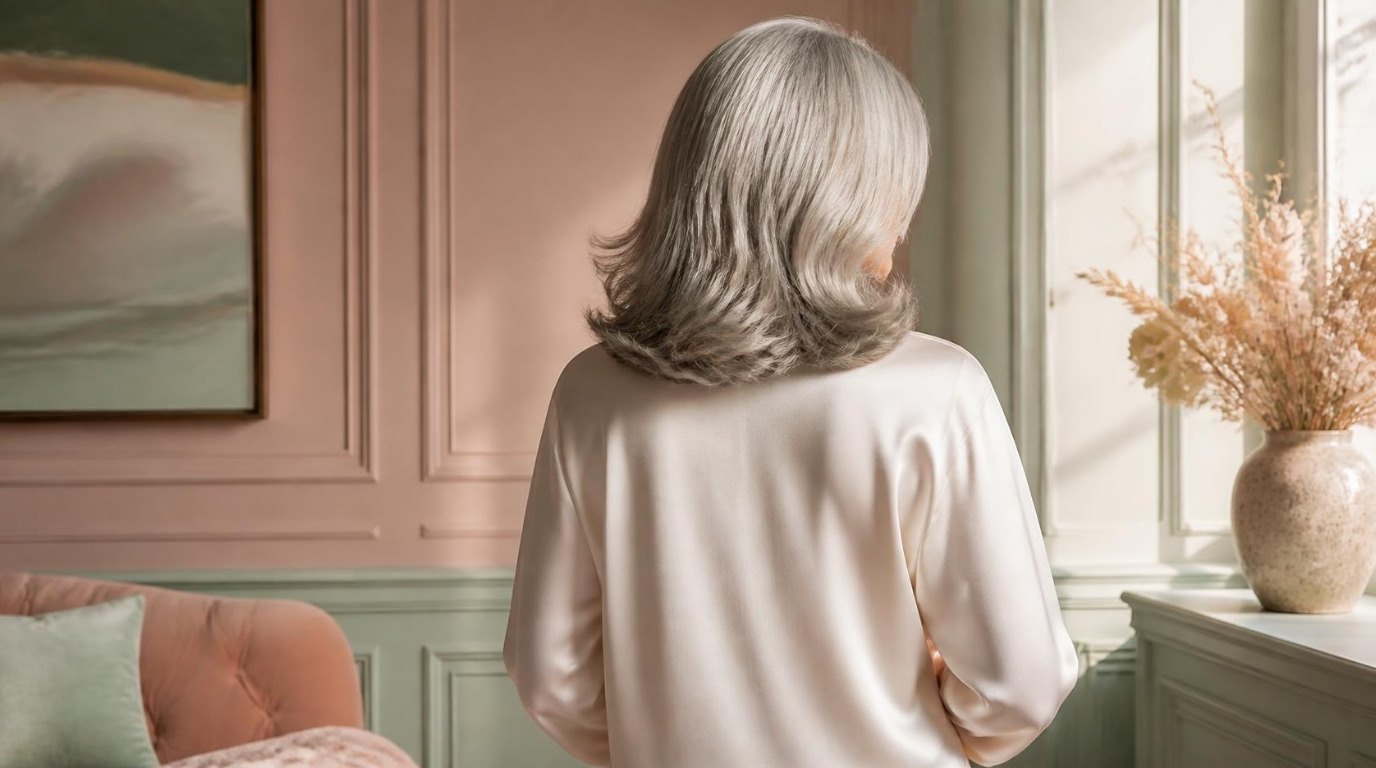
Gray hair isn't a problem you have to solve. It's a change in color and texture, and once you understand both, you get to choose how you meet it: by letting the silver grow in proudly, or by blending it so the shift feels softer and slower. Neither path is more "brave" or more "polished" than the other. They're simply two different ways of caring for the hair you have right now.
What makes gray feel tricky usually isn't the color itself. It's the in-between: the line at your roots, the strands that suddenly feel wiry, the yellow tint that shows up after a summer of sun. Those are all fixable with a few calm habits, and none of them require a full salon overhaul.
This guide walks you through gray hair from both sides. You'll find a "which path fits you" table with time, budget and monthly upkeep, a three-stage grow-out timeline for the awkward line phase, care habits that keep silver bright and soft, and the blending options (highlights, lowlights, gloss and root touch-ups) that make the transition gentle if you're not ready to go all in.
Take a breath. There's no deadline here, and you're allowed to change your mind halfway.
First, What Actually Changes When Hair Turns Gray
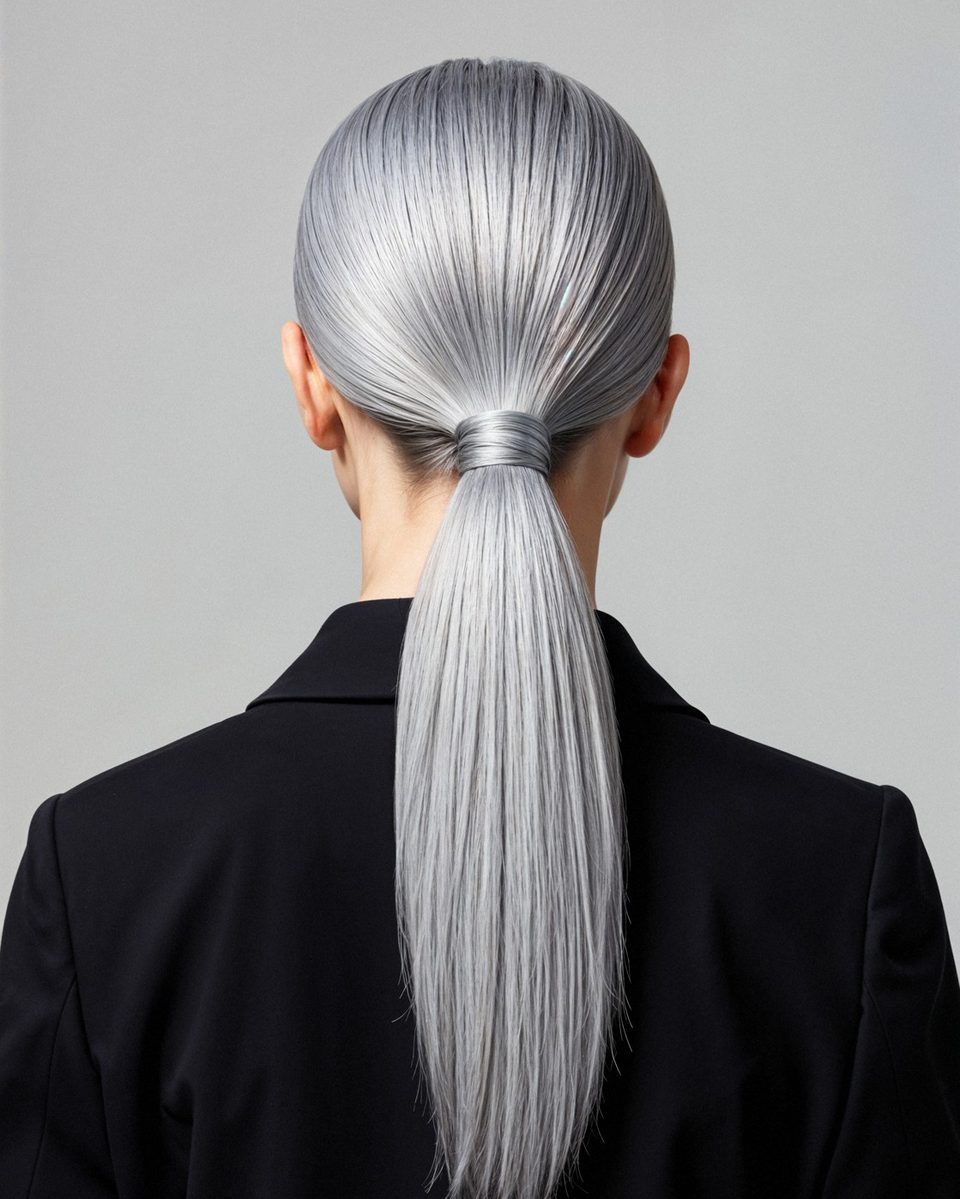
Each strand of hair gets its color from pigment made at the root. Over time, those pigment cells slow down, and new hair grows in with less color or none at all. A strand with no pigment looks white; a mix of white and pigmented strands reads as gray or salt-and-pepper from a distance.
The part nobody warns you about is texture. Gray strands often feel a little coarser, drier or more "springy" than the rest of your hair, partly because the scalp tends to make less oil as time goes on. They can also pick up a yellow or brassy tint from sun, heat styling, hard water minerals and even some styling products. That's why so much of gray hair care is really about two things: moisture and keeping the tone clear.
A small honest admission: I once thought gray hair care meant special everything. It doesn't. It means a slightly gentler version of a good basic hair care routine, with one or two extra steps for tone.
A kind safety note: gradual graying is a normal part of life. If you notice sudden patches of hair loss, very fast changes along with feeling unwell, or an itchy, irritated scalp that doesn't settle, it's worth checking in with a doctor or dermatologist rather than treating it as a cosmetic question.
Which Path Fits You? Embrace vs Blend
Before you buy anything or book anything, look at the real-life cost of each option. Not just money, but time in the chair, time between appointments and how much you want to think about your roots. Find the row that sounds most like the life you actually live.
| Path | Time in the salon | Budget | Upkeep per month | Best for you if… |
|---|---|---|---|---|
| Grow it out naturally | Only regular trims | $ | A purple shampoo wash once a week, a trim every 8–10 weeks | You're ready to stop coloring and can live with a visible line for a few months |
| Grow out with blending help | 1–3 longer visits during the transition | $$–$$$ (front-loaded) | Toning gloss every 6–8 weeks while the line grows out | You want to go gray, but the sharp root line makes you want to give up |
| Highlights and lowlights | 2–3 hours, every 3–4 months | $$$ | Gloss or toner between visits, purple shampoo weekly | You have 20–50% gray and want it to look intentional and sun-kissed |
| Demi-permanent gloss | About 1 hour, every 6–8 weeks | $$ | Gentle sulfate-free washing so it fades softly | You want to soften gray rather than hide it, with no hard regrowth line |
| Keep covering with root touch-ups | Color every 4–6 weeks | $$–$$$ | Root powder or spray between visits | You love your current color and aren't ready to change anything yet |
If two rows feel equally right, choose the one with less upkeep for the next three months. You can always move from blending to embracing (or the other way around) once you see how your gray actually looks as it grows.
Path One: Embracing Your Gray
Going fully gray is less about one big decision and more about patience in stages. The color you see in the first month isn't the color you'll end up with, so try not to judge the whole journey by the first inch of root.
The 3-Stage Grow-Out Timeline
Hair grows roughly half an inch a month, so every timeline is a little different depending on your length. Here's what the journey usually feels like for shoulder-length hair.
Stage 1: The Awkward Line (Months 0–4)
This is the hardest stage, and it's completely normal to want to reach for the box dye. The contrast between your gray roots and old color is at its sharpest. What helps: a toning gloss from your colorist to soften the old color so it's closer to your natural shade, and a weekly purple shampoo so the new silver looks bright instead of dull. Take a photo of your roots once a month in the same spot by a window. Seeing the progress on paper (or in your camera roll) makes the slow weeks feel less endless.
Stage 2: The Halfway Point (Months 4–9)
Now there's enough gray to see your real pattern. Maybe you have a silver streak at the front, maybe it's darker at the back. This is a lovely moment to stop and notice which shade you actually have, because it's often prettier than you imagined. Trims every 8–10 weeks gradually remove the old colored ends. Keep moisture high in this stage, since you're caring for two different textures at once.
Stage 3: Fully Silver (Month 9 and Beyond)
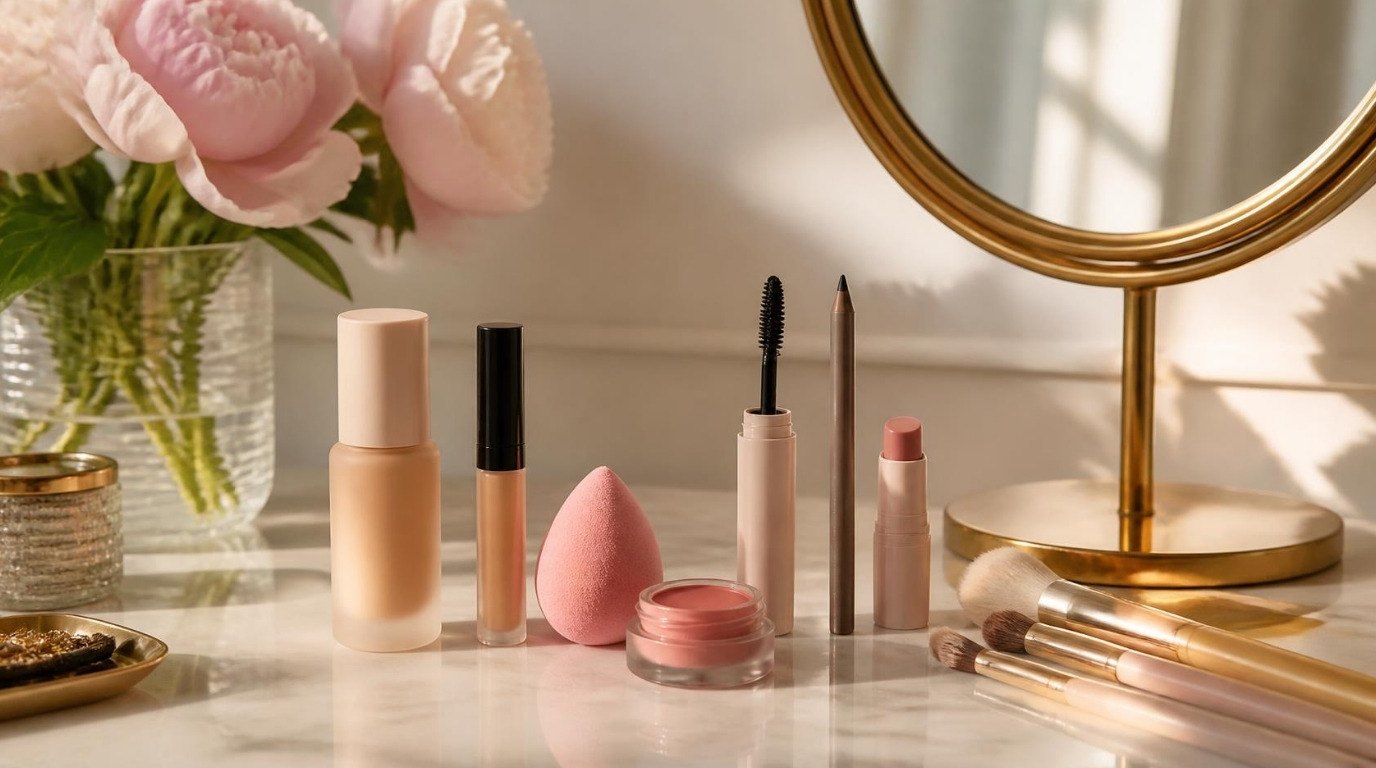
Once most of the old color is gone, your routine gets simpler. Focus on tone (keeping yellow away), softness and shine. Many women find they actually spend less time on their hair in this stage than they ever did while coloring. That freedom is the quiet reward nobody talks about enough. I've found the same freedom with my makeup bag, and these soft, never-cakey makeup ideas for mature skin pair beautifully with silver hair.
7 Care Habits That Keep Gray Hair Bright and Soft
- Tone once a week, not every wash. A purple toning shampoo cancels yellow, but using it every day can leave a lilac cast. Once a week is plenty for most people. Leave it on for 2–3 minutes, then follow with your usual conditioner.
- Add a clear gloss for shine. Gray strands scatter light, which can make them look flat. A clear at-home hair gloss treatment every two to three weeks smooths the surface so the silver reflects light again. Look for one that says color-safe and clear (not tinted) if you're fully embracing your natural shade.
- Make conditioner non-negotiable. Condition every single wash, from mid-lengths to ends, and leave it on while you finish your shower. Once a week, swap in a richer mask for 5–10 minutes.
- Protect from heat. Hot tools are one of the biggest causes of yellowing. Mist a heat protectant spray over damp hair before blow-drying, and keep straighteners on a medium setting rather than the highest one.
- Detangle gently. Coarser gray strands snag easily. A wide-tooth comb used on damp, conditioned hair, starting at the ends and working up, prevents the breakage that makes gray look frizzy.
- Swap tight elastics for silk. Soft cream silk scrunchies hold hair without the dents and snapping that thin rubber bands can cause. They're also kinder on the delicate hairs around your face.
- Clarify once a month. Hard water and product build-up both dull silver. A clarifying shampoo once a month (or after a pool day) resets everything, so your toning shampoo can actually do its job.
Your scalp matters just as much as your lengths, especially if it's feeling drier lately. My scalp care routine covers gentle exfoliation and massage that fit neatly alongside these habits.
Making Peace With the Awkward Line
The line itself is temporary. How you feel about it is something you can work with right now. A few things that make it easier:
- Decide on a "check-in date" three months from now. Until then, you're not allowed to quit (but you are allowed to complain).
- Ask your colorist about softening the line with a few fine lowlights or a toning gloss, rather than cutting everything off at once.
- Wear colors near your face that flatter silver: soft blue, lavender, cream, berry and charcoal tend to look beautiful with cool gray.
- Find two or three women with gray hair you admire and keep their photos somewhere you'll see them. It's a gentle reminder of where you're heading.
Path Two: Blending Gray Gracefully
Blending is for anyone who wants gray to look softer, slower or more intentional. It's also a wonderful middle ground if you think you might go fully gray one day, but not just yet. The goal isn't to hide every silver strand. It's to make them look like they belong.
Highlights and Lowlights
Fine highlights placed through gray-heavy areas make the silver look like sun-kissed lightness instead of regrowth. Lowlights (a few strands slightly darker than your natural base) add depth so gray doesn't look washed out. Together, they create a multi-tonal look where the roots grow in gently, without a hard line.
This is a great option once you're somewhere between 20 and 50 percent gray. Expect a longer first appointment, then visits every three to four months. Ask for fine, scattered pieces rather than chunky stripes so regrowth stays soft.
Demi-Permanent Gloss
A demi-permanent gloss doesn't fully cover gray. It tints it, so silver strands take on a soft, translucent version of the color around them. It fades gradually over six to eight weeks, which means no harsh line as it grows out. If you want to look like yourself, just a little more blended and shiny, this is often the easiest place to start.
It's also a gentle bridge if you're currently using permanent color and want to transition away from it. Many colorists suggest switching to gloss for a few months before going fully natural.
Root Touch-Up Between Visits
For those last two weeks before an appointment, a root touch-up powder is a small but mighty helper. Choose the shade that matches your base color (if you're in between, go slightly lighter, since darker looks heavier at the part). Apply with the little brush only along your part and hairline, tap off the excess, and it washes out with your next shampoo.
A tip: these powders can also make a thinner part look fuller. If that's something you've noticed, my guide on how to make thin hair look thicker has a few more gentle tricks that pair well with blending.
What To Ask Your Colorist
Feeling unsure at the salon is completely normal, so here's a mini script you can read straight from your phone:
- "I'd like my gray to look blended, not covered. What would you suggest for my percentage of gray?"
- "How long can I go between appointments with that option?"
- "If I decide to go fully gray later, will this make the grow-out easier or harder?"
- "What should I do at home to keep the tone from turning yellow or brassy?"
A good colorist will happily answer all four. If someone pushes you toward full coverage when you asked for blending, it's okay to look for a second opinion.
A Simple Weekly Rhythm for Gray Hair
Whichever path you choose, gray hair does best with a steady, gentle rhythm rather than a dramatic routine you abandon after two weeks. Here's an easy week you can copy, then adjust to how often you actually wash.
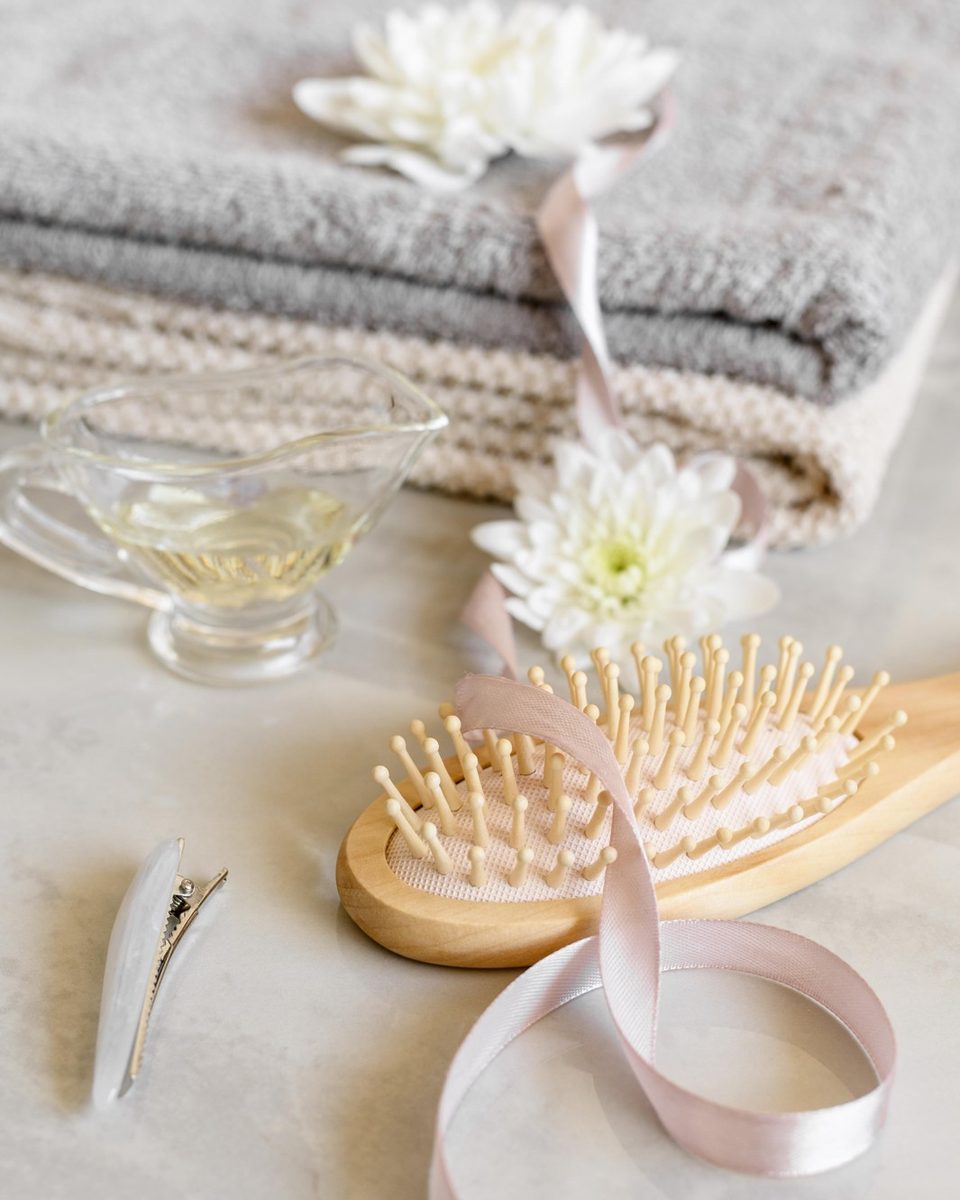
- Wash day one: Gentle sulfate-free shampoo on the scalp only, conditioner from mid-lengths to ends, and a wide-tooth comb while the conditioner sits.
- Wash day two: Your toning wash. Purple shampoo for 2–3 minutes, then a richer mask for 5–10 minutes.
- Wash day three: Same as day one, plus a few drops of a light hair oil on the ends once your hair is almost dry.
- Every two to three weeks: A clear gloss treatment for shine.
- Once a month: A clarifying wash, a root photo by the window and a quick check of how your tone looks in daylight.
Keep the products for this rhythm together on one shelf or in one basket. When everything lives in one spot, the routine almost runs itself, and you're far less likely to skip the moisture steps on a busy morning.
Feeling Mixed About Going Gray
It's completely normal to feel two things at once: excited to stop fighting your roots and a little wobbly about what gray "means." Hair carries a lot of feelings, and changing it can stir up more than you expected.
A few gentle reminders that help: you don't owe anyone an explanation for your hair color, in either direction. You're allowed to love your silver one day and book a gloss the next. And the way you speak to yourself in the mirror matters more than any shampoo. Try swapping "I look tired" for "I'm still getting used to this," which is kinder and usually more true.
Little Style Shifts That Love Silver
When your hair color changes, the colors around your face can shift a little too. This isn't about a full makeover, just a few small tweaks that make silver look intentional and bright.
- Define your brows softly. As hair lightens, brows can fade too. A brow pencil a shade or two lighter than you used before keeps your face framed without looking harsh.
- Add a little warmth to your cheeks. A rosy or berry blush keeps cool gray from washing out your complexion.
- Try a clearer lip color. Soft pinks, roses and berries usually look fresher with gray than very warm oranges or browns.
- Revisit your wardrobe palette. Gray tends to love cool, clear tones. If you've never figured out your best shades, my guide to building a wardrobe color palette makes it much easier.

6 Gray Hair Mistakes To Skip
- Using purple shampoo every day. Too much toning leaves a violet tint and can feel drying. Once a week is enough for most hair.
- Skipping heat protection. Heat is a fast way to turn silver yellow. Protect every time you use hot tools.
- Pulling out gray strands. Plucking can irritate the follicle and won't stop more gray from growing. Leave them be, or blend them.
- Judging your gray in month one. The first inch of root rarely shows your real pattern. Give it at least four months before deciding.
- Box-dyeing over a half-grown line. If you need a pause, a gloss or root powder is far easier to undo than permanent color.
- Forgetting the sun. Long beach days and pool water can yellow and dry silver. A hat, a leave-in with UV filters, and a clarifying wash afterward help a lot.
Gray hair can also feel extra dry in the colder months, when indoor heating pulls moisture from everything. My winter hair care guide is a lovely companion for that season.
Final Thoughts
Whether you let your silver grow in all at once, soften it with a gloss or blend it slowly over a year, you're not doing gray hair "wrong." You're choosing what feels like you, and that's the whole point.
Start with one small step this week: a gentle purple wash, a gloss appointment or simply a photo of your roots by the window. Your hair is changing, and you get to meet that change with patience, kindness and a little curiosity about the beautiful shade that's waiting for you.