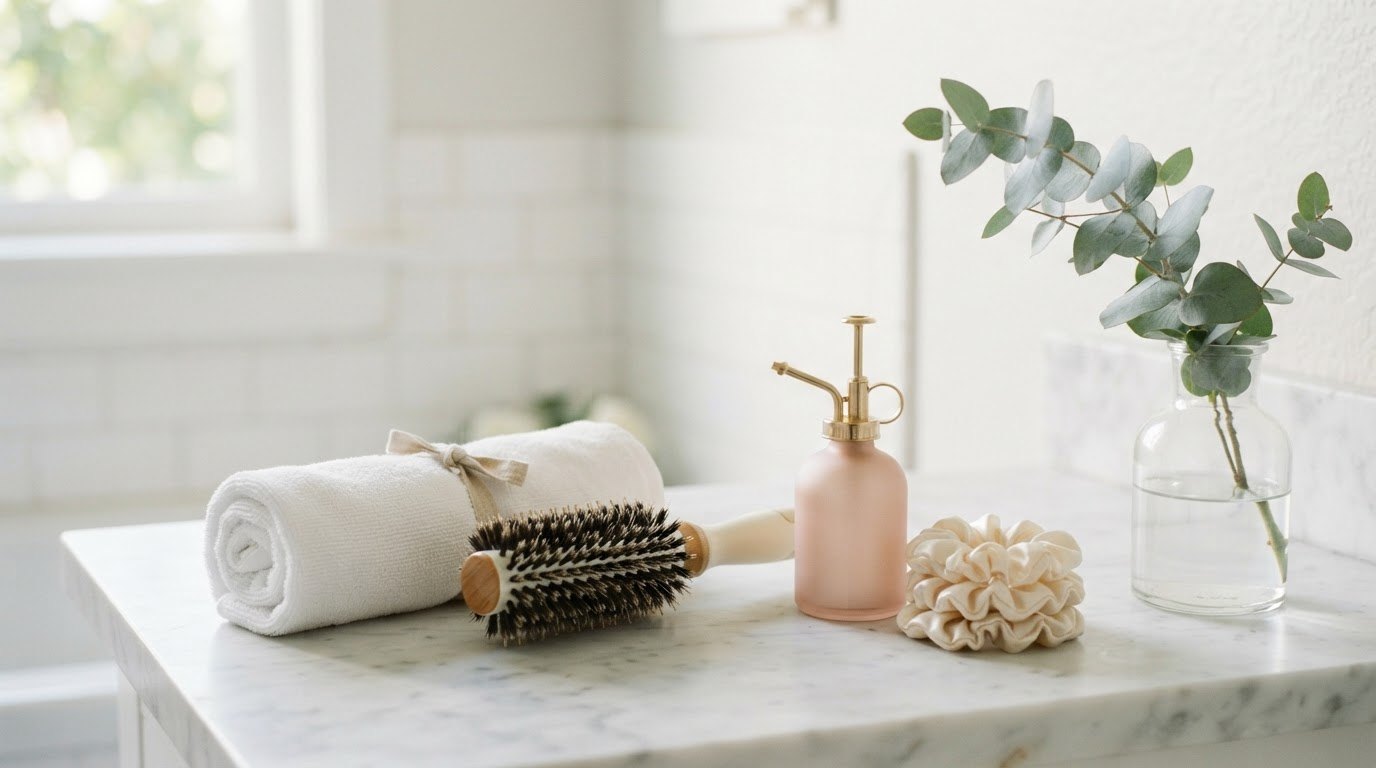
Fine, thin hair usually isn't the problem. The problem is weight. Heavy conditioners, rich oils, product buildup and drying your hair flat against your head all pull it down, and fine strands simply don't have the strength to push back. Take some of that weight away and add a little lift at the root, and the same hair can look noticeably fuller.
It took me a long time to understand that "more product" was rarely the answer. Usually it's the right product in a smaller amount, in the right place, plus a few minutes of smarter drying.
This guide is all about how to make thin hair look thicker with care habits rather than complicated styling. You'll find why fine hair falls flat, a "what flattens fine hair" do and don't card, 15 easy tricks, a wash-day to styling volume routine you can follow step by step, a few haircut tips to ask for and a gentle note on when thinning deserves a doctor's visit.
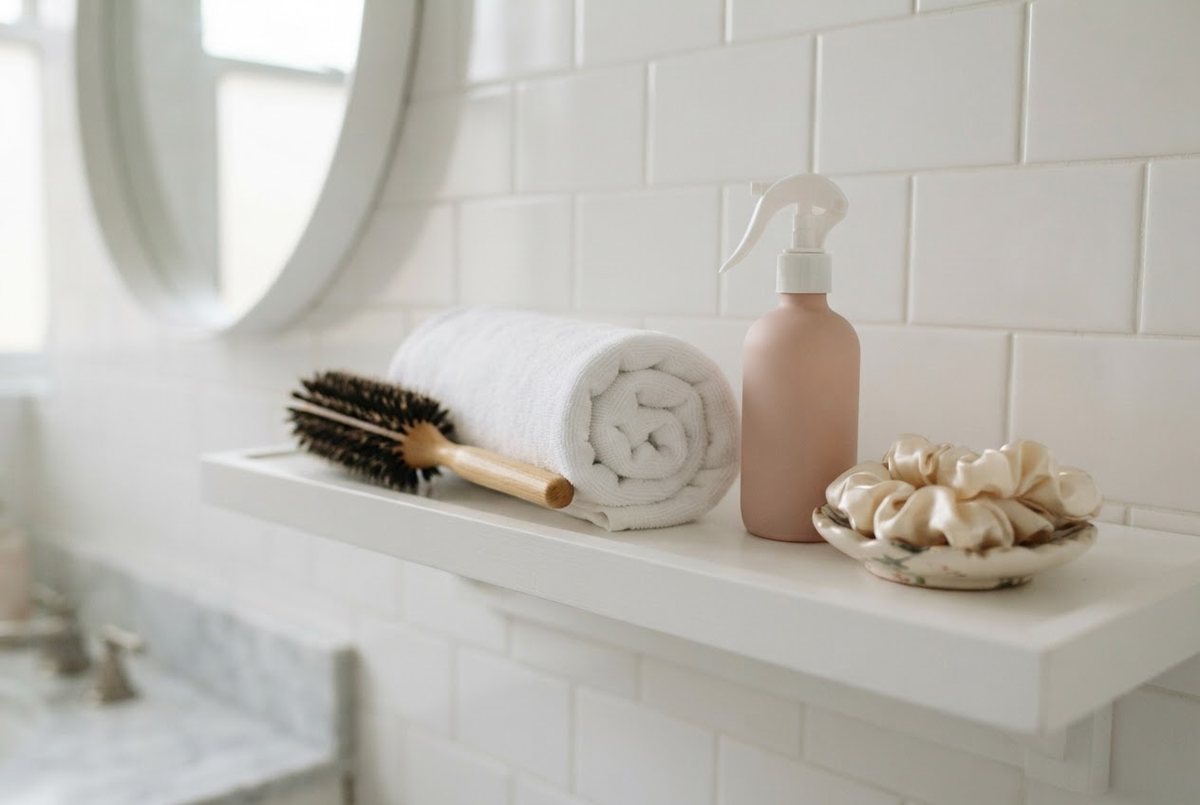
Fine Hair vs Thin Hair: What's the Difference?
People use these words interchangeably, but they describe two different things, and knowing which one you have helps you pick the right tricks.
- Fine hair describes each strand. Fine strands have a small diameter, which makes them soft and silky but easily weighed down. You can have fine hair and still have lots of it.
- Thin hair describes density, meaning how many strands you have on your head. With thin hair, you may see more scalp, especially along your part.
Many people have both. The good news is that most of the tricks below help with either, because they work on the same two things: keeping hair light and lifting it at the root.
If you want a quick check, take your ponytail between your fingers. If it feels smaller than a pencil's width around, you're likely in the fine-and-thin camp. That's completely normal, and it just means your hair loves a lighter touch.
What Flattens Fine Hair: Do and Don't
Before adding anything new, it helps to stop doing the things that quietly pull your hair down. Here's the do and don't card I'd keep in mind every wash day:
| Don't | Do Instead |
|---|---|
| Apply conditioner from roots to ends | Condition only the mid-lengths and ends |
| Use rich oils and heavy masks every wash | Keep masks to once a week, on the ends only |
| Rub hair hard with a cotton towel | Squeeze and blot with a microfiber towel |
| Let hair air dry flat against your head | Rough-dry the roots first, lifting them away from the scalp |
| Pile on products every day | Clarify every two to four weeks to remove buildup |
| Wear the same part every day | Flip your part to the other side now and then |
| Sleep on wet hair | Dry your roots before bed |
| Use tight elastics and harsh clips | Choose soft scrunchies and loose, gentle hold |
| Brush aggressively while hair is wet | Detangle gently from the ends up |
Even swapping two or three of these can make a visible difference within a week.
15 Easy Tricks To Make Thin Hair Look Thicker
You don't need to do all fifteen. The first six are about care in the shower, the next six are about drying and finishing, and the last three protect the hair you have so it keeps looking full over time. Start with whichever group feels easiest and add more once it becomes a habit. Even two or three of these, done consistently, make a real difference.
1. Switch to a Volumizing Shampoo
A volumizing shampoo made for fine hair cleans without leaving a heavy film behind. Look for words like "volumizing," "lightweight" or "for fine hair" on the label, and skip formulas that promise intense smoothing or rich moisture. Massage it into your scalp, not your lengths. The suds will clean the ends as you rinse.
2. Use a Lightweight Conditioner, Only Where It's Needed
Fine hair still needs conditioner, just less of it. A lightweight conditioner applied from your ears down keeps the ends soft without flattening the roots. Use an amount about the size of a large coin, leave it on for a minute or two and rinse well with cool-to-lukewarm water.
3. Clarify Every Few Weeks
Dry shampoo, sprays, hard water and even conditioner residue build up slowly. Every two to four weeks, wash with a clarifying shampoo instead of your usual one. Many people notice their hair feels lighter and bouncier the very same day. If your hair is color-treated or feels dry, choose a gentle clarifying formula and follow with your lightweight conditioner on the ends, since clarifying can feel a little stripping.
4. Keep Your Scalp Healthy
A clean, comfortable scalp is the base of fuller-looking hair. Gentle scalp massage while you shampoo (one to two minutes, using your fingertips, not your nails) feels lovely and helps lift away buildup. My scalp care routine walks through a simple weekly rhythm if you want to go further.
5. Blot With a Microfiber Towel
Rubbing wet hair roughens the strands and can lead to breakage, which makes thin hair look even thinner. A microfiber hair towel wrap soaks up water faster, so you spend less time with heat on your hair. Squeeze, don't rub, and leave it on for around ten minutes while you do your skincare.
6. Add Root Lift Spray at the Roots Only
A root lift spray gives fine hair a little grip and structure. Part damp hair in sections and spray directly onto the roots, then blow-dry. Two or three spritzes per section are usually enough. More can make the roots feel stiff or sticky.
7. Rough-Dry Your Roots First
Before you pick up a brush, use your fingers and the dryer on medium heat to dry the first few inches of hair at the roots, moving them back and forth in different directions. This "confuses" the root so it doesn't settle flat into its usual place.
8. Blow-Dry Upside Down for a Minute
Flip your head forward and dry the roots for a minute or two. Gravity pulls the hair away from your scalp while it sets. Flip back up, then finish the lengths normally. It's the easiest volume trick there is.
9. Finish With a Round Brush
A medium ceramic round brush lets you lift each section at the root while you dry. Hold the section straight up (or slightly forward) from your head, point the dryer nozzle down the hair shaft and roll the brush away from your scalp. Medium heat is enough. Fine hair doesn't need the hottest setting.
10. Use the Cool Shot
When a section is dry, hit it with the cool-shot button for five to ten seconds while it's still on the brush. Cool air helps the shape set, so the lift lasts longer through the day.
11. Flip Your Part
Your hair gets used to falling one way. Switch your part to the opposite side, or move it slightly off-center, and the roots have to stand up against their habit. Instant lift, no product needed. A zigzag part can also help hide scalp along the line.
12. Use Dry Shampoo Before Hair Gets Oily
Dry shampoo isn't only for second-day rescues. A light mist at the roots on clean, dry hair adds texture and grip. Hold it about a hand's length away, spray in short bursts and massage it in. Choose a tinted one if you have dark hair to avoid a white cast.
13. Fill In the Scalp Visually
If your part or crown shows more scalp than you'd like, a tinted root powder or root touch-up spray close to your hair color softens the contrast between hair and scalp. Apply it lightly with the brush along the part. It washes out with your next shampoo.
14. Be Gentle With Ties and Sleep
Tight elastics break fine strands at the same spot again and again. A soft silk scrunchie holds hair with less tension and fewer kinks. At night, a loose low tie and a smooth pillowcase reduce friction (my post on silk pillowcase benefits explains why that matters).
15. Go Easy on Heat and Color
Heat and chemical processing can make fine hair more fragile. Use a heat protectant spray every time you blow-dry, keep flat irons to occasions and give your hair a break between color appointments. Subtle highlights or dimensional color, done carefully by a professional, can also make hair look fuller because the variation in shade creates depth.
Wash-Day to Styling Volume Routine
Here's how the tricks fit together on a normal wash day. It takes around twenty to twenty-five minutes once you get used to it. Screenshot it and keep it on your phone until it feels automatic.
| Step | What To Use | Why It Adds Fullness |
|---|---|---|
| 1. Scalp massage and wash | Volumizing shampoo, fingertips only | Removes oil and buildup that weigh roots down |
| 2. Condition the ends | Lightweight conditioner, ears down | Keeps ends soft without flattening roots |
| 3. Cool rinse | Cool to lukewarm water | Leaves strands smoother and less frizzy |
| 4. Blot dry | Microfiber towel, about 10 minutes | Less friction and less time under heat |
| 5. Protect and lift | Heat protectant on lengths, root lift spray at roots | Gives fine roots grip and structure |
| 6. Rough-dry roots | Fingers and dryer, head flipped forward | Sets roots standing away from the scalp |
| 7. Smooth the lengths | Round brush, medium heat, sections lifted up | Adds lift and body through the lengths |
| 8. Set it | Cool shot on each section | Helps volume last through the day |
| 9. Finish | Light dry shampoo mist at roots, part flipped | Adds texture and visible lift |
On non-wash days, steps 6, 8 and 9 alone are often enough to bring flat roots back to life. For the bigger picture of how often to wash and which products suit your hair, my hair care routine guide covers the full weekly rhythm.
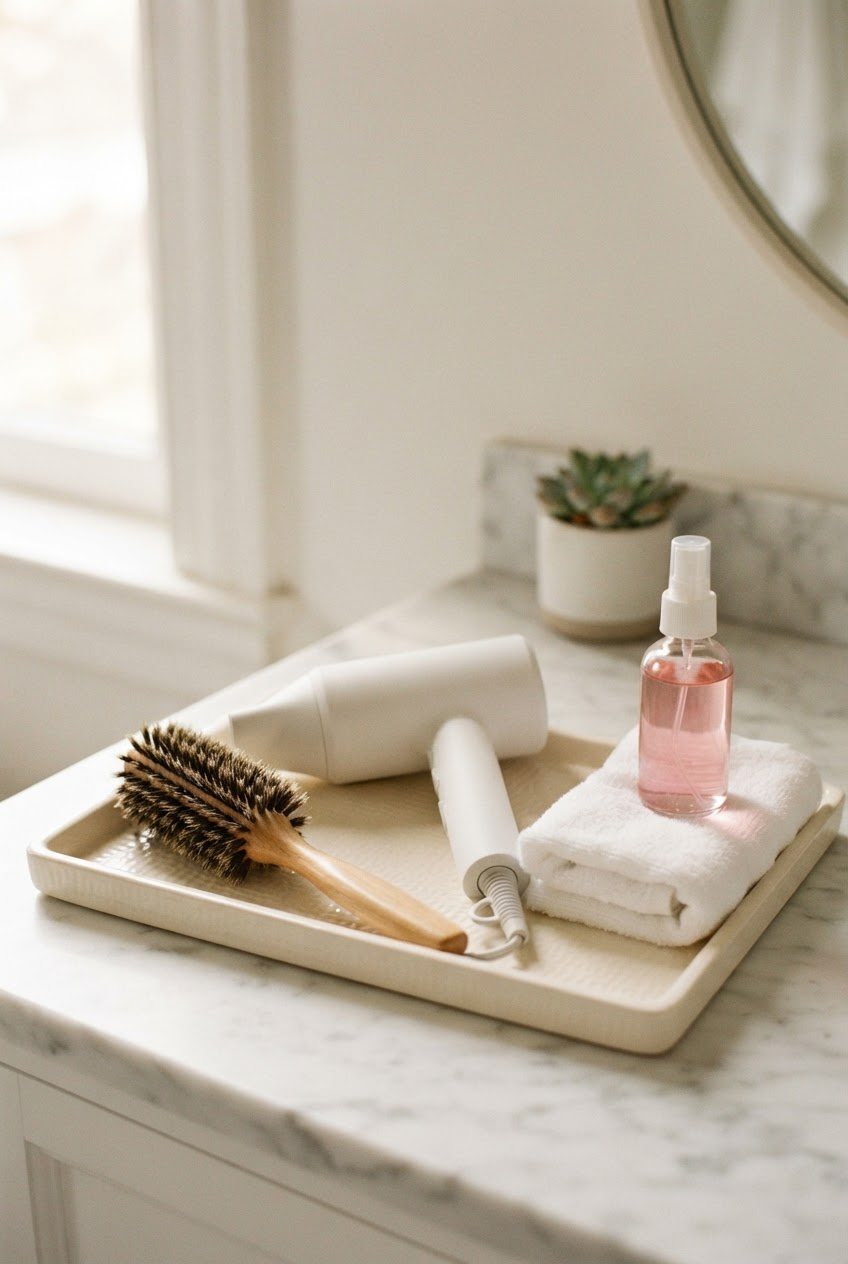
How Often To Wash Fine Hair
Fine hair tends to look oily sooner because there's less hair to spread the scalp's natural oil across. Many people with fine hair feel best washing every day or every other day, and that's okay as long as the shampoo is gentle and the conditioner stays on the ends.
If your hair looks flat by the afternoon of day two, try washing more often rather than piling on dry shampoo. If your scalp feels tight or itchy, wash a little less often and choose a milder shampoo. There's no perfect number, only what keeps your scalp comfortable and your roots light. My post on how often to wash your hair based on hair type has a helpful breakdown.
How To Read Labels for Fine Hair
You don't need to become an ingredient expert, but a quick look at the label can save you from products that quietly weigh fine hair down. Here's what I'd look for and what I'd go easy on:
- Helpful words: "volumizing," "lightweight," "weightless," "for fine hair," "body" or "thickening." These formulas are designed to leave less residue behind.
- Go easy on: products marketed as "intense repair," "ultra-rich," "smoothing" or "for thick, coarse hair." They're lovely for the hair they're made for, but on fine strands they often feel heavy by midday.
- Oils and butters: a tiny drop of a light hair oil on the very ends is fine, especially in winter. Thick butters and heavy oils near the roots are usually too much.
- Texture of the product: sprays, foams and light lotions suit fine hair better than thick creams and balms.
A simple test: rub a small amount of the product between your fingers. If it leaves a slick, greasy feel on your skin after a minute, it will probably do the same at your roots.
A Quick Refresh for Non-Wash Days
Flat second-day roots don't mean you have to start over. This five-minute refresh brings back most of the lift:
- Mist the roots lightly with water or a little root lift spray, just enough to make them slightly damp.
- Flip your head forward and dry the roots with your fingers for about a minute, moving them in different directions.
- Change your part to the opposite side or a little off-center.
- Add a light mist of dry shampoo at the crown and along the part, wait a minute, then massage it in with your fingertips.
- Hit the roots with the cool shot for a few seconds to set everything in place.
On busy mornings, steps 3 and 4 alone take under a minute and still make a visible difference.
Haircut Tips To Ask For
The right cut does a lot of the work for you. You don't need to describe a specific style, just a few principles your stylist will understand:
- Ask for blunt ends. A strong, even baseline makes hair look denser at the bottom. Heavy thinning or razoring at the ends tends to make fine hair look wispy.
- Ask for subtle, long layers only. A few soft layers can add movement, but lots of short layers take away the weight that makes ends look full.
- Keep length where your hair looks thickest. For many people with fine hair that's somewhere between the chin and the collarbone. Ask your stylist where your hair starts to look thin and cut just above that point.
- Book regular trims. Every eight to twelve weeks keeps split ends from making the bottom look see-through.
Little Habits That Support Fuller-Looking Hair
Hair grows slowly, so these won't change anything overnight. But over months they help the hair you have stay strong and look its best.
- Eat enough, regularly. Very restrictive eating can show up in your hair a few months later. Steady meals with enough protein support your whole body, hair included.
- Handle stress gently. Big stressful periods can be followed by extra shedding. Rest, sleep and small calming habits matter more than any serum.
- Protect hair from sun and wind. A hat or scarf on very sunny or windy days reduces dryness and breakage.
- Be patient with new products. Give a new routine at least four to six weeks before deciding whether it works.
When To See a Doctor
Most fine or thin hair is simply your natural hair type, and all of the tricks above are about making the most of it. But please be kind to yourself and check in with a doctor or dermatologist if:
- your hair is suddenly thinning or you're shedding a lot more than usual,
- you notice patches of hair loss or a widening part over a few months,
- your scalp is itchy, red, scaly or painful,
- the change came after an illness, a new medication, pregnancy or a very stressful time.
Hair changes can have many causes, and some of them are easy to check and treat. Getting answers early is a gentle act of self-care, not an overreaction. If shedding is on your mind, my article on hair loss gathers some helpful starting points too.
Final Thoughts
Fine, thin hair can look soft, healthy and full when it's treated with a lighter hand. Less weight, smarter drying, a fresh part and a little patience go a surprisingly long way.
Start with the do and don't card, pick the two tricks that feel easiest and add the rest of the routine slowly. Your hair doesn't need to be different. It just needs a little lift in the right places.