Healthy hair starts about an inch above where most of us focus. Your scalp is skin, with oil glands, a moisture barrier and a natural balance of its own, and it responds to care the same way your face does. When it's clean, calm and not over-scrubbed, hair tends to look softer and fuller at the root. When it's ignored or overtreated, you get the itch, the flakes, the greasy-by-noon roots or the tight, dry feeling.
This guide gives you a simple weekly scalp care routine you can actually keep: how to figure out your scalp type, how often to wash for that type, a seven-step wash-day routine, a weekly scalp schedule card, and the small habits between washes that make the biggest difference.
No complicated regimen needed. A few minutes of attention, a couple of times a week, is usually all your scalp is asking for.
Why Your Scalp Deserves Its Own Routine
Most hair routines are built around the lengths: conditioners, masks, oils, heat protection. That makes sense, because the lengths are what you see. But the scalp is the only living part of the picture, and it has very different needs.
- It makes oil. Sebum is useful (it protects the skin), but when it builds up with sweat, dead skin and product, roots look flat and the scalp can feel itchy.
- It sheds skin. Like everywhere else, the scalp renews itself. If those cells don't rinse away properly, they can clump into visible flakes.
- It has a barrier. Harsh shampoos, very hot water and too much scratching can weaken it, leaving the scalp tight, sensitive or red.
A scalp care routine simply means cleaning, balancing and protecting that skin on purpose, instead of hoping the shampoo you bought for your ends is also right for your roots. If you'd like the full picture of the lengths as well, my hair care routine with a simple weekly schedule pairs perfectly with everything below.
What's Your Scalp Type? A Simple Table
Your scalp type and your hair type aren't always the same. You can have dry, frizzy ends and an oily scalp, or thick hair and a sensitive scalp. Look at how your scalp feels 24–48 hours after washing, then find your row.
| Scalp type | How it feels | Wash frequency | What helps | What to skip |
|---|---|---|---|---|
| Oily | Roots look greasy within a day, scalp may feel itchy when oily | Every 1–2 days | Gentle daily-use shampoo, double shampoo on wash day, lightweight conditioner on ends only | Heavy oils at the root, very hot water, touching your hair through the day |
| Dry and tight | Tight after washing, small dry flakes, hair feels dull at the root | Every 3–4 days | Mild, moisturizing shampoo, lukewarm water, a light hydrating scalp serum | Clarifying shampoo more than twice a month, hot styling right at the root |
| Flaky | Larger, oilier flakes, itch, sometimes redness along the hairline | Every 2–3 days | Regular gentle washing, thorough rinsing, an anti-dandruff shampoo if flakes persist | Scratching, picking flakes, skipping washes to "rest" the scalp |
| Sensitive | Stings or itches with new products, can look pink after washing | Every 2–3 days | Fragrance-free products, short ingredient lists, patch testing new formulas | Strong fragrance, scrubs with grains, essential oils applied directly |
| Balanced | Comfortable for 2–3 days, no flakes, no tightness | Every 2–3 days | Keep it simple, scalp massage on wash days, weekly brush-out | Changing everything at once because of a trend |
If you're between two rows, follow the one that matches your most annoying symptom. And remember that scalps change with the seasons: heated indoor air in winter often nudges scalps toward the dry and tight row, while summer heat pushes them toward oily.
The 7-Step Scalp Care Routine for Wash Day
This is the core routine. It takes about ten minutes more than a usual hair wash, and you only do the full version on wash days.
1. Brush Before You Wash
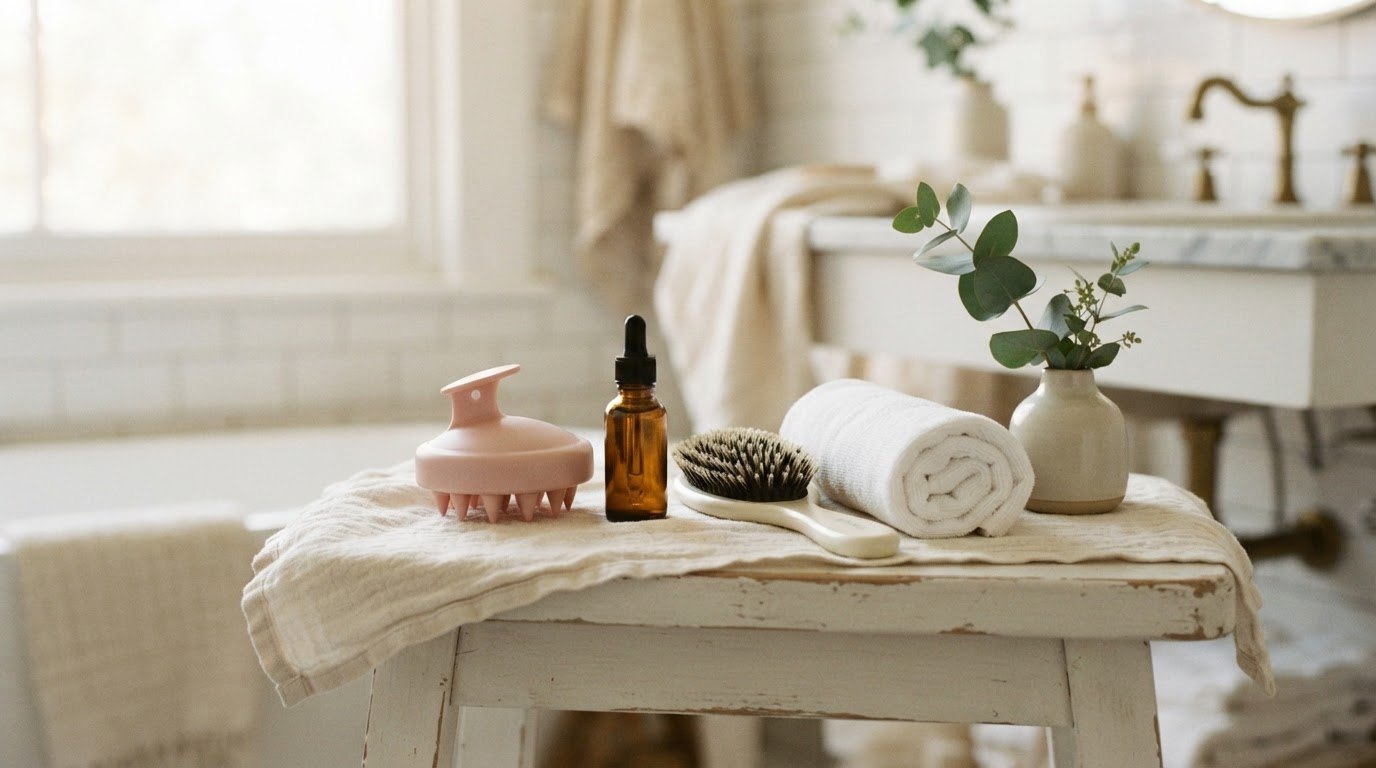
Start with dry hair. Use a soft brush or a wide-tooth comb to detangle from the ends up, then brush gently from the scalp outward a few times. This loosens flakes and product buildup so the shampoo can reach the skin, and it means fewer tangles once your hair is wet. A soft cream boar bristle brush is a good pick for this step because it moves oil from the roots down the lengths without scratching.
2. Wet Your Hair Thoroughly With Lukewarm Water
Spend a full minute just wetting your hair, lifting sections so water reaches the scalp underneath. Thick hair often stays dry underneath for longer than you'd think, and shampoo spreads much more evenly on fully wet hair. Keep the water lukewarm: hot water strips oil, which can leave dry scalps tighter and push oily scalps to make even more.
3. Shampoo the Scalp, Not the Lengths
Emulsify a coin-sized amount of shampoo in your palms with a little water, then apply it directly to your scalp in sections: hairline, crown, sides, nape. Look for a gentle, sulfate-free shampoo if your scalp is dry or sensitive; oily scalps often do well with a gentle daily formula used twice. Let the lather slide down your lengths as you rinse rather than scrubbing the ends.
4. Massage for Two Minutes
This is the step that turns a hair wash into scalp care. Use the pads of your fingers (never your nails) and move in small circles, slowly working from the front hairline to the back of your head. Two minutes feels long the first few times. Count to sixty twice, or let it last one song.
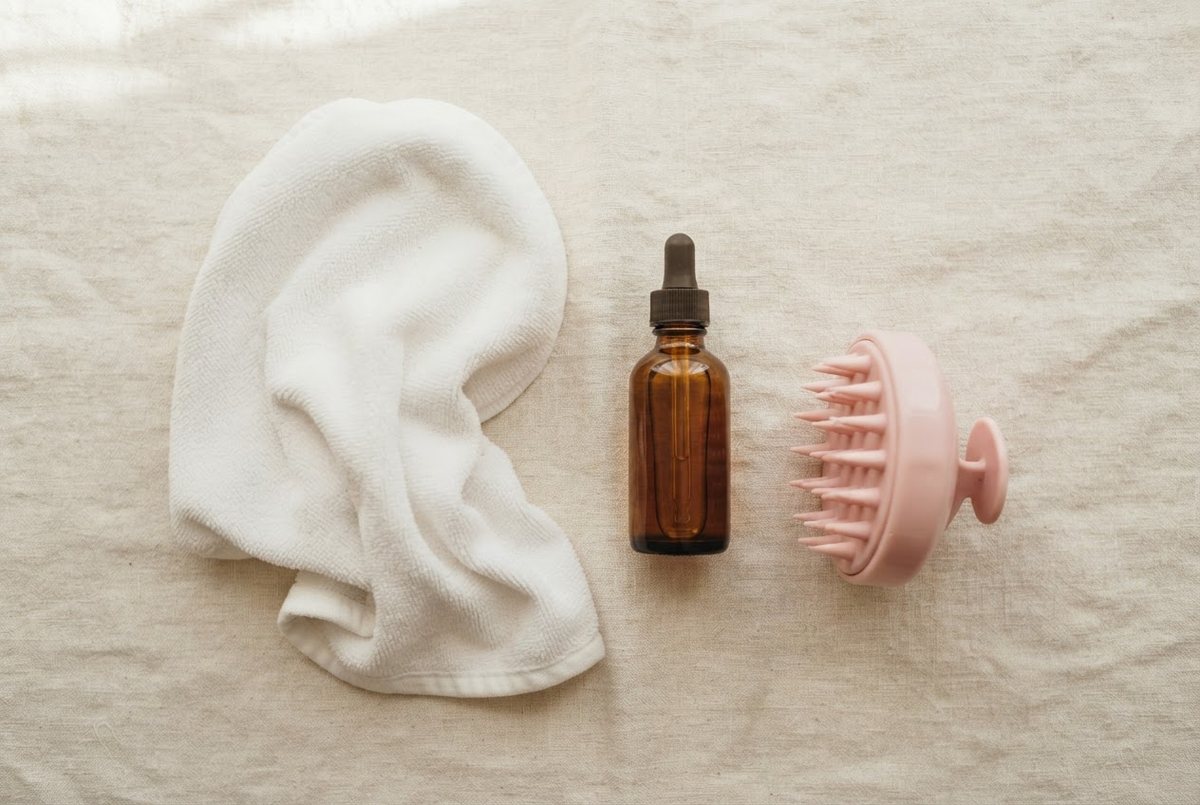
If you'd like a little help, a soft silicone scalp massager brush spreads shampoo evenly and feels lovely. Look for one with flexible, rounded bristles and use light pressure only. The goal is to lift buildup and relax the scalp, not to scrape it.
5. Rinse Longer Than You Think
Leftover shampoo is one of the most common causes of itchy scalps. Rinse until the water runs clear and your roots no longer feel slippery, then rinse for another 30 seconds. Lift sections at the back and behind the ears where suds like to hide.
6. Condition the Lengths Only
Apply conditioner from the ears down, comb it through with your fingers and leave it for two to three minutes. Keeping conditioner off the scalp prevents that heavy, greasy-at-the-root feeling the next day. Rinse with slightly cooler water at the end.
7. Dry Your Roots First
A damp scalp left wrapped up for an hour, or slept on wet, can feel itchy and look flat. Squeeze out water gently, then wrap your hair in a soft microfiber hair towel wrap for 10 minutes; it absorbs water quickly without the roughness of a regular towel. Then dry your roots with a blow-dryer on a cool or low setting, holding it about six inches away. The lengths can air-dry if you prefer.
If you like doing hair, face and body in one long, slow session, this whole routine fits right into my everything shower routine.
Your Weekly Scalp Schedule Card
Here's how a full week can look for a balanced or slightly oily scalp washed three times a week. Screenshot it and adjust the wash days to match your row in the scalp type table.
| Day | Scalp care | Time |
|---|---|---|
| Monday | Wash day: the full 7-step routine | 15 min |
| Tuesday | Brush-out morning and evening, hands off during the day | 2 min |
| Wednesday | Wash day, plus a few drops of scalp serum on dry or tight areas | 15 min |
| Thursday | Two-minute dry scalp massage before bed | 2 min |
| Friday | Wash day: double shampoo if you wore products, hats or worked out | 15 min |
| Saturday | Rest day: loose hairstyle, clean pillowcase | 1 min |
| Sunday | Weekly reset: wash brush and comb, check how your scalp felt this week | 10 min |
For a dry scalp, swap Wednesday's wash for a serum-and-massage evening. For an oily scalp, add a quick wash on Saturday. Once a month, replace one regular wash with a clarifying shampoo if you use a lot of styling products (dry and sensitive scalps can skip this or do it every other month).
Scalp Serums: Do You Need One?
A scalp serum is optional, not essential. A good wash routine does most of the work. That said, a serum can be a nice addition if your scalp feels tight or dry between washes, or if you enjoy a small evening ritual.
If you'd like to try one, choose a lightweight hydrating scalp serum with soothing, simple ingredients such as niacinamide, panthenol, hyaluronic acid or aloe, and skip anything heavily fragranced if your scalp is sensitive. Part your hair in a few lines, apply a few drops directly to the skin along each part, and massage it in for a minute. Two or three evenings a week is plenty.
Be wary of any product that promises to regrow hair or "cure" a scalp problem. A serum can make your scalp feel more comfortable; persistent issues need a proper diagnosis.
A 2-Minute Dry Scalp Massage for Evenings
A scalp massage doesn't have to happen in the shower. On non-wash days, a short dry massage helps loosen tension, spreads a little natural oil and simply feels calming. I like it as part of a slow evening, after a cup of tea and before a few lines of journaling, when my shoulders are still up near my ears from the day.
Here's how to do it in five easy moves:
- Sit comfortably and drop your shoulders. Take two slow breaths before you start. Tension in the neck and jaw often shows up as a tight scalp.
- Start at the hairline (20 seconds). Place your fingertips just inside your front hairline and make small, slow circles, moving the skin rather than sliding over it.
- Work over the crown (30 seconds). Move your hands back in lines, a few circles at each spot, like you're walking your fingers across your head.
- Behind the ears and the nape (40 seconds). This area holds a surprising amount of tension. Use slightly firmer, still gentle pressure and slower circles.
- Finish with a gentle lift (30 seconds). Spread your fingers into your hair at the roots, close them softly and lift slightly, then release. Repeat across your head.
If you use a scalp serum, do the massage right after applying it. If your scalp is oily, keep evening massages to two or three times a week, since lots of touching can make roots look greasier sooner.
Scalp Care for Everyday Situations
Your routine doesn't live in a vacuum. Workouts, hats and styling products all change what your scalp needs that week.
After Workouts
Sweat on its own isn't the enemy, but sweat mixed with oil and left for hours can make the scalp itchy. If you can't wash after every workout, rinse your scalp with lukewarm water and massage gently with your fingertips, or at least let your roots dry fully instead of tying damp hair up tight.
Hats and Beanies
Hats trap warmth and oil, which can leave roots flat and itchy by evening. Choose breathable fabrics when you can, take the hat off indoors, and wash it every week or two in the colder months.
Styling Products
Mousse, texture sprays, gels and dry shampoo all leave some residue at the root. If you style a lot, apply products to the mid-lengths rather than the scalp where possible, double shampoo on wash day, and use a clarifying shampoo once or twice a month.
Stressful Weeks
Many people notice their scalp gets itchier or flakier when life gets busy and sleep gets short. Keep your routine simple during those weeks rather than adding new products, and lean on the two-minute massage as a small moment of calm.
6 Small Scalp Habits Between Washes
- Keep your hands off. Touching and scratching transfers oil and can irritate the skin. When the urge hits, press gently with your fingertips instead of scratching.
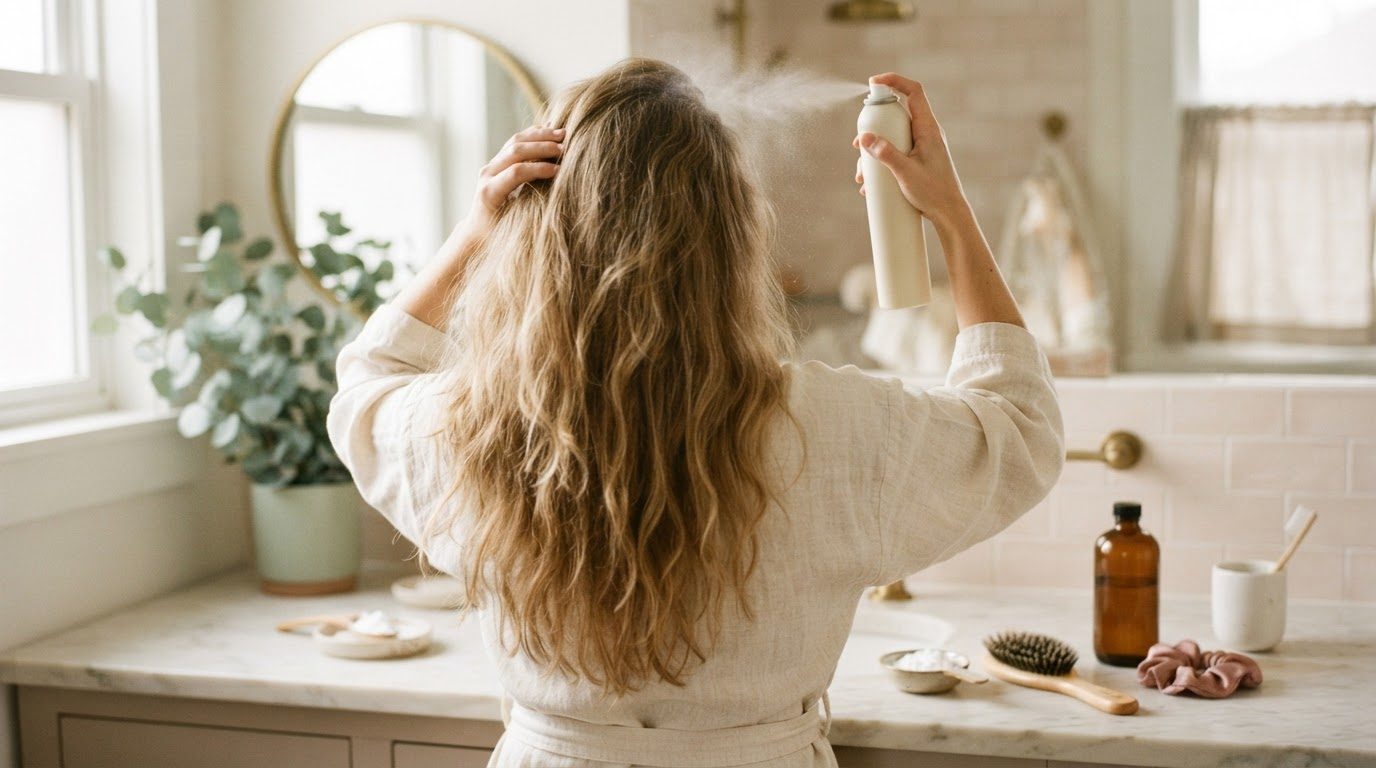
- Use dry shampoo sparingly. It's handy, but it builds up. Use it on day two at most, spray from a distance, brush it through well and wash it out at your next wash.
- Change your pillowcase often. Oil and product transfer onto fabric and back onto your scalp. Fresh pillowcases twice a week help, and a smooth silk pillowcase reduces friction too (here's my take on silk pillowcase benefits).
- Wash your brushes weekly. Pull out loose hair and wash brushes and combs in warm water with a drop of shampoo, then let them dry bristle-side down.
- Protect your part from the sun. Your scalp can burn. On long sunny days outside, wear a hat or use a sunscreen made for the scalp or hair part.
- Loosen up. Very tight hair ties and constant pulling can stress the scalp. Switch between a loose clip and leaving your hair down.
Winter Scalp Care: What Changes
Cold air outside and heated air inside can leave even an oily scalp feeling tight and flaky. A few small swaps help through the colder months:
- Turn the shower temperature down a notch, even when it's freezing outside.
- Move to a more moisturizing shampoo for winter and keep clarifying washes rare.
- Make sure your roots are fully dry before you head out into the cold.
- Wash hats and beanies regularly, since they hold sweat and oil against the scalp.
- Run a humidifier in your bedroom if the air feels very dry.
For more on static, hat hair and dry ends, my winter hair care quick fixes cover the lengths side of the season.
5 Scalp Care Mistakes To Skip
- Skipping washes to "train" an oily scalp. Going longer between washes doesn't teach your scalp to make less oil. Wash as often as your scalp type needs.
- Scrubbing with your nails. Scratching can create tiny breaks in the skin and more irritation. Fingertips only.
- Using scalp scrubs too often. Grainy scrubs can be rough on sensitive scalps. If you use one, once a week at most, gently.
- Piling oil onto a flaky scalp. Heavy oils can make some types of flaking worse. If you have oily flakes, a proper anti-dandruff shampoo usually helps more than oil.
- Changing every product at once. If something irritates you, you won't know what it was. Introduce one new product at a time and give it two to three weeks.
When To See a Dermatologist
Home care is wonderful for everyday scalp comfort, but it has limits. Please see a dermatologist or your doctor if you notice persistent flaking or itching that doesn't improve after a few weeks of gentle care, thick scaly patches, sores, bumps that hurt or ooze, redness that spreads, or hair loss in patches or more shedding than usual. These can have many different causes, and the right treatment depends on the cause. Getting it checked early is a kind thing to do for yourself, not an overreaction.
Final Thoughts
Scalp care doesn't need to be complicated. It's mostly about washing as often as your scalp actually needs, using gentle products, taking two minutes to massage, rinsing well and drying your roots.
Find your row in the scalp type table, follow the weekly card for a month and let your scalp tell you what's working. A calm, comfortable scalp is the quiet foundation under every good hair day.