Most "bad hair" isn't bad at all. It's good hair getting the wrong kind of care. When conditioner sits on top of your strands like a film, or your hair drinks up a mask and feels dry again by lunchtime, the problem usually isn't the product. It's that the product doesn't match how your hair takes in and holds on to moisture.
That one quality has a name: porosity. And once you know yours, a lot of hair mysteries suddenly make sense, from why your hair takes forever to dry to why a rich oil makes it limp while your friend swears by the same bottle.
This guide covers everything about hair porosity: what it actually means, the signs of low, medium and high porosity, why the popular float test can mislead you, three better ways to test at home, a care table you can screenshot, and a simple routine for each type. No complicated chemistry, just what to do in the shower and after it.
It took me a long time to stop blaming my hair and start listening to it. Let's make that part quicker for you.
What Hair Porosity Actually Means
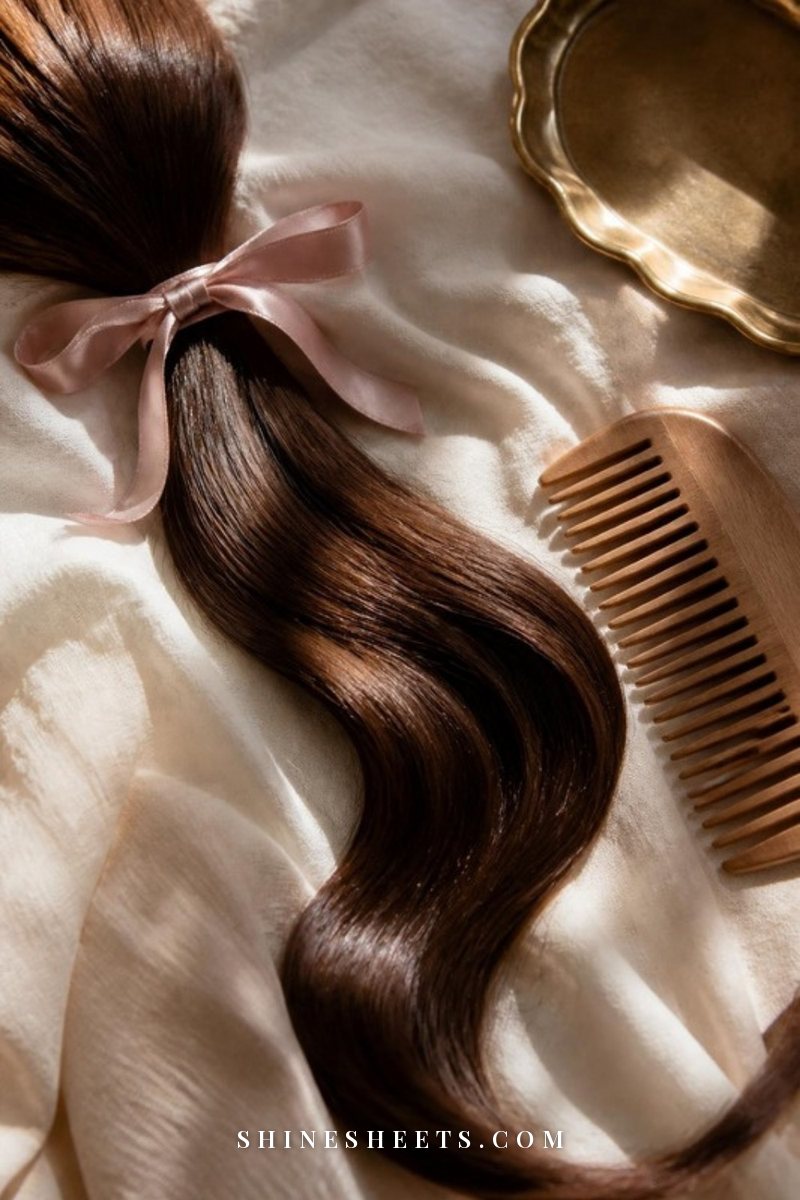
Every strand of hair has an outer layer called the cuticle. Picture it like tiny overlapping roof shingles running from root to tip. Porosity simply describes how tightly those shingles lie, which decides how easily water and products get in, and how easily moisture slips back out.
- Low porosity: the shingles lie flat and tight. Moisture has a hard time getting in, but once it's in, it stays.
- Medium porosity: the shingles are slightly relaxed. Moisture goes in fairly easily and stays a reasonable amount of time.
- High porosity: the shingles are lifted or have gaps. Moisture rushes in quickly and escapes just as quickly.
A few things worth knowing before you start testing:
- Porosity is not the same as thickness or texture. Fine, straight hair can be high porosity, and thick, curly hair can be low porosity. Thickness is about the width of each strand; porosity is about its surface.
- It can change. Your natural starting point is partly genetic, but bleaching, coloring, frequent hot tools, sun and rough towel-drying all raise porosity over time.
- One head can have more than one porosity. Ends are older than roots and have been through more washes, brushing and heat, so it's very common to have medium roots and high-porosity ends.
That last point explains a lot. If your roots get greasy fast while your ends feel like straw, you don't have "confused" hair. You have two zones that need slightly different care, and that's easy to handle once you see it.
Low, Medium and High Porosity: The Signs
Before any test, look at how your hair behaves in everyday life. These everyday signs are often more reliable than a single experiment, because you've been watching them for years without realizing it.
Low Porosity Hair
- Water beads on your hair in the shower before it finally soaks in.
- It takes a long time to air-dry, sometimes hours.
- Products sit on top and leave your hair feeling coated, sticky or greasy.
- Buildup happens quickly, so hair looks dull or heavy a day or two after washing.
- It's often naturally shiny and resists color, both dye and lightener take longer to work.
Medium Porosity Hair
- It gets wet fairly quickly and dries in a normal amount of time.
- Most products absorb without much drama.
- It holds color and styles well.
- It usually has a healthy, even shine from roots to mid-lengths.
Medium porosity is often called "normal," and it's the easiest to look after. It still needs protection, though, because every round of heat and bleach nudges it toward high porosity.
High Porosity Hair
- It soaks up water almost instantly and dries very quickly.
- It drinks up conditioner and masks, then feels dry again within hours.
- It frizzes easily, especially in humidity, and tangles readily.
- It looks dull or rough, and the ends may snap or split.
- Color goes in fast and fades fast.
If you recognize yourself in two groups, go with the one that describes the longest part of your hair, and plan to treat your ends a little more like high porosity.
Why the Float Test Isn't Reliable
You've probably seen the float test: drop a strand of hair into a glass of water and watch. If it floats, low porosity. If it sinks slowly, medium. If it sinks fast, high. It's simple and it looks scientific, which is exactly why it's everywhere.
The trouble is that a single strand is a tiny, light thing, and plenty of factors that have nothing to do with porosity decide whether it floats:
- Natural oils and product residue make a strand repel water, so even high-porosity hair can float if it hasn't been freshly washed.
- Surface tension can hold a light strand on top of the water no matter what its cuticle looks like.
- Which strand you pick matters. A hair from your brush is often a shed root-to-tip strand with mixed porosity along its length.
- How long you wait changes the result, and nobody agrees on the right time.
I don't think you need to throw it out entirely; it can be a fun extra clue on clean, product-free hair. Just don't let one floating strand decide your whole routine. The three tests below look at how your hair actually behaves, which is what you're trying to care for anyway.
3 Better Ways To Test Your Hair Porosity
Do these on clean hair with no leave-in, oil or styling product. Wash with a regular shampoo, skip conditioner just this once, and test the same day.
1. The Drying Time Test
After washing, gently squeeze out excess water, wrap your hair for five minutes, then let it air-dry without heat and note roughly how long it takes to feel completely dry at the mid-lengths.
- Dries surprisingly fast (well under an hour for most lengths): likely high porosity.
- Dries in an average amount of time: likely medium.
- Still damp hours later, even if it's not especially thick: likely low porosity.
Compare against your own thickness. Very dense hair always takes longer, so the real tell is drying time that feels unusual for how much hair you have.
2. The Product Absorption Test
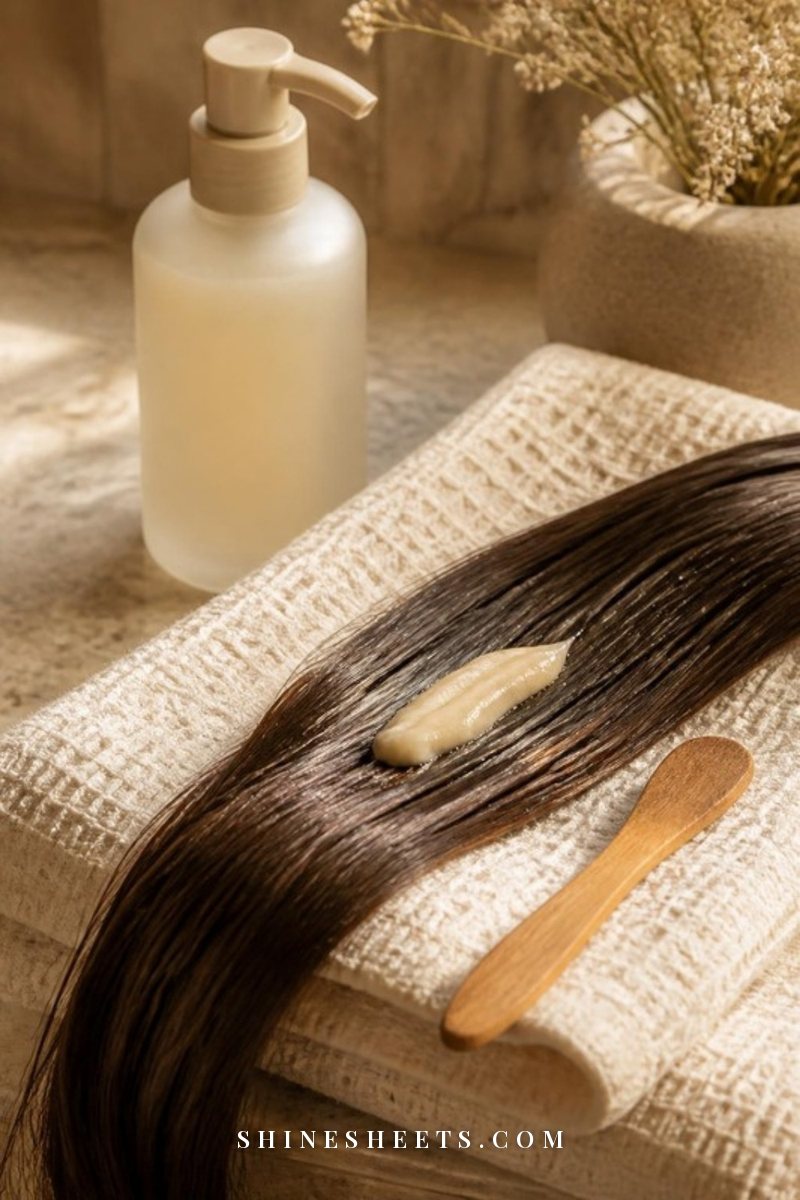
Take a small, pea-sized amount of a simple cream leave-in or conditioner and smooth it onto a section of damp hair. Wait two to three minutes, then run your fingers through it.
- Absorbed and gone almost immediately, and the hair still wants more: high porosity.
- Absorbed after a minute or two, hair feels soft: medium porosity.
- Still sitting on top, slippery or white, and you can feel it on your fingers: low porosity.
3. The Slide Test
Take a single strand (or a very thin section) and hold it taut. With the thumb and finger of your other hand, slide gently from the tip up toward the root.
- Completely smooth and slick: the cuticle is lying flat, which points to low or medium porosity.
- Slightly bumpy or rough, catching as you slide: the cuticle is lifted, which points to high porosity.
Try it on a strand near your face and one from the back, and at the ends versus closer to the root. If the two zones feel different, that's your answer to the mixed-porosity question.
Two out of three tests pointing in the same direction is a solid result. Write it down, then give your new routine about four weeks before judging it; hair needs a few washes to show what it likes.
Hair Porosity Care Table
Here's the whole guide on one screen. Find your row, screenshot it and keep it in your phone for the next time you're standing in the hair care aisle wondering which bottle to choose.
| Porosity | Signs | Wash | Condition | Styling Products | Avoid |
|---|---|---|---|---|---|
| Low | Water beads, slow drying, products sit on top, quick buildup | Lightweight shampoo; clarify every 2–4 weeks; wash with warm water | Thin, runny conditioner; deep condition with gentle warmth for 15–20 min | Water-based leave-in sprays, light lotions, a few drops of light oil | Heavy butters, thick creams, layering many products, frequent protein |
| Medium | Normal drying time, products absorb easily, holds color and style | Gentle shampoo as often as your scalp needs; clarify monthly if you use styling products | Regular conditioner every wash; moisturizing mask every 1–2 weeks | Light leave-in, heat protectant, oil on the ends only | Too much heat and bleach, which slowly raise porosity |
| High | Soaks up water, dries fast, frizz, tangles, color fades quickly | Mild, sulfate-free shampoo; focus on the scalp; finish with a cool rinse | Rich conditioner every wash; protein mask alternated with a moisture mask | Creamy leave-in, then a sealing oil; heat protectant always | Hot water, high heat, rough towels, back-to-back bleaching |
If you have mixed porosity, use your root type for washing and your end type for conditioning and styling. It's the single adjustment that helps most people with greasy roots and dry ends.
How To Care for Low Porosity Hair
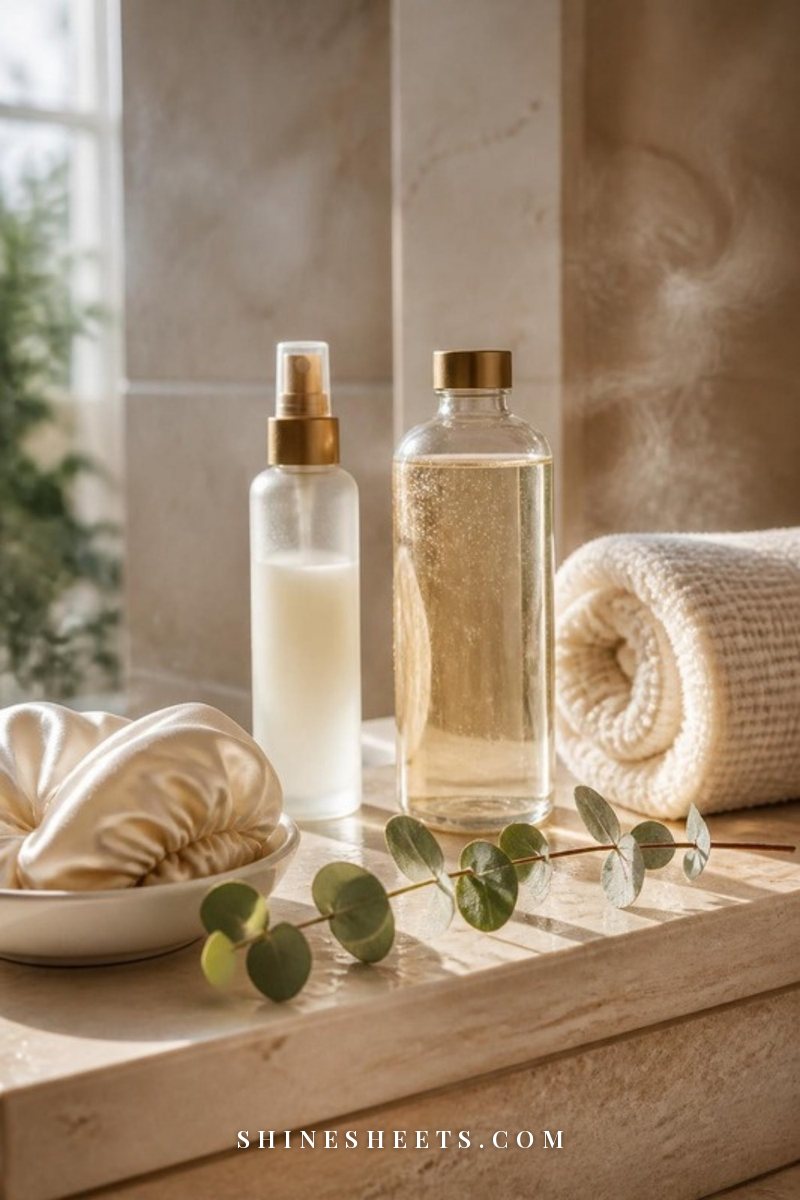
Low porosity hair is strong and often beautifully shiny. Its only real challenge is letting moisture in, and not drowning in the products you're trying to get it to absorb. Lighter and warmer are your two key words.
- Clarify regularly. Because products sit on top, buildup is your biggest enemy. Every two to four weeks, wash with a gentle clarifying shampoo instead of your usual one, lathering twice at the scalp and letting the suds rinse through the lengths. Follow with conditioner; clarifying can feel a bit squeaky.
- Wash and condition with warm water. Warmth helps the cuticle relax slightly so products can get in. Save the cool rinse for the very end, if at all.
- Apply products to damp, not dripping, hair. Soaking wet hair is already "full," and low porosity hair has a hard time making room for anything else. Squeeze gently first.
- Use gentle heat when you deep condition. Apply a light mask, cover with a shower cap, then wrap a warm towel on top (or sit under a hooded dryer on a low setting) for 15 to 20 minutes. The warmth does the work a heavy formula can't.
- Choose lightweight leave-ins. Look for water-based sprays and thin lotions rather than butters. A lightweight leave-in conditioner spray misted over damp lengths gives slip and softness without the film.
- Go easy on protein. Low porosity hair often already has a tight, strong structure, and too much protein can make it feel stiff and brittle. A protein treatment every couple of months is plenty, if you need one at all.
- Use less product than you think. Start with half of what you'd normally use and add more only if the ends feel dry once your hair is dry.
Low porosity hair also tends to get flat quickly from buildup. If volume is your main worry, my guide on how to make thin hair look thicker has root-friendly tricks that pair nicely with a lighter routine.
How To Care for Medium Porosity Hair
Medium porosity is the lucky middle ground, and the goal is simply to keep it there. You don't need a complicated routine, just a steady one that protects your cuticle from the habits that slowly lift it.
- Keep a simple wash rhythm. Shampoo as often as your scalp asks for it and condition every time, focusing from the mid-lengths down.
- Mask every one to two weeks. Alternate a moisturizing mask with an occasional protein one if your hair is colored or heat-styled. My guide to hair masks and which one your hair actually needs walks through how to tell when to switch.
- Protect before heat, every time. Even good hair gets more porous after months of hot tools. Mist a heat protectant spray over towel-dried hair, comb it through, and keep your tools at a moderate setting instead of the highest one.
- Oil only the ends. Two or three drops warmed between your palms and pressed into the last few inches is enough.
- Clarify about once a month if you use dry shampoo, styling creams or hard water leaves your hair dull.
Think of medium porosity as an asset worth protecting. A little kindness now means you won't need a rescue routine later.
How To Care for High Porosity Hair
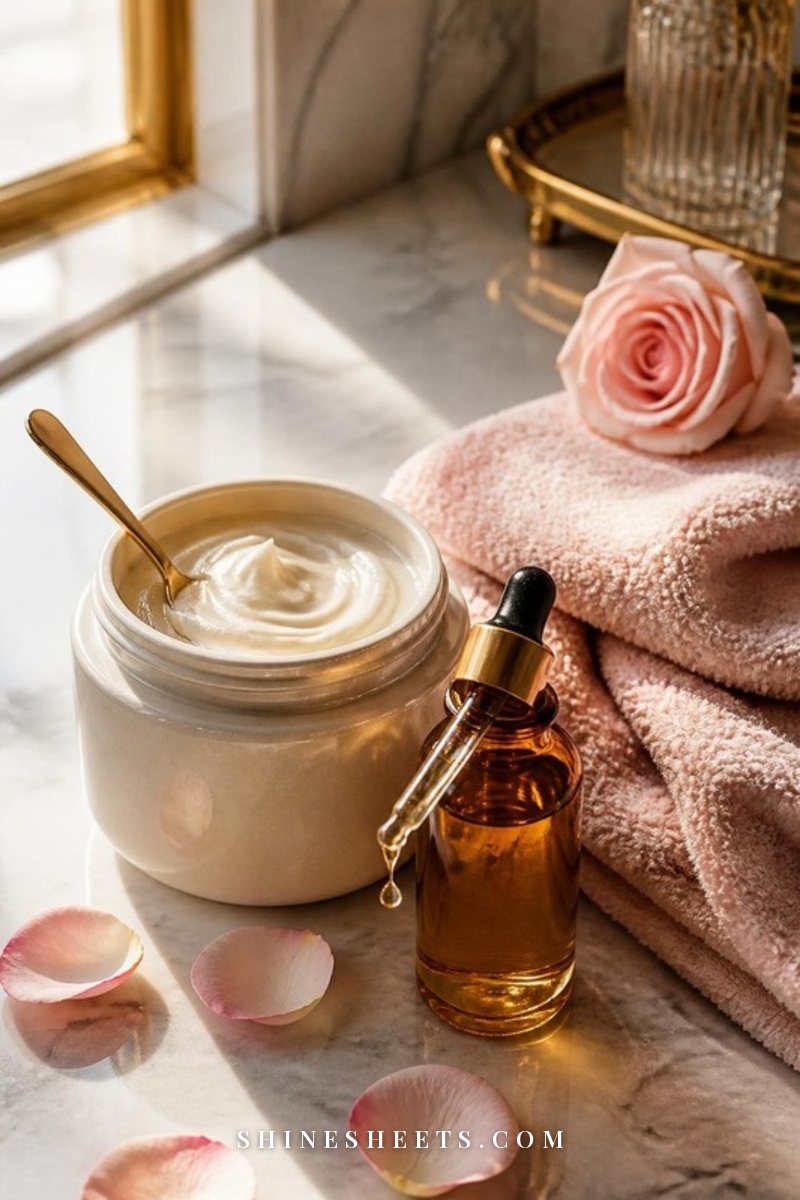
High porosity hair is thirsty, and that's not a flaw. It simply loses moisture as easily as it takes it in, so the goal is twofold: fill the gaps in the cuticle and then seal the moisture in. Richer, cooler and gentler are your words here.
- Add protein to patch the gaps. Protein temporarily fills the rough spots along a damaged cuticle, which helps hair hold moisture and feel stronger. Use a protein hair mask every one to two weeks for 10 minutes (or as the label says), then follow with a regular conditioner.
- Alternate protein with moisture. Too much protein makes high porosity hair stiff and snappy; too little leaves it mushy and stretchy when wet. A simple rhythm is protein one week, moisture mask the next.
- Layer, then seal. On damp hair, apply a creamy leave-in first, then seal it with a few drops of oil on the mid-lengths and ends. Pure argan oil is a pick I'd choose for this step because it's light enough not to weigh hair down but rich enough to smooth the surface.
- Finish with a cool rinse. After conditioning, turn the water to lukewarm-cool for the last 20 to 30 seconds. It won't "close" damaged cuticles like magic, but it's gentler than hot water and helps your hair feel smoother.
- Use gentle heat only. Air-dry when you can, or blow-dry on a medium or low setting with protectant. Skip the hottest setting on irons; high porosity hair gets damaged fastest.
- Swap your bath towel. Rough cotton roughens a lifted cuticle even more. A soft microfiber hair towel wrap lets you squeeze and blot instead of rub, which means noticeably less frizz.
- Trim the most damaged ends. Very porous, split ends won't fully recover. A small trim every eight to twelve weeks keeps the damage from traveling up.
One kind safety note: if your hair is breaking off in large amounts, feels gummy when wet, or you're noticing shedding from the root rather than snapping at the ends, pause chemical treatments and talk to a dermatologist or an experienced stylist. Porosity care helps the look and feel of the hair, but it can't fix every underlying cause.
Habits That Help Every Porosity Type
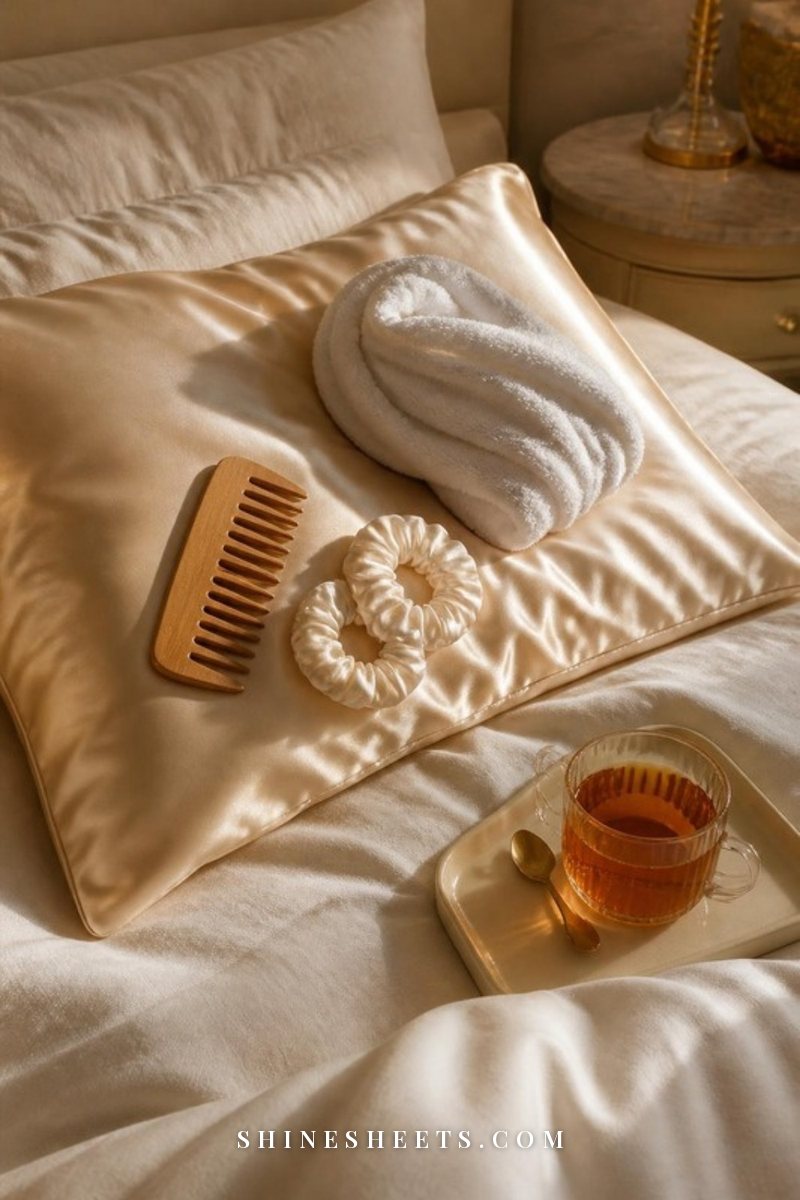
Whatever your result, a few everyday habits make a real difference, because they protect the cuticle instead of wearing it down.
- Detangle from the ends up with a wide-tooth comb while conditioner is still in your hair. Never start at the roots and drag down.
- Look after your scalp. Healthy hair starts there, and buildup on the scalp often travels down the lengths. My weekly scalp care routine keeps things balanced without stripping.
- Sleep on something smooth. Cotton creates friction that roughens the cuticle overnight. A silk pillowcase or a loose silk scrunchie helps, and I've covered whether silk pillowcases are worth it if you're on the fence.
- Protect from the sun and cold. UV rays and dry, heated indoor air both raise porosity over time. A hat in summer and a little extra leave-in in winter go a long way; my winter hair care fixes cover static and dry ends specifically.
- Space out chemical treatments. Give bleach and color at least six to eight weeks between sessions, and ask your colorist about a bond-building treatment.
- Retest twice a year. After a big color change, a long summer or a few months of new habits, your porosity may have shifted, and your routine can shift with it.
If you want a ready-made weekly rhythm to slot these habits into, my simple hair care routine lays out a full week you can adjust to your porosity.
Common Hair Porosity Mistakes
Most of these come from good intentions, so don't feel bad if a few sound familiar. They're easy to fix.
- Trusting one float test. Use it as a clue at most, and let your drying time and product behavior have the final word.
- Piling on heavy products for dryness. If you're low porosity, dry-feeling hair is often coated hair. Clarify first, then go lighter.
- Using protein every wash "for strength." Even high porosity hair needs a balance with moisture, or it turns stiff and brittle.
- Treating the whole head the same way. Roots and ends can be different types. Condition and oil where the dryness actually is.
- Skipping heat protectant "just this once." Every hot session counts, and the effect adds up quietly.
- Changing everything at once. Switch one product at a time and give it about four weeks so you know what is really working.
Honestly, the biggest shift is moving from "what's the best product?" to "what does my hair need?" The second question is much easier to answer, and it saves a lot of money on bottles that end up at the back of the shower.
Final Thoughts
Your hair isn't difficult; it just has its own way of handling moisture. Once you know whether it needs lighter products and a little warmth, a steady middle-ground routine, or protein, richness and a gentle seal, the guesswork falls away.
Start with the tests on your next wash day, find your row in the care table and change one thing at a time. A few weeks from now, you'll be reaching for products with confidence, and your hair will feel softer, calmer and more like itself.