Dry shampoo doesn't fail because it's a bad product. It fails because most of us use it like a fire extinguisher: a panicked blast on greasy roots five minutes before we need to leave. Used that way, it turns hair gray, stiff and somehow still flat. Used a little earlier and a little more patiently, the same can gives you clean-looking, soft, lifted roots for an extra day or two.
The whole trick is timing and technique. Dry shampoo is an absorber, so it works best before oil builds up, not after it has already soaked every strand. Add the right distance, a two-minute wait and a proper massage, and it stops being a sticky emergency fix and becomes a calm little part of your routine.
This guide covers how to use dry shampoo so it actually works: why it usually goes wrong, the seven steps that fix it, spray vs powder, what to do if you have dark hair, how many days in a row is fine, and how to keep your scalp happy along the way. There's also a simple day-by-day plan you can screenshot and keep on your phone.
Grab your can (whatever you already have is fine to start) and let's make it earn its spot on your shelf.
How Dry Shampoo Actually Works
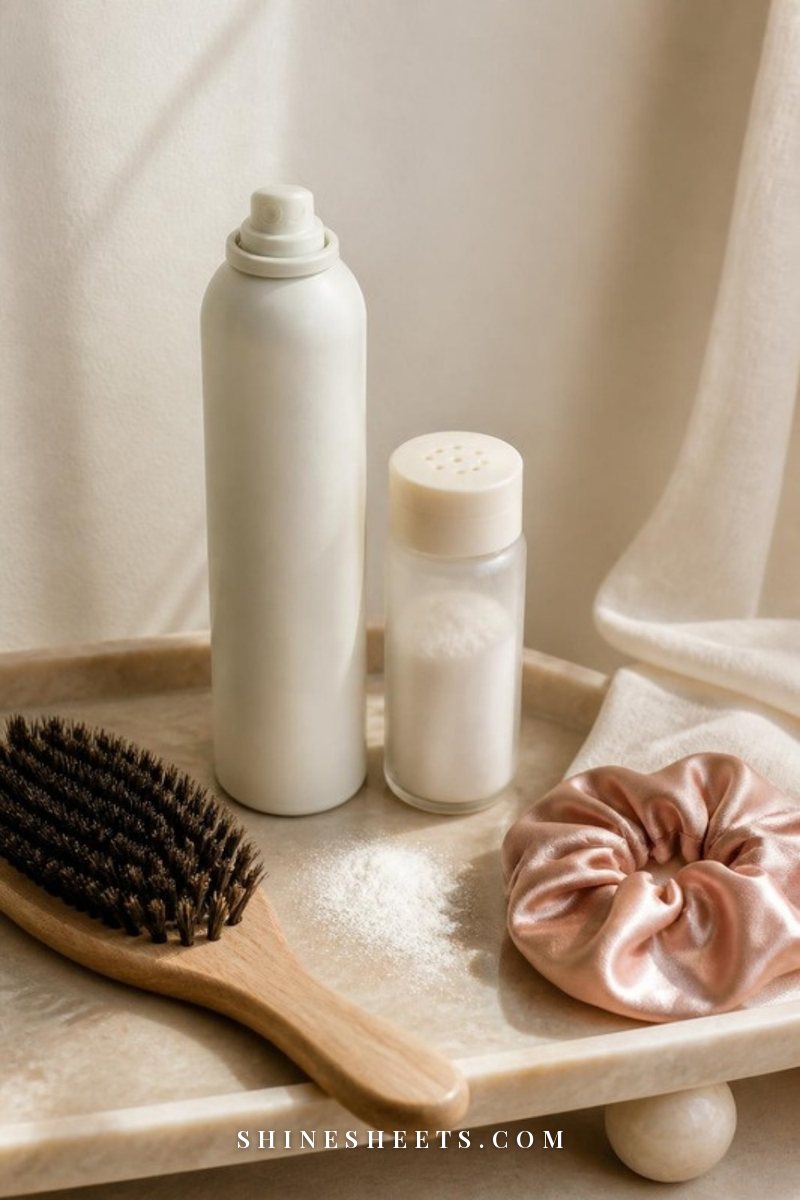
Most dry shampoos are made of fine absorbent powders, usually starches like rice or tapioca, sometimes clay or silica, plus a little fragrance. In a spray, those powders are suspended in a propellant and often a bit of alcohol, which helps them spread and evaporate fast. In a powder, they come straight out of a shaker or pump.
Either way, the job is the same: the powder sits at the root and soaks up sebum, the natural oil your scalp makes. Less oil at the root means hair stops clumping together, so it looks fuller, feels softer and smells fresher. That's it. Dry shampoo doesn't clean your scalp, remove buildup or replace washing. It buys you time.
Once you see it as an oil sponge, everything else makes sense. A sponge works best when it's already in place before the spill. It works poorly when the counter is already flooded. And a sponge needs a moment to actually absorb before you wipe it away.
Why Your Dry Shampoo Isn't Working: 6 Common Mistakes
If you've ever thought "dry shampoo just doesn't work on my hair," one of these is usually the reason. Often it's two or three at once.
1. Spraying It on Already-Greasy Hair
By the time roots look visibly oily, the oil has spread down the hair shaft. The powder can absorb some of it, but not all, and the leftover oil mixes with the powder into a pasty, dull film. Dry shampoo is far better at preventing grease than rescuing it.
2. Using It Right Before You Walk Out the Door
Morning-of application leaves no time for absorption. The powder is still sitting on top of your hair, which is exactly why it looks white or gray in daylight. Give it at least a couple of minutes, ideally a whole night.
3. Holding the Can Too Close
Spraying from two or three inches away concentrates the product in one damp, chalky spot. You end up with a white patch in one place and nothing a centimeter away. Distance spreads it into a fine, even mist.
4. Only Spraying the Top Layer
The roots you see in the mirror are rarely the oiliest ones. Oil hides along your part, at the crown, behind your ears and at the nape of your neck, where hair touches your skin all day. If you only spray the surface, the hidden oil keeps hair flat.
5. Skipping the Massage and Brush
Dry shampoo that's left sitting on the hair is just powder on hair. Rubbing it into the roots is what moves it to where the oil actually is, and brushing is what distributes it and lifts the leftovers out. These two steps take less than a minute and make the biggest difference.
6. Using Too Much
More product doesn't mean more clean. Heavy layers make hair gritty, dull and stiff, and they build up on the scalp. Start with a light mist, wait, check, and add a tiny bit more only where you need it.
How To Use Dry Shampoo: 7 Steps That Actually Work
This is the full routine. It looks like a lot written out, but once you've done it twice it takes about three minutes, and most of that is waiting.
Step 1: Apply It at Night or on Day-One Roots

The best time to use dry shampoo is before you need it. Either apply it the night before a day you'll skip washing, so it can absorb oil while you sleep, or give clean roots a light mist on the evening of wash day as a preventive layer. Both work because the powder is already in place when oil starts to appear.
If you apply it at night, tie your hair up loosely so it doesn't get crushed into one flat side. Something soft like a few silk scrunchies won't leave a dent or snag, and a smooth pillowcase helps too (my guide to silk pillowcase benefits explains why it matters for second-day hair).
Morning application still works. It just needs the waiting time in Step 4, and it won't be quite as invisible.
Step 2: Start With Completely Dry Hair
Never spray dry shampoo on damp hair or right after a sweaty workout before you've cooled down. Moisture makes the powder clump into a paste. If your roots are damp, use a hair dryer on a cool setting for a minute first.
Step 3: Section and Spray From About 6 Inches Away
Shake the can well (powder settles at the bottom). Then part your hair in small sections, starting at your usual part, then the crown, the sides above your ears and the nape. Hold the can about 6 inches from your head, roughly the length of your hand with fingers spread, and give each section a short, quick burst aimed directly at the roots.
Think "misting," not "painting." You should see a fine haze, not a white stripe. For powder, tap a small amount into your palm or onto a brush and dab it along each part instead.
Step 4: Wait 2 Minutes (Really)
This is the step almost everyone skips, and it's the one that makes dry shampoo work. Set a two-minute timer and do something else: brush your teeth, put on moisturizer, make your tea. The powder needs that time to actually draw oil out of the hair. If you applied it the night before, this step is already done for you.
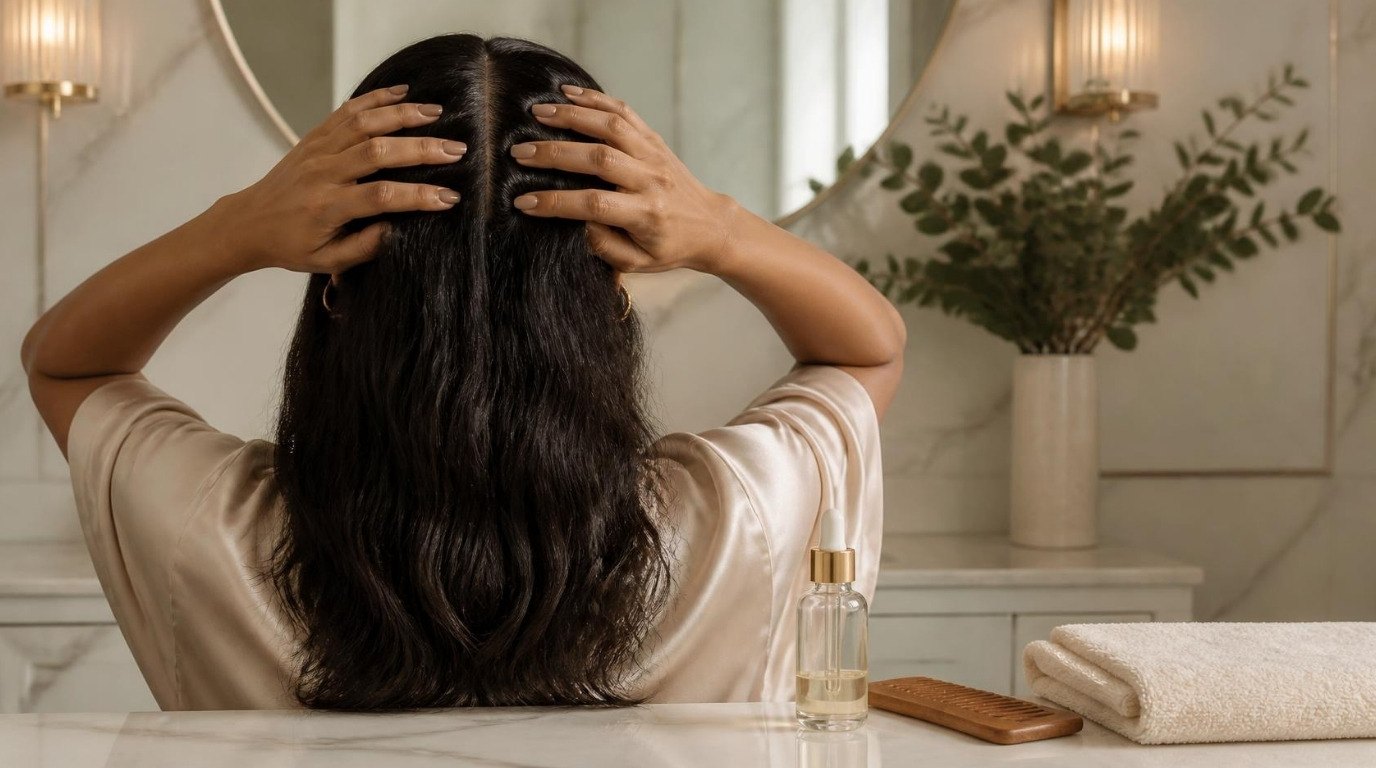
Step 5: Massage It In With Your Fingertips
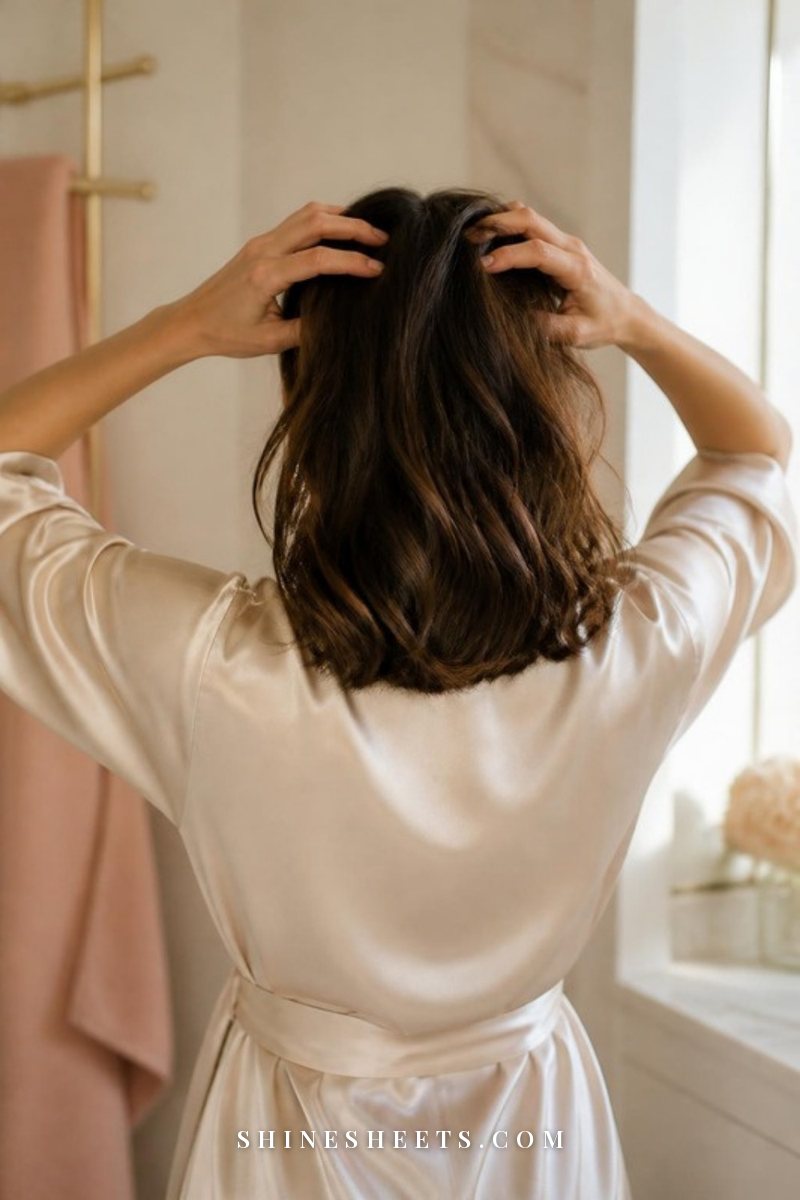
Use the pads of your fingers, not your nails, and work in small circles at each section for about 30 seconds total, the way you would with regular shampoo. This blends the powder into the roots, breaks up any white spots and gives an instant bit of lift. If your scalp feels a little tight or itchy, a soft silicone scalp massager is gentler than fingernails and spreads product evenly.
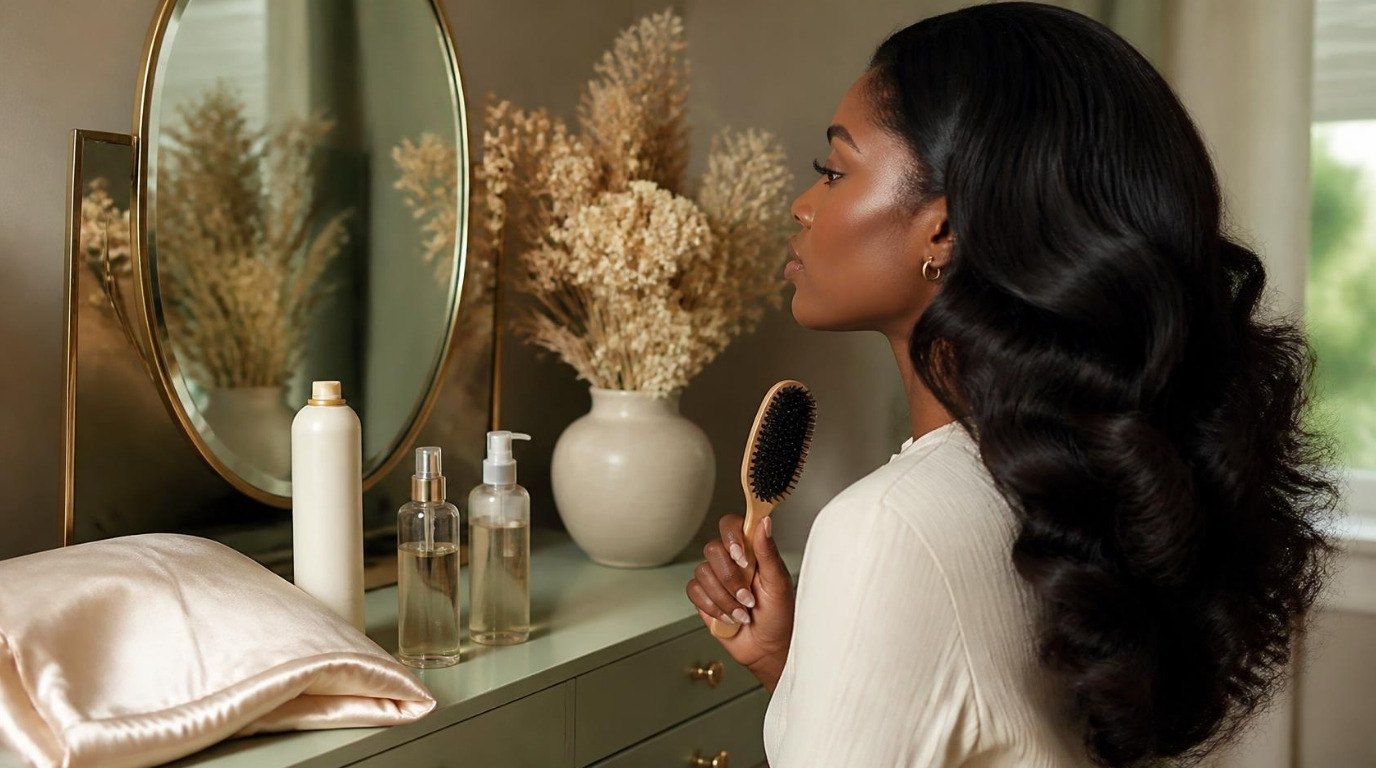
Step 6: Brush It Through
Flip your head over or tilt it to the side and brush from root to end. Brushing distributes the remaining powder, lifts out excess and smooths everything back down. A boar bristle brush is especially good here because the natural bristles grab leftover powder and also move a little of your scalp's oil down toward the ends, where hair is usually drier anyway.
If you have curly or coily hair, skip the full brush-through so you don't disturb your pattern. Instead, massage well and gently fluff the roots with your fingers.
Step 7: Finish With a Cool Blast and a Quick Check
For extra lift, give your roots a 10-second blast from a hair dryer on cool. It helps the powder settle and adds volume. Then check your part and hairline in natural light. Any white cast left? Rub that spot with your fingertips again or go over it once more with the brush. Done.
Dry Shampoo Powder vs Spray: Which One To Choose
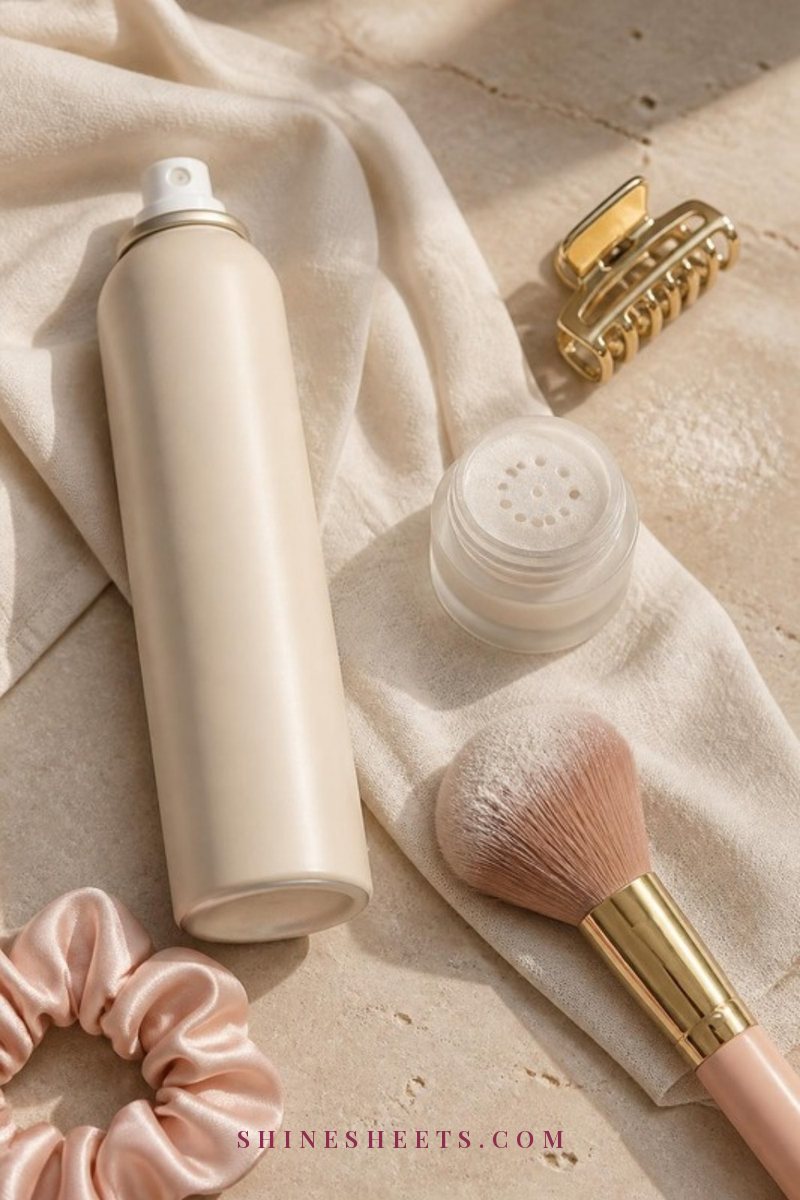
Both work. They just suit different hair, habits and moods. Here's how I'd think about it:
| Spray (aerosol) | Powder (loose or pump) | |
|---|---|---|
| Best for | Speed, all-over coverage, long or thick hair | Precise spots (part, hairline), fine hair, travel |
| Feel | Light, slightly cool, can feel dry | Soft, very matte, can feel a little chalky if overused |
| White cast risk | Low if sprayed from 6 inches | Higher on dark hair, lower with a brush |
| Control | Less precise, easy to overdo | Very precise, you choose exactly where it goes |
| Good to know | Flammable while wet, needs ventilation | No propellant, carry-on friendly, lasts a long time |
If you're new to dry shampoo, a spray is the easiest place to start. If you have fine hair that gets weighed down quickly, or you mostly need help at your part and fringe, a dry shampoo powder gives you more control. Tap it onto a clean, fluffy makeup brush and sweep it along the part (an old blush brush works perfectly). Fine-haired friends, my guide on how to make thin hair look thicker has more root-lifting tricks that pair well with this.
A small honest admission: for a long time I assumed powders were messier. They aren't, as long as you dab rather than shake straight onto your head.
Dry Shampoo for Dark Hair (No Gray Cast)
White cast is the number one complaint from brunettes, and it's very fixable. A few things help:
- Choose a tinted formula. A tinted dry shampoo for dark hair has a soft brown pigment that blends into brown and black roots instead of sitting on top as white powder. Look for "brunette" or "dark" on the label, and pick the shade closest to your roots, not your ends.
- Go lighter than you think. On dark hair, start with half the amount you'd guess and build up.
- Apply it the night before. Overnight absorption is the best cast-preventer there is.
- Use a brush for powders. A makeup brush buffs powder into the roots so it disappears.
- Massage longer. An extra 15 seconds of fingertip massage usually melts any leftover gray.
Redheads and anyone with color-treated hair can use the same logic: a tinted formula close to your shade, light layers and plenty of blending time. On very light blonde or gray hair, regular white formulas tend to vanish on their own.
One note: tinted products can transfer onto light pillowcases and collars if you apply a lot, so keep layers thin and let them settle before bed.
Your Dry Shampoo Day Plan (Day 1–4)
This is the part that makes everything click. Dry shampoo works best as a plan between washes, not a one-day rescue. Here's a simple rhythm for most hair types. Screenshot it and adjust the days to your own hair.
| Day | How your hair feels | What to do |
|---|---|---|
| Day 1 (wash day) | Clean, soft, maybe a little too fluffy | Wash and condition as usual. In the evening, a very light preventive mist at the roots if you get oily fast. Loose silk scrunchie for sleep. |
| Day 2 | Still clean-looking, slight flatness at the part | Brush well in the morning. Touch up only the part and hairline if needed. Before bed, apply dry shampoo to all roots (sectioned, 6 inches away) and leave it overnight. |
| Day 3 | Roots fresher than expected thanks to last night | Massage the roots for 30 seconds, brush through, cool blast. Light touch-up at the nape and crown if needed. |
| Day 4 | Heavier, product starting to feel gritty | Wash day. If you've used dry shampoo three days in a row, make this a clarifying wash (see below), then start again at Day 1. |
If your hair gets oily quickly, your plan might be Day 1 to Day 2 and back to washing, and that's completely fine. If your hair is dry or curly, you might stretch to Day 5 with only one light application. The point isn't to go as long as possible between washes. It's to make each day in between feel good.
Not sure what your natural rhythm should be? This guide on how often you should wash your hair based on hair type is a good place to start.
How Many Days in a Row Can You Use Dry Shampoo?
For most people, one to two days in a row between washes is the sweet spot, and three is usually the most it can do before hair starts to feel heavy. After that, powder, oil, sweat and the general dust of life pile up on the scalp, and no amount of extra spraying will make it look clean.
A few signs it's time to wash instead of reaching for the can again:
- Your scalp feels itchy, tight or a little sore.
- Hair feels gritty or waxy when you run your fingers through it.
- You notice flakes that weren't there before.
- More dry shampoo makes hair look duller, not fresher.
Listen to those signals. Dry shampoo is a lovely helper, but your scalp still needs real water and real cleansing on a regular rhythm.
How To Keep Your Scalp Healthy While Using Dry Shampoo
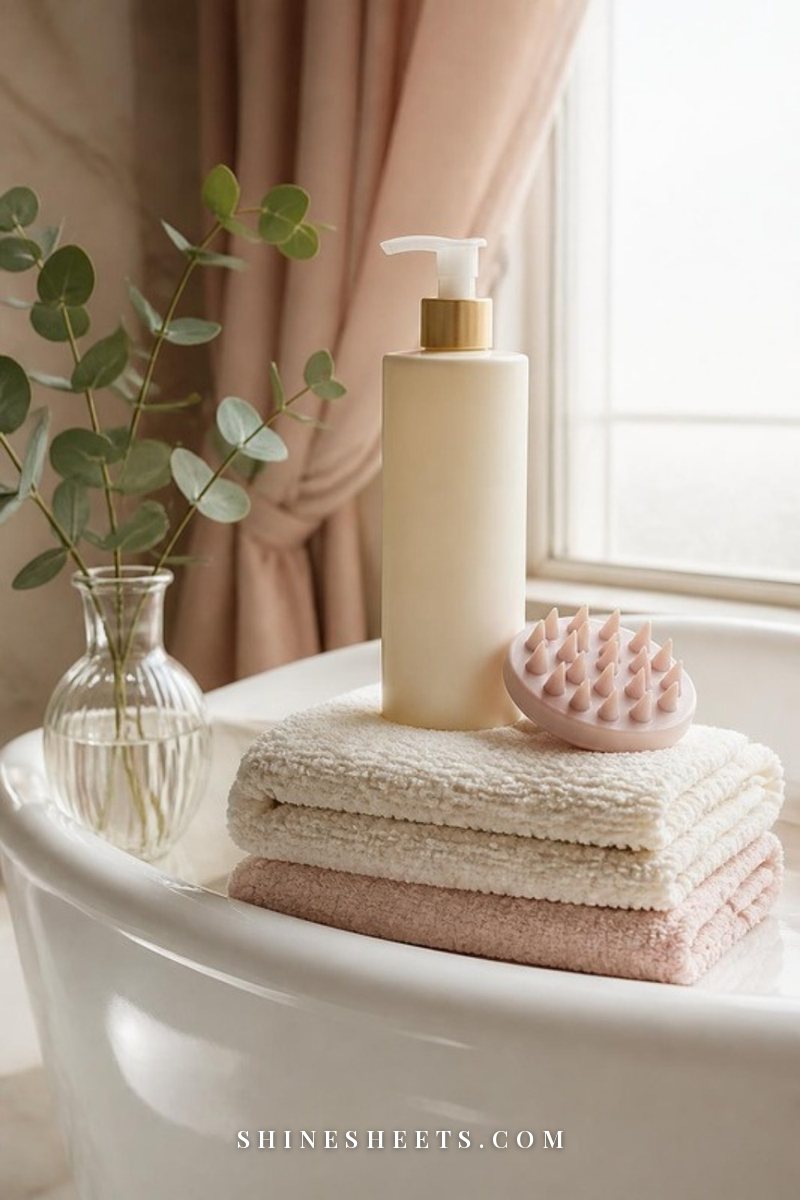
Your scalp is skin, and like the skin on your face, it doesn't love being covered in a layer of powder for days. A few small habits keep things balanced:
- Clarify once a week (or after a heavy dry shampoo stretch). A clarifying shampoo removes the residue a regular shampoo can leave behind. Focus it on the scalp, lather twice, and follow with conditioner on the lengths only.
- Actually massage when you wash. Two minutes of fingertip massage with shampoo loosens buildup and feels lovely. My scalp care routine walks through a full weekly rhythm.
- Give your scalp a break. Try to have at least a day or two a week with no dry shampoo at all.
- Don't sleep in heavy layers night after night. One overnight application before a skip day is great. Every single night isn't.
- Keep your ends nourished. Dry shampoo is for roots only. If your lengths feel dry, a weekly treatment from my guide to hair masks balances things out.
And a small safety note, because it matters: aerosol dry shampoo is flammable until it dries, so spray it away from a lit candle, a gas stove or anyone smoking, and wait a minute before using a hot tool. Spray in a ventilated room and try not to breathe in the mist. If you notice ongoing itching, redness, flaking or hair shedding that doesn't settle after a few washes without it, stop using it and check in with a doctor or dermatologist.
Dry Shampoo Tips for Gym Days, Travel and Busy Weeks
After a Workout
Let your scalp cool and dry completely first, ideally with a few minutes of cool air from a dryer. Then use a light amount at the hairline and nape only, where sweat gathers. Dry shampoo can't remove sweat salt, so on heavy workout days a quick rinse and a conditioner-only wash may feel better.
Travel
Powder is the easiest companion for flights. It doesn't count toward liquid limits, it won't leak, and a small amount lasts a whole trip. Apply it the night you arrive so you wake up with fresh roots after a long travel day.
Busy Weeks
Build dry shampoo into your evening wind-down instead of your rushed morning. Apply it right after you wash your face, then make your tea and let it do its quiet work overnight. If you love structured routines, my everything shower routine pairs nicely with this, because it gives your hair one proper reset day each week.
Quick Dry Shampoo Mistakes Cheat Sheet
For when you just need the short version:
- Too white? Spray from farther away, wait longer, massage more, or switch to a tinted formula.
- Still greasy? Apply it earlier, the night before or on day-one roots.
- Feels gritty or stiff? Use less, brush more, and plan a clarifying wash.
- Itchy scalp? Give it a break, wash with a gentle shampoo and massage well.
- Flat by noon? Spray the hidden roots too: crown, behind the ears and the nape.
Final Thoughts
Dry shampoo is one of those small beauty helpers that becomes wonderful the moment you give it a little patience. Spray it earlier than you think, from farther away than you think, wait two minutes, and let your fingertips and a good brush do the rest.
And remember, the goal was never to go as many days as possible without washing. It's to feel fresh, soft and put-together on the days in between, with a happy scalp underneath it all. That's a pretty lovely thing to give yourself on a busy week.