Forehead lines are mostly a record of expression: every surprised laugh, every raised brow while you read a message, every squint into a bright afternoon. That isn't something you need to hide or apologize for. But if you'd like the lines you have to look a little softer, and fewer new ones to settle in, the most effective steps are surprisingly gentle, and almost all of them are habits rather than harsh treatments.
This guide covers forehead lines from start to finish: what they are and why they appear, 7 everyday habits that help prevent new ones, the ingredients that can soften existing lines over time, a routine table you can screenshot, makeup tips so foundation doesn't sink into the creases, and when a dermatologist is your best next step.
One honest promise up front: nothing here will erase lines, and any cream that claims it can is overselling. What these steps can do is keep skin smoother, plumper and better protected, which is a lovely thing on its own.
What Forehead Lines Actually Are

When people say "forehead lines," they usually mean one of two things (or both):
- Horizontal lines across the forehead. These come from the broad muscle that lifts your eyebrows. Every time it contracts, the skin above it folds into soft horizontal creases.
- Frown lines between the brows. Sometimes nicknamed "the 11s," these vertical lines form when the small muscles between your brows pull together as you concentrate, frown or squint.
Both types start out as dynamic lines, which means they only show when your face moves. Over many years, some of them become static lines that stay visible even when your face is completely relaxed.
A quick way to see where you are: relax your face fully, let your brows drop, and look at your forehead in daylight. If the skin looks fairly smooth at rest, your lines are mostly dynamic, and prevention habits will do a lot of the work. If you can see faint lines even at rest, softening ingredients and patience come into play too. Most of us have a mix, and that's completely normal.
Why Forehead Lines Appear
There isn't one single cause. Forehead lines are usually the result of several small things adding up over time:
- Expression. Lifting your brows and frowning thousands of times a year slowly trains the skin to fold in the same places.
- Sun exposure. UV light breaks down collagen and elastin, the proteins that keep skin firm and springy. The forehead sits right at the top of your face, so it catches more sun than almost anywhere else.
- Dryness. Dehydrated skin makes fine lines look deeper than they really are. Dry winter air, hot showers and harsh cleansers all play a part.
- Collagen changes. As time goes on, skin naturally makes less collagen and renews itself more slowly, so creases bounce back less easily.
- Squinting. Bright light, glare and uncorrected vision all make you tense your brows without noticing.
- Screen habits. Leaning toward a small screen, frowning at tiny text and raising your brows while you read add up over a long day.
- Genetics. Some people simply have more expressive brows or thinner skin on the forehead. That part isn't up to you.
The encouraging part is that several of these (sun, squinting, dryness and screen habits) are things you can change gently, starting this week.
7 Habits That Help Prevent New Forehead Lines
Prevention isn't glamorous, but it's where most of the long-term difference comes from. Pick two or three of these to start, then add the rest as they become automatic.
1. Wear Sunscreen Every Day, Right Up to the Hairline
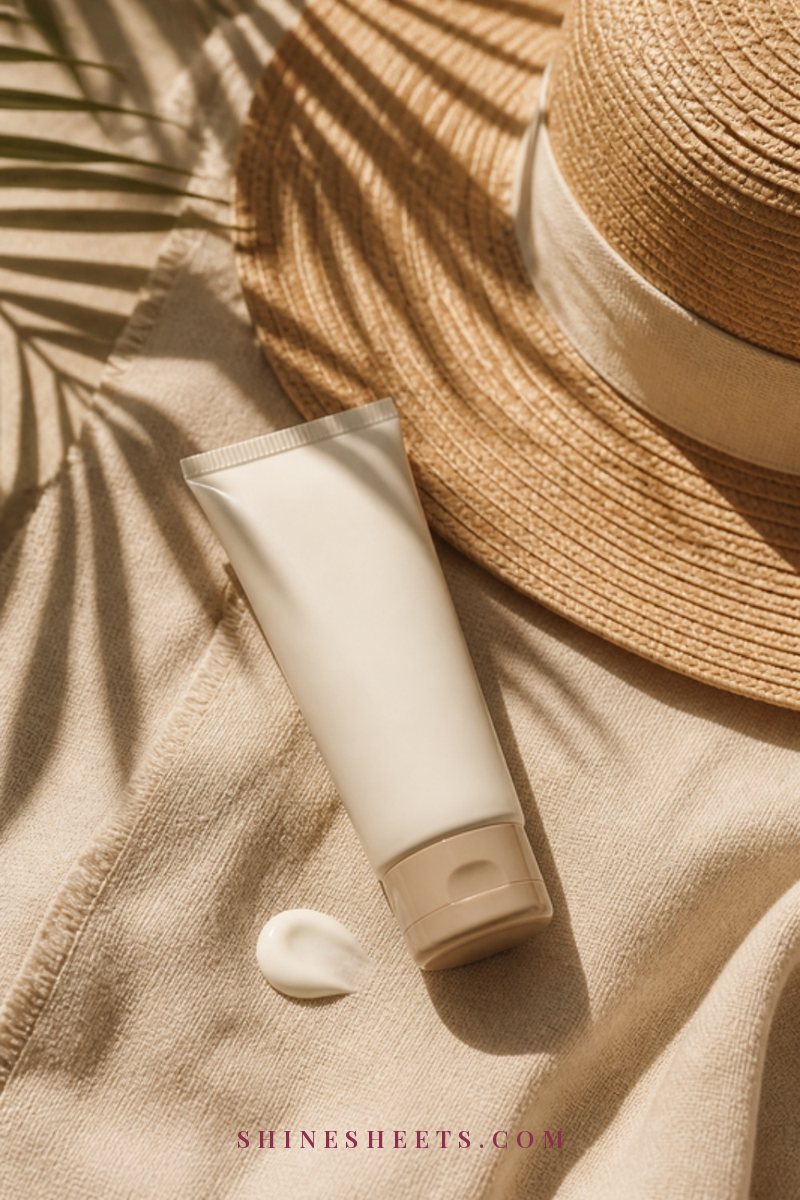
If you only change one thing, make it this one. Daily sunscreen protects the collagen you already have, which is far easier than trying to rebuild it later. The catch is that most people stop blending at the eyebrows or a finger's width below the hairline, leaving the top of the forehead bare.
How to do it: every morning, as the last step of your skincare, apply a generous layer to your whole face and neck (two finger lengths is a good rough guide for face and neck). Then take what's left on your fingertips and work it right up into the hairline and along your part. Outdoors, reapply about every two hours, and after sweating or swimming.
Look for a broad-spectrum daily face sunscreen with SPF 30 or higher and a texture you'll happily wear every single day. My skin is combination and sensitive with a shiny T-zone, so I'd choose a lightweight fluid or gel finish labeled non-comedogenic. If you're unsure which filter type suits you, my guide to mineral vs chemical sunscreen walks you through it.
2. Wear Sunglasses So You Squint Less

Squinting doesn't just affect the corners of your eyes. When you narrow your eyes against bright light, your brows pull together and down, which is exactly the motion behind frown lines.
A good pair of sunglasses quietly removes hundreds of those little squints every week. Look for lenses labeled UV400 or 100% UVA/UVB protection, and frames large enough to shade the brow area too. A pair of oversized cream sunglasses feels very Old Hollywood and covers more skin than tiny frames.
Keep a pair in your bag and another near the door, and don't forget them in winter. Snow and low sun create a surprising amount of glare.
3. Moisturize Morning and Night
Well-hydrated skin reflects light more evenly, so fine lines look softer almost instantly. Dry skin does the opposite: it creases more easily and shows every line in sharp detail.
The simple routine: in the morning, a lighter lotion or gel cream under sunscreen. At night, a slightly richer cream. Apply both to skin that's still a little damp from cleansing, within about a minute, so the moisturizer seals in that water.
If your forehead is part of an oily T-zone (mine is), it's tempting to skip it. Please don't. Oily skin can still be dehydrated, and a light gel cream gives the forehead what it needs without extra shine. My moisturizer guide explains how to choose between gel, cream and balm textures.
4. Check Your Eyesight and Screen Brightness
If you catch yourself leaning toward your phone or frowning at your laptop, your eyes may be asking for help. Uncorrected vision is one of the most overlooked reasons people frown and lift their brows all day.
- Book an eye exam if it's been a while, or if reading feels like more effort than it used to.
- Match screen brightness to the room, so you're not squinting at a glowing rectangle in a dim space.
- Bump the text size up one step on your phone and computer.
- Raise your laptop so the top of the screen sits around eye level, roughly an arm's length away.
- Move lamps to reduce glare, so light isn't bouncing straight off the screen into your eyes.
None of this takes long, and your eyes, neck and forehead will all thank you.
5. Notice Your Brow-Raising Habits
Many of us raise our brows while talking, listening, reading or concentrating, without any idea we're doing it. The goal isn't to freeze your face (please keep laughing and being expressive). It's to release the tension you don't actually need, the same way you might notice and relax a clenched jaw.
Try this for one week: put a tiny sticky note on your laptop that just says "soft forehead." Each time you see it, let your brows drop and your forehead go smooth. Do the same check at red lights, while waiting for the kettle and during long video calls.
It feels silly at first, but after a few days you'll start catching the habit on your own. Many people find it also helps with tension headaches and that tight, wound-up feeling at the end of a busy day.
6. Sleep on Your Back or on a Silk Pillowcase

When you sleep with your face pressed into a pillow, the skin is folded and squashed for hours at a time. Those pressure creases are more likely to show up on the sides of the forehead and cheeks than in the center, but they're worth reducing either way.
Sleeping on your back is the most effective option. If that feels impossible (it does for many side sleepers), a smooth pillowcase creates less friction and tugging. A silk pillowcase in a soft lavender is a pretty pick; look for 100% mulberry silk around 19 to 22 momme and one that's labeled machine washable on a delicate cycle.
For more on this, my guide to sleep wrinkles covers pillow positions and the small changes that help side sleepers.
7. Try a Gentle Forehead Relaxation Massage

A massage won't iron lines away, but it can help you release habitual tension and turn your evening skincare into a calm little ritual. I like to do this after my evening tea, when the day is finally winding down.
- Wash your hands and apply your night moisturizer or a few drops of facial oil to your forehead.
- Place the fingertips of both hands at the center of your forehead. Glide them slowly outward toward your temples with light pressure. Repeat 10 times.
- Make small, slow circles at your temples for about 30 seconds.
- Between your brows, press gently with two fingers, then smooth upward toward the hairline. Repeat 5 times.
- Rest your palms flat on your forehead and take three slow breaths before letting go.
The whole thing takes about two minutes. Keep the pressure light, and skip any area with broken skin, a fresh breakout or irritation. If you enjoy this kind of ritual, my face yoga moves are a nice next step.
How To Soften Forehead Lines You Already Have

Here's where expectations matter. The right ingredients can make skin look smoother and lines look softer, but changes are gradual, and consistency beats intensity every time.
Two rules before you start anything new:
- Patch test every new product. Apply a small amount behind your ear or along your jawline once a day for a few days. If you see redness, itching or bumps, it's not the product for you.
- Introduce one product at a time, about two weeks apart. If your skin reacts, you'll know exactly which product caused it.
Start a Retinoid or Bakuchiol Slowly
Retinoids (vitamin A ingredients such as retinol and retinal) are among the most researched over-the-counter options for fine lines and texture. They encourage skin to renew itself more quickly and support collagen over time.
The beginner approach:
- Use a pea-sized amount for your whole face, at night only.
- Start with 2 nights a week for the first two weeks.
- If your skin feels fine, move to 3 nights a week, then slowly build toward every other night.
- If your skin is sensitive, try a "sandwich": a thin layer of moisturizer, then the retinoid, then more moisturizer.
- Keep it off your eyelids and away from the corners of your eyes.
- Wear sunscreen every morning without exception, because retinoids can make skin more sensitive to the sun.
Some dryness or flaking in the first few weeks is common. If your skin stings, peels a lot or turns red, take a few nights off and restart at a lower frequency. If you're pregnant, breastfeeding or trying to conceive, skip retinoids and ask your doctor what's suitable.
Look for a gentle beginner retinol serum with a low strength (often labeled around 0.2 to 0.3% or "encapsulated") and no added fragrance. Stronger prescription retinoids exist, and a dermatologist can tell you whether one makes sense for you.
Bakuchiol is a plant-derived ingredient often described as a gentler alternative. The research is smaller than for retinoids, but it's promising, and it's usually well tolerated morning or night. With my sensitive skin, I'd choose bakuchiol first if retinol has ever left your face red and unhappy.
Layer Hydrating Serums and Essences

Hydrating ingredients like hyaluronic acid, glycerin and panthenol draw water into the top layers of skin, which plumps it up and makes fine lines look softer within minutes. The effect is temporary, but with daily use it keeps skin consistently smoother and more comfortable.
How to use them: apply to damp skin right after cleansing, then seal with moisturizer. On very dry days, pat on two or three thin layers of a watery essence before your serum. Hyaluronic acid on bone-dry skin in dry air can feel tight, so that damp-skin step matters.
A Korean-style hydrating essence is a lovely option here. Look for a short ingredient list, no added fragrance and a watery texture you can press in with your palms.
Add Peptides and a Nourishing Moisturizer
Peptides are small chains of amino acids that play a supporting role in a smoothing routine. They're gentle, pair well with retinoids and are a good choice if your skin doesn't tolerate stronger actives. Ceramides and squalane help keep the skin barrier strong, so everything else works more comfortably.
A peptide moisturizer cream fits neatly into your night routine, applied after your retinoid or bakuchiol. One small reality check: no cream relaxes muscles the way professional treatments do, whatever the jar says. Think of peptides as support, not a shortcut.
How Long To Wait Before Judging Results
This is where most people give up too soon. A rough timeline:
- Hydration: softer-looking lines the same day, as long as you keep it up.
- Moisturizer and barrier care: smoother, calmer skin within about 2 to 4 weeks.
- Retinoid or bakuchiol: better texture after about 8 to 12 weeks, with fine lines looking softer over 3 to 6 months.
- Sunscreen and sunglasses: a long-term investment you won't see in a mirror next week, but your skin will show it years from now.
Take one photo of your forehead in the same window light when you start, and another after 12 weeks. Comparing photos is far kinder (and more accurate) than inspecting your skin up close every morning.
Your Forehead Lines Routine at a Glance
Here's everything in one place. Screenshot it and keep it handy while the habits settle in.
| Habit or product | Morning or night | What it helps | Beginner tip |
|---|---|---|---|
| Broad-spectrum sunscreen | Morning, reapply outdoors | Protects collagen from UV, the biggest outside cause of lines | Blend it right up into the hairline and part |
| Sunglasses | Daytime outdoors | Less squinting and brow tension | Choose UV400 lenses and larger frames |
| Hydrating essence or serum | Morning and night | Plumps skin so fine lines look softer | Pat onto damp skin, then seal with moisturizer |
| Moisturizer | Morning and night | Prevents dryness that deepens creases | Lighter gel cream in the morning, richer cream at night |
| Retinoid or bakuchiol | Night (bakuchiol works morning or night) | Smoother texture and softer lines over months | Start with 2 nights a week |
| Peptide cream | Night | Gentle support for smoother-looking skin | Apply after your retinoid or bakuchiol |
| Back sleeping or silk pillowcase | Night | Fewer pressure creases | Wash the pillowcase weekly on a delicate cycle |
| Forehead relaxation massage | Night | Releases habitual tension | Two minutes, light pressure |
| Screen and eyesight check | All day | Less frowning and brow raising | Increase text size by one step |
You don't need every row at once. Sunscreen, moisturizer and one habit change are a wonderful start.
Makeup Tips So Foundation Doesn't Settle Into Lines
Foundation creasing on the forehead is usually about too much product, too little hydration or the wrong finish, not about your lines themselves. A few small changes make a big difference:
- Prep, then wait. Moisturize and let it sink in for 3 to 5 minutes before makeup, so foundation sits on smooth, hydrated skin instead of patchy dryness.
- Use primer only where you need it. A thin layer of hydrating or blurring primer on the forehead, rather than a thick coat all over.
- Use less foundation than you think. Apply it to the center of your face and blend outward. Your forehead often needs only what's left on the sponge.
- Press, don't swipe. A damp blush pink makeup sponge presses product into the skin so it moves with your expressions instead of sitting on top.
- Powder only the shiny spots. For me that's the T-zone. Use a finely milled powder and a small fluffy brush, pressing lightly rather than buffing a thick layer.
- Smooth creases midday. If foundation gathers in a line, gently press a clean fingertip or a barely damp sponge over it before blotting. No need to add more product.
Heavy, full-coverage matte formulas tend to emphasize lines, so a skin tint or light-coverage foundation is often more flattering on the forehead. For more ideas, see my guide to makeup mistakes that age you and these fixes for cakey foundation.
When To See a Dermatologist
Forehead lines are a normal part of having a face that moves, and many people choose to simply let them be. That's a beautiful choice too. But a dermatologist is worth a visit if:
- Your lines bother you a lot and over-the-counter products haven't helped after a fair trial of several months.
- Your skin keeps reacting (stinging, redness, peeling) to the products you've tried.
- You're curious about prescription retinoids or other stronger options.
- You'd like to understand professional treatments. Injectables, lasers, microneedling and in-office peels all exist, and a dermatologist can tell you whether any of them fit your skin, your budget and your comfort level.
- You notice a spot, patch or texture change on your forehead that's new, growing or changing. Please get that checked promptly.
What I'd skip completely: DIY injections, at-home microneedling and strong peels bought online. The forehead is close to your eyes, and these carry real risks of burns, infection and scarring. Leave anything beyond everyday skincare to a qualified professional.
Final Thoughts
Forehead lines are proof of a face that has laughed, wondered, worried and lived. You don't owe anyone a perfectly smooth forehead.
If you'd like to care for that skin a little more, start small: sunscreen up to the hairline, sunglasses in your bag, moisturizer morning and night and one gentle softening ingredient introduced slowly. Give it a few months, be kind to the face looking back at you, and let the results arrive quietly in their own time.