Skin in your 50s doesn't need a longer routine. It needs a kinder one. The biggest shift at this stage is usually comfort: skin that once handled foaming cleansers and strong acids starts asking for more moisture, gentler steps and steady protection. When you give it that, it often looks calmer, smoother and brighter than it did when you were fighting it.
A lot of what you'll notice is linked to menopause, which is a completely natural stage of life, not a problem to fix. Falling estrogen tends to bring drier, thinner and less bouncy skin, slower healing and a bit more sensitivity, and years of sunshine start to show up as spots. None of that means your skin is "failing." It just means the rules have changed a little.
This guide to skincare in your 50s covers what actually changes and why, a simple table that matches each change to a helpful ingredient, seven gentle essentials, an easy morning and evening routine, five common mistakes and when it's worth seeing a dermatologist. No miracle promises, just what genuinely makes skin feel good.
What Changes in Your Skin in Your 50s
Everyone's skin is different, and you might notice all of these or only one or two. These are the changes that come up most often:
- Dryness that doesn't go away. Skin makes less oil and holds on to water less well, so it can feel tight after cleansing, even if you were oily for years.
- Thinner, less firm skin. Collagen naturally declines, so skin can look a little crepey, especially around the eyes, neck and chest.
- More sensitivity. Products you used happily for years may suddenly sting or leave you pink.
- Slower healing. Small blemishes, scratches or irritation can take longer to settle.
- Sun spots and uneven tone. Sun exposure from earlier decades often shows up now as brown spots and a less even surface.
- Dullness. Skin renews itself more slowly, so dead cells linger and skin can look a bit flat.
If you're coming from your 40s routine, my guide to skincare in your 40s focused on early changes and prevention. In your 50s, the focus gently moves toward barrier support, deep moisture and comfort.
Why Menopause Changes Your Skin
Estrogen does a lot of quiet work for your skin. It helps keep collagen levels up, supports oil production and helps skin hold moisture. As levels fall around and after menopause, those supports soften, which is why dryness and thinning often show up quite quickly, sometimes within a few years.
The kindest way I know to think about it: your skin isn't aging "badly," it's adjusting to a new normal. The goal isn't to make it look like it did before. It's to give it what it now needs so it feels comfortable and looks healthy and rested.
If you have questions about menopause itself or how you're feeling overall, that's a lovely conversation to have with your doctor. This guide sticks to what you can do on the outside, with your skincare.
Skin Changes in Your 50s and What Helps
Here's the heart of this guide: each common change, the simple reason behind it, the ingredient that tends to help and where it fits in your routine. Screenshot it and keep it handy when you're standing in a store aisle feeling overwhelmed.
| Skin change | Why it happens | Helpful ingredient | Routine step |
|---|---|---|---|
| Tightness and dryness | Less oil and a weaker moisture barrier | Ceramides, glycerin, shea butter | Moisturizer, morning and evening |
| Thirsty, dehydrated look | Skin holds on to water less well | Hyaluronic acid | Serum on damp skin, before moisturizer |
| Loss of firmness | Natural collagen decline | Peptides; retinoids over time | Serum in the morning, retinoid in the evening |
| Sun spots and uneven tone | Years of sun exposure showing up | Daily broad-spectrum SPF; niacinamide or vitamin C | Sunscreen every morning, last step |
| New sensitivity and stinging | Thinner skin and a fragile barrier | Fragrance-light, soothing formulas such as panthenol and centella | Gentle cleanser; fewer actives per night |
| Dullness | Slower cell turnover | Retinoid; a mild lactic acid once a week | Evening only, on alternate nights |
| Crepey neck and chest | Thin skin that gets lots of sun and little care | The same moisturizer and SPF as your face | Extend every step below the jawline |
Notice how many rows lead back to the same few things: moisture, sunscreen and patience. That's good news. It means a simple routine can cover almost everything.
What Actually Helps: 7 Gentle Essentials
You don't need all of these on day one. Start with the cleanser, moisturizer and sunscreen, then add one new step every two to three weeks so your skin has time to tell you how it feels.
1. A Gentle Cream Cleanser

If your face feels squeaky or tight after washing, your cleanser is too strong. Switch to a creamy, non-foaming formula that leaves skin soft. A gentle cream cleanser is a pick for this stage: look for words like "hydrating," "non-foaming" or "for dry and sensitive skin," and ingredients like glycerin or ceramides.
Use lukewarm water (hot water strips oil), massage for about thirty seconds and pat dry with a soft towel instead of rubbing. Many people in their 50s find that in the morning, a splash of water or a quick rinse is plenty.
2. Hyaluronic Acid on Damp Skin
Hyaluronic acid works like a sponge, pulling water into the skin's surface so it looks plumper and smoother. The trick is applying it to damp skin, then sealing it in with moisturizer straight away. On very dry skin, used alone, it can actually feel tighter.
A hyaluronic acid serum is one of the simplest, most comfortable additions to any routine. Two or three drops are enough for the face, with one more pressed onto the neck.
3. A Peptide Serum
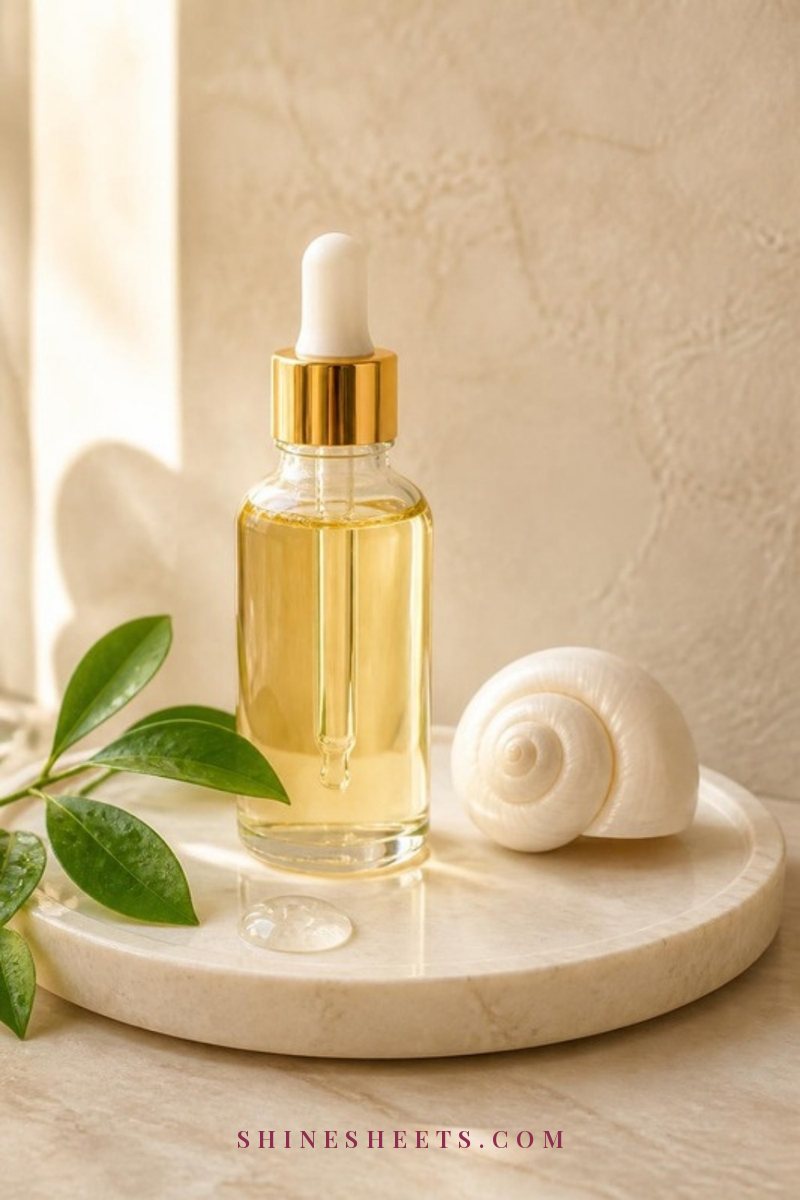
Peptides are small chains of amino acids that help support the skin's firmness and smoothness. They're very gentle, which makes them a lovely choice if your skin has become more sensitive and retinoids still feel like a lot.
I'd choose a lightweight peptide serum for the morning, under moisturizer and sunscreen. Look for "multi-peptide" or "copper peptide" formulas without heavy fragrance. Results are subtle and gradual, so think in months, not days.
4. A Richer Moisturizer With Ceramides
This is the step that probably matters most. Ceramides are fats that naturally sit between your skin cells and keep the barrier strong; they decline with age, and replacing them helps skin hold on to moisture and feel less reactive.
A ceramide cream moisturizer in a jar or tube is a pick for both morning and night. If your skin is very dry, look for one that also contains peptides, glycerin or shea butter. Apply it while your skin is still slightly damp from serum, and don't be shy: a generous fingertip for the face and another for the neck.
5. Daily SPF 30 or Higher
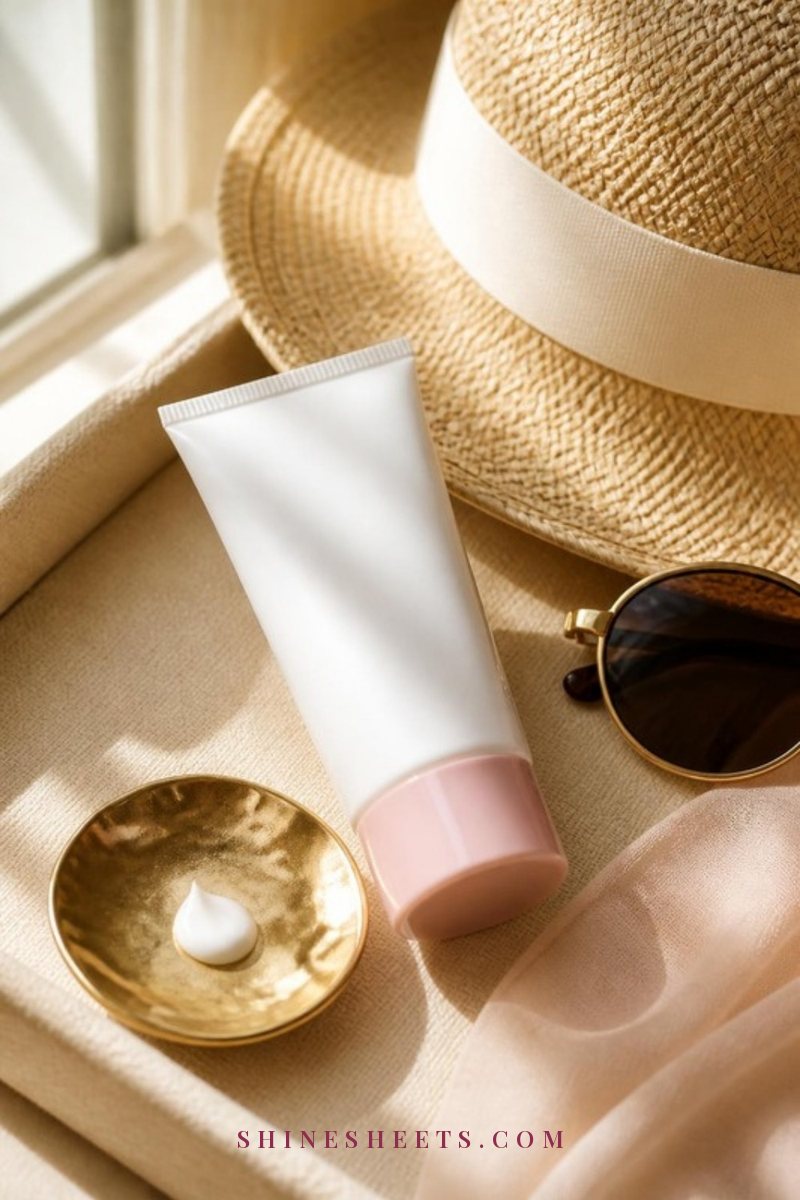
Sunscreen is the single most effective step for keeping new sun spots from forming and protecting the collagen you have. Use a broad-spectrum SPF 30 or higher every morning, even on cloudy days and even if you mostly stay inside near windows.
If your skin has turned sensitive, a mineral SPF 50 lotion with zinc oxide is often the most comfortable choice. Look for a tinted or sheer formula so it doesn't leave a white cast. My guide to mineral vs chemical sunscreen explains the difference if you're deciding between the two. Use about two finger-lengths for the face and neck, and reapply if you're outdoors for longer than two hours.
6. A Retinoid, Introduced Slowly
Retinoids (including retinol) are among the best-studied ingredients for smoother texture, more even tone and firmer-looking skin over time. In your 50s, though, the key word is slowly, because thinner, drier skin gets irritated more easily.
- Start with a gentle, low-strength retinol two nights a week.
- Use a pea-sized amount for the whole face, on dry skin, after cleansing.
- Try the "sandwich": a thin layer of moisturizer, then retinol, then more moisturizer.
- Keep it away from the corners of your nose, mouth and eyes.
- After three to four comfortable weeks, move to three nights a week.
Some flaking or pinkness at the start is common; if it stings or burns, pause for a few nights and restart less often. My full guide to retinol for beginners has a gentle step-by-step start plan. And because retinoids make skin more sun-sensitive, morning sunscreen is not optional on this one.
7. Neck, Décolleté and Hands
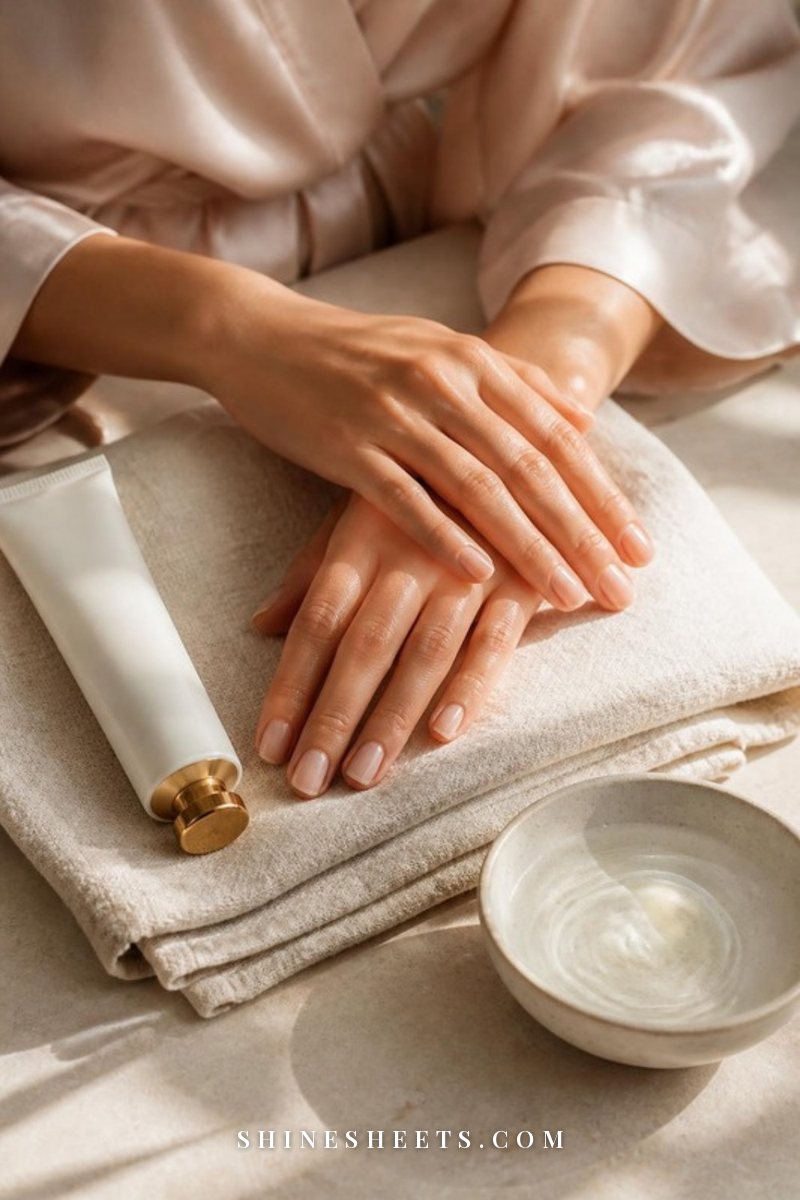
The skin on your neck, chest and hands is thinner than on your face and has usually had plenty of sun and very little care. The simplest fix: take every step of your face routine down past your jawline. Whatever cleanser, serum, moisturizer and sunscreen you use on your face, sweep it over your neck and chest too, using upward strokes.
For hands, keep a rich hand cream by the sink and use it after every wash, plus a little sunscreen on the backs of your hands in the morning. My guide to neck and décolleté care goes into more detail on this often-forgotten area.
Your Simple Skincare Routine in Your 50s
Here's how all of it fits together. It looks like a lot written out, but the morning takes about five minutes and the evening about seven. Skip steps on tired nights; consistency over weeks matters far more than perfection on any single day.
Morning Routine
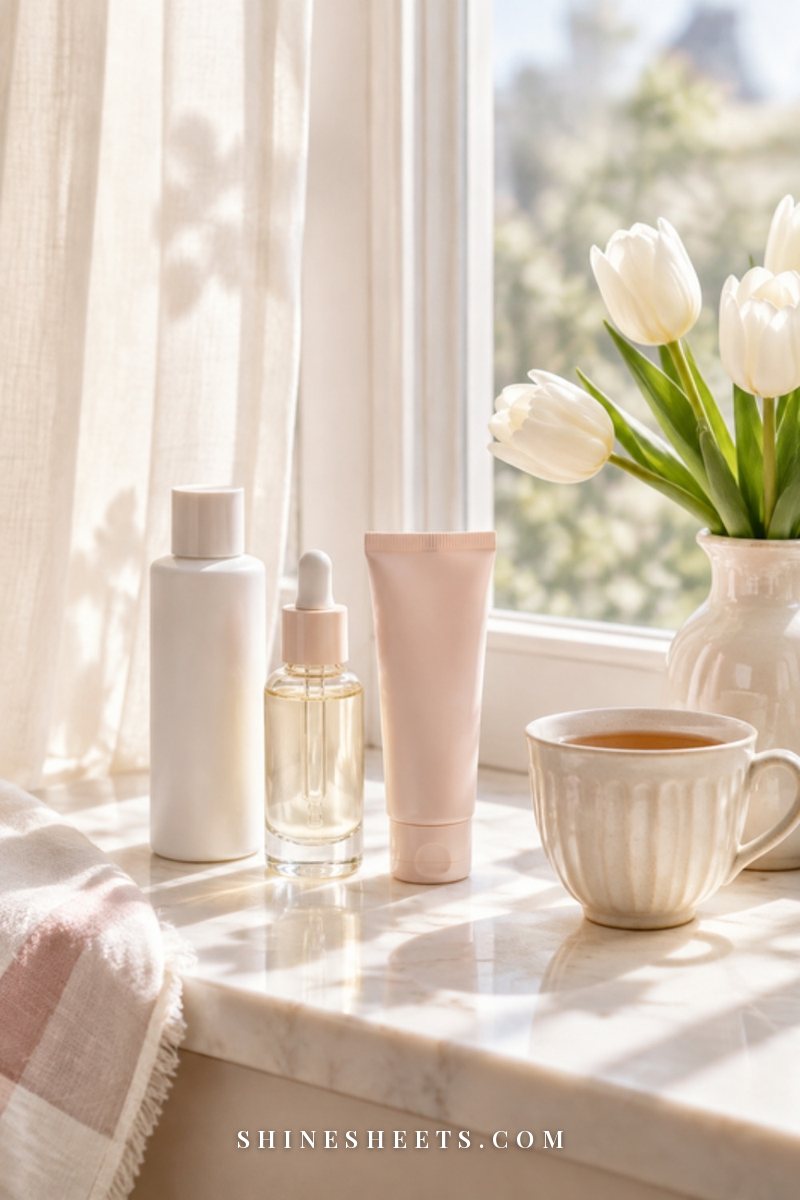
- Rinse or cleanse gently. Lukewarm water, or a small amount of cream cleanser if your skin feels oily.
- Hyaluronic acid on damp skin. Two or three drops, face and neck.
- Peptide serum. A few drops, pressed in.
- Ceramide moisturizer. Face, neck and chest.
- SPF 30 or higher. The last step, every single morning.
If you wear makeup, give the sunscreen a couple of minutes to settle first. My guide to makeup for mature skin has tips for keeping foundation soft and fresh instead of settling into lines.
Evening Routine

- Cleanse. If you wore makeup or sunscreen, start with a cleansing balm or oil, then follow with your cream cleanser.
- Retinoid (two or three nights a week). On dry skin, pea-sized, using the sandwich method if needed.
- On non-retinoid nights: hyaluronic acid on damp skin, or simply nothing extra.
- Ceramide moisturizer. A slightly thicker layer than in the morning.
- Hands and lips. Hand cream and a balm before bed.
A small addition that feels lovely at this stage: an ivory silk pillowcase. It's smoother than cotton, so there's less tugging on delicate skin while you sleep, and it doesn't soak up as much of your night cream. I'd choose mulberry silk you can wash on a gentle cycle. I like to finish my evening routine with a cup of tea and a glass candle on the nightstand, which turns a few minutes of skincare into a little wind-down ritual.
5 Common Skincare Mistakes in Your 50s
- Using the same strong products as before. Foaming cleansers, gritty scrubs and strong acids that worked for years can now strip a more fragile barrier. Swap to gentler versions and exfoliate no more than once a week.
- Adding too many actives at once. Retinol, vitamin C, acids and a new serum all in the same week makes it impossible to know what's helping and what's irritating. One new product at a time, with two to three weeks in between.
- Skipping sunscreen on "indoor" days. UV light comes through windows, and daily habits add up. SPF every morning is still the biggest single difference-maker.
- Stopping at the jawline. Neck, chest and hands show changes too. Every step can go there as well.
- Chasing miracle claims. No cream can turn back time, and products promising that tend to cost a lot and deliver little. A gentle, steady routine outperforms an expensive, irritating one.
How To Add New Steps Without Overwhelming Your Skin
If your current routine is just soap and a moisturizer (no judgment, truly), here's a calm way to build up over about six weeks. Each step gets time to settle before the next one arrives:
- Weeks 1 and 2: Swap to a cream cleanser, a ceramide moisturizer and daily SPF. That's it. Notice how your skin feels after a few days of gentler cleansing.
- Weeks 3 and 4: Add hyaluronic acid on damp skin in the morning, under your moisturizer.
- Weeks 5 and 6: Add a peptide serum in the morning, or start retinol two nights a week, but not both in the same fortnight.
- After that: Increase retinol to three nights a week if your skin feels comfortable, and consider a gentle brightening serum with niacinamide or vitamin C only if you'd still like more.
If anything stings, burns or makes you itchy, step back to what your skin last felt good with and wait a week before trying again. Slow is not a sign you're doing it wrong. Slow is the method.
Small Habits That Help Dry Skin Feel Comfortable
Products do a lot, but a few everyday habits quietly make a big difference to how dry, sensitive skin feels:
- Keep showers lukewarm and short. Hot water feels lovely but pulls oil from both your face and body. Aim for around ten minutes and moisturize within three minutes of stepping out, while skin is still damp.
- Add moisture to the air. Heating and air conditioning dry out a room. A small humidifier in the bedroom can help skin feel less tight by morning.
- Pat, don't rub. Thinner skin is more delicate. Pat your face dry, press products in with your palms and avoid tugging around the eyes.
- Choose fragrance-light formulas. Fragrance is one of the most common reasons sensitive skin reacts. If you love scent, enjoy it in a body mist or candle instead of on your face.
- Drink water and rest well. Neither replaces moisturizer, but tired, dehydrated days often show on the skin first. An evening cup of herbal tea is one of my favorite small rituals for winding down.
- Wear sunglasses and a hat outdoors. They protect the delicate eye area and save you from squinting, with no extra steps in your routine.
Patch Testing and When To See a Dermatologist
Because skin often becomes more reactive in your 50s, patch test every new product. Apply a small amount behind your ear or on your inner forearm once a day for three to five days. If there's no redness, itching or stinging, try it on a small area of your face before using it everywhere.
And please don't hesitate to see a dermatologist if you notice any of these:
- A new spot or mole, or one that's changing in size, shape or color.
- A sore or patch that doesn't heal within a few weeks, or that bleeds.
- Dryness, itching or redness that doesn't improve with a gentle routine.
- Persistent flushing or bumps you're unsure about.
A yearly skin check is a lovely habit at any age, and a dermatologist can also suggest options beyond what's available over the counter if you'd like more support. This guide is general information, not medical advice, so when something feels off, a professional opinion is always the right call.
Final Thoughts
Skincare in your 50s is less about doing more and more about listening. Gentle cleansing, deep moisture, daily sunscreen and a slow, patient approach to retinoids will carry your skin a very long way, and the comfort alone makes it worth it.
Be kind to the face that has carried you through so much. Give it softness, protection and a few quiet minutes each evening, and it will reward you by feeling calm, healthy and beautifully, unmistakably yours.