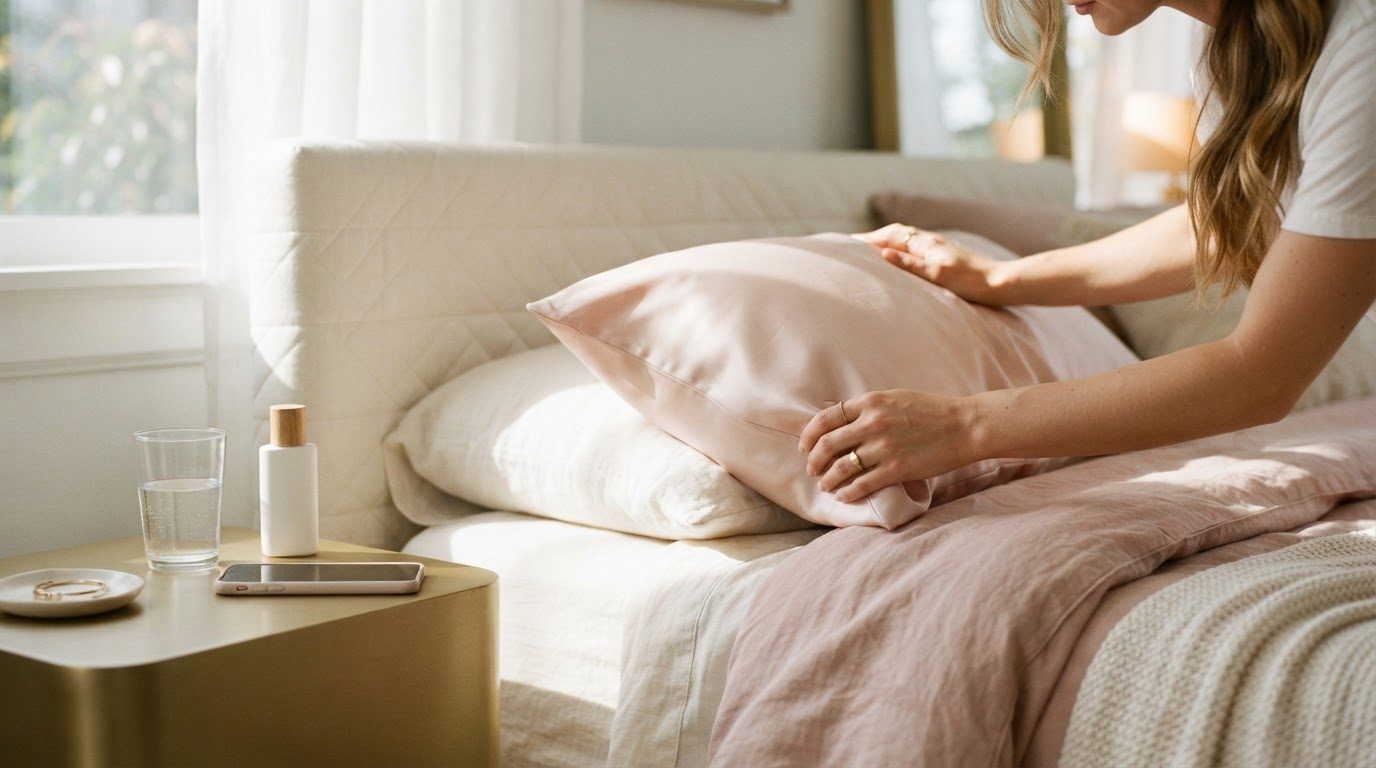
Sleep wrinkles have less to do with your skincare and more to do with the shape of your night. Every hour you spend with one cheek pressed and pulled against a pillow leaves a tiny fold, and the good news is that small changes to how you sleep can ease that pressure a lot.
Most of us notice them first as morning creases: a line across the cheek, a fold near the eye, a crease on the forehead that fades by lunch. For a long time they really are temporary. Over the years, as skin naturally makes less collagen and bounces back more slowly, the same folds in the same places can start to linger a little longer.
This guide is all about sleep wrinkles and how to prevent pillow lines on your face (and chest) with your whole night setup: why certain sleep positions cause lines, how to gently train yourself toward back sleeping, what pillowcase fabric can and can't do, how to keep your face hydrated overnight, six simple night habits and a few quick morning fixes.
None of this needs to be perfect. Even a partial shift, a few hours a night on your back, makes a real difference over time.
Sleep Lines vs Expression Wrinkles
Not every line is the same, and knowing the difference helps you choose the right fix.
- Expression lines form from repeated muscle movement while you're awake: smiling, squinting, raising your eyebrows. They usually run along the direction of the movement, like the lines at the corners of your eyes or across your forehead.
- Sleep lines form from mechanical forces while you sleep. Your face is pressed into the pillow (compression), and as you shift and turn, the skin gets pulled sideways (shear). They often appear on the side you sleep on and can run in different directions than expression lines, for example a vertical line on the cheek, a diagonal line near the temple or a crease on one side of the forehead.
One easy clue: if you have a line on just one side of your face and you always sleep on that side, it's very likely a sleep line. Expression lines tend to be more symmetrical, because you smile with both sides.
Sleep lines are a normal part of having skin and sleeping on it. You don't need to "fix" them. If you'd like to soften how often they form, though, your sleep position is where to start.
Why Sleep Lines Get Deeper Over Time
When skin is very springy, a crease from the pillow smooths out within minutes of getting up. Collagen and elastin, the proteins that give skin its firmness and bounce, help it snap back into shape. Over the years, skin naturally makes less of them, and it also tends to get a little drier and thinner. That means the same fold takes longer to fade.
Now add repetition. If you sleep on the same side, in the same position, night after night, the skin folds in exactly the same place thousands of times. Eventually, a line that used to disappear by breakfast may still be faintly there at dinner.
Sun exposure plays a big part too, since UV light breaks down collagen faster. That's why daily sunscreen quietly belongs in any conversation about sleep lines, even though it happens in the morning, not at night.
None of this is a reason to worry. It's simply a reason to be a little kinder to your skin while you sleep: less pressure, less pulling and plenty of moisture.
Why Side and Stomach Sleeping Cause Lines
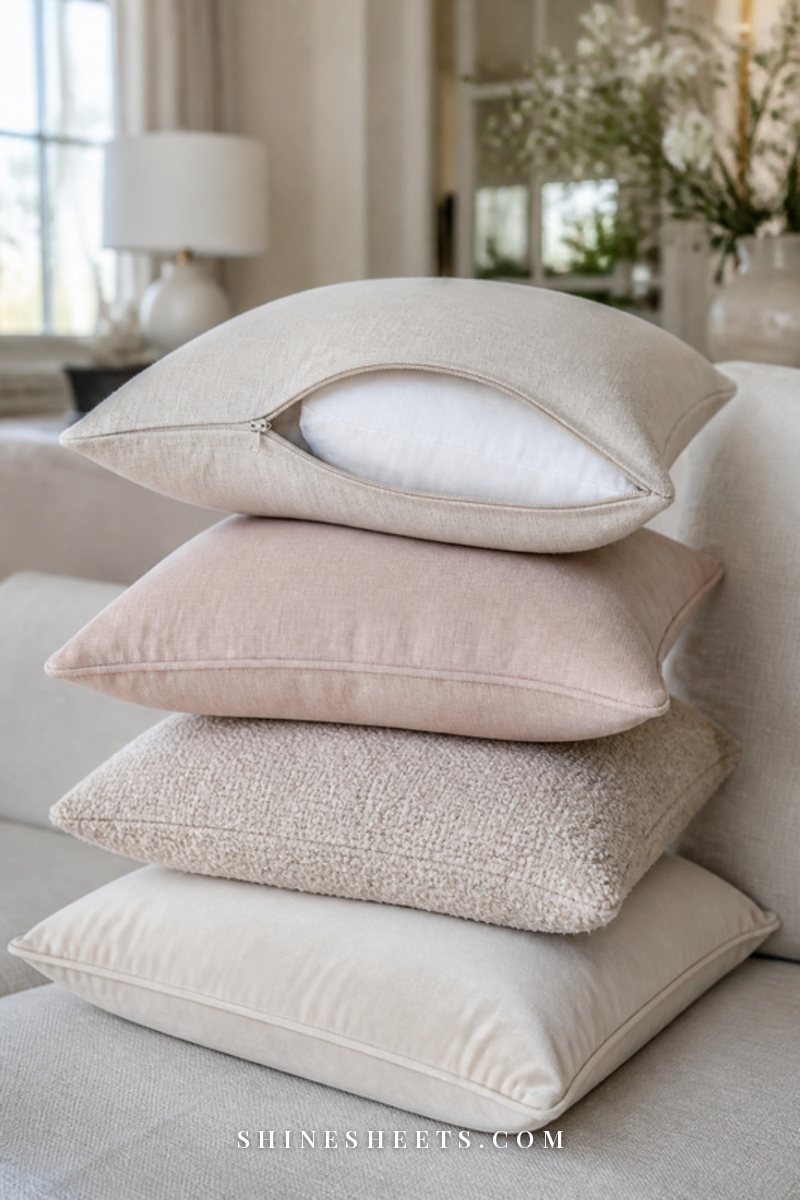
Your face spends roughly a third of your life against a pillow. The position you choose decides where the pressure goes.
Side Sleeping
This is the most common position, and it puts one whole side of your face into the pillow. The cheek gets pushed up toward the eye, the corner of your mouth can fold, and the skin near the temple and eye gets compressed. Since many of us favor one side, lines tend to show up more on that side.
Stomach Sleeping
Stomach sleeping is the hardest on facial skin, because you turn your head fully to one side and press your face down with the weight of your head. The forehead, cheek and chin can all fold. It's also often tough on the neck, which is a good extra reason to try shifting away from it.
Back Sleeping
On your back, your face isn't touching anything, so there's no compression and almost no shear. That's why back sleeping is usually suggested as the kindest position for your skin. It isn't comfortable for everyone, though, and if you snore or have a sleep condition, it's worth talking to your doctor about what's best for you.
Sleep Positions and Pillow Lines: The Quick Table
Here's a quick overview to find your own position and the fix that fits it. Screenshot it if it helps.
| Sleep position | Where lines tend to form | Fix | How easy it is |
|---|---|---|---|
| Back | Very few on the face; sometimes none | A supportive pillow under the neck and pillows on both sides to stay put | Easy if it already feels natural |
| Side, always the same side | One cheek, the temple, the outer eye area, one side of the forehead | Alternate sides, use a smooth pillowcase, try a contoured pillow | Medium; alternating takes a few weeks |
| Side, curled up with chin down | Cheek, mouth corner, neck and chest folds | A body pillow between knees and arms to open the chest | Medium |
| Stomach | Forehead, cheek, chin, one side of the face | Shift gradually to side sleeping first, then toward back | Hardest; a slow, two-step change |
| Combination (you move all night) | A mix, usually on the side you end up on in the morning | Smooth pillowcase plus a pillow setup that makes back sleeping comfy | Easy to medium |
Notice that the easiest wins (a smoother pillowcase, alternating sides) don't require you to become a perfect back sleeper. Start there if a big change feels like too much.
How To Train Yourself Toward Back Sleeping
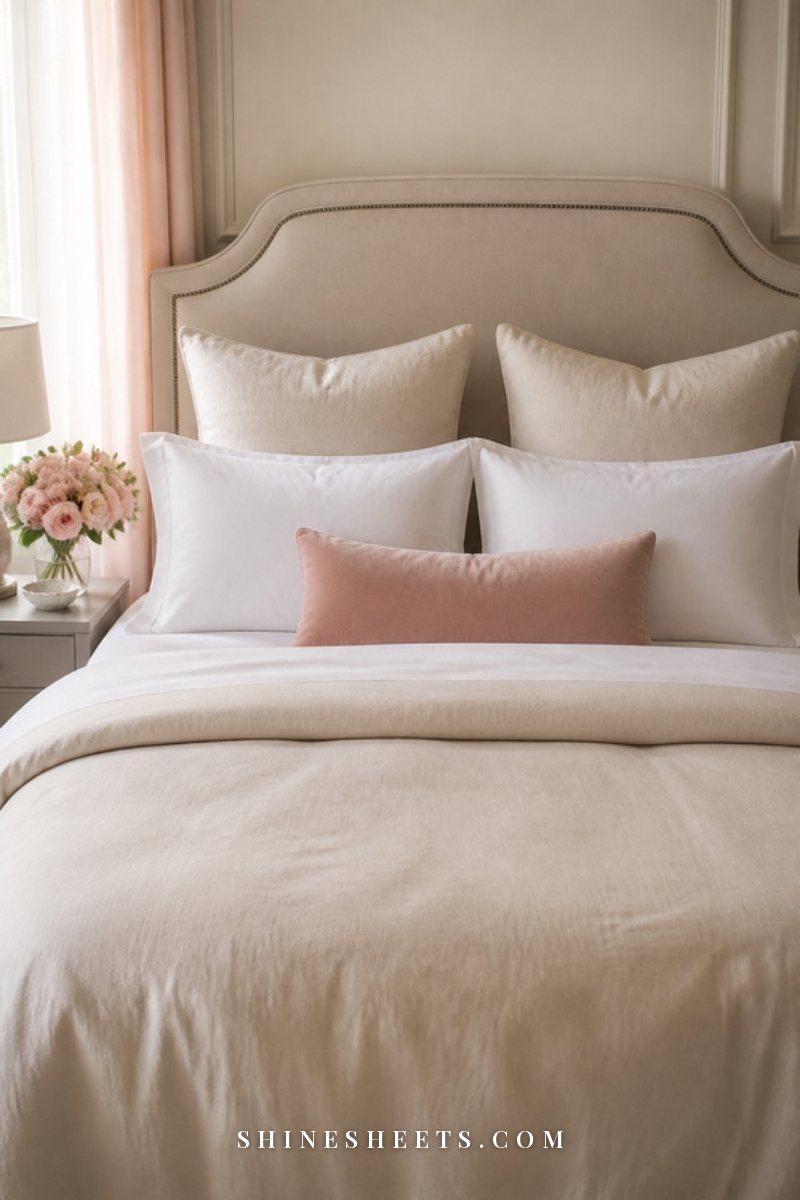
Changing a sleep position you've had for years takes patience. Your body will roll back to its favorite spot in the middle of the night, and that's completely normal. The goal is to make back sleeping feel supported and comfortable, so your body chooses it more often.
Build a Pillow Wall on Both Sides
Place a pillow on each side of your body, roughly at shoulder and hip level. They act as gentle bumpers that make rolling over less tempting and give your arms somewhere soft to rest. A small pillow under your knees can also take pressure off your lower back, which makes lying flat feel much more relaxing.
Try a Contoured Pillow
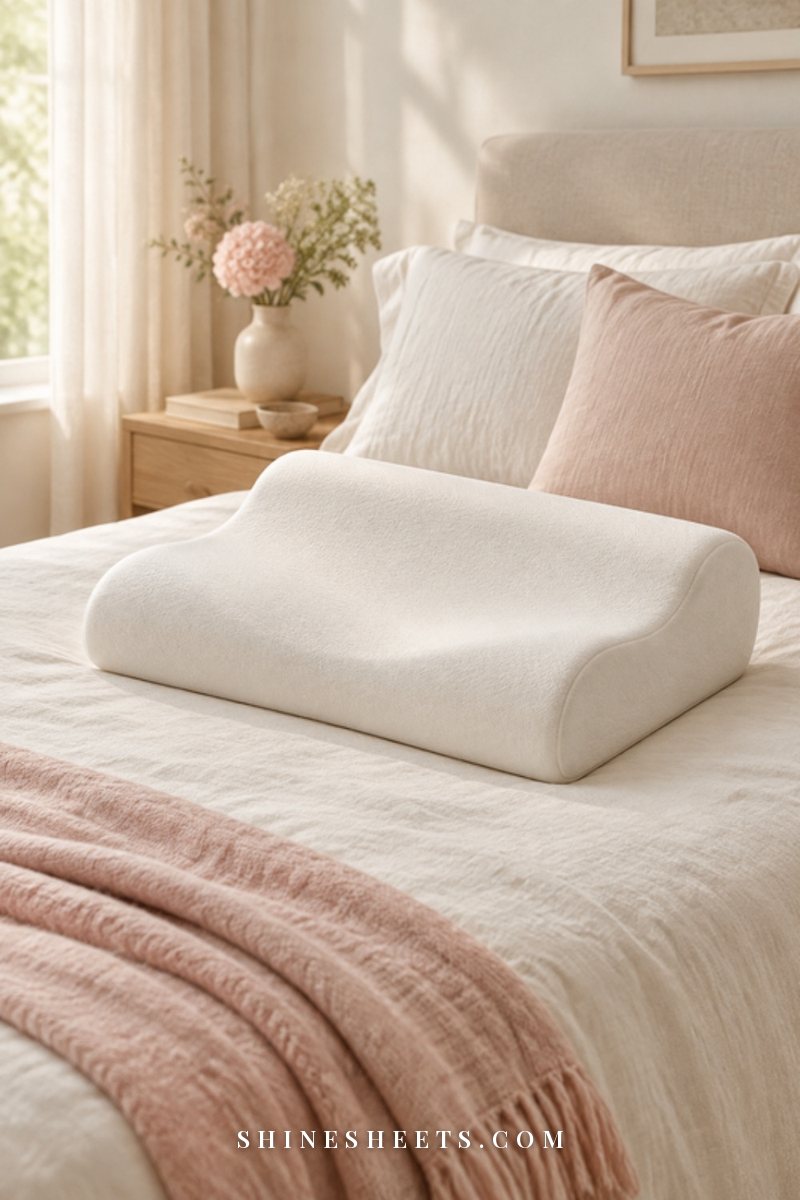
A pillow with a dip in the middle and support under the neck helps your head settle into place on your back. Look for a contoured memory foam pillow with a medium height and a soft, removable cover you can wash. If you wake up with a sore neck after a few nights, the height may be wrong for you, so choose one with a return window.
Be Patient With the Transition
- Start on your back each night. Even if you end up on your side by morning, those first hours count.
- Give it at least two to three weeks. New positions usually feel strange for the first several nights.
- Don't fight yourself awake. If you wake up on your side, simply roll back if it's easy. Sleep matters more than position, so please don't lose rest over this.
As someone prone to a bit of anxiety, I find a slow breathing exercise on my back helps me settle into the position instead of lying there thinking about it. Your brain starts to link back sleeping with calm.
If You'll Always Be a Side Sleeper
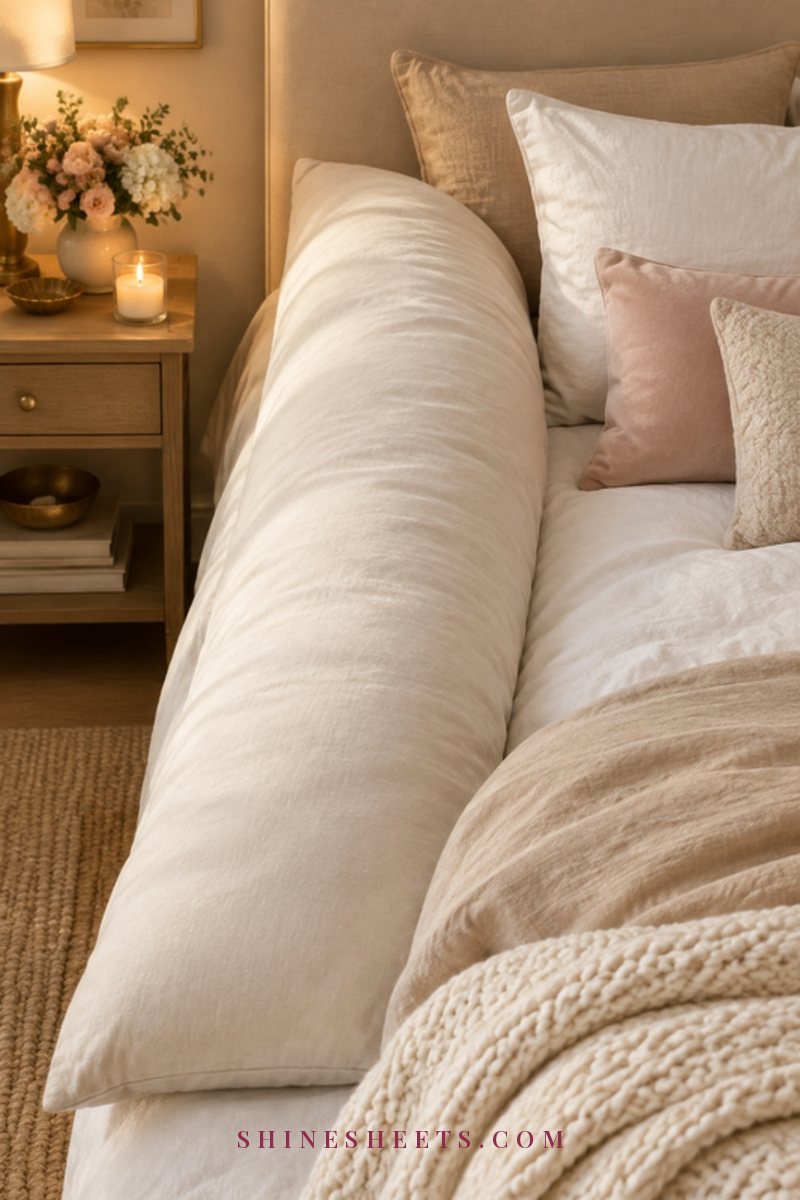
Some people simply can't sleep on their backs, and that's okay. You can still make side sleeping gentler on your skin:
- Alternate sides. Switching sides spreads the pressure more evenly, so one side doesn't take all of it. Start each night on the side you use less.
- Keep your face off the pillow edge. Rest your head so your cheek lies on the flat part of the pillow, not folded over its edge.
- Use a body pillow. A side-sleeper body pillow to hug between your arms and knees keeps you from curling forward and pressing your face and chest down. It also feels lovely and cozy.
- Choose the right pillow height. Your head should stay level with your spine. A pillow that's too flat pushes your face deeper into it.
Does Pillowcase Fabric Matter?
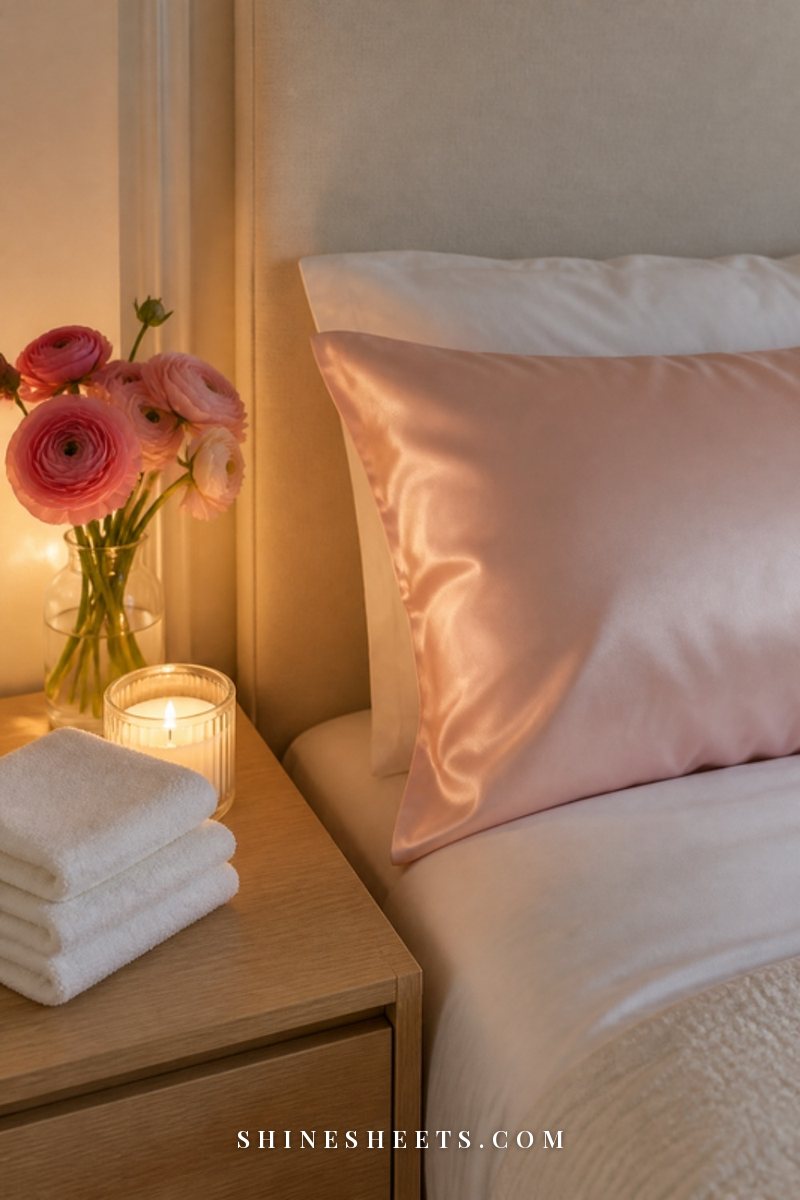
It does, but it's one piece of the puzzle rather than the whole answer. A smoother fabric creates less friction, so your skin glides a little instead of getting tugged and folded as you move. It won't stop the pressure of your face against the pillow, which is why position still matters most.
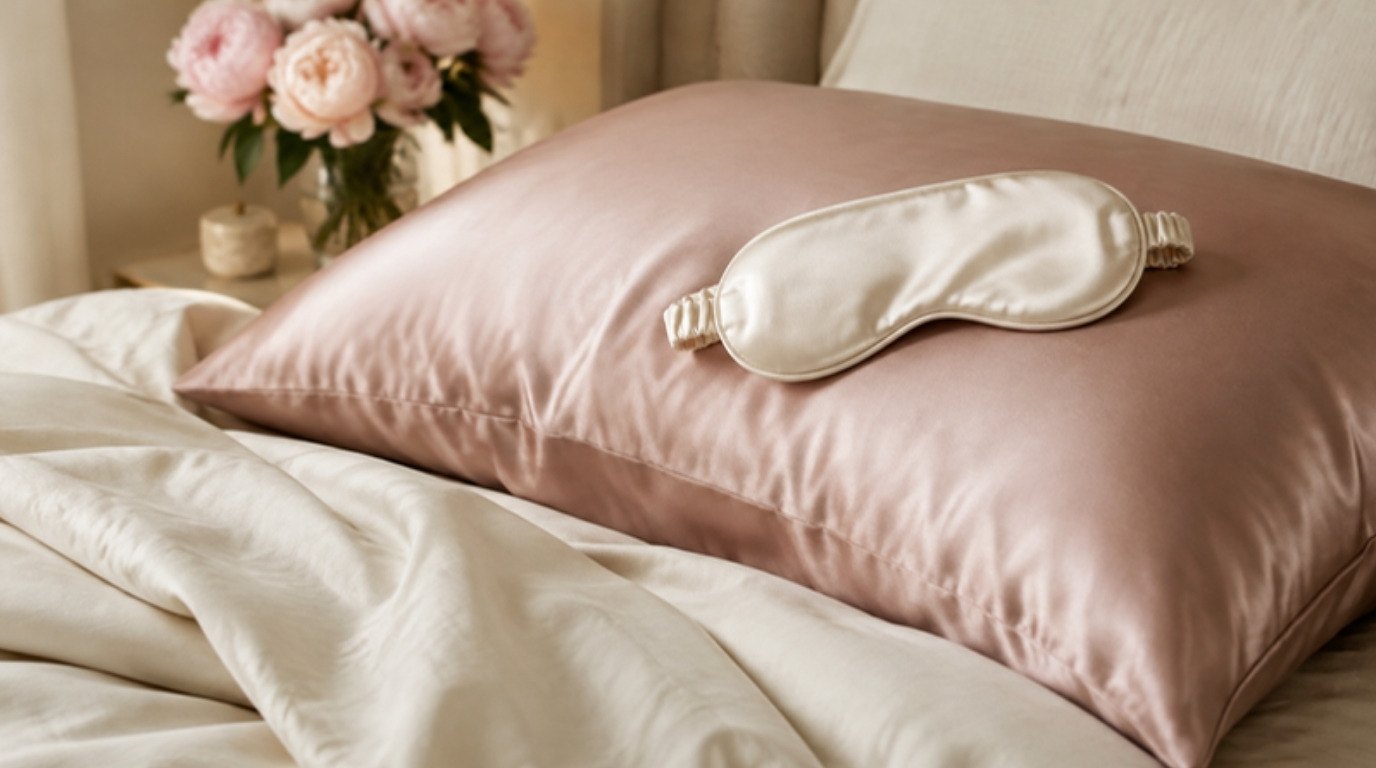
- Silk. Very smooth and soft. A mulberry silk pillowcase in blush is a pick if you want the smoothest option; look for a higher momme weight (around 19–25) for a sturdier feel and check that it's machine-washable on a gentle cycle.
- Satin. Satin is a weave, usually made from polyester. It's smooth and more budget-friendly, though it can feel warmer.
- Cotton sateen. A smoother cotton weave that still breathes well. A nice middle ground if silk or satin feels too slippery.
I've written a whole post on silk pillowcase benefits if you'd like the full comparison for skin and hair. Whatever fabric you choose, change your pillowcase every few days, since oils and skincare build up on it.
A Hydrated Face at Night
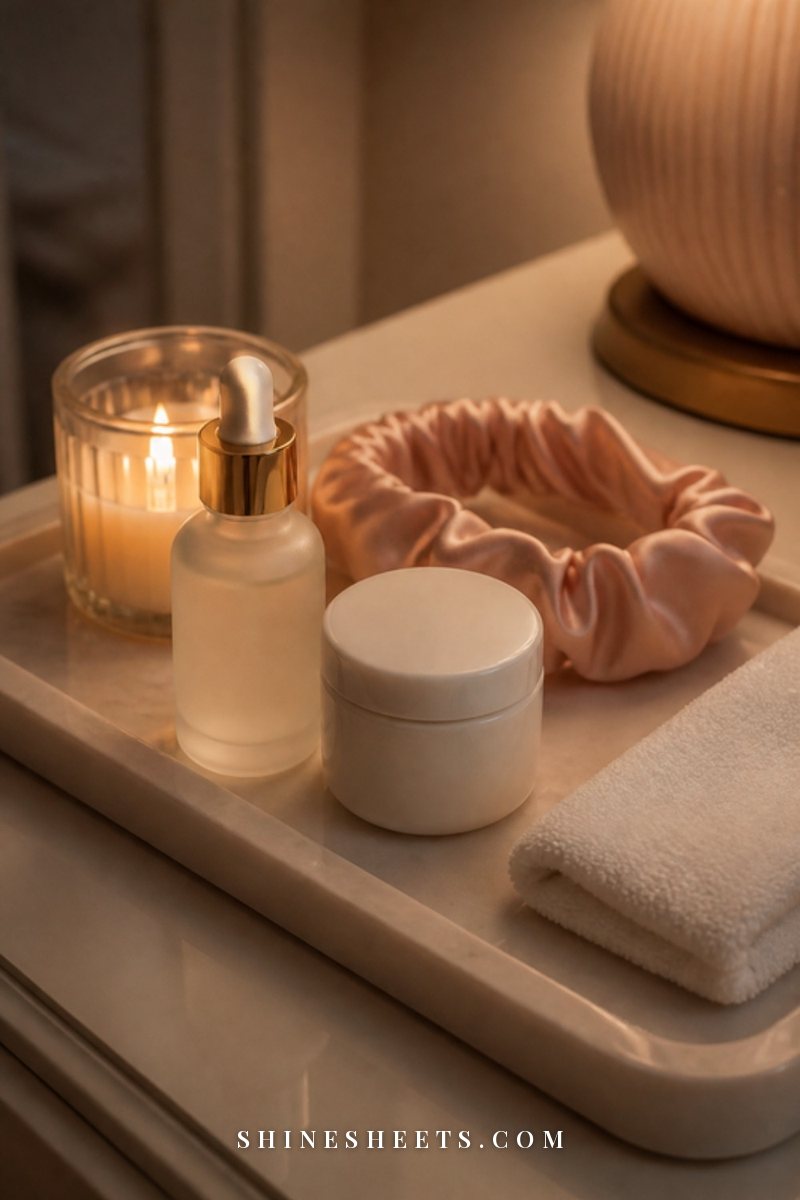
Well-moisturized skin tends to be more supple and bounce back from creases more easily in the morning, while dry skin can show lines more. Hydration isn't a cure for sleep lines, but it's a lovely support.
Moisturizer or Sleeping Mask
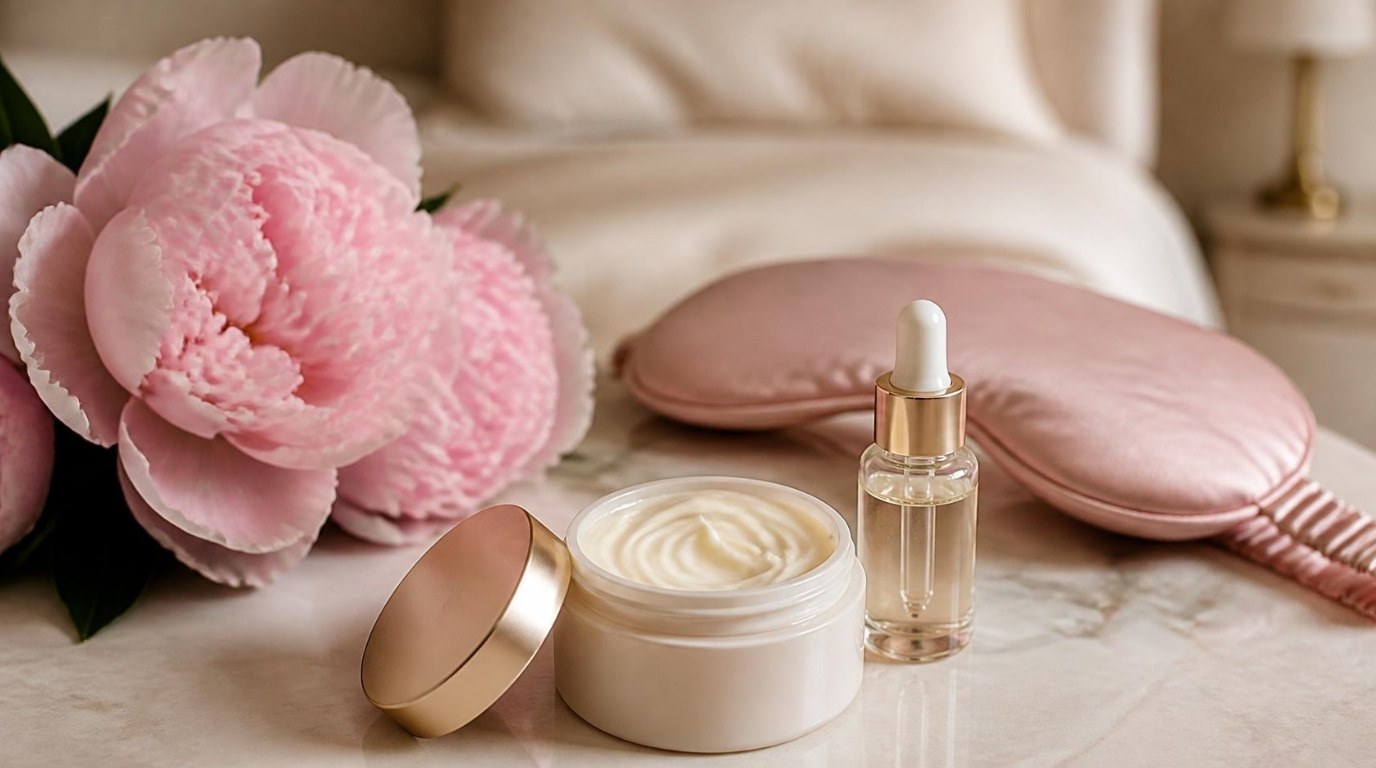
A good night cream or moisturizer is enough for many people. If your skin feels dry or tight overnight, an overnight sleeping mask gives a slightly richer, sealing layer on top. Apply it as the last step, about 20–30 minutes before you lie down, so it has time to settle instead of transferring straight onto your pillowcase. Not sure which one you need? My guide on sleeping mask vs night cream breaks it down.
Retinol for Longer-Term Support
For longer-term support of skin texture and fine lines, retinol is one of the most studied ingredients in over-the-counter skincare. It works slowly, over months, and it can irritate at first, so start low and slow: a small amount two or three nights a week, always with a patch test first and sunscreen every morning. My retinol for beginners guide has a gentle start plan. Skip retinol if you're pregnant or trying to conceive, and ask your doctor if you're unsure.
Chest Lines and the Décolletage
Sleep lines don't only show up on your face. Many side sleepers notice vertical lines in the center of the chest in the morning, because the chest folds as the top shoulder rolls forward and the breasts press together.
- Open your chest. A body pillow between your arms keeps the top shoulder from collapsing forward.
- Moisturize the décolletage too. Bring your night moisturizer down to your neck and chest. Many of us stop at the jaw.
- Wear soft, smooth sleepwear. A smooth fabric against the chest reduces tugging, much like a silky pillowcase.
- Protect it by day. The chest gets a lot of sun, so include it in your morning sunscreen.
6 Night Habits That Help Prevent Pillow Lines
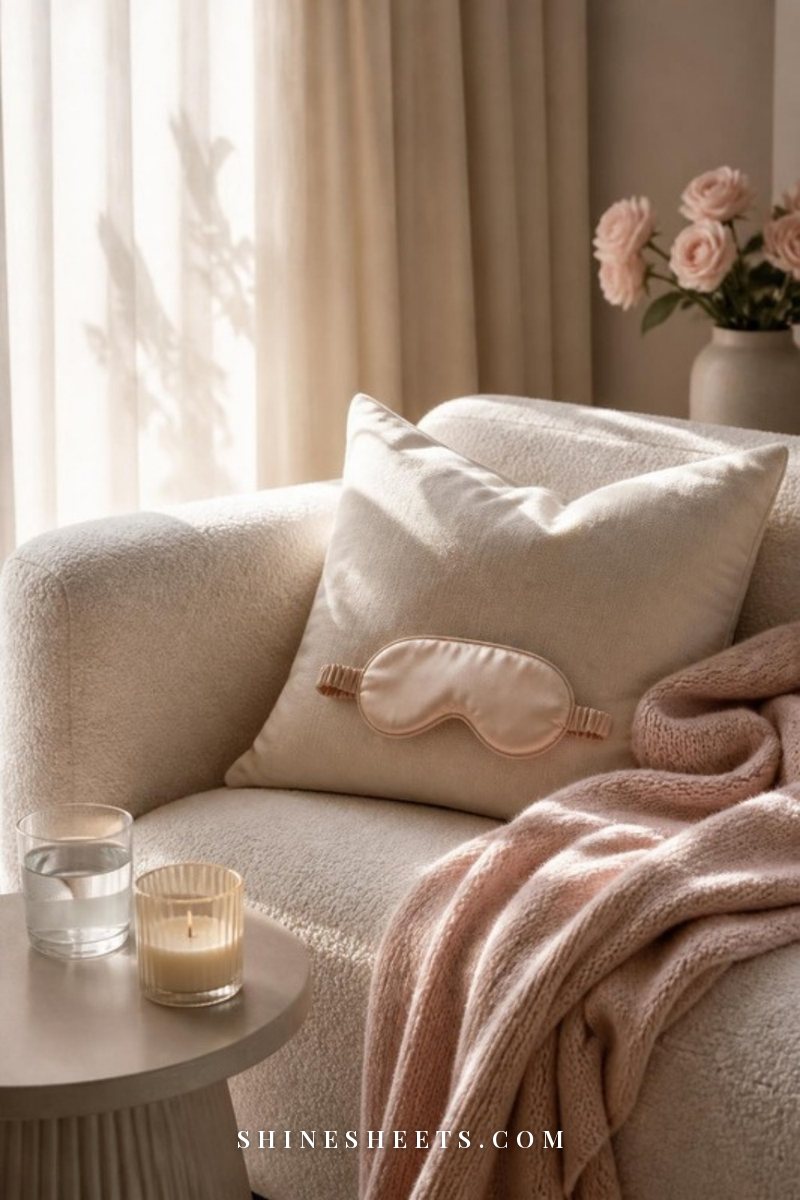
These six habits work together. Pick two to start, then add the rest when they feel easy.
- Start every night on your back. Settle in with your pillow wall and contoured pillow, take a few slow breaths and let yourself drift off in that position.
- Moisturize 20–30 minutes before bed. Face, neck and chest. That small gap lets products absorb so your skin, not your pillowcase, gets the benefit.
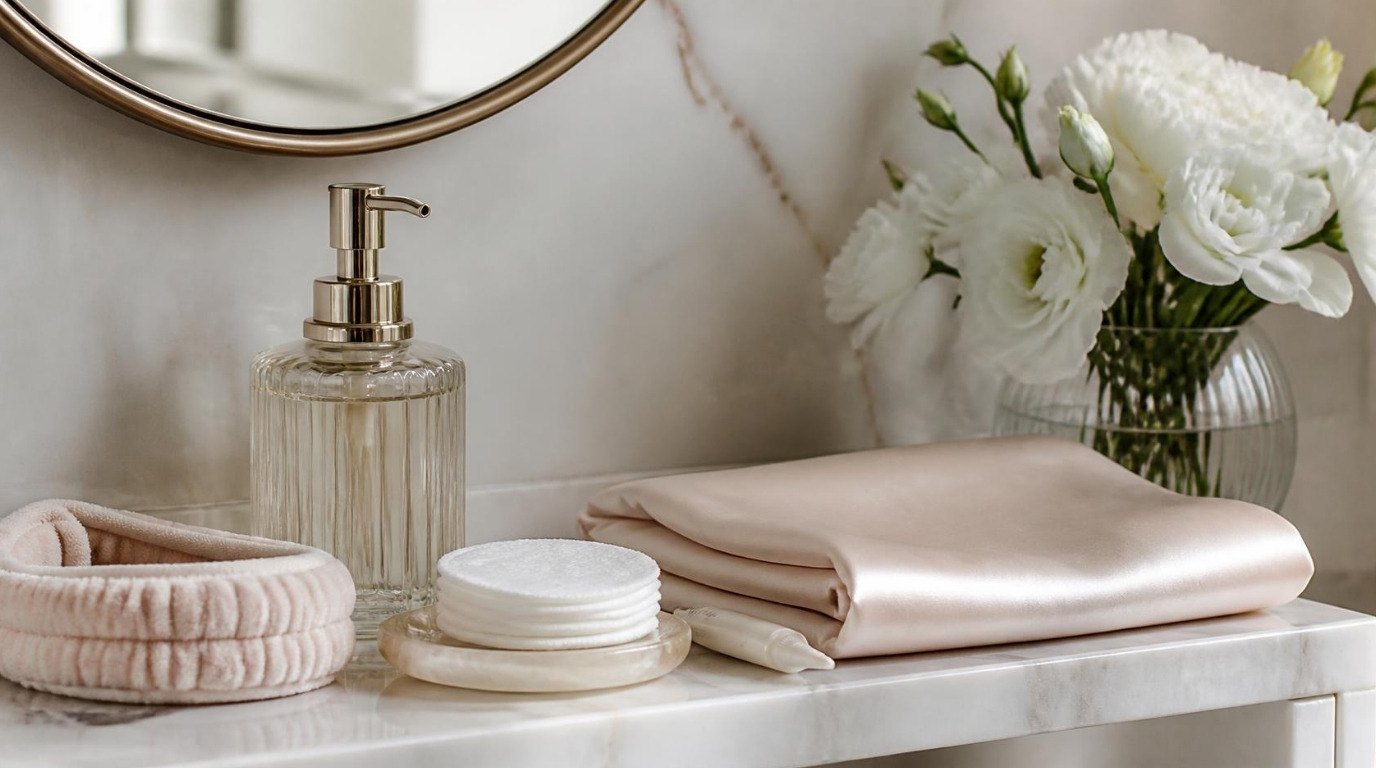
- Use a smooth pillowcase and change it every 2–3 days. Silk, satin or cotton sateen, kept fresh.
- Wear a soft eye mask. A silk sleep eye mask in cream blocks light (which helps you sleep more deeply and move less) and adds a smooth layer around the delicate eye area. Choose one with a soft, wide strap that doesn't press.
- Keep your hair off your face. A loose, soft scrunchie or a low braid keeps strands from tugging and rubbing against your cheeks.
- Protect your sleep itself. A regular bedtime, a dark, cool room and a calming wind-down (tea, a candle, a few lines in a journal) help you sleep more soundly and shift around less. My sleep routine for skin post has more gentle ideas.
Count it as a win if you manage even three of these most nights. Habits stack up quietly.
Morning Fixes for Pillow Creases
Even with a great setup, you'll still wake up with the odd crease. Here's how to help it fade a bit faster:
- Splash with cool water. A few splashes of cool (not icy) water feel refreshing and help your skin wake up. Pat dry gently.
- Moisturize right away. A hydrating serum or moisturizer helps skin feel plumper and creases look softer.
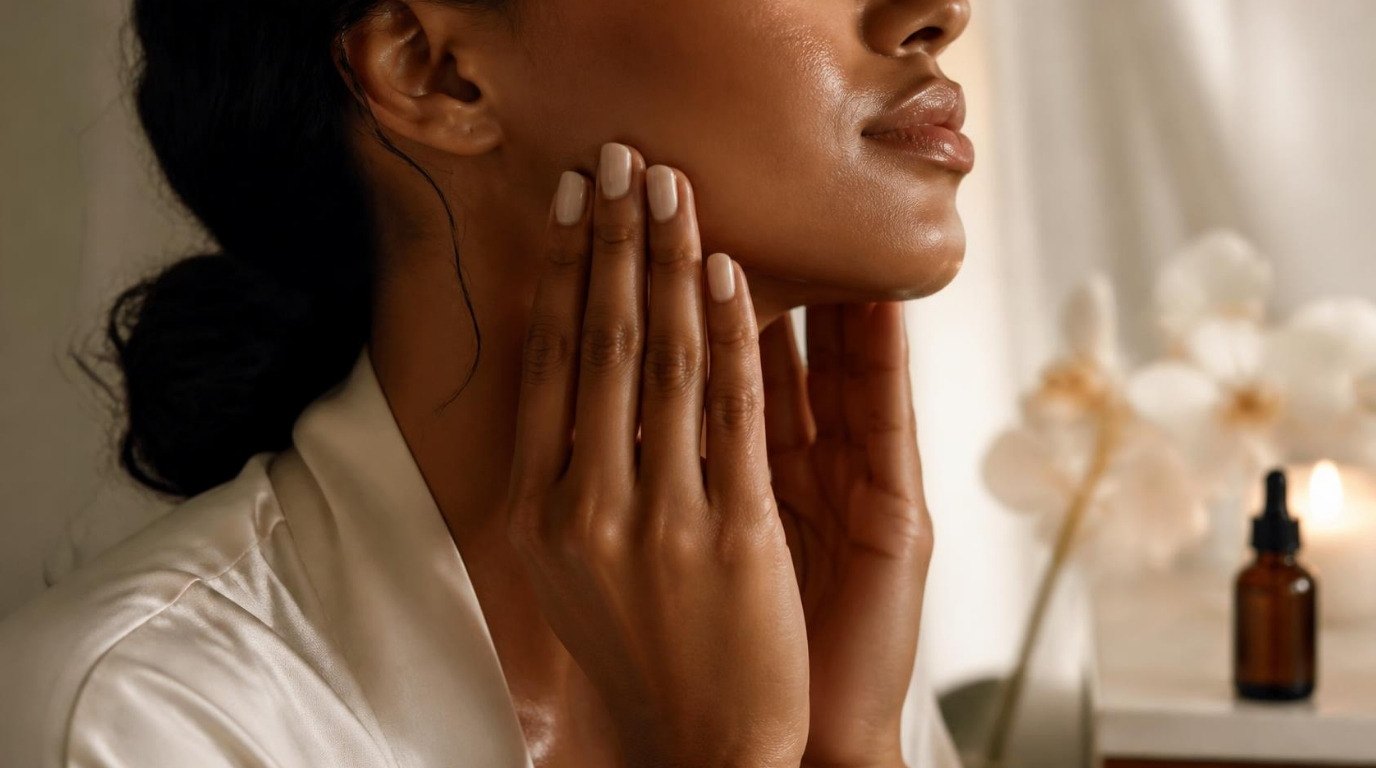
- Try a light massage. Using a little moisturizer or face oil, glide your fingertips from the center of your face outward and gently down toward the sides of the neck for 1–2 minutes. Keep the pressure very light. My lymphatic drainage face massage routine shows the exact strokes.
- Give it time. Most morning creases soften within an hour or two as your skin moves and rehydrates.
If you notice a line that doesn't fade at all or any skin change that worries you, a dermatologist can take a look and talk through your options.
What Your Night Setup Can and Can't Do
I think it's kind to be clear about expectations here. Changing your sleep position, pillow and pillowcase can reduce how much pressure and pulling your skin goes through every night. Over months and years, that may mean fewer new sleep lines and softer morning creases. It's a gentle, preventive habit, not a quick fix.
What it can't do is erase lines that are already well set, stop natural aging or replace the basics that matter all day long: sunscreen every morning, a moisturizer that suits your skin, enough rest and a healthy, steady routine. Think of your night setup as one helpful layer among those basics.
It also shouldn't cost you sleep. If a new position keeps you awake or makes your neck or back ache, go back to what feels comfortable and lean on the easier changes (a smooth pillowcase, alternating sides, moisturizing earlier). Deep, restful sleep is good for your skin in its own right, and losing it to chase fewer creases isn't a good trade.
Final Thoughts
Sleep wrinkles are simply what happens when real skin meets a real pillow every night. You don't need to sleep perfectly still or wake up flawless to take care of your face.
Start with one or two changes, maybe a smoother pillowcase and the first hour on your back, and let the rest come slowly. Your nights can be restful, your skin can be cared for, and both can happen without any pressure at all.