The best sunscreen isn't mineral or chemical. It's the one you like wearing enough to put on every single morning, in the right amount, and top up when you're outside. Both types protect your skin well when they're used properly, and both can feel miserable if they don't suit your skin.
What really changes between them is the feel, the finish and how your skin reacts. Mineral formulas tend to be the gentler pick for reactive skin but can leave a white cast. Chemical formulas usually disappear into the skin and sit beautifully under makeup, but they can sting if they wander into your eyes. Once you know which trade-off you'd rather live with, choosing gets so much easier.
This guide breaks down mineral vs chemical sunscreen in plain words: how each type works, the calm answer on safety, a side-by-side comparison table, which formula suits sensitive, acne-prone, oily, dry skin and deeper skin tones, how to read a label, and how to apply and reapply so the SPF on the bottle is the SPF you actually get.
My own skin is combination and sensitive, with a T-zone that turns shiny by lunch, so I've spent a lot of time thinking about textures (and about what makes me skip sunscreen on lazy days). Let's make this simple.
Mineral vs Chemical Sunscreen: The Short Answer
If you only read one section, make it this one.
- Mineral sunscreen uses zinc oxide and/or titanium dioxide. It's usually the calmer choice for sensitive, reactive or easily irritated skin, but it can look chalky or white, especially on medium and deeper skin tones.
- Chemical sunscreen (often called organic sunscreen, because the filters are carbon-based molecules) uses filters like avobenzone, homosalate, octisalate and octocrylene. It's usually lighter, more invisible and easier to wear under makeup, but some people find it stings near the eyes.
- Both work mainly by absorbing UV rays. Neither is automatically safer or stronger. An SPF 30 is an SPF 30, whatever filters it uses, as long as you apply enough of it.
- Hybrid formulas mix both kinds of filters, and they're often a lovely middle ground: less white cast than pure mineral, and a gentler feel than some purely chemical formulas.
Choose by your skin, your skin tone and your day, not by fear. Now for the details.
How Mineral Sunscreen Works
Mineral sunscreens rely on two filters: zinc oxide and titanium dioxide. You'll often hear that they "sit on top of the skin and bounce the sun away like a mirror." That's only a small part of the story. Research on these particles shows they mostly absorb UV light, just like chemical filters do, and scatter or reflect only a small share of it.
The two minerals also do slightly different jobs:
- Zinc oxide covers a wide range, from UVB (the burning rays) through most of UVA (the deeper rays linked to aging that also pass through windows).
- Titanium dioxide is excellent against UVB and shorter UVA rays, but weaker against long UVA, so it's usually paired with zinc oxide or other filters.
Why do sensitive skin types love them? Zinc oxide and titanium dioxide rarely cause allergic reactions, and zinc oxide is even used in soothing creams. Many mineral formulas are also simpler, with fewer ingredients overall, which means fewer chances for something to irritate you.
The trade-offs are real, though. Mineral sunscreens can feel thicker, take a little more blending, and leave a white or grayish cast. Newer formulas use finer particles and tinted bases (colored with iron oxides) to fix that, and a tinted mineral sunscreen with SPF 50 is often the easiest way to get mineral protection without looking ghostly. A small bonus: the iron oxides in tinted formulas also help block visible light, which can matter if you're dealing with dark spots or melasma.
How Chemical Sunscreen Works
Chemical sunscreens use carbon-based filters that absorb UV energy and release it as a tiny amount of heat. Each filter covers its own slice of the UV spectrum, so good formulas combine several of them to get broad protection. Common ones you'll see on US labels:
- Avobenzone – the main UVA filter in many American sunscreens. On its own it breaks down in sunlight, so well-made formulas pair it with stabilizing ingredients.
- Homosalate and octisalate – UVB filters that also help the texture glide on smoothly.
- Octocrylene – a UVB filter that also helps keep avobenzone stable.
- Oxybenzone – a broad filter that has become less common, partly because some people react to it and partly because Hawaii restricts sunscreens that contain it (along with octinoxate).
Europe, Korea and Japan also use a newer generation of filters, with long names like bis-ethylhexyloxyphenol methoxyphenyl triazine or methylene bis-benzotriazolyl tetramethylbutylphenol on the back of the tube. They're very stable, give strong UVA protection and are a big part of why Korean and Japanese sunscreens have such a loyal following for their weightless, invisible finish.
The biggest draw of chemical sunscreen is how it feels. Most formulas are thin and sheer and leave no cast at all, which makes them easy to wear every day and lovely under foundation. A lightweight Korean sunscreen with SPF 50 is the type I'd point most people with oily or combination skin toward first.
The downsides: some filters can sting if they migrate into your eyes (especially when you sweat), and a small number of people react to specific filters with redness or itching. If that's you, it doesn't mean chemical sunscreen is "bad". It might just mean one ingredient doesn't agree with your skin.
Is One Type Safer Than the Other?
This is the question that causes the most worry, so here's the calm version.
In the US, the FDA considers zinc oxide and titanium dioxide generally recognized as safe and effective. For many chemical filters, the agency has asked manufacturers for more safety data, partly because studies found that some of these filters can be absorbed into the bloodstream. That's a request for more information, not a finding that they're harmful, and the FDA has been clear that people should keep using sunscreen.
Dermatologists broadly agree on the part that matters most: the proven risk is sun damage, and a well-made broad-spectrum sunscreen you wear consistently protects you from it. If knowing your sunscreen is mineral gives you peace of mind, that's a perfectly good reason to choose it. If you'd skip sunscreen altogether because mineral feels heavy and chalky on you, a chemical formula is the better choice for your skin by a mile.
A gentle note: if you're pregnant, have a skin condition or are choosing sunscreen for a baby, ask your doctor or dermatologist which type they'd recommend. For babies under six months, the usual advice is shade and protective clothing rather than sunscreen.
Mineral vs Chemical Sunscreen: Side-by-Side Comparison
Here's the whole debate in one table. Screenshot it for your next drugstore run.
| Factor | Mineral sunscreen | Chemical sunscreen |
|---|---|---|
| Active filters | Zinc oxide, titanium dioxide | Avobenzone, homosalate, octisalate, octocrylene; newer filters in Europe and Asia |
| How it protects | Mostly absorbs UV, scatters a little | Absorbs UV and releases it as a little heat |
| Finish | Matte to slightly chalky; tinted versions look natural | Sheer and invisible, often a little dewy |
| Feel | Thicker, needs more blending | Thin lotion, fluid or gel that sinks in fast |
| White cast | Common in untinted formulas | Rare |
| Near the eyes | Rarely stings | Can sting if it moves into the eyes |
| Best for | Sensitive, reactive or rosacea-prone skin; freshly treated skin | Oily and combination skin, deeper skin tones, daily wear under makeup |
| Under makeup | Can pill if layered too fast; tinted versions can replace a light base | Usually smooth, almost like a primer |
| Water and sweat | Look for "water resistant (40 or 80 minutes)" | Same: check the label |
| Reapplying | Every 2 hours outdoors and after swimming or sweating; a stick makes it easy | Every 2 hours outdoors and after swimming or sweating; sticks and SPF mists help over makeup |
| Patch test? | Yes, for any new product | Yes, for any new product |
Notice the last few rows: the rules for how much and how often are identical. The filter type changes the experience, not the routine.
Which Sunscreen Suits Your Skin?
Skin types overlap (mine is sensitive and combination at the same time), so read the ones that sound like you and look for the common ground.
Sensitive or Reactive Skin
Start with mineral. Look for zinc oxide as the main filter, a short ingredient list and no added fragrance. If you have rosacea or your skin flushes easily, zinc oxide's soothing nature is a real plus. A mineral sunscreen made for sensitive skin with SPF 30 or higher makes a calm everyday base. If you'd like the whole routine around it, my sensitive skin routine walks you through a gentle morning and night plan.
Acne-Prone Skin
Both types can work. What matters more is the base: look for "non-comedogenic" or "oil-free" on the label, a gel or fluid texture, and no heavy oils near the top of the ingredient list. Zinc oxide is a favorite for breakout-prone skin because it's calming, while lightweight chemical fluids are great if you can't stand any heaviness. Whatever you pick, cleanse it off properly every night.
Oily or Combination Skin
This is where chemical and hybrid formulas often win (with less shine, which my T-zone appreciates). Gel creams, fluids and formulas labeled "matte" or "sebum control" keep oil in check for longer. If you love mineral, choose a matte tinted version and blot with a tissue midday instead of piling on powder.
Dry Skin
Look for creamy formulas with glycerin, ceramides or hyaluronic acid. Both types come in hydrating versions. Mineral formulas can emphasize dry patches, so moisturize first and give it two or three minutes to settle before sunscreen goes on.
Medium and Deeper Skin Tones
A white cast is one of the most common reasons people stop wearing sunscreen, and that's not vanity, it's practicality. Chemical sunscreens and sheer Korean or Japanese formulas are usually invisible. If you prefer mineral, go for a tinted version in a shade that matches you, and test it on your jaw in daylight before committing.
Under Makeup

The secret to sunscreen under makeup is patience: apply it, wait three to five minutes, then go in with your base. Chemical formulas tend to layer more smoothly, while mineral ones can pill if you rush or rub too much. Pat foundation on with a damp sponge instead of buffing hard.
And no, the SPF in your foundation doesn't replace sunscreen. To reach the number on the bottle, you'd need to wear far more foundation than anyone actually does. Think of makeup SPF as a small bonus on top.
How To Read a Sunscreen Label
Whatever type you choose, these four things on the label matter more than mineral vs chemical:
- Broad spectrum. This means it protects against both UVA and UVB. The SPF number on its own only measures UVB protection. Outside the US you may see a UVA logo in a circle or a PA rating instead (PA+++ or PA++++ means strong UVA protection).
- SPF 30 or higher. SPF 30 is the everyday minimum dermatologists recommend. For long days outdoors, at the beach, on a hike or on the snow, SPF 50 gives you a little extra margin, especially since most of us apply less than we should.
- Water resistance. In the US, labels can say water resistant for 40 or 80 minutes. That's how long it holds up while you swim or sweat, not a pass to skip reapplying. No sunscreen is truly "waterproof" or "sweatproof", which is why those words aren't allowed on US labels.
- A texture you'll actually use. Lotion, cream, fluid, gel, stick or spray. The best texture is the one you'll put on generously without complaining.
If you want to go deeper into the specific filters on the back of the tube, I've broken them down one by one in my guide on how to choose the right active sunscreen ingredients.
How To Apply Sunscreen the Right Way
Here's the part nobody finds exciting, but it matters more than the filter type. SPF is tested with a generous layer (2 milligrams per square centimeter of skin), and most people apply half of that or less. Less sunscreen means much less protection than the label promises.
- Measure with the two-finger rule. Squeeze a line of sunscreen along the full length of your index and middle fingers. That's roughly 1/4 teaspoon, about the right amount for your face. Your neck and ears need extra. I go into the measuring in more detail in how much sunscreen to put on your face.
- Apply it as the last step of your skincare. After moisturizer, before makeup.
- Split it into two thinner layers if one feels heavy. Apply half, let it set for a minute, then apply the other half. Same total amount, much nicer feel.
- Don't forget the easy-to-miss spots. Hairline, ears, the sides of your nose, around the eyes, your neck and the backs of your hands.
- Give it a little time. Apply it around 15 minutes before you head outside so it can settle into an even film, whichever type you use.
Reapplying During the Day
Sunscreen wears down with sun exposure, sweat, touching your face and wiping your nose. Reapply at least every 2 hours when you're outdoors, and straight after swimming, heavy sweating or towel-drying.
A clear sunscreen stick is the easiest way to reapply over bare skin or light makeup: glide it over your face several times (not one quick swipe), then pat it in with clean fingertips. Over full makeup, an SPF setting spray adds a helpful layer on top, though it works best as a top-up rather than your only protection, since it's hard to tell how much actually lands on your skin. My guide on how to reapply sunscreen over makeup has the full step-by-step method.
Spending the whole day at a desk away from windows? You don't need to reapply nearly as often. Sitting by a sunny window or heading out at lunch, a top-up is worth it. Here's when sunscreen indoors and on cloudy days really makes a difference.
How To Patch Test a New Sunscreen
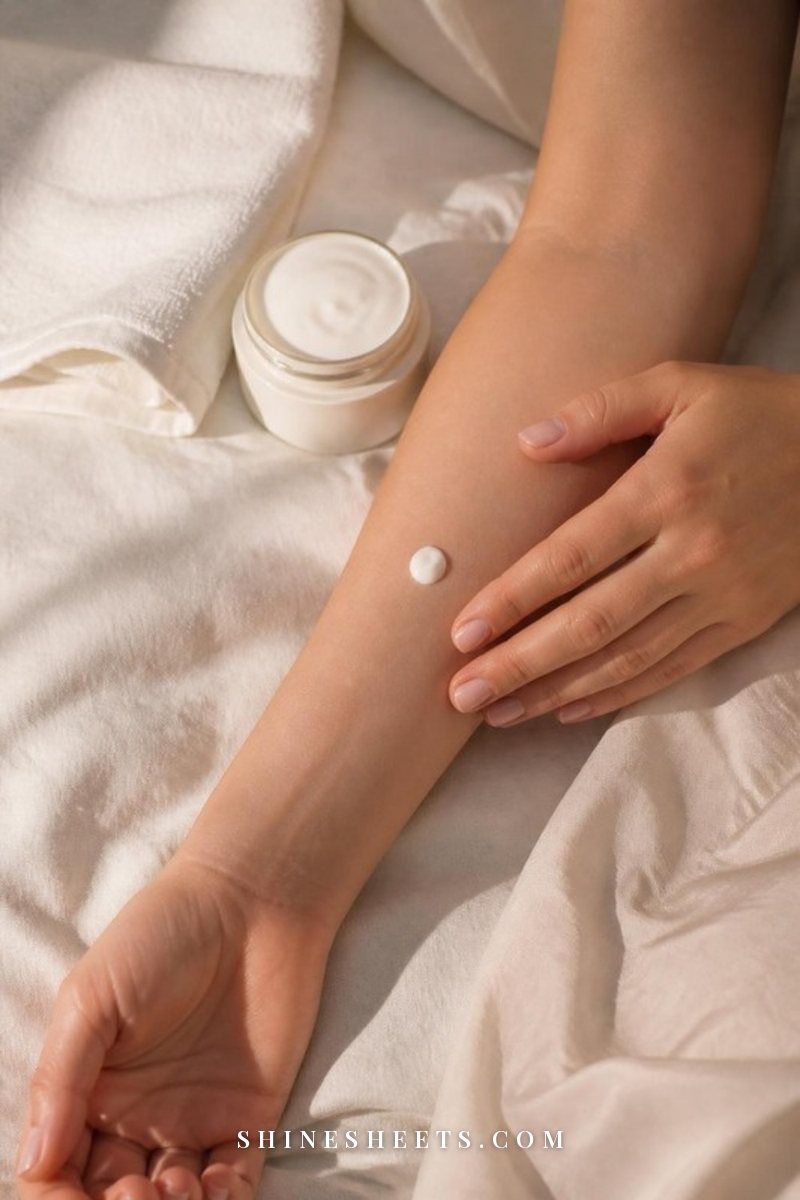
Any new sunscreen, mineral or chemical, deserves a patch test, especially if your skin is sensitive. It takes a few days, but it can save you a week of irritation.
- Apply a small amount on the side of your jaw or behind your ear once or twice a day.
- Keep going for three to five days, leaving it on as you normally would.
- Watch for redness, itching, burning, stinging or small bumps.
- No reaction? Use it on your whole face. A reaction? Wash it off, stop using it and write down the filters, so you can avoid them next time.
If you get a rash, swelling or a reaction that doesn't settle within a day or two, please see a doctor or dermatologist. Some people have a true allergy to one specific filter, and a dermatologist can do proper patch testing to find out which.
6 Common Sunscreen Mistakes and Easy Fixes
- Using too little. Fix: the two-finger rule, every morning, no guessing.
- Relying on makeup SPF. Fix: wear real sunscreen underneath and treat makeup SPF as a bonus.
- Applying once and forgetting. Fix: keep a stick in your bag and set a phone reminder on long outdoor days.
- Skipping it on cloudy days. Fix: much of the UV still gets through clouds, so keep the habit going all year.
- Rubbing mineral sunscreen too hard. Fix: smooth it on, then pat. Overworking it makes it pill and streak.
- Keeping old bottles forever. Fix: check the expiration date, and toss sunscreen that has expired, separated or spent the summer baking in a hot car.
And one evening habit that helps every type: sunscreen, especially water-resistant and mineral formulas, can cling to the skin. A gentle cleansing balm as a first cleanse melts it away without scrubbing, and your usual cleanser finishes the job.
Choosing Your Sunscreen: A Quick Guide
Still undecided? Let your skin make the call:
- Choose mineral if your skin is sensitive, reactive or rosacea-prone, if chemical filters have stung or irritated you before, or if you simply feel calmer with zinc oxide.
- Choose chemical if you have oily or combination skin, a medium or deeper skin tone, you wear makeup most days, or you hate any heavy or chalky feeling.
- Choose hybrid if you want a bit of both: some zinc oxide for gentleness, plus chemical filters for a lighter, more invisible finish.
- Choose tinted mineral if you want a sheer bit of coverage, extra help against visible light, and no white cast in one easy step.
You're also allowed to own more than one. Many people keep a light chemical sunscreen for everyday makeup days and a gentle mineral one for the beach, the snow or days when their skin feels raw. What counts is that there's always one you're happy to reach for.
Final Thoughts
Mineral or chemical, the sunscreen that protects you best is the one you're happy to wear every day, generously, and top up when you're out in the sun. Pick the texture that suits your skin, patch test it kindly, and let go of the worry about choosing the "wrong" team. There isn't one.
Your future skin will thank you for every ordinary morning you reached for that bottle.