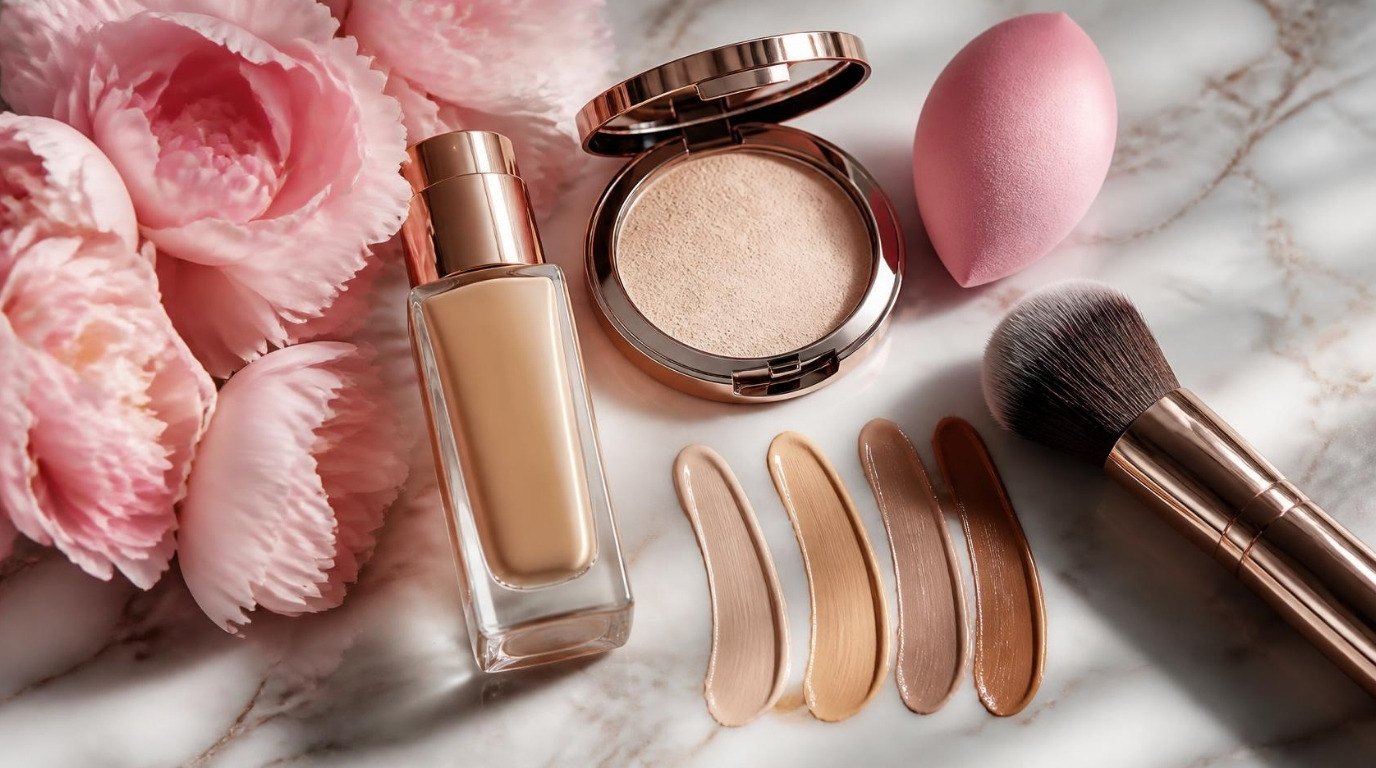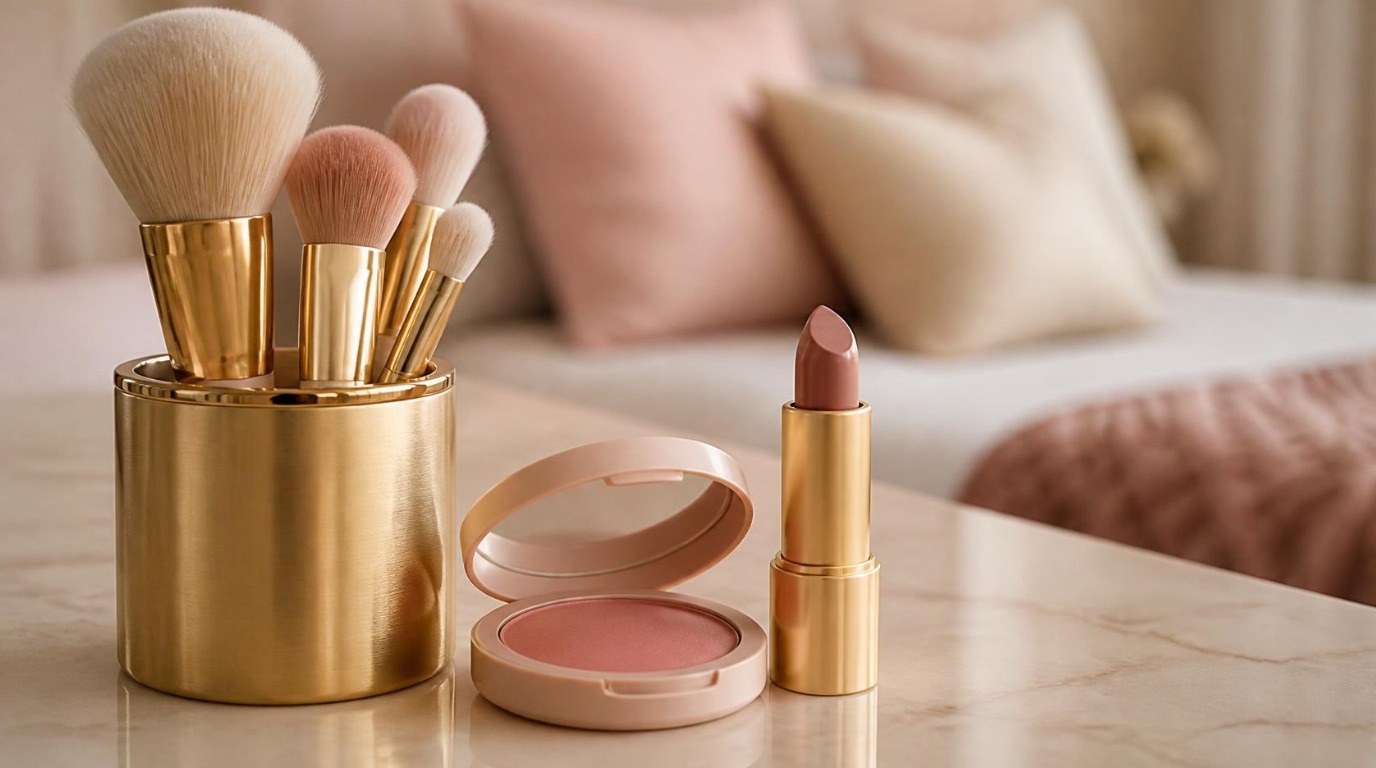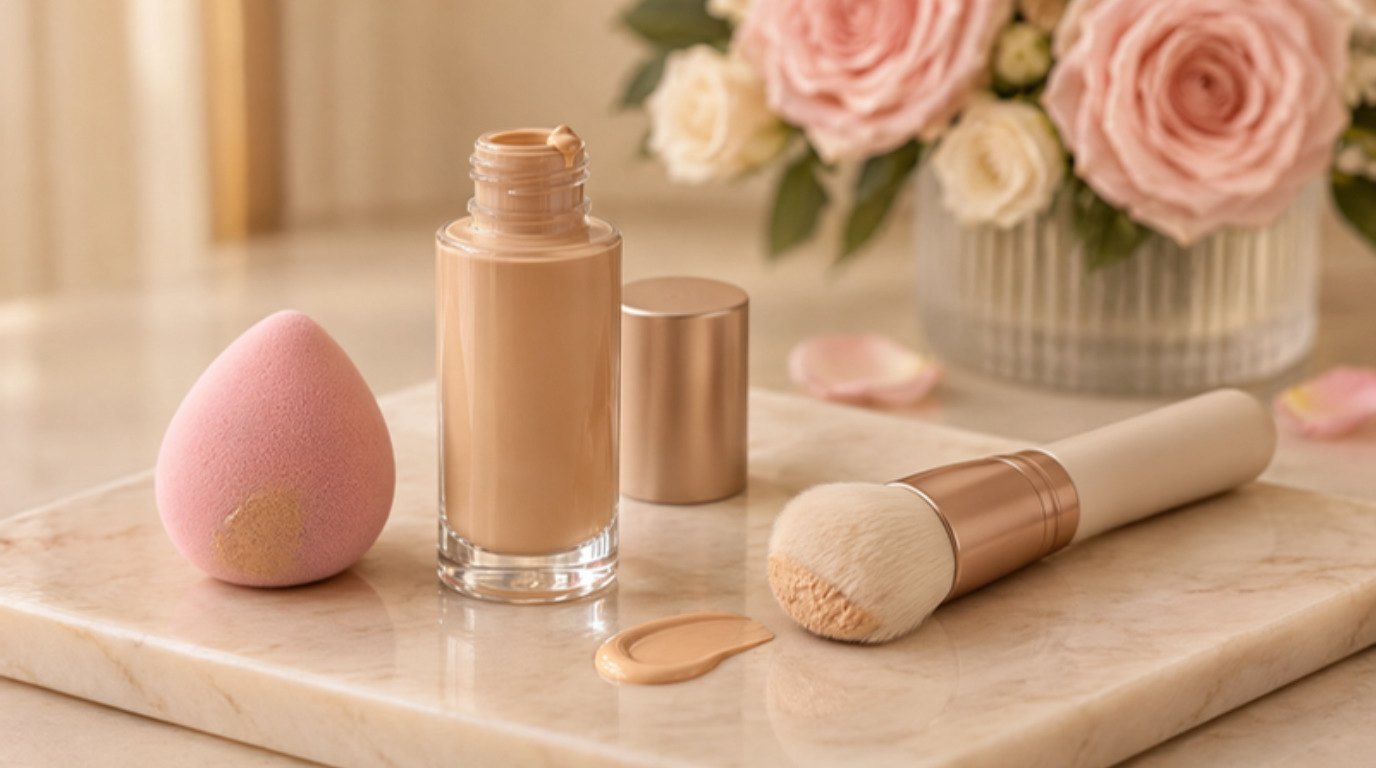
Cakey foundation is almost never a sign that you're bad at makeup. It's usually a sign that something underneath isn't cooperating: skin that's thirsty, a formula fighting your primer, or simply one layer too many. Fix the real cause and the same foundation you were ready to throw out can suddenly look like skin.
The frustrating part is that cakiness can come from completely opposite problems. Dry skin makes foundation cling to flakes; oily skin makes it slide and clump by noon. Too much powder looks cakey, and so does too little prep. That's why one-size-fits-all advice rarely works.
This guide is all about diagnosing and fixing cakey foundation: what it looks like, the 8 most common causes, a quick-fix table you can come back to, how to rescue your base mid-day, how to prevent it by skin type, a thin-layer technique and the places where you can skip foundation altogether. If you want the full application routine from scratch, my guide on how to apply foundation so it looks like skin covers that; here we're playing detective.
I have combination, sensitive skin with a shiny T-zone and drier cheeks, so I know the special joy of foundation that looks flaky in one spot and greasy in another. Let's sort it out.
What Cakey Foundation Looks Like

"Cakey" is one of those words everyone understands but describes differently. These are the signs to look for, ideally in daylight and a few hours after you've applied:
- Visible patches. Foundation sits on top of the skin in thicker areas instead of melting in, often around the nose, chin or mouth.
- Settling into lines and pores. Product gathers in smile lines, under-eye lines and around the nose, making texture look more noticeable than it really is.
- A flaky or dry finish. Little lifted bits of skin look darker or lighter because foundation has clung to them.
- A heavy, mask-like look. Your skin looks flat and opaque, especially in photos, and expressions crease the foundation.
- Separation or clumping. On oily areas, foundation breaks up, slides or gathers into small clumps through the day.
Notice where it happens and when. Cakiness that shows up right away usually points to prep or product amount. Cakiness that appears after a few hours usually points to oil, dryness or the wrong formula.
8 Common Causes of Cakey Foundation
Most cakey bases come down to one or two of these. Read through and see which sound like your mornings.
1. A Dry or Flaky Base

Foundation can't sit smoothly on skin that isn't smooth. Dry patches and flakes grab pigment and make it look darker and thicker in those spots. This is the most common cause in colder months and for anyone with dry or dehydrated skin.
What to do: exfoliate gently once a week (not the morning of a big event, in case your skin reacts), moisturize morning and evening and press a little extra moisturizer onto dry areas before makeup. My guide to exfoliating your face without overdoing it explains how to choose a gentle option and how often to use it.
2. Too Much Product
This is the one nobody wants to hear, but it's often the answer. Most faces need far less foundation than we instinctively apply: often one pump, or even half a pump, for the whole face. Extra product has nowhere to go except into lines, pores and texture.
What to do: start with half the amount you'd normally use, apply it to the center of the face and blend outward. Add a second thin layer only where you need more coverage. More coverage almost always looks better built in two thin layers than one thick one.
3. The Wrong Formula for Your Skin Type
A full-coverage matte foundation on dry skin will cling to every flake. A rich, dewy formula on very oily skin can slide and separate. The foundation might be lovely, just not for your skin.
What to do: dry skin usually does best with hydrating, satin or dewy formulas; oily skin with lightweight, oil-free or long-wear formulas; combination skin with a natural or satin finish.
4. Skipping Moisturizer (or Not Letting It Sink In)
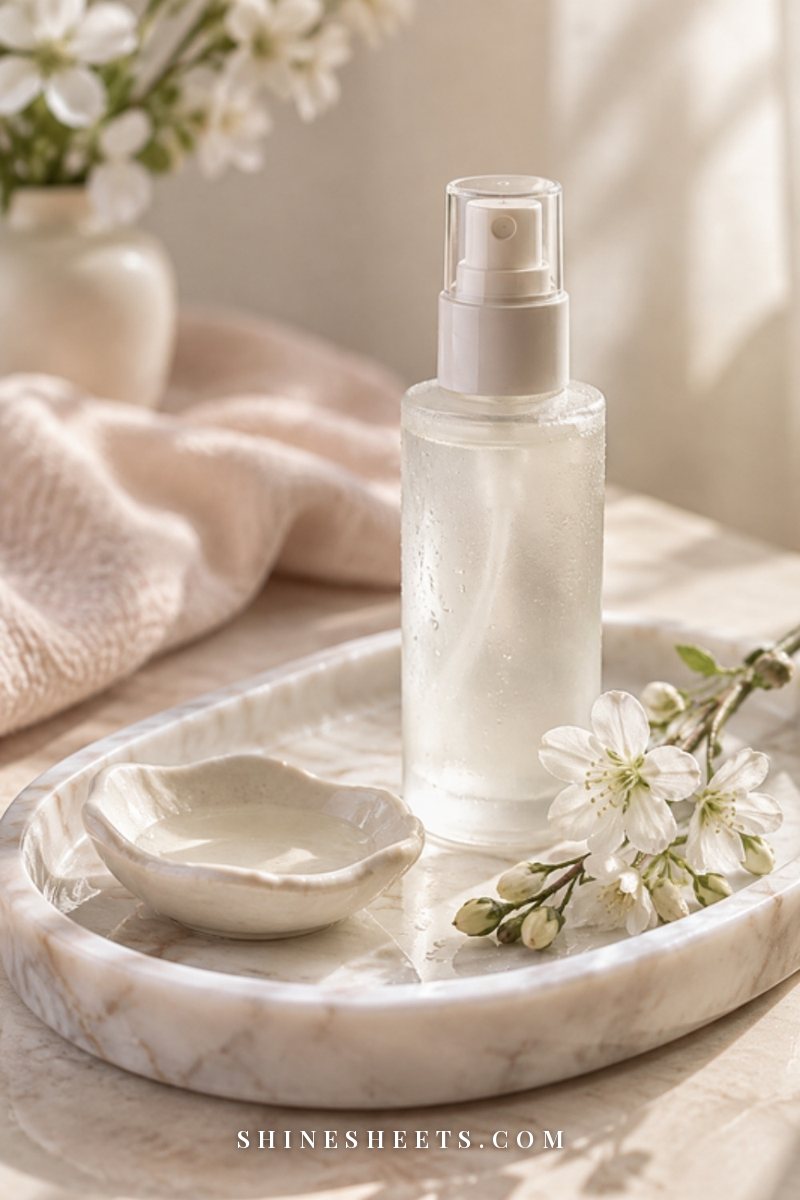
Skipping moisturizer leaves foundation nothing to grip but dry skin. Applying it and going straight in with foundation can be just as tricky, because a wet, slippery layer makes foundation pill, streak or slide around.
What to do: moisturize, then wait three to five minutes before primer or foundation. Use that time to brush your hair or make tea. If your skin is oily, a lightweight gel moisturizer is a pick that hydrates without adding shine; look for an oil-free, non-comedogenic formula that sinks in within a few minutes.
5. Primer and Foundation That Clash
Primer and foundation need to be friends. A water-based foundation over a heavy silicone primer (or the other way around) can pill, separate or look patchy, no matter how carefully you blend.
What to do: check the first few ingredients. If your primer is silicone-heavy (words ending in "-cone" or "-siloxane" near the top), it tends to pair best with a silicone-based foundation; if your foundation is water-based, a water-based primer is usually the safer match. And if your skin looks fine without primer, you can skip it entirely. My guide to choosing the right makeup primer goes into the details.
6. Too Much Powder
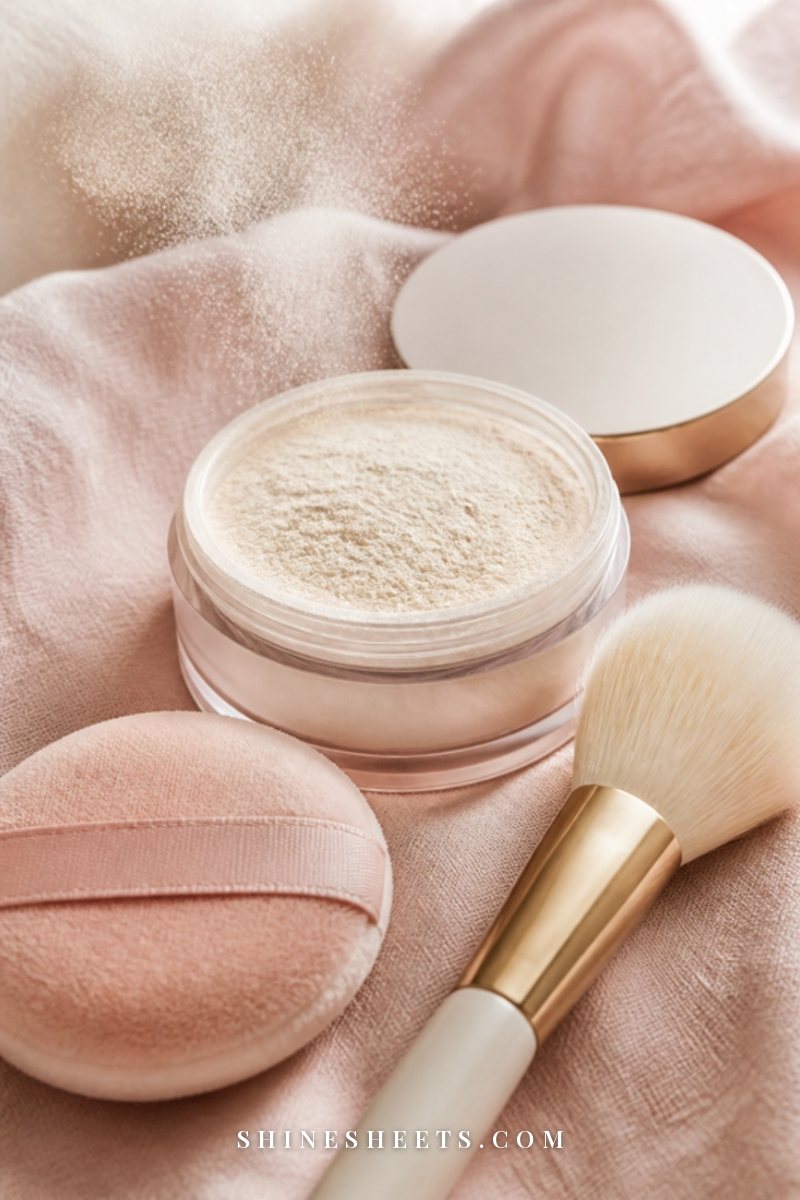
Powder is the quickest way to turn a nice base into a cakey one. A heavy layer over the whole face sits on top of foundation, soaks up the moisture in it and settles into every line.
What to do: powder only where you actually get shiny, usually the T-zone and the sides of the nose, and use a light touch. A finely milled translucent powder is a pick for this; look for a silky, almost weightless texture that disappears when you rub it between your fingers, with no visible white tint. Not sure whether you need powder or spray? My comparison of setting powder vs setting spray helps you decide.
7. The Wrong Tool or a Dry Sponge
A dry sponge soaks up foundation and drags it across the skin, leaving streaks and patches. A brush with sparse, scratchy bristles can do the same, while fingers alone sometimes leave thicker spots.
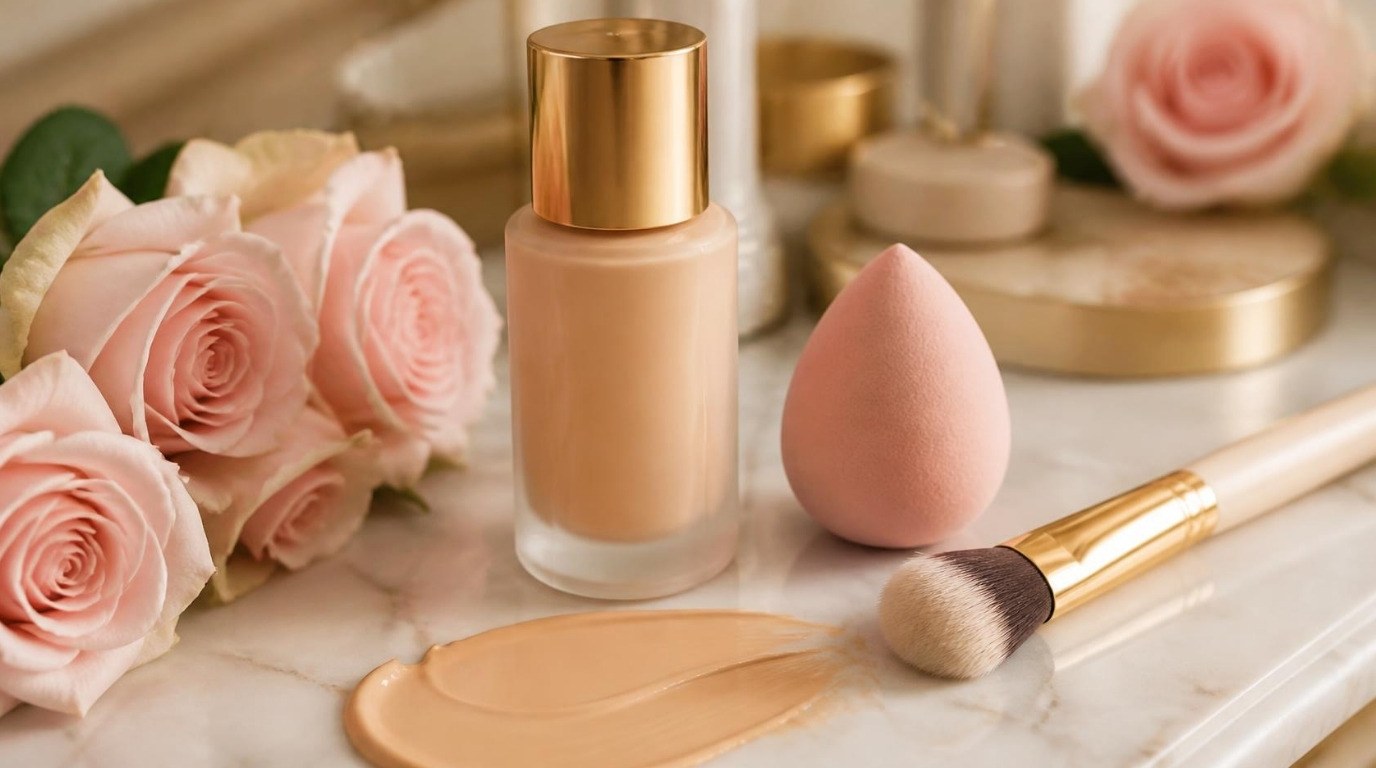
What to do: always use a makeup sponge damp: soak it, squeeze it out in a clean towel until no water drips, and it should feel springy and slightly bigger. A pink makeup blending sponge is a pick for this; look for a soft, bouncy sponge that expands when wet and has a pointed tip for around the nose. If you prefer a brush, a dense foundation brush with tightly packed, soft bristles buffs product in thinly. Wash sponges and brushes at least once a week, as old product makes the next application patchier.
8. Layering Over Old Makeup
Touching up by adding fresh foundation on top of foundation that has already mixed with oil and sweat is a fast route to cakiness. Every layer gets thicker and less even.
What to do: before a touch-up, blot oil first, then press the existing makeup back into place with a damp sponge. Add new product only in tiny amounts, only where it's needed. The quick fixes below walk you through it.
Cakey Foundation Fix Table
Here's everything at a glance. Screenshot it, it makes figuring out your own cause much quicker.
| Cause | How it looks | Quick fix | Prevention |
|---|---|---|---|
| Dry or flaky base | Darker clinging spots on flakes, patchy cheeks and around the nose | Press a tiny drop of moisturizer on the spot, then a damp sponge | Gentle weekly exfoliation, richer moisturizer |
| Too much product | Heavy, mask-like finish, creasing when you smile | Press with a clean damp sponge to lift the excess | Start with half a pump, build in thin layers |
| Wrong formula | Flaky on dry skin, sliding or separating on oily skin | Mist and press; blot oily areas | Match the finish to your skin type |
| Skipping moisturizer or rushing it | Patchy, dry-looking base or pilling and streaks | Mist, then press with a damp sponge | Moisturize and wait 3–5 minutes |
| Primer and foundation clash | Pilling, separating, little rolled-up bits | Gently press flat; avoid rubbing | Pair water with water, silicone with silicone, or skip primer |
| Too much powder | Dry, flat, powdery finish, settling in lines | Hydrating mist and a damp sponge press | Powder only the shiny zones, lightly |
| Wrong tool or dry sponge | Streaks, patches, uneven edges | Re-blend with a damp sponge | Damp sponge or dense brush, washed weekly |
| Layering over old makeup | Thick, uneven patches by afternoon | Blot, press, then add only a tiny amount | Blot before every touch-up |
How To Fix Cakey Foundation Mid-Day
You're out, you catch your reflection in a shop window and the foundation looks heavy. No need to start over. These three fixes work in a couple of minutes.
1. Mist and Press With a Damp Sponge

This is the most useful fix there is. Hold a hydrating mist at arm's length and spritz your face two or three times, then wait about 30 seconds. Take a clean, damp sponge and press (don't swipe) over the cakey areas. The moisture softens the foundation and the sponge lifts the excess, so everything melts back into the skin.
A hydrating facial mist is a pick for your bag; look for a fine, even spray and a simple formula with hydrating ingredients such as glycerin or hyaluronic acid, ideally without heavy fragrance if your skin is sensitive.
2. Blot Before You Add Anything
If cakiness is coming from oil, adding more powder will only make it worse. Press a blotting paper or a clean tissue onto the shiny areas first, holding it for a few seconds without rubbing. Once the oil is gone, the foundation often looks fine again. If you still want a touch of powder, use the smallest amount on the very center of the T-zone.
3. Melt Patches With a Tiny Drop of Moisturizer
For dry, flaky patches, warm a tiny dot of moisturizer (rice-grain size) between your fingertips and gently press it over the area. Then pat with a damp sponge. The moisturizer rehydrates both the skin and the foundation, and the patch softens within a minute.
How To Prevent Cakey Foundation by Skin Type
Prevention depends a lot on your skin, so here's a simple plan for each type. Combination skin, you'll want to read both dry and oily, then the combination section ties them together.
Dry Skin
- Exfoliate gently once a week with a mild exfoliant to keep flakes from building up.
- Use a richer moisturizer morning and night, and let it sink in for five minutes before makeup.
- Choose hydrating, satin or dewy formulas rather than full matte ones.
- Apply with a damp sponge for the softest, most skin-like finish.
- Use powder sparingly, if at all, and set with a mist instead.
For more ideas, my guide on makeup for dry skin covers the full routine.
Oily Skin
- Use a lightweight gel moisturizer. Skipping moisturizer can make oily skin produce even more shine.
- Apply foundation in thin layers and give each one a minute to set before adding more.
- Choose oil-free or long-wear formulas with a natural or soft matte finish.
- Use targeted powder only on the T-zone and around the nose, not the whole face.
- Blot during the day instead of adding more powder.
My post on makeup for oily skin has more tips for staying shine-free without looking flat.
Combination Skin
Combination skin needs a zone-based approach, and this is mine with my shiny T-zone and drier cheeks:
- Moisturize everywhere, with a little extra on the drier cheeks and a lighter layer on the T-zone.
- Use a mattifying primer only on the T-zone, if you use one at all.
- Apply foundation thinly all over, then add a second thin layer only where you need coverage.
- Powder the center of the face only: forehead, nose and chin. Leave the cheeks alone.
Mature Skin
As skin changes over the years, it often becomes drier and shows more texture, and heavy layers tend to emphasize lines. The answer is usually less product, not more:
- Prep with hydration: a hydrating serum and a moisturizer, given time to sink in.
- Choose sheer to medium, luminous formulas and build coverage only where you need it.
- Use concealer for spot coverage instead of a thicker layer of foundation all over.
- Use very little powder, or swap it for a setting mist, especially around the eyes and mouth.
The Thin-Layer Technique

This simple method prevents most cakiness on its own. It takes about five minutes.
- Prep and wait. Moisturizer (and primer, if you use one), then three to five minutes for everything to settle.
- Start with half a pump. Dot it on the back of your hand or a small palette rather than straight onto your face.
- Apply to the center first. Place small amounts on the nose, the inner cheeks and the center of the forehead, where most people need coverage.
- Blend outward. Use a damp sponge or a dense brush to blend toward the hairline and jaw. The edges of your face need the least.
- Wait one minute, then check in daylight. Add a second thin layer only where you see redness or unevenness you'd like to cover.
- Spot-conceal instead of adding layers. Use concealer for blemishes and darker spots.
- Set only what needs setting. A little powder on shiny zones, or a setting mist all over.
Where To Skip Foundation Altogether
Not every part of your face needs foundation, and skipping some areas is one of the easiest ways to look fresher:
- Around the eyes. Foundation here tends to crease. Use a thin layer of concealer only where you have darkness.
- Smile lines and around the mouth. Use only what's left on your sponge so product doesn't collect in movement lines.
- The outer edges of the face. The hairline, jawline and temples usually need very little, and keeping them sheer avoids a visible line.
- Areas with dry patches. On a flaky day, skip foundation on those spots and use a tiny amount of concealer only if needed.
- Anywhere your skin already looks even. If an area doesn't need coverage, there's no rule that says it has to have it.
One small note: if dryness, flaking or redness keeps coming back no matter what you change, or your skin stings when you apply makeup, it's worth checking in with a dermatologist. Sometimes the base problem is the skin itself, and that deserves proper care. And as always, patch test any new foundation, primer or moisturizer before using it on your whole face.
Small Habits That Keep Your Base Smooth
Once you've found your cause, a few everyday habits keep cakiness from sneaking back:
- Shake your foundation before every use. Many formulas separate in the bottle, and an unmixed pump can be oilier or more pigmented than it should be.
- Check your base in daylight. Bathroom lighting hides patches. A quick look by a window before you leave shows you exactly where you've used too much.
- Wash sponges and brushes weekly. Old, stiff product on your tools transfers straight back onto your face as streaks.
- Keep your evening routine simple and hydrating. Smooth, comfortable skin in the morning starts with a gentle cleanse and a good moisturizer the night before.
- Drink water and sleep when you can. It won't replace moisturizer, but a well-rested, hydrated face is easier to work with.
- Retire foundation that has changed. If the smell, texture or color is different from when you opened it, or it has separated and won't mix back together, it's time to let it go.
Final Thoughts
Cakey foundation is almost always fixable, and usually with less rather than more: less product, less powder, a little more patience with your moisturizer. Once you know your cause, the fix becomes second nature.
Your foundation is there to support your skin, not to hide it. Thin layers, a damp sponge and a bit of kindness to the skin underneath will take you further than any expensive bottle ever could.