Crepey eyelids aren't a sign that you've done something wrong. The skin on your lids is some of the thinnest on your whole body, it moves thousands of times a day, and it rarely gets the same care as your cheeks. Give it gentle cleansing, steady moisture and real sun protection, and it usually looks softer and more comfortable within a few weeks.
What it doesn't need is harsh scrubbing, strong acids or a cupboard of miracle products. Eyelid skin responds best to being treated like silk: light touch, simple formulas, patience.
This guide is all about crepey eyelids: what that tissue-paper texture actually is, why it shows up, the daily habits that help most, which gentle actives are worth asking about, how to wear eye makeup that doesn't sink into creases, and when it's time to see a doctor. There's also a simple care table you can screenshot for your bathroom shelf.
It took me a while to accept that my eye area does better with less, not more. Once I stopped fussing with it, it calmed down. Let's start with the basics.
What Are Crepey Eyelids?
"Crepey" describes skin that looks finely crinkled, a bit like crepe paper or tissue paper that has been folded and smoothed out again. On the eyelids, you might notice it on the mobile lid (the part that moves when you blink), on the brow bone just under your eyebrows, or in the outer corners where the lid meets the crow's feet area.
A few things set it apart from other eye-area concerns:
- It's a texture, not a single line. Fine lines are individual creases. Crepiness is a whole surface of tiny crinkles, often more visible when you look down or close your eyes.
- It often looks thinner or shinier. The skin can look almost translucent, and small blood vessels may show a little more.
- It changes with hydration. Many people notice it looks worse on dry winter mornings or after a short night and better after a few days of good moisture.
- It's very common. Almost everyone sees some of it over time. It's a normal part of skin changing, not a flaw to fix at all costs.
If you've already read my guide to crepey skin on the arms and neck, the ideas are related, but eyelids need their own rules. You can't use the same body lotions or exfoliants here, because the skin is far thinner and sits right next to your eyes.
Why Eyelid Skin Gets Crepey
There's rarely one single cause. Usually it's a few small things adding up over years. Here are the most common ones:
- Natural thinning over time. Skin gradually makes less collagen and elastin, the proteins that keep it springy. On the lids, which start out thin, this shows up early.
- Sun exposure. UV light breaks down collagen faster. The eyelids and brow bone often get missed with sunscreen, so they quietly take years of sun.
- Dryness. Eyelid skin has very few oil glands of its own. Dry indoor air, hot showers and harsh cleansers make crinkles more visible.
- Rubbing and tugging. Rubbing tired or itchy eyes, scrubbing off mascara and pulling the lid taut for eyeliner all stretch delicate skin again and again.
- Genetics. Some people simply inherit thinner skin or deeper-set lids. If your mom or grandma had it, you may notice it too.
- Lifestyle factors. Short sleep, smoking and dehydration can all make the eye area look more tired and less smooth.
The good news hidden in that list: several of these are habits, and habits are something you can gently change starting tonight.
When To See a Doctor or Dermatologist
Most crepey texture is harmless. Still, the eye area is precious, so please don't try to handle everything at home. Book an appointment with a doctor, eye doctor or dermatologist if you notice:
- Sudden swelling or puffiness of one or both lids that doesn't settle within a day or two.
- A lid that droops enough to block part of your vision, or changes quickly.
- Redness, itching, flaking or burning that keeps coming back or lasts more than a week or two.
- Any bump, sore or patch on the lid that changes, bleeds or doesn't heal.
- Eye pain, discharge or changes in how you see.
Itchy, flaky lids are sometimes a reaction to a product (nail polish, hair dye and fragrance are common culprits because we touch our eyes so often), and a professional can help you find the trigger. You never need to "wait it out" with your eyes.
6 Gentle Daily Habits for Crepey Eyelids

These are the foundations. None of them is dramatic on its own, but together they make a real difference to how your lids look and feel. Start with the first three, then add the others over a couple of weeks.
1. Cleanse and Remove Makeup Without Tugging
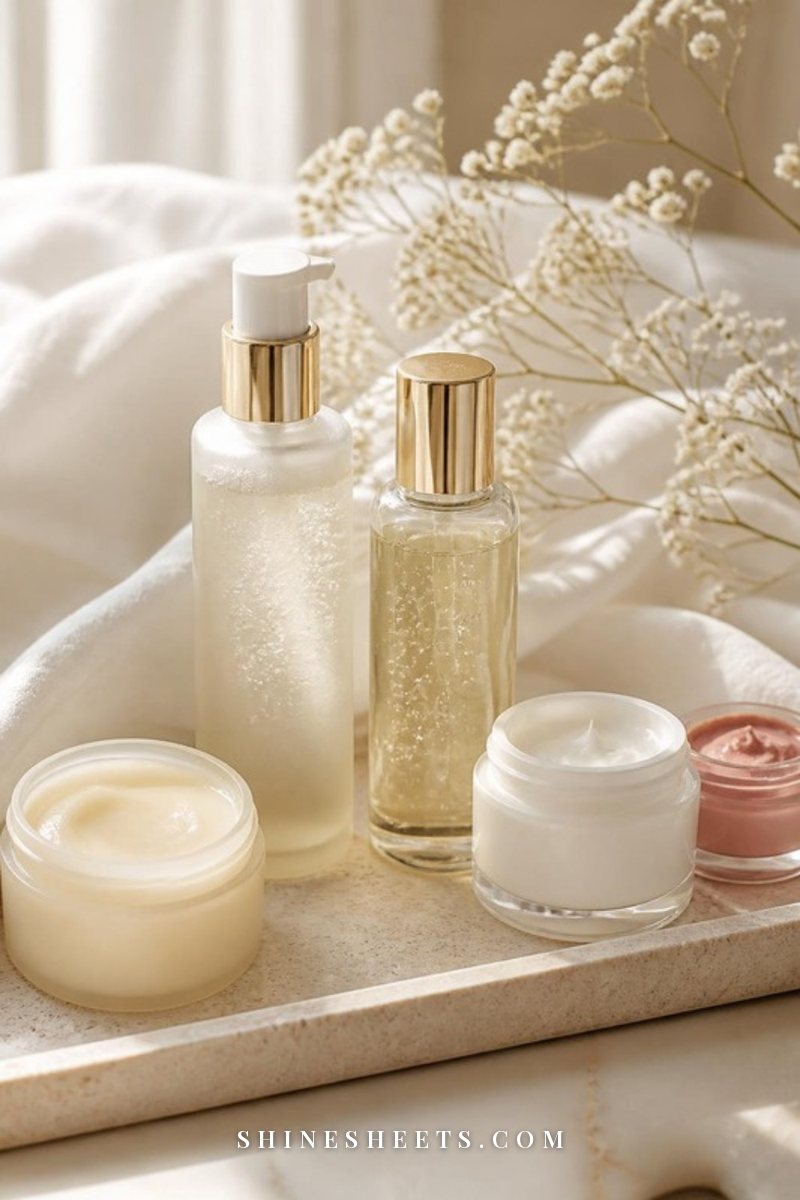
The way you take off your makeup matters more than almost any cream you put on afterward. Every evening of rubbing at waterproof mascara is a little stretch on skin that doesn't bounce back easily.
Here's the gentle method:
- Warm a small amount of a gentle, fragrance-free cleansing balm between your fingertips until it melts.
- Close your eyes and press it over the lids and lashes. Hold for 20–30 seconds so it can dissolve mascara and liner.
- Lay a damp cotton pad or soft washcloth over the closed eye for another 10 seconds.
- Sweep down and outward once, in the direction of the lashes, with almost no pressure. Repeat with a clean side rather than scrubbing.
- Rinse with lukewarm water, never hot, and pat dry.
Look for a balm or cleansing oil labeled ophthalmologist-tested or safe for the eye area, without added fragrance or essential oils. If your eyes sting, rinse and try a different formula.
2. Choose a Fragrance-Free Eye Cream
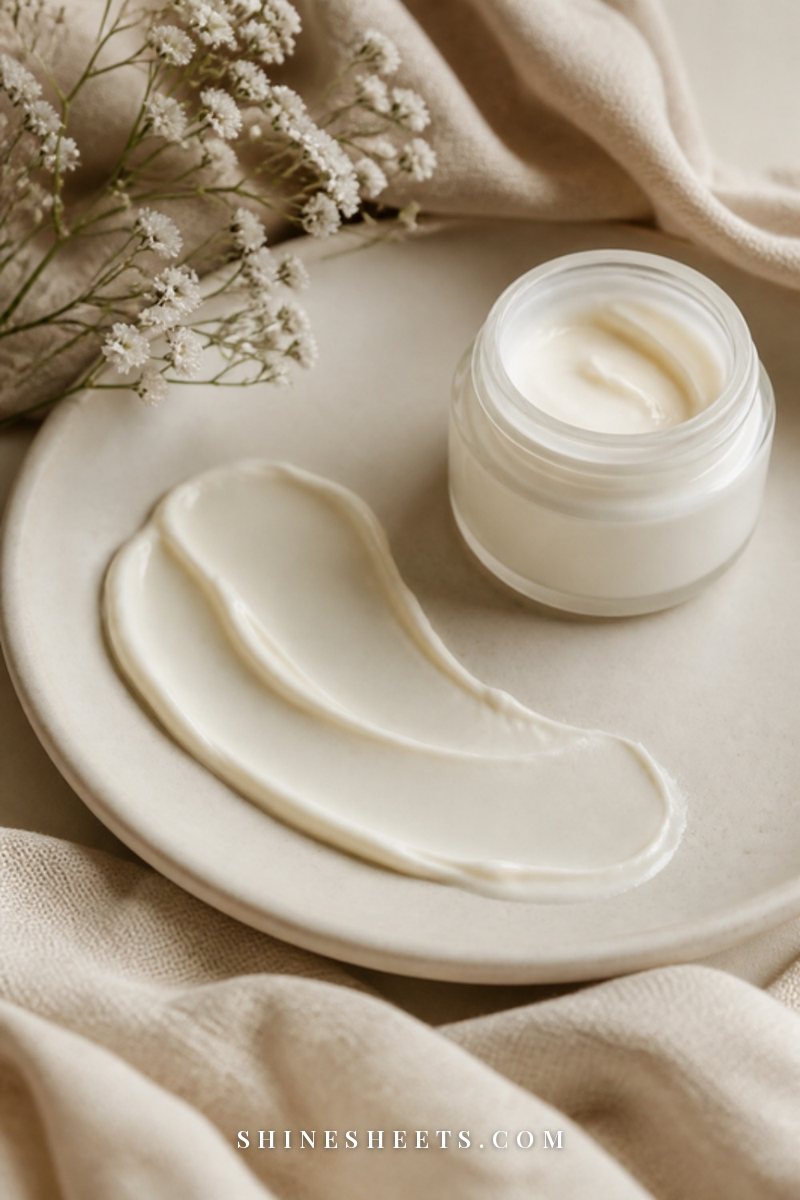
Do you need an eye cream at all? Not always, and I go through that question in my eye cream guide. But for crepey lids, a dedicated formula has one big advantage: it's made to be gentle enough for skin this thin and to stay put without migrating into your eyes.
When you shop, look for:
- Ceramides to support the skin barrier and keep moisture in.
- Hyaluronic acid or glycerin to draw water into the skin, so crinkles look plumper.
- Peptides, which are often included to support skin firmness over time.
- No added fragrance and no essential oils, which are frequent irritants around the eyes.
- A light cream texture rather than a heavy balm if you get milia (tiny white bumps).
A fragrance-free peptide eye cream is a sensible pick for this. Use a rice-grain amount for both eyes, morning and night. Tap it along the orbital bone (the bony ridge around the eye) and on the brow bone with your ring finger. Body heat and blinking will move enough onto the lid itself, so you don't need to pack it right up to the lash line.
Give any new cream about six to eight weeks before judging it. Skin texture changes slowly.
3. Protect the Eye Area From the Sun

If there's one habit that matters most long term, it's this one. The lids and brow bone are some of the most skipped spots in a sunscreen routine, partly because regular sunscreen can sting when it drifts into your eyes.
Three ways to make it easier:
- Use an eye-friendly mineral formula. Zinc oxide and titanium dioxide tend to be gentler around the eyes for sensitive skin. A mineral sunscreen stick lets you glide it along the orbital bone and brow bone without fingers or drips. If you want to understand the difference between filters, my guide to mineral vs chemical sunscreen explains it simply.
- Wear sunglasses that actually cover. Look for UV400 or 100% UV protection and a larger frame that shades the lids and outer corners. A pair of oversized sunglasses in a soft blush frame also stops you squinting, which is a quiet bonus for the whole eye area.
- Add a wide-brimmed hat on long sunny days outdoors.
Reapply around the eyes every two hours when you're outside, and keep sunscreen just outside the lash line rather than on it.
4. Stop Rubbing Your Eyes
This one sounds too simple to matter, and yet it's often the habit that makes the biggest visible difference. Rubbing stretches the lid, can irritate it, and (if your hands aren't clean) can bring bacteria close to your eyes.
Some small swaps that help:
- When your eyes feel tired, close them and press a cool, damp cloth over them for one minute instead of rubbing.
- If they itch often, mention it to your doctor or pharmacist. Allergies or dry eyes are common and treatable, and treating the cause stops the rubbing.
- When you apply eyeliner, look slightly down into a hand mirror rather than pulling the outer corner tight.
- Notice your "thinking" habits. Many of us rub our eyes while reading or worrying. A soft hair tie on your wrist can be a quiet reminder.
5. Support Your Skin With Sleep and Hydration

Your eye area is often the first place that shows a short night. Good sleep won't change your skin's structure overnight, but it does help the area look rested and less crinkled.
- Sleep on your back when you can. Pressing one side of your face into the pillow every night can deepen creases around that eye.
- Try a soft sleep mask. A cream silk sleep mask blocks light and is gentle on thin skin. Choose one that doesn't press on the eyes and wash it weekly.
- Use a humidifier in a dry bedroom during winter or heating season.
- Drink water through the day rather than all at once at night, which can make some people puffier in the morning.
- Apply eye cream about 30 minutes before bed so it has time to sink in rather than transferring onto your pillow.
I'm prone to anxiety, and on nights when my mind spins, my eyes look it the next day. A calmer bedtime routine with tea, a glass candle and a few lines in my journal has helped my sleep more than any product ever could.
6. Patch Test Every New Product
Your lids react faster than other skin, so new products deserve a test first. My combination, sensitive skin has taught me this one more than once.
- Apply a small amount behind your ear or on your inner arm once a day for three to five days.
- If there's no redness, itching or bumps, try a tiny amount on the orbital bone (not the lid) for another few days.
- Only then use it as directed.
Introduce one new eye product at a time, about two weeks apart. If something goes wrong, you'll know exactly which product caused it.
Gentle Actives: Start Slow, Stay Eye-Safe
Once your basics are steady for a month or so, you may wonder about "stronger" ingredients. This is where eyelids need extra caution. Some ingredients that work well on the cheeks are simply too much for skin this thin, right beside your eyes.
A few calm rules:
- Use eye-specific formulas only. Never take your face serum or body lotion up onto your lids. Eye products are tested and formulated for this area.
- Skip strong acids on the lids. Glycolic, lactic or salicylic acid exfoliants, peels and scrubs don't belong on eyelids.
- No full-strength retinoids near the eyes unless a dermatologist has told you exactly how. Some eye creams contain very gentle retinoid-type ingredients, but ask a dermatologist first if you're unsure, especially if you have sensitive skin or eczema.
- Start with every other night for any new active, and stop if you feel stinging, see redness or notice flaking.
- Gentle extras like niacinamide or caffeine are often well tolerated in eye formulas, but they're helpers, not essentials.
If you're also noticing lines in the crow's feet area, my guide to fine lines around the eyes goes into that zone in more detail. And if you like a little treat before an event, under-eye patches can give a short-term hydration boost, though they're placed under the eye rather than on the lid.
One thing I'd skip entirely: DIY remedies. Lemon juice, raw egg white, coffee grounds, baking soda pastes and essential oils have no place near your eyes. They can sting, irritate and even harm the eye itself.
The Crepey Eyelid Care Table
Here's everything in one place. Screenshot it for your bathroom shelf if that helps.
| Habit or product | What it helps with | How to use it near the eyes | What to avoid |
|---|---|---|---|
| Cleansing balm | Removes makeup without stretching the lid | Press on closed eyes for 20–30 seconds, then sweep down once with a damp pad | Scrubbing, hot water, fragranced makeup wipes |
| Fragrance-free eye cream | Moisture and a smoother, plumper look | Rice-grain amount, tapped on the orbital and brow bone, morning and night | Packing it onto the lash line; heavy balms if you get milia |
| Mineral sunscreen stick | Protects collagen from UV over time | Glide along the orbital and brow bone; reapply every two hours outdoors | Applying right on the lashes; skipping it on cloudy days |
| Sunglasses | Shade and less squinting | UV400 lenses with a larger frame, every time you're in bright light | Fashion lenses without UV protection |
| No rubbing | Less stretching and irritation | Cool damp cloth for one minute when eyes feel tired or itchy | Rubbing with fingers or knuckles |
| Sleep mask and back sleeping | A more rested look, fewer pillow creases | Soft silk mask that doesn't press on the eyes; wash weekly | Tight masks, sleeping face-down |
| Gentle eye actives | Gradual support for texture | Eye-specific formulas only, every other night at first, after a patch test | Acids, scrubs, full-strength retinoids or face serums on the lids |
If you only take three rows from this table, make them the cleansing balm, sun protection and no rubbing. Those three do most of the work.
Makeup That Doesn't Settle Into Creases
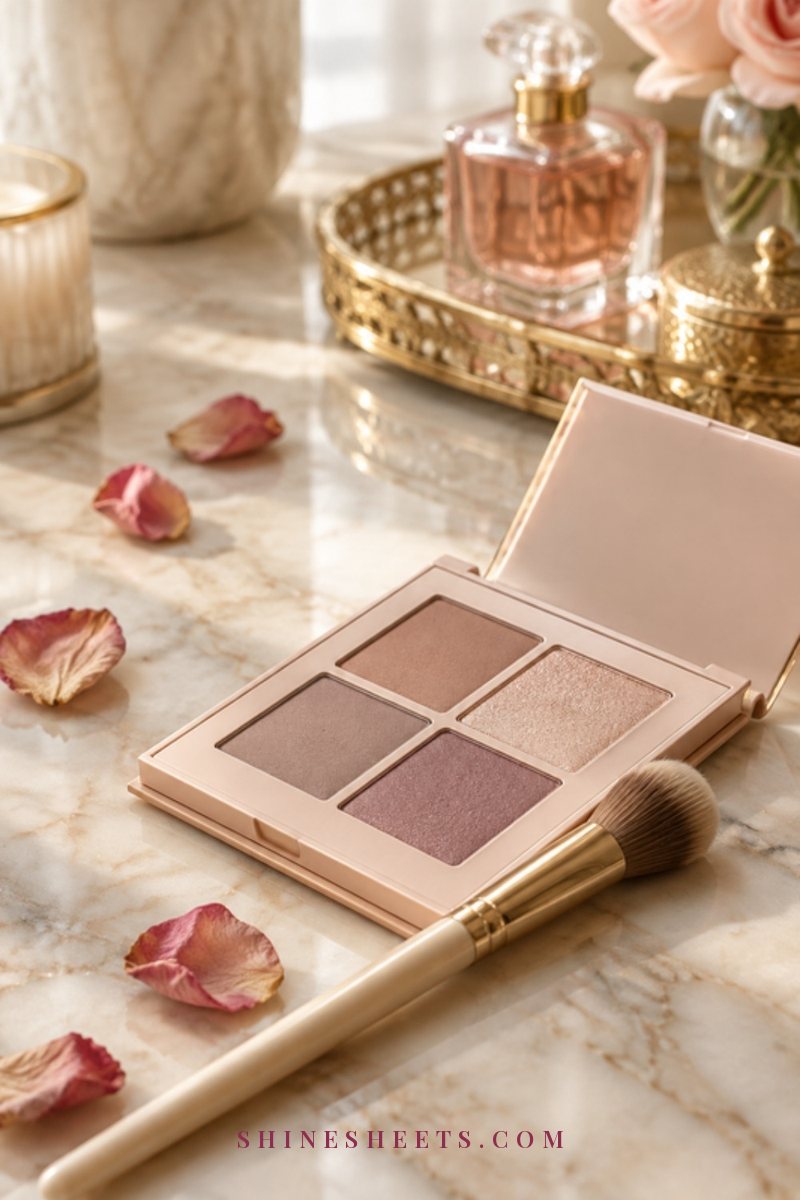
Crepey lids can still wear beautiful eye makeup. The trick is to work with the texture rather than trying to cover it. Thick layers and very matte or chunky glitter shadows tend to cling to every crinkle, while thin, satiny layers glide over them.
Prime and Prep the Lid
- Moisturize first, then wait. Apply eye cream at least 10 minutes before makeup, then blot the lid lightly with a tissue so it isn't slippery.
- Use a thin layer of primer. An eyeshadow primer in a nude shade smooths the surface and helps shadow stay where you put it. A tiny dot is enough for one eye.
- Skip heavy concealer on the lid. It creases quickly. If you want to even out the color, use primer alone or a sheer skin tint.
Thin Layers and Satin Finishes
- Choose satin or soft-sheen shadows in champagne, taupe, soft brown or blush. They reflect light gently and blur texture.
- Build in thin layers with a fluffy brush instead of packing one heavy layer on with a flat brush.
- Keep shimmer fine. Very fine shimmer on the center of the lid is lovely; large glitter pieces highlight texture.
- Use cream shadow sparingly and set it with a matching powder shadow so it doesn't slide into creases by lunchtime.
- Soft liner, close to the lashes. A soft pencil smudged right at the lash line works better than a sharp wing drawn across the lid.
- Set and check. Look down into a hand mirror after an hour. If shadow has gathered in a crease, gently tap it with a clean fingertip rather than rubbing.
And on the days you don't feel like makeup at all? A clean, moisturized lid and a coat of mascara can look wonderfully fresh. There's a reason those Old Hollywood stars often kept the lid simple and focused on the lashes and a soft brow.
Professional Options To Ask a Dermatologist About

Home care can make eyelids look more hydrated and comfortable, but it can't fully change skin structure. If crepey lids really bother you, a board-certified dermatologist can talk you through what's suitable for your skin. You might hear about:
- Prescription-strength skincare for the eye area, if and how it's suitable for you.
- In-office treatments such as certain lasers, energy-based devices or other procedures aimed at skin texture.
- Eyelid surgery options for excess lid skin, usually discussed with an oculoplastic or plastic surgeon, especially if it affects vision.
I'm not recommending any of these, and none of them are DIY. They're simply things to ask about. Before an appointment, it helps to write down what bothers you most, the products you use now (or photograph their ingredient lists), and any sensitivities or eye conditions. Ask about recovery time, realistic results and risks, so you can make a calm decision with all the facts.
What To Skip for Crepey Eyelids
Sometimes the most helpful thing is a short "no" list. If any of these are part of your routine now, it's worth easing them out:
- Physical scrubs, exfoliating pads or face brushes on the lids.
- Face serums, acids and strong retinoids taken up onto the eyelid.
- Heavily fragranced eye products or makeup wipes.
- Hot water or steam aimed right at the eyes.
- DIY masks, kitchen ingredients and essential oils near the eyes.
- Sleeping in mascara and eyeliner.
- Products that promise to "erase" crepey skin in days. Skin changes slowly, and kind, steady care beats big claims.
Final Thoughts
Crepey eyelids are one of the most normal changes skin goes through, and they don't need a complicated fix. Gentle cleansing, a simple fragrance-free eye cream, sun protection and keeping your hands away from your eyes will carry you a long way.
Be patient with this delicate little area. Treat it softly, give your routine a couple of months, and let a dermatologist guide anything stronger. Your eyes do so much for you every single day, and they deserve the kindest care in your whole routine.