Clutter rarely comes from having "too much stuff" in some abstract way. It comes from asking a shelf, a drawer or a closet to hold more than it physically can, and then feeling bad when it overflows. The container concept flips that around: the space itself becomes the limit, and you simply keep what fits.
It sounds almost too simple, which is exactly why it works. You don't have to decide whether you "need" eleven mugs or whether a book is "worth keeping." The cabinet decides. When it's full, it's full, and the extras go.
This guide explains the container concept in plain words: what it is, why it takes so much guilt out of decluttering, how to apply it in seven calm steps, where it works best around the home, the mistakes that quietly undo it and how to do it on a budget. You will also find a table of everyday containers with their natural limits and the signs each one is overflowing.
A small honest admission: I resisted this idea for a long time because it felt strict. It turned out to be the opposite. Letting the space set the rule is one of the kindest things you can do for a tired brain.
What Is the Container Concept?
The container concept was popularized by decluttering author Dana K. White. The idea is that every space in your home is a container: a bookshelf, a kitchen cabinet, a drawer, a closet, even a whole room. Each container has a natural limit, and that limit, not your feelings in the moment, decides how much you keep.
In practice, it means you stop asking "Should I keep this?" for every single item. Instead, you fill the space with your favorites first, and once there is no more room, the rest is clutter by definition. Not because it's bad, but because it doesn't fit.
It works with any style of home and any amount of space. A tiny studio and a large house both have containers. The difference is only how many.
How It Differs From One In, One Out
If you already know the one in, one out rule, you might wonder how these two fit together. They are wonderful partners, but they start from different places:
- One in, one out starts with purchases. Every time something new comes home, something similar leaves. It keeps the amount steady.
- The container concept starts with the space. It sets the amount in the first place, by asking what the shelf or drawer can comfortably hold.
In other words, the container concept decides your limit, and one in, one out helps you stay within it. If you like comparing approaches, my guide to decluttering methods and how to find your fit explains how this idea sits next to other popular methods.
Why the Space Deciding Removes Guilt
Most decluttering guilt comes from making the decision feel personal. "I'm wasteful if I let this go." "My aunt gave me that." "I might need it someday." The container concept takes those heavy little moments and turns them into something neutral.
Fewer Decisions, Less Fatigue
Deciding about every object one by one is exhausting. After twenty decisions, most of us start keeping everything just to make it stop. When the space decides, you only make one easy kind of choice: "Is this one of my favorites?" You put favorites in until the container is full, and the decision is finished.
A Fair Rule That Isn't About You
A cabinet has no opinion about you. It isn't judging your shopping habits or your sentimental heart. It simply has a size. That makes it much easier to let go without feeling like you're failing at something.
A Limit You Can See
A rule like "keep only what you need" is invisible and endlessly debatable. A full shelf is visible. When a new mug arrives and the shelf is already full, the answer is right in front of you.
How To Apply the Container Concept in 7 Steps
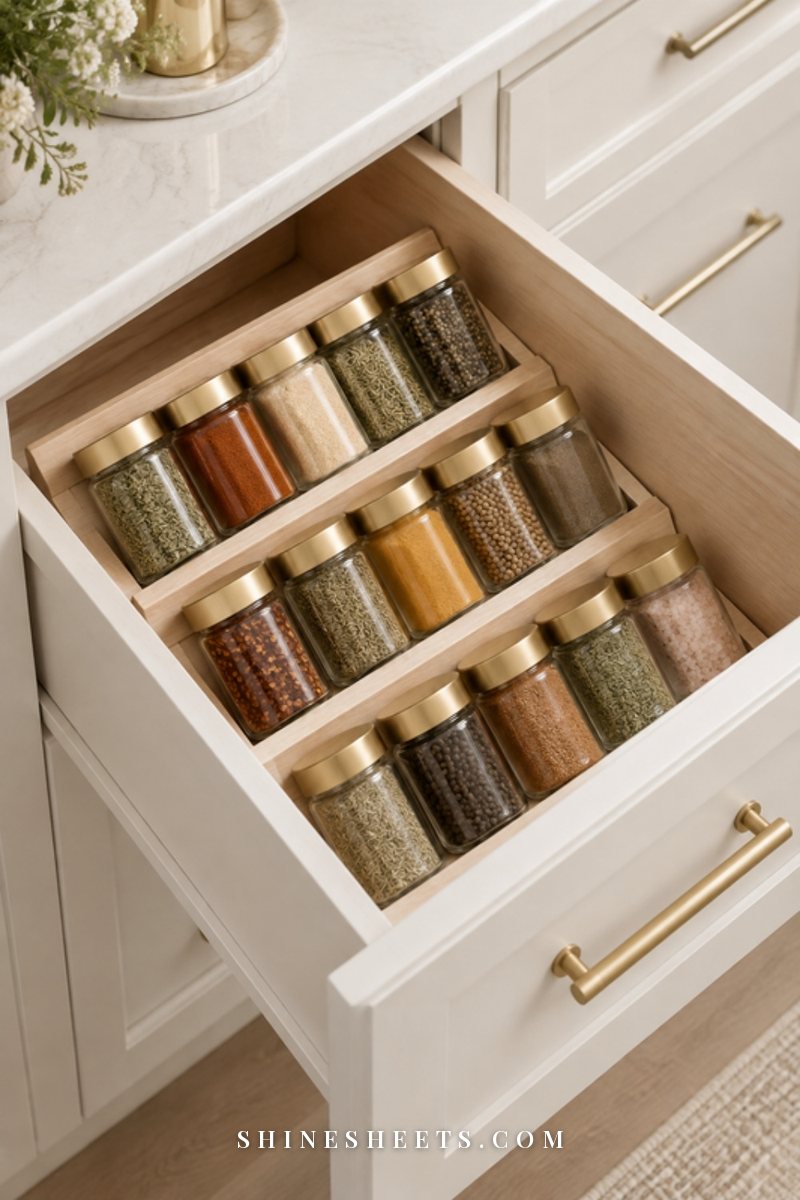
Choose a calm moment and give yourself 20 to 45 minutes for your first container. Small and finished is better than big and abandoned.
1. Pick One Container
Start with a small, defined space you use every day: the mug shelf, the bathroom drawer, the towel shelf. Avoid starting with a whole room or the garage. One container, one session.
2. Empty It
Take everything out and put it on a clear surface, like the bed or the kitchen table. Wipe the inside of the container while it's empty. Seeing the actual size of the space, without anything in it, is part of the magic.
3. Put Your Favorites Back First
Pick up the items you love and use most, and put them back one at a time. Your favorite mug, your best towel, the book you reread every winter. Don't think about what will leave. Only think about what you're happy to keep.
4. Stop When It Is Full
Keep adding the next favorite, and the next, until the container is comfortably full. "Comfortably" matters: you should be able to take something out and put it back with one hand, without anything falling over. Squeezing in one last thing doesn't count.
5. Let the Rest Go
Whatever didn't fit is now your decision pile, and the decision has already been made. Sort it into donate, give to a friend, recycle or trash. Take the donation bag to your car the same day if you can, so it doesn't quietly drift back.
6. Mark the Limit
Make the limit easy to remember. A small label on the shelf edge, a drawer divider or simply a photo on your phone of what "full" looks like. A cream label maker is a pretty, practical pick for shelf edges and bin fronts, but a strip of washi tape and a pen work just as well.
7. Repeat in the Next Space
Once one container feels good, move to the next one nearby. Many people find that a single finished drawer gives them more motivation than any amount of planning. One container a day for two weeks is a lovely, gentle pace.
Where the Container Concept Works Best
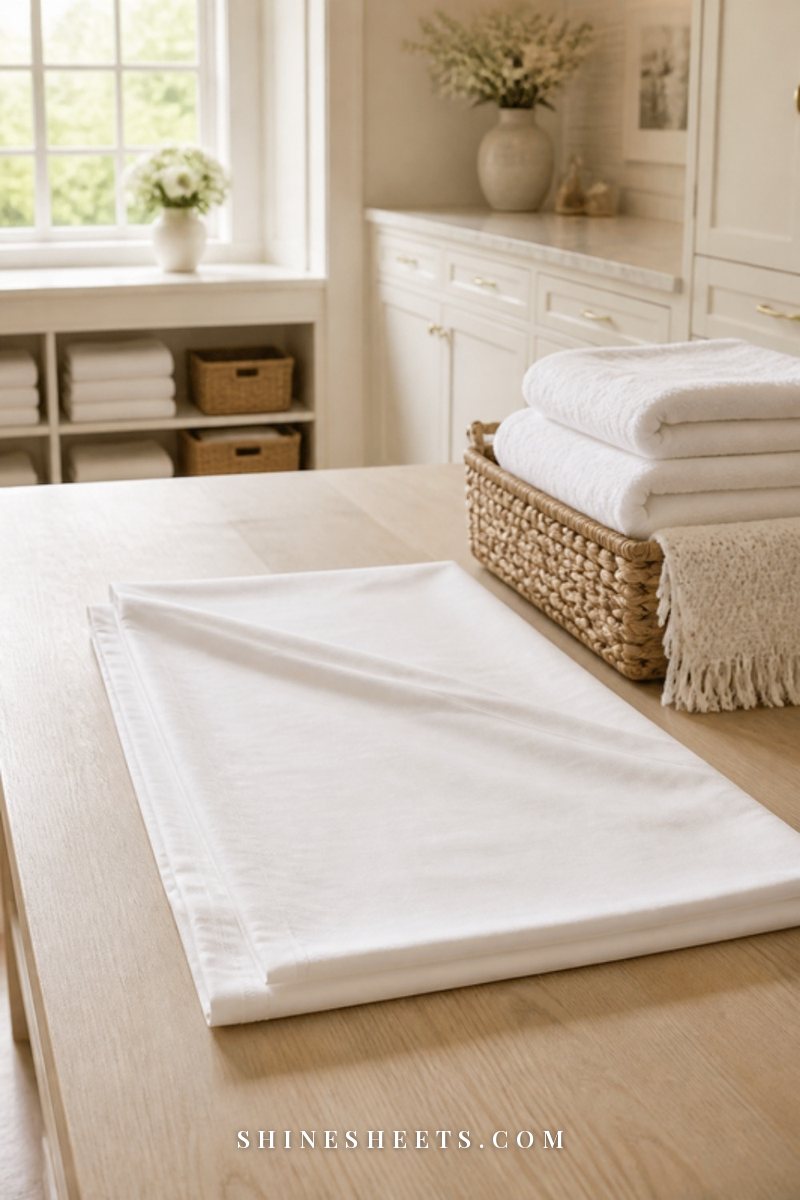
Almost any space can be a container, but some are especially satisfying because the limit is so obvious.
Bookshelves
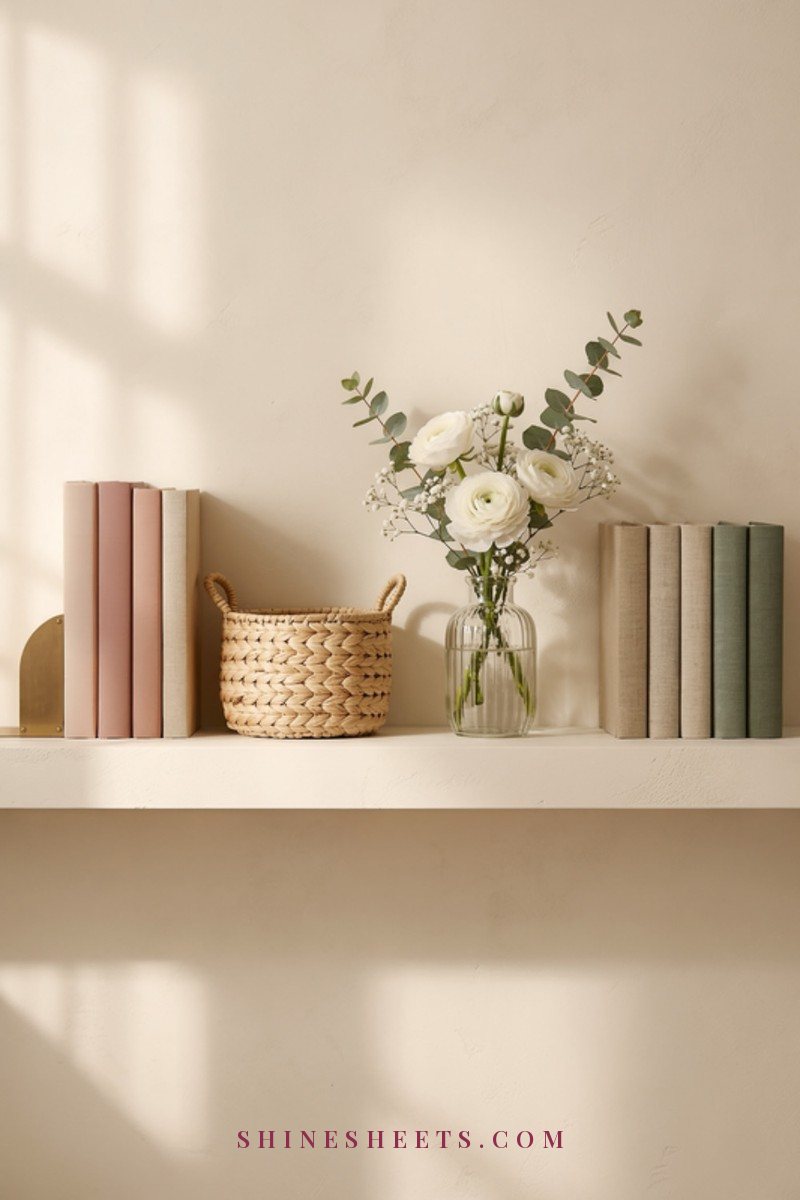
Decide how many shelves belong to books, and keep only what fits on them standing upright, without a second row behind. Your shelf becomes a curated collection rather than a storage problem.
Mugs and Cups
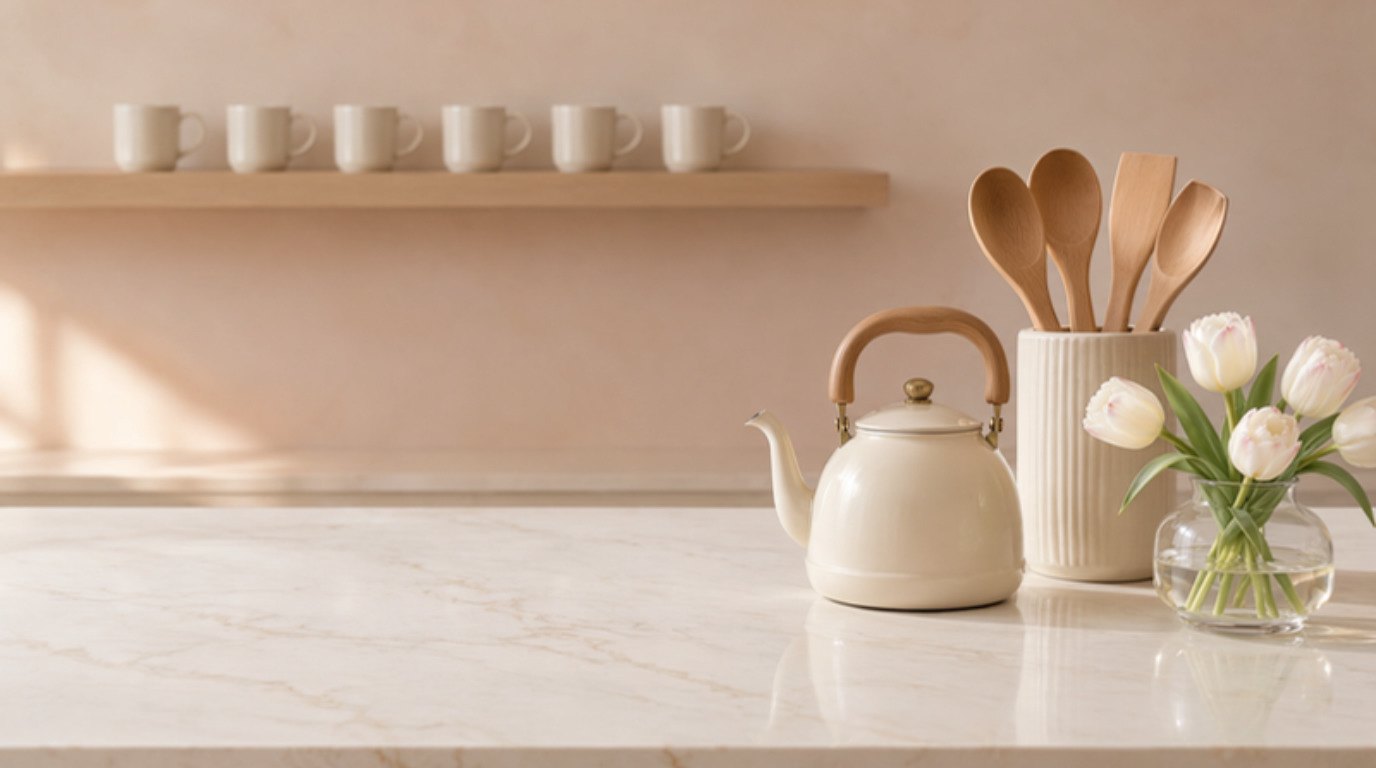
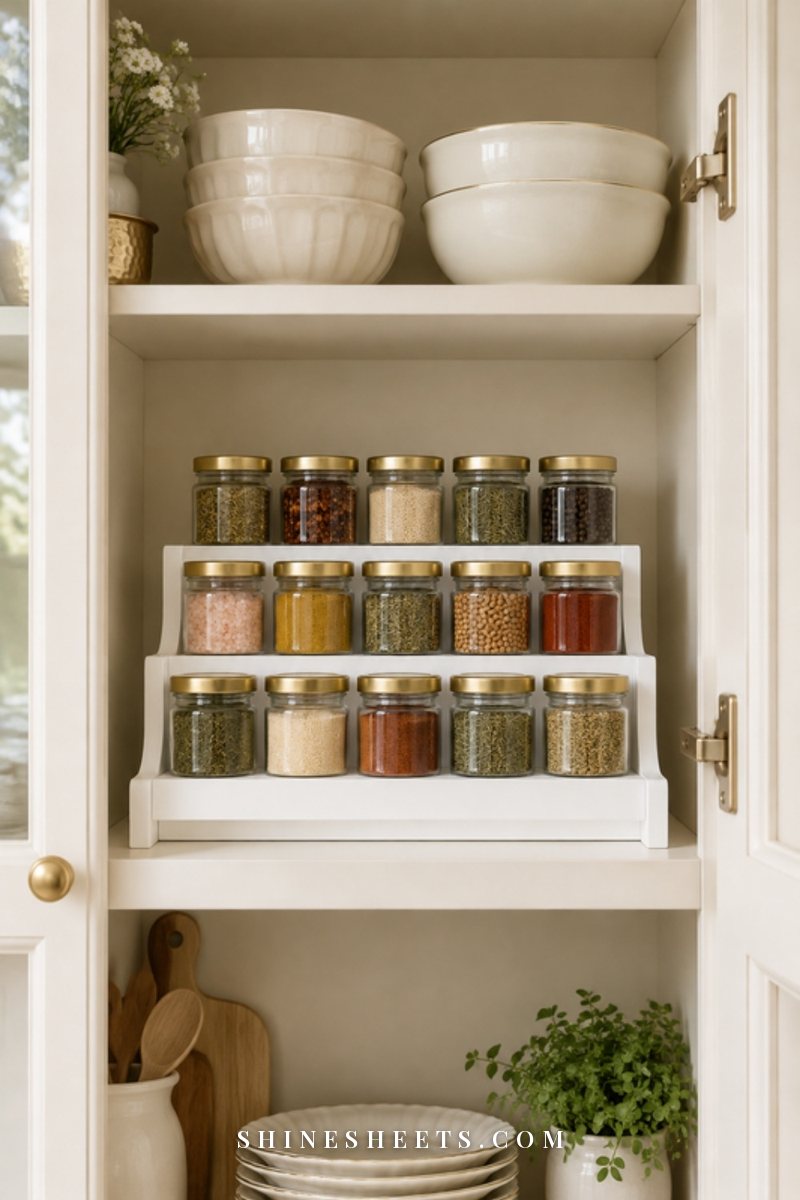
One shelf for mugs is a classic first container. Keep your favorites in a single, unstacked row, and you will notice how much easier it is to put away the dishes. If cabinet height is wasted, a white stackable shelf riser can make the shelf more usable, but only add it after you've edited, not instead.
Towels and Linens
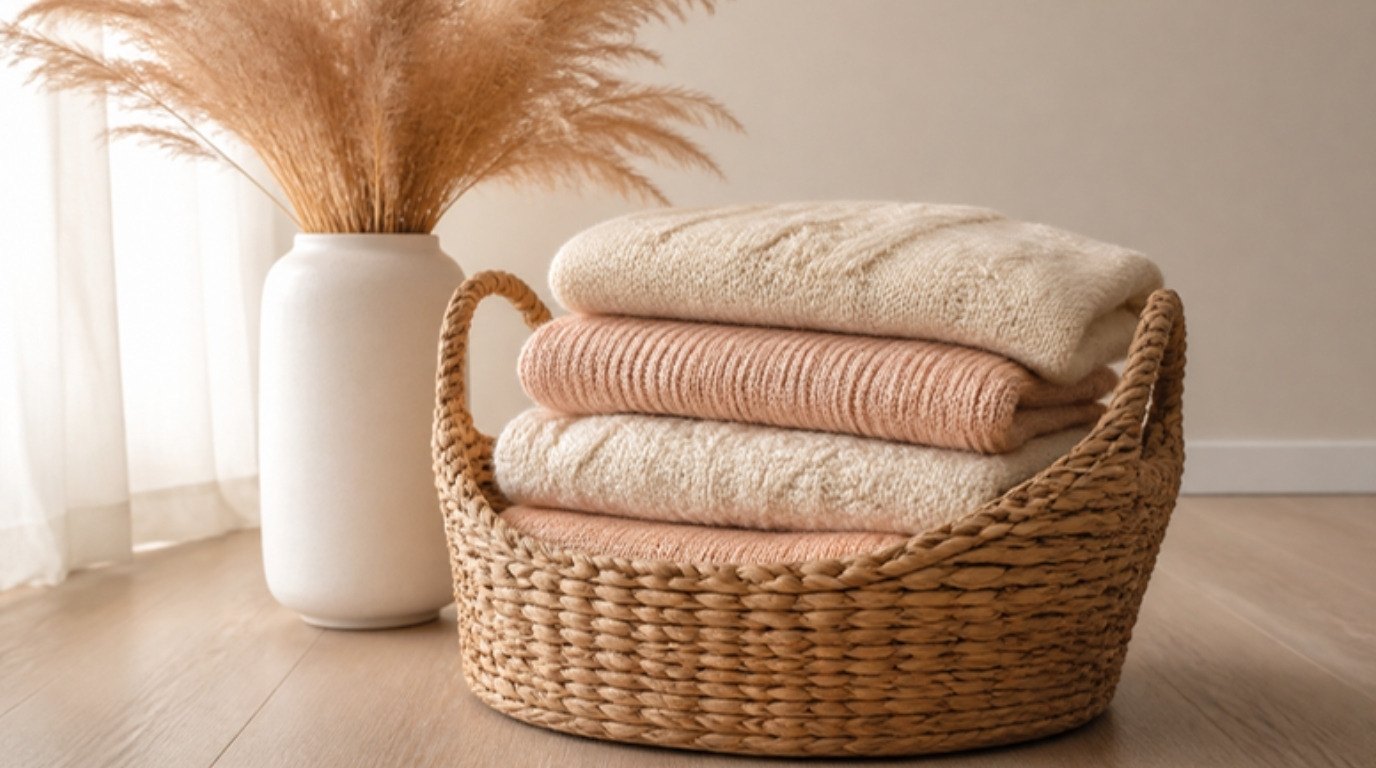
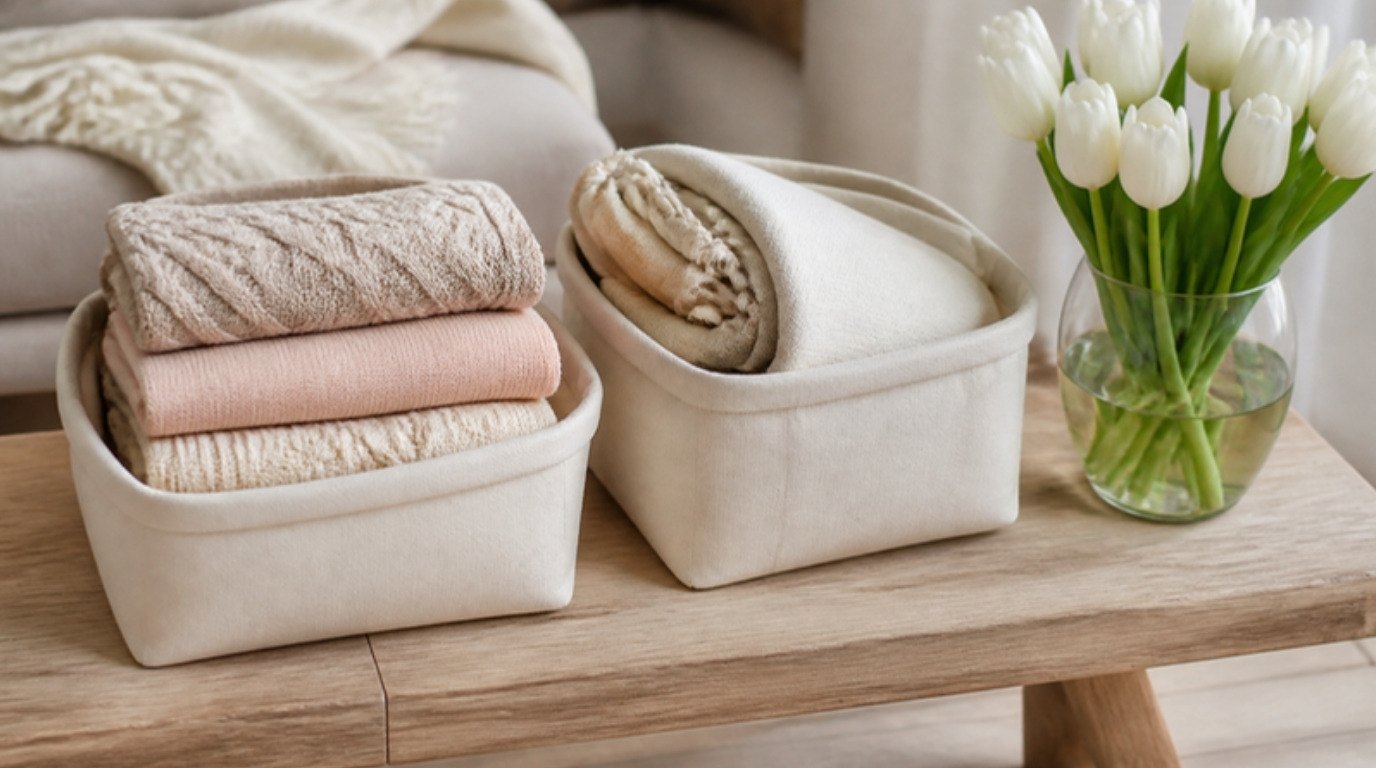
Your linen shelf can hold a set number of towels and sheet sets. A simple guide: two or three bath towels per person and two sheet sets per bed, and whatever the shelf comfortably holds.
Skincare and Bathroom Drawers
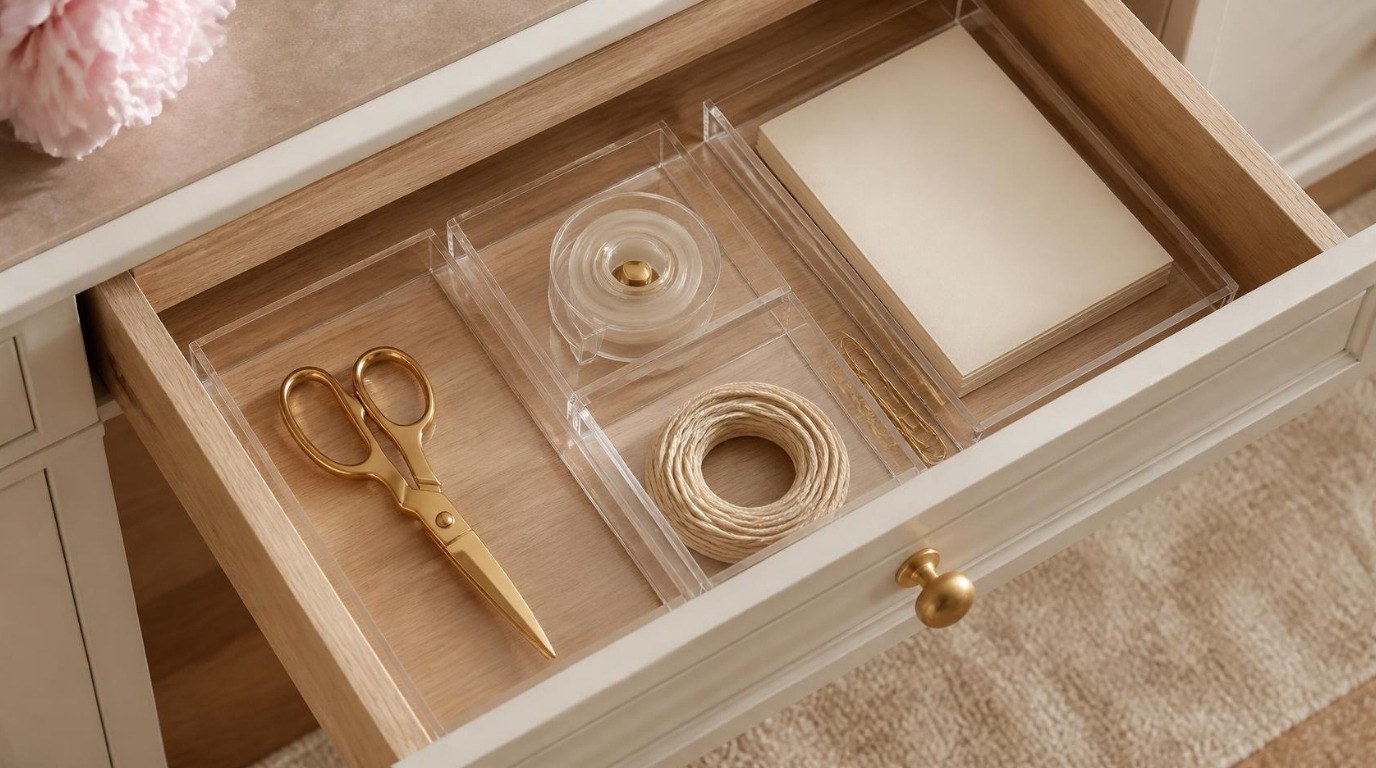
A bathroom drawer is a perfect container for skincare and toiletries. Keep only what fits in a single layer, so you can see every product. This pairs beautifully with a calmer, simplified skincare routine, because fewer products need much less space. Clear acrylic drawer dividers help each category keep its own little zone.
Cables and Chargers
Give cables one small box or one drawer section. If they no longer fit, it's time to recycle the ones for devices you don't own anymore. Please recycle old chargers and batteries through electronics collection points rather than the trash.
Seasonal Decor
Decide on one or two bins for each season or holiday, and let the bins set the limit. When something new comes in, something old makes room. My guide to easy storage solutions for seasonal decor has ideas for keeping those bins tidy between seasons.
Kids' Toys (Gently, Together)
For children, a toy basket or shelf can become a clear, friendly limit. Do it together and let them choose their favorites to put back first, rather than sorting while they're away. The goal is to teach that space is limited, not to take away what they love. Rotating a few toys in and out of storage can keep things feeling fresh without adding more.
The Container Limits Table
Use this table as a quick reference for the most common containers at home. The "natural limit" is a starting point, so adjust it to your space and your life.
| Container | What it holds | Natural limit | Sign it is overflowing |
|---|---|---|---|
| Bookshelf | Books, a few decor pieces | One upright row per shelf | Books stacked sideways on top or a second row behind |
| Mug shelf | Mugs and cups | One unstacked row | Mugs stacked inside each other or living on the counter |
| Linen shelf | Towels and sheet sets | Folded stacks that don't touch the shelf above | Towels fall out when you pull one |
| Bathroom drawer | Skincare and toiletries | A single visible layer | You find duplicates or expired products underneath |
| Wardrobe rail | Hanging clothes | Hangers slide easily with a little space | You need two hands to pull an item out |
| Cable box | Chargers and cables | Lid closes without pressing | Tangles and cables for devices you no longer own |
| Seasonal bin | Holiday or seasonal decor | One or two bins per season | Extra bags next to the bins |
| Toy basket | Children's toys | What fits with the basket edge visible | Toys piled on the floor around it |
| Entryway shelf | Shoes, bags, keys | One pair of shoes per person per space | Shoes spilling onto the floor |
Screenshot it and keep it on your phone. When you feel overwhelmed, pick the first container on the list that is showing its overflow sign, and start there.
3 Common Container Concept Mistakes
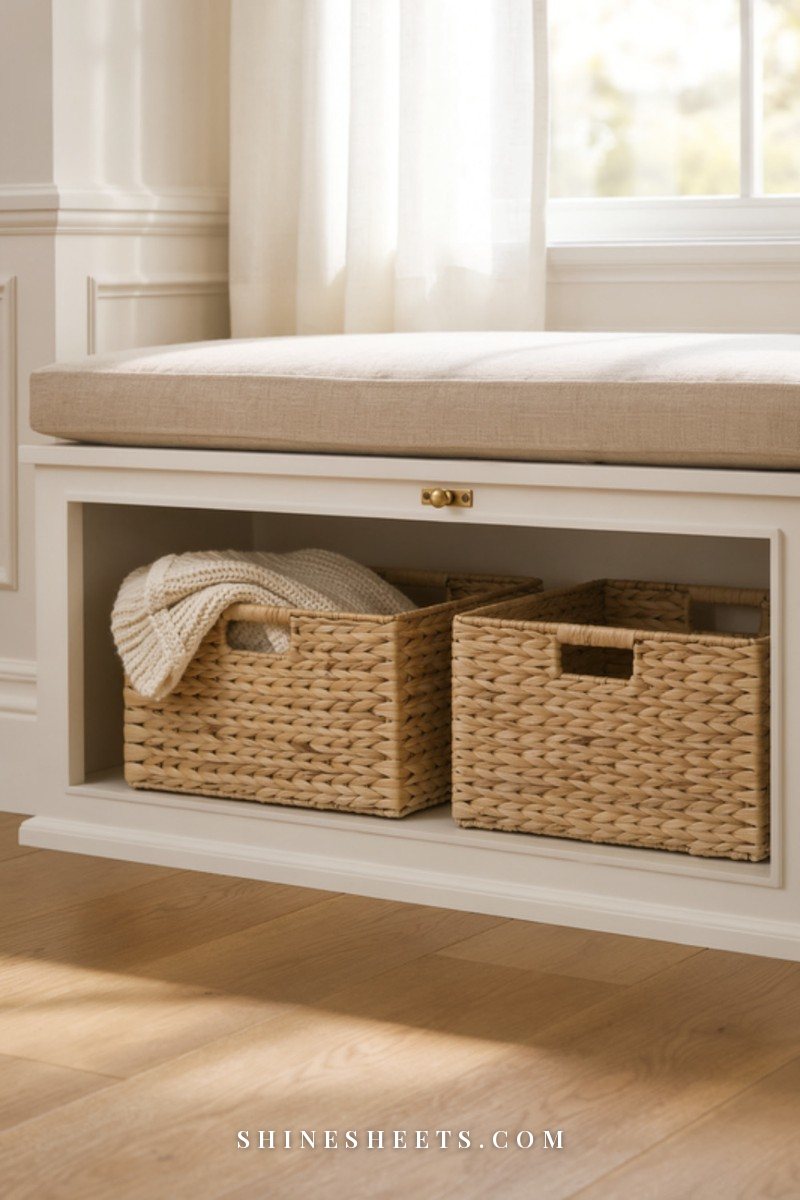
The container concept is simple, but a few habits can quietly cancel it out. Here are the ones to watch.
1. Buying More Bins First
It is so tempting to start with a shopping trip. But new bins create new containers, and new containers create room for more stuff. Edit first, measure second and only then decide whether you actually need a storage piece. You may find you need fewer, not more.
2. Choosing Containers That Are Too Big
A huge bin for "miscellaneous" will always fill up. Choose containers that are slightly smaller than your current amount, so the limit actually asks something of you. A small box for hair ties is a limit. A giant basket for hair ties is a hiding place.
3. Letting Floors and Countertops Become Containers
Floors, countertops, the top of the dresser and the chair in the bedroom are not containers. They are surfaces. When they start holding things, it's usually a sign that the real containers nearby are overflowing. Treat a cluttered surface as a clue: which container should these things live in, and does it have room?
The Container Concept on a Budget
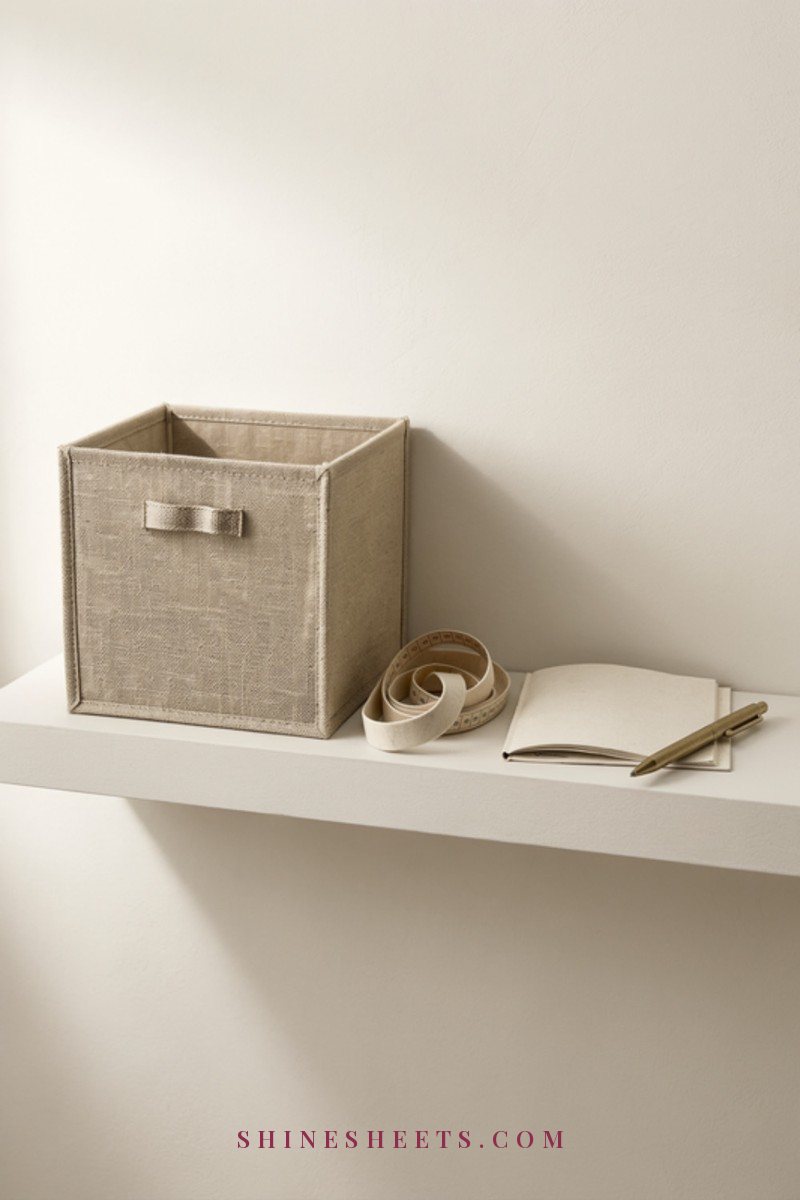
The best part of this method is that it costs nothing to start. Your shelves, drawers and cabinets are already the containers. Before buying anything, try these:
- Use what you own first. Shoeboxes, gift boxes and old baskets make perfectly good drawer dividers and shelf bins.
- Move containers between rooms. A basket that no longer fits the living room might be exactly right for the linen shelf.
- Measure before you shop. Write down the width, depth and height of the space, and only buy something that fits it exactly.
- Buy one, then pause. If you do need storage, buy a single piece and live with it for a week before buying the matching set.
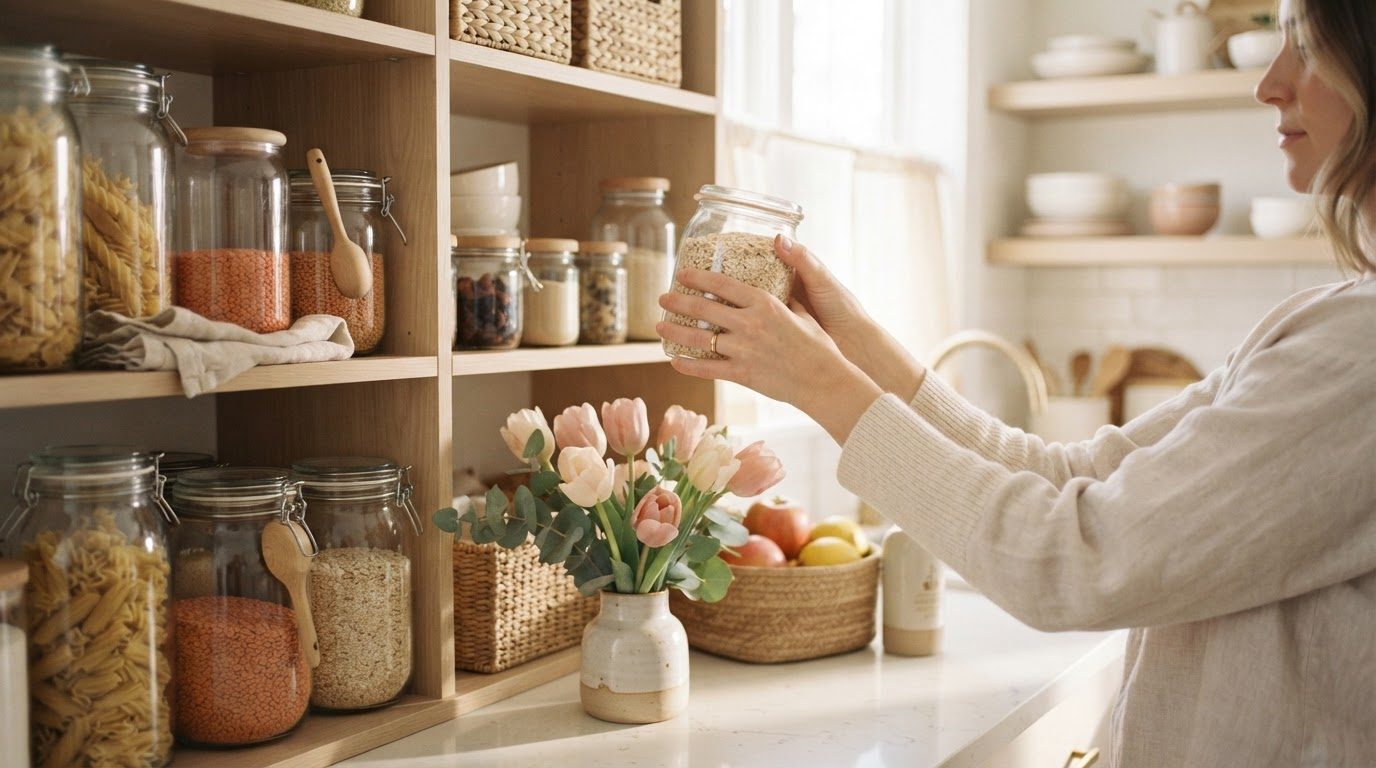
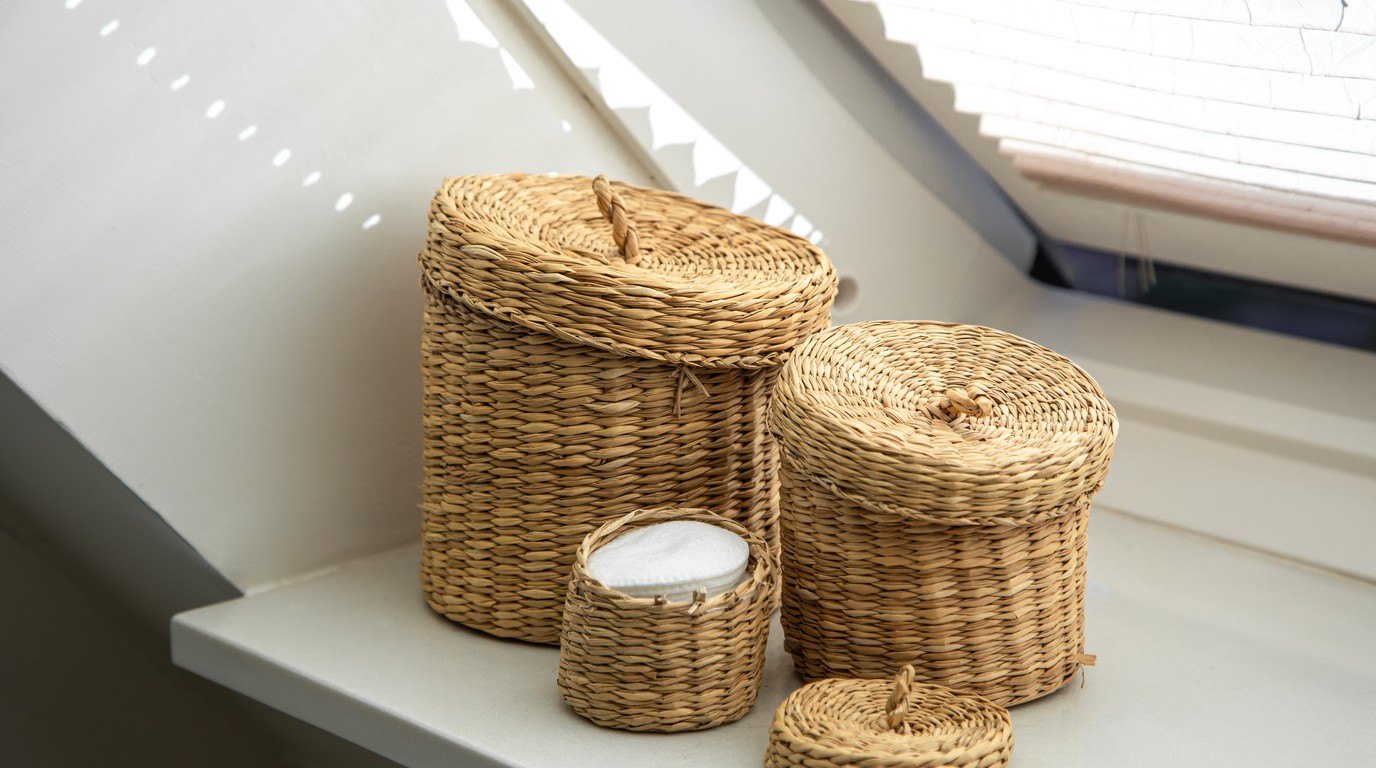
If you decide to add storage, stick to a soft, simple palette so your shelves look calm. White stackable storage bins work well in closets and pantries, while beige woven storage baskets soften open shelves in the living room or bathroom. For closet shelves, beige linen closet bins keep sweaters and spare bedding neat. Small homes have their own challenges, and my guide to organizing a small apartment with no storage is full of renter-friendly ideas.
When Everything Feels Like a Favorite
Sometimes you put your favorites back and the container is full long before the favorites run out. That isn't a failure. It just means you need one more gentle round of choosing.
- Rank within the category. Line up the leftover favorites and ask which one you would grab first if you could only keep one more. Put it back, then ask again until the space is full.
- Look at use, not love. A mug you admire but never drink from can live as decor somewhere else, or with someone who will use it every morning.
- Give it a waiting box. If you truly can't decide, put the extras in a box, write the date on top and store it out of sight. If you haven't opened it in three months, you already have your answer.
- Keep the memory, not the object. For sentimental pieces, a photo can hold the feeling while the item goes to a new home. One or two special pieces can stay in a small keepsake box of their own.
If you want a few extra prompts for the hardest items, my list of decluttering questions to ask before you keep things is a calm companion to this method.
How To Keep Containers From Overflowing Again
The container concept isn't a one-time project. It's a quiet habit that keeps working for you long after the first clear-out. A few small routines help it last:
- Do a two-minute check when putting things away. If something doesn't fit back in its container, that's your signal that something in there can leave.
- Pair it with one in, one out. When a new item arrives, the container is already full, so an older one makes room. The space keeps the score for you.
- Revisit one container a week. A Sunday afternoon tidy of a single drawer or shelf takes ten minutes and keeps every space in your home from drifting.
- Keep a donation bag in a closet. When an item doesn't make the cut, it goes straight into the bag. When the bag is full, it goes to the car.
- Be kind about busy seasons. Around the holidays, after a move or during a stressful month, containers will overflow a little. That's life. Reset one space at a time when you have the energy, and skip the guilt.
Over time, you will notice something lovely: you start shopping differently. When you already know the mug shelf is full, a new mug has to be truly special to come home. The limit protects your space and your budget at the same time.
Final Thoughts
The container concept is less about owning less and more about letting your home tell you what fits. You choose your favorites, the space sets the limit and the guilt has nowhere to land.
Start with one shelf this week, maybe the mugs or the towels. Put your favorites back first, stop when it's full and let the rest find a new home. That one calm, finished space is often all it takes to make the rest of the house feel possible.