Decluttering before the new year works best when you stop thinking of it as one big project. You don't need a free weekend, a skip bin or a dramatic before-and-after. You need a list, a timer and a few quiet December evenings, one small space at a time.
The weeks before January are the perfect window for it. You're already in reflective mode, the holidays bring new things into the house, and there's something lovely about walking into the new year with lighter drawers and a calmer hallway. It's less about having less and more about only keeping what still earns its place.
This guide is your room-by-room list of what to declutter before the new year: a simple 15-minute rule, the three-bin method, exactly what to let go of in the entryway, kitchen, bathroom, closet, living room, desk, holiday boxes and on your phone, a quick room-by-room table with time estimates, where to donate or recycle things safely, and how to keep the clutter from creeping back.
Make a cup of tea, put on a playlist you love, and pick the smallest space first. Momentum is everything here.
How To Use This List: The 15-Minute Rule and Three Bins
The biggest decluttering mistake is starting with the hardest room on a Saturday morning and quitting by lunchtime with everything spread across the floor. This approach is the opposite: small, timed and finished every single time.
Here's how it works:
- One space, 15 minutes. Set a timer and work on one small area only: a drawer, a shelf, the shoe rack. When the timer goes off, you stop, even if you're on a roll. Stopping while it still feels good makes you want to come back tomorrow.
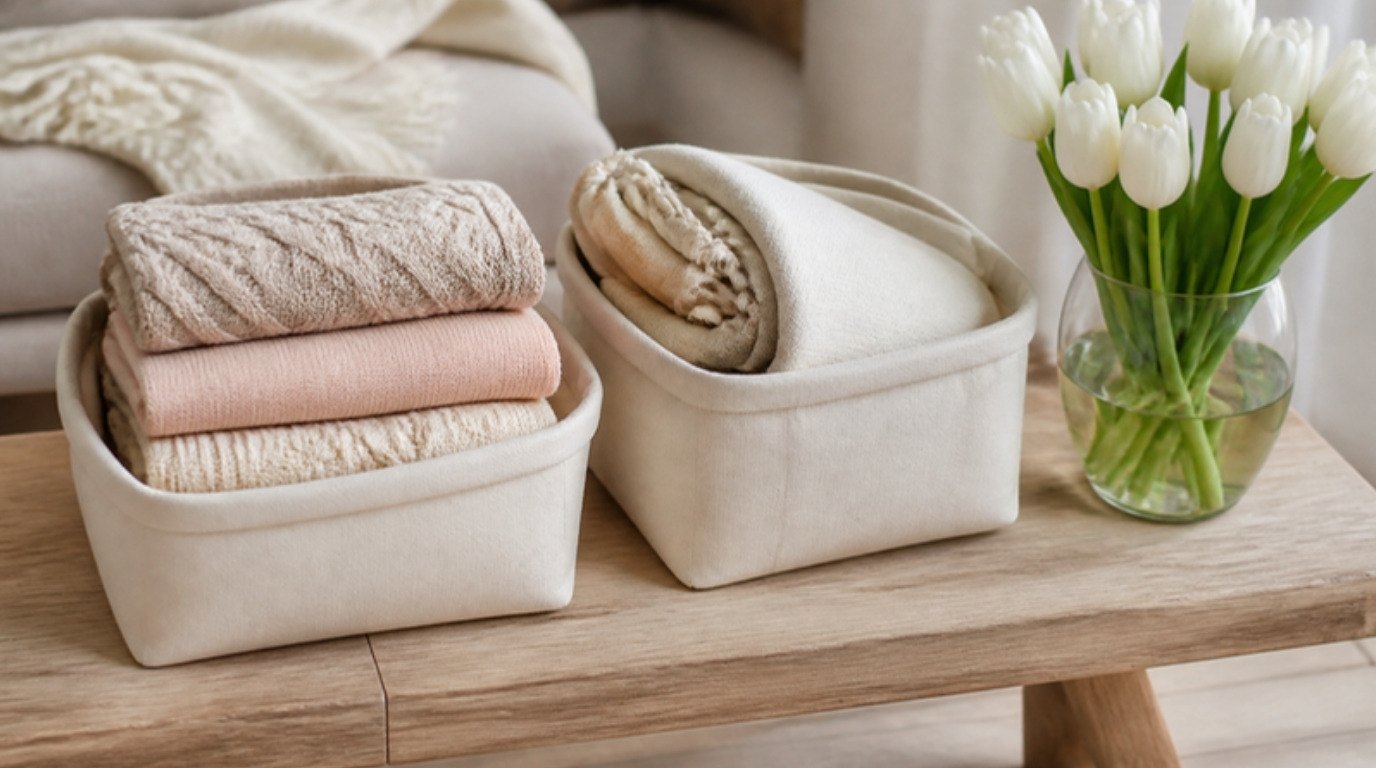
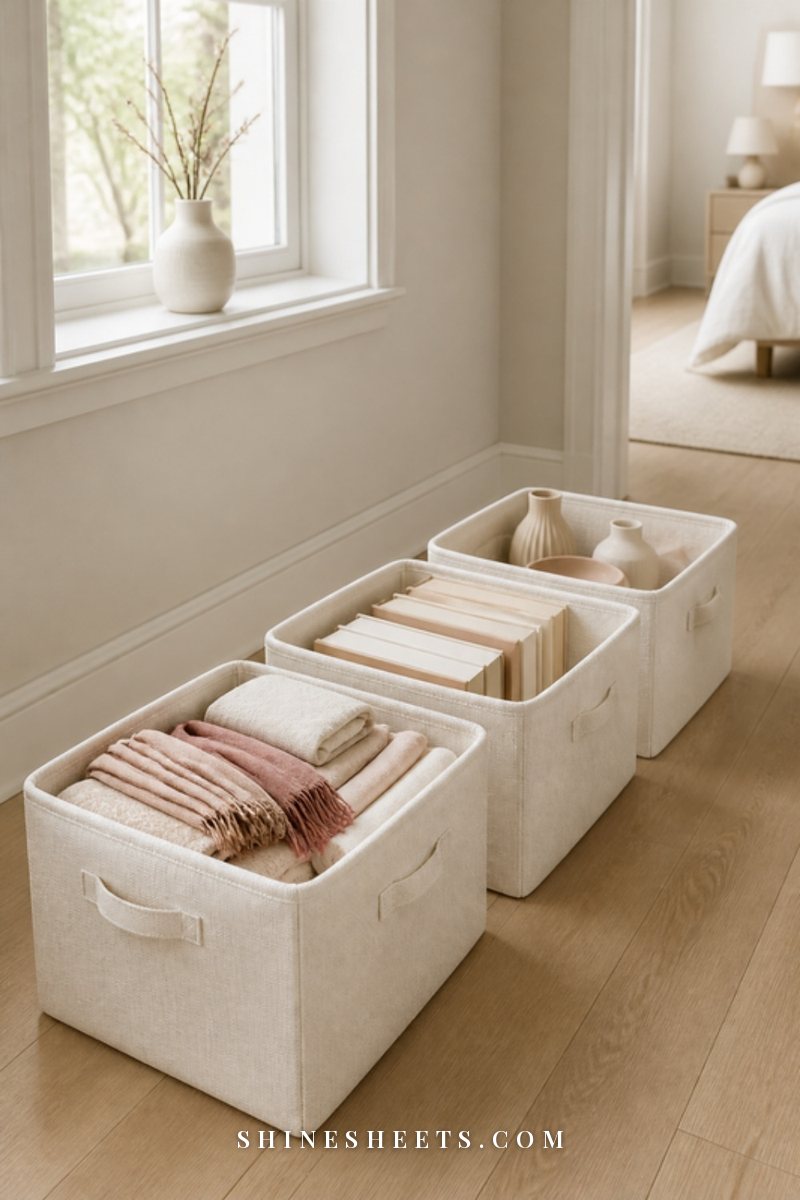
- Three bins. Keep, donate and toss. Set them up before you start so every item has somewhere to go immediately. A set of cream fabric storage bins works well for the keep and donate piles, and they're pretty enough to stay out afterwards as everyday storage.
- Toss means toss today. The toss bin gets emptied into the trash or recycling the same evening.
- Donate means out within a week. Bag donations straight away. Sturdy donation bags make it easy to tie them up and put them by the door, or straight in the car, so they don't quietly move back into the closet.
Fifteen minutes an evening, five evenings a week, adds up to more than an hour of real decluttering, without ever feeling like a chore marathon. If you'd like to compare different approaches before you begin, my guide to decluttering methods explains eight of them in plain words.
How To Decide Fast
Decision fatigue is what really slows decluttering down. Instead of debating every item, ask these four quick questions and go with your first answer:
- Have I reached for it in the last year? If not, and it isn't seasonal or sentimental, it can probably go.
- Is it broken, expired or missing a part? If you haven't fixed it by now, you're unlikely to.
- Would I buy it again today? If the honest answer is "no," you have your answer.
- Do I have a better version of this? Keep the best one, let the duplicates go.
For anything you truly can't decide on, use a "maybe" box. Tape it shut, write a date three months from now on a sticky note and put it out of sight. If you haven't opened it by then, donate it without peeking. (I find this takes almost all the anxiety out of letting go, because nothing feels final right away.)
Sentimental items deserve their own rule. Don't start with them, because they slow everything down and drain your energy for the easy decisions. Leave letters, photos and keepsakes until the very end, once your decluttering muscles are warmed up. When you get there, choose a single box or basket as the limit: whatever fits and feels most meaningful stays, and you can photograph the rest before letting it go. Keeping the memory doesn't require keeping every object attached to it.
What To Declutter Before the New Year, Room by Room
Work through these spaces in any order you like. I'd start with the entryway because it's small, quick and you'll feel the difference every time you come home.
1. Entryway
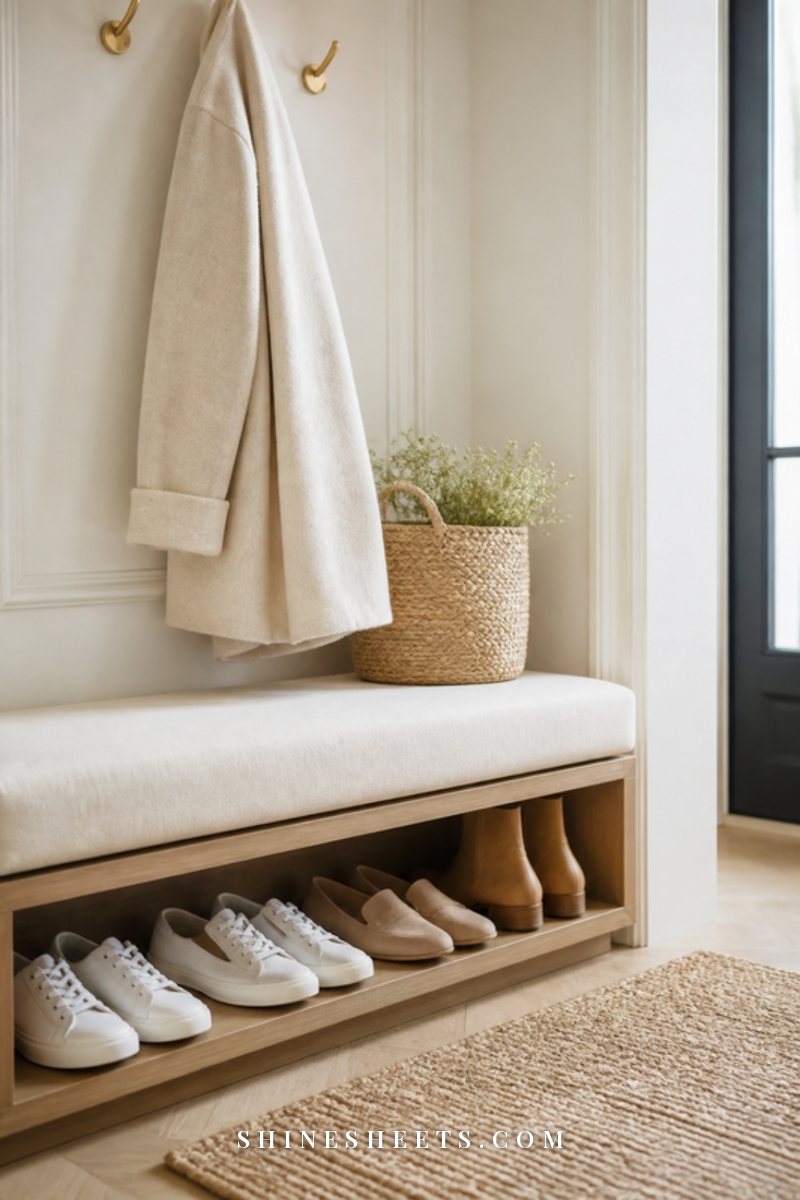
The entryway collects everything that's "just passing through." In winter it fills up fast, so this is the perfect place to begin.
- Single gloves and mittens whose partner disappeared long ago.
- Worn-out gloves with holes in the fingertips.
- Broken umbrellas, or the fourth spare one you never grab.
- Shoes that hurt, don't fit or haven't been worn in a year.
- Old flyers, takeout menus and receipts in the key bowl.
- Reusable shopping bags beyond the five or six you actually take with you.
- Keys you can't identify (check with housemates, then let them go).
Time needed: one or two 15-minute sessions.
2. Kitchen

The kitchen is where clutter hides in plain sight. Go cupboard by cupboard rather than tackling the whole room at once.
- Chipped or cracked mugs and plates (cracks can harbor bacteria and are prone to breaking).
- Food storage containers without lids, and lids without containers. Match them up on the counter, then recycle the singles.
- Duplicate utensils: three can openers, five spatulas, a drawer of mystery gadgets.
- Anything in the pantry past its date. Check quickly and move on; no need to reorganize every shelf tonight.
- Worn tea towels and scorched oven mitts.
- Giveaway mugs and water bottles from events that you never reach for.
- Small appliances you haven't plugged in for a year.
Once you've cleared a drawer, a few white drawer organizer trays keep everything in its own little zone, which makes it much harder for the chaos to return.
Time needed: three to four 15-minute sessions.
3. Bathroom

Bathroom products have a way of multiplying. This space is quick to clear and the difference is instantly visible.
- Expired skincare and makeup. Look for the small open-jar symbol on the packaging, which shows how many months a product lasts after opening. Mascara usually goes after about three months.
- Products that changed smell, color or texture, or that irritated your skin.
- Old razors and dull razor cartridges.
- Hair ties that have lost their stretch and broken clips.
- Sample sachets and hotel minis you've been "saving" for years (keep a few for travel, let the rest go).
- Towels that are thin, scratchy or permanently stained. Many animal shelters gladly accept old towels, so check with one near you.
- Old medicines. These don't go in the trash or down the drain; more on safe disposal below.
If your makeup bag needs more than a quick pass, my guide on how to declutter makeup and skincare has a full breakdown of what to toss and what to keep.
Time needed: two 15-minute sessions.
4. Closet

The closet is often the most emotional space, so give yourself permission to go slowly. Do one category per session: tops, then bottoms, then dresses, then accessories.
- Clothes you haven't worn in a full year (seasonal pieces get a pass if you wore them last season).
- Pieces that don't fit the body you have today. You deserve clothes that feel good now.
- Stretched-out socks, tights with runs and underwear past its best.
- Anything with stains or damage you've decided not to repair.
- Odd hangers: wire hangers from the dry cleaner, broken plastic ones, mismatched sets.
- Bags and belts you keep but never choose.
Swapping a jumble of hangers for one matching set makes a closet look calmer in minutes. Slim blush velvet hangers save space and stop silky tops from sliding off. For a deeper edit, my step-by-step guide on how to declutter your wardrobe walks you through it gently.
Time needed: four to six 15-minute sessions.
5. Living Room

The living room is where the whole household's clutter lands. Clearing surfaces makes the biggest difference here.
- Dead batteries rolling around in drawers (these need a drop-off point, not the trash).
- Old magazines and catalogs you're not going to read.
- Tangled cables and chargers for devices you no longer own.
- Remote controls for things that left the house years ago.
- Burned-down candles with only a sliver of wax left.
- Throw pillows that have gone flat or faded.
- Board games and puzzles with missing pieces.
If you have candles you're keeping, trim the wicks to about a quarter inch and never leave them burning in an empty room, especially with extra holiday decor around.
Time needed: two to three 15-minute sessions.
6. Desk and Paperwork
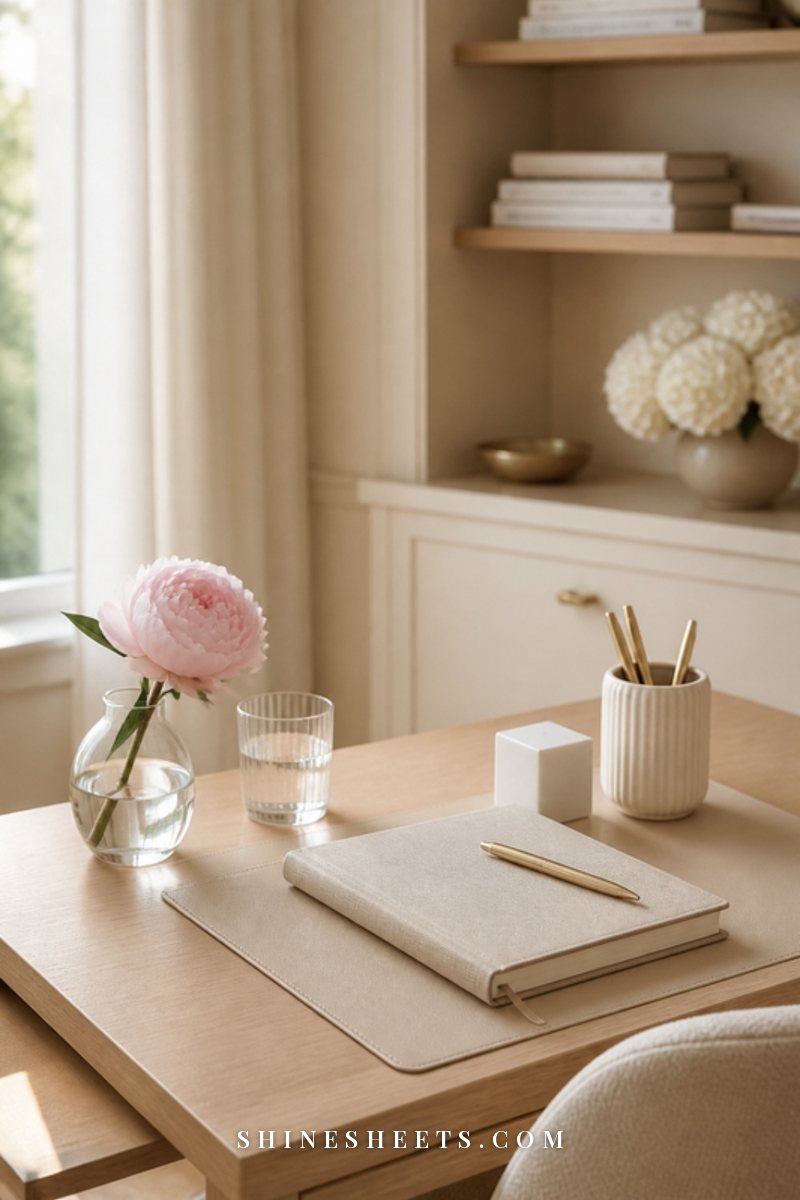
Paper is the clutter that makes most people sigh. Set aside a little more time for this one, and do it with a cup of tea.
- Dry pens, dried-out markers and highlighters.
- Old receipts for things you can no longer return.
- Manuals you can find online (keep warranties for items still covered).
- Expired coupons and loyalty cards for shops you don't visit.
- Old bank statements and bills you don't need to keep. Rules for how long to keep financial papers vary, so check what applies to you before you let anything important go.
- Anything with your name, address or account numbers should be shredded, not just recycled.
A small home paper shredder turns this into a satisfying evening task rather than a pile that sits on the desk for months.
Time needed: two to four 15-minute sessions.
7. Holiday Leftovers
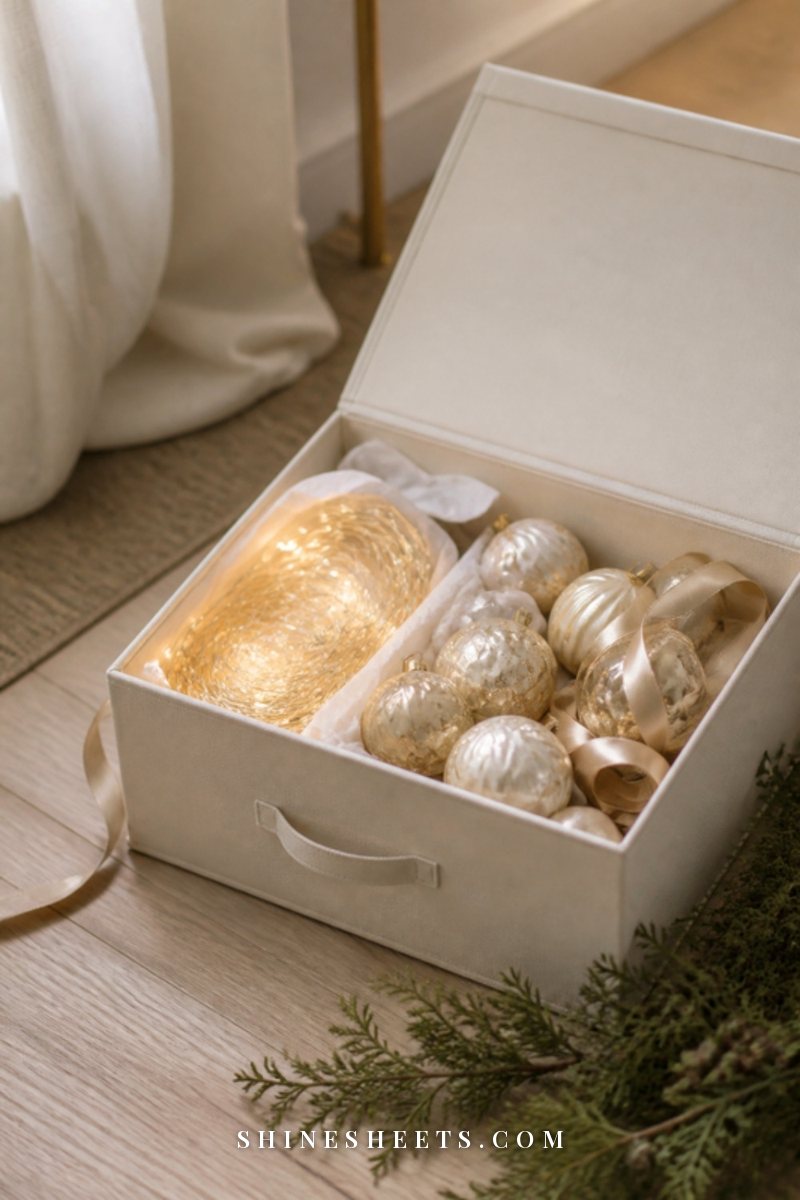
Before the new decorations come out (or as soon as they go back in the box), go through your seasonal storage.
- Broken string lights or strands with dead sections you've never fixed.
- Ornaments that are chipped or that you never hang.
- Wrapping paper scraps too small to wrap anything.
- Crushed bows, tangled ribbon and gift bags past their prime.
- Last year's holiday cards. Keep the truly special ones; photograph the rest so you keep the memory without the stack.
- Seasonal decor that doesn't match your style anymore.
When you pack decorations away, a small label maker is worth its weight. Label each box with what's inside and which room it's for, and next season's decorating takes half the time.
Time needed: two 15-minute sessions.
8. Digital Quick Wins
Digital clutter doesn't take up shelf space, but it absolutely takes up mental space. A few quick wins before January:
- Delete blurry photos, duplicates and screenshots you no longer need.
- Unsubscribe from five newsletters you never open.
- Delete apps you haven't opened in three months.
- Move everything on your computer desktop into one "sort later" folder (and actually sort it in January).
- Archive old email threads in one go rather than reading them again.
For a full plan covering your phone, email and photos, my guide to a digital declutter breaks it into easy sessions.
Time needed: two 15-minute sessions.
Room-by-Room Decluttering Table
Here's the whole list at a glance. Screenshot it, pick one row per evening, and you'll have the entire home done in about three weeks of short sessions.
| Room | What to let go | Time needed |
|---|---|---|
| Entryway | Single gloves and mittens, broken umbrellas, painful shoes, old flyers, extra shopping bags | 15–30 minutes |
| Kitchen | Chipped mugs, lidless containers, duplicate utensils, expired pantry items, unused appliances | 45–60 minutes |
| Bathroom | Expired skincare and makeup, old razors, worn towels, broken hair ties, old medicines (drop-off) | 30 minutes |
| Closet | Unworn clothes, stretched socks, ripped tights, odd hangers, unused bags | 60–90 minutes |
| Living room | Dead batteries (drop-off), old magazines, tangled cables, burned-down candles, flat pillows | 30–45 minutes |
| Desk | Dry pens, old receipts, outdated papers to shred, expired coupons | 30–60 minutes |
| Holiday boxes | Broken lights, chipped ornaments, wrapping scraps, old cards (photograph first) | 30 minutes |
| Digital | Blurry photos, unused apps, unread newsletters, old email threads | 30 minutes |
Where To Donate, Recycle or Drop Off
Letting go feels much better when you know things are going somewhere useful. Here's where the most common items can go:
- Clothes, shoes and bags in good condition: charity shops, local shelters, clothing swaps or community groups. Wash everything first and pair shoes with a rubber band.
- Worn-out textiles: many areas have textile recycling bins, and some clothing stores run take-back programs for old fabric.
- Old towels and blankets: animal shelters and rescues often welcome them.
- Kitchenware and decor: charity shops, or a local "buy nothing" style group where neighbors give things away.
- Books and magazines: little free libraries, schools or paper recycling for the ones that are too worn.
- Electronics, cables and chargers: electronics recycling points, often at large retailers or local recycling centers.
A quick safety note on batteries and medicines. Batteries, especially lithium-ion ones from old phones, vapes and gadgets, should never go in household trash or recycling bins, because they can spark fires in garbage trucks and sorting facilities. Tape the ends of loose batteries and take them to a battery drop-off point (many hardware and electronics stores have one). Old or unused medicines should go to a pharmacy take-back point or a community drop-off day rather than the trash or toilet. The FDA has clear guidance on how to dispose of unused medicines if no take-back option is near you.
If You Only Have One Evening
December gets busy, and some weeks you'll only have one free evening. If that's all the time you have, these four quick jobs give you the biggest feeling of lightness for the least effort:
- Clear the entryway. It's the first thing you see when you come home, so even ten minutes here changes how the whole house feels.
- Empty the bathroom cabinet of anything expired. It takes minutes and frees up a surprising amount of space.
- Fill one donation bag from your closet. Aim for ten items you haven't worn in a year, then stop.
- Clear one surface completely. The coffee table, the kitchen counter or your nightstand. A single clear surface makes a room look instantly calmer.
That's roughly an hour, and it's enough to carry a fresh, lighter feeling all the way into the new year.
How To Keep the Clutter From Coming Back
Decluttering is wonderful, but keeping it that way is where the real calm comes from. A few small habits make a big difference:
- One in, one out. When a new sweater, mug or candle comes in, one similar item goes out. This is especially helpful right after the holidays.
- A permanent donation bag. Keep one bag at the back of your closet. When something no longer works for you, it goes straight in. When the bag is full, drop it off.
- A home for everything. Clutter is often just items without a place. Give each category a clear spot, ideally labeled, and things find their way back.
- A five-minute evening reset. Before bed, return anything that's out of place. Five minutes a day saves a whole Saturday later.
- A seasonal check-in. Repeat a quick version of this list each season so it never builds up into a big job again.
If you'd like to carry this fresh start into January, my January home reset plan picks up right where this list leaves off, with a room-by-room refresh for the first weeks of the year.
Final Thoughts
You don't have to declutter your whole home to feel the difference. One cleared drawer, one tidy shelf, one bag of donations by the door is enough to make your space feel lighter and your mind a little quieter.
Pick one row from the table tonight, set a 15-minute timer and begin. By the time the new year arrives, you'll be walking into it with a home that holds only what you love and use, and that is a beautiful way to start fresh.