A small apartment with no storage doesn't need more space as much as it needs fewer homeless things. When every object has a place to go, even a tiny studio feels calm. When things don't, they land on the closest flat surface, and suddenly the kitchen counter is also the mail desk, the makeup station and the place where tote bags go to multiply.
The trick is to stop thinking in closets and start thinking in walls, doors, corners and the space under things. Most small apartments are full of storage, it just isn't labeled "storage." And you can find nearly all of it without a drill, a landlord conversation or a whole new set of furniture.
This guide covers how to organize a small apartment with no storage, step by step: an honest edit to start, where to find hidden storage, 10 renter-friendly ideas, room-by-room quick wins for the entry, kitchen, bathroom and bedroom, a no-drill table with rough costs and a few ways to keep it all looking calm instead of crammed.
Go slowly. One corner this weekend is real progress.
Why Small Apartments Feel Cluttered So Fast
In a bigger home, clutter hides in a spare room or a deep closet. In a small apartment, everything is on display, so even a normal amount of stuff looks like a lot. Add the fact that many older or budget-friendly apartments come with one tiny closet (or none), no pantry and two kitchen cupboards, and it's no wonder things pile up.
There's also a mental side. When you can see everything from your bed or your sofa, visual clutter follows you around. That's why the goal here isn't just "fit more in." It's to create fewer, clearer zones, so your eyes have somewhere to rest. Small honest admission: I'm prone to anxiety, and I notice my mind feels busier when every surface is covered. Clearing one surface helps more than you'd expect.
Start With an Honest Edit
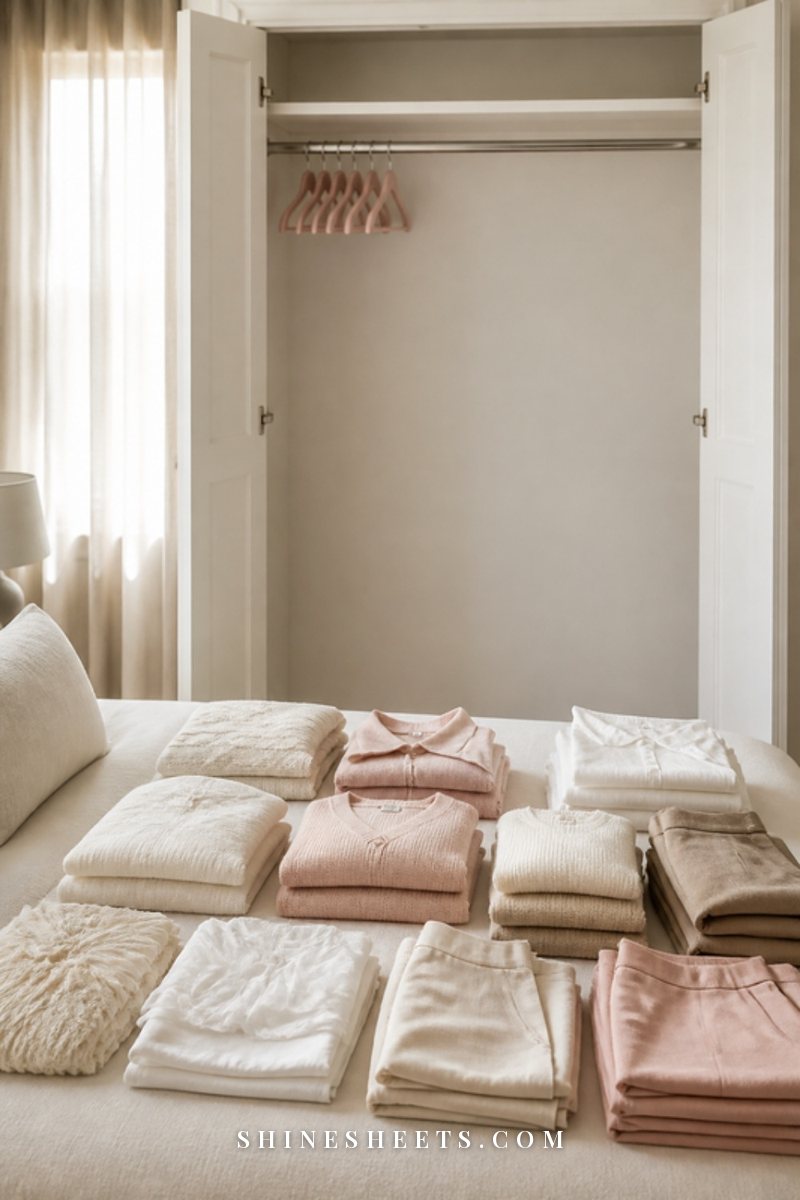
Before you buy a single basket, edit. Organizing things you don't need just means storing clutter neatly. Set a timer for 20 minutes and work through one category at a time – clothes, kitchen, bathroom, papers, "miscellaneous."
- Keep: things you've used in the last few months or truly love.
- Relocate: things that belong in another room (you'll be surprised how many there are).
- Donate or sell: duplicates, things that don't fit your life now and "maybe one day" items.
- Toss: broken, expired or stained things nobody will want.
A gentle question that helps with tough decisions: "If I were moving tomorrow, would I pack this?" If the answer is no, it probably doesn't need to take up your limited space.
The One-In, One-Out Rule
Once you've edited, protect your space with a simple habit: every time something new comes in, something similar goes out. A new sweater means an old one gets donated. A new mug means one leaves the cupboard. In a small apartment, this single rule does more than any organizer. My guide to the one in, one out rule has more on making it feel easy rather than strict.
Where To Find Hidden Storage
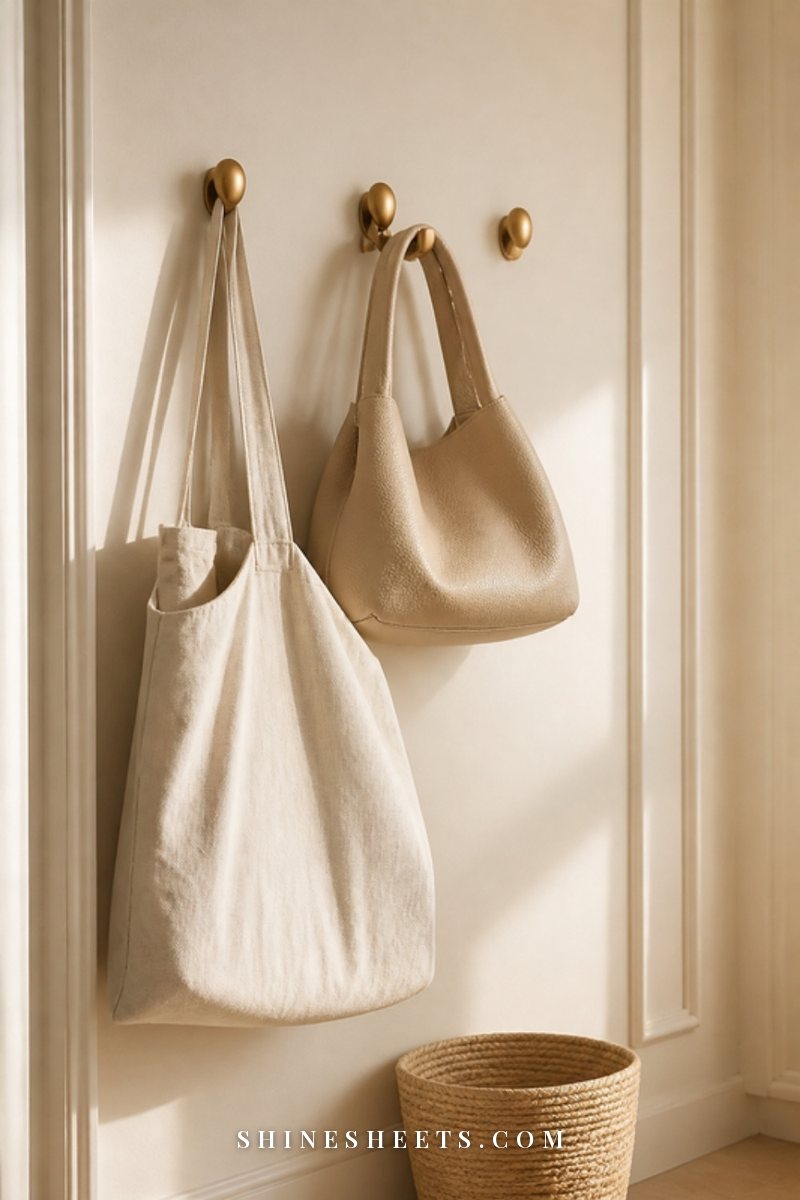
Walk around your apartment and look for these five spots. Most small spaces have all of them, and almost none of them are being used.
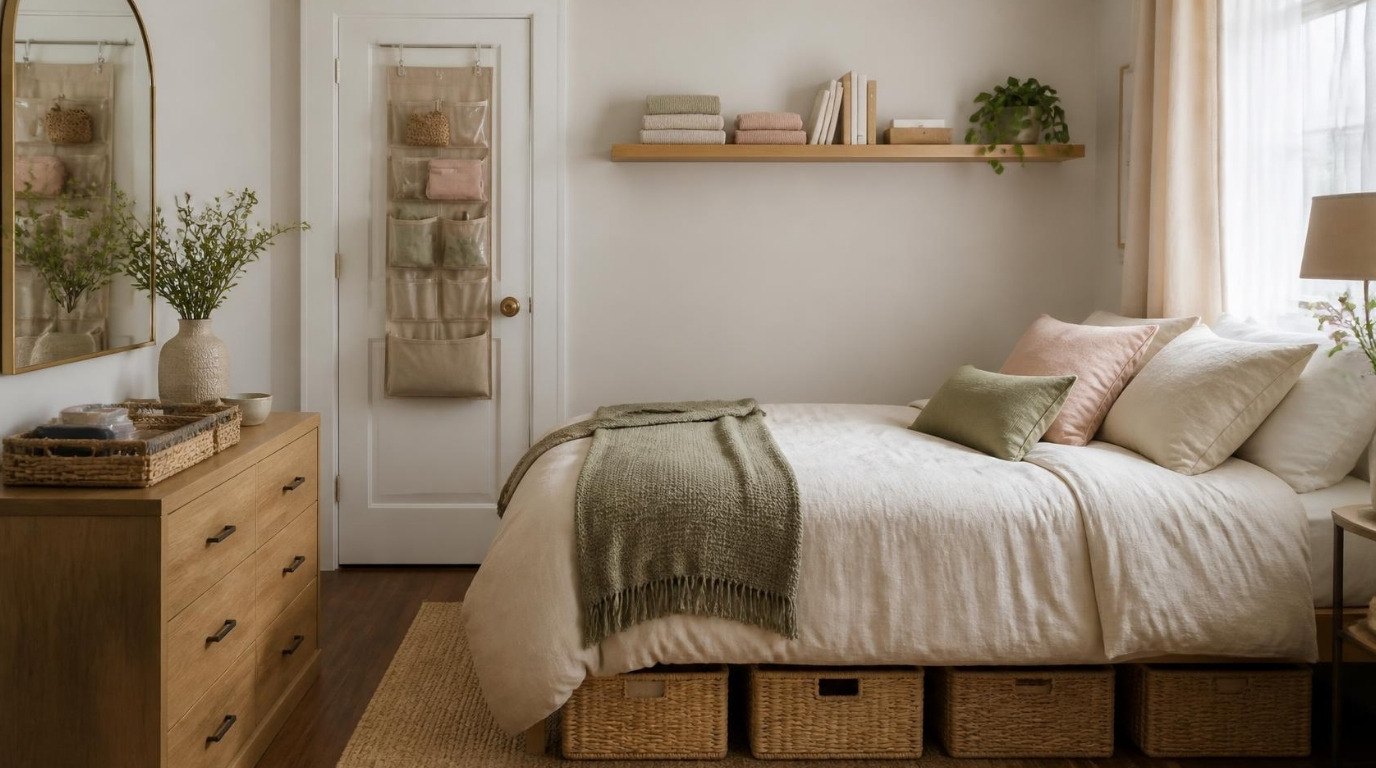
- Under the bed: often the biggest unused space in a small apartment, especially if you raise the bed a few inches.
- Behind doors: bedroom, bathroom and closet doors (even pantry-less kitchens usually have one door you can use).
- Vertical walls: the space above your desk, above the toilet, beside the bed and above eye level in the kitchen.
- Above the fridge: a classic spot for things you use a few times a year, kept in a lidded basket.
- Inside furniture: ottomans, benches, side tables and coffee tables with drawers or lift-up tops.
The rule of thumb: everyday things go between hip and shoulder height, where they're easy to reach. Rarely used things go up high or down low.
10 Storage Ideas for a Small Apartment With No Storage
These 10 ideas are renter-friendly, need no drilling and work with the furniture you already have. Pick the two or three that solve your biggest problem first.
1. A Storage Bed or Bed Risers
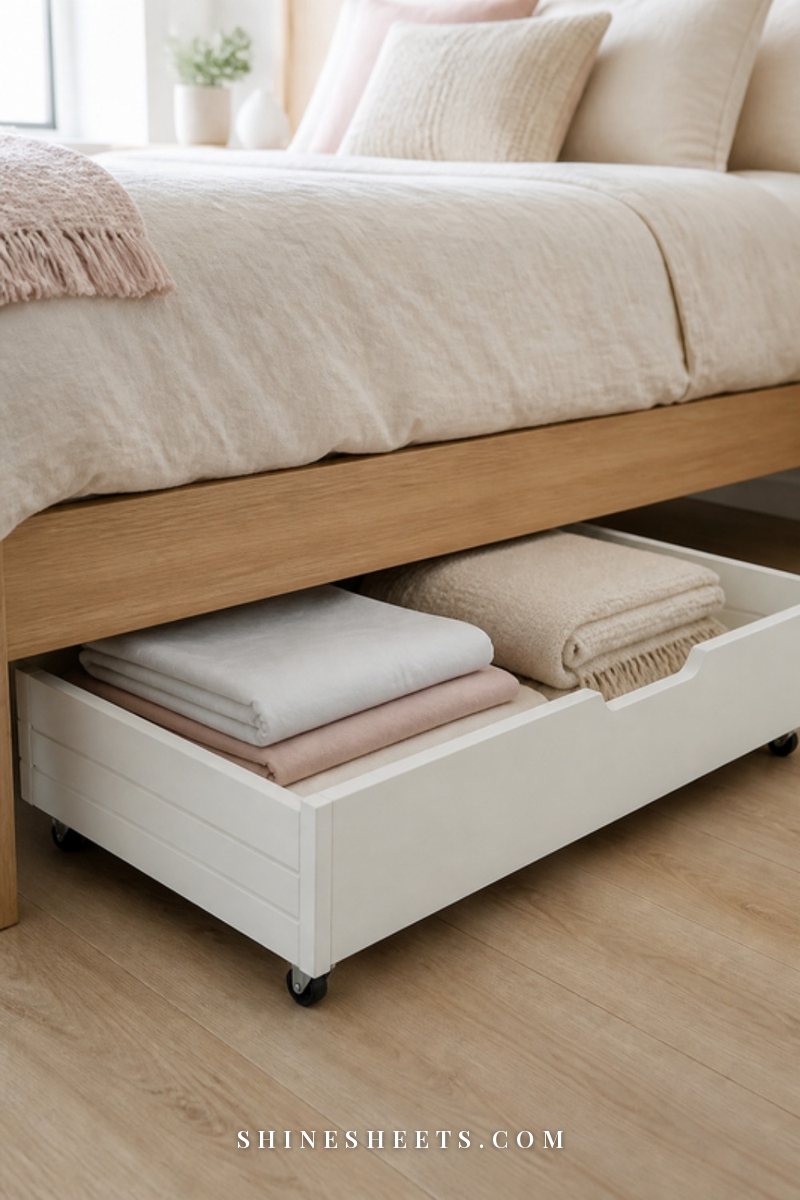
If you're buying a bed anyway, a storage bed with drawers or a lift-up base is worth it. If not, a set of sturdy bed risers can lift your existing bed by a few inches and roughly double the space underneath. Look for risers with a weight rating well above your bed and mattress, a cup that fits your bed legs and a non-slip base.
Fill the space with lidded bins or rolling drawers for off-season clothes, spare bedding and shoes. My post on smart under bed storage ideas goes into exactly what to put there and how to keep it dust-free.
2. Over-the-Door Organizers
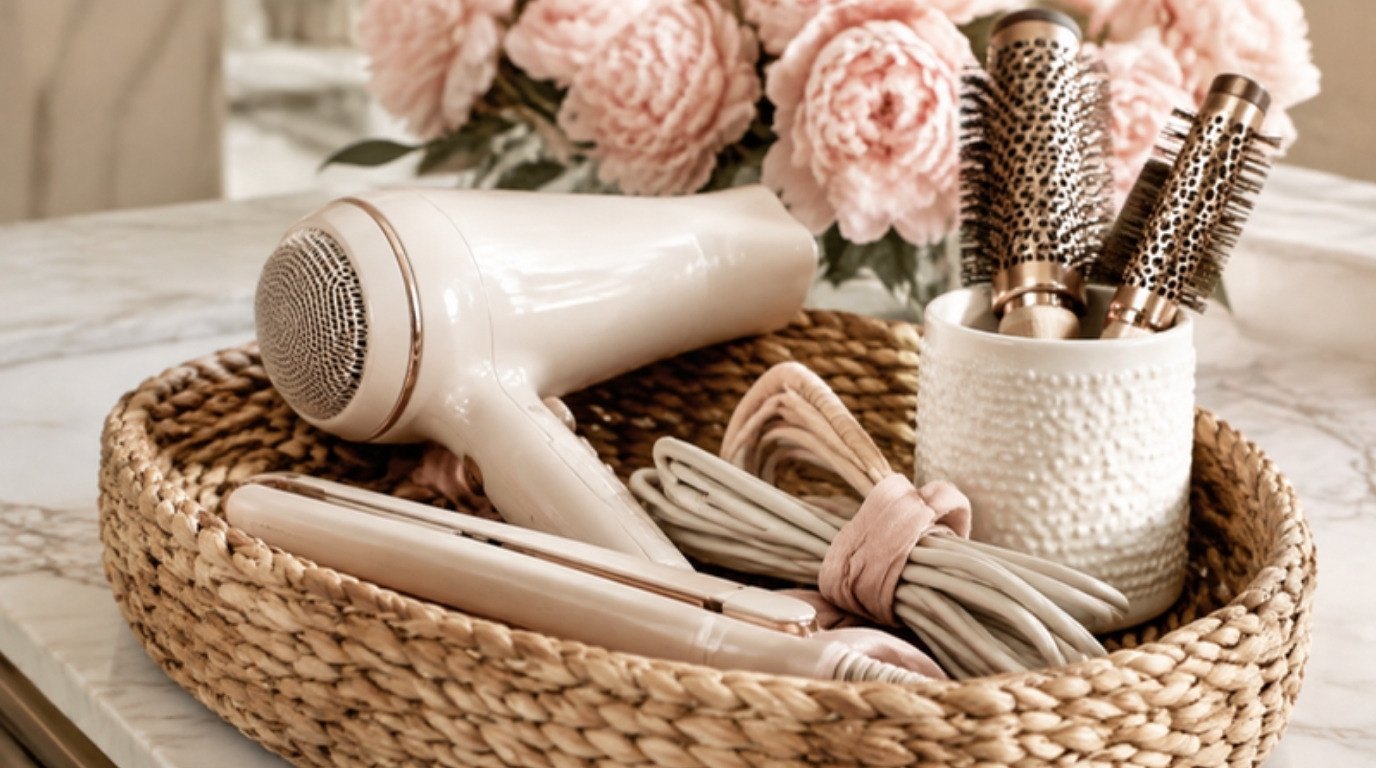
A door is basically a free wall. An over-the-door organizer with clear pockets holds far more than shoes: cleaning supplies, scarves, hair tools (cooled, of course), snacks, chargers or bathroom extras. Choose one with sturdy hooks that don't stop the door from closing, and a soft neutral fabric so it blends in. Put the heaviest things in the bottom pockets.
3. Freestanding Shelves
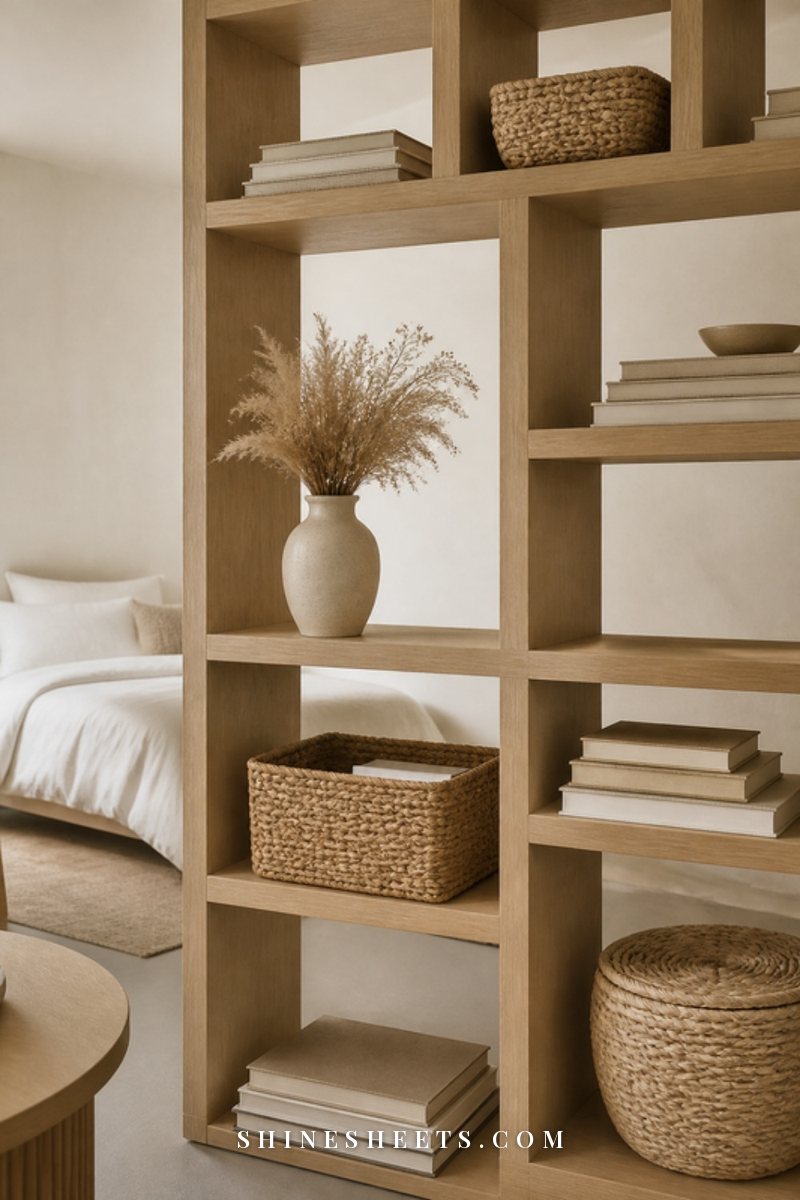
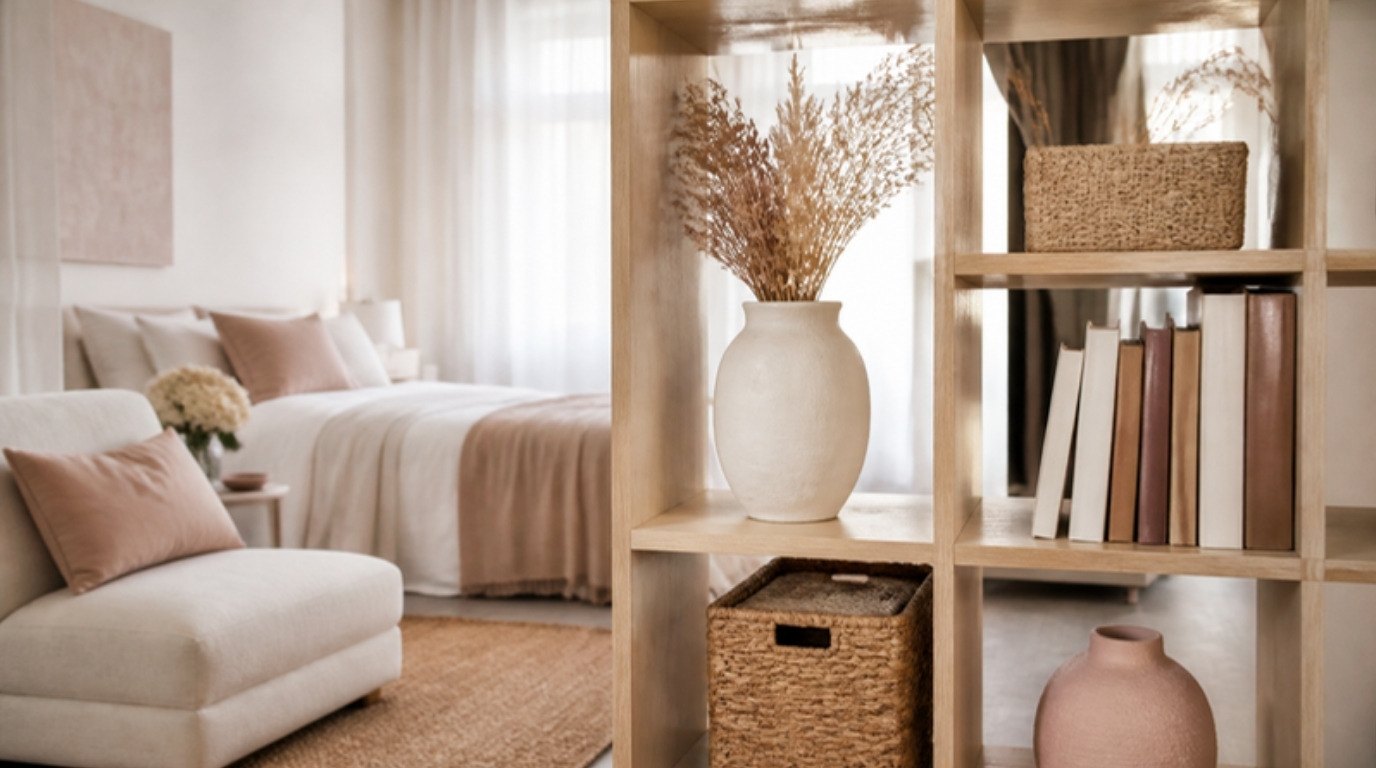
A tall, narrow shelf adds storage without taking much floor space. Use it as a pantry in the kitchen, a linen shelf by the bathroom or a "closet" for folded clothes in the bedroom. Ladder shelves and slim bookcases both work; look for one with an anti-tip strap you can secure to a furniture leg or with a small adhesive kit if drilling isn't allowed. Keep heavier things on the bottom shelves.
4. A Rolling Cart
A white three-tier rolling cart is the most flexible piece of small-apartment storage there is. It can be a bar cart, a bathroom caddy, a kitchen pantry, a craft station or a nightstand, and it rolls into a corner when you need floor space. Choose one with locking wheels and shelves deep enough for the things you plan to put on them.
5. An Ottoman With Storage
Seating that hides things is perfect for living rooms where every inch counts. A cream storage ottoman with a lift-off lid can hold throws, board games, chargers or magazines, and it works as a footrest, extra seat or coffee table with a tray on top. Look for one with a sturdy frame and a lid that's easy to lift.
6. Adhesive Hooks
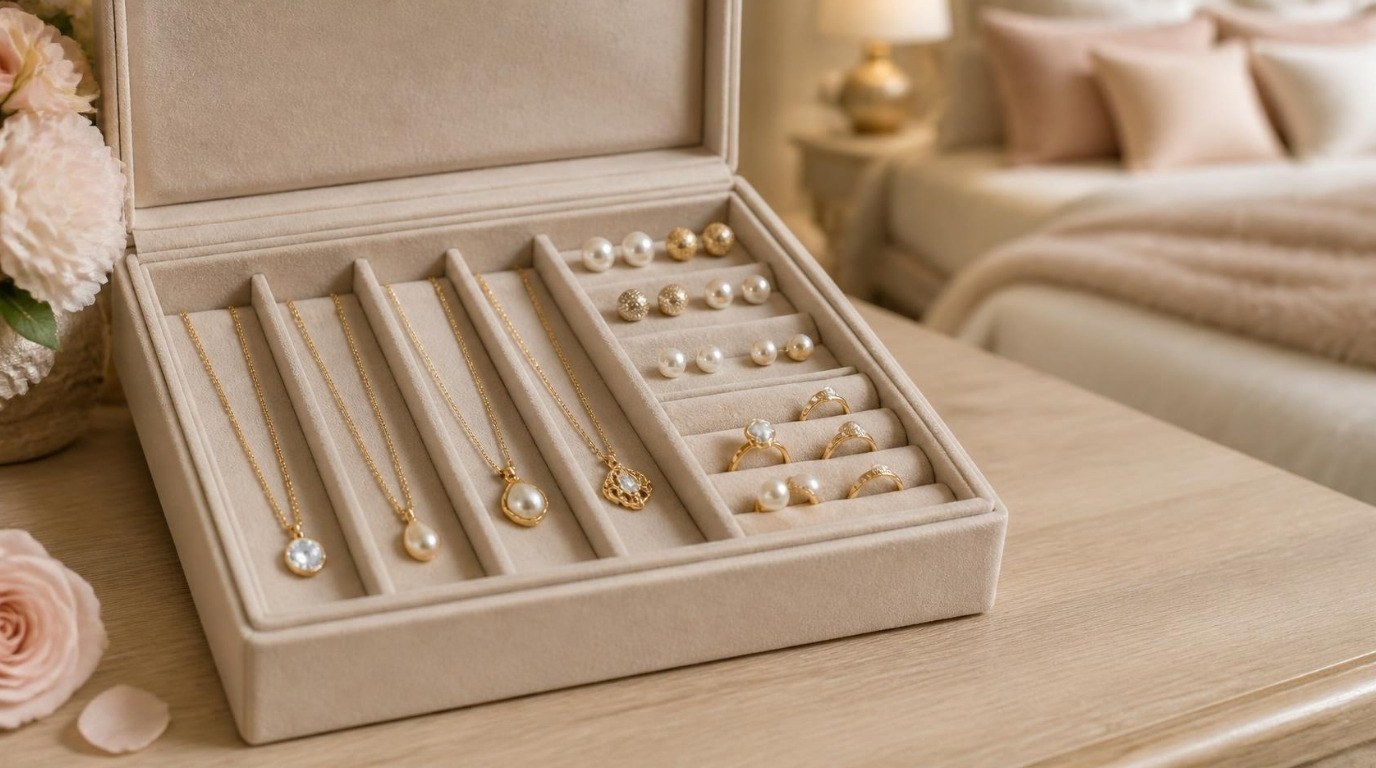
Hooks turn empty walls and the sides of cabinets into storage. Use them for bags, coats, kitchen towels, jewelry, headphones or a robe. Clear adhesive hooks disappear on most walls; check the weight rating on the pack, press firmly for about 30 seconds and wait an hour before hanging anything (or follow the time on the package). To remove them without damaging paint, pull the release tab slowly and straight down, never toward you.
7. Tension Rods
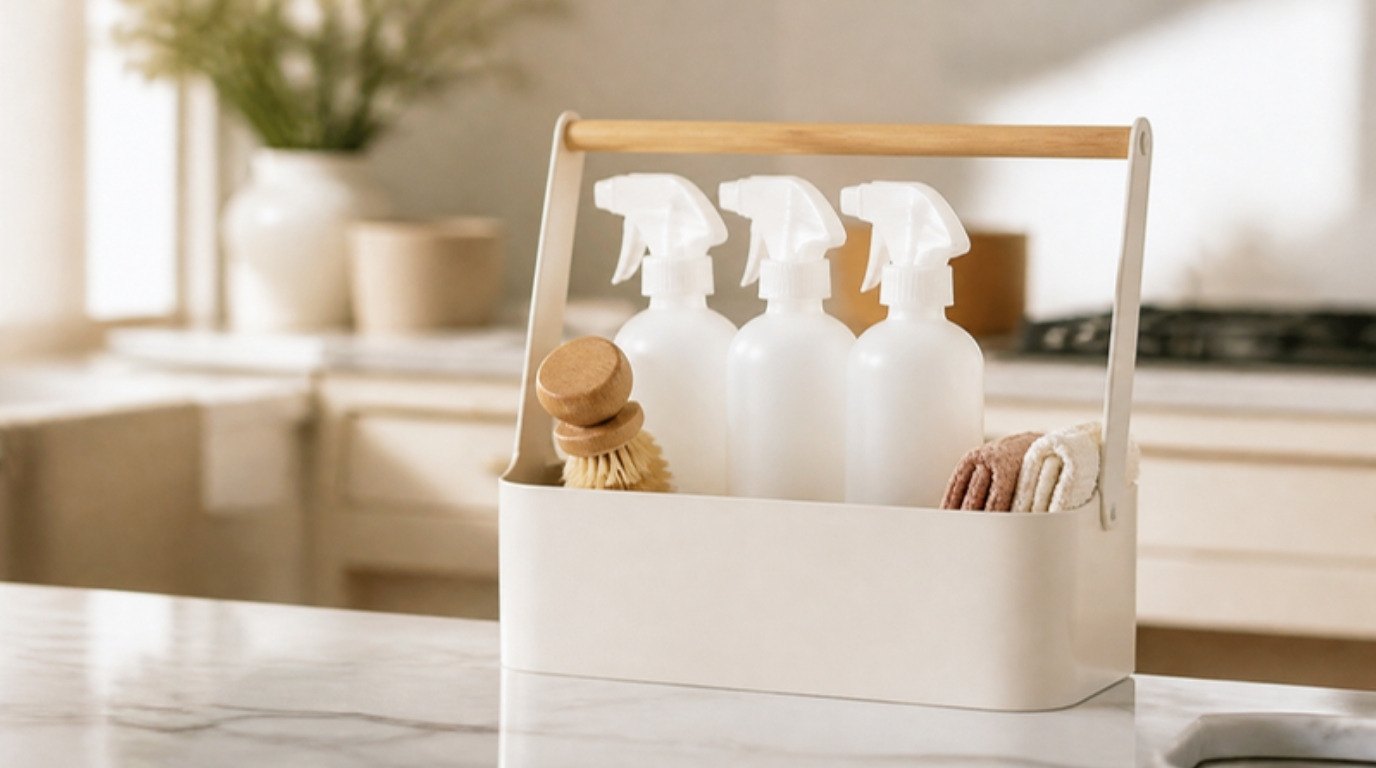
Tension rods are a renter's secret. Put one under the kitchen or bathroom sink to hang spray bottles by their triggers, across a window nook to hang a curtain that hides a mini storage area, inside a cabinet to hold baking trays upright, or inside a shower for an extra spot for a pouf and a towel. They need no tools at all, just twist until they're snug.
8. A Clothing Rail
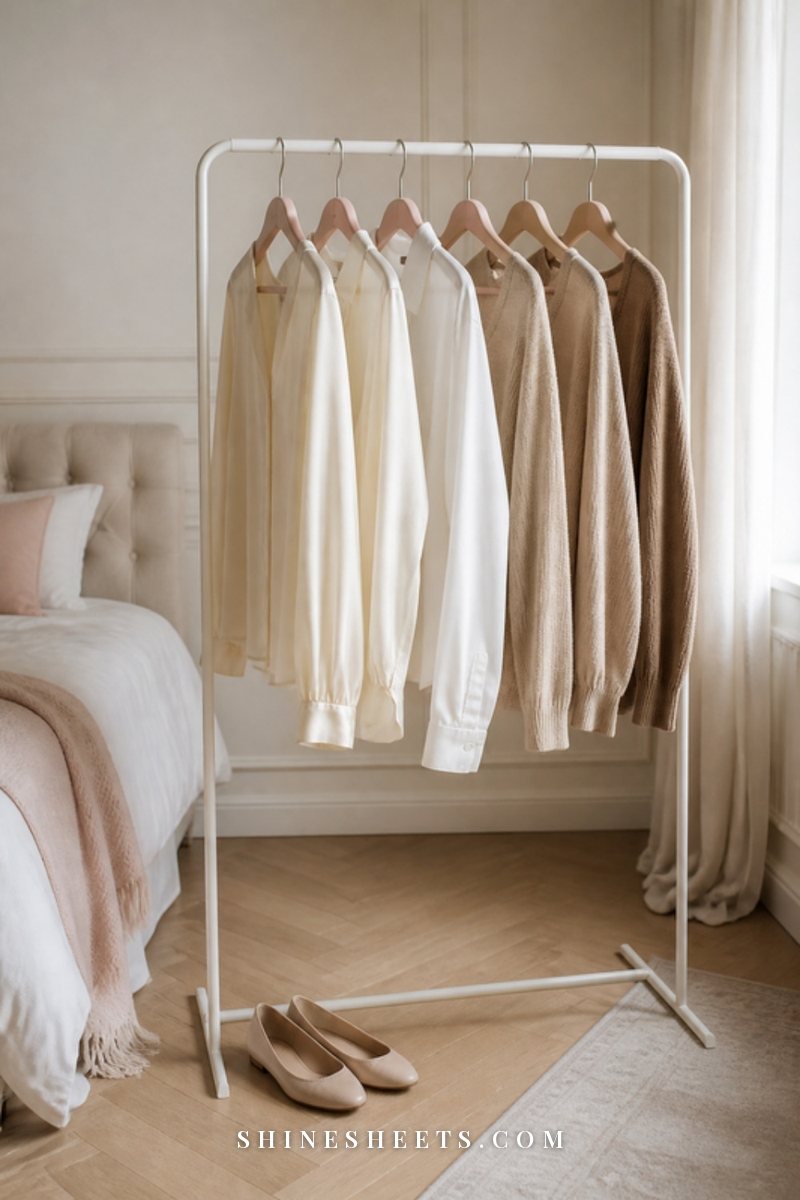
No closet? A clothing rail can become a pretty, intentional part of the room. A white metal garment rack with a bottom shelf gives you hanging space plus a spot for shoes or baskets. Keep it calm with matching hangers and a limited color palette, and add a curtain or folding screen if you'd rather hide it. For more ideas, see my guide to clothes storage without a closet.
9. Baskets on Open Shelves
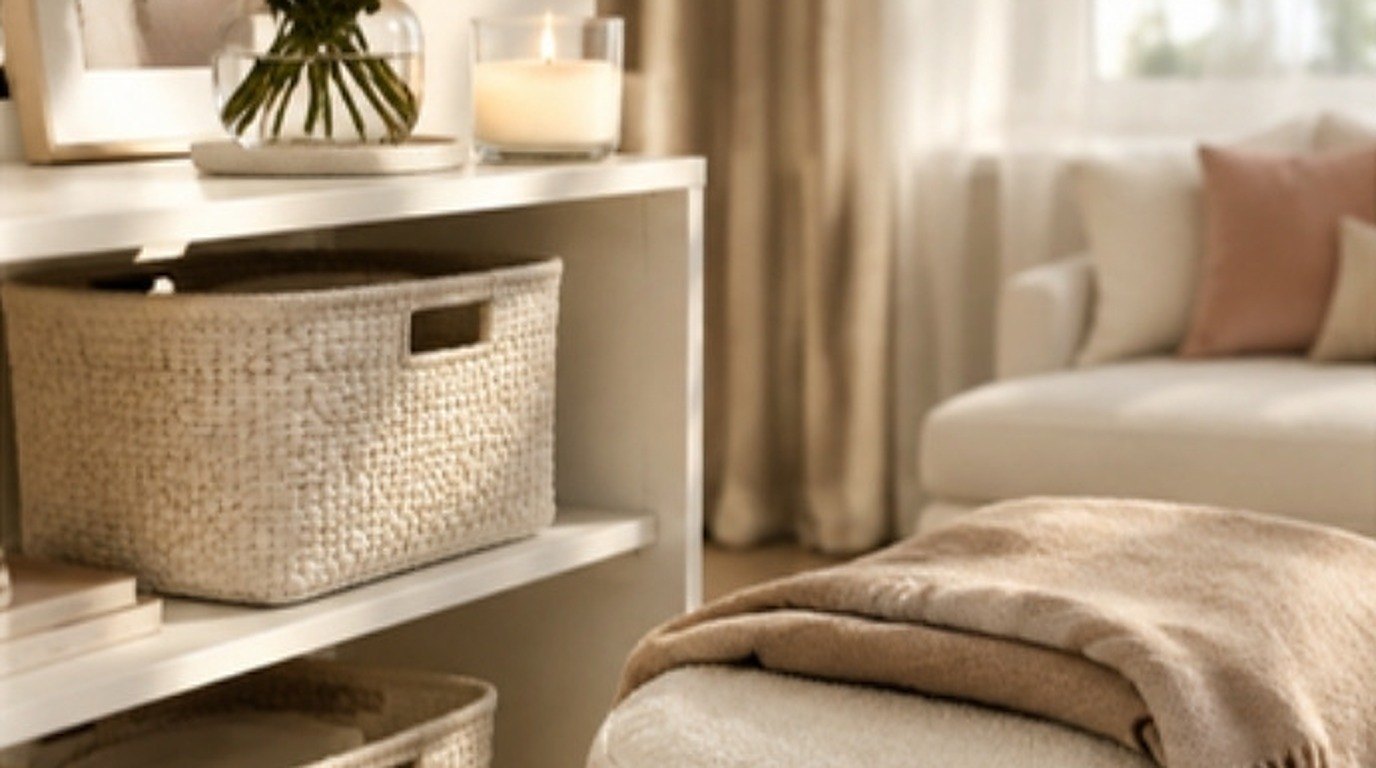
Open shelves look lovely until they're full of small, mismatched things. Baskets fix that instantly: they group little items, hide visual clutter and make shelves look styled instead of stuffed. Cream woven storage baskets in one or two sizes are easy to match. Give each basket one job (chargers, hair accessories, cleaning cloths) so you always know where to look.
10. Furniture With Drawers
When you do replace a piece of furniture, choose one that stores. A nightstand with two drawers instead of an open table, a coffee table with a shelf, a TV unit with doors, a bench with cubbies. You don't need a whole new set – swapping one piece at a time, when something wears out, is the budget-friendly way to build storage into your home.
Room-by-Room Quick Wins
If you only have an afternoon, start with these. Each room has one or two moves that make the biggest difference.
Entryway
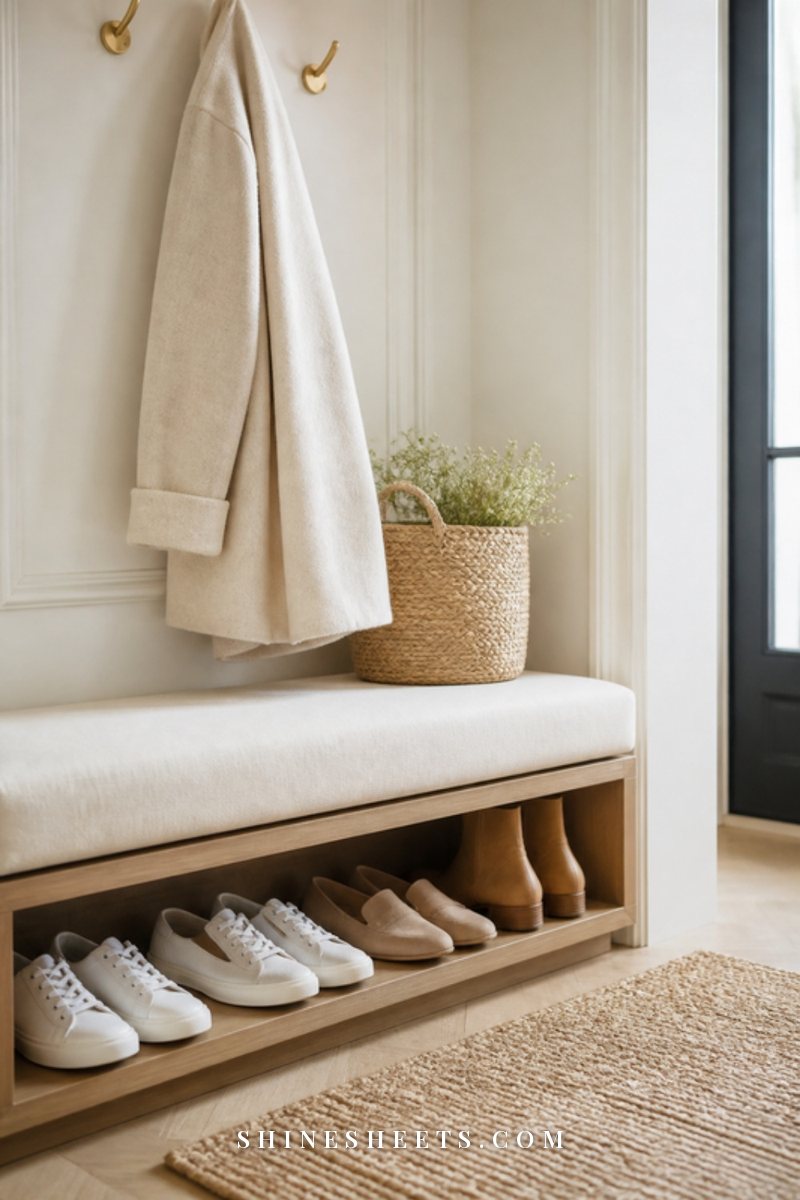
Even a tiny apartment needs a landing spot, or keys, bags and mail end up everywhere. Put two or three adhesive hooks by the door for bags and coats, a basket on the floor for shoes, and a small tray or bowl for keys on the nearest surface. If you have the space, a slim bench with a basket underneath is perfect. My guide to entryway ideas and a drop zone that stays tidy has more ways to set this up.
Kitchen
- Use a rolling cart or a freestanding shelf as a pantry.
- Add a tension rod under the sink for spray bottles.
- Put rarely used items (a big serving platter, holiday dishes) in a lidded basket above the fridge.
- Use hooks on the side of a cabinet for kitchen towels and oven mitts.
- Keep the counter for daily things only, like the kettle and the dish soap.
Bathroom
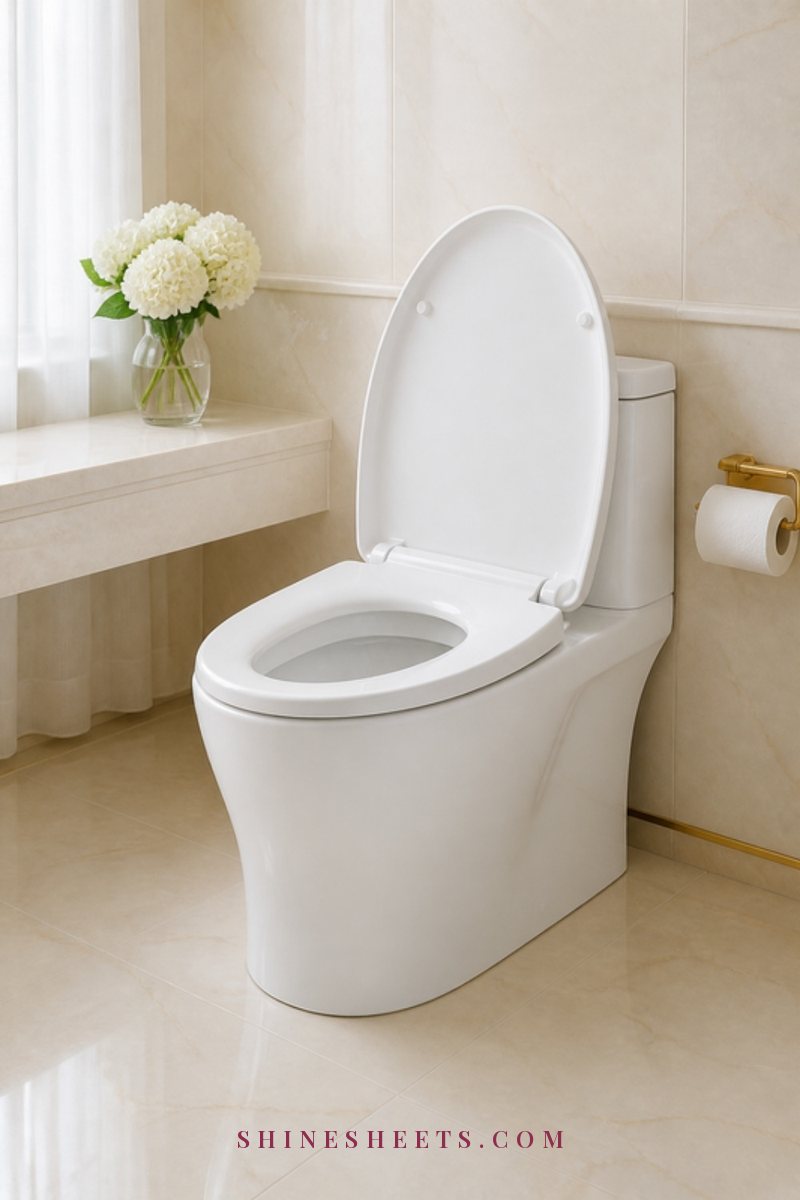
- Add a freestanding over-the-toilet shelf for towels and extras.
- Use an over-the-door organizer for hair products and backup toiletries.
- Put a small basket on the back of the toilet tank for daily skincare.
- Hang a tension rod inside the shower for a second shelf caddy.
- Roll towels instead of folding them; they take less shelf depth.
Bedroom
- Raise the bed and use the space underneath for off-season clothes.
- Choose a nightstand with drawers.
- Hang hooks behind the door for robes and tomorrow's outfit.
- Keep one basket for things that need to go somewhere else, and empty it weekly.
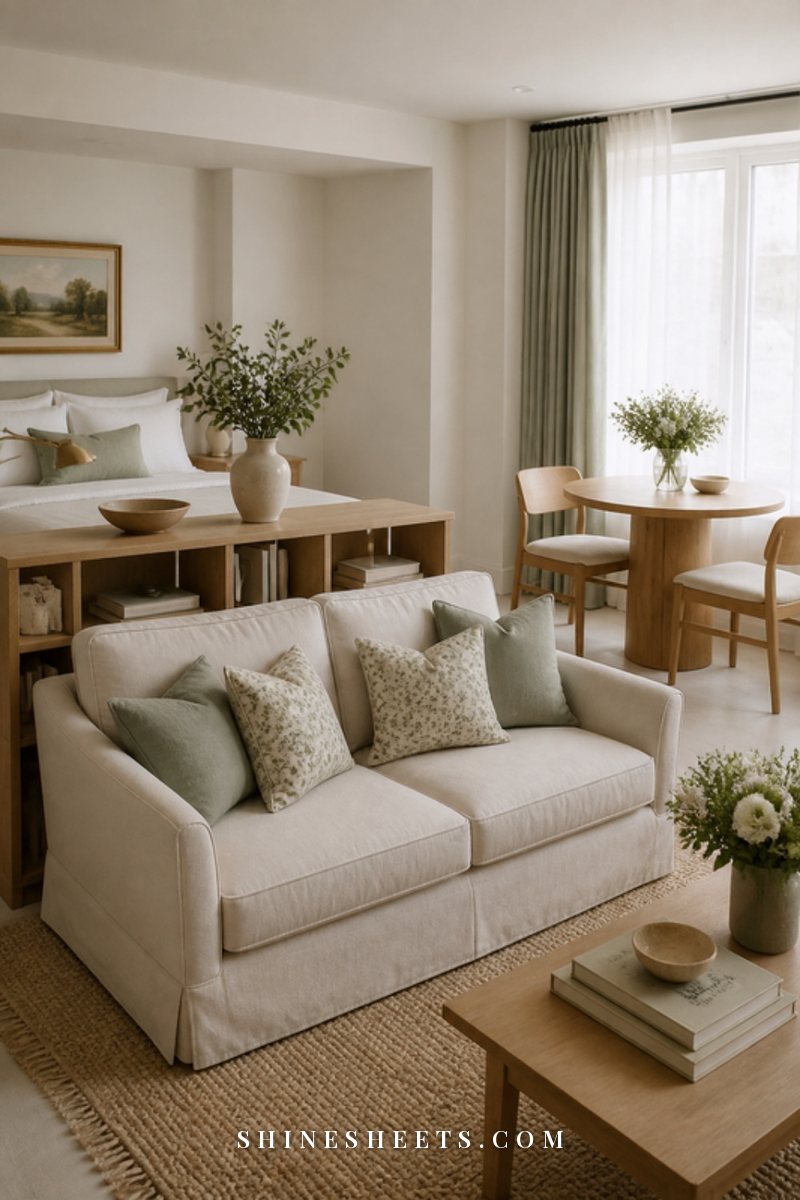
If your apartment is one big room, it helps to think of each area as its own zone (sleep, lounge, eat). My studio apartment layout and decor tips walk through how to divide one room without walls.
The No-Drill Small Apartment Storage Table
Here's the whole plan in one table: the most common small-apartment problems, a no-drill fix and a rough cost so you can plan your budget. Screenshot it and work through one row at a time. Prices vary a lot by store and size, so treat these as ballpark ranges.
| Room | Problem | No-drill solution | Approx. cost |
|---|---|---|---|
| Entryway | Keys, bags and shoes everywhere | Adhesive hooks, a shoe basket and a small key tray | $15–40 |
| Kitchen | No pantry | Freestanding shelf or rolling cart with baskets | $30–80 |
| Kitchen | Messy under-sink cupboard | Tension rod for spray bottles plus one bin | $10–25 |
| Bathroom | No cabinet or tiny vanity | Over-the-toilet shelf and small baskets | $40–90 |
| Bathroom | Toiletries crowding the sink | Over-the-door organizer for backups | $15–30 |
| Bedroom | No closet | Clothing rail with a bottom shelf | $30–80 |
| Bedroom | Nowhere for off-season clothes | Bed risers plus lidded under-bed bins | $25–60 |
| Living room | Throws, cables and remotes on display | Storage ottoman and baskets on open shelves | $40–100 |
| Anywhere | Small items on every surface | One "relocate" basket, emptied weekly | $10–20 (or one you already have) |
How To Keep a Small Apartment Looking Calm
Storage that's full of mismatched bins can still look busy. A few small choices make a small home feel peaceful instead of packed:
- Repeat your containers. The same baskets or bins in two or three sizes look intentional. Different styles look like clutter, even when they're tidy.
- Prefer closed storage for small things. Lids, doors and drawers hide visual noise. Save open shelves for a few pretty things and baskets.
- Stick to a soft palette. Cream, white, beige and natural wood blend into the walls and make the room look bigger.
- Leave some empty space. One clear shelf or an empty corner of the counter gives your eyes a rest. Not every inch needs to be used.
- Reset for five minutes every evening. Put things back in their homes while the kettle boils. It keeps the system working without a big weekly tidy.
I find a glass candle on a cleared surface in the evening does a lot to make a small space feel like a home, not a storage unit.
Small Apartment Organizing on a Budget
You don't need to buy everything at once. Start with the edit (free), then solve your single biggest frustration with one purchase. Look around for things you already own: shoeboxes covered in fabric, a spare basket, jars for small items, a tray for the dresser. Buy organizers only after you've measured the space and decided exactly what will go in them.
A simple order that works for most people: edit first, then hooks and tension rods (the cheapest wins), then one larger piece like a shelf, rail or bed risers, then baskets to make everything match. Spread it over a few weeks and it never feels overwhelming.
Small Apartment Organizing Mistakes To Avoid
A few common habits make small spaces feel smaller. If your apartment still feels crowded after you've organized, check for these:
- Buying organizers before editing. Bins full of things you don't use are still clutter, just in a box. Edit first, measure second, shop last.
- Filling every wall. Vertical storage is wonderful, but a wall covered in shelves and hooks feels heavy. Choose one or two walls to work hard and let the others breathe.
- Using the floor as storage. Piles on the floor make a room feel tiny. If something lives on the floor, give it a basket or a rolling bin so it has edges.
- Keeping "just in case" duplicates. Three spatulas, five water bottles, a drawer of spare cables. Keep the best one or two of each and let the rest go.
- Forgetting about access. If it takes three steps to reach something you use daily, you'll stop putting it away. Daily things need the easiest spots, even if that means moving something pretty to a higher shelf.
- Trying to finish in one weekend. A small apartment changes slowly, as you notice what actually bothers you. It's fine to live with a fix for a week before deciding what comes next.
Be patient with the process. Every apartment has a rhythm, and the best system is the one that fits how you really live, not how a photo looks.
Final Thoughts
A small apartment with no storage can still be a calm, beautiful place to live. It just asks you to keep fewer things, give every one of them a home and look at walls, doors and the space under the bed as the closets they secretly are.
Start with one honest edit and one corner. Every small fix makes the next one easier, and before long your little space will feel like exactly enough.