Decluttering rarely gets stuck on the big decisions. It gets stuck on one sweater, one candle holder, one box of cables you're holding in your hands, feeling vaguely guilty and not sure why. That's the moment a good question helps more than any method or rule.
Questions slow things down in the best way. They give guilt, impulse and "but what if" a minute to settle, so you can make a calm choice instead of a rushed one. And because you answer them yourself, the decision feels like yours, not like something a decluttering expert told you to do.
This guide is all about decluttering questions: 25 gentle, practical questions to ask while you're holding a single item, grouped by what's really going on (use, love, space, duplicates, guilt and money, sentiment and your future self). You'll also find a table that tells you what each answer means and what to do next, a simple way to use the questions without burning out, and where things can go once you've decided.
If you're still choosing an overall approach, my guide to decluttering methods compares the big systems side by side. This article is the part that comes after: the item in your hand.
Why Decluttering Questions Work Better Than Rules
Rules like "toss anything you haven't used in a year" are tidy on paper, but real life is messier. A winter coat you skipped last year because the winter was mild is not the same as a bread maker that's been sitting in its box for three years.
Questions work because they meet each item where it is. They help in three quiet ways:
- They slow down guilt. Instead of "I should keep this because it was a gift," you get to ask what the gift was really for.
- They slow down impulse. On a motivated day it's easy to toss things you'll miss. A question gives you a breath before you decide.
- They build trust in yourself. Every honest answer makes the next decision a little easier. By the end of a drawer, you'll notice you're deciding faster.
I'm prone to anxiety, and I've noticed that clutter decisions can feel strangely heavy for something as small as a mug. Asking one calm question at a time takes the pressure off. You don't have to decide about the whole house. Just this one thing.
25 Decluttering Questions To Ask Before You Keep Something
You don't need to ask all 25 about every item. Pick the group that fits what you're holding. If something is useful but you're not sure you love it, go to the love questions. If it's sentimental, skip straight to sentiment. One or two good questions are usually enough.
Questions About Use
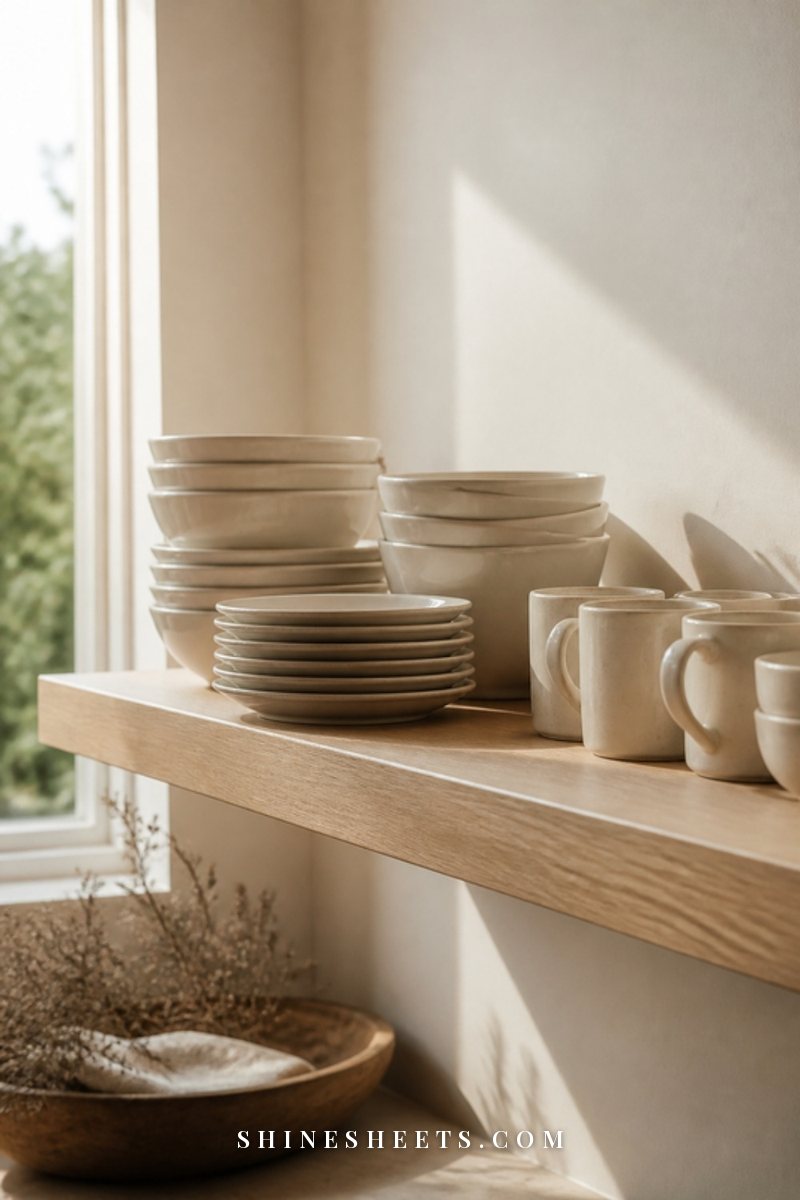
Start here with anything practical: kitchen tools, cleaning supplies, gadgets, bags, shoes.
- When did I last use it? Be specific. "Last month" or "two summers ago" tells you far more than "sometimes."
- Would I notice if it disappeared tomorrow? If the honest answer is no, it's not really doing a job in your home.
- Does it still work the way it should? Broken, missing parts, stretched out or stained counts as no.
- Is it waiting for a project I keep postponing? If the project has waited longer than a year, it may be time to let both go.
Questions About Love

Useful isn't the only good reason to keep something. Beautiful, comforting and joyful are reasons too. These questions help you tell real love from habit.
- Would I buy it again today, at full price? This is the most honest question on the list. If you'd walk past it in a shop now, you may be keeping it out of habit.
- Do I feel good when I reach for it or see it? Notice your body. A small lift means yes. A slight sigh means something else.
- Am I keeping it for who I am, or for who I was years ago? Your taste is allowed to change.
- If a friend offered me this, would I say yes? Looking at it as something new strips away the guilt of already owning it.
Questions About Space
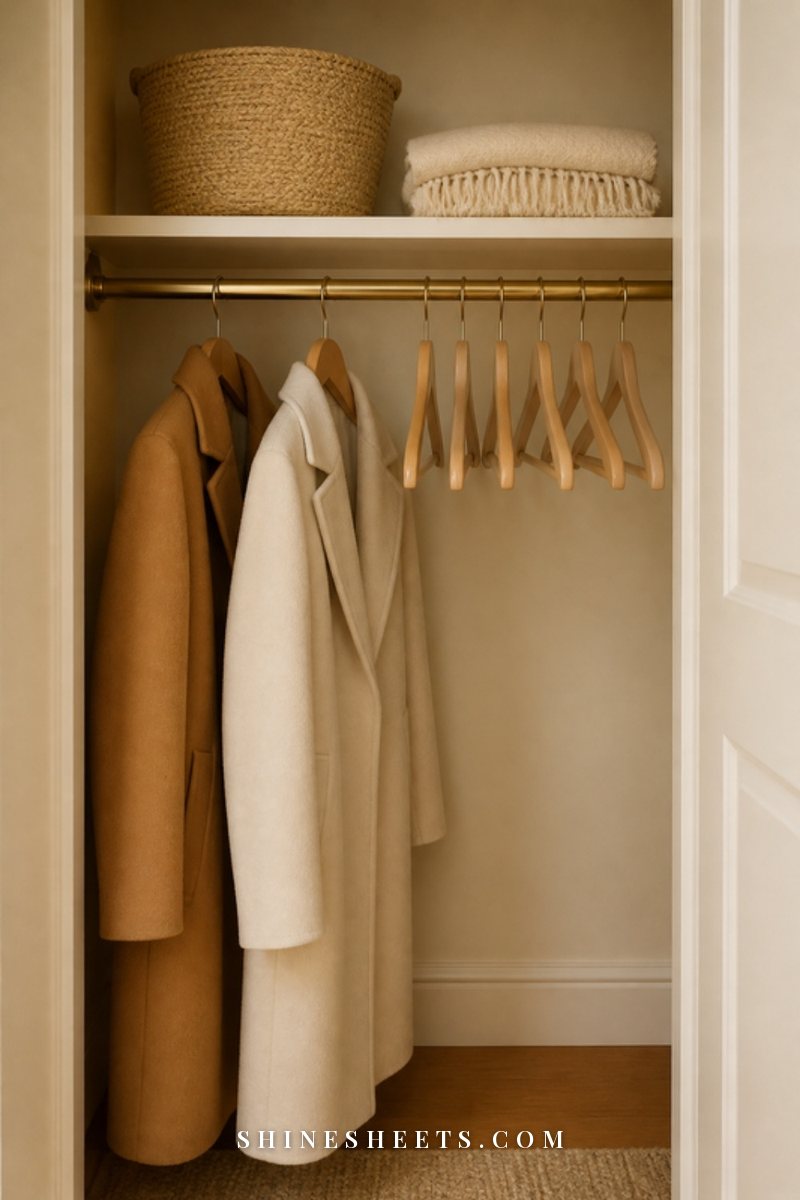
Every home has a limit, and space is a resource just like time and money. These questions are especially helpful in small apartments.
- Do I have a real home for it? Not "on the chair for now," but a spot where it belongs and can be put back easily.
- Is it taking space from something I reach for more? A bulky item in prime storage can push everyday things into piles.
- Would this space feel calmer without it? Picture the shelf or corner empty. If you feel relief, that's your answer.
Questions About Duplicates
Duplicates sneak in quietly: five black pens that all skip, three spatulas, a drawer of nearly identical tote bags.
- Do I own a better one? If yes, the better one wins. Keep your favorite and let the rest go.
- How many of these do I actually use in a normal week? That number, plus maybe one spare, is usually enough.
- Am I keeping extras "just in case"? If the "case" hasn't happened in a year, the extras are probably costing you more space than they're worth.
Questions About Guilt and Money
This is often the hardest group, because the item isn't the problem. The feeling is. Be extra gentle with yourself here.
- Am I keeping it only because it cost a lot? The money is already spent. Keeping the item doesn't bring it back, but letting it go can give you back the space.
- Am I keeping it because someone gave it to me? A gift's job is done once it's been given with love. You're allowed to release the object and keep the kindness.
- Am I afraid I'll need it later? Ask yourself how easy it would be to borrow or replace it. For most everyday things, the answer is "very."
- Am I holding on to avoid the feeling of waste? Passing it to someone who will use it is the opposite of waste.
Questions About Sentiment
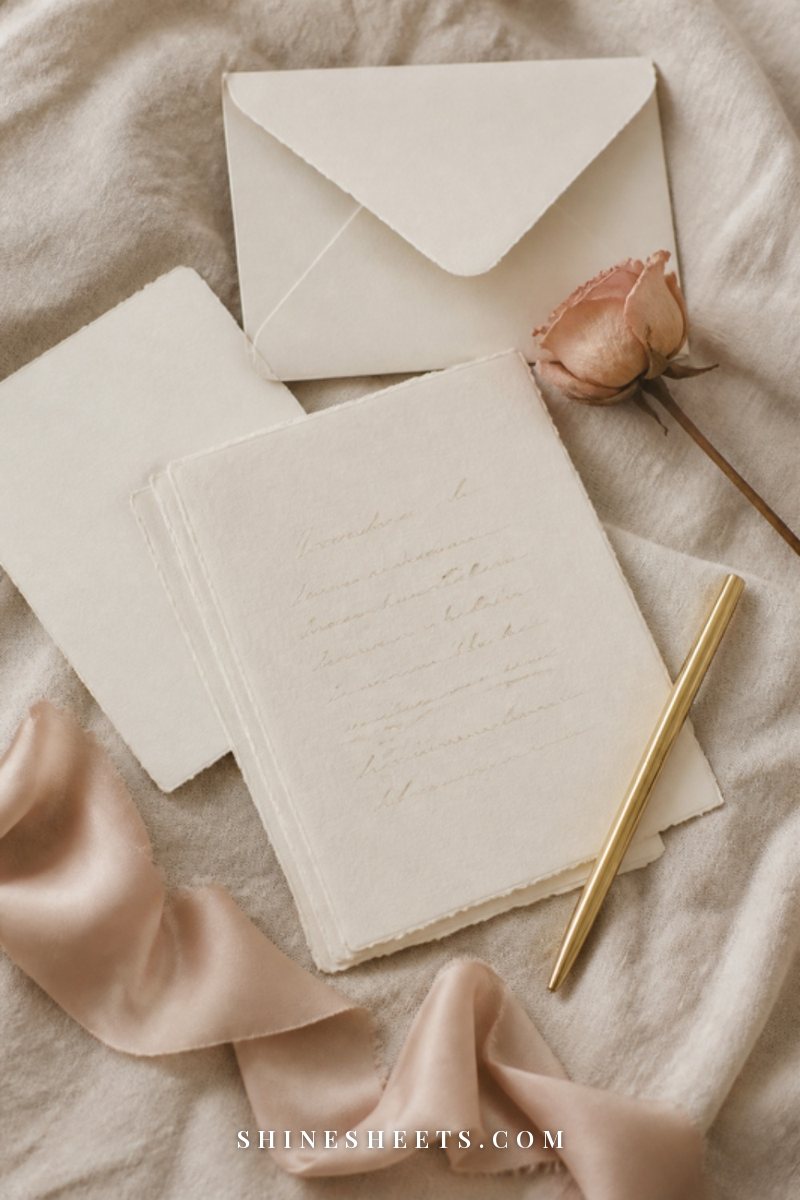
Sentimental items deserve their own pace. Never start with these. Save them for when your decision muscles are warmed up, and if you'd like a gentler, deeper approach, my guide on decluttering sentimental items without guilt goes step by step.
- Would a photo hold the memory just as well? Often it's the memory you want, not the object. A photo takes up no shelf space.
- Is this the best piece of this memory, or one of many? Keep the one that tells the story best, like one ticket from a trip instead of the whole folder.
- Would I display it or use it, or will it stay in a box? Treasures in a box you never open can't bring you much joy. Choose a few to keep where you can see them.
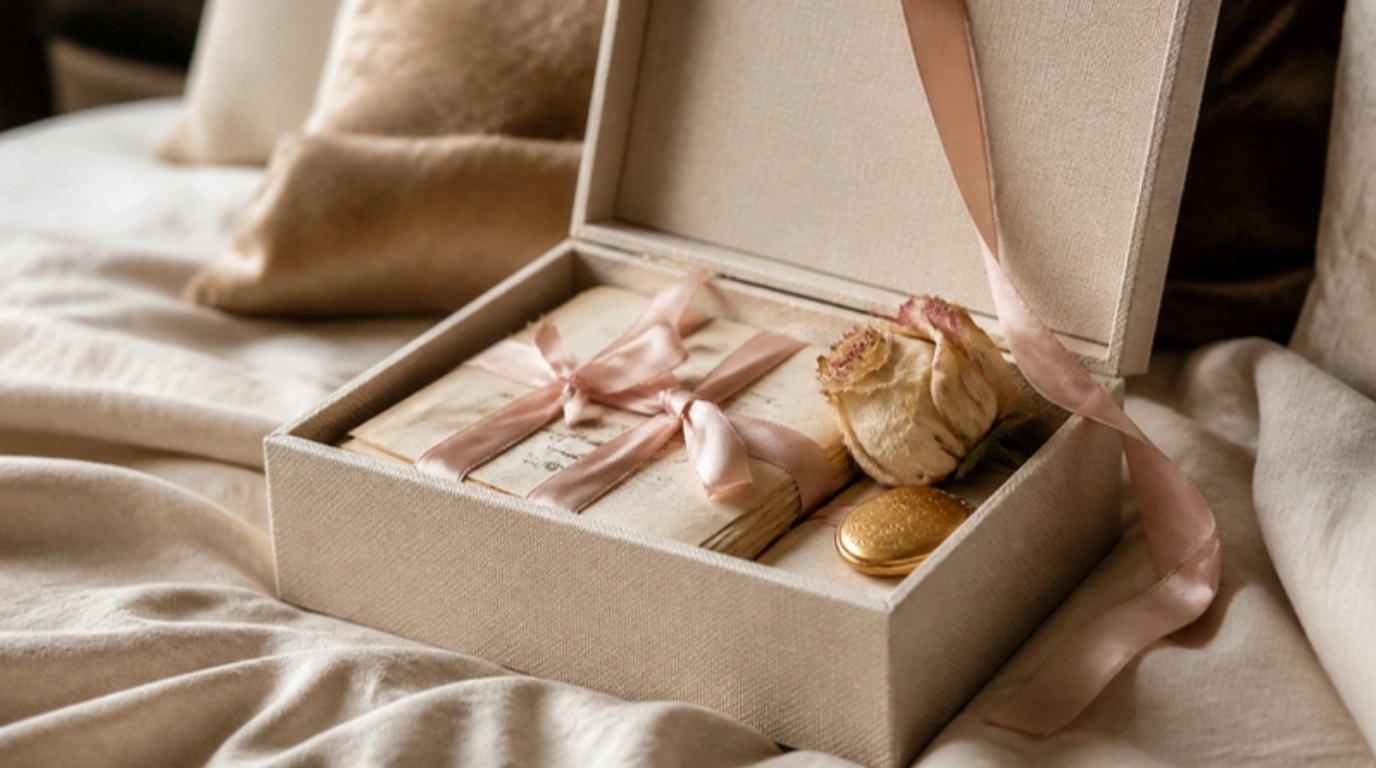
For the pieces that truly matter, one pretty keepsake memory box gives them a special home. When the box is full, that's your gentle limit.
Questions About Your Future Self
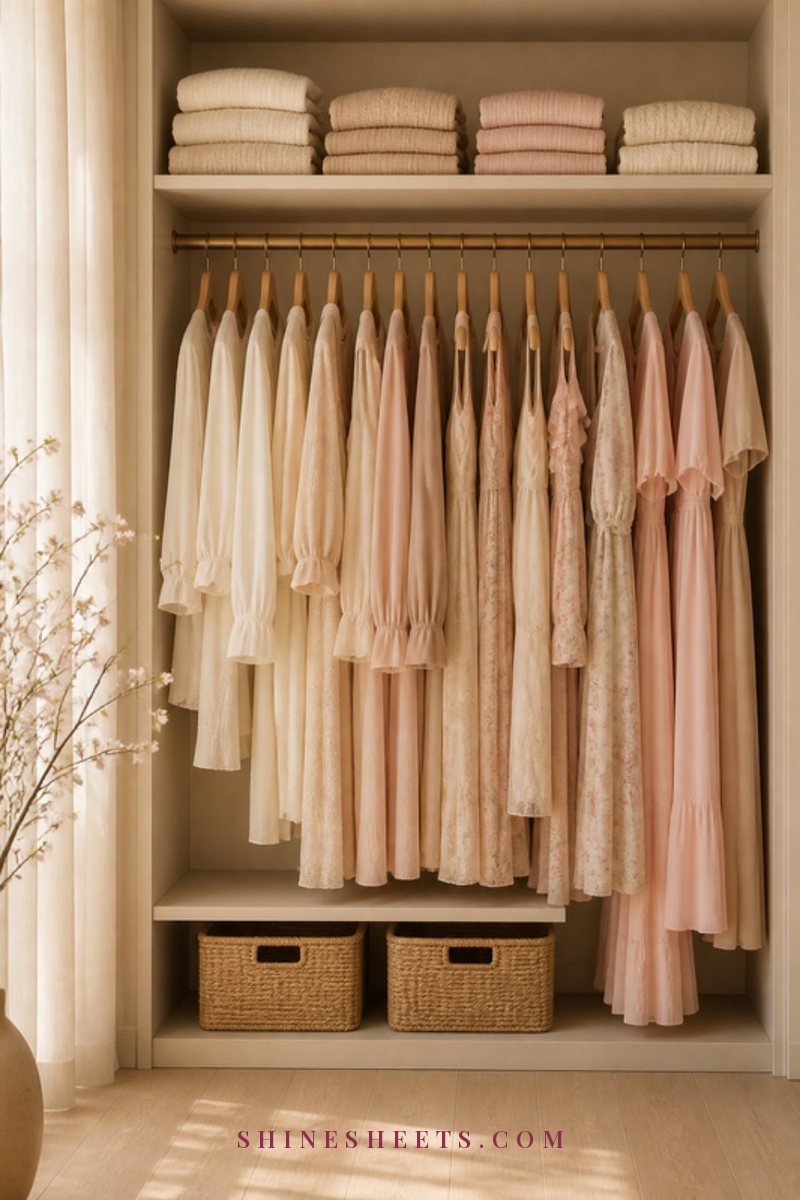
These are the questions that quietly change how you shop, too.
- Is this for my real life or an imagined one? The dress for parties you don't go to, the equipment for a hobby you don't enjoy. Your real life deserves the space.
- Will I realistically use it in the next six months? Seasonal items count, if you actually use them each season.
- Would my future self thank me for keeping this, or for letting it go? Imagine moving house next year. Would you pack it?
- Does it fit the home and life I'm building? Not perfect, just headed in the right direction.
Clothes bring up these questions more than anything else. If your closet is your biggest challenge, my calm method for decluttering your wardrobe pairs well with this list.
Decluttering Questions Table: What Your Answer Means
Sometimes you know the answer but not what to do with it. This table turns the most useful questions into a clear next step. Screenshot it and keep it on your phone while you sort:
| Question | What a yes means | What a no means | Next step |
|---|---|---|---|
| Have I reached for it in the last year? | It has a real job in your home | It's likely not part of your life right now | Yes: keep and give it a home. No: donate, or put it in the maybe box |
| Would I buy it again today? | You still value it | You're keeping it out of habit or guilt | Yes: keep. No: pass it on to someone who'd choose it |
| Do I have a real home for it? | It can live here without causing clutter | It will keep ending up in piles | Yes: put it back now. No: make room or let it go |
| Do I own a better one? | This one is a spare | This may be your best version | Yes: keep the better one, donate this. No: keep it |
| Am I keeping it only because it cost a lot? | Money guilt is making the decision | You have a real reason to keep it | Yes: sell it or pass it on. No: keep with a clear conscience |
| Would a photo hold the memory? | The memory matters more than the object | The object itself is the treasure | Yes: photograph, then release. No: keep it somewhere you'll see it |
| Is this for my real life? | It supports how you actually live | It belongs to an imagined version of you | Yes: keep. No: let it go and make room for your real life |
Notice that a "no" never means you failed. It only means the item has finished its job with you.
How To Use These Questions Without Burning Out
Asking good questions is tiring if you try to answer hundreds of them in one afternoon. Decision fatigue is real, and it's the reason so many decluttering days end with everything shoved back into the closet. Three habits keep it light.
Work on One Area at a Time
Choose a space small enough to finish in 20 to 30 minutes: one drawer, one shelf, one bag. Empty it, ask your questions, put back only the keepers, and stop. A finished drawer feels wonderful. A half-sorted bedroom feels like a disaster.
If you'd like a gentle structure, the 30-day declutter challenge gives you one small area a day, which is a lovely fit for these questions.
Before you start, set yourself up with a few simple tools: a pad of pastel sticky notes for marking decisions on bigger pieces, and a bag or basket for each destination so nothing ends up back on the floor.
Use a Maybe Box With a Date
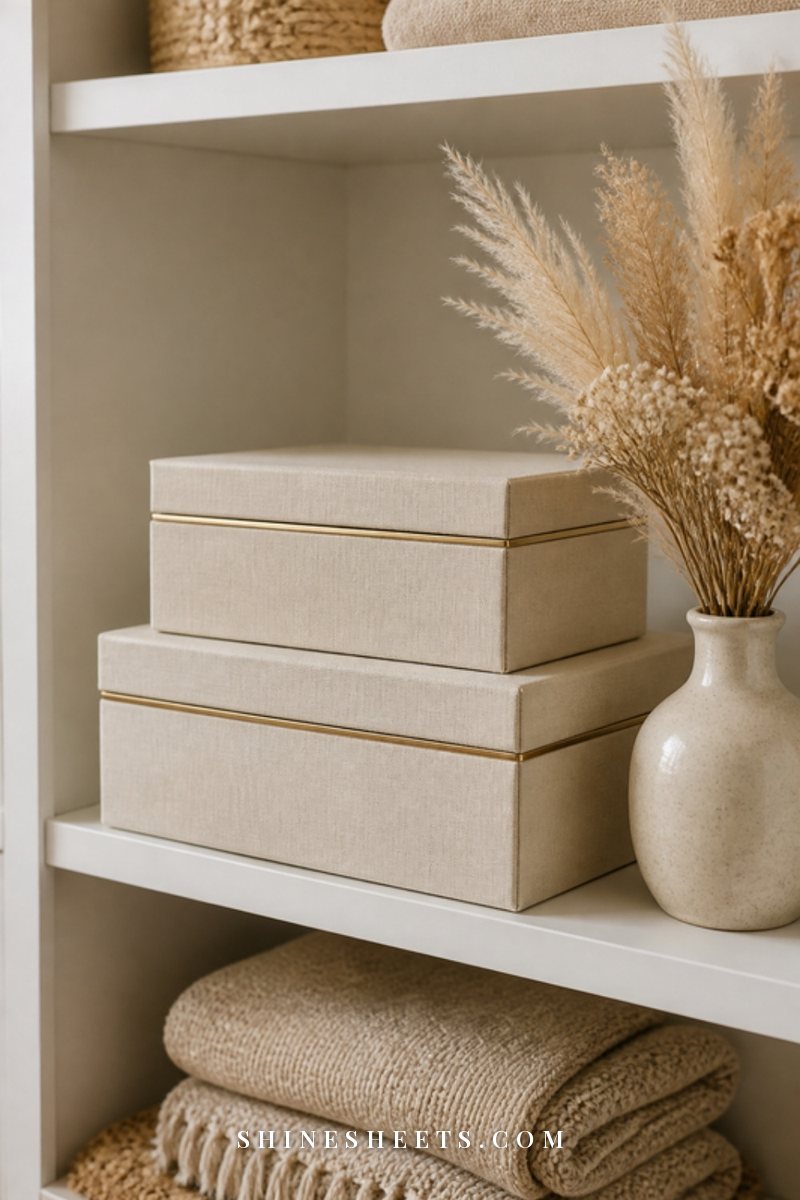
Some items just won't give you a clear answer, and that's okay. Put them in a "maybe" box instead of forcing a decision.
- Place the unsure items in one box and close the lid.
- Write the date on a sticky note, about three months from today, and stick it on top.
- Store the box somewhere out of the way, like a closet top shelf.
- When the date arrives, open it. Anything you didn't miss or go looking for can go without a second round of questions.
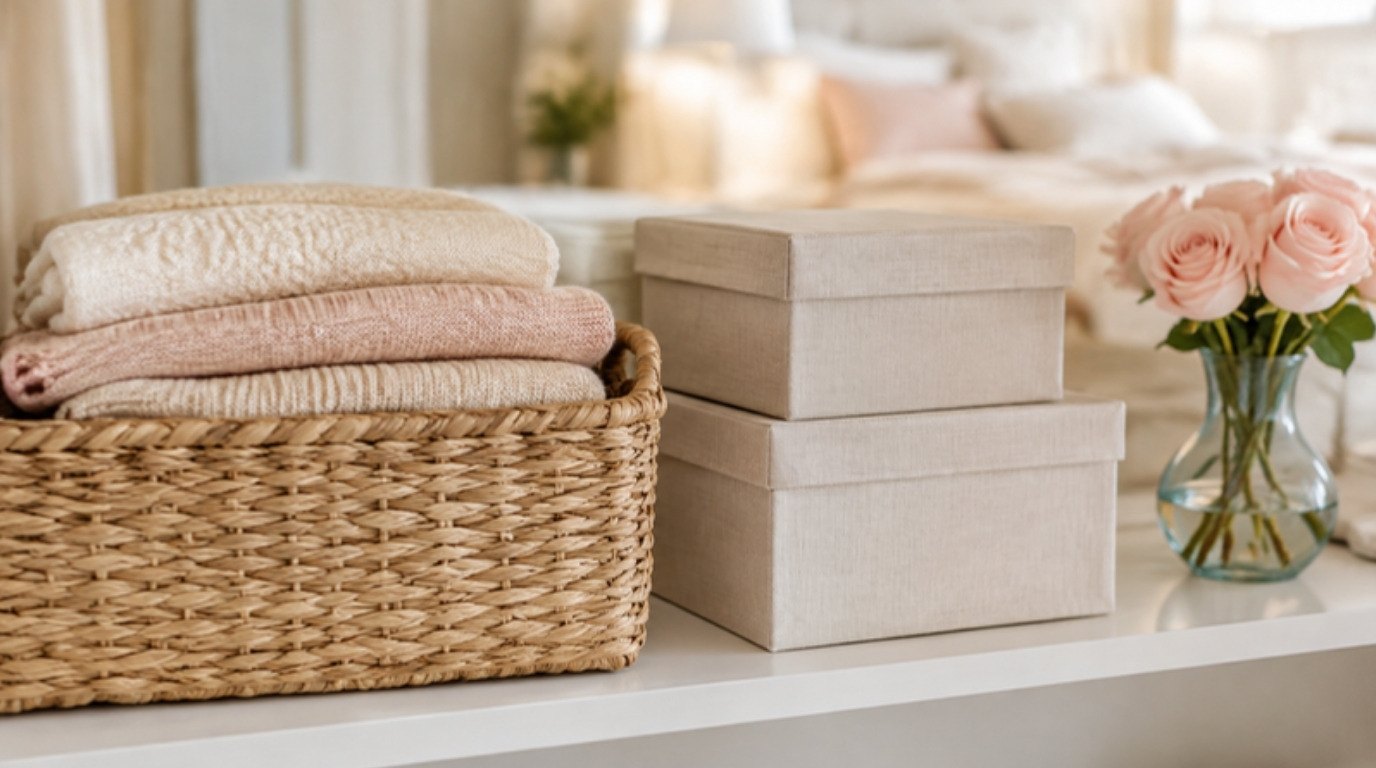
A set of cream fabric storage boxes with lids works beautifully for this and looks calm on an open shelf. If you like everything clearly marked, a small white label maker makes it easy to label the maybe box and the keepers you've sorted, so they stay where they belong.
Talk to Yourself Kindly
The way you speak to yourself during decluttering matters more than people think. "Why did I ever buy this?" turns every item into proof that you made a mistake. Try softer phrases instead:
- "This was right for me once, and that's okay."
- "I'm making room for the things that fit my life now."
- "Letting go of this isn't letting go of the memory."
- "I'm allowed to change my mind."
If decluttering brings up a lot of sadness or anxiety, or letting go of anything feels truly distressing, take a break. You can also talk to a therapist, who can help you untangle the feelings tied to things. There's nothing to be embarrassed about.
Know When To Stop for the Day
The best decluttering sessions end before you're exhausted. Your answers get less honest when you're tired, and that's when you either keep everything or toss things you'll miss. Watch for these four signs that it's time to put the lid on the box:
- You're answering "I don't know" to almost every question.
- You feel irritated, teary or rushed, even with easy items.
- You've started making piles without deciding what they're for.
- You're more than about 45 minutes in without a break.
When you notice one of them, finish the item in your hand, take the donation bag to the car or the door, and stop. A short, calm session you'll happily repeat tomorrow beats one long marathon that leaves you never wanting to open a drawer again. I like to end with an evening cup of tea and a few lines in my journal about what felt easy, which makes the next session feel a little more inviting.
Where Decluttered Things Can Go

Knowing where items will go makes letting go much easier. Before you start, set up four simple destinations:
- Donate. Clothes, books, kitchenware and home decor in good condition can go to charity shops, shelters or community groups. Check what they accept first, since many don't take broken or stained items. Keep a woven donation basket by the door and drop it off as soon as it's full, so it doesn't turn into new clutter.
- Sell. Worth it for furniture, designer bags, electronics and anything with real resale value. Give yourself a deadline, such as two weeks. If it hasn't sold by then, donate it.
- Recycle. Paper, cardboard, most glass and many plastics can be recycled. Old electronics and batteries need special drop-off points, so check your local rules.
- Pass on. Friends, family, neighbors or local giving groups. It's lovely to know your things are going to someone who'll use them, but only offer, never insist.
Truly worn-out items (torn, moldy, broken beyond repair) can simply go in the trash. You don't have to find a perfect new home for everything.
A Gentle Note for Shared Homes
The questions in this article are for your own things. It's tempting, once you get into the rhythm, to start eyeing someone else's pile of stuff. Please don't decide for them. Clearing out another person's belongings, even with good intentions, can feel like a real betrayal.
In a shared home, focus on your own spaces first. Calm, uncluttered corners tend to inspire people far more than suggestions do. For shared areas like the kitchen or the living room, decide together, item by item, and agree on a simple limit, like one shelf each.
If you're helping an older relative sort through a lifetime of belongings, the slow, kind approach of Swedish death cleaning is a beautiful way to do it together, with their choices leading the way.
Final Thoughts
Decluttering isn't about owning as little as possible or proving anything to anyone. It's about making room for the life you actually live, one honest question and one item at a time.
Start small, use the maybe box when you need it, and speak to yourself the way you'd speak to a friend. Every decision makes the next one easier, and before long your home will feel lighter, calmer and much more like you.