Letting go of a sentimental item is never really about the item. It's about the memory, the person or the version of you it represents, and the quiet fear that without the object, the memory will fade too. That's why the usual "does it spark joy?" approach often falls apart with keepsakes. You need a gentler method, one that honors the feelings instead of rushing past them.
Here's what helps: memories live in you, not in the box. The goal isn't to keep as little as possible. It's to keep the things that truly carry meaning, store them well enough that you can actually enjoy them, and release the rest without guilt.
This guide walks you through how to declutter sentimental items step by step: why it's so emotional, when to start, how container limits make decisions easier, the questions that help you choose, ways to keep a memory without keeping the object, handling things from someone who has died, kids' artwork, gifts you don't love, and where everything can go. There's also a decision table you can come back to whenever you're stuck on a single item.
Go slowly. There's no deadline here.
Why Sentimental Items Are So Hard To Let Go
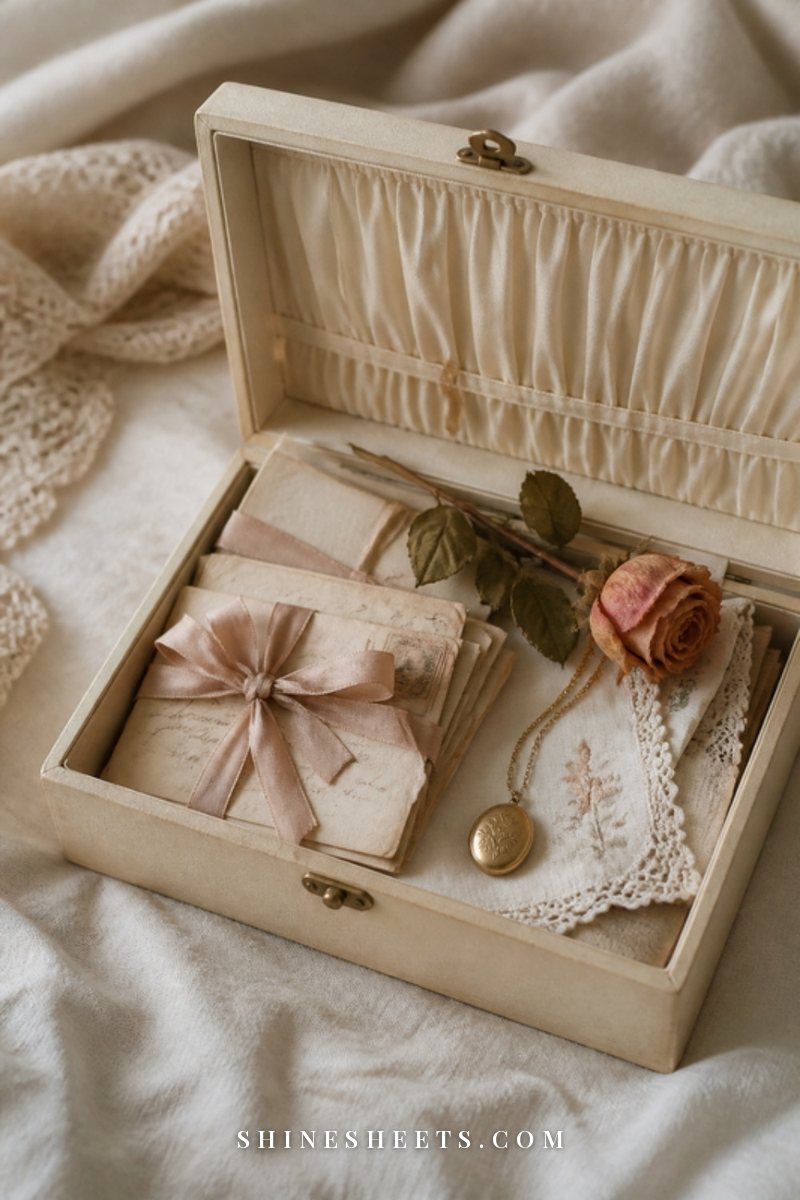
Sentimental clutter is different from a drawer of old chargers. A few reasons it feels so heavy:
- It feels like letting go of a person. A sweater that belonged to your grandmother can feel like a piece of her, so donating it can feel like a betrayal.
- Guilt about gifts. Someone chose it for you, so passing it on feels ungrateful, even if you never liked it.
- Fear of forgetting. The object works as a memory trigger, and you worry the memory will go with it.
- Who you used to be. Old journals, trophies and concert tickets hold earlier versions of you, and it's tender to look at them.
- "Someday" thinking. Maybe your kids will want it, maybe you'll make something with it, maybe you'll need it to remember.
All of these feelings are valid. You don't have to argue yourself out of them. The method below simply helps you make decisions while respecting them. Small honest admission: I can get a little anxious when a decision feels permanent, so I've learned to build in "maybe" steps that take the pressure off. You'll see them throughout.
Start With Everything Else First
Sentimental items should be the very last category you declutter, not the first. Starting with keepsakes is like running a marathon on your first day of training: you'll get exhausted and stuck before you've built any decision-making muscle.
Begin with easy, low-emotion categories: expired products, duplicate kitchen tools, clothes you never wear, old paperwork. Each easy decision builds confidence and helps you recognize what "enough" feels like. If you're working through the whole house, my step-by-step guide to decluttering your home gives you a full order to follow, and clearing out your closet first with these tips on how to declutter your wardrobe is a great warm-up.
When you finally reach the sentimental pile, you'll be surprised how much clearer you feel about it.
Set a Container Limit
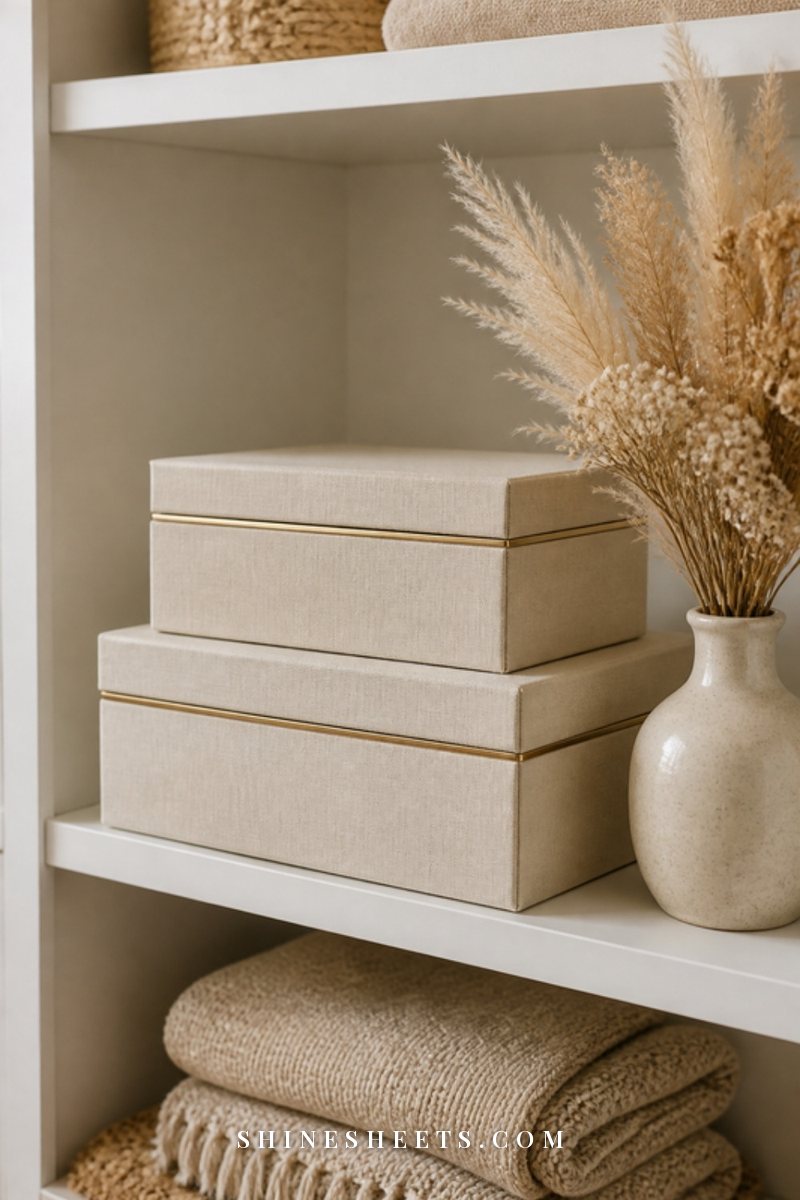
The single most helpful tool for sentimental decluttering is a container limit. Instead of asking "should I keep this?" for every item (which is exhausting), you decide in advance how much space your keepsakes get, then fill it with your favorites.
A container limit works because it turns an emotional question into a practical one. You're not throwing memories away; you're choosing which ones get the best spot.
How to set one:
- Choose a container size that feels generous but finite: one or two keepsake boxes per person, or one shelf in a closet.
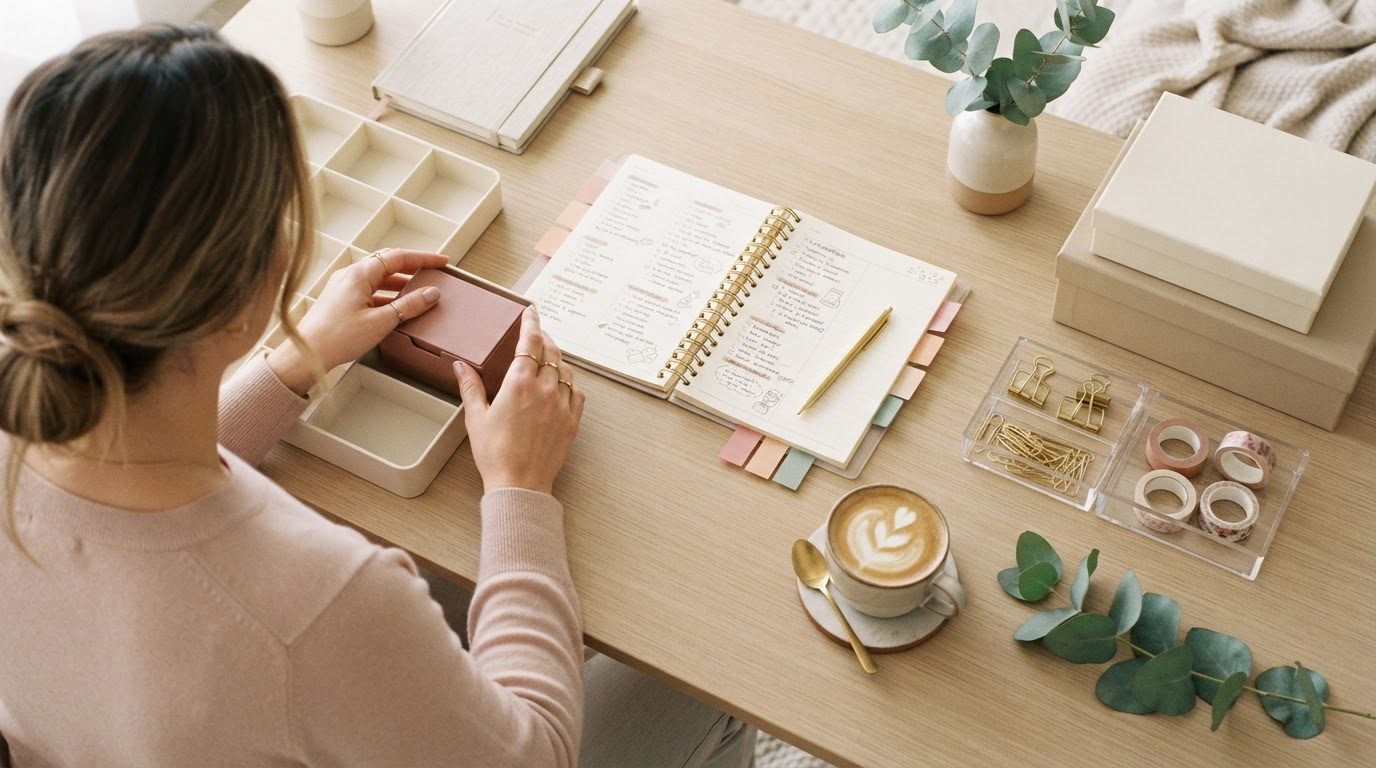
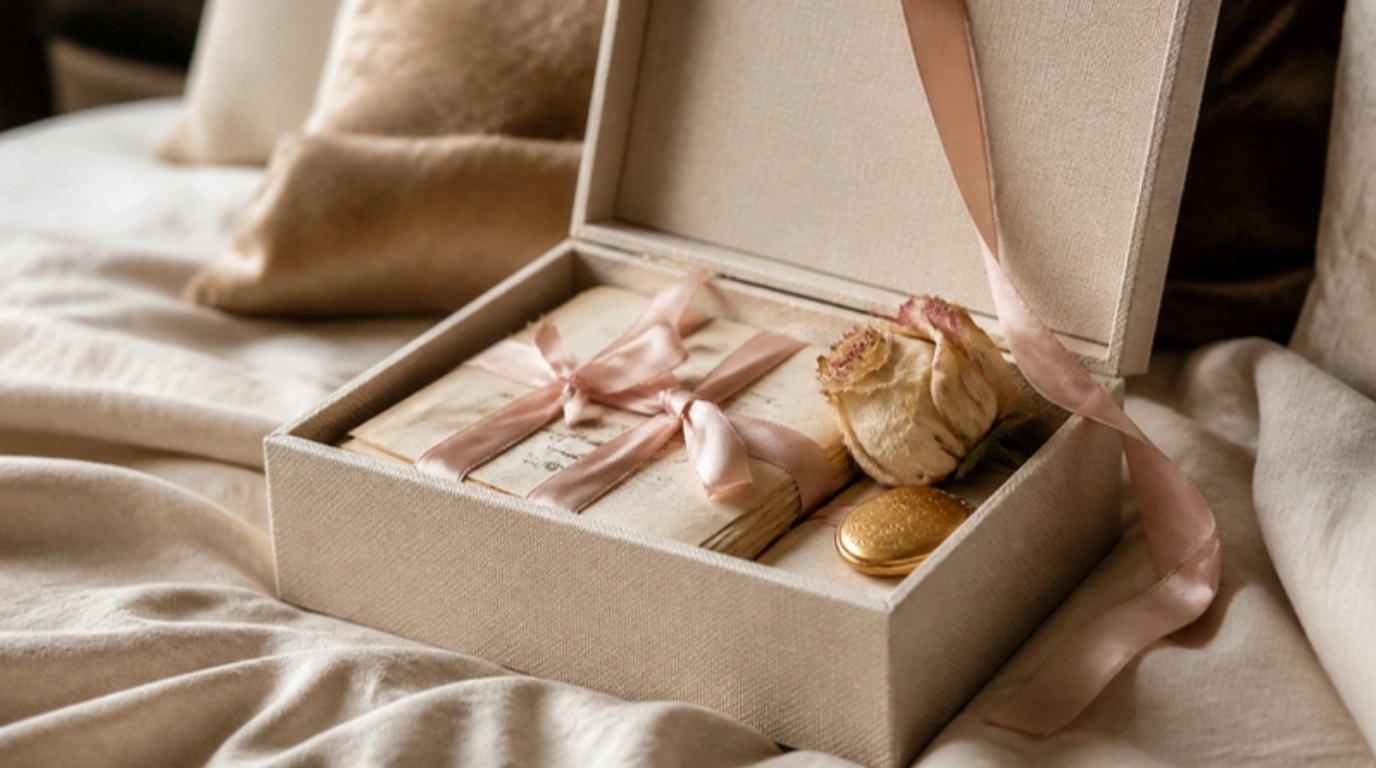
- Pick something lovely enough that you'll want to open it. A set of cream linen keepsake boxes with lids is a pretty pick, because they look calm on a shelf and keep dust off.
- Place your favorite items in first.
- When the container is full, that's your signal to pause and compare, not to buy another container.
If something new deserves a spot later, it can, but something else gently steps aside.
Make Each Session Feel Gentle
Sentimental decluttering is emotionally tiring in a way that sorting a pantry isn't. A few small choices make each session feel kinder:
- Keep sessions short. Thirty to sixty minutes is plenty. Stop while you still have energy, not when you're drained.
- Work on one box or one category at a time. Finishing something small feels far better than half-sorting everything.
- Make it comfortable. Pour a cup of tea, light a candle, play soft music. You're spending time with your memories, so let it feel like a treat.
- Have your containers ready. Set out four spots before you start: keep, offer to family, donate and "not yet." Decisions come faster when everything has somewhere to go.
- Plan something nice afterward. A walk, a bath or a call with a friend helps you close the session gently.
And if you open a box and realize you're not ready today, close it again. That's not failure. It's listening to yourself.
Keep the Best of the Best
You don't need every card, every drawing or every ticket stub to hold onto a memory. You need the one that captures it best.
Group similar items together first: all the birthday cards, all the baby clothes, all the travel souvenirs. Seeing them side by side makes it much easier to choose. Then pick the most meaningful one or two from each group:
- From a stack of 40 cards, keep the five with personal handwritten notes.
- From a bin of baby clothes, keep the coming-home outfit and one favorite.
- From years of school papers, keep one report card and the essay you were proudest of.
- From a pile of souvenirs, keep the one that instantly takes you back.
Something lovely happens when you do this: the item you keep becomes more special, not less. A single framed letter means more than a box of fifty you never open.
The Sentimental Item Questions
When you're holding an item and can't decide, work through this table. Start at the top. If an answer points clearly to "keep" or "release," you can stop there. If not, keep going.
| Question | If Yes | If No |
|---|---|---|
| Does holding it bring a warm feeling, not just obligation? | Likely a keep; give it a good spot | Keep going down the table |
| Would I grab it in a fire or a move across the country? | Keep, it's part of your "best of the best" | Keep going |
| Is it the best example of this memory, or one of many similar ones? | Keep the best one | Release the duplicates |
| Am I keeping it out of guilt or fear? | Consider photographing it, then releasing | Keep going |
| Would someone else in my family treasure it more? | Offer it to them | Keep going |
| Could it become something I'll use or display? | Repurpose or frame it | Keep going |
| Would a photo hold the memory just as well? | Photograph, then donate or release | Keep it in your keepsake box |
| Am I too emotional to decide right now? | Put it in a "maybe" box and revisit in six months | Make your decision and move on |
That last row is important. Not deciding yet is a decision too, and it's a perfectly kind one.
Ways To Keep the Memory Without Keeping the Thing
Letting an item go doesn't mean letting the memory go. These are the gentlest ways to keep what matters while freeing up space.
Photograph Items Before You Let Them Go
Taking a photo of an item before you release it keeps the visual memory without the storage. Photograph your old ballet shoes, your childhood stuffed animals, your trophies or a collection you've outgrown. Take a close-up and one with context (on your bed, on a shelf).
Make a dedicated album on your phone called "Keepsakes" or "Memory Box," and add a short note to each photo about why it mattered. You'll actually look at that album more than you would ever open a box in the attic.
Repurpose Into Something You'll Use
Some sentimental items can become something you love and use every day:
- Old T-shirts (concerts, school, a loved one's) turned into a quilt or a throw pillow.
- A grandmother's scarves sewn into a cushion cover or framed as fabric art.
- Wedding or bouquet flowers pressed and framed.
- Jewelry you don't wear reset into a new piece, or worn as a charm on a necklace.
- Baby clothes made into a small memory bear or quilt square.
Repurposing is a lovely middle path: the object lives on, just in a form that fits your life now.
Frame or Display a Few Favorites
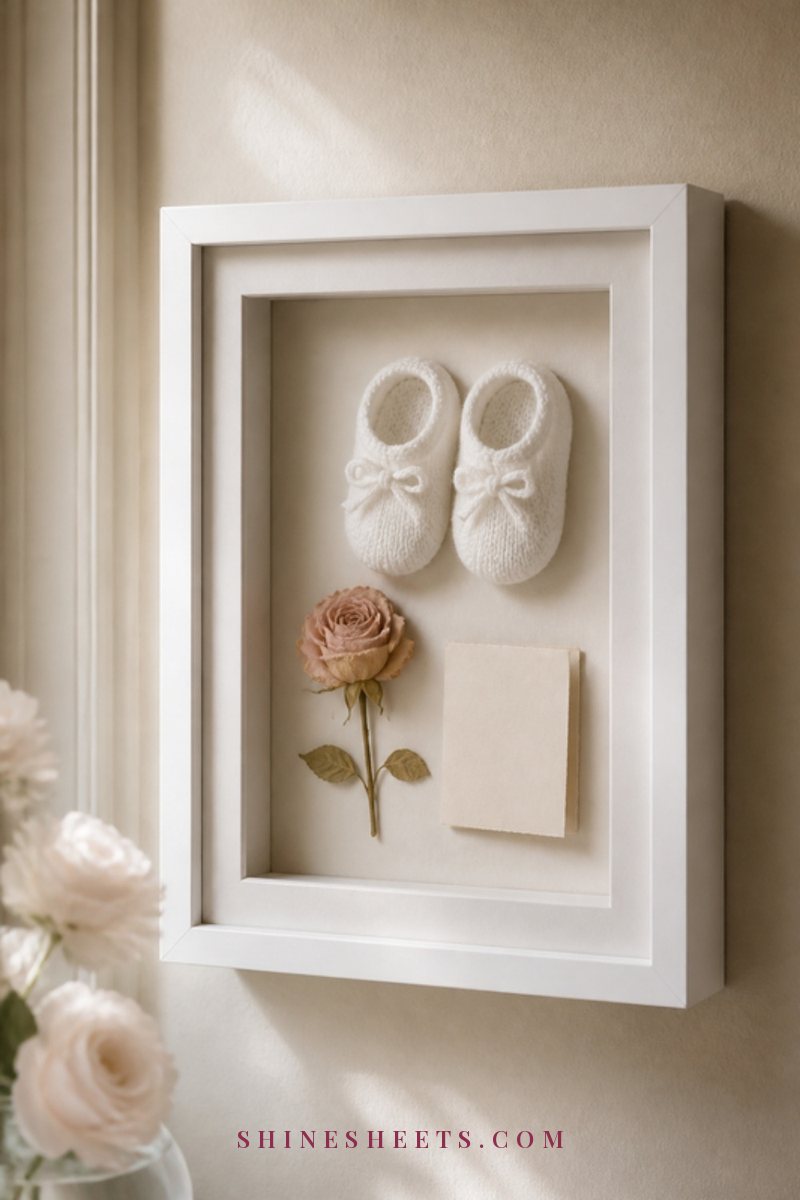
Instead of storing your most precious items in a closet, bring a few into daily life. A white shadow box frame is perfect for three-dimensional keepsakes like baby shoes, a wedding garter, a medal, a corsage or ticket stubs from a special trip.
Hang it somewhere you'll see often, like a hallway or a bedroom wall. Displayed keepsakes get looked at and loved; boxed ones tend to be forgotten.
Digitize Letters, Cards and Photos
Boxes of printed photos, letters and cards take up a lot of space and fade over time. Scanning them keeps them safe and easy to share.
- Use a free scanning app on your phone for letters and cards, or a flatbed scanner for photos.
- Name files clearly (for example, "Grandma letters, summer 1998") so you can find them later.
- Back everything up in two places, like a cloud service and an external drive.
- Keep the originals of the most meaningful few, and let the rest go once they're safely saved.
Digitizing can turn into its own project, so keep it manageable: one envelope or one album per evening is plenty. My guide to a digital declutter has tips for keeping your photo library tidy once everything is scanned, so it doesn't become digital clutter instead.
Create a Keepsake Box for Each Person
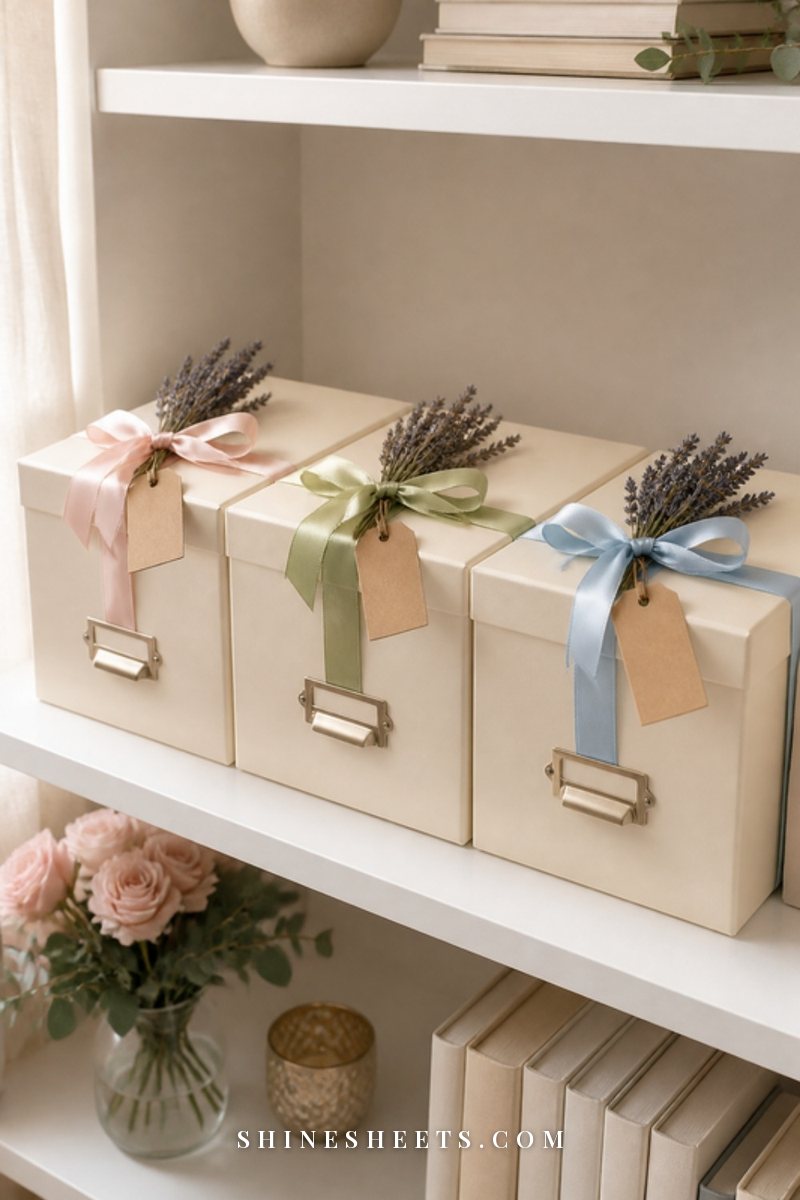
Instead of one giant bin of mixed memories, give each person in your life (including yourself) their own keepsake box. One for your childhood, one for each family member, one for a beloved grandparent.
This makes sentimental items feel organized and intentional. When you come across a card from your sister, you know exactly where it goes. When the box fills up, you review it.
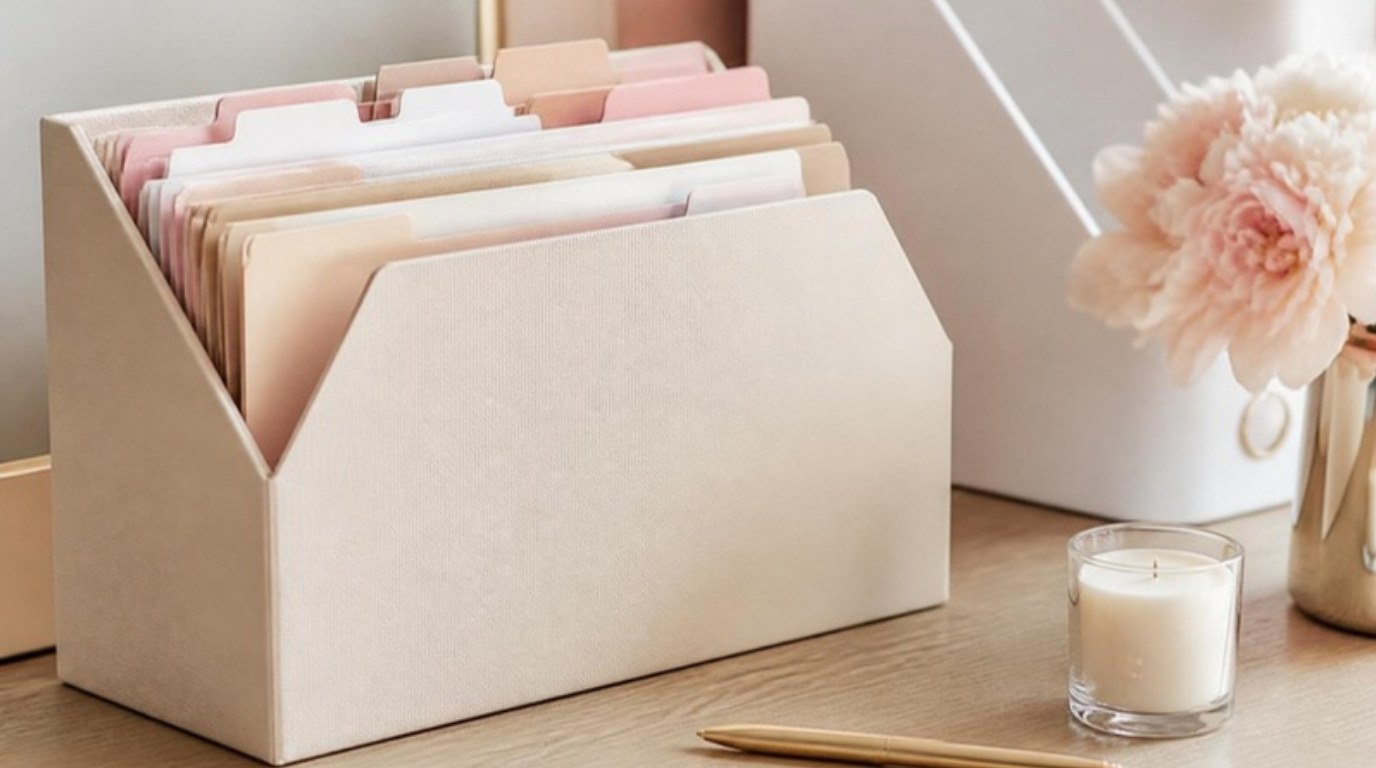
For photos and paper keepsakes, archival photo storage boxes are a good pick because they're acid-free and designed to protect paper and photos from yellowing. Add a label to each box with a simple label maker or a handwritten tag tied with ribbon, so you never have to open five boxes to find one thing.
If you're dealing with paper that isn't sentimental (old bills, manuals, records), keep it separate. My guide on how to organize paperwork helps you sort the practical documents so they don't get mixed in with treasured letters.
Sorting Items From Someone Who Has Died
This is the most tender kind of sentimental decluttering, and it deserves its own pace. Please be gentle with yourself here.
- There is no deadline. Unless you truly need to clear a home by a certain date, you don't have to make any decisions right away. Many people wait months or even years. That's okay.
- Start with the practical. Toiletries, everyday household goods and paperwork are easier first steps than clothing and personal belongings.
- Do it with someone. A sibling, a friend or a family member can share stories as you sort, which often makes it feel more like remembering than losing.
- Choose a few things that feel most like them. A handwritten recipe card, a favorite mug, their reading glasses, a piece of jewelry. These often matter more than larger items.
- Let others choose too. Invite family members to pick items that matter to them before anything is donated.
- Use a "not yet" box. Anything you can't decide on goes in one box with a date on it. Revisit it in six months or a year.
Grief doesn't follow a schedule, and neither does this process. If sorting brings up more than you expected, it's okay to stop, close the box and come back another time.
What To Do With Kids' Artwork
Children produce a beautiful, overwhelming amount of artwork. A simple system keeps the joy without the piles:
- Display, then rotate. Put new pieces on a wall, a clipboard line or the fridge for a few weeks.
- Photograph everything. Snap a picture of each piece before it comes down, ideally with your child holding it.
- Keep a few favorites per year. Choose five to ten pieces a year (letting your child help) and store them flat in a labeled portfolio or archival box.
- Make a photo book. Once a year, turn the photos into a small printed book. It's easier to store and lovely to flip through together.
- Gift some away. Grandparents and aunts often love receiving a piece of art in the mail.
Gifts You Don't Love
Gift guilt is one of the biggest reasons sentimental clutter builds up. Here's a kind way to think about it: a gift's purpose is fulfilled the moment it's given and received with love. You're not obligated to keep it forever to honor the giver.
Some gentle options:
- Keep the card or a photo of the gift, and pass on the item.
- Re-gift to someone who would truly enjoy it (with care for who gave it).
- Donate it, knowing someone else will use it and love it.
- If it's a family heirloom you don't want, offer it to a relative first.
Most people who give gifts would much rather you be happy than feel weighed down by something you're keeping out of obligation.
Where Sentimental Items Can Go
Once you've decided what to release, it helps to know where things are headed. Letting go feels easier when items go somewhere meaningful.
- Family and friends. Offer heirlooms, photos and keepsakes to relatives who might treasure them. Send a photo first and give them a clear date to respond.
- Donation. Clothing, books, dishes and decor can go to local charities, shelters or thrift shops.
- Specialized organizations. Wedding dresses, musical instruments, uniforms and vintage items often have organizations that welcome them.
- Repurposing. Fabric, jewelry and paper can be turned into new keepsakes, as covered above.
- Letting go fully. Some items are worn out, broken or simply no longer needed. It's okay to thank them and let them go.
If motivation fades halfway through (it often does), my guide on how to get motivated to declutter your home has gentle ways to pick up where you left off.
How To Store What You Keep
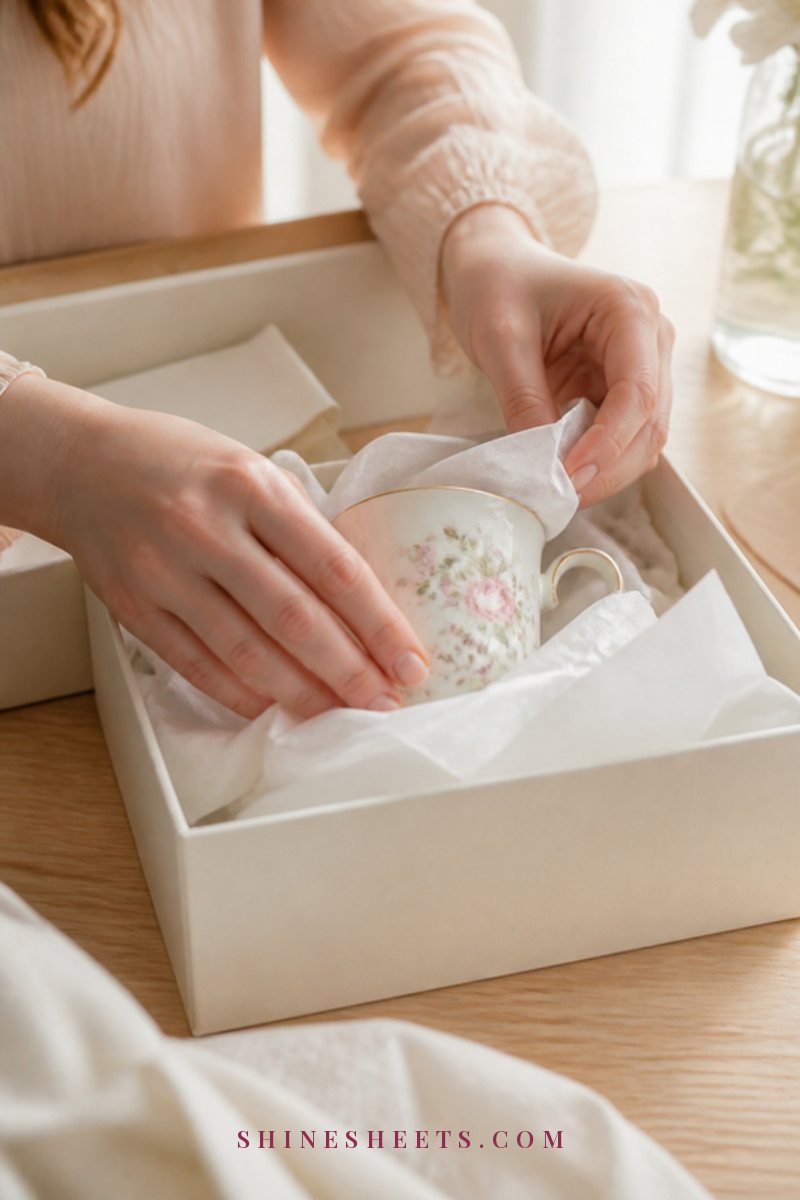
Once you've chosen your treasures, store them so they last. Sentimental items deserve better than a damp basement bin.
- Choose a stable spot. A closet inside the main living space is better than an attic or basement, where temperature and humidity swing.
- Wrap delicate pieces. Use acid-free tissue paper for fabric, lace, photos and fragile objects, since regular tissue can yellow and stain over time.
- Keep paper flat. Store letters and cards flat in folders or archival boxes instead of rubber-banded bundles.
- Label everything. A short note on each box (who, what, roughly when) makes it easy to find and enjoy later.
- Visit your keepsakes. Open your boxes once a year, perhaps on a quiet winter evening with tea. It turns storage into a ritual of remembering.
Final Thoughts
Learning how to declutter sentimental items is really learning to trust that your memories are safe inside you. The objects you keep become more special when they're chosen with care, and the ones you release can go on to be useful or loved somewhere else.
Start last, set a gentle limit, keep the best of the best and give yourself all the time you need. There's no wrong pace, and every small decision makes room for the memories you're still making.