Most tired, upset skin isn't asking for one more product. It's asking for fewer. When a routine grows to eight or ten steps, every layer adds another chance for stinging, clogged pores or two actives quietly fighting each other, and it gets almost impossible to tell what is actually helping.
The good news is that a lean routine is not a lazy one. A gentle cleanser, a moisturizer you like and a sunscreen you will actually wear do most of the heavy lifting for most people. Everything else is a bonus, and bonuses are allowed to come and go.
This guide walks you through building a simplified skincare routine you can keep for the long run: the signs you are overdoing it, the core three steps for morning and night, how to choose one active instead of four, which steps are truly optional, how to cut back without shocking your skin and when it is time to see a dermatologist. There is also a table that sorts every common step into essential or optional, so you can edit your shelf in one sitting.
One small note before we start: this is different from a short skincare break. If you are curious about pausing everything for a week or two, my guide to skin fasting and whether a skincare break works covers that. Here we are building something you keep.
Why Less Often Works Better
Your skin barrier is the thin outer layer that holds water in and keeps irritants out. It is surprisingly good at its job when you let it be. The trouble starts when we keep asking it to cope with more: foaming cleansers twice a day, an acid toner, a vitamin C serum, a retinoid, a peeling mask on Sundays and a new launch we saw online.
Each product might be lovely on its own. Together they can strip, sensitize and confuse. A simpler routine helps in three practical ways:
- Less irritation. Fewer ingredients means fewer chances for one of them to bother you.
- Clearer feedback. If something changes, good or bad, you can actually tell which product caused it.
- Better consistency. A three-minute routine is one you will still do on a tired Tuesday night, and consistency beats variety every time.
My own skin is combination and sensitive, with a shiny T-zone that tempted me for years into stripping cleansers and more mattifying layers. It took me a while to understand that the shine was often my skin overcompensating, not asking for more products.
6 Signs Your Routine Is Doing Too Much
You don't need all of these to benefit from editing. Even one or two that show up regularly are a sign your skin would like a calmer week:
- Stinging or burning when you apply a product that used to feel fine, especially moisturizer.
- Tightness right after cleansing, as if your face is a size too small.
- New breakouts or tiny bumps that appeared after you added several things at once.
- Pilling, when layers roll into little flakes on your skin because there is simply too much on top of each other.
- Shiny but flaky skin at the same time, which often points to a stressed barrier rather than oily skin.
- Redness that lingers for hours after your routine instead of fading in a few minutes.
If several of these sound familiar, start with my guide to the signs of a damaged skin barrier and how to restore it, then come back here to build the routine you will keep once things feel calm again.
The Core Morning Routine: 3 Steps
Mornings are about protection, not treatment. Three steps are enough for most skin types, and the whole thing takes about three minutes.
1. Gentle Cleanser or a Water Rinse
If you cleansed well the night before and your skin is dry or sensitive, a splash of lukewarm water is often enough in the morning. If you wake up oily or you used a rich night cream, use a small amount of a mild cleanser. A gentle low-pH gel cleanser in the style of the popular Korean best-sellers is a good pick for combination and oily skin, because it cleans without that squeaky, stripped feeling.
Massage for about 30 seconds, rinse with lukewarm (never hot) water and pat dry with a clean towel. A stack of soft white cotton face towels that you swap every couple of days is a small, kind habit for sensitive skin.
2. Moisturizer
Apply moisturizer to slightly damp skin. Look for a texture that suits your face: a gel-cream for oily skin, a lotion for combination, a richer cream for dry skin. A pea-sized amount to a small almond-sized amount is plenty for the face; add a little more for the neck.
3. Sunscreen
This is the step I would never cut. Daily broad-spectrum sunscreen of SPF 30 or higher helps protect against sunburn and long-term sun damage, even on gray winter days. I'd choose a lightweight SPF 50 sun fluid if heavy creams make you skip this step, since the best sunscreen is the one you actually reach for. Use about two finger lengths for the face and neck, and reapply if you are outdoors for a long time.
That's it. If you love a vitamin C serum in the morning, it can sit between cleansing and moisturizer, but it is a choice, not a requirement.
The Core Night Routine: 3 Steps
Night is when you remove the day and, if you want to, add one treatment. Keep it calm and predictable.
1. Cleanser
At night you do need a proper cleanse, because sunscreen, makeup and city grime are sitting on your skin. If you wear long-wear makeup or water-resistant sunscreen, a cleansing balm or oil first and then your gentle cleanser works well. If you wear very little, one cleanse is enough. Keep it to about 60 seconds of gentle massage, then rinse.
2. One Treatment (Only If You Need It)
This is the slot for your single active ingredient: a retinoid, an exfoliating acid or a soothing serum. Apply it to dry skin, a pea-sized amount for retinoids, and keep it away from the corners of your eyes, nose and lips. On nights you skip it, nothing bad happens. That flexibility is the whole point.
3. Moisturizer
Finish with moisturizer to seal everything in. A ceramide barrier repair cream is a reliable pick for night, especially in winter or when you are using a retinoid, because ceramides help support the barrier's natural structure. If your skin is oily, a lighter ceramide lotion does the same job without the weight.
Choose One Active Instead of Four
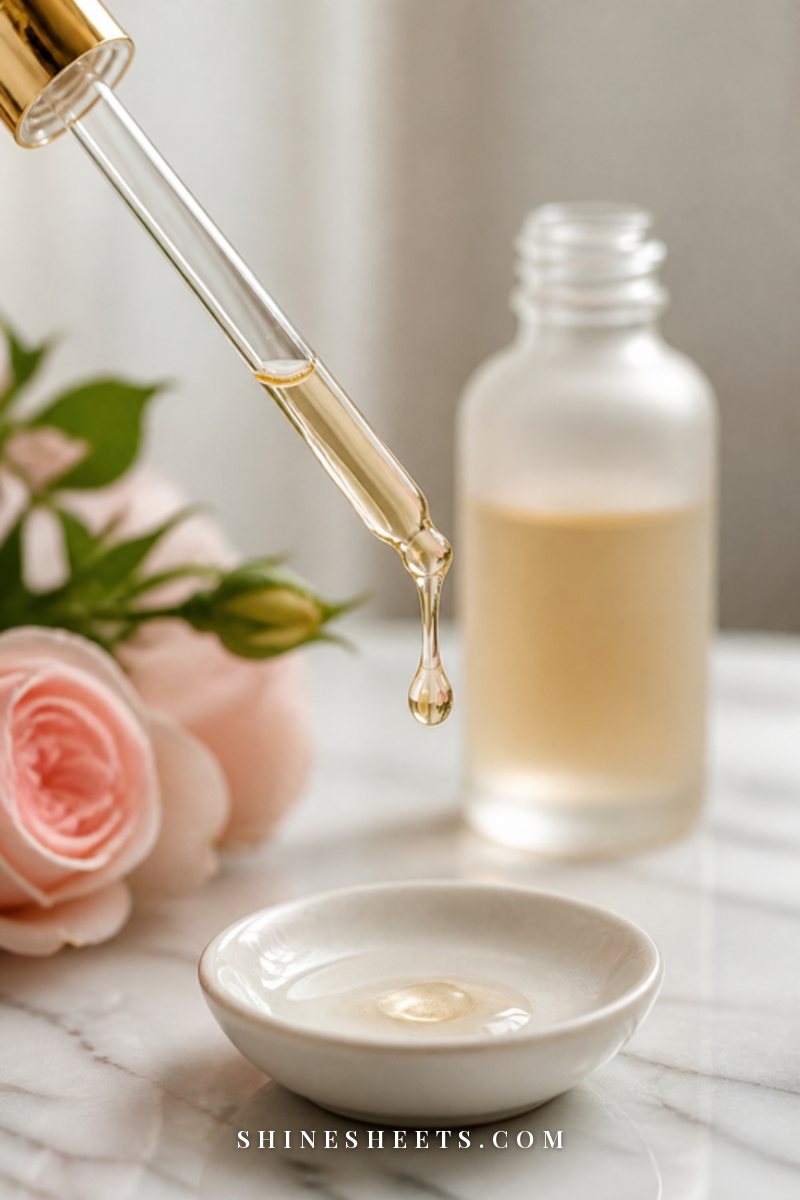
Actives are the ingredients that change something: texture, tone, breakouts or fine lines. They are wonderful, and they are also where most crowded routines go wrong. Pick the one goal that matters most to you right now and choose the active that matches it.
If Your Goal Is Smoother Texture and Fine Lines: A Retinoid
Retinoids are among the most researched skincare ingredients for texture and visible signs of aging. Start low and slow: a gentle over-the-counter retinol two nights a week for two weeks, then three nights a week if your skin is comfortable. Some dryness and flaking at first is common; stinging that doesn't settle is a sign to pause. Retinoids are not recommended during pregnancy, so check with your doctor if that applies to you.
If Your Goal Is Brightness and Uneven Tone: Vitamin C
Vitamin C serums are usually used in the morning, under sunscreen. If pure vitamin C stings, gentler derivatives exist and are often easier for sensitive skin. Keep the bottle away from heat and light, and replace it if it turns dark orange.
If Your Goal Is Clogged Pores or Dullness: An Exfoliating Acid
Salicylic acid (BHA) works inside the pore and is popular for oily skin and blackheads. Lactic or glycolic acid (AHAs) work on the surface for dullness. Two or three evenings a week is enough for most people. Daily acid plus a retinoid plus a scrub is exactly the kind of overlap that leads to a stressed barrier.
If Your Skin Mostly Needs Calm: Niacinamide
Niacinamide is a friendly, low-drama ingredient that many people use for oiliness, the look of pores and redness. A 5 percent niacinamide serum is a gentle place to start; higher strengths are not always better and can bother sensitive skin. It plays well with most routines, which makes it a good choice if you don't want a "strong" active at all.
If you are not sure what can be layered together, my guide to skincare ingredients you shouldn't mix and what pairs well has the full list. The simplest rule: one strong active per routine, and never two new ones in the same month.
Which Steps Are Optional
These products aren't bad. They are simply extras, and extras can be added on the days you enjoy them and left out when life is busy or your skin feels sensitive.
Toner
Modern hydrating toners are pleasant, but a good moisturizer usually covers the same ground. Keep one if you love the ritual and it never stings. Skip astringent, alcohol-heavy toners if your skin is dry or sensitive.
Essence
Essences are watery, lightweight hydration layers, very common in Korean routines. They can feel lovely on dry skin in winter. If your routine is already comfortable without one, it is an easy step to drop.
Masks
A hydrating sheet mask or a soothing cream mask once a week is a pleasant self-care moment. Peel-off and strong clay masks are the ones to treat carefully if your skin is sensitive. Masks are a treat, not a foundation.
Eye Cream
For many people, the face moisturizer works perfectly well around the eyes, as long as it doesn't sting. An eye cream is worth keeping if your eye area is noticeably drier, or if your face products irritate that delicate skin.
The Simplified Skincare Table: Essential or Optional
Use this table to sort the products on your shelf. Anything in the "optional" rows can stay, but only if it earns its place. Screenshot it before you start editing.
| Step | Essential or optional | Who it suits | Simple product type |
|---|---|---|---|
| Morning cleanse | Essential (water rinse counts) | Everyone; water only for dry or sensitive skin | Low-pH gel or cream cleanser |
| Night cleanse | Essential | Everyone, especially sunscreen and makeup wearers | Gentle cleanser, plus a balm or oil for heavy makeup |
| Moisturizer | Essential | Every skin type, including oily | Gel-cream, lotion or ceramide cream |
| Sunscreen | Essential (mornings) | Everyone, all year | Broad-spectrum SPF 30–50 fluid or cream |
| One active | Optional, but useful | Anyone with a specific goal | Retinoid, vitamin C, acid or niacinamide |
| Toner | Optional | People who enjoy the ritual | Hydrating, alcohol-light toner |
| Essence | Optional | Dry or dehydrated skin, especially in winter | Watery hydrating essence |
| Eye cream | Optional | Dry or easily irritated eye area | Fragrance-free eye cream |
| Masks | Optional (once a week at most) | Anyone who enjoys a treat | Hydrating sheet or cream mask |
| Scrubs and peels | Optional, use rarely | Resilient, non-sensitive skin | Mild chemical exfoliant instead of gritty scrubs |
If you are newer to all of this, my skincare routine for beginners explains the four steps that matter in even more detail, including how to pick each one for your skin type.
How To Cut Back Gradually
Cutting everything overnight can feel like a shock, and it also makes it hard to see what you miss. A gentle four-week plan works better:
- Week 1: Sort. Gather every product you use on your face. Put the essentials (cleanser, moisturizer, sunscreen) in one group, your actives in another and extras in a third. Check dates and toss anything expired, separated or smelling odd.
- Week 2: Remove the extras. Pause toners, essences, masks and scrubs. Keep only the core routine and, if you like, one active.
- Week 3: Settle on one active. If you were using several, keep the one that matches your main goal and pause the rest. Use it on a schedule, for example retinoid on Monday, Wednesday and Friday nights.
- Week 4: Notice. How does your skin feel at night? In the morning? Write a single line in your journal or notes app every few days. You will be surprised how quickly patterns show up.
Give the paused products a home where you can see them but won't reach for them automatically. I like the idea of a clear acrylic skincare organizer holding only the daily essentials in front, with everything else in a drawer. When your counter shows three bottles instead of twelve, the routine almost runs itself.
Patch Test Anything New
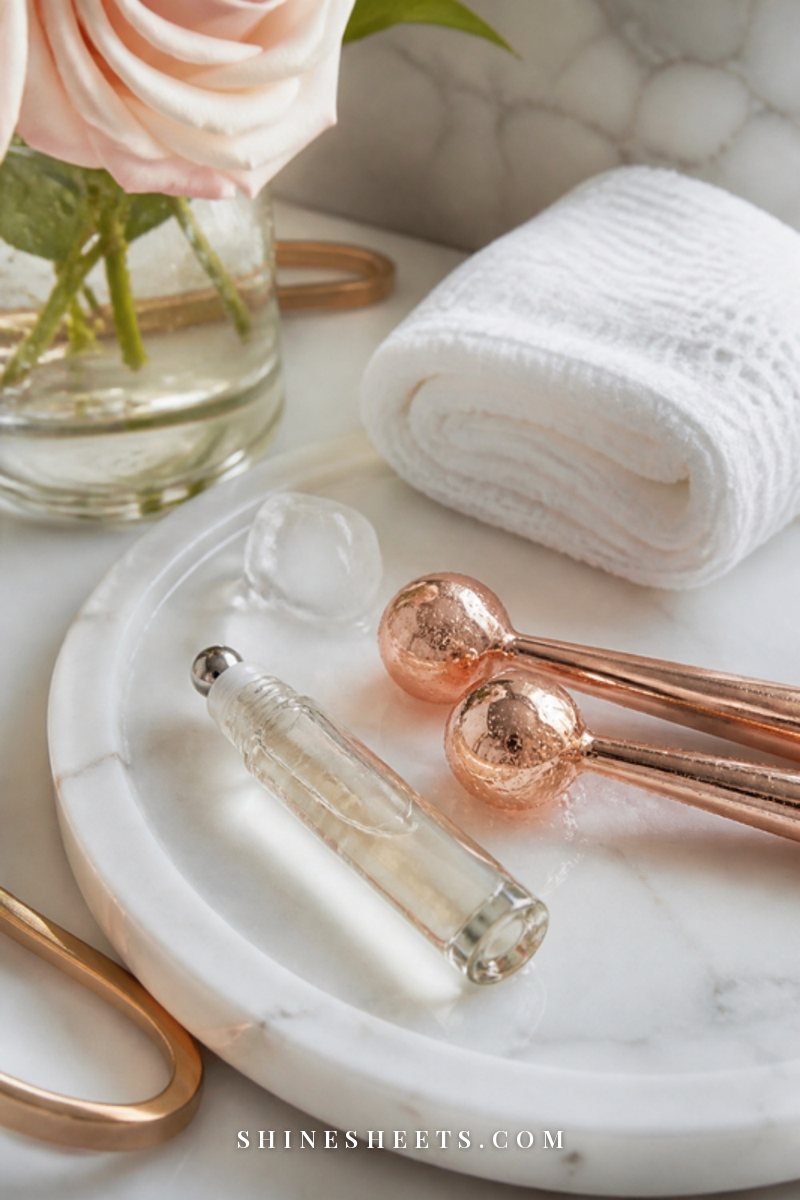
A simple routine is also a great moment to add things more thoughtfully. Before a new product goes on your whole face, patch test it: apply a small amount to the same spot, such as along the jawline or behind the ear, once or twice a day for several days. If you notice redness, itching, swelling or a rash, stop using it.
Only introduce one new product at a time, and wait at least two weeks before adding another. My step-by-step guide on how to patch test skincare explains exactly where to test and what a real reaction looks like compared to a normal tingle.
Give It 6 to 8 Weeks Before You Judge
Skin renews itself slowly, and most products need time to show what they can do. A moisturizer can feel good within days, but changes in texture, tone or breakouts usually take six to eight weeks of consistent use, sometimes longer for retinoids.
Here is a gentle way to think about it:
- Days 1–14: watch for irritation. Comfort is the only goal.
- Weeks 3–6: stay consistent, even if you see nothing yet. This is the stage where most people give up.
- Weeks 6–8: take an honest look in daylight. Is your skin calmer, smoother or clearer than when you started? If yes, keep going. If nothing has changed, the product might simply not be for you, and that is fine.
The exception is irritation. Stinging that gets worse, swelling or a rash are signs to stop right away, not to wait it out.
Keeping It Simple When Life Gets Busy

The best routine is one that survives your worst week, not your best one. A few small ideas that help:
- Have a "minimum" version. On exhausted nights, cleanse and moisturize. That's a complete routine, not a failure.
- Keep sunscreen where you see it. Next to your toothbrush or your keys, so it becomes automatic.
- Use a simple active schedule. Write it on a sticky note inside your cabinet door: active nights and rest nights.
- Travel with the core three. Small bottles of cleanser, moisturizer and sunscreen are all you truly need for a weekend away.
- Shop with your shelf in mind. Before buying something new, ask which step it would replace. If the answer is "none," it's probably an extra.
Evening skincare can also become a soft little ritual instead of a chore. I like to do mine after my evening tea, when the house is quiet. Three steps, a glass candle flickering (an LED one is a lovely safe option in the bathroom) and a few slow breaths. That's plenty.
When To See a Dermatologist
A simpler routine helps with a lot of everyday sensitivity, but it is not a treatment for skin conditions. Please see a dermatologist or your doctor if you notice persistent redness, acne that is painful or leaving marks, patches that itch or flake for weeks, irritation that doesn't improve after you have cut back or any mole or spot that changes in size, shape or color. A professional can tell you what is really going on and recommend options that are right for your skin.
Final Thoughts
A simplified skincare routine is not about doing less because you have given up. It is about trusting your skin to do its job and giving it only what helps. Three steps in the morning, three at night, one active if you want it, and the freedom to enjoy extras without needing them.
Start with one small edit this week, maybe putting away the toner you never loved or swapping a harsh cleanser for a gentle one. Your skin will tell you, slowly and quietly, that it was ready for a calmer routine all along.