Clutter rarely comes from one big shopping trip. It builds quietly, one extra mug, one more sweater, one nice notebook at a time, until the drawers stop closing and every tidy-up feels like starting over. That's why the simplest fix is not a bigger decluttering weekend but a small habit at the door: when something new comes in, something old goes out.
It sounds almost too easy, and that is exactly its strength. You don't need a perfect system, labels on everything or a free Saturday. You just need one quiet decision each time you bring something home.
This guide covers the one in, one out rule from start to finish: what it is, why it works, the categories where it shines, how to set your own "enough" numbers, a few variations, how to handle gifts, sentimental things and a busy household, what to do with the outgoing item, the sensible exceptions, and an "enough number" table to make it all feel simple.
What Is the One In, One Out Rule?
The one in, one out rule means that every time a new item enters your home, one similar item leaves. A new pair of jeans comes in, an old pair goes to donation. A new mug arrives, an older mug finds a new home.
The key word is similar. The outgoing item should come from the same category, so the balance stays even where it matters. Buying a new scarf and letting go of a book doesn't help a crowded scarf drawer.
Think of it less as a strict rule and more as a gentle boundary. Your home has a certain amount of space for each kind of thing. Once a category fills its space, the only question left is which version you'd rather keep.
Why It Works So Well
Most decluttering methods are about getting rid of things. This one is about not needing to. That's why it lasts. Here is what it does quietly in the background:
- It keeps a stable amount. Once you've decluttered, the number of things in each category stays roughly the same. No slow creep, no big purge every spring.
- It makes you pause before buying. When you know a new sweater means choosing which old one goes, you naturally ask whether the new one is really better. Often the answer is no, and you save the money.
- It upgrades your things over time. Each swap replaces something tired with something you love more, so your wardrobe and shelves slowly become a collection of favorites.
- It removes decision fatigue. Instead of a hundred decisions in one exhausting afternoon, you make one small decision at a time.
- It's easy to remember. No apps, no rules to look up. One comes in, one goes out.
If you want to spend less in general, it pairs beautifully with a gentle low buy year, because both habits ask the same question: do I need this, or do I just like the feeling of buying it?
Where the Rule Works Best
The rule works for almost anything you collect without meaning to. These are the categories where it makes the biggest difference.
Clothes and Shoes
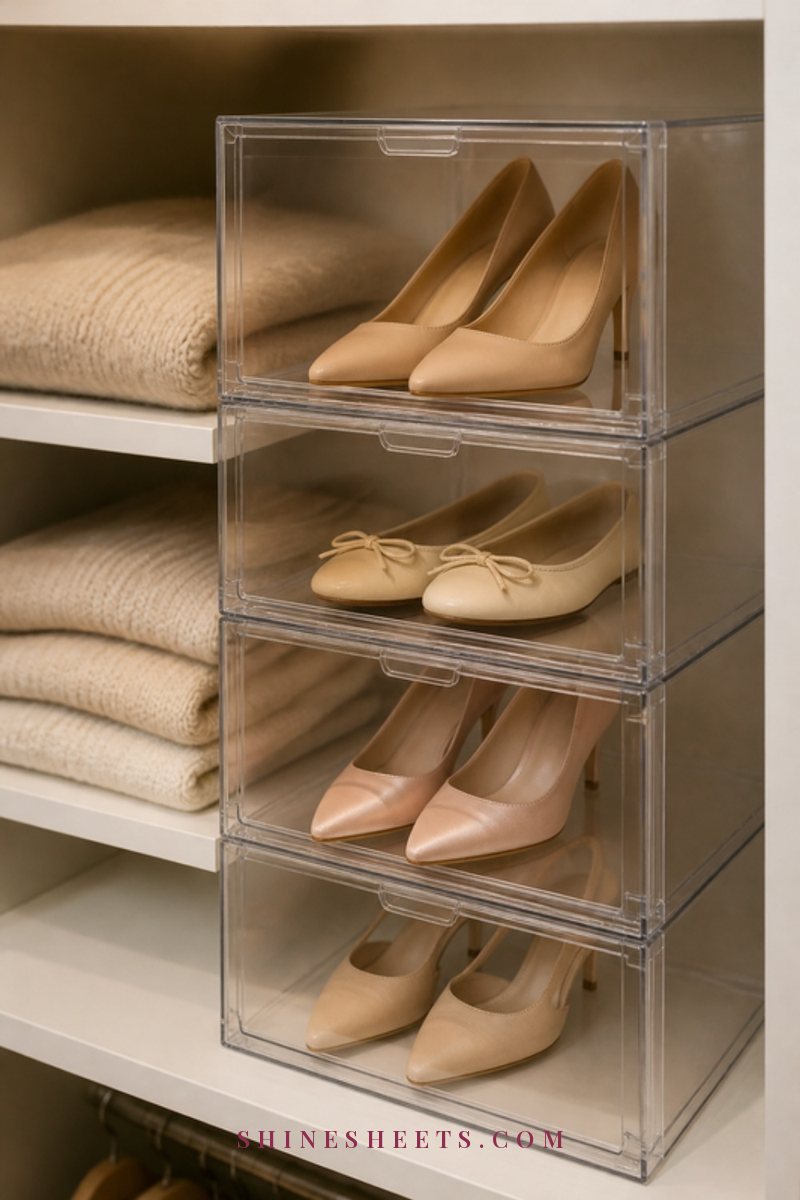
This is the classic place to start, because wardrobes fill up so quietly. Every new top means one top goes; every new pair of shoes means one pair leaves. Match by type: a new pair of sneakers replaces old sneakers, not a pair of heels you still wear.
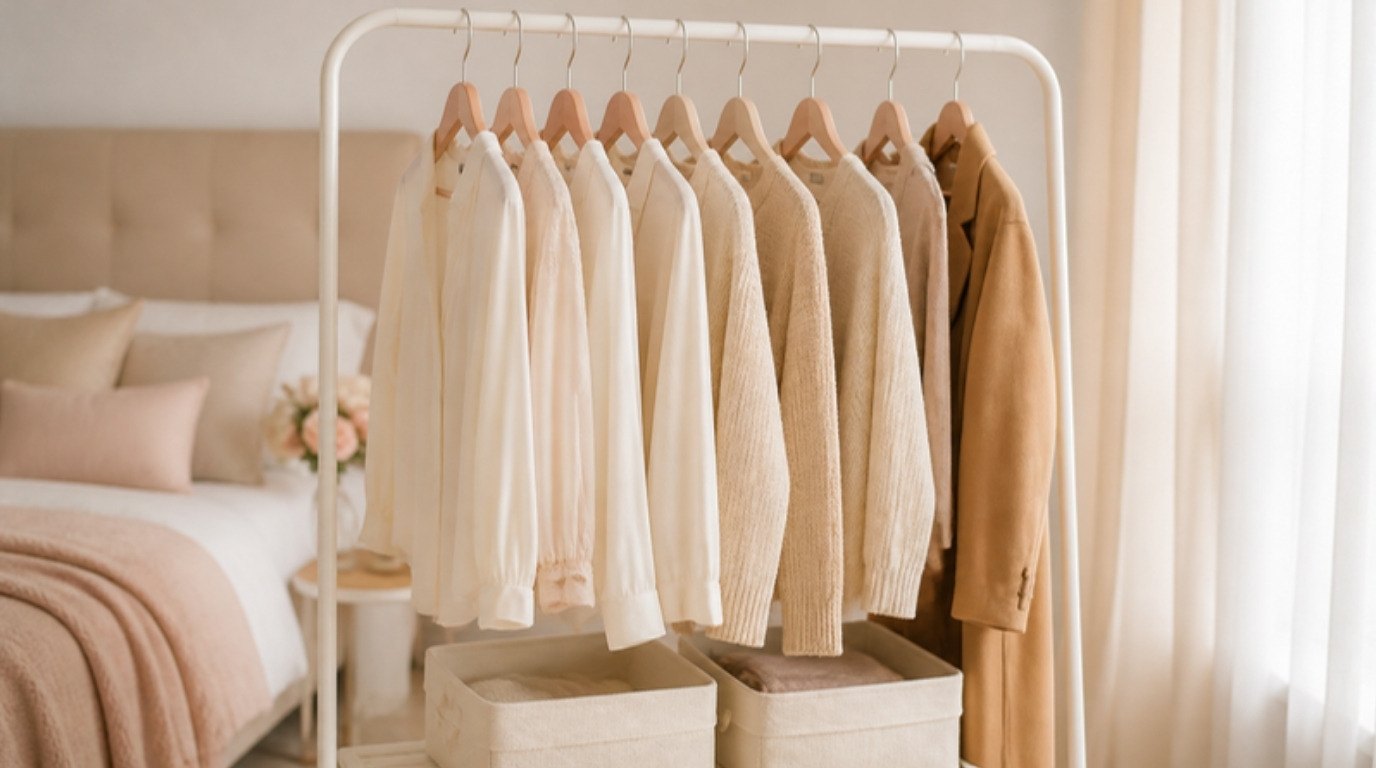
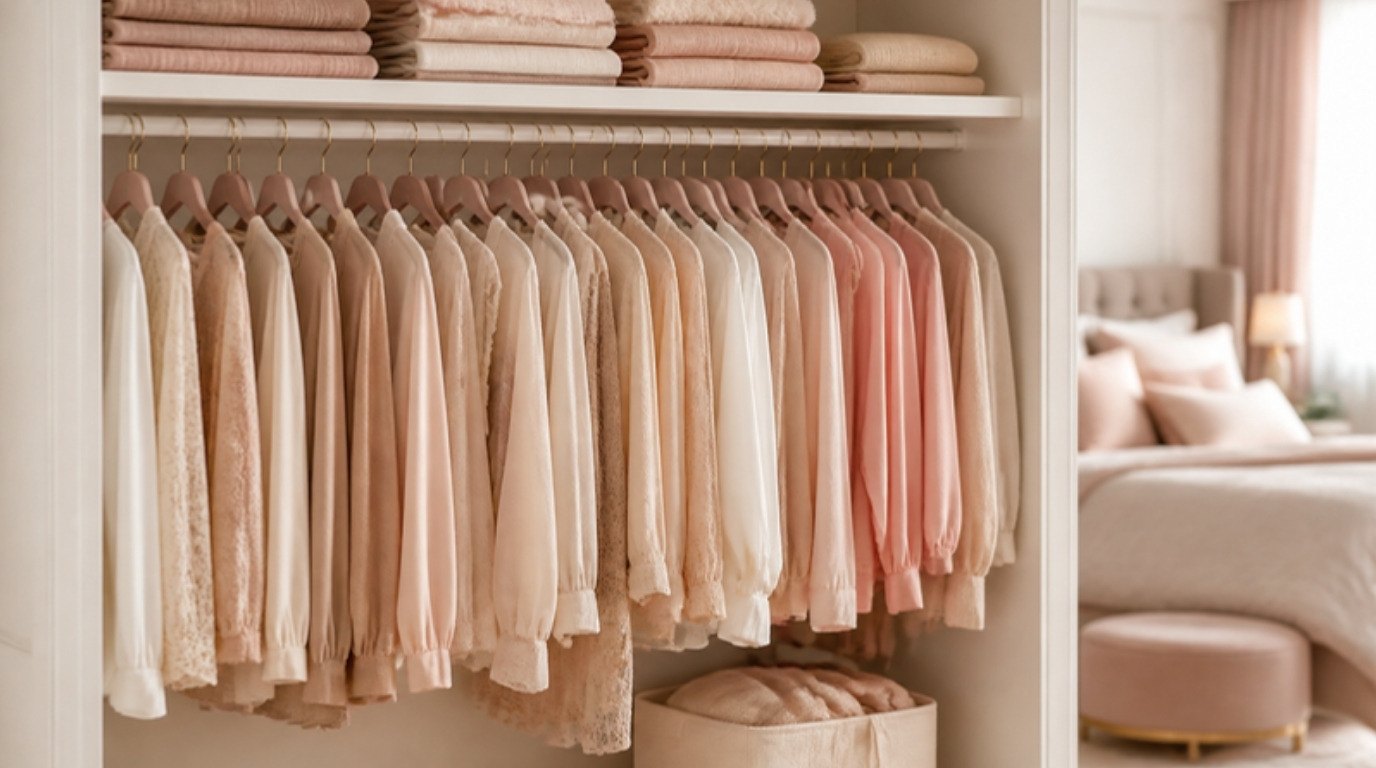
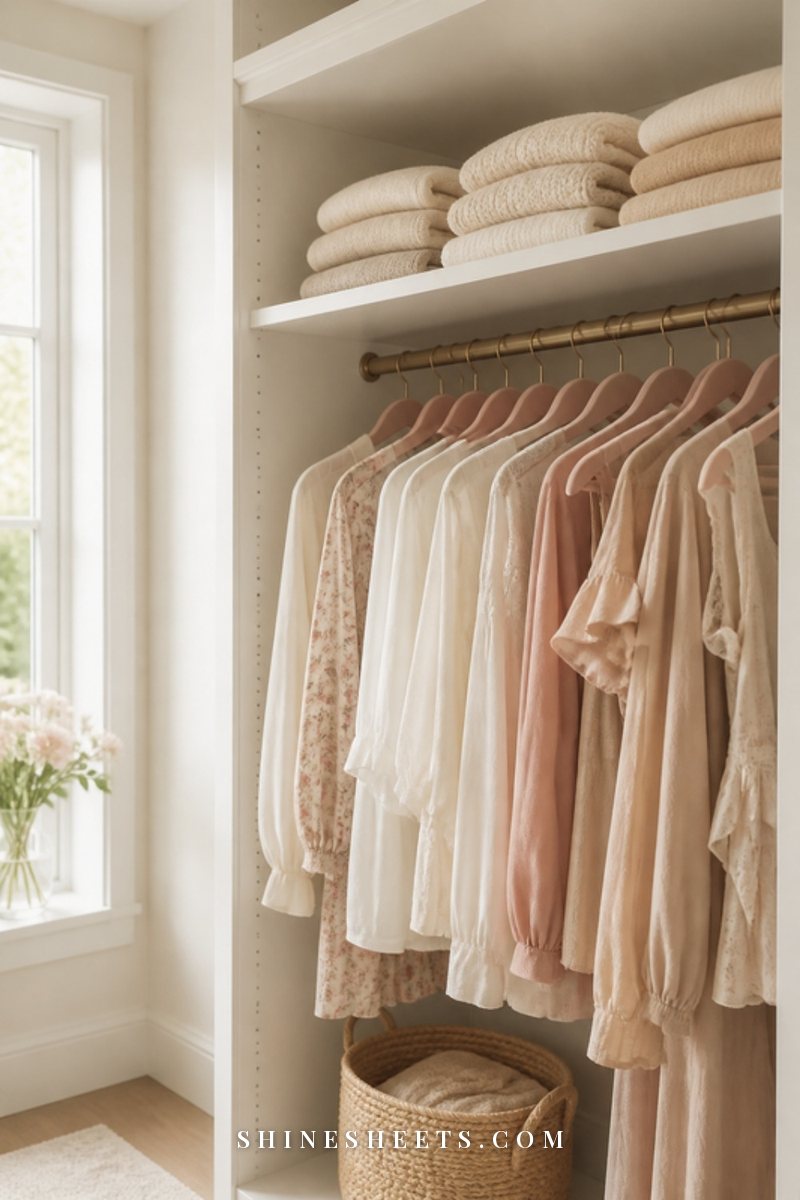
A small trick that helps: use matching hangers and keep the number fixed. A set of velvet hangers in one soft color makes the rule visible – when every hanger is full, a new piece can only go up if an old one comes down. If your closet needs a proper reset first, my step-by-step guide on how to declutter your wardrobe walks you through it calmly.
Books
Books are tricky because they feel meaningful. Let the rule apply only to books you've read and wouldn't reread. Keep a shelf (or two) for the books you love, and when a new book joins it, pass along one you won't open again to a friend, a little free library or a donation shelf.
Mugs and Kitchen Extras
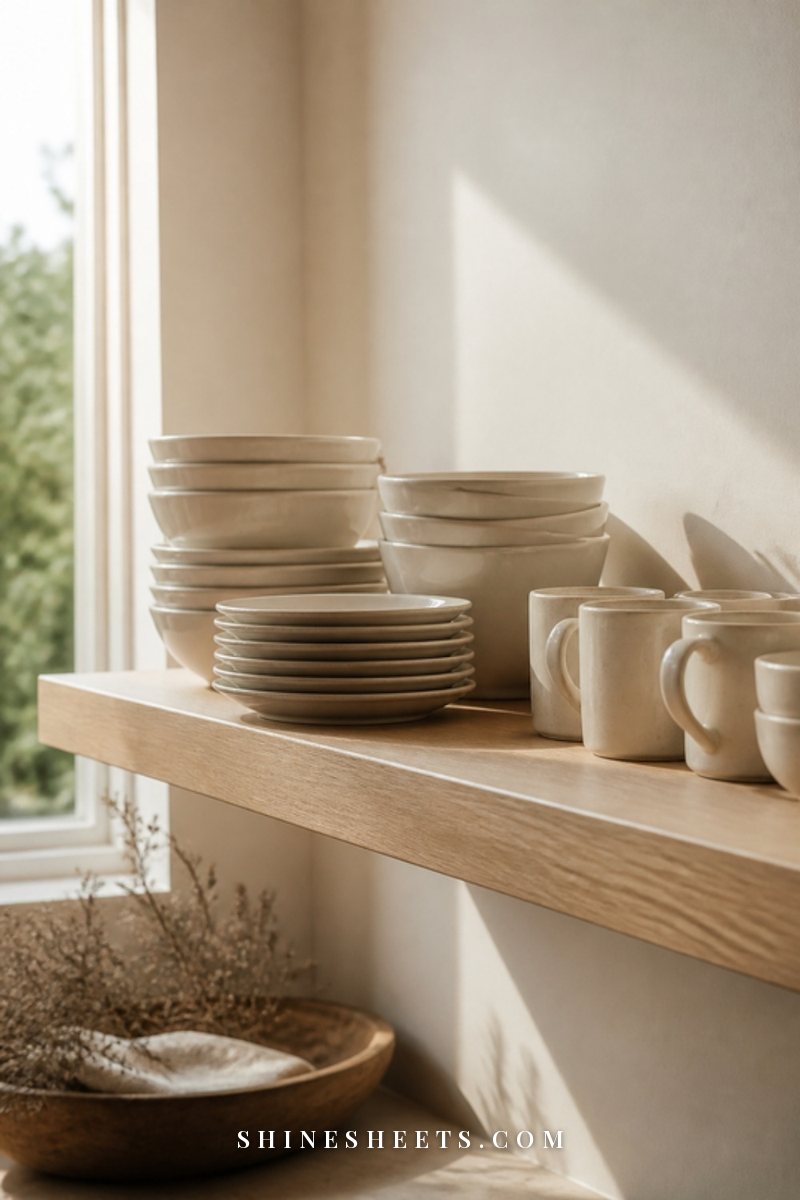
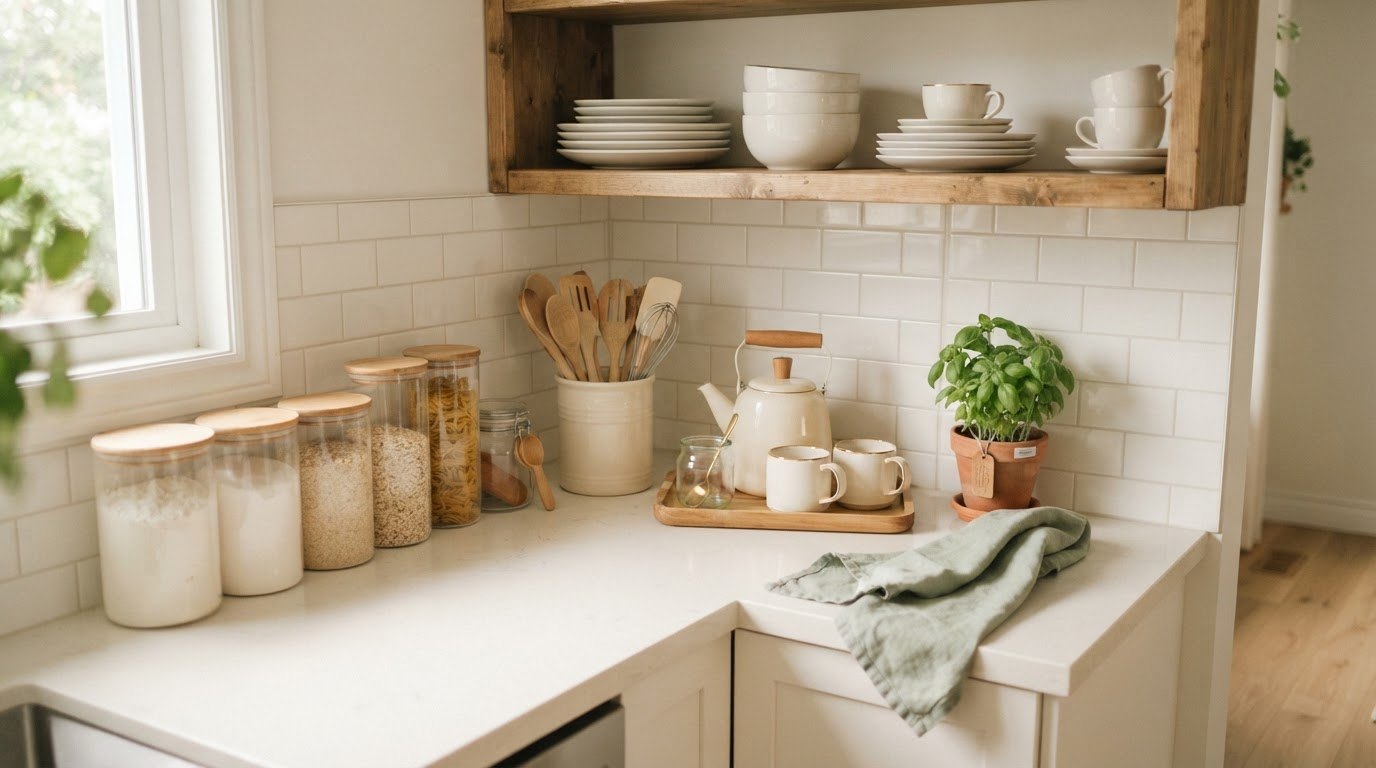
Mugs multiply like nothing else: gifts, souvenirs, the cute one you couldn't resist. The same goes for water bottles, tote bags, travel cups and kitchen gadgets. Choose how many fit comfortably on one shelf, and let that be the number. A new mug in means the chipped or least-loved one goes out.
Makeup and Skincare
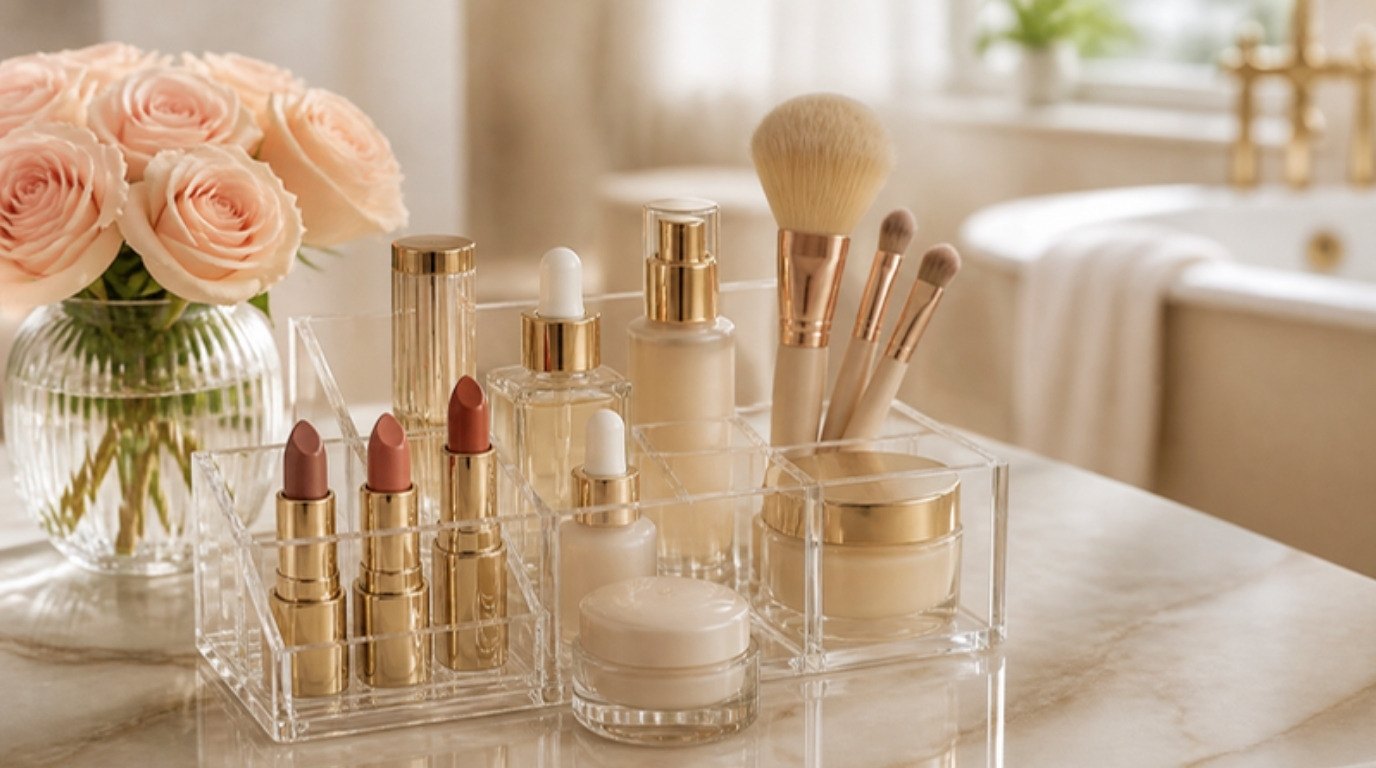
For makeup, swap within the same type: a new lipstick in, one old lipstick out; a new blush in, one blush out. Skincare is usually a consumable (more on that in the exceptions), but backups and "just trying it" products count – don't open a new moisturizer until the old one is finished or gone. Old makeup also has a shelf life, so letting go of very old products is good for your skin, not just your drawer.
Toys
For kids' toys, the rule works best as a kind, shared ritual rather than a rule handed down. Before a birthday or holiday, sit together and choose a few toys to pass on to another child who will enjoy them. Children often love the idea of giving, especially when they choose the toy themselves and help pack it.
Towels and Bedding
Linen closets overflow because old towels and sheets never feel bad enough to throw away. Decide on a number per person – for example, two or three bath towels each and two sets of sheets per bed – and stick to it. Worn-out towels can go to an animal shelter, which often welcomes them, or become cleaning rags.
How To Start: Declutter Once, Then Set Your Numbers
The one in, one out rule maintains a calm home, but it doesn't create one. If your space is already overflowing, swapping one-for-one just keeps it overflowing. That's why it helps to start with one honest decluttering round.
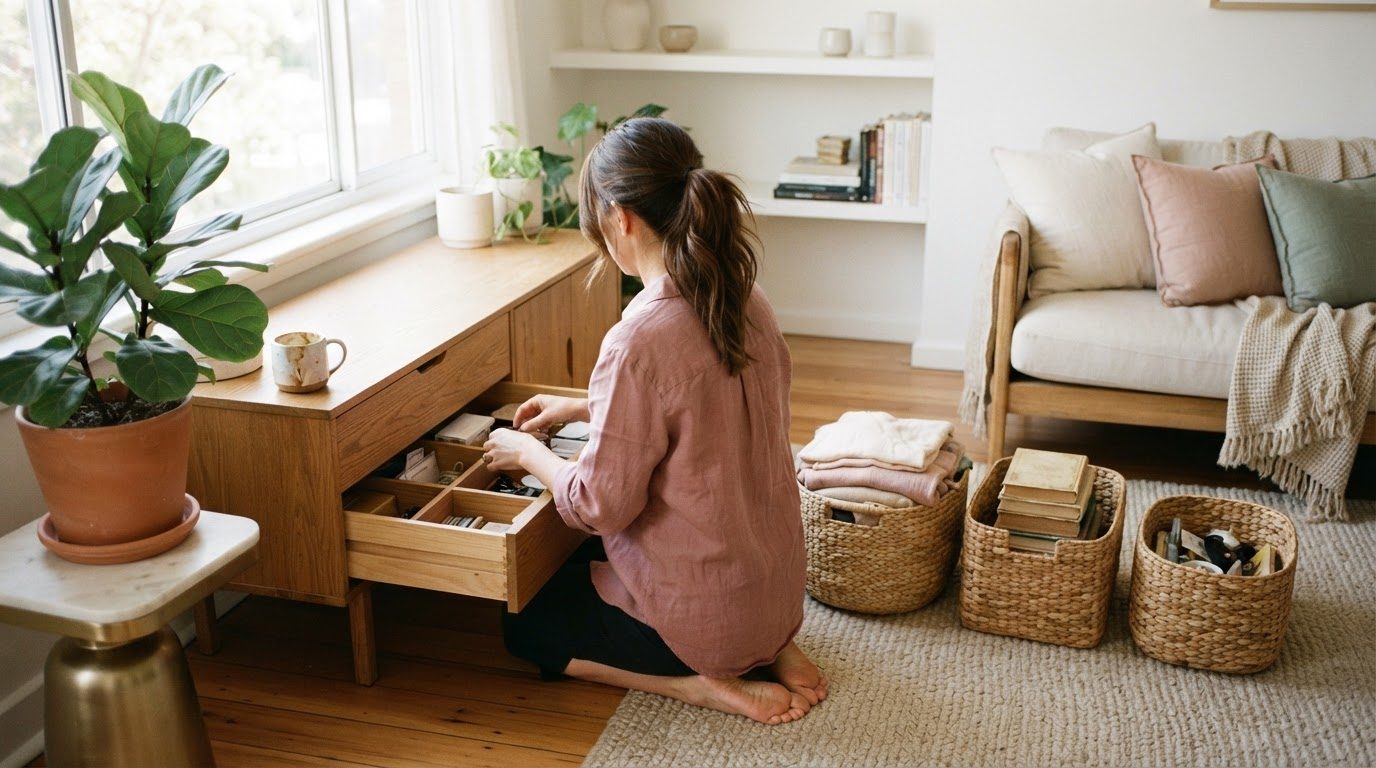
- Declutter once, category by category. Start with whatever bothers you most, often clothes or the kitchen. My ultimate guide to decluttering your home breaks it into steps, and the 30-day declutter challenge spreads it out into one small area a day if a big push feels like too much.
- Count what you kept. After decluttering a category, count it. Twelve mugs, nine pairs of shoes, thirty hangers. That number is your starting point.
- Set your "enough" number. Ask: how many of these do I actually use in a normal week or season? Your enough number can be lower than what you kept, and that's fine – you'll reach it gradually through swaps.
- Give each category a home. A shelf, a drawer, a basket. The container quietly becomes the limit: when it's full, it's full. Simple drawer dividers make this especially clear in sock, underwear and makeup drawers.
- Start the rule the next time you buy anything. No ceremony needed. The next new thing that comes home is your first swap.
Your "Enough Number" Table
Here is a starting point for setting your own limits. These numbers are only examples for one adult – adjust them freely to your space, your lifestyle and your climate. The out-item idea column tells you exactly what to let go of first when something new comes in.
| Category | Example "enough" number | Out-item idea when something new comes in |
|---|---|---|
| Tops and blouses | 15–20 | The one you reach for last or that no longer fits well |
| Jeans and trousers | 5–7 | The pair with a worn hem or the least comfortable waist |
| Shoes | 8–10 pairs | The pair that hurts, or one you haven't worn in a full season |
| Handbags | 4–6 | The bag that sits empty in the back of the closet |
| Books (read, not rereading) | One shelf | A book you finished and won't open again |
| Mugs | 6–8 | The chipped one or the souvenir you never pick |
| Water bottles and travel cups | 2–3 | The one that leaks or has a lost lid |
| Lipsticks and lip products | 5–8 | The oldest one or the shade you never wear out |
| Bath towels | 2–3 per person | The thinnest, roughest towel (to a shelter or the rag bin) |
| Sheet sets | 2 per bed | The set with pilling or a worn elastic |
| Tote bags | 3–5 | Promotional totes you never chose |
| Candles | 3–5 unburned | Burn one fully before opening a new one |
Screenshot the table or copy it into your notebook, then change the numbers until they feel right for your home. The point is not to hit someone else's number. The point is to have one at all.
Variations To Try
The basic rule is lovely, but a few variations can help in different seasons of life.
One In, Two Out for a Reset
If your home still feels crowded after decluttering, try one in, two out for a month or two. Every new item sends two similar items out the door. It's a slow, painless way to shrink a category without a big purge day. Once you reach your enough number, go back to one-for-one.
The Seasonal Swap
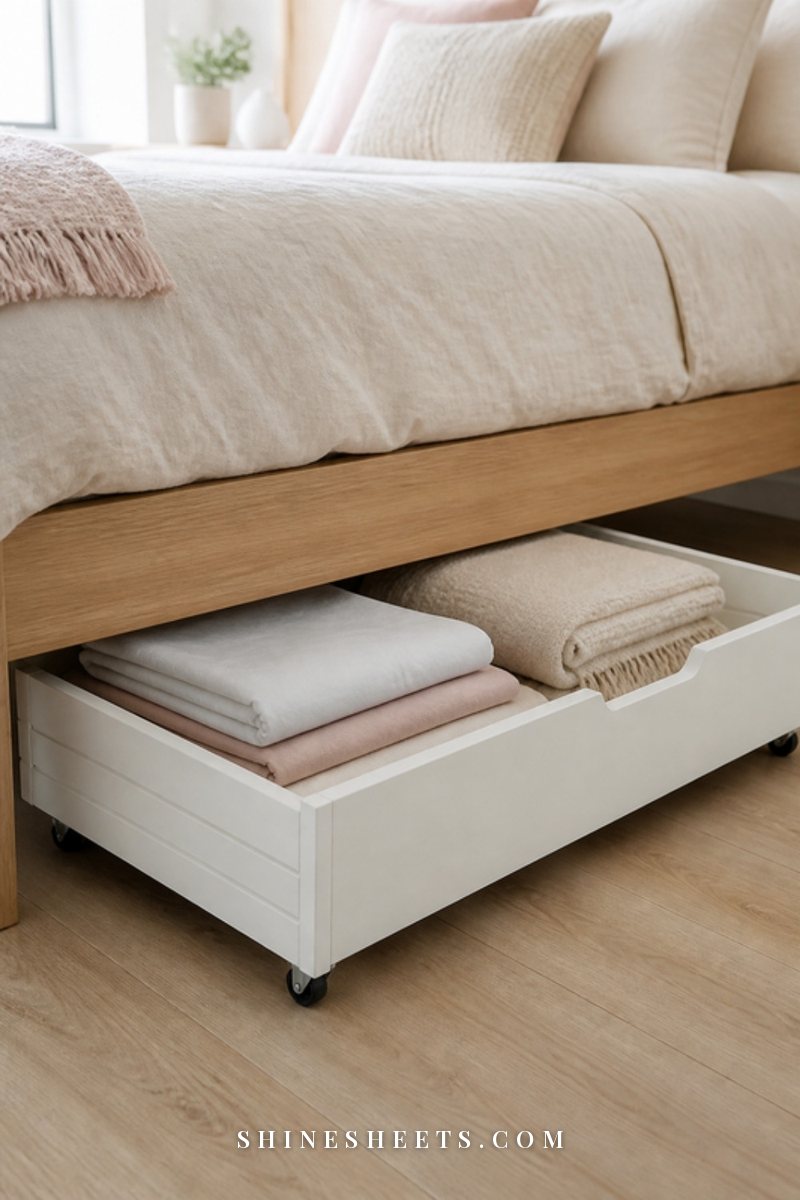
Twice a year, when the weather changes, store off-season clothes and look at what you actually wore. Anything you skipped for a whole season is a strong out-item candidate. Fold what stays into clear storage bins so you can see everything at a glance next season, and you'll notice gaps (and doubles) before you shop.
The seasonal swap is also a lovely moment to rethink your wardrobe as a whole. If you'd like fewer pieces that all work together, my guide to building a capsule wardrobe fits naturally with this rule.
One In, One Out by Space
Some people prefer to measure by space instead of items. A shelf, a drawer or a basket is the limit, and the rule is simply "if it doesn't fit, something goes." This works especially well for books, makeup and kitchen extras, where items come in very different sizes.
Gifts and Sentimental Items
Gifts are where the rule feels hardest, because letting something go can feel like letting the person down. A few gentle ways to handle it:
- The rule still applies, but the timing can be softer. Enjoy a gift for a while first. You can decide on the out-item a week later.
- Remember the gift was the gesture. The kindness of the person who gave it doesn't live in the object. You can keep the memory and pass the item on.
- Share wishes when people ask. If someone asks what you'd like, it's perfectly kind to suggest experiences, consumables or one specific thing you need.
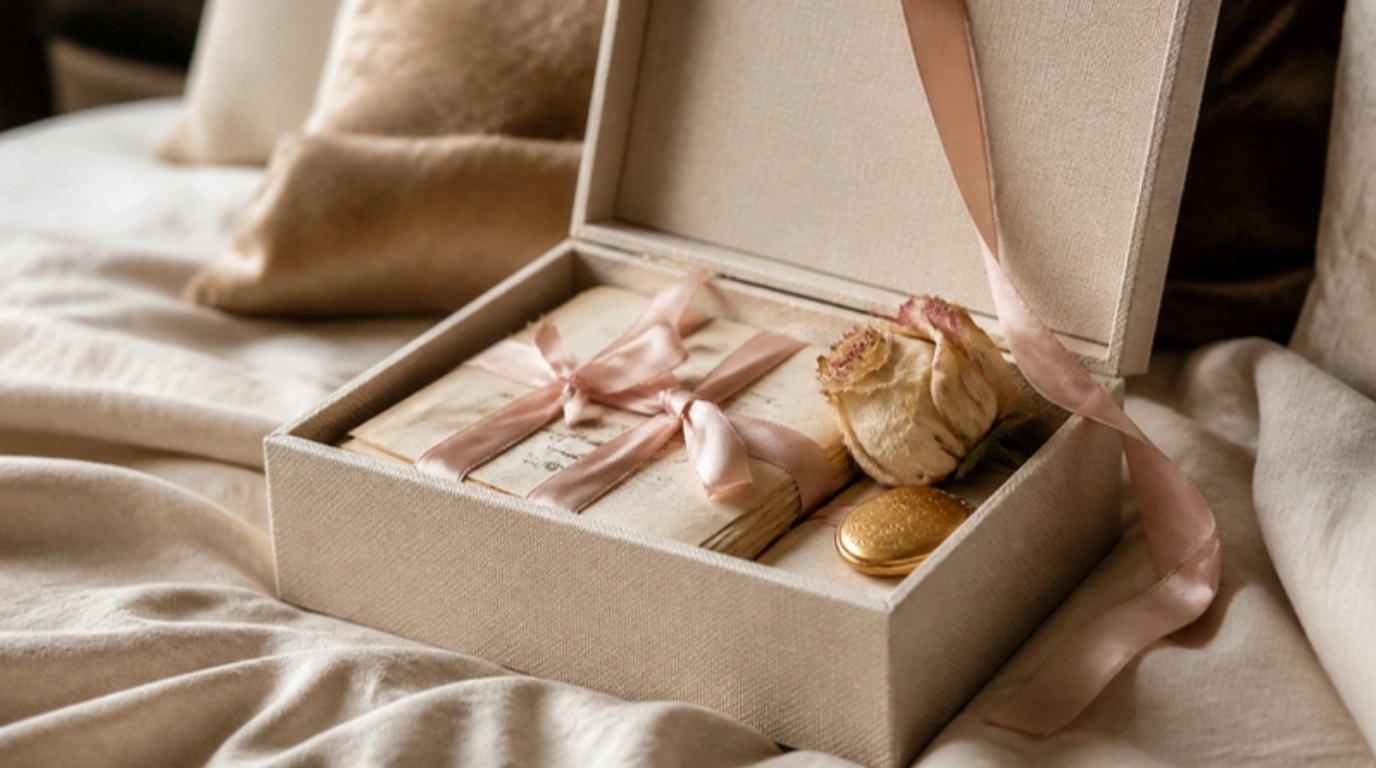
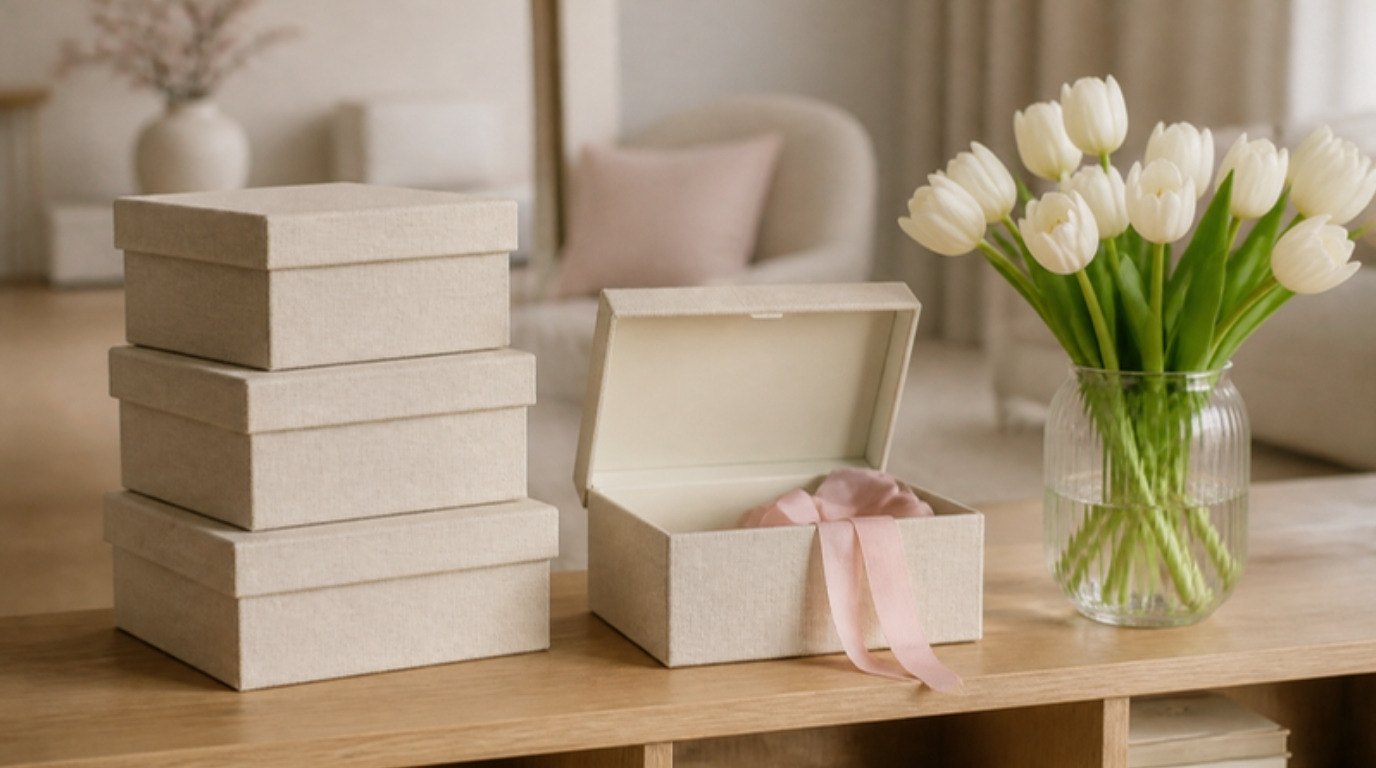
- Sentimental items get their own box. Choose one pretty box for keepsakes. As long as everything fits, nothing has to go. When it overflows, choose the least meaningful piece to let go of, or take a photo of it first.
Please be gentle with yourself here. Sentimental things are not clutter just because they don't have a practical use. The rule is there to make room, not to make you sad.
Getting Your Household on Board
The rule works best when everyone who shares the space understands it, but you can't force it on anyone. Start with your own things and let the results speak. A calmer closet tends to inspire more than a lecture.
Some ideas for a shared home:
- Talk about the why, not the rule. "I'd love it if we could open the cupboard without things falling out" is easier to agree with than "we need a new rule."
- Each person owns their categories. Their clothes, their hobby things, their decisions. Shared categories (mugs, towels, kitchen gadgets) get numbers you agree on together.
- Make it visual. One shelf for mugs, one basket for throws. When it's full, everyone can see it.
- For kids, keep it kind and concrete. One toy bin per category, a giving box before birthdays and holidays, and plenty of praise for generosity. Never give away a child's things without them.
What To Do With the "Out" Item Right Away
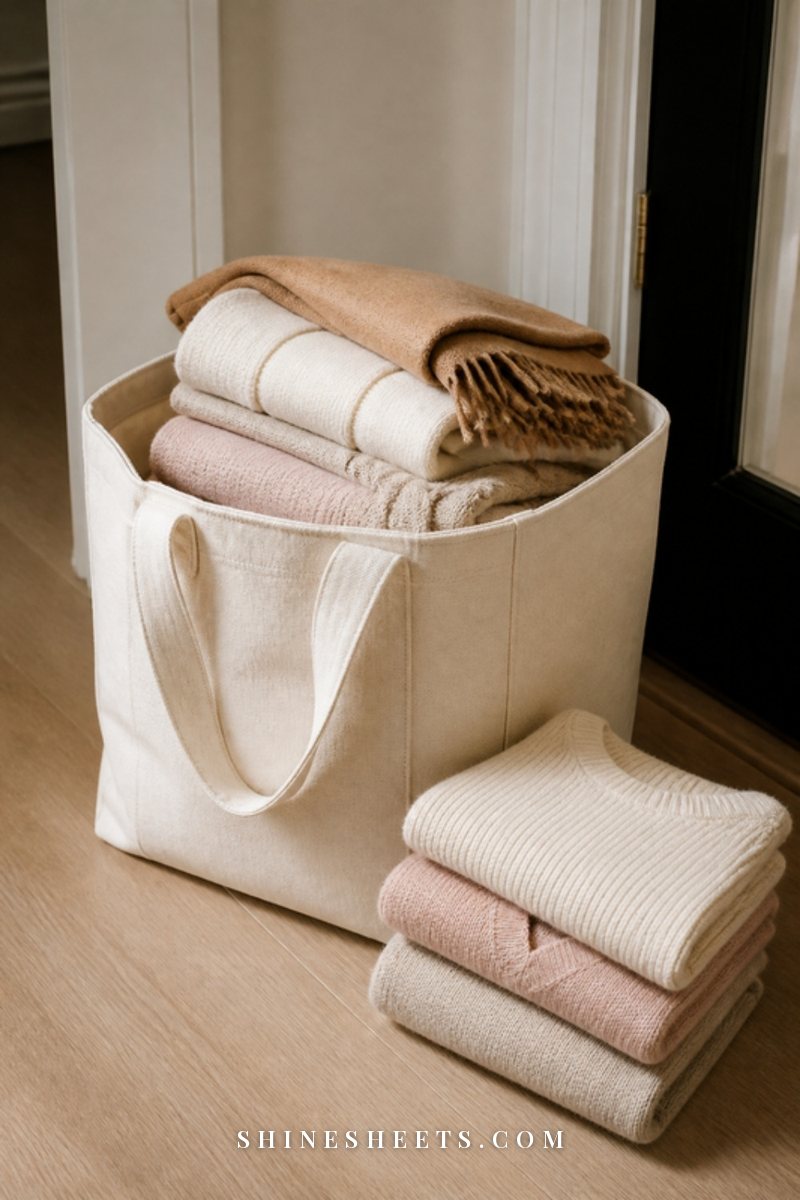
The rule only works if the outgoing item actually leaves. An "out" pile on the floor is just clutter with a new name. Make it effortless:
- Keep a donation bag in your closet. A fabric storage box or a sturdy bag on the closet floor gives out-items an instant home. The moment you hang up something new, the old piece goes straight in.
- Set a drop-off trigger. When the bag is full, it goes in the car or by the door the same day, and you drop it off on your next errand.
- Sort by destination. Good clothes and shoes go to donation or resale; worn textiles to textile recycling where available; old towels to an animal shelter; books to a library donation shelf or a friend.
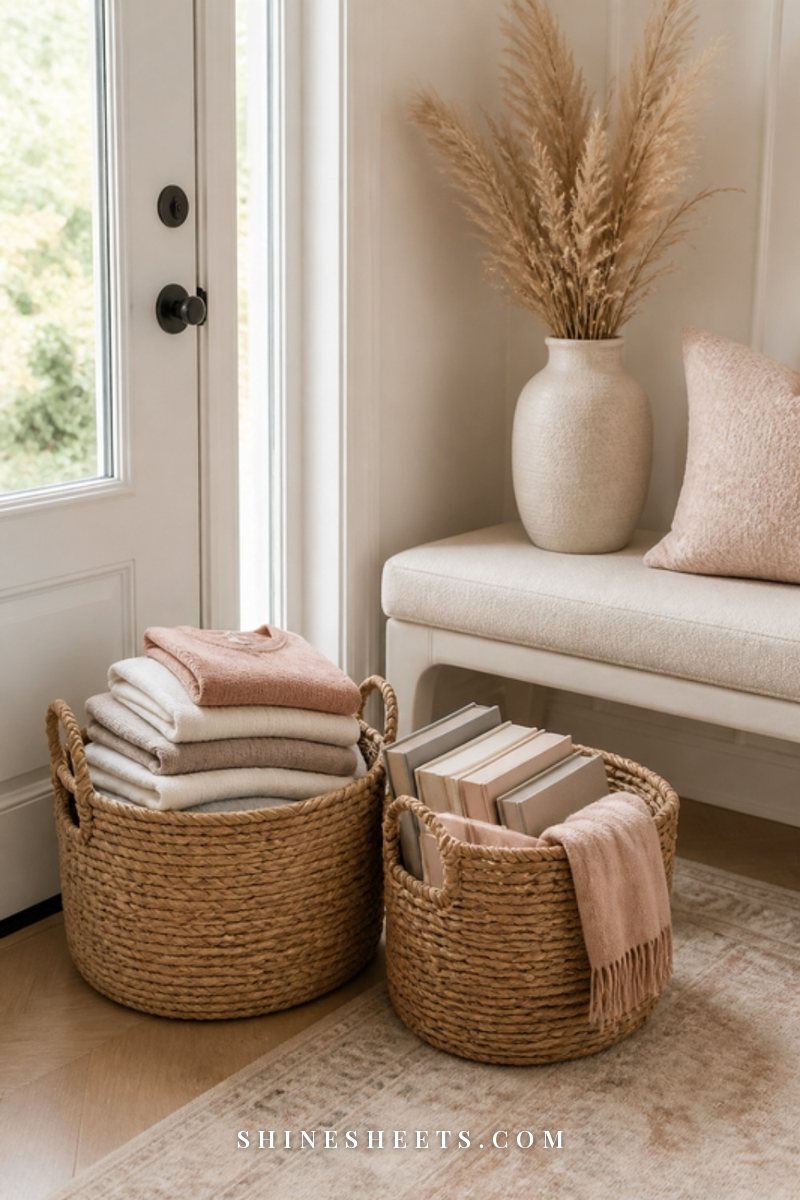
- Keep a basket by the door for things to return or give. A woven storage basket by the entrance is perfect for items going to a specific person – a borrowed dish, a book for a friend.
Check local guidelines for what donation centers accept, and never donate items that are broken, stained or unsafe – those belong in recycling or the trash.
Exceptions to the Rule
A good rule knows when not to apply. These don't need a one-for-one swap:
- Consumables. Shampoo, cleaning products, tea, paper towels, candles you burn. They leave on their own when you use them up. The only rule is not to stockpile far beyond what you'll use.
- True replacements. If your only pair of rain boots cracks and you buy new ones, the old pair is already gone. One in, one out happened by itself.
- Genuine gaps. If you never owned a warm coat and now you need one, filling a real gap is not clutter.
- Life changes. A new job, a new hobby, a new home or a new season of life can raise a number for good reasons. Just adjust the number on purpose rather than letting it creep.
Tracking It Without Stress
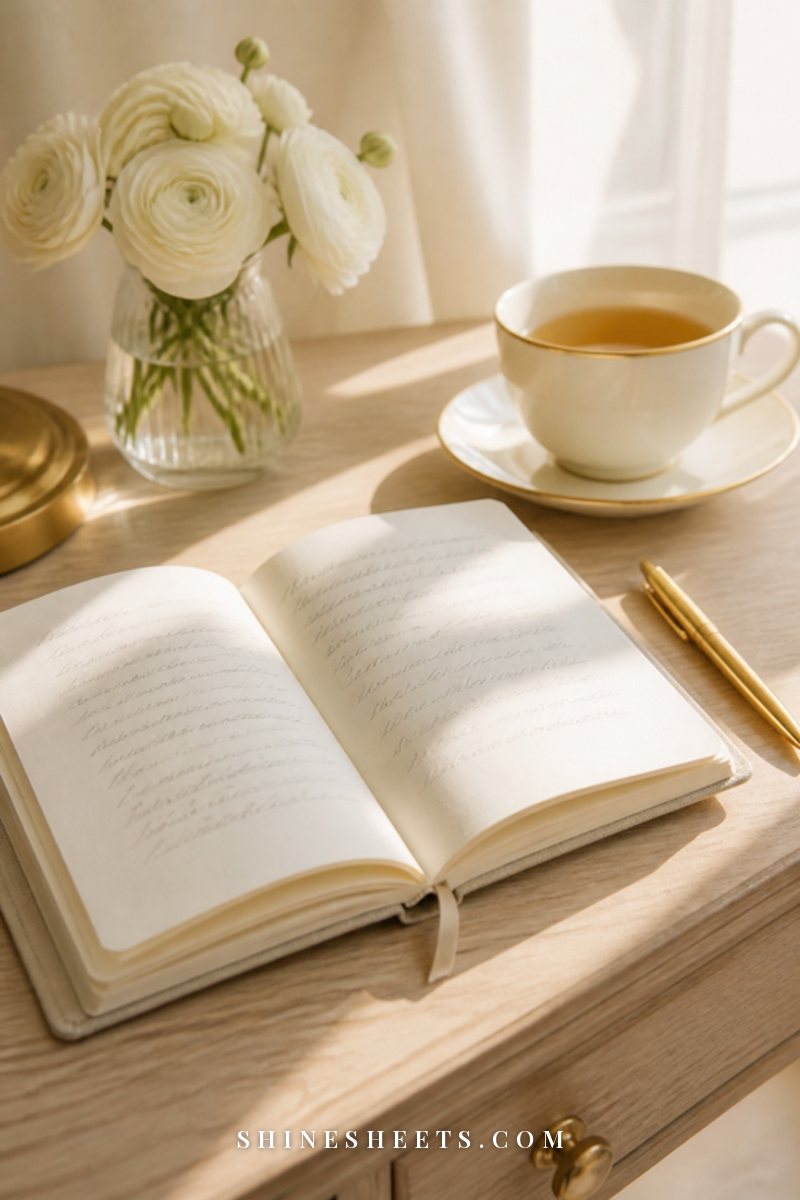
You don't need a spreadsheet for this. Most of the time, the containers do the tracking for you: a full shelf or a full hanger rail is the reminder. If you like a little more structure:
- Write your enough numbers in one place. The back page of a planner or a note on your phone is enough.
- Do a quick count each season. Ten minutes, a few key categories, no judgment.
- Notice your patterns. If one category keeps overflowing, that's where the pause before buying matters most.
- Forgive the slips. If something came in without anything going out, just choose an out-item when you notice. No need to start over.
The point is a calmer home, not a perfect record. A rule that makes you anxious isn't doing its job.
Final Thoughts
The one in, one out rule is one of those small habits that quietly changes everything. Declutter once, decide what "enough" looks like, and let each new thing ask one old thing to leave. Your drawers close, your shelves breathe, and the things you keep become the things you truly love.
Start with one category this week. A calmer home is built one small swap at a time.