There was a winter when my face felt like paper by mid-afternoon. Tight across the cheeks, a little flaky around the nose, and somehow still shiny on the forehead (combination skin really does love to keep things interesting). Everyone kept telling me the answer was hyaluronic acid, so I added it to my routine and waited for that bouncy, dewy look.
Instead, my cheeks felt even tighter. I genuinely thought hyaluronic acid just didn't work for me, until I learned that I was making the most common mistake of all: putting it on bone-dry skin, in a bone-dry room, and walking away without sealing it in.
Hyaluronic acid isn't complicated, but it does have one rule that changes everything. This guide covers what hyaluronic acid actually is, what it can and can't do, the damp skin rule laid out as a simple step card, how to adjust it for dry versus humid climates, and the little mistakes that make it feel like it isn't working.
No lab coat required. Just a damp face and about two minutes.
What Hyaluronic Acid Actually Is
Despite the name, hyaluronic acid isn't an exfoliating acid. It won't peel, tingle or resurface anything. It's a sugar-based molecule your body already makes, found in your skin, joints and eyes, where its main job is to hold on to water.
In skincare, it works as a humectant, which simply means an ingredient that attracts water and binds it to the surface of your skin. You'll often hear that it can hold up to a thousand times its own weight in water. Whatever the exact number in your bathroom, the idea is the same: it acts like a little sponge that helps keep the top layers of your skin plump and comfortable.
Our skin's own supply naturally becomes less abundant over time, and things like sun exposure, dry air and harsh cleansers can make skin feel thirsty much faster. A hyaluronic acid serum is one easy way to give that surface layer a boost of hydration.
Hyaluronic Acid vs. Sodium Hyaluronate
On ingredient lists, you'll often see sodium hyaluronate instead of (or alongside) hyaluronic acid. It's the salt form of the same molecule, and it's usually smaller, more stable and easier to formulate. For your purposes, think of them as close cousins that do the same job. Seeing either name on the label is a good sign.
Why "Multi-Weight" Matters a Little
Some serums mention several molecular weights. Larger molecules tend to sit on the surface and create a smooth, hydrated film you can feel right away. Smaller ones are thought to reach a little further into the very top layers of the skin. A blend of sizes gives you both, which is why "multi-weight" or "multi-molecular" formulas are popular. It's a nice extra, not a must.
What Hyaluronic Acid Can Do: 5 Realistic Benefits
These are cosmetic benefits, and they're mostly about how your skin looks and feels on the surface. The good news is that you'll notice some of them almost immediately.
1. Instant Comfort for Tight Skin
That stretched, "my face is too small" feeling after cleansing? A hydrating layer on damp skin can soften it within minutes. It's the most noticeable benefit and the reason so many people keep using it.
2. A Plumper, Smoother Look
When the surface of your skin holds more water, fine dehydration lines (those crinkly lines that appear when skin is thirsty, especially under the eyes and on the cheeks) can look softer. It's temporary, but it's real, and it makes skin look fresher.
3. Hydration Without Heaviness
Hyaluronic acid adds water, not oil. That makes it a lovely option for oily and combination skin that needs hydration but hates greasy creams. Your T-zone gets moisture without extra shine.
4. A Smoother Base for Makeup
Dehydrated skin can make foundation cling to dry patches and look patchy by lunchtime. Well-hydrated skin tends to take makeup more evenly. A thin layer of moisturizer on top, a minute to settle, and your base goes on noticeably smoother.
5. A Friendly Partner for Stronger Ingredients
Because it's gentle and soothing, hyaluronic acid pairs well with ingredients that can be drying, like retinoids or exfoliating acids. It won't cancel out their effect, but it can help your skin feel more comfortable while you use them.
What Hyaluronic Acid Won't Do
Knowing the limits keeps you from spending money on promises no serum can keep:
- It won't replace your moisturizer. Hyaluronic acid adds water, but it doesn't lock it in on its own. You still need a cream or lotion on top.
- It won't fix a damaged barrier by itself. A compromised barrier needs lipids like ceramides, gentle care and time.
- It won't erase wrinkles. The plumping effect is surface-level hydration, not a change in deeper structure.
- It won't treat acne or dark spots. It can support skin that's being treated, but it isn't a treatment.
- More isn't better. A serum with a higher percentage isn't automatically more hydrating. Many effective formulas use well under 2%.
Why Hyaluronic Acid Can Make Skin Feel Drier
This is the part that confused me for so long, so let me explain it the way I wish someone had explained it to me.
Hyaluronic acid is a water magnet. It needs water nearby to do its job. If you apply it to completely dry skin, it has very little to grab onto from the surface. In very dry air, the thinking is that it may even pull water from wherever it can, and without a moisturizer on top, that water can simply evaporate away. The result is skin that feels tight, sometimes even a bit sticky, and not at all dewy.
The fix is beautifully simple: give it water to hold, then put a lid on it. That's the damp skin rule.
The Damp Skin Rule: A 5-Step Card
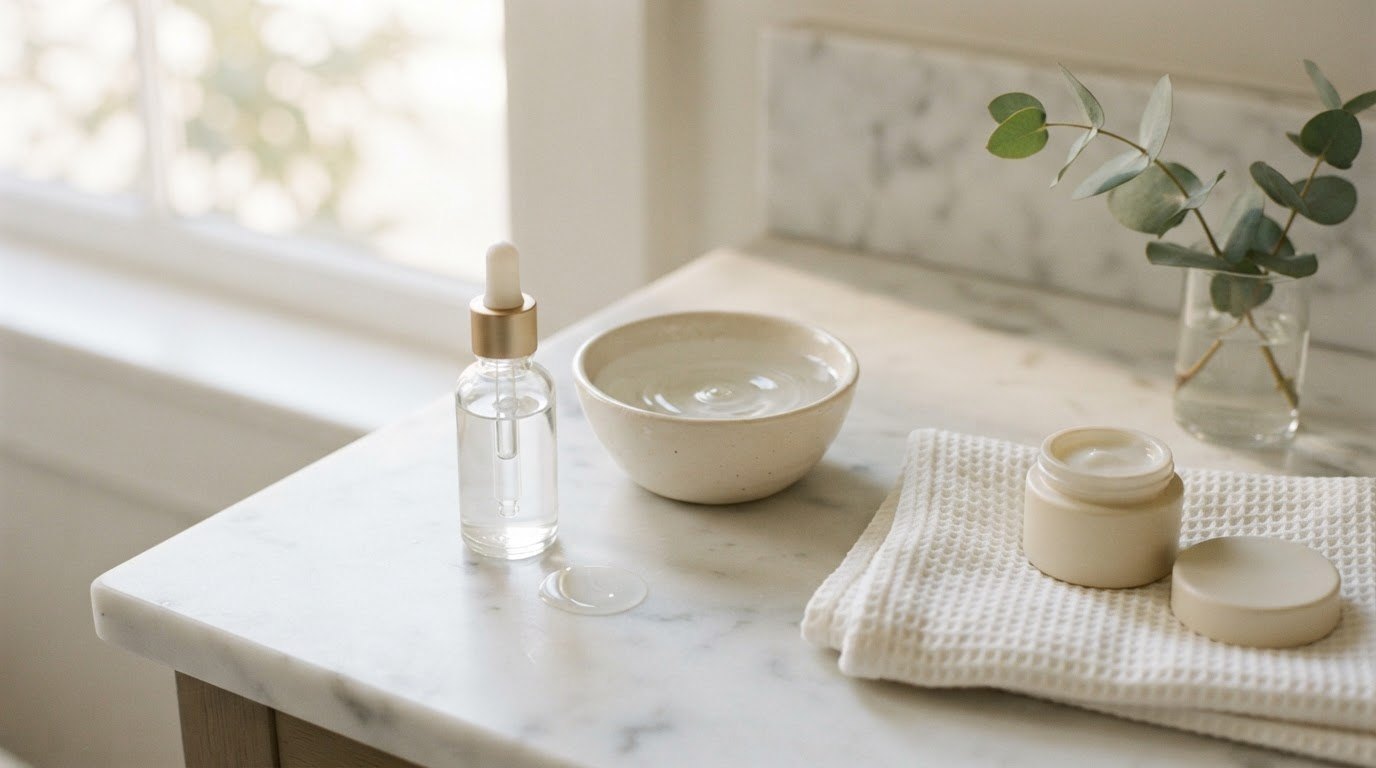
This is the heart of the whole article, so screenshot it or stick a note on your bathroom mirror. Five steps, about two minutes, morning or evening.
Step 1: Cleanse Gently
Wash with a mild cleanser and lukewarm water. Hot water and squeaky-clean foaming washes strip the skin and leave it thirsty before you've even started. Look for something that leaves your face soft, not tight.
Step 2: Pat, Don't Rub, and Stay Damp
Gently pat your face with a clean towel so it's no longer dripping, but still visibly damp. Think "just out of the shower," not "dried off." If your skin dried while you were brushing your teeth, that's fine: go to step 3.
Step 3: Add Water if Needed
Mist your face or press on a watery toner. A light veil of a hydrating facial mist takes two seconds and gives the serum something to work with. If you prefer a toner, a Korean hyaluronic acid toner patted in with your palms does the same job and adds an extra layer of hydration.
Step 4: Press In Two or Three Drops of Serum
Place two or three drops of serum into your palm or fingertips, warm them slightly, and press (don't drag) over your face and neck. Start where you feel tightest. A pick for most people is a simple hyaluronic acid serum with vitamin B5: look for a short ingredient list, no added fragrance and sodium hyaluronate or several molecular weights in the formula. Wait about 30 to 60 seconds, until it feels mostly absorbed but still slightly tacky.
Step 5: Seal It With Moisturizer
This is the step people skip, and it's the one that makes everything work. Apply your moisturizer while the serum is still a little tacky. The moisturizer locks the water in so it stays in your skin instead of evaporating. A ceramide moisturizing cream is a lovely choice here, since ceramides support the barrier while the hyaluronic acid handles hydration. In the morning, follow with sunscreen.
The damp skin rule in one line: damp skin, a little serum, a lid of moisturizer, within two minutes.
How Much and How Often
Hyaluronic acid is one of the easiest ingredients to use regularly. Here's the simple version:
- How much: Two or three drops for the face, one more for the neck. Using half the bottle won't hydrate you more; it'll just feel sticky and may pill under makeup.
- How often: Once or twice a day. Most skin types tolerate daily use well.
- How soon you'll notice: The comfort is often immediate. Smoother, plumper-looking skin over the day usually shows within a week or two of consistent use.
- How long it lasts: An opened serum generally keeps for several months. Check the little open-jar symbol on the packaging and store it away from heat and direct sunlight.
Morning or Night?
Either works, and both is lovely. It doesn't make your skin more sensitive to the sun and it plays well with almost everything.
In the morning, hyaluronic acid gives you a smooth, comfortable base for sunscreen and makeup. At night, it can make the rest of your evening routine feel gentler, especially if you use retinoids or exfoliants. I'd keep it in the evening at the very least if your skin feels tight when you wake up, and pair that with a slightly richer moisturizer.
If you're layering several serums, the general order is thinnest to thickest: toner, hyaluronic acid, any other water-based serums, then moisturizer. My guide on how to layer skincare products goes into more detail if your shelf is getting crowded.
Dry Climate vs. Humid Climate: How To Adjust
Here's something most labels never mention: the air around you changes how hyaluronic acid behaves. A routine that feels perfect on a muggy summer day can feel tight in a heated apartment in January. Use this table to adjust.
| Situation | Dry climate or heated indoor air | Humid climate or muggy summer |
|---|---|---|
| How skin tends to feel | Tight, flaky patches, makeup clings to dry spots | Comfortable or a bit slick, T-zone gets shiny faster |
| Damp skin step | Essential every time; mist or toner first, never on dry skin | Still helpful, but a quick pat-dry is usually enough |
| Serum amount | Two or three drops, layered with a hydrating toner | One or two drops; a hydrating toner alone may be enough |
| Moisturizer | A richer cream with ceramides or a little squalane; seal immediately | A light gel-cream or lotion so the T-zone stays comfortable |
| Extra support | A humidifier in the bedroom and an extra hydrating layer at night | Blotting papers for the T-zone and a lightweight sunscreen |
| Watch out for | Skipping moisturizer, very hot showers, foaming cleansers | Layering too much product, which can feel sticky in heat |
If you live somewhere with long, dry winters, a small humidifier can make a surprising difference. I'd choose a white mini cool-mist humidifier for the bedroom: quiet, easy to clean and small enough for a nightstand. Clean it regularly according to the instructions so it stays fresh. My full winter skincare routine has more swaps for when the heating comes on.

Hyaluronic Acid by Skin Type
Dry Skin
Hyaluronic acid is a natural friend for dry skin, but it's only half the answer. Dry skin lacks oil as well as water, so always follow it with a richer moisturizer that contains lipids like ceramides, shea butter or squalane. Use it morning and night if your skin likes it.
Oily Skin
Oily skin can still be dehydrated, and that can make it look dull and feel tight underneath the shine. A hyaluronic acid serum plus a light gel moisturizer gives hydration without heaviness. For a full routine, my guide to the best skincare routine for oily skin walks through every step.
Combination Skin
This is my own skin type, so I have a soft spot for this one. Apply hyaluronic acid all over, since both zones benefit from water, then adjust your moisturizer: lighter on the T-zone, a little more on the cheeks. My skincare routine for combination skin includes a "zone it" map that shows exactly what goes where.
Sensitive Skin
Hyaluronic acid is generally very well tolerated, which makes it a great first serum for sensitive skin. Choose a fragrance-free formula with a short ingredient list, and watch for extras like essential oils or high amounts of alcohol, which are more likely to sting than the hyaluronic acid itself.
What To Pair It With
Hyaluronic acid gets along with nearly everything, which is part of its charm. A few pairings work especially well:
- Niacinamide: A classic duo. Hyaluronic acid on damp skin first, then niacinamide, then moisturizer. My guide to what niacinamide does and how to use it has a full pair-it table.
- Ceramides: Water plus lipids. Hyaluronic acid hydrates, ceramides help keep it there.
- Retinoids: Apply hyaluronic acid before a retinoid, or on alternate nights, to help your skin feel more comfortable while it adjusts.
- Exfoliating acids: Use hyaluronic acid after your exfoliant (once it has dried) or on rest nights to soothe that freshly exfoliated feeling.
- Vitamin C: Easy to layer in the morning. Vitamin C first, hyaluronic acid on top, then moisturizer and sunscreen.
For a weekly treat, a hydrating sheet mask is the damp skin rule in its most relaxing form. A Korean hyaluronic acid sheet mask for 15 to 20 minutes, followed by moisturizer, feels lovely after a long week. My guide to a hydrating facial at home turns it into a whole slow evening.
6 Common Hyaluronic Acid Mistakes
- Applying it to dry skin. The number one reason it feels like it isn't working. Damp skin first, every time, especially in dry air.
- Skipping moisturizer. Without a lid, the water it attracts can evaporate. Seal it within a minute or two.
- Using too much. More serum means more stickiness and pilling, not more hydration. Two or three drops are plenty.
- Waiting too long between steps. If your face dries completely before moisturizer, mist again first.
- Stacking several hyaluronic products. A toner, serum, essence and cream that all feature it can feel tacky. One or two hydrating layers is enough for most people.
- Expecting it to do everything. It's a hydrator, not a treatment. Pair it with sunscreen, a good moisturizer and gentle habits for the results you're hoping for.
What To Look For in a Hyaluronic Acid Serum
You don't need the most expensive bottle. Many of the best-loved serums are drugstore and K-beauty favorites. When you're comparing options, look for:
- Hyaluronic acid or sodium hyaluronate near the top of the ingredient list.
- Multiple molecular weights, if you'd like both surface and slightly deeper hydration.
- Soothing extras like panthenol (vitamin B5), centella or glycerin.
- No added fragrance, especially for sensitive skin.
- A light, watery texture that absorbs within a minute and doesn't leave a sticky film.
- Packaging that keeps it clean, like a dropper or pump, stored away from heat and sunlight.
A Gentle Safety Note
Hyaluronic acid is one of the most widely tolerated skincare ingredients, but every product contains other ingredients too, and every face is different. Patch test anything new: apply a little behind your ear or along your jawline once a day for a few days. If there's no redness, itching or burning, you can try it on your face.
If you notice burning, swelling, hives or a rash, rinse it off and stop using the product. And if your skin is persistently dry, cracked, itchy or inflamed, it's worth speaking to a dermatologist or pharmacist, since some skin conditions need more than a good serum. This guide is for general information and isn't a substitute for personal medical advice.
Final Thoughts
Hyaluronic acid isn't magic in a bottle, but it doesn't need to be. Give it a damp face, a couple of drops and a moisturizer on top, and it quietly does exactly what it promises: keeps your skin comfortable, soft and hydrated.
Start tonight with the five-step card, adjust for the air around you, and let your skin enjoy the drink of water it's been asking for.