I remember standing in the skincare aisle, looking at a wall of little dropper bottles that all seemed to say the same word: niacinamide. Five percent. Ten percent. Twenty percent "for maximum results." Everyone online swore by it, and I wanted in. So naturally my first instinct was to reach for the strongest one on the shelf.
Then I remembered my skin. I have combination, sensitive skin with a shiny T-zone, and anything too strong tends to make my cheeks go warm and pink before I've even finished my evening tea. What I eventually learned is that niacinamide really can be one of the kindest, most useful ingredients out there, but only when you choose the right strength and pair it thoughtfully.
So this is the calm, no-hype guide to niacinamide: what it actually is, what it can and can't do, a simple percentage guide (2–5% versus 10% and beyond) with sensitive skin in mind, how to fit it into your routine, and a "pair it / be careful with" compatibility table you can come back to whenever you buy something new.
Think of it as the friend who reads the label for you.
What Is Niacinamide, in Plain English
Niacinamide (you'll sometimes see it called nicotinamide) is a form of vitamin B3. In skincare, it's a water-soluble ingredient, which means it blends easily into watery serums, toners and lightweight moisturizers and usually feels like nothing on the skin.
It's become so popular because it's a bit of an all-rounder. Instead of doing one dramatic thing, it quietly supports several of the things most of us care about: a comfortable barrier, less visible shine, a more even-looking tone. It's also generally well tolerated, which is rare for an ingredient that does this much.
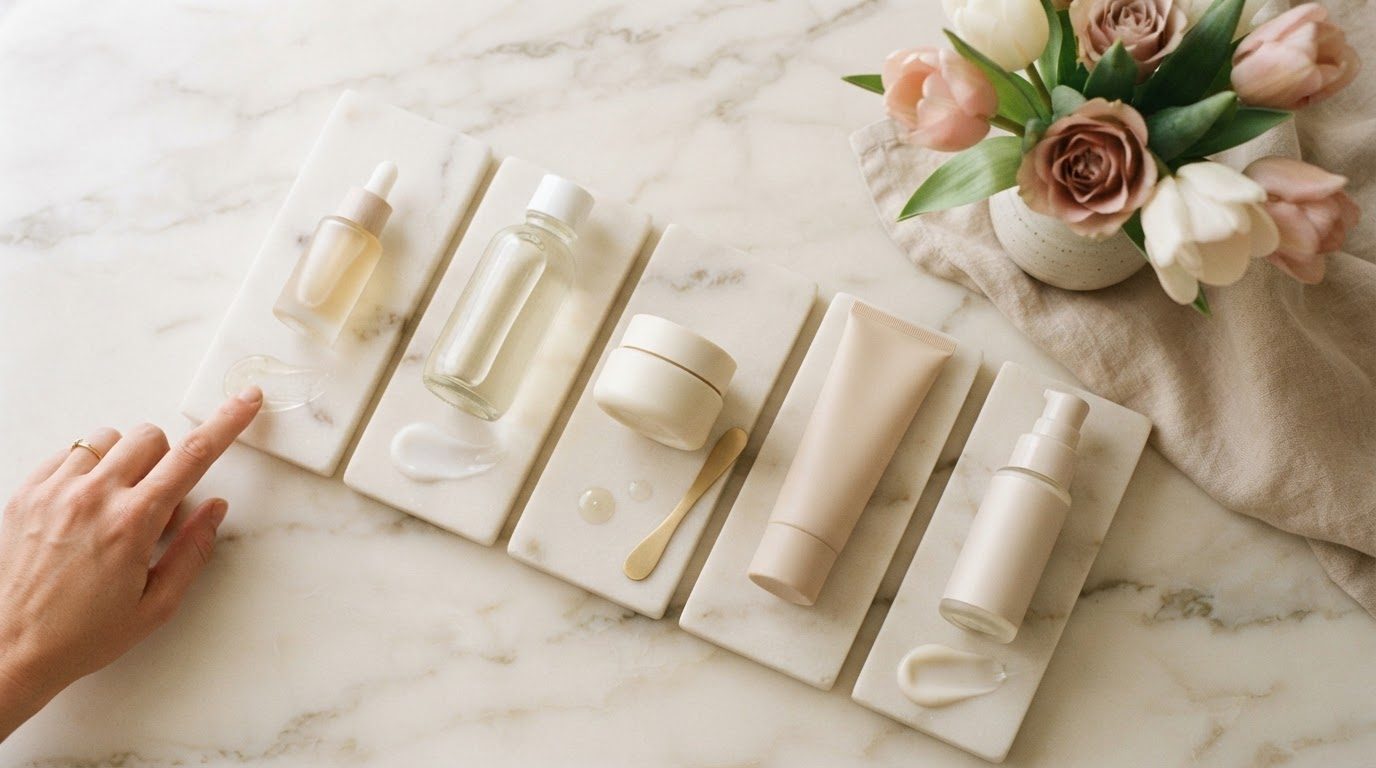
You'll find it in three main places:
- Serums – the most concentrated option, often between 2% and 10%, sometimes higher.
- Moisturizers – usually a lower percentage blended with hydrating and barrier-supporting ingredients.
- Toners and essences – lighter doses, good for building it into a routine gently.
What Niacinamide Can Help With: 5 Real Benefits
A quick note before the list: these are cosmetic benefits, they build gradually, and results vary from person to person. Niacinamide is a supportive ingredient, not a cure for any skin condition.
1. A Stronger-Feeling Skin Barrier
Your skin barrier is the outermost layer that keeps moisture in and irritants out. Niacinamide is well known for supporting it, in part by helping the skin produce its own ceramides (the fats that hold skin cells together like mortar between bricks). The result many people notice is skin that feels less tight, less reactive and more comfortable overall.
2. Less Visible Shine
For oily and combination skin, this is the headline benefit. Niacinamide can help regulate how oily the skin looks over the day, so your T-zone may look less slick by the afternoon. It won't turn an oily face matte, but it can take the edge off.
3. Smaller-Looking Pores
You can't actually shrink pores, but when they're less clogged and the skin around them is healthier, they tend to look smaller. With steady use, many people see a smoother-looking surface on the nose and inner cheeks.
4. A More Even-Looking Tone
Niacinamide can help fade the look of dullness and uneven tone over time, including leftover marks after breakouts. It works slowly and gently, which is exactly why it's a nice option for people who can't tolerate stronger brightening ingredients.
5. Calmer-Looking Redness
Because it supports the barrier, niacinamide can help skin look calmer and less blotchy. That said, a small number of people find high percentages make redness worse, which is why strength matters so much (more on that below).
What Niacinamide Won't Do
I think it's just as useful to know the limits, so you don't end up disappointed or overdoing it:
- It won't clear acne overnight. It can be a helpful supporting player for breakout-prone skin, but persistent or painful acne deserves a dermatologist's advice.
- It won't replace sunscreen. Dark spots and uneven tone will keep coming back without daily sun protection.
- It won't exfoliate. Niacinamide doesn't dissolve dead skin like acids do, so it won't give you that instant smoothness.
- More isn't better. A 20% serum isn't four times as effective as a 5% one. For many people, higher strengths simply raise the chance of irritation.
Which Percentage Should You Choose?
This is the question I get asked most, and it's where many of us go wrong. Higher numbers look impressive on the bottle, but much of the research on niacinamide's skin benefits has looked at lower concentrations, often in the 2–5% range. Here's a simple guide:
| Strength | Who it suits | How to start | Good to know |
|---|---|---|---|
| In a moisturizer (often under 5%) | Very sensitive or reactive skin, beginners, dry skin | Once a day, at night, for the first two weeks | The gentlest way to try it; you get barrier support without a separate step |
| 2–5% serum | Sensitive, combination and dry skin; most first-timers | Every other day for two weeks, then daily if calm | The sweet spot for many people; plenty of benefit with low irritation risk |
| 10% serum | Oily, resilient skin that already tolerates niacinamide well | Only after a few calm weeks on a lower strength; start every other day | Very popular, but can cause redness or tingling on sensitive skin |
| 15–20% and up | Rarely necessary | Not a starting point; spot use on the T-zone at most | Higher irritation risk without clear extra benefit for most people |
If you have sensitive skin like mine, I'd choose a gentle niacinamide serum around 5% to start. Look for a short ingredient list, no added fragrance and soothing extras like panthenol or centella if you can find them.
If your skin is oily and fairly resilient, and you've already used a lower strength without any trouble, a 10% niacinamide and zinc serum is the classic best-seller. Zinc is often added for oil control. Just introduce it slowly and keep it mostly on the T-zone if your cheeks are on the sensitive side.
How To Use Niacinamide, Step by Step
Niacinamide is easy to slot into almost any routine. Here's the simplest way to do it:
- Cleanse gently. Start with a gentle hydrating facial cleanser that leaves your skin comfortable, not tight. Pat dry, leaving the skin slightly damp.
- Apply any watery toner or essence (optional). If you have one you love, use it first. Thin textures go on before thicker ones.
- Use two or three drops of niacinamide serum. Warm them between your fingertips and press over your face, starting with oilier areas. You need far less than you'd think.
- Wait about a minute. Let the serum sink in before the next layer. This helps prevent pilling, the little rolled-up flakes that appear when products don't absorb.
- Moisturize. A barrier-friendly cream locks everything in. A ceramide moisturizing cream is a lovely match, since niacinamide and ceramides support the barrier from two angles.
- In the morning, finish with sunscreen. A lightweight Korean sunscreen with SPF 50 sits nicely over niacinamide without feeling heavy. This step protects every bit of progress you make.
If you're juggling several serums, my guide on how to layer skincare products walks through the order in more detail.
Morning or Night?
Both. Niacinamide is stable, doesn't make your skin more sensitive to the sun and plays well with most routines, so you can use it whenever it fits best.
- Morning works well if you want help with shine during the day. It also sits nicely under sunscreen and makeup.
- Evening works well if your morning routine is already full, or if you use it alongside a retinoid to help keep things comfortable.
- Twice a day is fine once your skin has adjusted, but there's no need to rush. Once a day already brings plenty of benefit.
Consistency matters more than timing. If you tend to forget serums, keep your evening steps together on a small cream ceramic vanity tray by the sink, in the order you'll use them. When everything is lined up and within reach, the routine starts to feel like a little ritual rather than a chore, and you're far more likely to stick with it long enough to see results.
Pair It or Be Careful: The Compatibility Table
This is the part I wish existed when I first started. Niacinamide gets along with most ingredients, but a few combinations need a bit of thought, especially for sensitive skin. Screenshot it for your next shopping trip.
| Ingredient | Verdict | How to combine |
|---|---|---|
| Hyaluronic acid | Pair it | A classic duo. Apply hyaluronic acid on damp skin, then niacinamide, then moisturizer. |
| Ceramides | Pair it | Both support the barrier. Use niacinamide first, then a ceramide cream. |
| Peptides | Pair it | Generally easy to layer; use the thinner texture first. |
| Sunscreen | Pair it | Niacinamide in the morning, sunscreen as the last step. |
| Retinol and retinoids | Pair it, gently | Niacinamide may help retinoids feel more comfortable. Apply niacinamide first or mix into your moisturizer; introduce the retinoid slowly. |
| Vitamin C | Usually fine | The old "never mix them" rule is mostly outdated with modern formulas. If you notice flushing, use vitamin C in the morning and niacinamide at night. |
| AHAs and BHAs (exfoliating acids) | Be careful | Not dangerous together, but sensitive skin may sting. Alternate nights or use acids at night and niacinamide in the morning. |
| Benzoyl peroxide | Be careful | Can be drying on its own. Use at different times of day and keep a good moisturizer in the routine. |
| Several niacinamide products | Be careful | A toner, serum and moisturizer that all contain it can add up to a high total dose. Check labels and cut back if you get redness. |
For more on hydration pairings, my guide to using hyaluronic acid with the damp skin rule fits perfectly with this. And if vitamin C and retinol are both on your shelf, this explainer on using retinol and vitamin C together clears up a lot of confusion.
Niacinamide by Skin Type
Oily and Combination Skin
This is where niacinamide really shines (or, well, helps you shine less). Use it once or twice a day, focus on the T-zone and pair it with a light gel-cream rather than a heavy one. If you have combination skin, my full skincare routine for combination skin shows exactly where it fits, including which zones to focus on.
Dry Skin
Dry skin benefits from niacinamide's barrier support. Choose a moisturizer that contains it, or a low-percentage serum layered under a richer cream. Avoid alcohol-heavy formulas that can feel tight.
Sensitive Skin
Start low and slow: a moisturizer containing niacinamide or a serum of 5% or less, used every other night for two weeks. If your skin stays calm, move to daily use. If you have rosacea or a diagnosed skin condition, check with your dermatologist before adding it.
Breakout-Prone Skin
Niacinamide can be a gentle support for skin that tends to break out, especially for the redness and marks that linger afterward. It works well alongside other routine basics. My guide to the best skincare routine for oily skin has more ideas for keeping pores clear.
Why Niacinamide Sometimes Causes Redness
If you've ever applied a niacinamide serum and felt your face turn warm and pink a few minutes later, you're not imagining it. Some people experience a temporary flush, especially with higher strengths or on skin that's already irritated.
A few things can make it more likely: a very high percentage, applying it to freshly exfoliated or damaged skin, layering several products that contain it, or simply having very reactive skin.
What to do if it happens:
- Rinse it off with cool water and apply a plain, gentle moisturizer.
- Give your skin a few days off.
- Try again with a lower strength, every other day, or mixed into your moisturizer to buffer it.
- Stop completely if you get burning, swelling, itching or a rash, and speak to a pharmacist or dermatologist.
Sometimes redness is less about niacinamide and more about a stressed barrier. My guide to the signs of a damaged skin barrier can help you tell the difference.
How Long Until You See a Difference?
Niacinamide is a slow, steady ingredient. Here's a realistic timeline with consistent daily use:
- First two weeks: Skin may feel a little more comfortable and balanced. This is mostly your adjustment period.
- Four to eight weeks: Many people notice less shine on the T-zone and a smoother-looking surface.
- Around twelve weeks: Changes in tone and the look of leftover marks tend to show up around here, if they're going to.
Take a photo in the same light on day one, then again after a month and after three months. Day-to-day changes are almost impossible to see in the mirror, but side-by-side photos tell the story.
5 Common Niacinamide Mistakes
- Starting with the strongest bottle. A 10% or 20% serum is not a beginner product for sensitive skin. Start at 5% or lower.
- Using too much. Two or three drops cover the whole face. Extra product just pills and wastes money.
- Stacking it without realizing. Check your toner, essence and moisturizer labels so you're not using four sources at once.
- Layering it with every active on day one. Introduce niacinamide on its own for two weeks before combining it with acids or retinoids.
- Giving up too soon. Unless it irritates you, give it at least six to eight weeks before deciding it doesn't work.
What To Look For in a Niacinamide Product
You don't need a pricey bottle. Some of the most-loved niacinamide serums are affordable drugstore and K-beauty best-sellers. When you're comparing options, here's what I'd check:
- The percentage on the label. Around 2–5% for sensitive or first-time skin; 10% only if you already know your skin tolerates it.
- Niacinamide near the top of the ingredient list. If it's listed after the preservatives, there's probably very little in there.
- No added fragrance or essential oils. These are far more likely to irritate sensitive skin than the niacinamide itself.
- Soothing or hydrating partners. Panthenol, centella, glycerin, ceramides or hyaluronic acid make a formula feel kinder.
- A texture you'll enjoy. A watery serum layers easily under makeup; a milky formula can feel more comforting on dry cheeks.
- A realistic promise. Words like "balancing," "barrier-supporting" or "refining" are honest. "Erases pores overnight" is not.
Can You Use Niacinamide Every Day?
For most people, yes. Once your skin has adjusted over the first couple of weeks, daily use is perfectly normal, and that steady consistency is what brings results. Many people happily use it twice a day.
The exceptions are simple: if your skin feels warm, itchy or flushed after applying it, drop back to every other day or switch to a lower strength. And on days when your skin feels stressed (after too much sun, a harsh cleanser or a new exfoliant), it's fine to skip every active and keep things to cleanser, moisturizer and sunscreen. Niacinamide will still be there tomorrow.
A Gentle Safety Note
Niacinamide is generally considered gentle and safe for everyday skincare, but every face is different. Patch test any new product first: apply a little behind your ear or along your jawline once a day for three to five days. If there's no redness, itching or burning, you're good to try it on your face.
If you're pregnant or breastfeeding, have a diagnosed skin condition or use prescription skincare, it's worth checking with your doctor or dermatologist before adding new products. This guide is for general information and isn't a substitute for personal medical advice.
Final Thoughts
Niacinamide doesn't need to be dramatic to be wonderful. Choose a gentle strength, give it a few quiet weeks and pair it with the basics your skin already loves: a kind cleanser, a good moisturizer and daily sunscreen.
Start low, go slow and let it do its steady work in the background. Your skin will thank you in its own calm, understated way.