Dry skin and dehydrated skin can feel almost identical: tight after cleansing, a little rough, makeup that clings to every flaky patch. But they're two different problems, and they need different fixes. Dry skin is short on oil. Dehydrated skin is short on water. Put a rich oil on skin that's really thirsty for water and you'll often end up greasy and still tight at the same time.
The good news is that once you know which one you're dealing with (or whether it's both, which is very common), the routine gets much simpler. You stop buying random "hydrating" products and start choosing the one thing your skin is actually asking for.
This guide breaks down dehydrated vs dry skin in plain language: what each one is, how to tell them apart at home with the pinch test, what causes dehydration, a simple routine for each, what to do when you have both, the mistakes that keep skin thirsty and the small daily habits that help. There's also a side-by-side comparison table you can screenshot for your next shopping trip.
Dry Skin vs Dehydrated Skin: The Real Difference
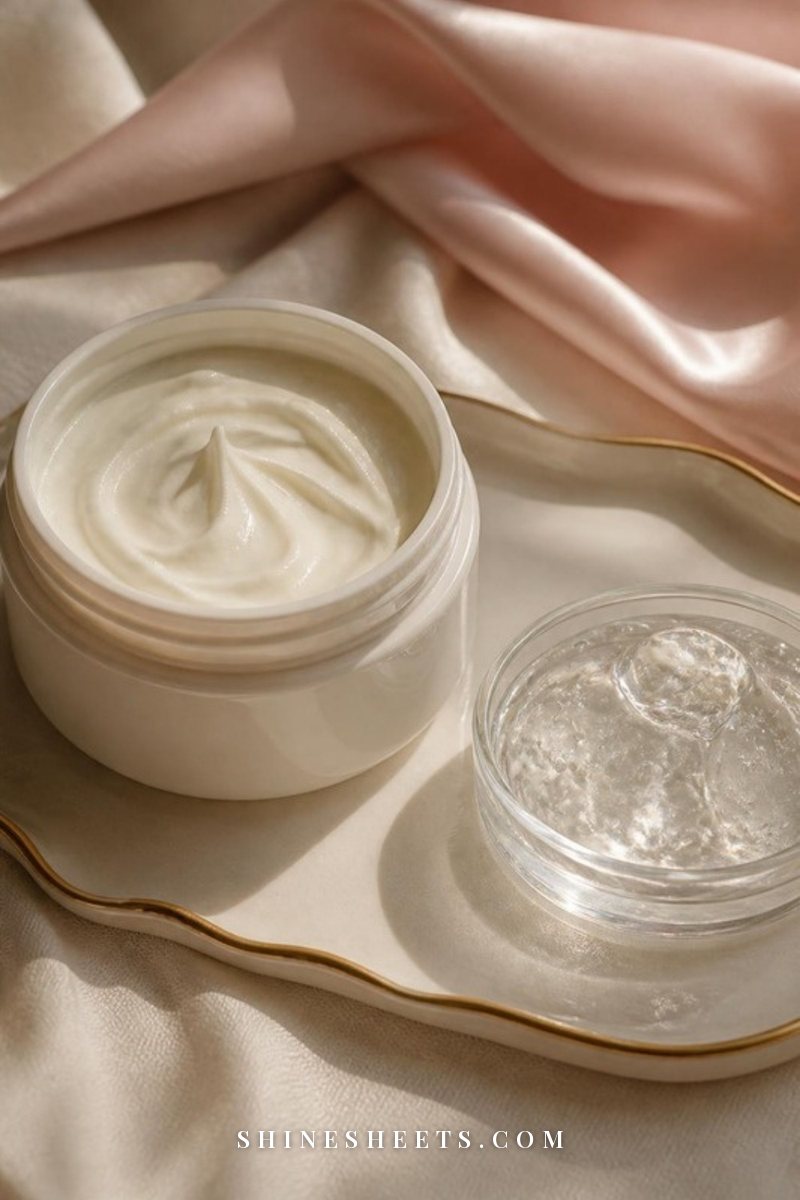
The simplest way to remember it: dry is a skin type, dehydrated is a skin condition. A skin type is mostly something you're born with and it stays fairly stable. A condition comes and goes depending on the weather, your routine and your habits.
What Dry Skin Is
Dry skin naturally produces less sebum, the oily substance that keeps the surface soft and helps hold everything together. Less oil means a weaker protective film, so the skin feels rough, looks matte or dull and can flake, especially around the cheeks, nose and eyebrows. Pores tend to look small. Dry skin is usually dry all over and all year, even if winter makes it worse.
Think of it like a wooden table that was never oiled. It's not that it lost something overnight; it just doesn't have enough of its own protective layer.
What Dehydrated Skin Is
Dehydrated skin is low on water in its upper layers. It can happen to anyone: dry, normal, combination and yes, oily skin too. In fact, oily skin that's dehydrated is one of the most confusing combinations out there, because you see shine and assume you need less moisture, when your skin is actually crying out for more water.
Dehydration often shows up as fine, crisscross lines that appear when you smile or gently push your cheek, a dull or "tired" look, and skin that feels tight but may still get oily by midday. It tends to come and go. A long flight, a week of indoor heating or a new exfoliating acid can bring it on in a few days, and the right routine can calm it down just as quickly.
It took me a while to understand that my combination skin could be shiny in the T-zone and dehydrated on the cheeks at the very same time. Once I stopped treating my whole face as "oily," things got a lot calmer.
Dry vs Dehydrated Skin at a Glance
Here's the comparison table I wish I'd had years ago. Screenshot it, and next time you're standing in the skincare aisle, check which column sounds like you.
| Dry Skin | Dehydrated Skin | |
|---|---|---|
| What it is | A skin type: your skin makes less oil | A temporary condition: your skin is low on water |
| Who gets it | People with a naturally dry skin type | Any skin type, including oily and combination |
| Feels like | Rough, tight, sometimes itchy, all day | Tight after cleansing, then may turn oily; "thirsty" but not always flaky |
| Looks like | Matte, flaky patches, small pores, rough texture | Dull, fine crisscross lines, sunken look under eyes, makeup sits oddly |
| Comes and goes? | Mostly stable, worse in winter | Yes, changes with weather, routine and habits |
| Key ingredients | Ceramides, squalane, shea butter, plant oils, fatty acids | Hyaluronic acid, glycerin, panthenol, aloe, beta-glucan |
| Routine fix | Gentle cream cleanser, rich cream, a few drops of oil | Hydrating toner and serum on damp skin, sealed with a light moisturizer |
| Biggest mistake | Using foaming cleansers and light gels only | Piling on oils or skipping moisturizer because skin "looks oily" |
If you nodded at both columns, don't worry. You're not confused, you're just normal. We'll cover the "both at once" situation further down.
Signs You Have Dry Skin
These signs tend to show up most days, not just after a hard week:
- Your skin feels tight and rough even when you haven't washed it for hours.
- You rarely, if ever, see shine, even on your nose by late afternoon.
- Flaky patches appear around your nose, eyebrows or the corners of your mouth.
- Your pores look small and your skin has a matte, slightly dull finish.
- Rich creams sink in quickly and you want more an hour later.
- Your skin gets itchy or red more easily in cold, windy weather.
- Your lips and hands also tend to be dry.
Signs Your Skin Is Dehydrated
Dehydration is sneakier. Look for these:
- Fine, crisscross lines on your cheeks that appear when you gently push the skin upward.
- Your skin looks dull and "tired" even after a good night's sleep.
- Your face feels tight right after cleansing, but gets shiny a few hours later.
- Foundation looks fine for an hour, then settles into lines or looks patchy.
- The under-eye area looks more hollow or shadowy than usual.
- Your skin suddenly stings with products that never bothered you before.
- You notice more breakouts or oiliness, because thirsty skin can produce extra oil to compensate.
That last point surprises a lot of people. Thirsty skin isn't always flaky skin. Sometimes it's shiny, congested skin that simply feels uncomfortable.
The Pinch Test and Two Other Quick Checks

None of these are a medical diagnosis, but together they give you a pretty clear picture. Do them on clean skin, about 30 minutes after washing with lukewarm water and before applying anything.
- The pinch test. Gently pinch a little skin on your cheek (or the back of your hand) between your thumb and index finger and hold for two or three seconds. Let go and watch. If it springs back right away, your hydration is probably fine. If it wrinkles slightly or takes a moment to settle, your skin is likely dehydrated.
- The push-up test. Place a fingertip on your cheek and gently push the skin upward. Look in good light. Lots of tiny crisscross lines that weren't there before point to dehydration. Smooth skin that just looks rough or flaky points more toward dryness.
- The tissue test. Wait an hour after cleansing, then press a clean tissue on your forehead, nose, cheeks and chin. No oil anywhere plus tightness usually means dry skin. Oil on the tissue plus a tight, uncomfortable feeling usually means oily or combination skin that's dehydrated.
Try all three on two different days. One test can be thrown off by a bad night or a hot shower; a pattern over a few days is much more reliable.
6 Common Causes of Dehydrated Skin
Because dehydration is a condition, it almost always has a cause you can change. These are the usual suspects:
- Weather and indoor heating. Cold air holds less moisture, and central heating or air conditioning dries the air indoors even more. Your skin loses water into that dry air all day and all night.
- Harsh cleansers. Strong foaming cleansers with harsh sulfates can strip away the oils and natural moisturizing factors that help your skin hold water. If your face feels "squeaky clean," that's a warning sign, not a win.
- Over-exfoliation. Daily scrubs, strong acids or exfoliating several times a week wear down the outer layer that keeps water in. Most skin is happy with one or two gentle sessions a week, and some skin needs even less.
- Too many actives at once. Retinoids, vitamin C, AHAs, BHAs and benzoyl peroxide all do good things, but stack three of them in one routine and your skin barrier may wave a white flag.
- Hot water. Long, hot showers feel lovely, but hot water dissolves the oils that protect your skin. Washing your face directly under the shower stream is one of the quickest routes to tightness.
- Daily habits. Short sleep, long flights, alcohol, lots of sun without SPF and simply forgetting to drink water during busy days can all show up on your face within a day or two.
If your skin also stings, looks red or reacts to everything, the problem may have moved past simple dehydration into a stressed barrier. My guide on how to tell if your skin barrier is damaged and how to restore it walks you through that step by step.
A Routine for Dry Skin
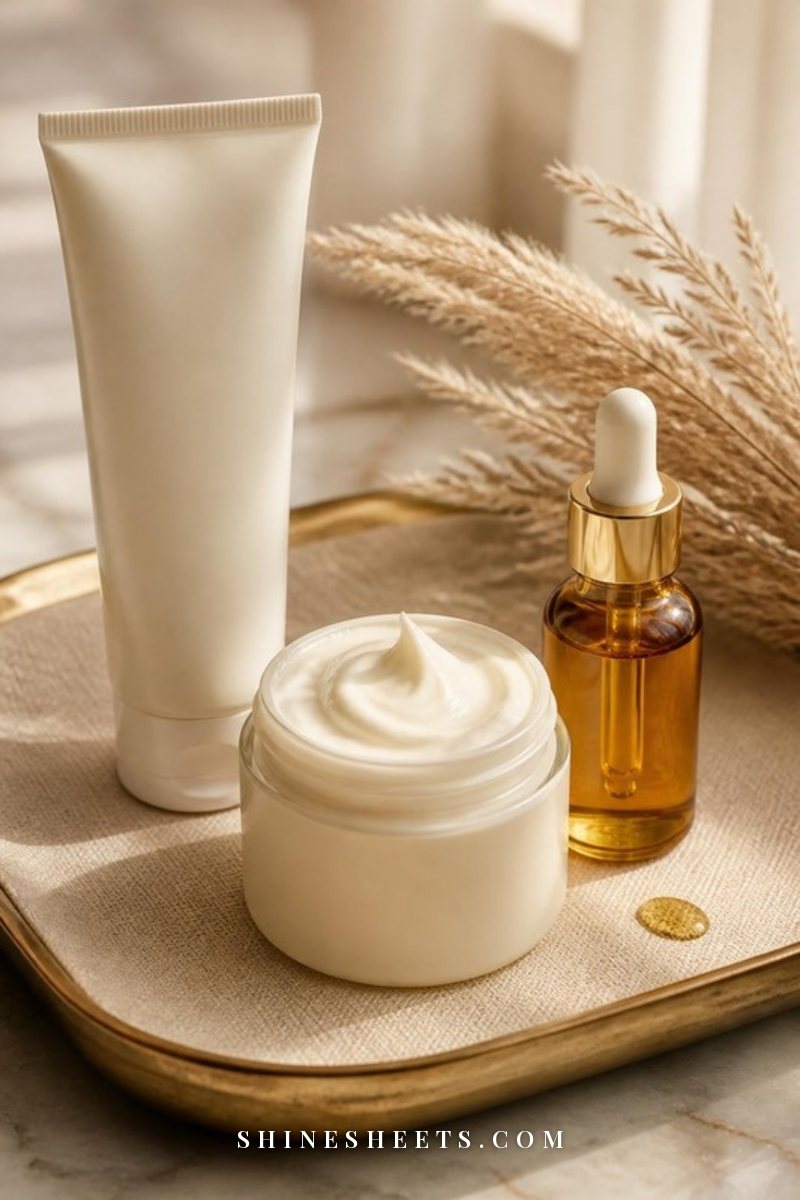
Dry skin needs oil and lipids back. The goal is to cleanse without stripping, then rebuild that soft protective layer with richer textures. Keep it simple: four steps in the morning, four at night.
Morning
- Rinse or cleanse gently. Many dry skin types do best with just lukewarm water in the morning. If you prefer to cleanse, use a gentle cream cleanser that leaves your skin soft, never tight. Massage for 30 seconds and rinse with lukewarm water.
- A hydrating layer. Even dry skin benefits from a little water-based hydration first, so a few pats of a humectant serum on damp skin is a nice base.
- A rich cream. This is the most important step for dry skin. Look for a ceramide moisturizing cream with ceramides, cholesterol and fatty acids, which mimic the lipids your skin naturally lacks. Use a pea-to-almond-sized amount for your face and neck.
- SPF. A moisturizing sunscreen with a creamy finish keeps the sun from making dryness worse.
Night
- Cleanse with a balm or cream. If you wear makeup or SPF, a cleansing balm first, then your cream cleanser, keeps things gentle.
- Treatment, if you use one. A retinoid or a mild acid only a few nights a week, never on the same night as exfoliating.
- Your rich cream. Apply slightly more than in the morning, including around the nose and mouth.
- A few drops of oil. Warm two or three drops of a lightweight squalane facial oil between your palms and press it over your cream. This seals everything in and leaves skin soft by morning.
Ceramides are the quiet heroes for dry skin. If you want to know how to choose a good ceramide cream and how long to give it, I've covered it in detail in my post on why your skin needs ceramides and how to use them. And for a full day-and-night plan, there's my gentle skincare routine for dry skin.
A Routine for Dehydrated Skin
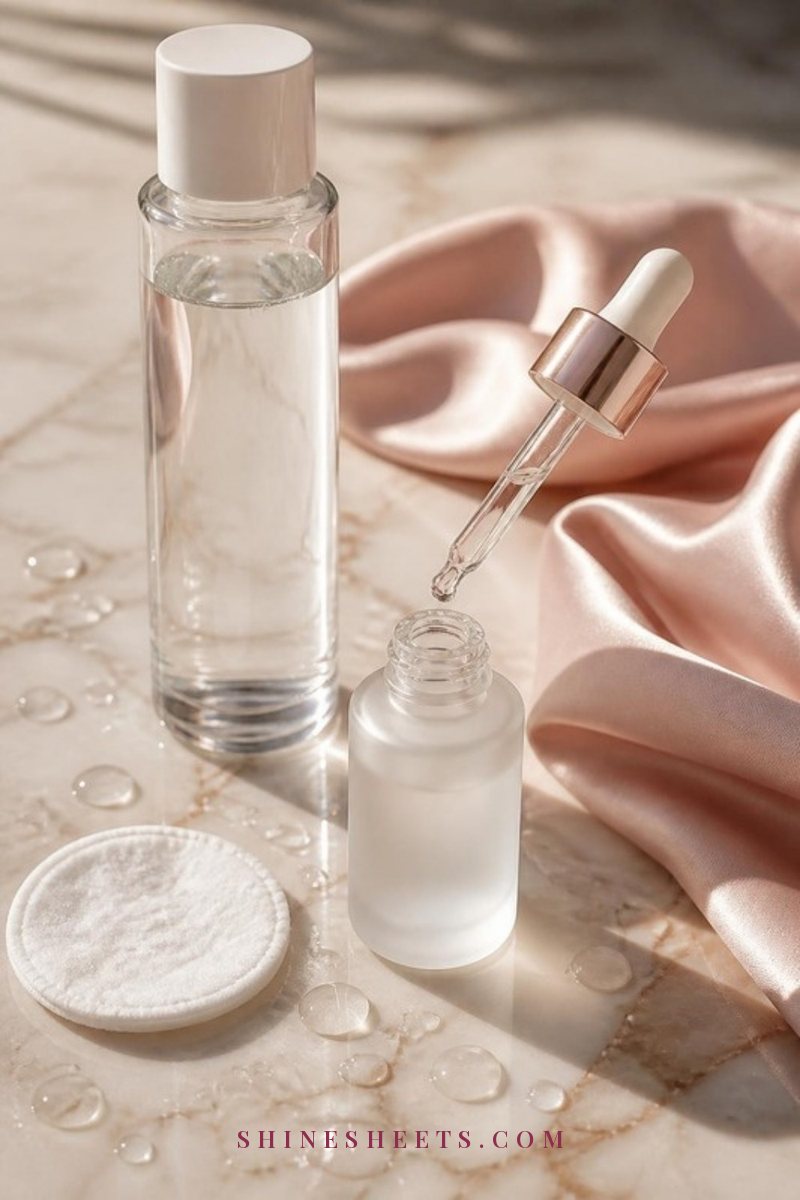
Dehydrated skin needs water, plus something to keep that water from evaporating. That's where humectants come in: ingredients like hyaluronic acid, glycerin, panthenol and aloe that attract and hold water in the skin. The trick is to give them water to work with, then seal them in.
Here's a little formula to help you remember the order:
Damp skin + humectant layers + a moisturizer to seal = skin that stays hydrated all day.
Morning
- Gentle cleanse or rinse. A low-foam or cream cleanser, or just water if your skin feels comfortable.
- Hydrating toner on damp skin. Don't towel off completely. While your face is still slightly damp, press in a Korean-style hydrating toner with your palms. If your skin feels very thirsty, do a second or even a third thin layer, pressing each one in for a few seconds. This layering is the heart of the routine.
- Hyaluronic acid serum. Two or three drops of a hyaluronic acid serum pressed into skin that's still a little damp from the toner. Applied to completely dry skin in a dry room, it has much less water to hold on to.
- Seal with moisturizer. Oily or combination skin can choose a gel-cream; normal or dry skin can choose a cream. This step isn't optional: without it, the water you just added evaporates.
- SPF. Sun exposure is a big cause of dehydration, so finish with sunscreen every morning.
Night
- Cleanse gently, double cleansing only if you wore makeup or water-resistant SPF.
- Toner layers, the same way as in the morning.
- Hydrating serum, or a calming one with panthenol or centella.
- Moisturizer, a slightly richer one than in the morning if your skin likes it.
Give it about two weeks. Dehydration often improves much faster than dry skin, and many people notice their skin looking plumper within a few days. If you're unsure where toners, essences and serums each fit, my post on toner vs essence vs serum clears it up, and the damp skin rule for hyaluronic acid explains why that slightly damp face matters so much.
What If Your Skin Is Both Dry and Dehydrated?
This is incredibly common, especially in winter. Dry skin has a weaker protective layer, so it loses water more easily, which means a lot of dry skin is dehydrated too. The fix is simply to combine both routines in the right order:
- Gentle cream cleanser (or just water in the morning).
- Two or three thin layers of hydrating toner on damp skin.
- Hyaluronic acid or glycerin serum.
- A rich ceramide cream.
- At night, a few drops of facial oil pressed over the top.
Think "water first, then oil." Humectants go on first to bring water in, creams and oils go on last to lock it all down. If you reverse the order and put oil first, the water-based layers can't get through as easily.
Not sure which oil suits you best? My guide to which facial oil suits your skin type compares the gentle ones.
Dehydrated Oily and Combination Skin
This one deserves its own section, because it's where most of the confusion happens. Oily and combination skin can be dehydrated, and when it is, it often looks shiny and feels tight at the same time. Many people respond by washing more often, using stronger cleansers and skipping moisturizer, which makes the dehydration worse and can even make the skin produce more oil.
With combination, sensitive skin myself (hello, shiny T-zone), here's what I'd suggest:
- Keep the cleanser mild. A gentle gel or low-foam cleanser, not a squeaky one.
- Go big on watery layers. Hydrating toner and hyaluronic acid serum give oily skin hydration without heaviness.
- Choose a light moisturizer, but use one. A gel-cream or oil-free lotion seals in water without feeling greasy.
- Skip the heavy oils on the T-zone. If your cheeks are dry, you can add a drop of oil there only.
- Exfoliate less. Once or twice a week with a gentle BHA is plenty for most oily skin.
Within a couple of weeks, many people find their skin actually becomes less shiny, because it no longer has to overcompensate.
5 Mistakes That Keep Skin Thirsty
These are the habits I see most often, and the ones I've made myself at some point. Fixing even one of them can make a visible difference.
1. Putting Oil on Dehydrated Oily Skin
Oils soften and seal, but they don't add water. On oily skin that's dehydrated, a heavy oil can feel greasy on top while the skin underneath stays tight. Reach for watery humectants first, and save oils for dry areas.
2. Skipping Moisturizer Because Your Skin Looks Oily
Shine doesn't mean your skin has enough water. Without a moisturizer, the hydration from your toner and serum evaporates quickly. A light gel-cream is enough; just don't skip it.
3. Applying Hyaluronic Acid on Dry Skin in a Dry Room
Humectants need water to grab onto. On completely dry skin in a heated room, they have less to work with and can leave skin feeling tighter. Apply on damp skin and always seal with moisturizer.
4. Exfoliating Your Way Out of Flakes
When skin flakes, the instinct is to scrub. But if the flakes come from dehydration or dryness, more exfoliation only weakens the barrier further. Hydrate and moisturize for a week first; often the flakes disappear on their own.
5. Expecting One Product To Do Everything
A single "hydrating" moisturizer may not be enough for very dehydrated skin. Layering a light toner and serum underneath usually works better than piling on more cream. Small, thin layers beat one thick one.
Lifestyle Habits That Help Your Skin Hold Water

Your routine does most of the work, but a few daily habits make it much easier for your skin to stay comfortable:
- Add moisture to the air. A white cool mist humidifier in your bedroom is one of the best things you can do in heating season. Run it while you sleep, keep it clean as the instructions say and aim for comfortable, not damp, air.
- Turn the water temperature down. Lukewarm for your face, and keep showers to around 10 minutes. Apply moisturizer within a few minutes of drying off.
- Drink water through the day. It won't fix dehydrated skin on its own (skin hydration is mostly about your routine and barrier), but being properly hydrated overall supports everything else. A water glass on your desk and one with your evening tea is an easy start.
- Protect your skin outside. SPF every day, and a soft scarf over your lower face on windy winter days.
- Keep a mini kit for flights. Cabin air is very dry, so a small hydrating serum and moisturizer in your bag lets you refresh your skin during and after the flight.
- Sleep and rest. Skin repairs itself overnight. A steady bedtime does more for a tired, dull complexion than any new jar.
When To See a Dermatologist
Most dry and dehydrated skin improves with a gentler routine and a little patience. But please see a dermatologist or your doctor if your skin is cracked, bleeding, very itchy or inflamed, if you see thick scaly patches or a rash that spreads, or if nothing improves after four to six weeks of a gentle routine. Conditions like eczema, psoriasis and some contact allergies can look like "just dry skin" at first, and they deserve proper care. This article is general information, not a substitute for personal medical advice.
Final Thoughts
Once you know the difference between dry and dehydrated skin, skincare gets so much less confusing. Dry skin needs oil and lipids back. Dehydrated skin needs water and something to hold it there. Many of us need a little of both, depending on the season.
Start with the pinch test, pick the routine that matches, and give your skin two weeks of gentle, consistent care. Soft, comfortable skin rarely comes from more products. It comes from the right ones, in the right order, used kindly.