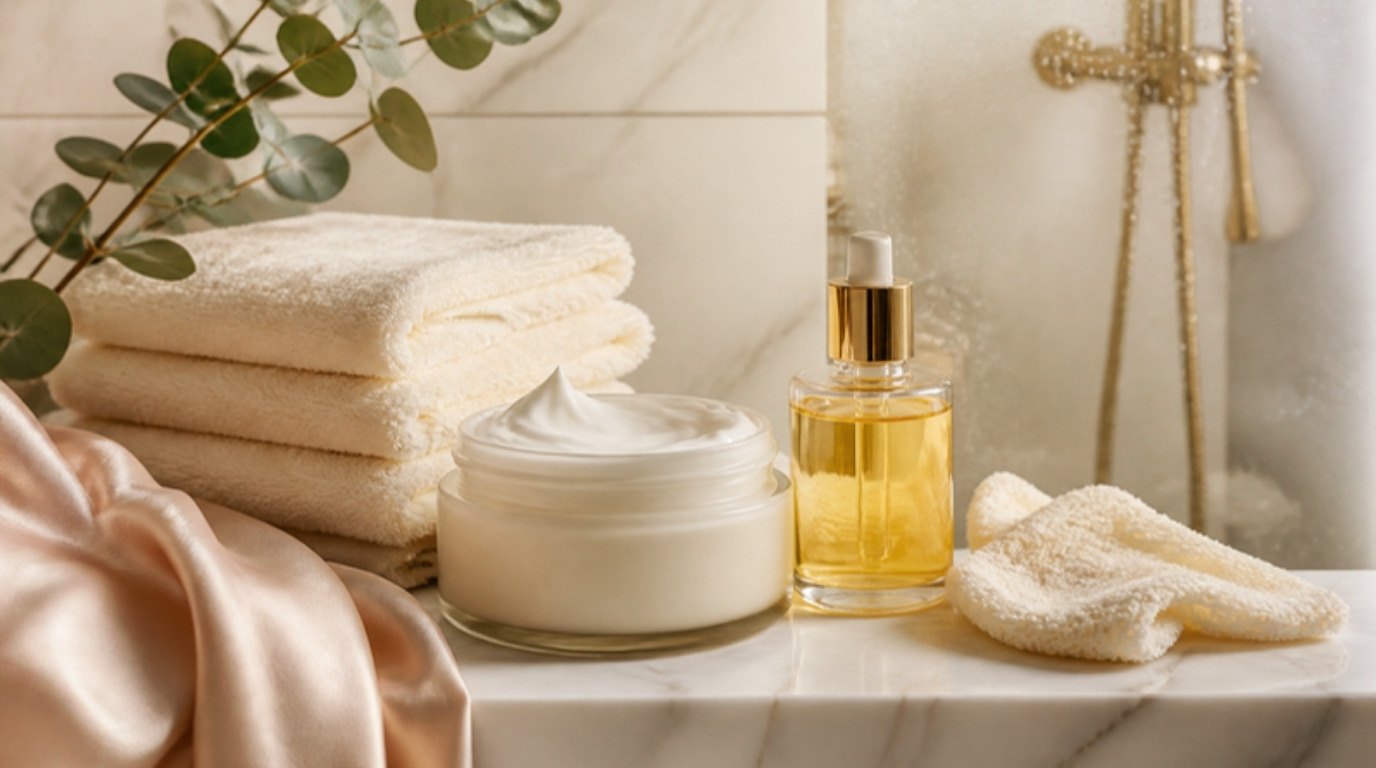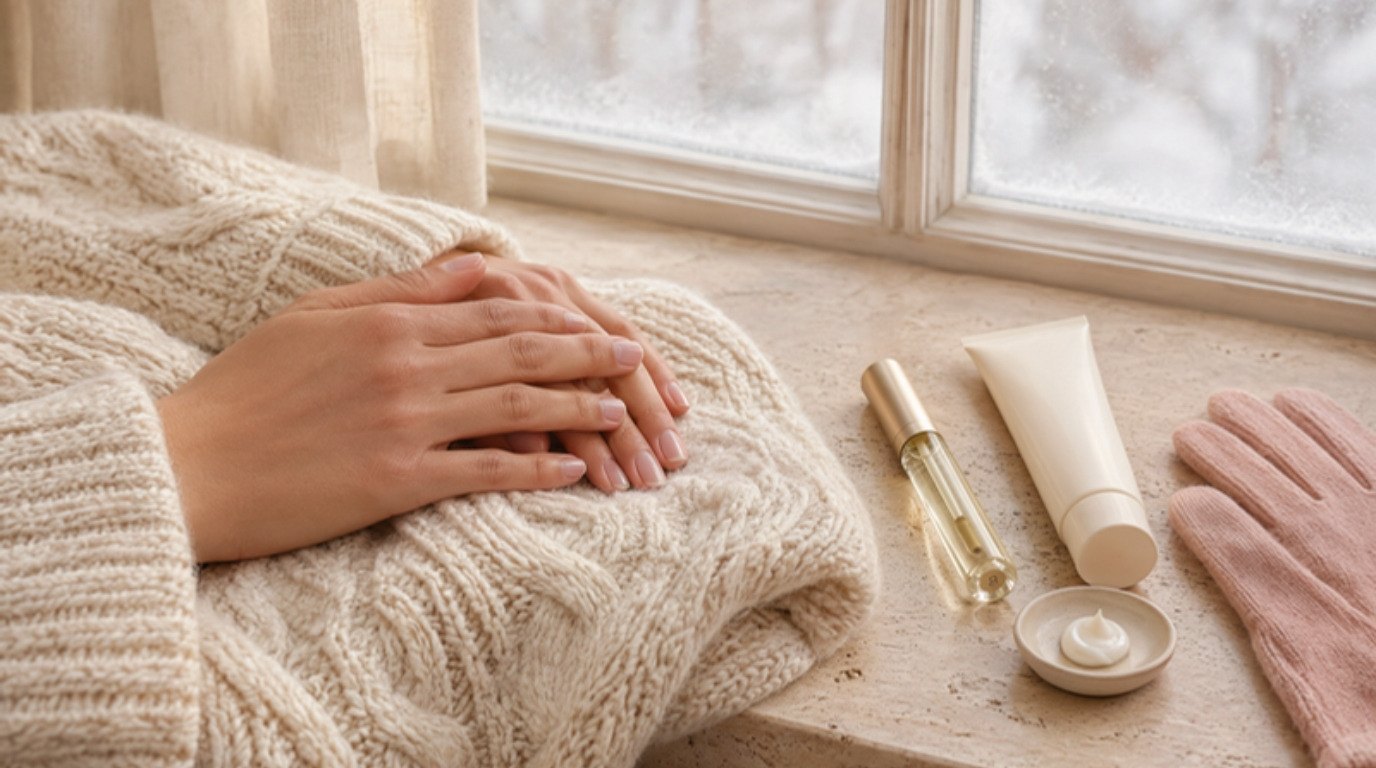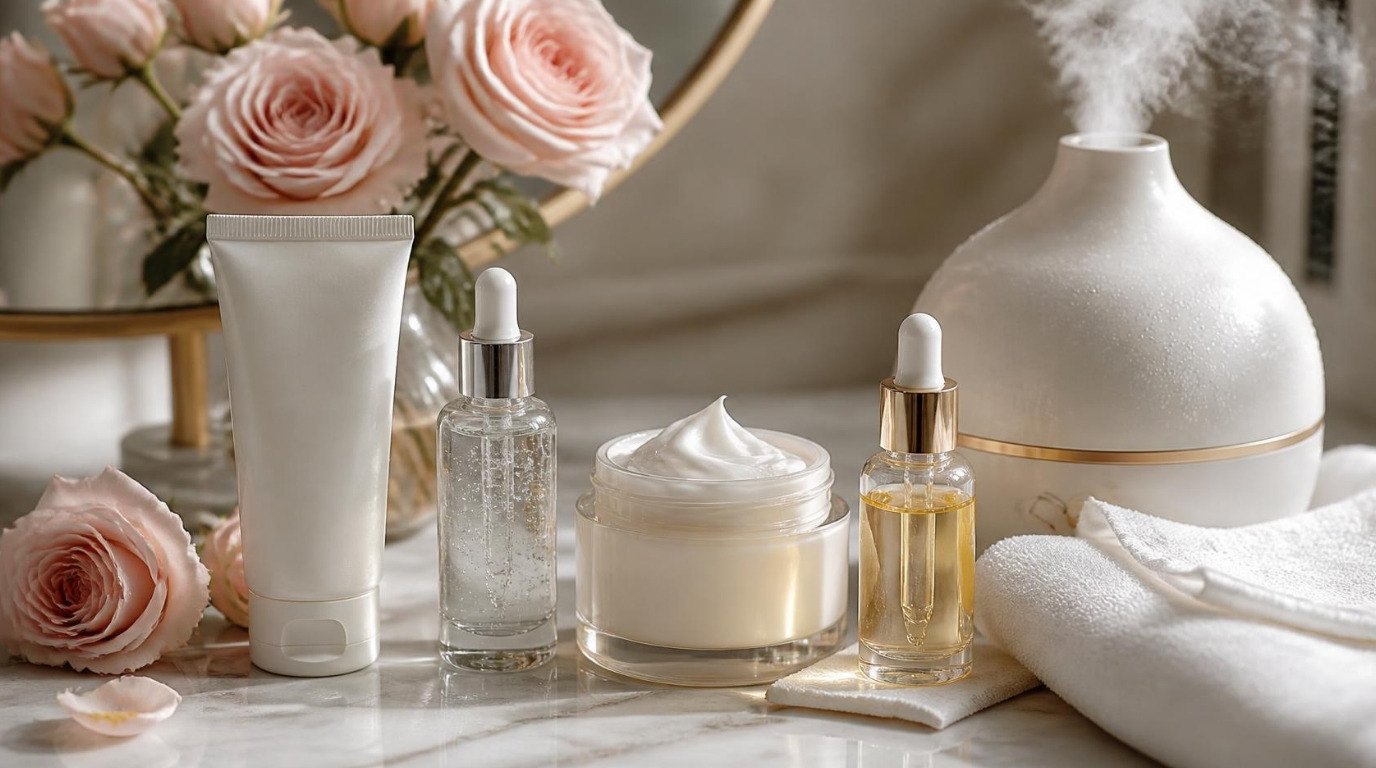
If your skin suddenly feels tight and patchy now that the heating is on, nothing is "wrong" with you. Cold air outside holds very little moisture, and indoor heating dries the air even further, so your skin loses water faster than it did in July. Your routine just hasn't caught up with the weather yet. A hydrating serum helps a lot here, and this is how to use hyaluronic acid so it actually plumps instead of drying.
The good news is that a winter skincare routine doesn't mean buying a whole new shelf of products. Mostly, it's a handful of swaps: pausing a few things, adding a couple of others and moving your actives around. Below you'll find my winter swap chart, simple 3–4 step morning and night routines, a bedroom humidity checklist, quick fixes for lips, hands and body, and clear signs that it's time to see a dermatologist instead of trying one more cream.
A quick, kind note before we start: this is general, everyday skincare guidance, not medical advice. If you have a diagnosed skin condition or you're using prescription treatments, your dermatologist's plan always comes first.
Why Your Skin Changes When the Heating Comes On
Your skin barrier is the outermost layer of your skin – think of it as a brick wall where the cells are the bricks and natural fats (ceramides, cholesterol and fatty acids) are the mortar. When that mortar is happy, water stays in and irritants stay out. When the air gets very dry, water evaporates from your skin faster, the "mortar" gets stressed and you start to feel it.
Winter adds a few extra stressors on top of dry air:
- Hot showers. They feel amazing on a cold morning, but long, very hot water strips the natural oils your barrier depends on.
- Wind and cold. Going from icy air outside to a heated room over and over again can leave cheeks red and reactive.
- Wool and scarves. Friction on the chin, jaw and neck can trigger itchiness and flaking, especially on sensitive skin.
- The same strong actives as summer. An exfoliant that felt fine in humid weather can suddenly sting once your barrier is already stretched thin.
Here's the part that confused me for years: combination skin doesn't simply "turn dry" in winter. My T-zone still gets shiny, while my cheeks and the sides of my nose flake. That mix is actually a classic sign of a dehydrated, slightly unhappy barrier – oil on top, not enough water underneath. If you want to check the other signs, my guide on how to spot a damaged skin barrier and restore it quickly goes through them one by one.
The Winter Skincare Swap Chart
This is the heart of the whole article. Instead of starting from scratch, look at what you're doing now and make these swaps one at a time over two to three weeks (changing everything at once makes it impossible to know what helped or what irritated).
| Action | What to change | Winter swap | Why it helps |
|---|---|---|---|
| Pause or reduce | Grainy scrubs and strong peels | Skip scrubs; if you love exfoliating, use a gentle chemical exfoliant 1x a week (lactic acid or PHA) | Fewer micro-scratches and less stinging on a stressed barrier |
| Pause or reduce | Foaming or "squeaky clean" cleansers | A gentle cream, gel-cream or milky cleanser; water alone or a quick rinse in the morning | Your skin should feel soft after washing, never tight |
| Pause or reduce | Alcohol-heavy toners and clay masks | A hydrating toner or essence; clay only on the T-zone, 1x a week at most | Keeps oil control where you need it without drying your cheeks |
| Add | Lightweight gel moisturizer | A ceramide cream (or your gel on the T-zone and a ceramide cream on the cheeks) | Ceramides help rebuild the "mortar" between skin cells |
| Add | Nothing on top at night | A thin occlusive layer on dry spots only, as the last step | Slows water loss while you sleep |
| Add | Dry bedroom air | A humidifier in the bedroom, aiming for about 40% humidity | Less moisture is pulled out of your skin overnight |
| Move | Retinoid or exfoliating acids every night | Drop to 2–3 nights a week, never on the same night as exfoliating acids | Same benefits over time, far less flaking and redness |
| Move | Vitamin C every morning | Keep it if it feels fine; if it stings, try every other morning or a gentler formula | You keep the brightening step without the burn |
| Keep | Sunscreen | Keep it daily – a creamier formula often feels better in winter | UV rays don't take the winter off, and snow reflects them |
If you only make three swaps this season, make them these: a gentler cleanser, a ceramide moisturizer and fewer nights of actives. Those three alone solve most of the "why is my face suddenly flaky?" moments. If your skin reacts easily, you might also like my list of skincare products for sensitive skin.
A Note for Combination and Oily Skin
If your T-zone gets shiny, it's tempting to keep washing it with a strong foaming cleanser "to control the oil." I did this for years. The problem is that over-cleansing can leave your skin feeling tight and dehydrated, and some people notice even more shine afterward. A gentler approach works better: cleanse gently, moisturize your whole face, then simply use a lighter layer on your forehead, nose and chin, and a richer one on your cheeks. I call it "zone moisturizing," and it's the single most useful winter habit for combination skin.
Simple Winter Morning Routine (4 Steps)
Winter mornings are dark and cold, and nobody wants a ten-step routine before coffee. These four steps take about five minutes.
- Rinse or cleanse gently. If your skin isn't oily in the morning, a splash of lukewarm water is enough. If your T-zone feels greasy, use a pea-sized amount of a gentle hydrating cream cleanser – look for one that's fragrance-free and doesn't foam much. Pat (don't rub) with a clean towel and leave your skin slightly damp.
- Hydrate. While your skin is still a little damp, press in a hydrating serum or essence with glycerin or hyaluronic acid. Two or three drops, pressed in with your palms. Optional: vitamin C here, if your skin tolerates it.
- Moisturize. Use a ceramide cream on your cheeks and around your nose, and a thinner layer on your T-zone. A fragrance-free ceramide moisturizing cream in the style of the big drugstore dermatologist-recommended brands is a lovely pick for sensitive skin – look for ceramides, glycerin and no added fragrance on the label.
- Sunscreen. A broad-spectrum SPF 30 or higher, every morning, even when it's gray. If your summer sunscreen feels drying now, a creamier lotion formula or a hydrating Korean sun cream can feel much more comfortable in winter.
Mini formula: damp skin → water layer → cream layer → SPF. If you remember nothing else, remember "damp skin, then seal."
Simple Winter Night Routine (4 Steps)
Night is when your skin does its repair work, so this is where winter swaps matter most. I like to do this right after my evening tea – it's become a small, calming ritual instead of a chore. If you want to go beyond skincare, my winter glow up checklist for skin and hair has thirty more ideas.
- Cleanse (once, or twice if you wore makeup). If you wore makeup or sunscreen, start with a cleansing balm or micellar water, then follow with your gentle cream cleanser. No makeup? One gentle cleanse is plenty. Keep the water lukewarm.
- Treat (only on your "active" nights). On 2–3 nights a week, apply your retinoid or exfoliating acid – never both on the same night. On the other nights, skip this step entirely and let your skin rest. A simple calendar: retinoid Monday and Thursday, gentle exfoliant Saturday, rest the other nights.
- Moisturize. Your ceramide cream again, with a slightly thicker layer than in the morning. If your skin feels tight, a second thin layer on the cheeks after a minute is completely fine.
- Seal the dry spots. Dab a thin layer of an occlusive balm only on the areas that flake: the sides of the nose, around the mouth, between the eyebrows. A healing ointment for very dry skin (the classic petrolatum kind sold in every pharmacy) is a good pick for this – a rice-grain amount is enough. Skip it on your T-zone if you're prone to breakouts there.
If retinoids are new to you or you're wondering how to fit them around vitamin C, my explainer on whether you can use retinol and vitamin C together walks through the timing. And for the right order of every step, see how to layer skincare products in 5 easy steps.
What About "Slugging"?
Slugging means covering your whole face with a thin layer of petrolatum as the last step of your night routine. It can be wonderful for very dry, flaky skin. For combination or acne-prone skin, though, I'd keep it to the dry zones only – the "spot slugging" approach from step four. You get the comfort without heavy occlusion on the areas that already make plenty of oil.
How To Adjust Your Actives in Winter
Actives are ingredients like retinoids, AHAs (glycolic, lactic), BHA (salicylic acid), vitamin C and benzoyl peroxide. They can be wonderful, but they are also the most common reason winter skin suddenly stings. Here's a gentle way to adjust them without giving up your progress:
- Cut the frequency, not the product. Going from every night to every third night keeps you on track while your barrier recovers.
- Try the "sandwich" method. Moisturizer, then retinoid, then moisturizer again. It softens the effect for sensitive skin.
- Keep BHA targeted. Salicylic acid can stay on the nose and chin if you get blackheads there, but there's no need to put it on dry cheeks.
- Give yourself a "rest week" if things flare. If your skin is red, stinging or peeling, pause all actives for 5–7 days and do only cleanse, moisturize and SPF. Then reintroduce one active at a time.
- Prescription products are different. If a doctor prescribed your retinoid or acne treatment, ask them before changing how often you apply it.
Bedroom Humidity Checklist
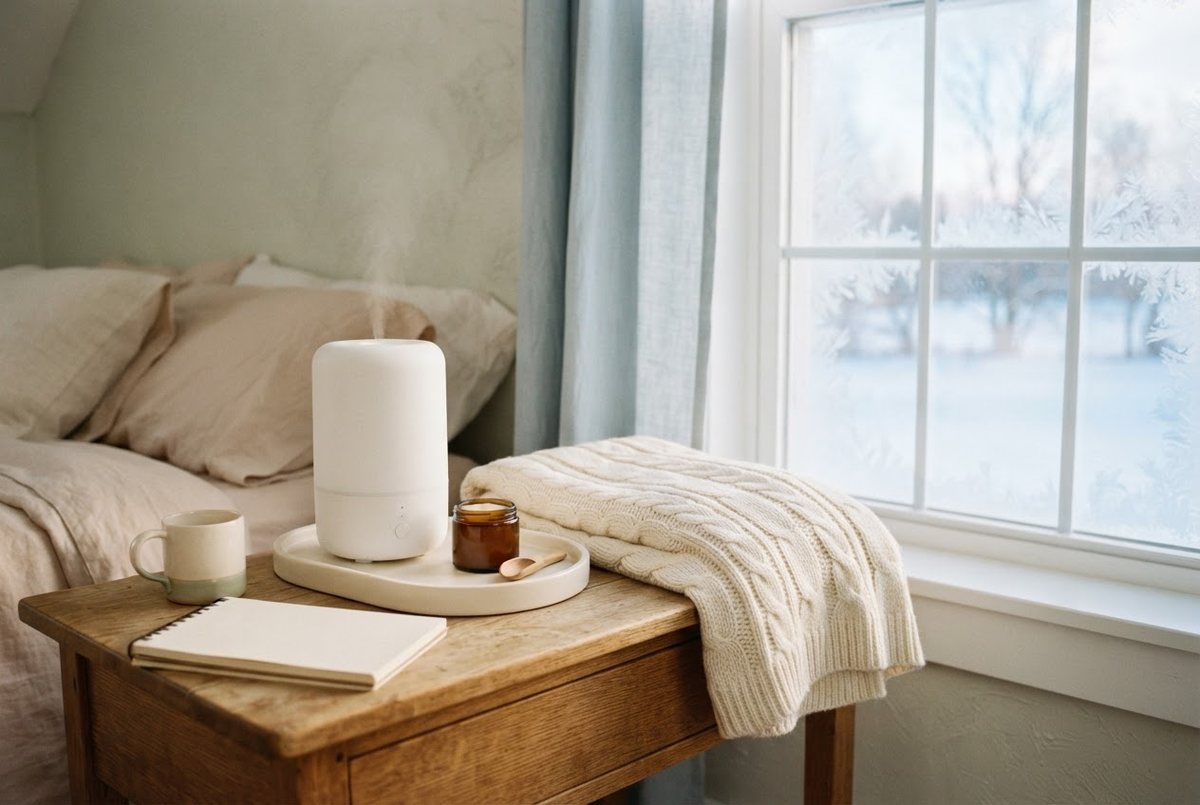
You spend about a third of your life in your bedroom, so the air there matters for your skin (and your lips, and your throat when you wake up). Dermatologists often suggest a bedroom humidifier for dry winter skin – the American Academy of Dermatology includes it in its tips for relieving dry skin. But more isn't better: too much humidity can lead to condensation and mold. Use this checklist to get it just right.
- Measure first. Put a small digital indoor humidity monitor on your nightstand for a few days before buying anything. Heated winter rooms often sit well below 30%.
- Aim for about 40%. The EPA's guide to mold and moisture recommends keeping indoor humidity below 60%, ideally between 30 and 50%. Around 40% is a comfortable middle for skin and for your walls.
- Choose a cool-mist model. A white cool-mist humidifier for the bedroom is the simpler, safer choice – no hot water near the bed, and look for an auto shut-off when the tank is empty.
- Place it well. Put it on a stable surface about 3 feet from your bed, away from walls, curtains, books and electronics, so moisture doesn't collect on them.
- Use the right water. Distilled or demineralized water helps prevent the white dust that tap water can leave on furniture. Check your model's instructions.
- Empty and refill daily. Don't let water sit in the tank for days. Rinse and dry the tank when you refill it.
- Clean it every week. Follow the manufacturer's cleaning instructions – a dirty humidifier can spread mold and bacteria into the air you breathe.
- Watch the windows. If you see condensation on the windows or the room smells musty, turn it down or run it for fewer hours.
- Lower the heat a notch. A slightly cooler bedroom (with a cozy blanket) is kinder to your skin than a very hot, very dry one.
No humidifier yet? A bowl of water near a radiator or drying a few towels indoors adds a little moisture too. It won't change much, but it's free.
Quick Winter Fixes for Lips, Hands and Body
Your face gets all the attention, but in winter it's often your lips, hands and shins that suffer the most. A few small habits make a big difference. For lips that crack every December, here is my winter lip care routine for soft, smooth lips.
Lips: 3 Swaps
- Stop licking them. Saliva evaporates fast and leaves lips drier than before. A balm in every coat pocket helps break the habit.
- Use an overnight mask. A Korean overnight lip sleeping mask applied as the very last step of your night routine is a soft, comfortable pick – a thick layer, then leave it alone until morning.
- Skip harsh scrubs. If lips peel, let the balm soften the flakes rather than scrubbing them off. If you still like a lip scrub, once a week is plenty – my thoughts on store-bought versus homemade lip scrubs may help you decide.
Hands: 3 Swaps
- Moisturize after every wash. Keep a fragrance-free hand cream next to every sink you use, so it becomes automatic. Look for glycerin, ceramides or urea on the label.
- Wear gloves. Warm gloves outside, rubber gloves for washing dishes. Hot water and dish soap are a harsh combination on winter hands.
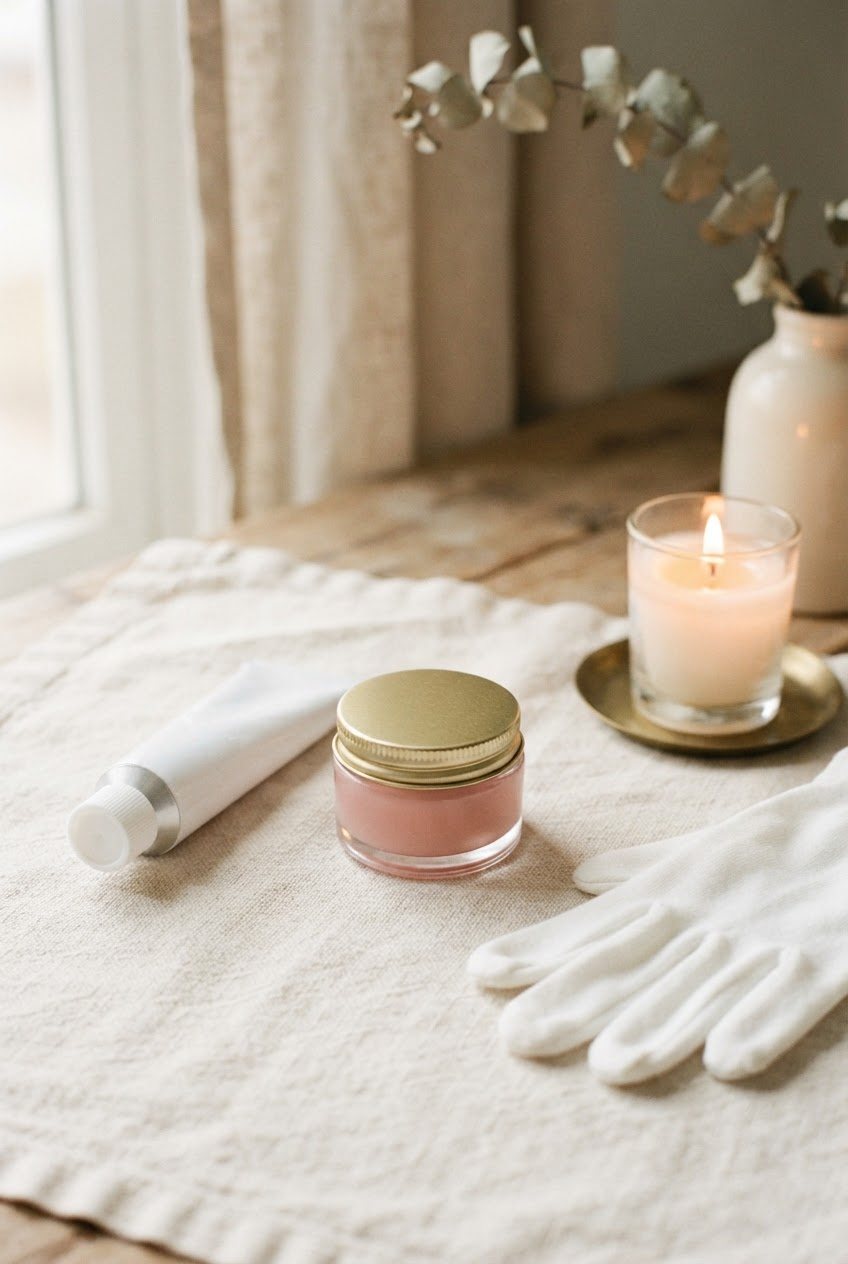
- Do an overnight hand treatment. Once or twice a week, apply a thick layer of cream or ointment before bed and slip on soft cotton gloves.
Body: 4 Swaps
- Shorter, warm (not hot) showers. Five to ten minutes with lukewarm water is the dermatologist-favorite rule.
- The 3-minute rule. Apply body cream within about three minutes of getting out of the shower, while your skin is still slightly damp.
- Swap body wash for something gentler. A creamy, fragrance-free body wash or a gentle cleansing oil, and only on the areas that need soap.
- Soft fabrics against the skin. If wool makes you itch, wear a cotton or silk layer underneath. For more on body care, my body skin care routine covers barrier care from neck to toes.
Little Winter Habits That Help Your Skin
A few gentle extras that cost nothing and support everything else in this guide:
- Drink water and warm drinks through the day. It won't replace moisturizer, but it's part of feeling good overall. Evening herbal tea is my favorite way to remember.
- Switch pillowcases often. Every few days is ideal if you use heavier creams at night or get breakouts on your cheeks.
- Pat, don't rub. Towels, cleansing cloths and makeup removers should all be gentle.
- Protect your face outside. A soft scarf over your cheeks on very windy days, plus a balm on your lips.
- Be patient. Most barrier improvements take two to four weeks to show. Give each swap time before you judge it.
Winter can be hard on mood as well as on skin, so if the dark afternoons are getting to you, my winter blues toolkit has thirty small, gentle ideas for the gray days.
When To See a Dermatologist
Most winter dryness responds to the swaps above. But some skin problems need a professional, and there's no prize for suffering through them at home. Please make an appointment with a dermatologist or your doctor if:
- Your skin doesn't improve after 2–3 weeks of gentle cleansing, regular moisturizing and fewer actives.
- Itching keeps you awake at night or makes it hard to concentrate.
- Your skin cracks, bleeds or oozes, or you see signs of infection like increasing redness, warmth, swelling or pus.
- You have large red, scaly or very itchy patches that keep coming back – these can be signs of conditions like eczema or psoriasis, which need a proper diagnosis.
- Your face is persistently red, flushed or bumpy, especially across the cheeks and nose.
- Your hands crack painfully despite cream and gloves.
- Any product causes swelling, hives or burning – stop using it and get advice.
- You're pregnant, breastfeeding or on prescription treatments and unsure which actives are safe for you.
Asking for help is not overreacting. A dermatologist can tell you exactly what's going on and save you months (and money) of guessing.
Your Winter Swap Checklist
Screenshot this one for the night you finally decide to switch everything over:
- Swap your foaming cleanser for a gentle cream or milky one.
- Pause scrubs; keep exfoliating acids to once a week at most.
- Move your retinoid to 2–3 nights a week.
- Add a ceramide cream (richer on cheeks, lighter on the T-zone).
- Seal dry spots at night with a thin layer of ointment.
- Keep daily SPF 30+.
- Put a humidity monitor in the bedroom and aim for about 40%.
- Keep balm and hand cream in every bag and next to every sink.
Final Thoughts
Winter skin doesn't need a dramatic overhaul. It needs a little more softness: gentler cleansing, a thicker layer of cream, fewer nights of strong actives and a bit more moisture in the air. Make one swap this week, another next week, and let your skin settle into the new season at its own pace.
Then light a candle, pour your evening tea and give your face five calm minutes. That's the whole routine.