Fruit flies are not a sign of a dirty home. They are a sign of one small, damp, slightly sweet spot that you haven't found yet. That's the good news, because once you find the spot (or the three spots), the whole problem collapses surprisingly fast.
The trap on the counter gets all the attention, but it is only one part of the fix. A jar of vinegar catches the adults you can see, while the next generation keeps hatching quietly in the drain, the recycling bin or the bottom of the fruit bowl. Real relief comes from doing three things in the right order: remove the source, trap the adults, then make your kitchen a boring place for them to come back to.
This guide walks you through exactly how to get rid of fruit flies at home without poisons or sprays: how to tell them apart from drain flies and fungus gnats, the seven places they breed, simple traps that actually work, a quick-reference table and a realistic timeline so you know what to expect day by day.
Fruit Flies, Drain Flies or Fungus Gnats?

Before you set a single trap, take ten seconds to look at the tiny flyer you're dealing with. Three small pests look alike from across the room, and each one is solved in a slightly different place.
- Fruit flies are tan or light brown with a rounded body and, if you look closely, red eyes. They hover lazily around fruit, open wine or juice, the bin and the sink. They fly in slow, drifting circles.
- Drain flies (sometimes called moth flies) are gray and fuzzy, with soft, heart-shaped wings that look like a tiny moth. They rest on bathroom or kitchen walls near a drain and make short, hopping flights.
- Fungus gnats are dark, slender and long-legged, a bit like a miniature mosquito. They stay close to houseplants, walk on the soil and are weak, clumsy fliers.
Here's the honest truth: in a lot of homes it's a mix. Fruit flies in the kitchen, a few gnats around a well-watered plant, the odd drain fly in the bathroom. The plan below covers all three, because the fixes overlap more than you'd think (moisture plus food is the common thread).
Why Fruit Flies Suddenly Appear
It can feel like fruit flies appear out of thin air. In reality, they usually arrive in one of two ways. Either a few adults wander in through a window or door, drawn by the smell of something ripening, or eggs come home already laid on the skin of fruit and vegetables from the store.
From there, it's simple math. A female fruit fly can lay hundreds of eggs, often right on the surface of fermenting food. In a warm kitchen, an egg can become a flying adult in about a week to ten days. That's why one forgotten banana on Monday can turn into a small cloud by the following weekend.
What they're looking for is anything moist, sweet and slightly fermenting:
- ripe or bruised fruit and vegetables (especially bananas, tomatoes, peaches and potatoes or onions that have gone soft)
- the film inside a sink drain or garbage disposal
- juice, wine, soda or beer residue in bottles and cans
- the damp, food-coated inside of a trash can or compost caddy
- sponges, dishcloths and mop heads that never fully dry
Notice what isn't on that list: messy cushions, dusty shelves, a cluttered desk. Fruit flies don't care about tidiness in general. They care about one wet, sweet spot, which is why the fastest fix is a quick hunt rather than a whole-house deep clean.
Step 1: Remove the Source (7 Places Fruit Flies Breed)
This is the step that actually ends the problem, so give it a focused 30 minutes. Walk through your kitchen (and a little beyond) and check these seven spots in order. Most homes have one main source and one or two small backups.
1. The Fruit Bowl
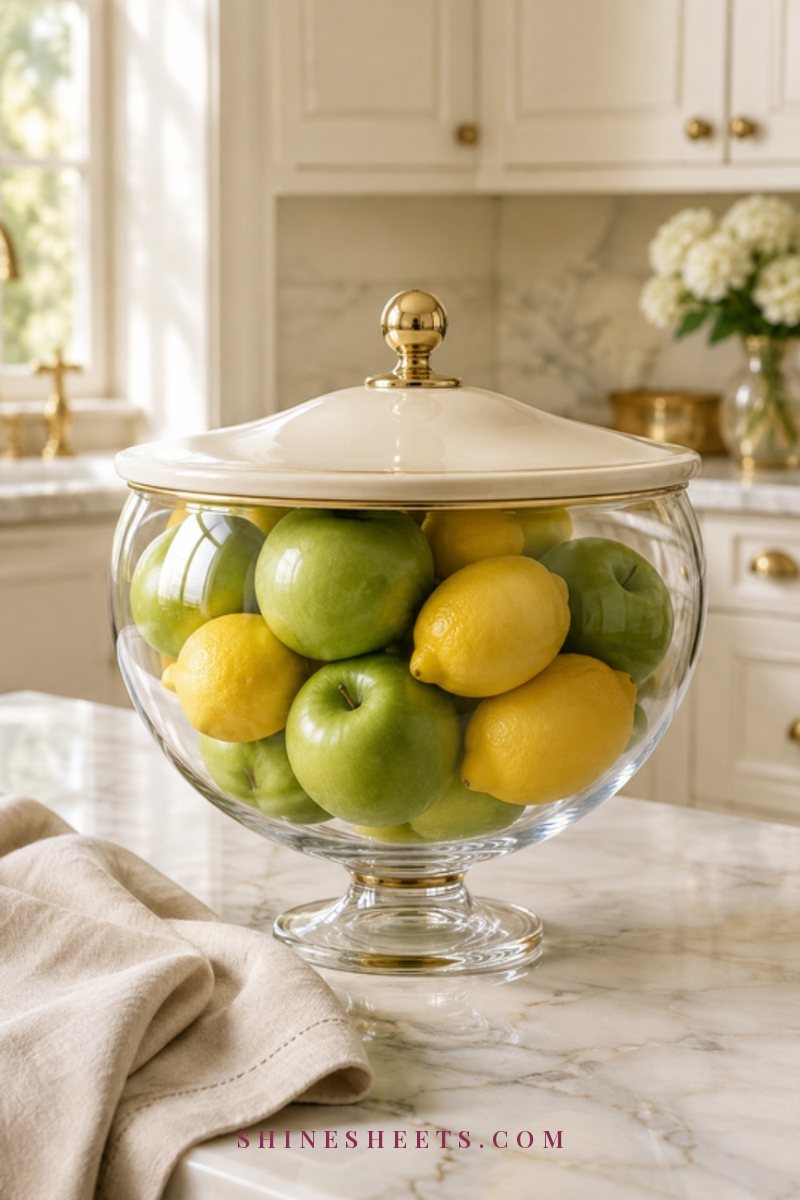
The fruit bowl is the number one suspect. Empty it completely, because the problem is usually at the bottom: a single soft grape, a split tomato or a sticky spot where a peach leaked.
- Toss anything bruised, split, wrinkled or soft. If you can press a thumbprint into it, it goes.
- Wash the bowl in hot, soapy water and dry it fully.
- Rinse fruit when you bring it home and pat it dry before it goes into the bowl. This removes many eggs before they hatch.
- Check the onion and potato basket too. One rotting potato can host an entire colony (and you'll usually smell it before you see it).
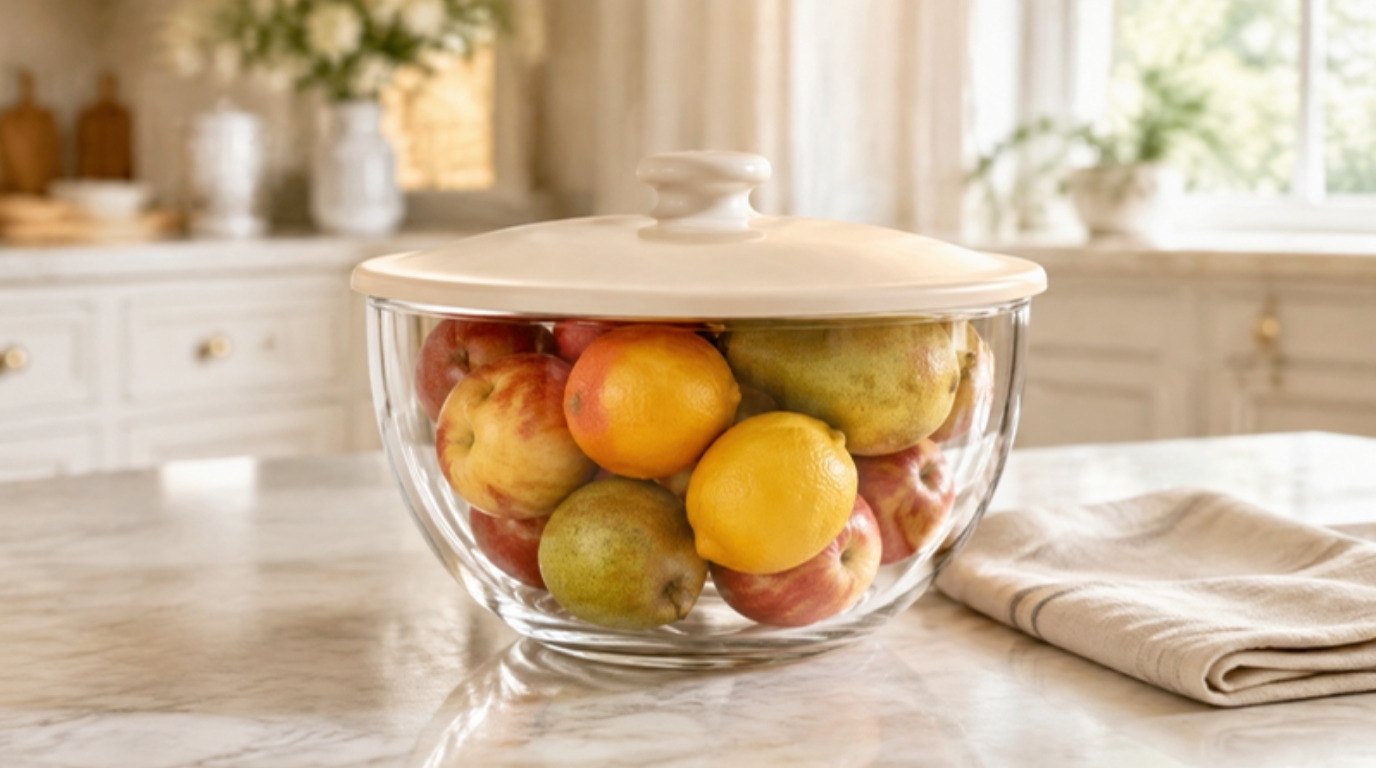
For the next week or two, a covered bowl makes a real difference. A glass fruit bowl with a cream lid keeps the smell of ripening fruit contained, so the flies simply lose interest. Look for one with a lid that sits flat and a few small vents so fruit doesn't sweat.
2. The Sink Drain
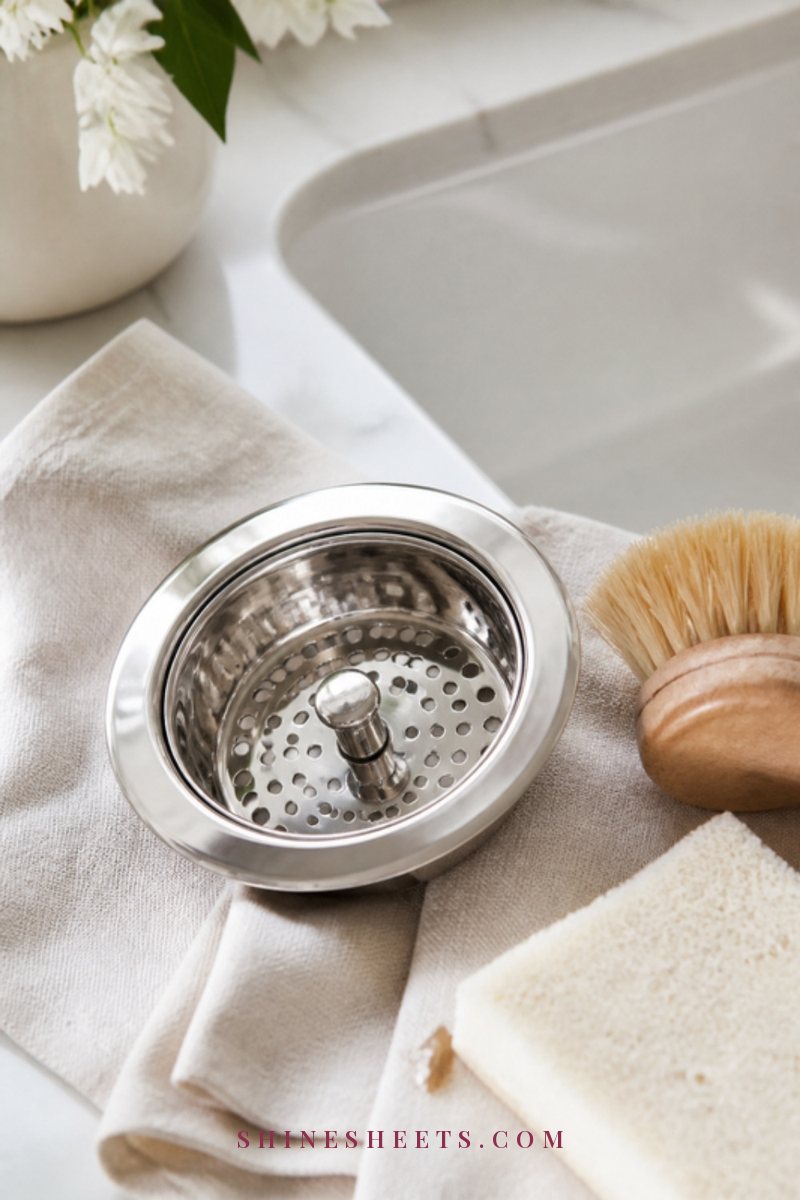
Drains are the hidden breeding spot that most people miss. A thin, slimy film builds up on the inside of the pipe and under the drain stopper, and it's exactly what fruit flies (and drain flies) love.
- Pull out the stopper or basket and scrub it with an old toothbrush and dish soap.
- Run a long, flexible drain brush down the pipe a few times to loosen the film.
- Pour a full kettle of very hot water down slowly. Use just-off-the-boil water for metal pipes and sturdy porcelain or steel sinks; if you have PVC pipes or a composite sink, very hot tap water is the safer choice.
- If you have a garbage disposal, run it with cold water for 30 seconds, then scrub under the rubber splash guard, which hides a surprising amount of gunk.
A quick tape test tells you whether the drain is the source: lay a strip of clear tape loosely over the drain overnight (sticky side down, with a gap for air). If you find tiny flies stuck to it in the morning, they're coming up from the pipe. For the full deep-clean method, my guide on how to clean a kitchen sink and drain so it smells fresh goes step by step.
One important safety note: if you reach for bleach to clean the drain, never mix it with vinegar, ammonia or other cleaners, and don't pour it in right after a vinegar trap or rinse. Mixing them can release harmful fumes. Choose one cleaner, rinse well with water and keep a window open.
3. The Trash Can
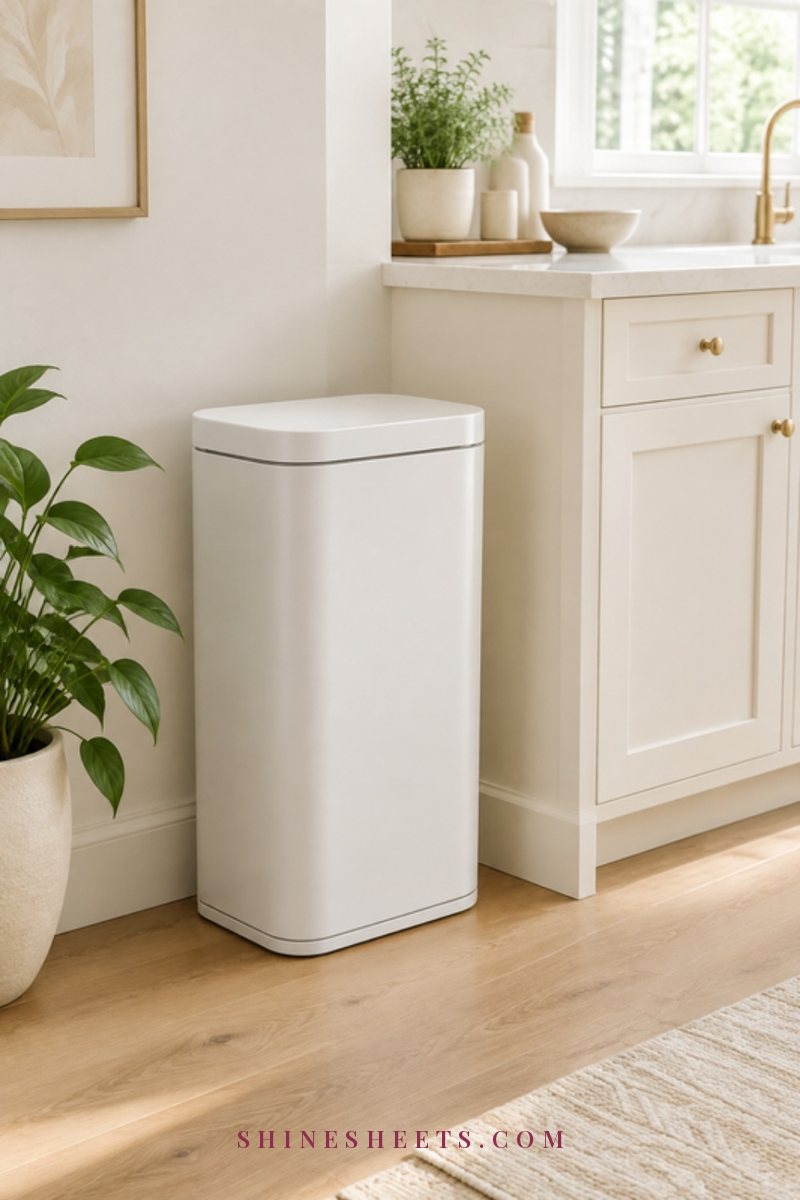
Even when the bag is fresh, the can itself can be the source. Juice drips through tiny tears in the bag and pools at the bottom, and the underside of the lid collects splashes.
- Take the bin outside or into the shower, spray the inside with hot, soapy water and scrub with a long-handled brush.
- Let it sit for 5 minutes, rinse and dry it completely in the air (upside down works well).
- Take out the trash daily while you're dealing with flies, even if the bag isn't full.
- Pick a bin with a lid that closes properly. An open-top bin is an open invitation.
If you'd like a more thorough method (including the sticky rim and the smell that lingers), the step-by-step guide to cleaning a trash can covers it all.
4. Recycling Bottles and Cans
Recycling is the sneaky one, because it feels clean. But a wine bottle with a last sip in it, a juice carton or a soda can is basically a fruit fly nursery with a built-in entrance.
- Rinse every bottle, can and carton with warm water before it goes into the bin. A quick swirl and shake is enough.
- Screw caps back on bottles you can't rinse straight away.
- Wipe out the recycling bin itself once a week, and move it a few steps away from the fruit bowl if you can.
5. The Compost Caddy
If you collect food scraps for compost, that caddy is probably the most attractive thing in your kitchen to a fruit fly. You don't need to stop composting, you just need a better setup.
- Choose a caddy with a tight lid and a charcoal filter. A white countertop compost bin with a lid looks clean on the counter and keeps the smell in. Look for a removable inner bucket that's easy to rinse.
- Empty it every one to two days while you're fighting flies (every two to three days once they're gone).
- Rinse it after each emptying and let it dry before the next round.
- Line the bottom with a sheet of newspaper or a compostable liner to soak up juices.
6. Damp Sponges and Cloths
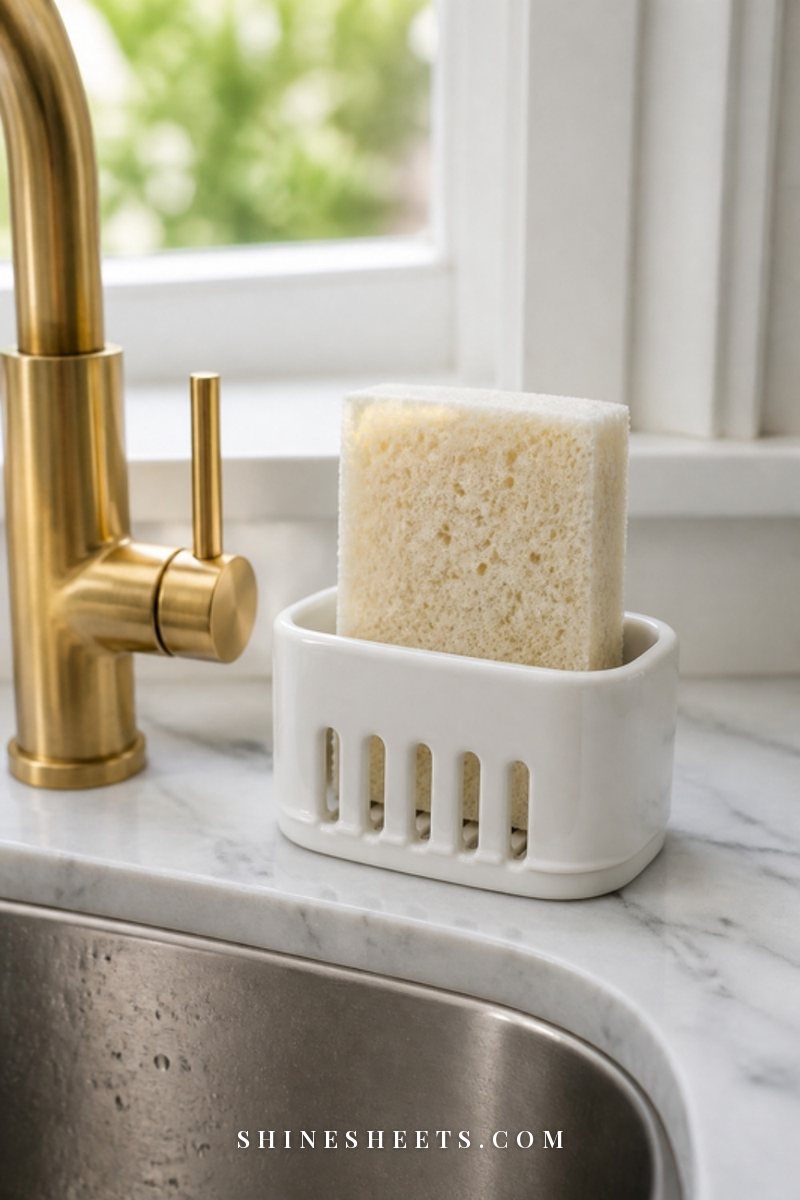
A sponge that never dries out is warm, wet and full of food residue, which is everything a fruit fly needs. The same goes for a dishcloth bunched up by the tap or a damp mop head in the corner.
- Squeeze sponges hard after each use and let them dry upright, not flat in a puddle. A white ceramic sponge holder with drainage holes lets air reach both sides.
- Swap dishcloths daily and wash them on a hot cycle.
- Replace sponges regularly; if one smells sour, it's done.
If you're not sure how often to swap yours, my guide to kitchen sponge hygiene and how often to replace your sponge has a simple schedule.
7. Potted Plant Soil
Plants are more often home to fungus gnats than fruit flies, but both like soggy, rich soil, and fruit flies will happily use a pot with a dropped piece of fruit or decaying leaves on top. If the flies cluster around a plant, try this:
- Remove dead leaves and any fallen flowers or fruit from the soil surface.
- Let the top inch or so of soil dry out between waterings. Gnat larvae need constant moisture, so this alone often breaks the cycle within a couple of weeks.
- Empty saucers so water doesn't sit under the pot.
- Bottom-water for a few weeks (set the pot in water for 15–20 minutes, then drain), so the surface stays dry.
Fruit Fly Breeding Spots at a Glance
This is the quick-reference table to come back to whenever you spot a few flies again. Screenshot it, or keep it in mind as you walk through the kitchen.
| Breeding spot | Sign it's the source | How to fix it | How often |
|---|---|---|---|
| Fruit bowl | Flies hover right above the bowl; one piece of fruit is soft or leaking | Empty, toss soft fruit, wash the bowl, cover or refrigerate ripe fruit | Check daily; wash bowl weekly |
| Sink drain | Flies rise when you run water; tape over the drain catches flies overnight | Scrub stopper, brush the pipe, flush with very hot water | Hot flush daily; brush weekly |
| Trash can | Flies swarm when you lift the lid; sour smell at the bottom | Wash with hot soapy water, dry fully, use a lidded bin | Empty daily during an outbreak; wash weekly |
| Recycling | Flies gather around bottles and cans | Rinse every container, cap bottles, wipe the bin | Rinse every time; wipe bin weekly |
| Compost caddy | Flies escape when you open it | Tight lid with a filter, liner, rinse after emptying | Empty every 1–2 days |
| Sponges and cloths | Flies land around the sink edge; sponge smells sour | Squeeze and dry upright, swap cloths, replace sponges | Cloths daily; sponge every 1–2 weeks |
| Plant soil | Small dark flies walk on the soil surface | Let top inch dry, remove debris, empty saucers, sticky traps | Check at every watering |
Step 2: Trap the Adults
Once the source is gone, the flies you can see still need to go. Adult fruit flies can live for a few weeks, and every female that survives can lay more eggs, so trapping is what speeds things up. Set two or three traps near the spots where you see the most activity (usually by the fruit bowl, the sink and the bin).
The Classic Jar Trap
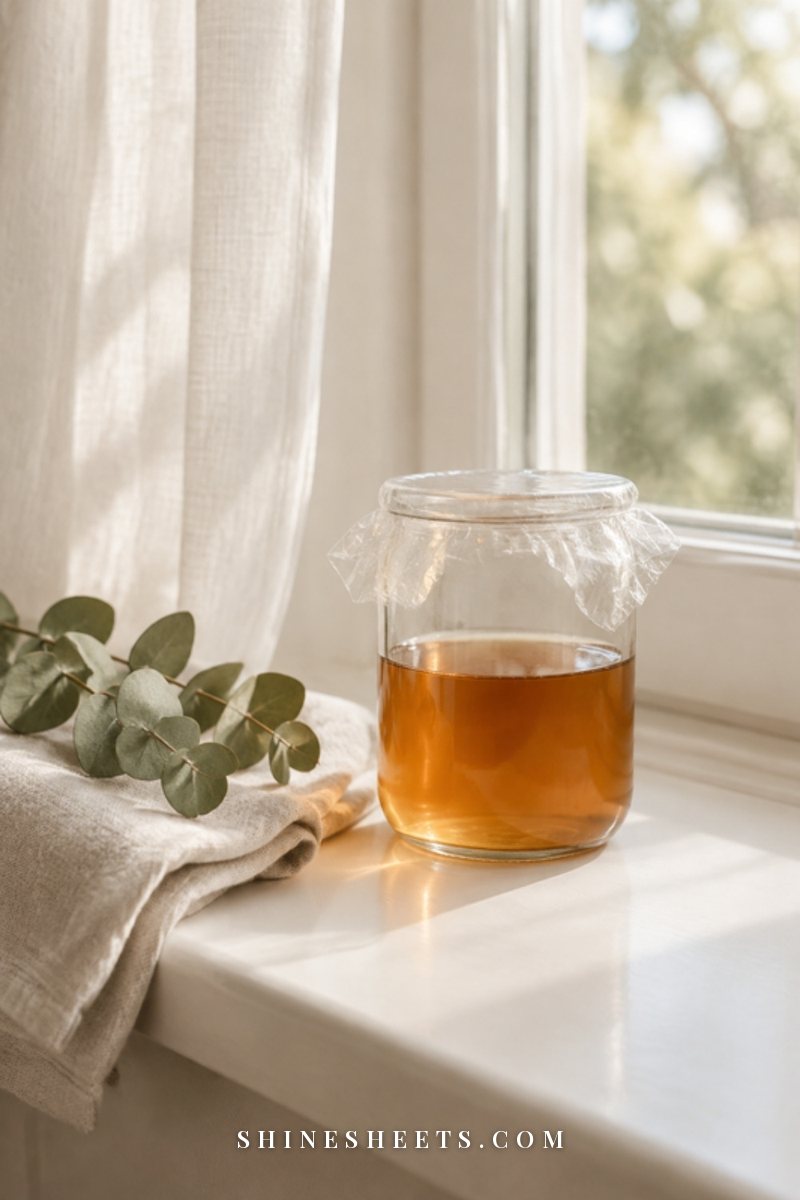
This is the trap that works best, and you probably have everything you need already. Pour a few tablespoons of apple cider vinegar into a small jar and add one drop of dish soap. The vinegar smells like fermenting fruit, which draws the flies in, and the soap breaks the surface tension so they sink instead of landing and flying off again.
- Use small jars rather than one big bowl; several small traps in different spots catch more. A set of small clear glass jars is handy for this (and they go straight back to holding spices or cotton pads afterwards).
- For a stronger pull, add a small piece of very ripe banana or a splash of leftover wine.
- Cover the top with plastic wrap, secure it with a rubber band and poke four or five small holes with a toothpick. The flies find their way in but struggle to get out.
- Refresh the trap every two to three days, or sooner if it's full or has stopped smelling.
The Paper Cone Version
If you don't have plastic wrap, roll a piece of paper into a cone with a small opening (about the width of a pencil) at the tip. Tape it closed and set it into the jar, narrow end down, so the tip sits above the liquid without touching it. Flies drift down through the cone toward the smell, and very few figure out the way back up. It's oddly satisfying to check in the morning.
Sticky Traps (Placed Out of Reach)
For houseplants and fungus gnats especially, sticky traps are the easiest option. Yellow sticky traps for plants are small cards on stakes that you press into the soil; the bright color attracts the adults, and they stick. Look for small, plant-sized cards so they're less noticeable.
- Place them where pets can't brush against them and little hands can't reach (high shelves, plants on a windowsill, behind other pots).
- Replace them when they're covered, roughly every two to four weeks.
- Sticky traps are great for monitoring, too: fewer flies on a fresh card each week means you're winning.
One thing I'd skip entirely is insecticide sprays and foggers in the kitchen. They're not needed for fruit flies, they settle on surfaces where food is prepared, and they're a worry around pets and children. Traps plus source removal really is enough.
Step 3: Prevent the Comeback
The final step is to make your kitchen boring for fruit flies. These are small habits, most taking under two minutes, and they're what keep the problem from returning every time a new bag of peaches comes home.
Store Ripe Fruit in the Fridge
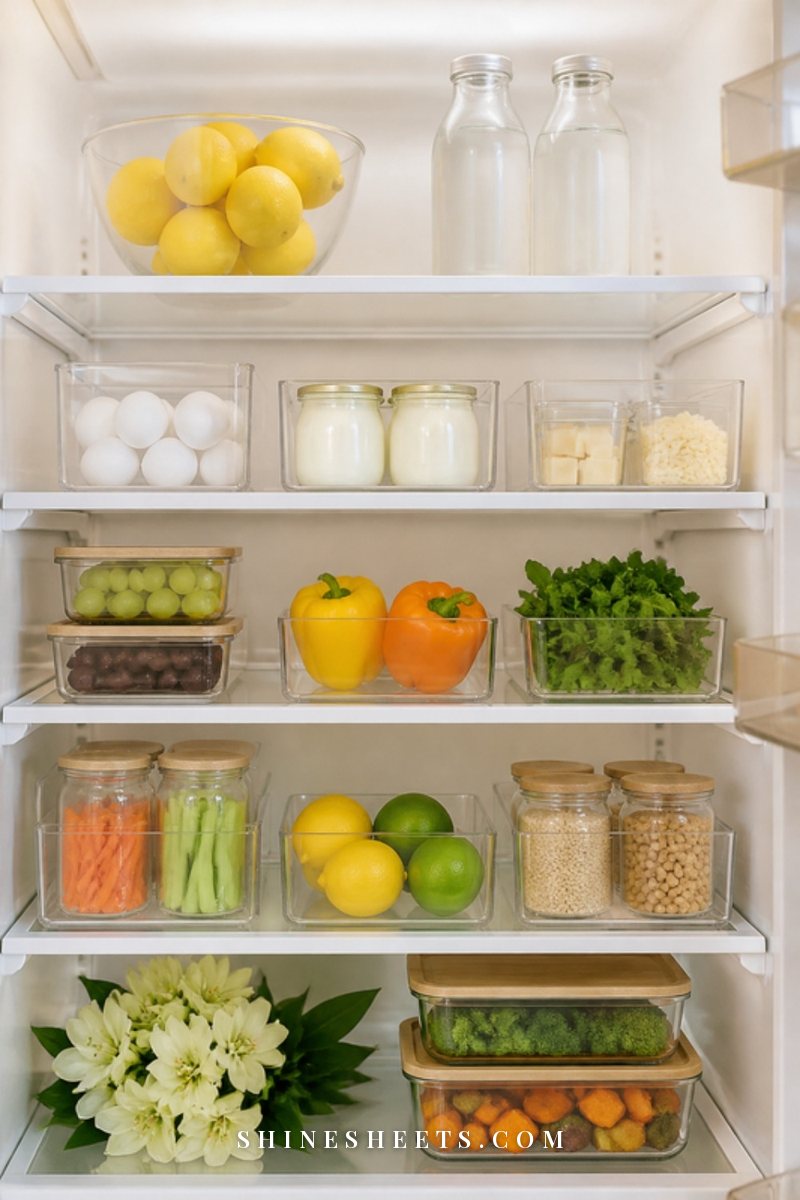
Fruit flies can't breed in cold temperatures. As soon as fruit is ripe, move it to the fridge: bananas (the skin darkens but the inside stays fine), peaches, plums, grapes, berries and tomatoes you'll eat in a day or two. Keep only unripe fruit or fruit you'll eat today out on the counter.
If your fridge is already full, a little reshuffling helps. My guide to organizing your fridge like a pro has easy zones so ripe fruit always has a spot.
Flush the Drain Daily
Every evening, after the last dishes, run very hot water down the kitchen sink for 30–60 seconds (or pour half a kettle down if your pipes allow it). It takes less time than brushing your teeth and keeps the film from building up again. A sage silicone drain strainer catches food bits before they slip into the pipe; empty it into the bin each night and rinse it.
Rinse the Bin and Recycling
Make rinsing part of the routine: every bottle and can gets a swirl of water before it goes in, and the trash can and recycling bin get a quick hot, soapy wash once a week. If your kitchen also has a damp or stale smell (which often goes hand in hand with drain and bin buildup), my guide on getting rid of musty smells at home has the room-by-room fix.
And if you're in the mood for a bigger reset, a seasonal top-to-bottom clean helps catch the forgotten corners, like under the toaster or behind the fruit bowl. My top-to-bottom kitchen deep clean plan breaks it into easy steps.
How Long It Takes: A Realistic Timeline

It helps to know what's normal, so you don't give up on day two. If you remove the sources and set traps, here's roughly what to expect:
- Day 1: Hunt down and remove the source, clean the drain and bin, set two or three jar traps. You'll still see plenty of flies, and that's okay.
- Days 2–3: The traps catch the bulk of the adults. You'll notice far fewer flies in the air. Refresh the traps.
- Days 4–7: A few stragglers may still appear as the last eggs and larvae finish developing. Keep up the daily drain flush, refrigerate ripe fruit and keep traps out.
- Week 2: In most kitchens, the flies are gone. If you still see new ones every day, there's a source you haven't found yet; go back through the seven spots and check under appliances, inside cabinets and the bottom of the onion basket.
In short: a few days for a big improvement and about a week for the cycle to break. If flies keep coming back after two weeks of doing everything right, or you see them in several rooms far from the kitchen, it's worth checking for a leak, a broken drain seal or a hidden spill (behind the fridge is a classic). A plumber or pest professional can help if it's beyond a quick fix.
Safety Notes for Homes With Pets and Kids
Getting rid of fruit flies doesn't require anything harsh, which is one of the nicest things about this particular problem. A few gentle rules keep everyone safe:
- Skip poisons, insecticide sprays and foggers in the kitchen; traps and cleaning are enough.
- Keep vinegar traps and sticky traps out of reach of pets and children (high windowsills, the back of the counter, on top of the fridge).
- Never mix bleach with ammonia, vinegar or other cleaners, and don't use bleach in a drain you've just treated with something else. Gloves and an open window are always a good idea when cleaning drains.
- Throw away traps in a sealed bag rather than pouring them down the sink you've just cleaned.
Final Thoughts
Fruit flies feel like a big, buzzing problem, but they really come down to one small, sweet, damp spot. Find it, clear it, set a couple of jars and give it a week. That's all it takes.
Once they're gone, the little habits (fruit in the fridge, a hot drain flush at night, a quick rinse of every bottle) keep your kitchen fresh with almost no effort. Here's to a calm, clean counter and a fruit bowl that's only full of good things.