A bathroom that smells good all the time isn't about having the strongest air freshener. It's about removing what causes the smell in the first place, then adding a soft, pleasant scent on top. Most bathroom odors come from a handful of spots: a drain, the base of the toilet, damp towels, the trash can or hidden mildew. Fix those, and the room smells fresh on its own.
This guide walks you through how to make your bathroom smell good step by step: how to find the real source, a smell-cause-fix table, a quick 3-minute daily routine, a weekly clean that actually removes odors, ventilation, towels and trash, and how to layer a pleasant scent safely. There's also a short list of what not to do, because some popular "fixes" make things worse.
Nothing here needs a renovation or expensive products. It's a few small habits that keep your bathroom feeling like a calm little spa instead of a room you apologize for when guests visit.
Find the Source First
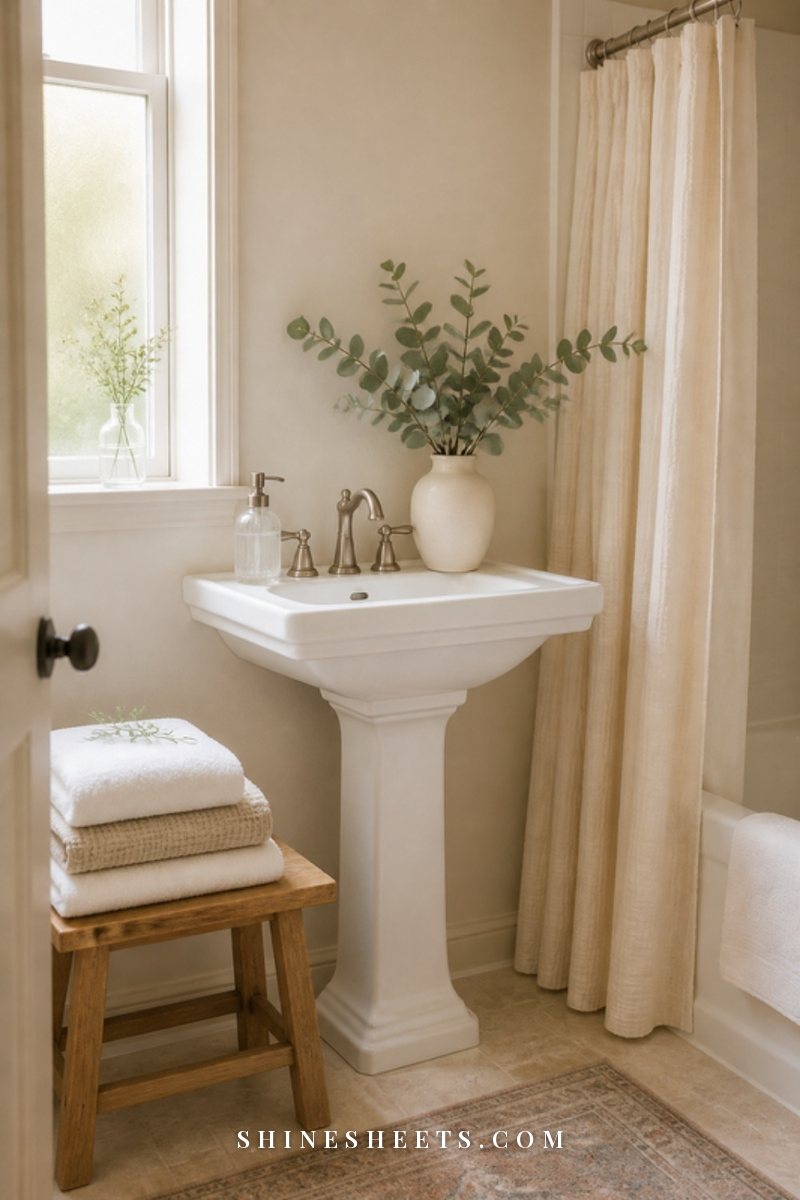
Before you buy anything scented, take two minutes and play detective. Close the door, turn off the fan, wait a minute and then use your nose. Get close to each of these spots:
- Drains: sink, shower and tub. Hair, soap scum and toothpaste build up in the pipes and start to smell.
- The sink overflow: the little hole near the top of the basin. It collects grime nobody sees.
- The toilet: under the rim, the base where it meets the floor, the hinges of the seat and the floor around it.
- Grout and caulk: dark spots in the shower corners or around the tub often mean mildew.
- Towels and bath mats: damp fabric that doesn't dry fully quickly smells musty.
- The trash can: especially the bottom of the can, under the bag.
- Under the sink: a small, slow leak can leave a damp, musty cabinet.
Once you know where it's coming from, you can fix the right thing. If the whole room has a damp, stale smell that never leaves, my guide on how to get rid of a musty smell goes deeper into moisture and mildew.
Smell, Cause and Fix: A Quick Table
Use this as your quick reference. Screenshot it and keep it on your phone for the next time something smells off.
| Smell | Likely cause | Fix |
|---|---|---|
| Musty, damp | Poor ventilation, damp towels, mildew in grout | Run the fan 20–30 minutes after showers, dry towels fully, clean grout weekly |
| Sour or "dirty" from the sink | Buildup in the drain or overflow | Clean the drain stopper, use an enzyme drain cleaner overnight, brush the overflow |
| Urine smell near the toilet | Splashes at the base, behind the toilet, on seat hinges | Wipe the base, floor and hinges with bathroom cleaner every few days |
| Sewer smell in a guest bathroom | Dry drain trap from not being used | Run water in the sink, shower and toilet for a minute every week |
| Sewer smell around the toilet base | Worn wax ring seal | Call a plumber |
| Rotten egg smell from hot water only | Water heater issue | Call a plumber |
| Stale, garbage smell | Trash can or bag residue | Empty often, wash the can monthly, use a lidded can |
| Mildew from the shower curtain | Liner staying wet | Spread it open after showers, wash the liner monthly |
One important safety note: if you ever smell gas (a strong rotten-egg smell that isn't coming from the water), leave the house and call your gas company or emergency services from outside.
A 3-Minute Daily Routine
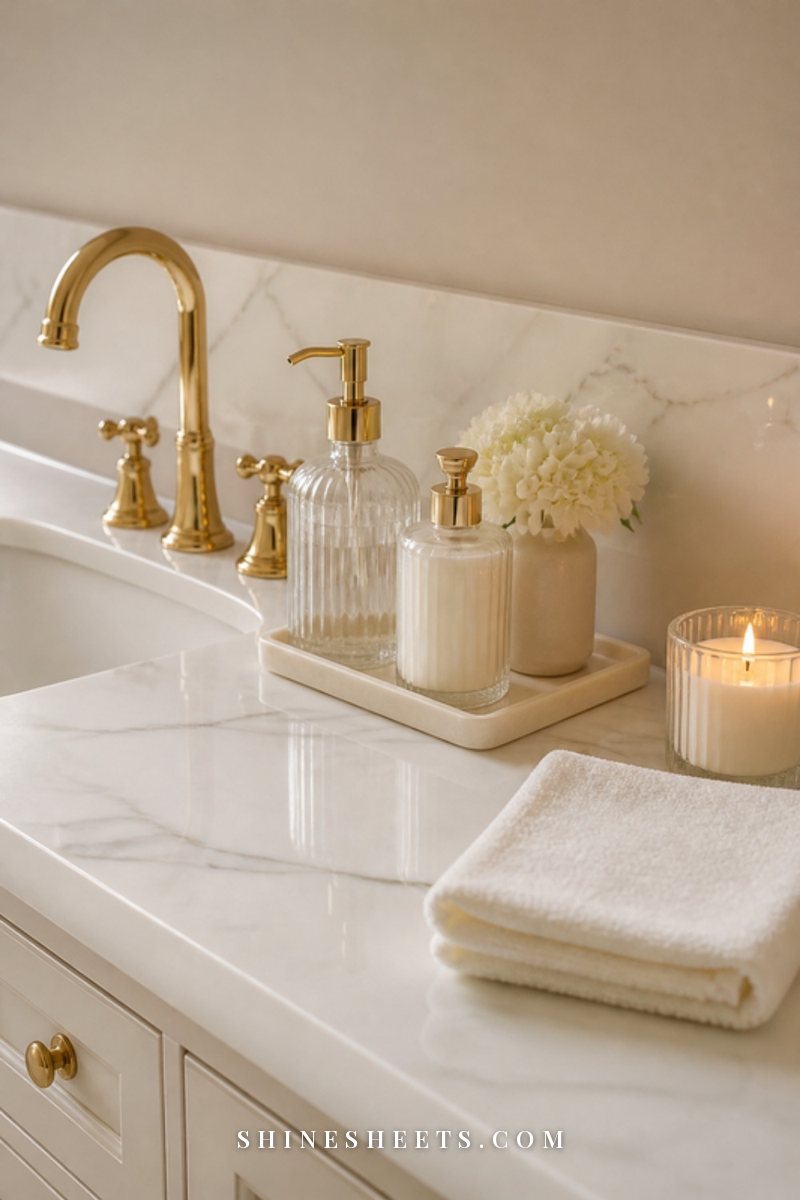
A bathroom stays fresh when small things never pile up. This mini routine takes about three minutes and keeps most odors from ever starting:
- Turn on the fan or open the window during and after your shower (more on timing below).
- Hang towels flat and spread out, not bunched on a hook.
- Squeegee or wipe the shower walls for 30 seconds to cut down on damp and mildew.
- Spread the shower curtain open so it dries.
- Wipe the sink and counter with a damp cloth, including toothpaste around the drain.
- Quick toilet check: a swish with the brush if needed and a wipe of the seat and the base with a disinfecting wipe.
- Lid down, door open when you leave, so air moves through.
If you want more simple habits like this, my guide on how to keep your bathroom clean has a full daily and weekly rhythm.
The Weekly Clean That Removes Odors
Once a week, give the smelly spots a proper clean. It takes about 20–30 minutes. Open a window or turn on the fan, wear gloves, and always follow the label of each cleaner. Never mix products, especially bleach with vinegar, ammonia or other cleaners, because the fumes can be dangerous.
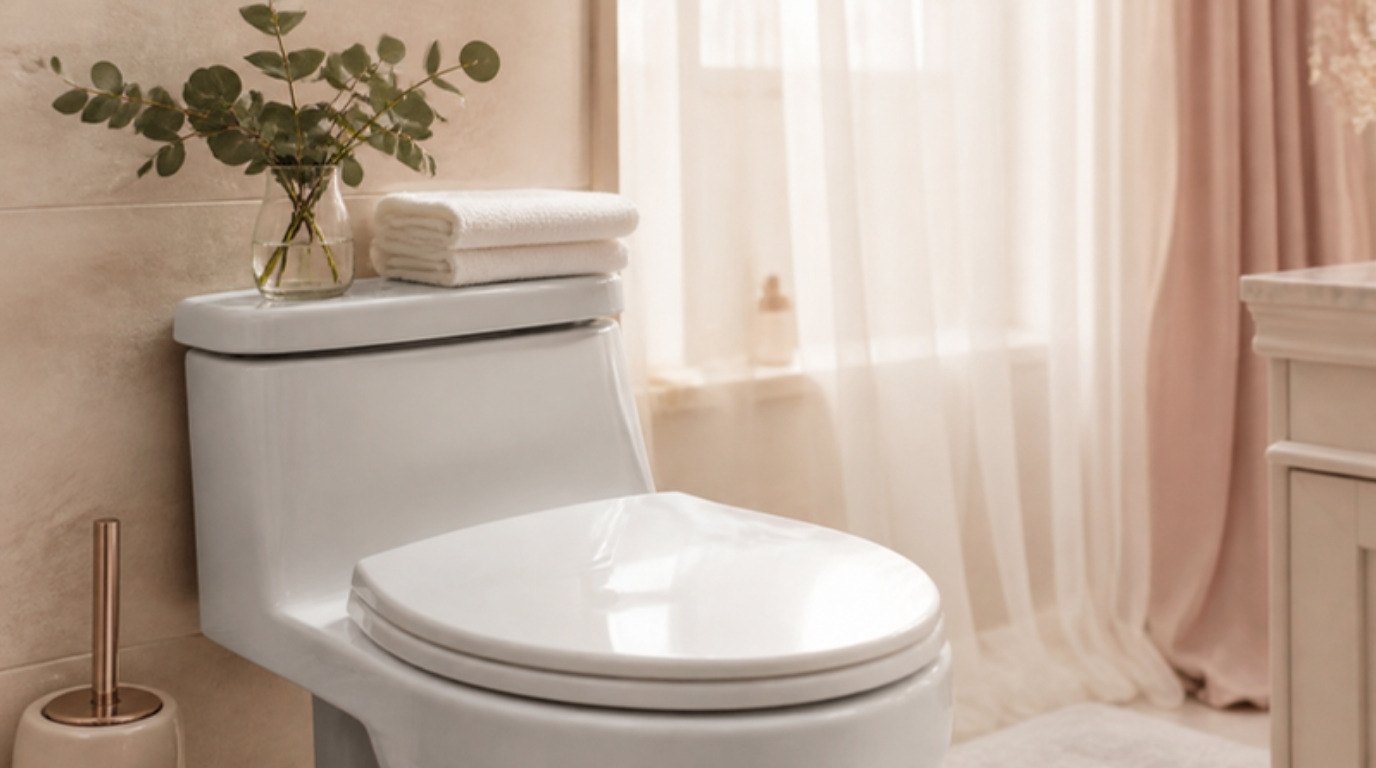
The Toilet, Including Under the Rim and the Base
- Apply toilet bowl cleaner under the rim and let it sit for the time on the label, usually 5–10 minutes.
- While it works, spray the outside of the toilet with bathroom cleaner: tank, handle, lid, seat (both sides), hinges and the base.
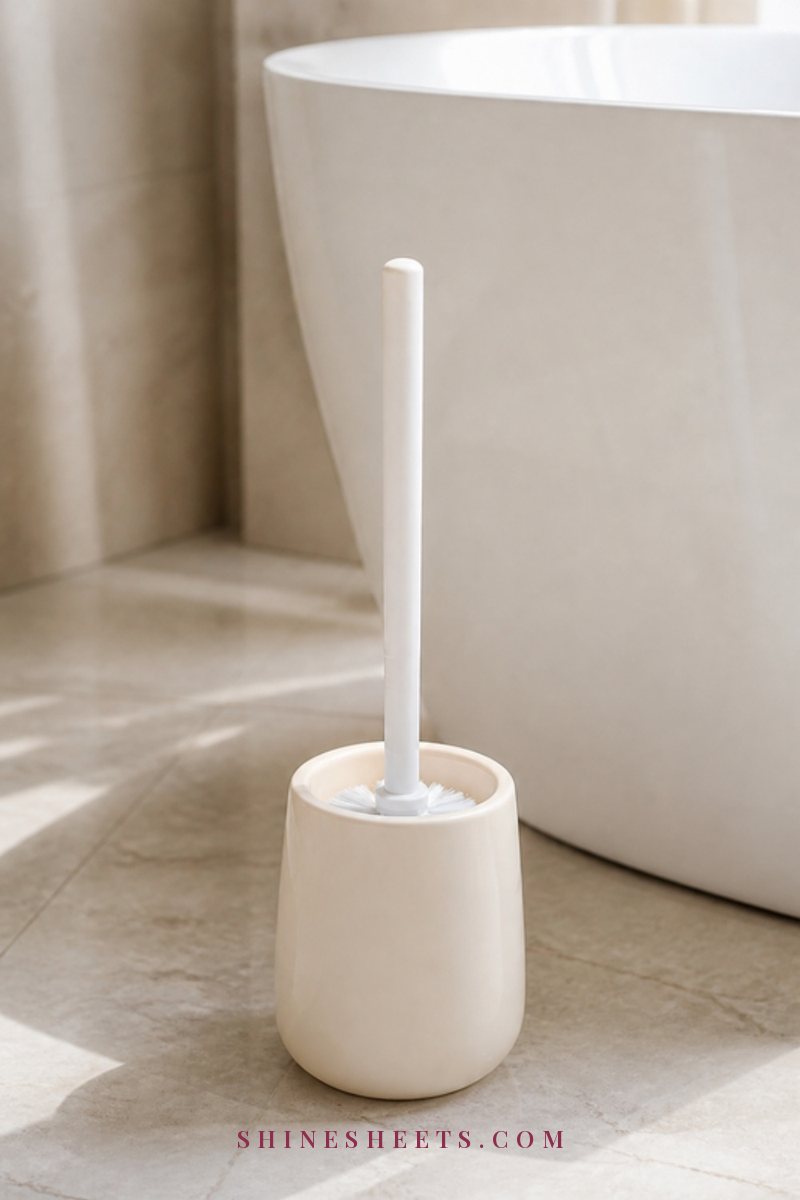
- Scrub the bowl with a toilet bowl brush with a holder, paying special attention under the rim. Flush.
- Wipe the outside from top to bottom with a cloth or paper towels, finishing with the base and the floor around it, where most odors hide.
- Use an old toothbrush around the seat hinges and the bolts at the base.
- Let the brush drip dry over the bowl, tucked under the seat, before putting it back in the holder. A wet brush in a closed holder smells fast.
If the area around the base still smells after cleaning, or the floor feels damp, the wax seal under the toilet might need replacing. That's a job for a plumber.
Drains and the Sink Overflow
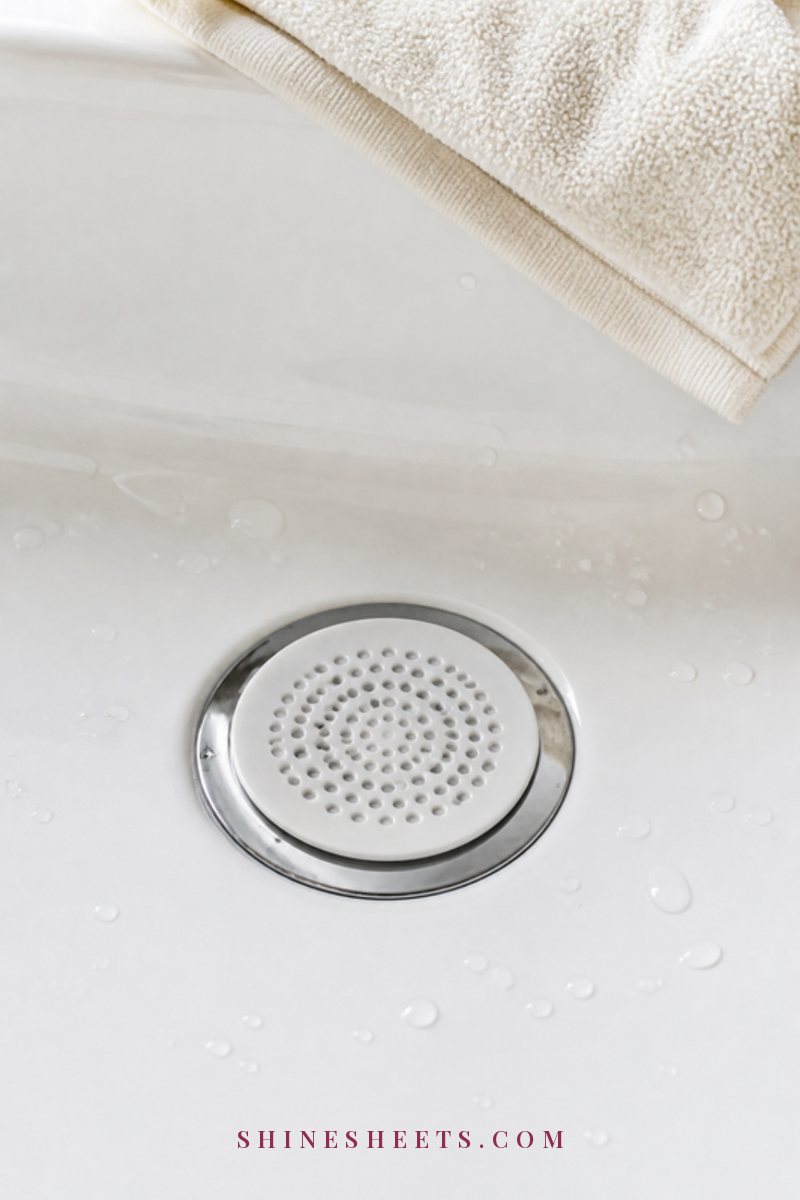
- Pull out the sink stopper (most lift out or unscrew) and clean off the hair and slime with a paper towel and an old toothbrush.
- Remove the hair from the shower drain with a drain hair tool or gloved fingers.
- Pour an enzyme drain cleaner into the drains before bed, following the amount on the label. Enzyme cleaners break down the organic buildup that causes smells and are gentler on pipes than harsh chemical openers. Leave it overnight, without running water, and rinse in the morning.
- Clean the sink overflow with a small bottle brush dipped in soapy water or bathroom cleaner. Rinse by pouring water through it.
Do the enzyme treatment every week or two if your drains tend to smell, monthly otherwise. And if your shower head has slow or uneven spray, that's often mineral buildup; here's how to clean a shower head without unscrewing it.
Shower Grout and Caulk
Grout is porous, so it holds onto soap, damp and mildew. Once a week:
- Spray grout with a bathroom cleaner or a mildew cleaner made for tile and leave it for 5–10 minutes.
- Scrub with a grout brush or a stiff toothbrush, rinse and dry with a towel.
- For dark spots in caulk, use a mildew cleaner made for the job and follow the dwell time on the label. Test on a small hidden spot first, especially on natural stone, which can be damaged by acidic cleaners.
- If caulk stays dark after cleaning, the mildew is underneath. Replacing old caulk is a simple weekend project, or a quick job for a handyman.
Wash the shower curtain liner every month in the washing machine with a couple of towels on a warm cycle, and hang it back up to dry.
Ventilation: The Most Underrated Fix
Steam is the root of many bathroom smells. When damp air has nowhere to go, it settles into towels, grout and walls, and that's where mildew starts. Good airflow fixes a surprising amount.
- Run the exhaust fan during your shower and for 20–30 minutes after. If you always forget, a simple timer switch is an easy upgrade.
- Clean the fan cover every few months. Dust blocks airflow. Turn off the power first, remove the cover, wash it in warm soapy water, dry and replace.
- Open the window for 10–15 minutes after showers, even in cooler months.
- Leave the door open when nobody is using the bathroom, so air moves through the house.
- No fan and no window? A small dehumidifier or even a gentle fan pointed toward the open door helps a lot in windowless bathrooms.
Test your fan by holding a single square of toilet paper near the cover while it runs. If it doesn't get pulled toward the fan, it may be clogged or too weak for the room.
Towels and Bath Mats
Damp towels are one of the most common reasons a bathroom smells stale, and often the easiest fix.
- Wash bath towels after three or four uses, hand towels every two days, and wash cloths after each use.
- Dry them fully between uses. Hang them spread out on a bar, not folded on a hook. A towel that stays damp for hours is a towel that will smell.
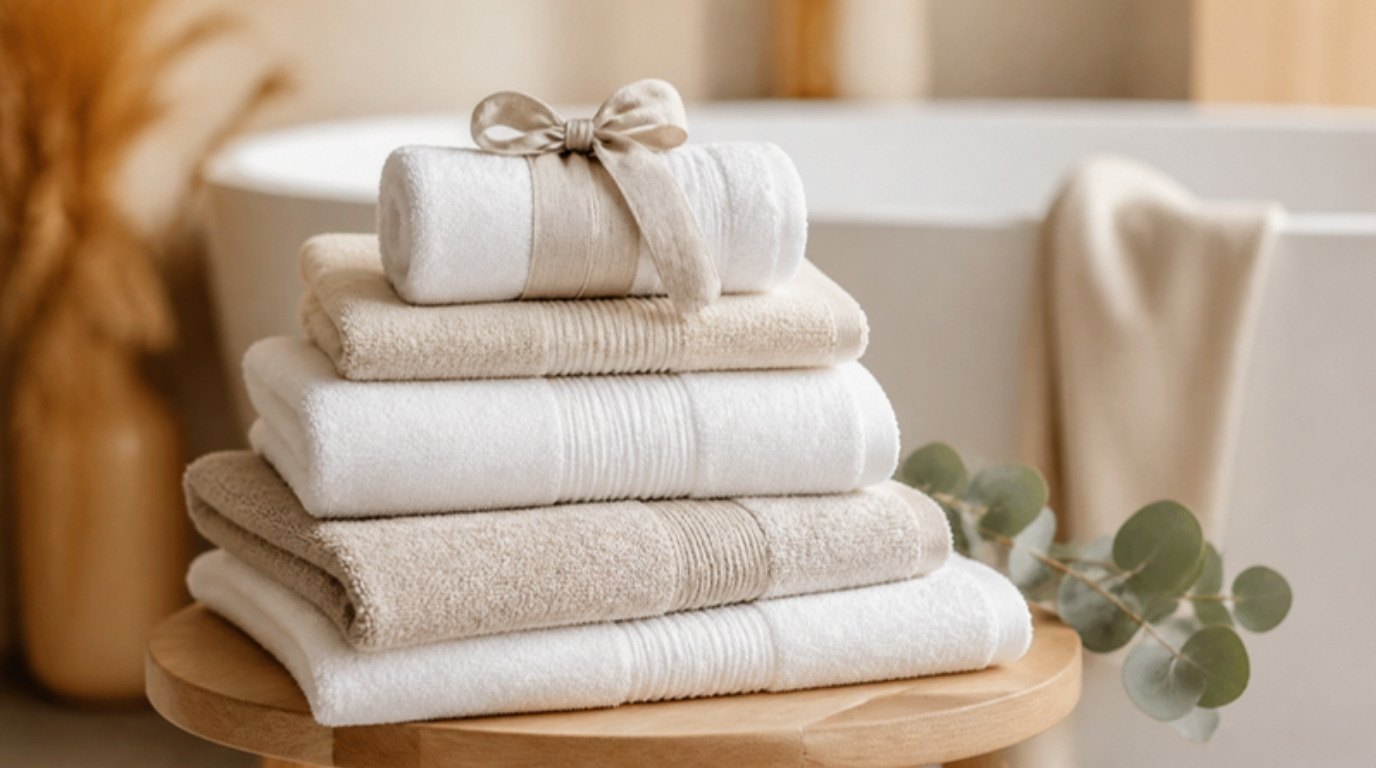
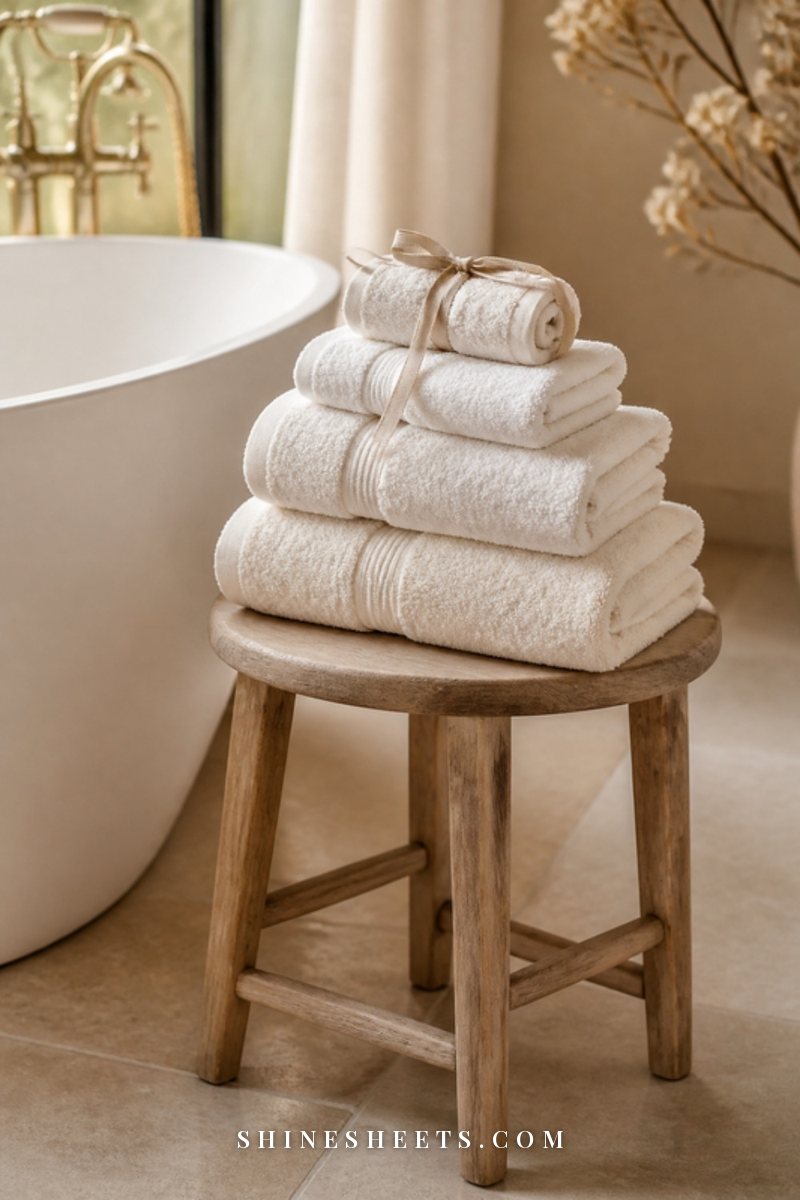
- Choose quick-drying towels. White waffle weave towels are thinner and dry much faster than thick terry, which helps a lot in small or humid bathrooms.
- Wash bath mats every week, and lift them off the floor to dry after each shower (over the tub edge works).
- Don't overload the washing machine with towels, use the right amount of detergent and skip fabric softener, which can leave residue that traps smells.
- Dry towels completely before folding and putting them away. Even slightly damp towels go musty in a closed cabinet.
If your towels already smell sour even after washing, wash them on the warmest setting the care label allows, and make sure your washing machine itself is clean.
Trash Can Care
The bathroom trash can is small, so it's easy to forget. A few simple habits help:
- Choose a small trash can with a lid, ideally a soft-close one. It keeps smells in and looks tidier.
- Empty it at least twice a week, and every day if it holds anything that smells.
- Wash the can once a month: rinse it in the tub or shower, scrub with a soapy brush, rinse and dry completely before putting in a new bag.
- Place a folded paper towel at the bottom, under the bag, to catch any leaks.
- Wrap anything smelly (like period products) before throwing it away.
Layering a Pleasant Scent Safely
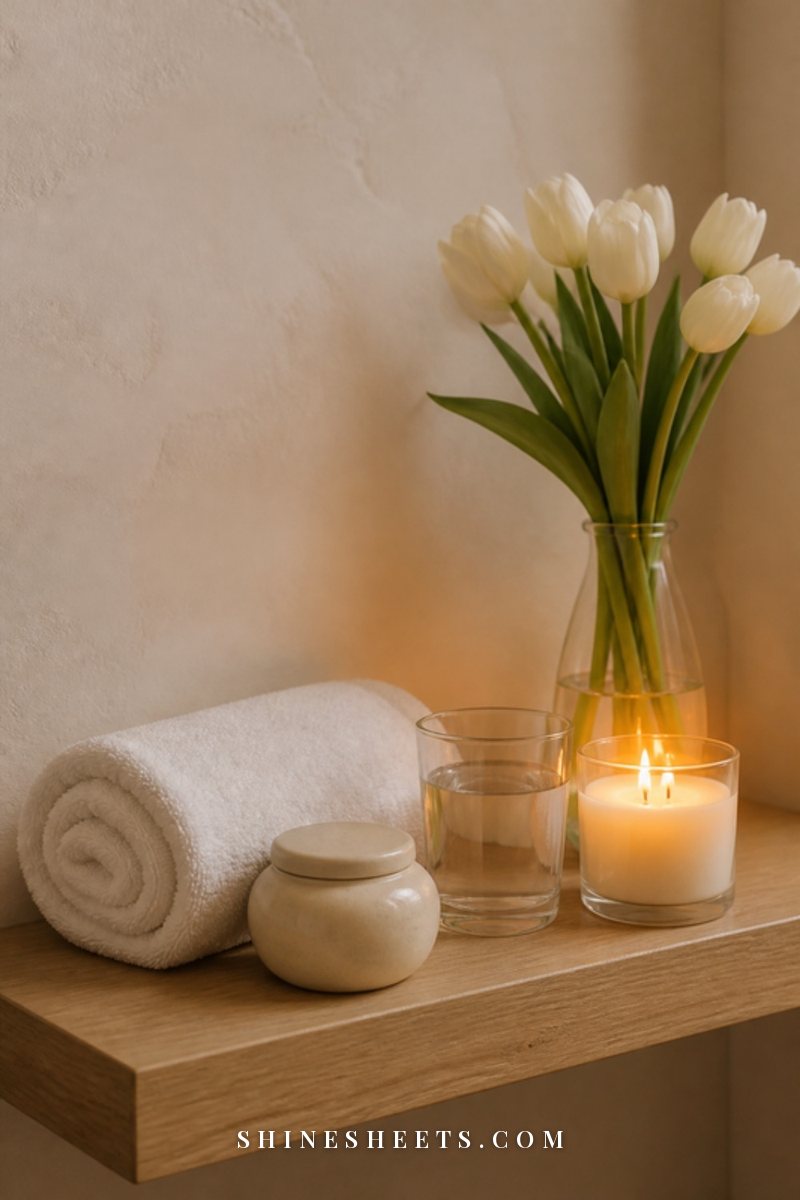
Once your bathroom is truly clean, a soft scent is the finishing touch. The goal is a gentle, fresh background, not a perfume cloud that hides problems.
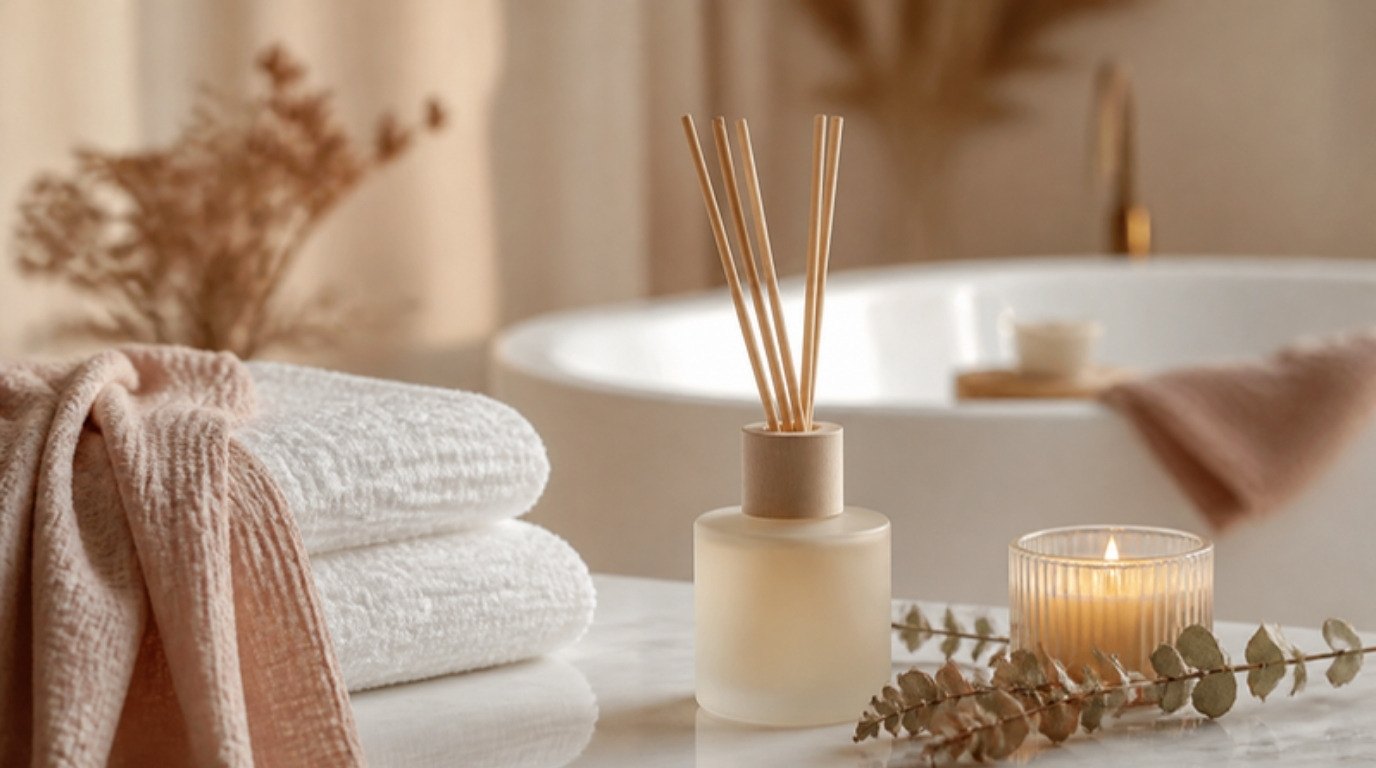
- A reed diffuser: A reed diffuser in a cream glass bottle gives a steady, subtle scent with no flame. Flip the reeds once a week to refresh it. Keep it out of reach of pets and children, and place it on a stable shelf.
- Candles only when you're there: I love a glass candle in the bathroom during a bath, but never leave one burning in an empty room, and keep it away from towels and curtains.
- Scented drawer liners in vanity drawers or the cabinet give a soft scent every time you open them.
- A bar of soap in the linen cabinet keeps towels smelling clean.
- A few drops of essential oil on a cotton ball hidden at the bottom of the trash can (under the bag) or inside the toilet roll tube. Keep oils away from pets, as some can be harmful to cats and dogs.
- Fresh flowers or a plant: a small bud vase on the vanity looks and feels fresh.
Pick one scent family and keep it consistent, like soft white florals, fresh linen or eucalyptus. Mixing several strong scents in a small room can feel overwhelming. For the rest of your home, my guide on keeping your apartment smelling fresh uses the same clean-first idea.
Small Bathroom Tricks
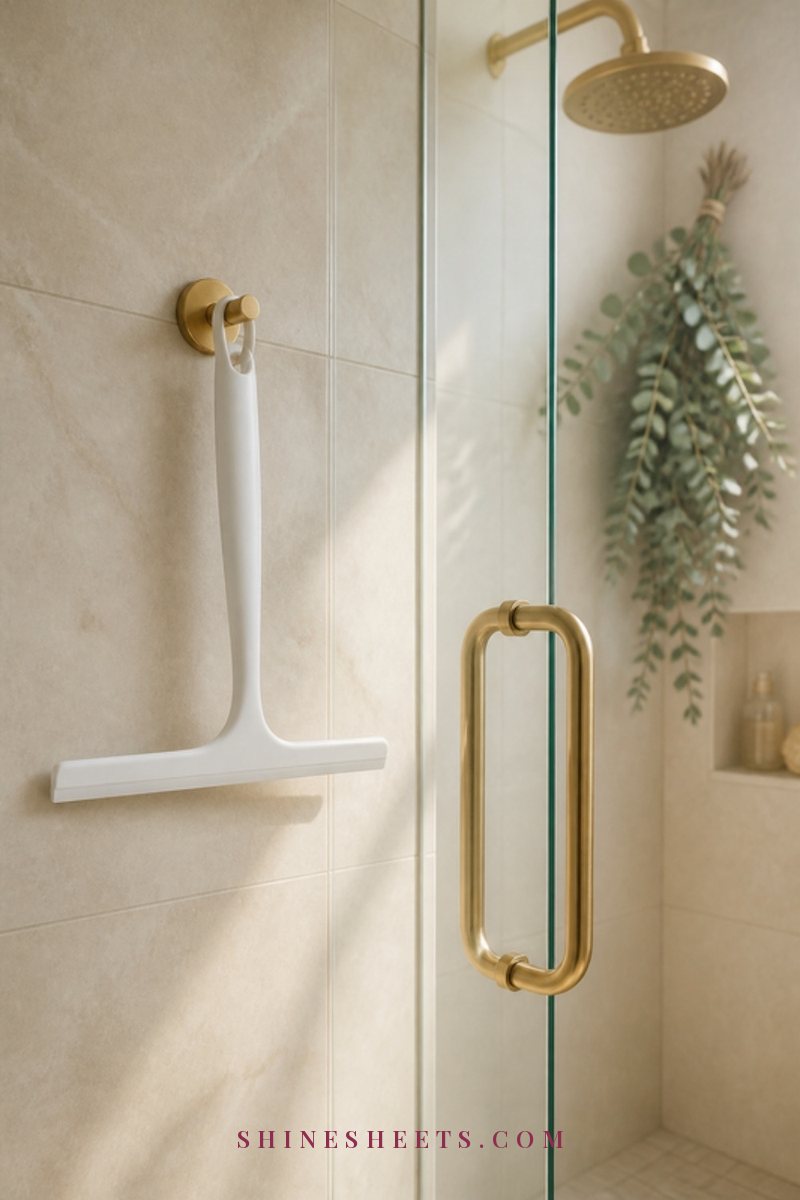
Small bathrooms trap smells faster, but they also respond quickly to small changes:
- Hang eucalyptus in the shower. A dried eucalyptus bundle tied to the shower head releases a fresh scent with the steam. Replace it every few weeks, before it gets dusty.
- Keep surfaces clear. Fewer bottles mean fewer spots for grime and quicker wipe-downs.
- Use closed storage for spare toilet paper and towels so they don't absorb damp air.
- Keep the toilet lid down when flushing. It keeps splashes and smells in the bowl.
- Use a toilet spray before use if you share a bathroom. A few sprays on the water surface trap odors.
- Keep the door open after showers to let steam out quickly.
Preparing for guests? My guide on how to clean your bathroom fast has a quick reset for when the doorbell is about to ring.
A Monthly Refresh for Lasting Freshness
Once a month, set aside about 30–45 minutes for the spots the weekly clean doesn't reach. These are the quiet places where odors build up slowly:
- Wash the shower curtain liner and bath mats on a warm cycle, following the care label, and let them dry fully before hanging them back.
- Clean the trash can inside and out, and let it air-dry in the sun or by an open window if you can.
- Empty and wipe the cabinet under the sink. Check for drips around the pipes; a small leak is a common hidden cause of a musty smell. If you find one, place a dry towel underneath and call a plumber or your landlord.
- Wash the toilet brush and holder. Fill the holder with hot water and a little bathroom cleaner, let the brush soak for 10 minutes, rinse and dry. Replace the brush every few months, or sooner if it looks worn.
- Dust the exhaust fan cover with a vacuum brush attachment (power off first).
- Refresh your scent: flip or replace the diffuser reeds, swap the eucalyptus bundle and change the drawer liners if they've faded.
- Wipe light switches, door handles and the toilet flush lever with a disinfecting wipe.
Tie this refresh to the first weekend of each month, and the bathroom never quite slides back into stale territory. It's one of those small routines that makes the whole home feel more cared for.
What Not To Do
Some common habits mask smells for an hour but make the problem worse over time:
- Covering odors with heavy air freshener. If the source is still there, you'll just smell both. Clean first, then add scent.
- Mixing cleaners. Never mix bleach with vinegar, ammonia or other cleaners. It creates dangerous fumes. Use one product at a time, rinse between them and keep the room ventilated.
- Using harsh chemical drain openers often. They can damage pipes over time. Use a drain hair tool and an enzyme cleaner regularly instead, and call a plumber for real clogs.
- Leaving damp towels on the floor or in a pile. Mildew starts within hours.
- Ignoring a smell that keeps coming back. A persistent sewer or rotten-egg smell can mean a plumbing issue that needs a professional.
- Closing the bathroom door with steam inside. Damp air needs a way out.
- Burning candles with nobody there. Always blow them out when you leave the room.
Final Thoughts
A bathroom that smells good all the time is really a bathroom that dries well, gets a quick daily wipe and a proper weekly clean, with one soft scent on top. Find the source, fix it, keep the air moving, and the fresh smell takes care of itself.
Start with the spot your nose noticed first, give it ten minutes this week, and enjoy walking into a bathroom that feels clean, calm and just a little bit like a spa.