A musty smell is almost never a cleaning problem. It's a moisture problem wearing a cleaning costume. You can scrub, spray and light every candle you own, but if something stays damp somewhere in your home, that heavy, basement-y smell will be back within days.
The good news is that musty odors are very traceable. They come from a small list of usual suspects, and once you find the one in your home, the fix is usually simple, cheap and surprisingly satisfying.
This guide covers how to get rid of musty smells for good: where they come from, how to sniff out the source, a "smell detective" table you can screenshot, room-by-room fixes, how to control moisture so the smell doesn't return, natural absorbers that actually work, and the signs that it's time to call a professional.
Why Your Home Smells Musty
That musty, earthy, wet-cardboard smell comes from mold and mildew. When they grow, they release tiny gas compounds into the air, and our noses are very good at picking them up, often long before we can see a single spot.
Mildew needs three things to thrive: moisture, something to feed on (fabric, dust, soap scum, wood, paper) and still air. Take away one of the three, and it struggles. Take away moisture, and it mostly gives up.
The most common causes I see over and over:
- High indoor humidity – anything consistently above about 60% is an open invitation.
- Poor airflow – closed closets, furniture pushed flat against exterior walls, rooms you rarely open.
- Hidden damp spots – under sinks, behind the washing machine, under rugs, in window tracks.
- Textiles that never fully dry – towels, bath mats, gym clothes, couch cushions, curtains.
- Appliances that hold water – front-loading washers, dishwashers, fridge drip trays, AC units.
- Basements and crawl spaces – cool, below-ground spaces where moisture naturally collects.
Here's the part that took me a while to accept: air fresheners don't remove a musty smell, they just sit on top of it. Masking is fine for guests arriving in ten minutes. For a real fix, you have to find the damp.
How To Find the Source of a Musty Smell
Think of this as a gentle little investigation. It usually takes 20–30 minutes, and you'll likely find the culprit faster than you expect.
- Start with fresh air. Step outside for five minutes, then come back in. Your nose gets used to smells quickly, and a short reset makes the musty one much easier to notice.
- Walk room by room and rate the smell. Use a simple 0–3 score in your head (0 = nothing, 3 = strong). The smell is almost always strongest closest to the source.
- Open everything. Closets, cabinets, the washing machine door, the dishwasher, under the sink. A smell that "pops" when you open a door has found its home.
- Get low and touch. Musty smells often live near the floor. Press on rugs, carpet edges, the bottom of curtains and couch cushions. Anything that feels cool and slightly damp is suspicious.
- Use a flashlight. Check corners, behind furniture, window sills and tracks, grout, the rubber seal of your washer and the back of the fridge. Look for gray, black, green or white fuzzy spots or dark rings.
- Check the humidity. A small digital humidity monitor costs very little and tells you the truth in a minute. If one room reads much higher than the rest, you've found your problem area.
- Notice the timing. Is it worse after showers, after rain, in the morning, or when the heating has been off? Timing is a big clue about whether you're dealing with steam, outdoor water or condensation.
The Smell Detective Table
Once you've narrowed down the room, this table helps you connect the smell to its most likely cause and the fix that actually works. Screenshot it and keep it on your phone for the next time something smells "off."
| Where it smells | Likely cause | Fix |
|---|---|---|
| Bathroom, worse after showers | Steam with nowhere to go; damp towels and bath mat | Run the fan 20–30 minutes after showering, spread towels flat to dry, wash the bath mat weekly |
| Towels that smell even when "clean" | Detergent and body oil buildup trapping bacteria | Strip-wash hot, use less detergent, dry fully the same day |
| Closet or dresser | Still air, clothes packed tightly, items put away slightly damp | Space clothes out, leave doors open for a day, add a moisture absorber |
| Basement | High humidity, condensation on cool walls and pipes | Dehumidifier set to 45–50%, fix leaks, raise stored items off the floor |
| Couch or armchair | Spills or pet accidents soaked into foam; body oils | Vacuum, enzyme spray, baking soda overnight, sunshine and airflow |
| Rug or carpet | Moisture trapped underneath, often from a damp floor | Lift and check the floor, dry both sides, use a breathable rug pad |
| Washing machine | Mildew in the door seal, drawer and drain filter | Clean the gasket and drawer, run a hot cleaning cycle, leave the door open |
| Under the kitchen or bathroom sink | A slow drip or a past leak in the cabinet base | Dry, check pipe joints, replace swollen shelf liner |
| Entryway | Wet shoes, coats and umbrellas stored in a closed space | Boot tray, open hooks, let things dry before they go in the closet |
| Whole home, worse in rainy season | General humidity above 60% | Ventilate daily, run a dehumidifier, check gutters and drainage outside |
| Near windows | Condensation collecting in tracks and on sills | Wipe condensation each morning, clean tracks, open curtains during the day |
How To Get Rid of Musty Smells Room by Room
Here's how I'd tackle each problem area, with exact steps and timings. You don't have to do them all at once. Start with the room your nose pointed to.
Bathroom
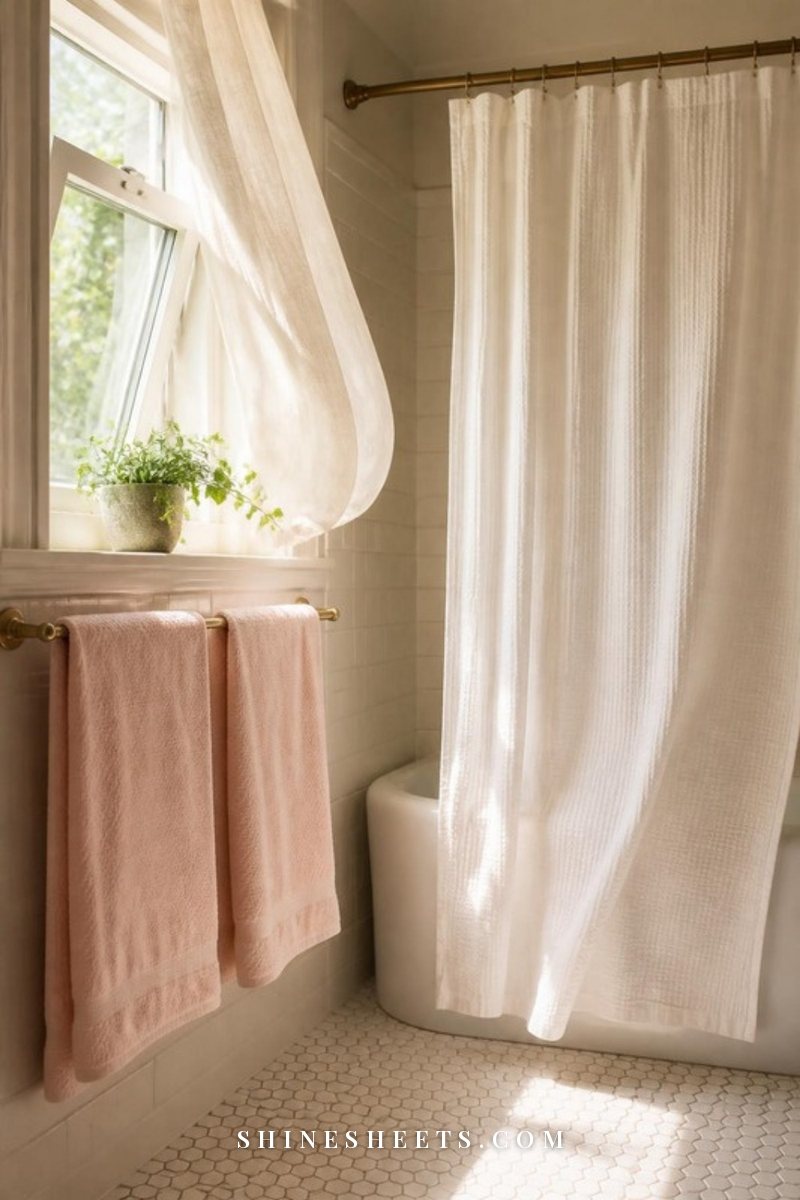
Bathrooms produce more moisture per square foot than any other room, so they're the classic musty-smell zone.
- Run the fan longer. Keep the exhaust fan on during your shower and for 20–30 minutes after. No fan? Crack the window and leave the door open.
- Spread everything out. Pull the shower curtain fully closed along the rod so it dries flat instead of bunched, hang towels open (not folded over a hook) and drape the bath mat over the tub edge.
- Wash soft items weekly. Bath mats, hand towels and fabric shower curtains (most can go in the washer on warm).
- Check the hidden spots. The underside of the bath mat, the corners of the shower caddy, the toothbrush holder, the base of the toilet and under the sink.
- Clean grout and caulk. Spray with a mildew cleaner or a paste of baking soda and water, let it sit 10 minutes, scrub with a small brush and rinse. Caulk that stays dark after cleaning usually needs replacing.
If you want a quick weekly flow for the whole room, my guide on natural cleaning walks through gentle, low-fume ways to keep bathrooms fresh.
Closets and Dressers

Closets get musty because they're dark, still and usually full. Fabric holds onto humidity and smells, and without airflow nothing ever fully dries out.
- Empty and air it out. Take everything out, leave the doors open and run a fan pointed inside for a few hours (or overnight).
- Wipe surfaces. Wipe shelves, rods and walls with a cloth dampened in a mild solution of white vinegar and water (about 1:1), then let them dry completely with the doors open.
- Sort by smell. Anything musty goes to the laundry. Wool and delicate pieces can often be freshened by airing them outside in shade for a day.
- Give clothes breathing room. Leave roughly a finger-width between hangers and avoid storing anything in plastic dry-cleaning bags, which trap moisture.
- Add a moisture trap. A hanging closet moisture absorber pulls water out of the air in small, closed spaces. Check it every few weeks and replace it once it fills.
- Never put away damp clothes. Even "almost dry" jeans or a sweater worn in the rain can start the smell. Let them hang out overnight first.
Drawers smell musty for the same reason. Empty them, wipe them, let them air for a day with the drawers pulled out, and tuck a small sachet of baking soda in a corner before refilling.
Basement
Basements are naturally cooler and closer to the ground, so humidity sneaks in through walls and floors and condenses on cold surfaces. This is where a dehumidifier stops being optional.
- Measure first. If the humidity reads above 60%, start a dehumidifier set to about 45–50% and empty or drain it daily at first.
- Look for water. Check walls for damp patches or white chalky residue, look at pipes for condensation and check the floor around the water heater and laundry area.
- Raise everything up. Store boxes on shelves or pallets, never directly on concrete. Swap cardboard for plastic bins with lids.
- Insulate cold pipes. Foam pipe sleeves stop pipes from "sweating" and dripping.
- Check outside. Clogged gutters and downspouts that empty right next to the foundation are a very common cause of a damp basement.
Couch, Rugs and Curtains
Upholstery and rugs absorb everything: humidity, spills, pet smells and body oils. Once moisture settles into foam or rug backing, it can smell musty for weeks.
- Vacuum thoroughly. Use the upholstery attachment on all sides of the cushions, the crevices and the underside of the couch.
- Treat smelly spots. A enzyme odor spray breaks down the organic matter behind the smell instead of covering it. Mist lightly (don't soak), then let it air dry fully.
- Baking soda overnight. Sprinkle a thin, even layer over the couch or rug, leave it 8–12 hours and vacuum it up.
- Bring in sun and air. If you can, set cushions in a sunny window or outside on a dry day for a few hours. Sunlight and moving air are wonderfully effective.
- Lift your rugs. If a rug smells musty, flip it and check the floor beneath. Dry both sides before putting it back, ideally on a breathable rug pad.
- Wash curtains. Fabric curtains near windows collect condensation at the hem. Wash them per the care label and let them dry fully before rehanging.
For a full deep clean, including how to check your couch's cleaning code before you start, see my guide on how to clean a couch.
Towels and Laundry
Towels that smell musty straight out of the dryer are one of the most frustrating things. The culprit is usually buildup: too much detergent and fabric softener coat the fibers and trap bacteria, and damp-but-not-wet towels sitting in a hamper finish the job.
- Strip-wash once. Wash towels on the hottest setting the care label allows with half your usual detergent and no fabric softener. Run a second rinse.
- Add a sanitizing step. A laundry sanitizer added to the rinse helps with smells that survive a regular wash, especially gym clothes and towels.
- Move laundry fast. Transfer wet loads to the dryer or drying rack within an hour or so. A load forgotten overnight in the drum will almost always smell musty.
- Dry completely. Thick towels need longer than you think. Feel the hems and folds; they're always the last to dry.
- Let hampers breathe. Hang wet towels to dry before they go in the hamper, and choose a woven or mesh hamper instead of a closed plastic one.
My guide on how to deep clean towels has the full reset routine if yours need some serious help.
Washing Machine
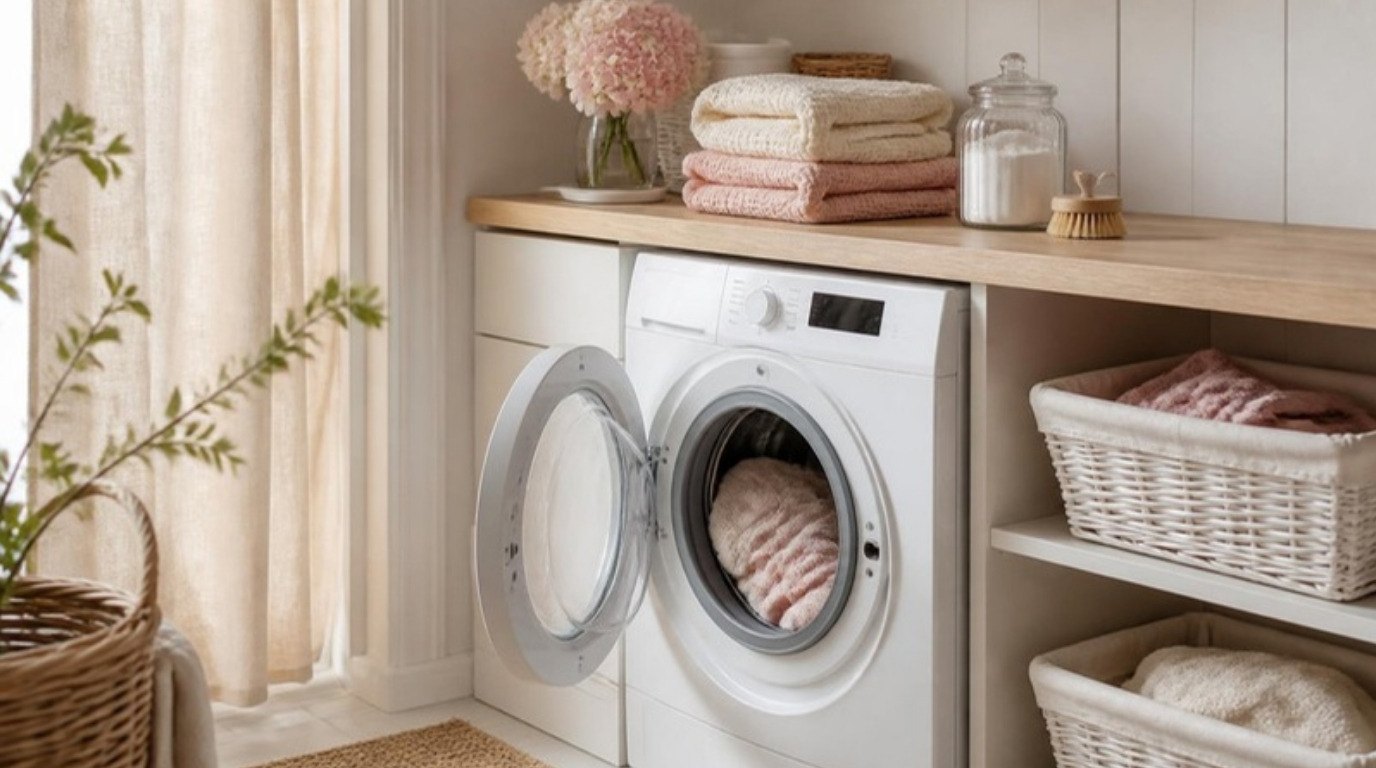
If your clean laundry smells musty, the machine itself might be the source. Front-loaders are especially prone because the rubber door seal holds water and lint.
- Clean the door seal. Pull back the rubber gasket and wipe out hair, lint and gray gunk with a cloth and a mild cleaner. Dry it with a towel.
- Clean the detergent drawer. Pull it out completely, soak it in warm water for 15 minutes and scrub the corners with an old toothbrush.
- Run a hot cleaning cycle. Use your machine's tub-clean setting or the hottest cycle with a washer cleaner, once a month.
- Leave the door and drawer open between loads so everything can dry.
The step-by-step version, including the drain filter most people never touch, is in my guide on how to clean a washing machine.
Entryway: The "Car" of the House

I like to think of the entryway as the car of the house: everything comes in through it, nothing gets fully unpacked, and it quietly holds onto smells. Wet shoes, rain-soaked coats, damp umbrellas and gym bags all land here, often in a closed closet.
- Use a boot tray. Wet shoes go on a tray, not straight into a closet or shoe cabinet.
- Hang coats open. Wet coats dry best on open hooks with space around them. Move them into the closet only once they're fully dry.
- Air out shoes. Loosen laces, pull out insoles and stuff damp shoes with newspaper or a dry cloth overnight.
- Freshen the shoe closet. Place activated charcoal bags on the shelves or the floor. Set them in the sun for an hour or two every month to "recharge" them.
- Wash the doormat. Shake it out weekly and wash or replace it whenever it stays damp.
Moisture Control: The Real Long-Term Fix

You can deep clean every room, but if the air stays damp, the smell will return. Moisture control is what makes the fix last.
The EPA's guidance on mold recommends keeping indoor humidity below 60%, ideally between 30% and 50%. That range is the sweet spot: dry enough to stop mildew, but not so dry that your skin and sinuses feel it.
Ways To Lower Humidity at Home
- Run a dehumidifier where it matters. A compact dehumidifier is enough for a bathroom, closet, bedroom or small basement. Empty the tank daily and clean the filter monthly.
- Ventilate every day. Open windows on opposite sides of your home for 10–15 minutes each morning to create a cross-breeze, even in winter.
- Use exhaust fans. In the kitchen while cooking and in the bathroom during and after showers.
- Pull furniture away from walls. Leave 2–4 inches between sofas, beds and dressers and exterior walls so air can circulate.
- Dry laundry smartly. If you air-dry indoors, do it in a room with an open window or a running dehumidifier, not a closed bedroom.
- Keep heat steady. Very cold rooms collect more condensation. A low, steady temperature helps more than heating a room in bursts.
- Fix small leaks quickly. A slow drip under a sink can create a musty smell within days.
Natural Odor Absorbers That Actually Work
Once the source is fixed, a few natural absorbers help pull lingering smells out of the air and fabrics. They work best as a finishing touch, not as the whole solution.
- Baking soda. Leave an open jar or a shallow bowl in closets, cabinets and under sinks. Replace it every 1–2 months. Sprinkle it on rugs, mattresses and couch cushions overnight, then vacuum.
- Activated charcoal. Stronger than baking soda for enclosed spaces. Good for shoe closets, basements and cars. Recharge it in sunlight monthly.
- White vinegar. A small bowl left out overnight absorbs smells in a room (the vinegar smell fades as it dries). Diluted 1:1 with water, it's a great wipe-down for hard surfaces.
- Sunshine and fresh air. The most underrated absorber of all. A few hours outside on a dry, breezy day can rescue musty pillows, throws, cushions and bags.
- Coffee grounds. Dry, used grounds in a small open dish can absorb odors in a fridge or a closed cabinet for a few days.
And once the musty smell is gone, adding a soft scent feels completely different, because it's no longer covering anything. My favorite ideas live in how to keep your apartment smelling fresh, and a gently bubbling stovetop pot from my simmer pot recipes is the loveliest way to make the whole home smell warm again.
A Simple Fresh-Home Routine To Keep Musty Smells Away
Musty smells sneak back when moisture quietly builds up again. This small routine keeps things in check without becoming a project.
Daily (5 minutes)
- Open a window for 10 minutes in the morning.
- Run the bathroom fan after showers and hang towels open.
- Wipe window condensation if you see it.
Weekly (20 minutes)
- Wash bath mats, hand towels and kitchen towels.
- Leave the washing machine door open and wipe the seal.
- Glance at your humidity monitor and empty the dehumidifier.
- Shake out the doormat and check the entryway for wet shoes.
Monthly (45 minutes)
- Run a hot washing machine cleaning cycle.
- Refresh baking soda and recharge charcoal bags in the sun.
- Check under sinks with a flashlight.
- Air out one closet with the doors wide open for a day.
- Clean the dehumidifier filter.
When a Musty Smell Means Mold That Needs a Pro
Most musty smells are mild mildew you can handle yourself. But some situations deserve professional help, and there's no shame in calling someone. Consider a mold specialist or contractor if:
- You can see mold covering an area larger than about 10 square feet (roughly 3 feet by 3 feet).
- The smell keeps coming back even after you've cleaned and dried everything.
- It smells musty inside walls, under flooring or from air vents.
- You've had a flood, a burst pipe or a roof leak.
- Drywall or wood feels soft, stained, bubbling or warped.
- Someone at home has asthma, allergies or a weakened immune system, or feels worse indoors.
A kind safety note: when you clean mildew yourself, open windows, wear gloves and ventilate well. Never mix bleach with vinegar, ammonia or other cleaners. Those combinations release toxic gases, even in small amounts. Use one product at a time and rinse well between them. If you notice headaches, coughing or breathing trouble around a damp area, step away and let a professional take over.
Final Thoughts
A musty smell isn't a sign that your home is dirty or that you've failed at anything. It's simply a sign that a little water is hiding somewhere it doesn't belong. Follow your nose, dry things out, let fresh air in and give your home a small routine to lean on.
Once the damp is gone, the air feels lighter, your clothes smell like clean laundry again, and coming home feels the way it should: soft, fresh and completely yours.