The best cleaning hacks aren't clever tricks. They're small changes to the order, timing and tools you already use, so the same jobs take half the effort. Most of the time we lose in cleaning goes to scrubbing things that just needed to soak, walking back and forth for supplies, and wiping the same surface twice because the dust fell on it after we cleaned it.
It took me a while to notice that my home didn't need more cleaning time. It needed fewer wasted minutes. Once I fixed the order and kept my supplies in one place, a full bathroom went from a dreaded hour to something I could do before my evening tea went cold.
This guide gathers the cleaning hacks that save time and actually work, grouped by room and situation: the basic rules that make every other trick faster, smart tool setups, bathroom and kitchen shortcuts, living room tricks, where vinegar and lemon help (and where they cause damage), a short safety note, and a "hack, time saved, best for" table you can screenshot for later.
The Rules That Make Every Cleaning Hack Work
Before any room-by-room tricks, there are three rules that quietly save the most time. They work in every space, with any products, and they cost nothing.
1. Clean Top to Bottom, Dry to Wet
Gravity is either your helper or your enemy. Dust, crumbs and hair always fall down, so if you wipe the counter first and dust the shelf above it second, you just cleaned the counter twice.
The order that works:
- Top first: ceiling corners, light fixtures, tops of cabinets and shelves.
- Middle next: counters, tables, windowsills, mirrors.
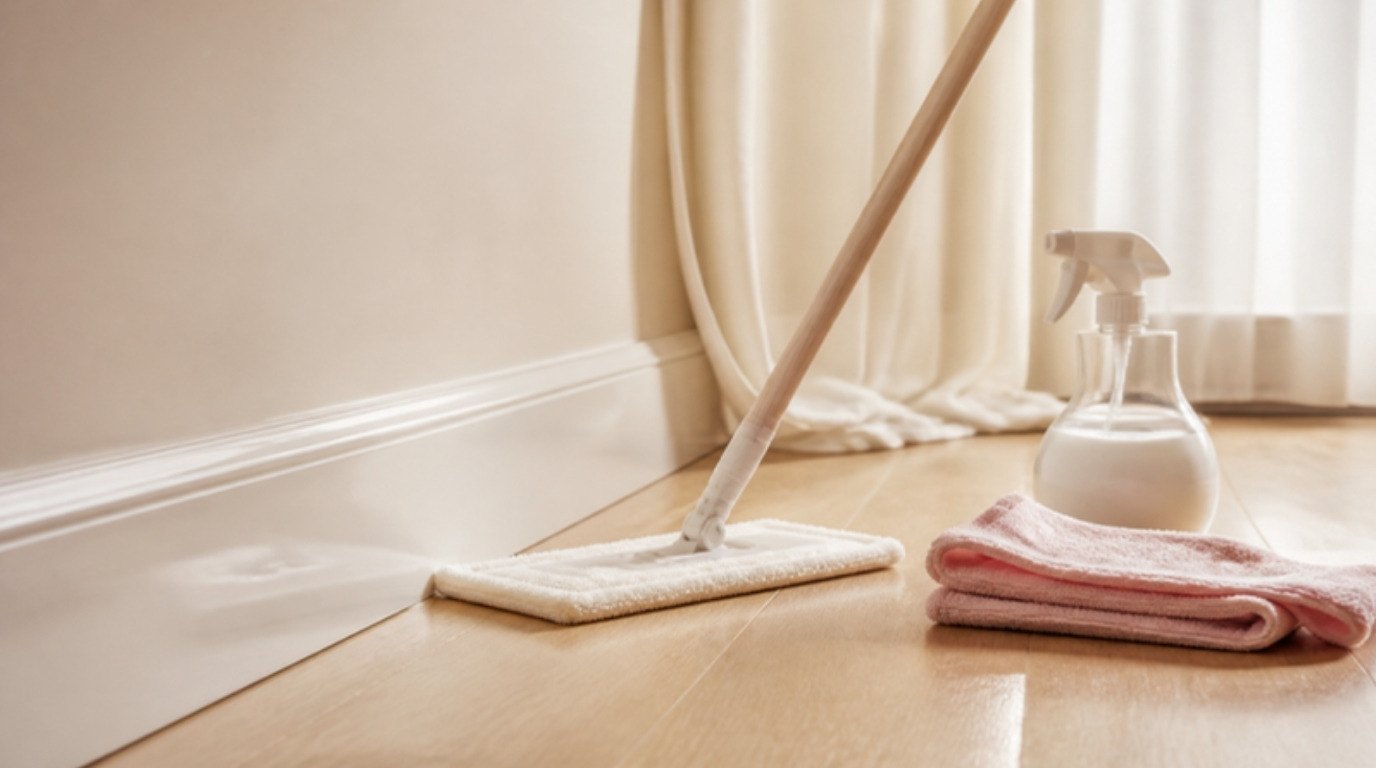
- Floor last: vacuum or sweep, then mop.
Add "dry before wet" to that. Dust and vacuum first, then use sprays and damp cloths. Wet cleaning on a dusty surface just turns dust into a muddy smear, and you end up rinsing your cloth five times instead of once.
2. Let Your Cleaner Sit (Dwell Time)
This is the hack that changed the way I clean more than any other. Almost every cleaning spray needs time on the surface to loosen grime or disinfect. If you spray and wipe immediately, you're doing all the work with your arm instead of letting the product do it.
Here's the simple formula: spray, walk away, come back, wipe. Spray the shower, the sink and the toilet first. While they sit for five to ten minutes, dust the shelves, empty the bin and swap the towels. By the time you come back, the soap scum wipes away with barely any pressure.
If you're using a disinfecting product, check the label for its contact time. Many need several minutes of staying visibly wet to actually disinfect, which is longer than most of us wait.
3. Use the One-Touch Rule
The one-touch rule means you handle each item once: when you pick something up, you put it where it lives, instead of moving it to a "for now" spot. The mail goes straight to the recycling bin or the paper tray. The mug goes straight into the dishwasher, not next to the sink.
It sounds small, but most clutter is just things that were touched three times and never put away. Fewer piles means less to clean around, and wiping a clear counter takes thirty seconds. If you love tiny habits like this, my list of micro habits for a neat and clean home has many more in the same spirit.
Tool Hacks That Save You Steps
A lot of cleaning time is really walking time: going back to the kitchen for a cloth, searching for the glass spray, digging under the sink for gloves. Setting up your tools once saves minutes every single time you clean.
4. Build a Cleaning Caddy
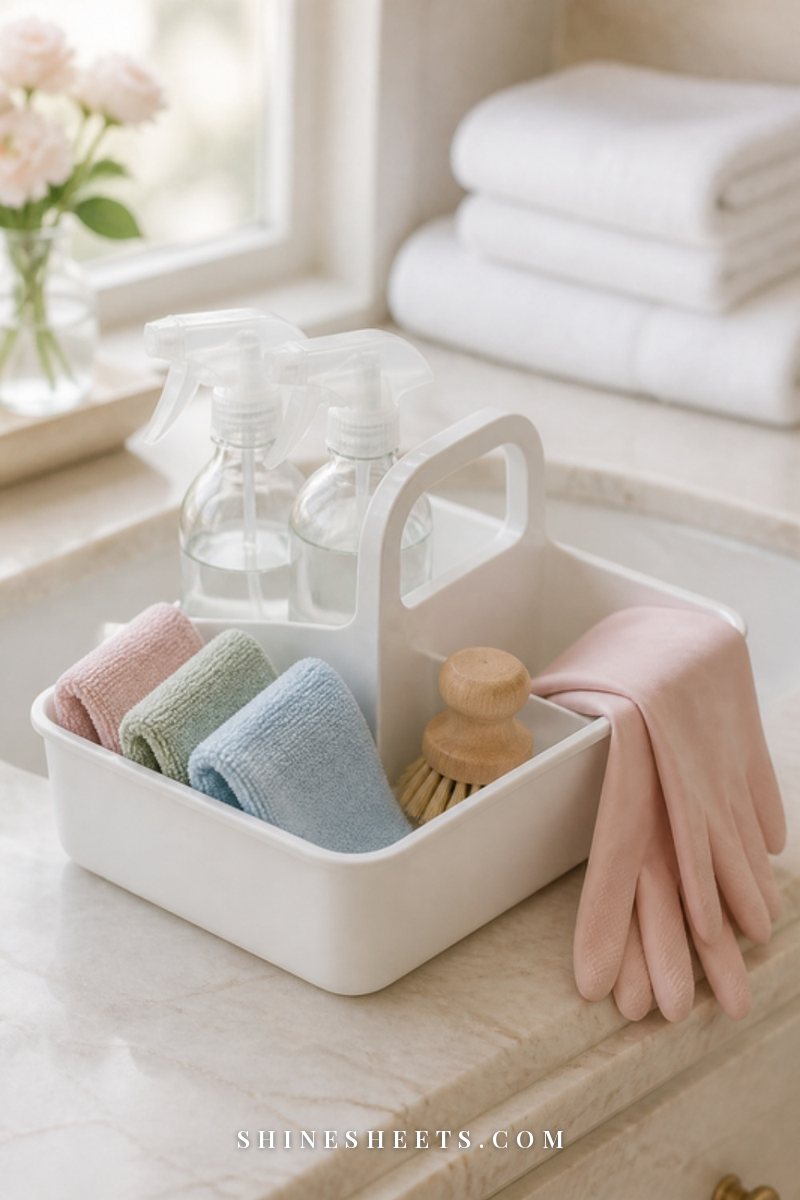
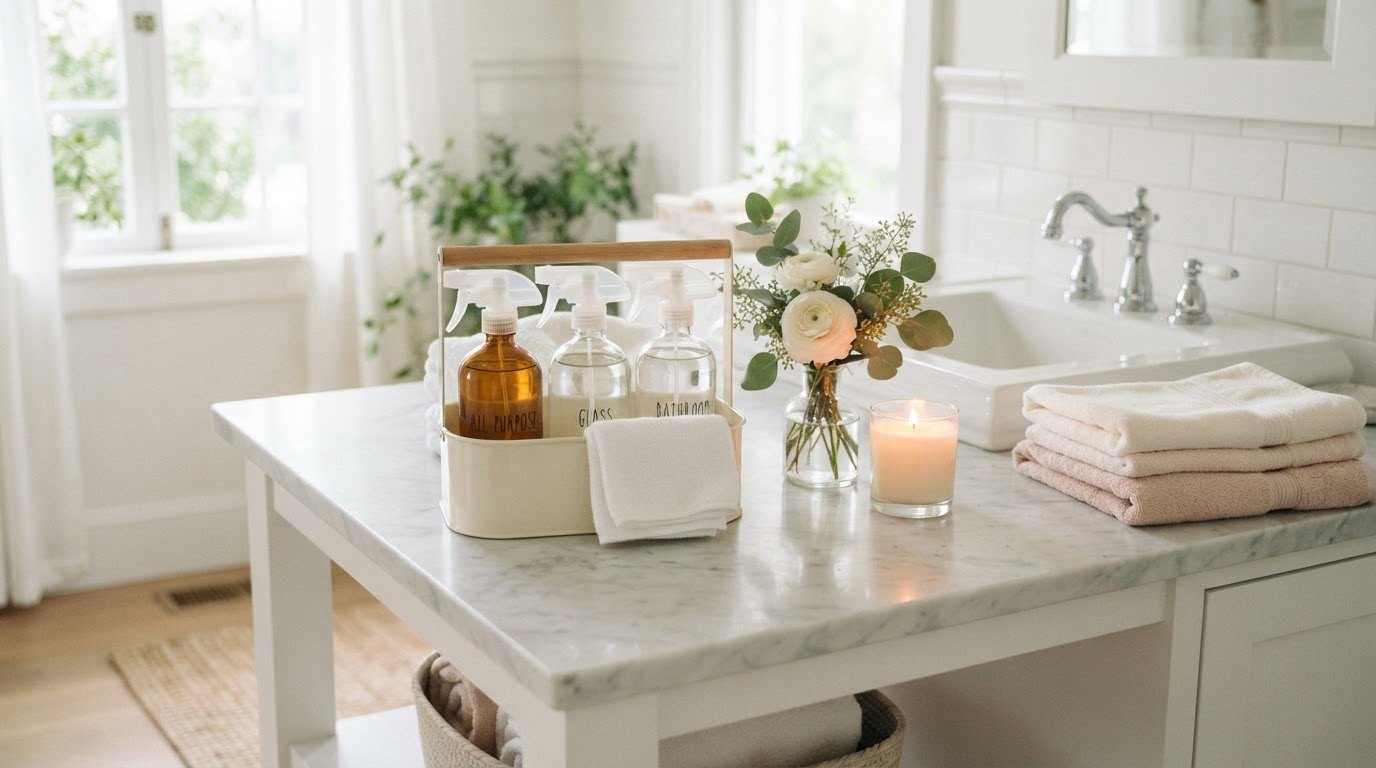
A caddy turns cleaning into one trip instead of ten. Everything you need for a quick clean travels with you from room to room, and when you're done, it all goes back in one spot.
A white cleaning caddy with a handle is a pick for this because you can see everything at a glance and it wipes clean. Look for one with at least two compartments and a sturdy grip. Fill it with:
- An all-purpose spray
- A glass cleaner
- A bathroom cleaner
- Four to six microfiber cloths
- A small scrub brush and an old toothbrush for corners
- A pair of rubber gloves
If you have more than one bathroom or a separate upstairs, a second small caddy that lives there is worth it. Not having to carry supplies up the stairs removes one more excuse.
5. Set Up a Color-Coded Microfiber System
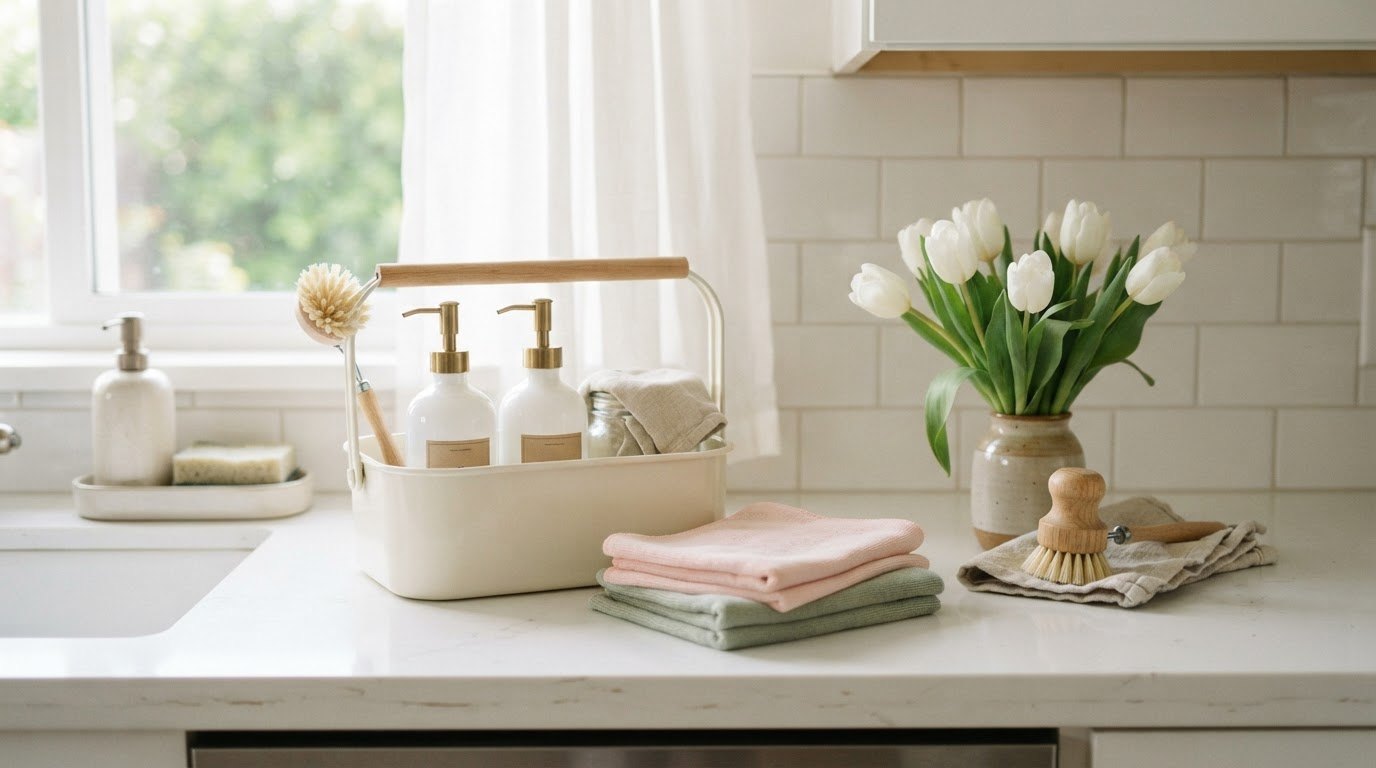
Microfiber picks up dust and grime with just water, dries fast and can be washed hundreds of times. The trick is giving each color its own job, so you never wonder whether the cloth in your hand was last used on the toilet.
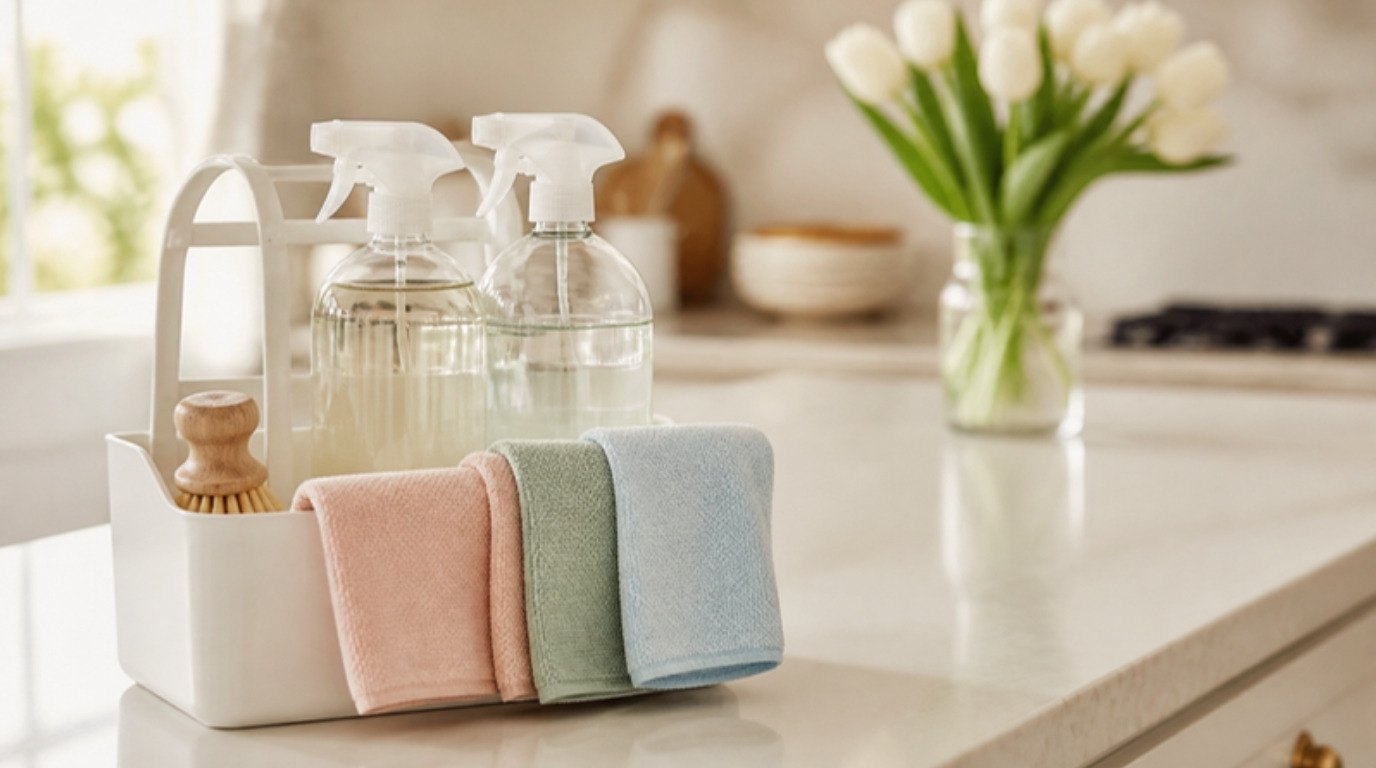
A set of color-coded microfiber cloths makes this easy. Look for a set with at least four colors and a soft, dense weave. A simple system:
- Blue: glass, mirrors and shiny surfaces.
- Green: kitchen counters and appliances.
- Pink: bathroom sink, shower and tiles.
- Yellow: toilet only.
Wash them together in warm water without fabric softener (softener coats the fibers and makes them stop grabbing dust), and skip the dryer sheets for the same reason. My laundry tips cover a few more ways to keep cloths soft and absorbent for longer.
6. Refill Glass Spray Bottles Once a Month
Buying a separate bottle for every surface clutters the cabinet and costs more than it needs to. Instead, keep a few refillable bottles labeled by job and top them all up on the same day each month.
Glass spray bottles with fine-mist nozzles are a nice pick here because they don't absorb odors and they look calm on an open shelf. Look for a trigger that sprays evenly and a silicone sleeve if you're worried about drops. Label each bottle clearly with what's inside, and never pour a new product into a bottle that held something different without rinsing it well first.
Bathroom Cleaning Hacks
The bathroom is where small daily habits save the biggest weekly scrubs. Five seconds now really does replace twenty minutes later.
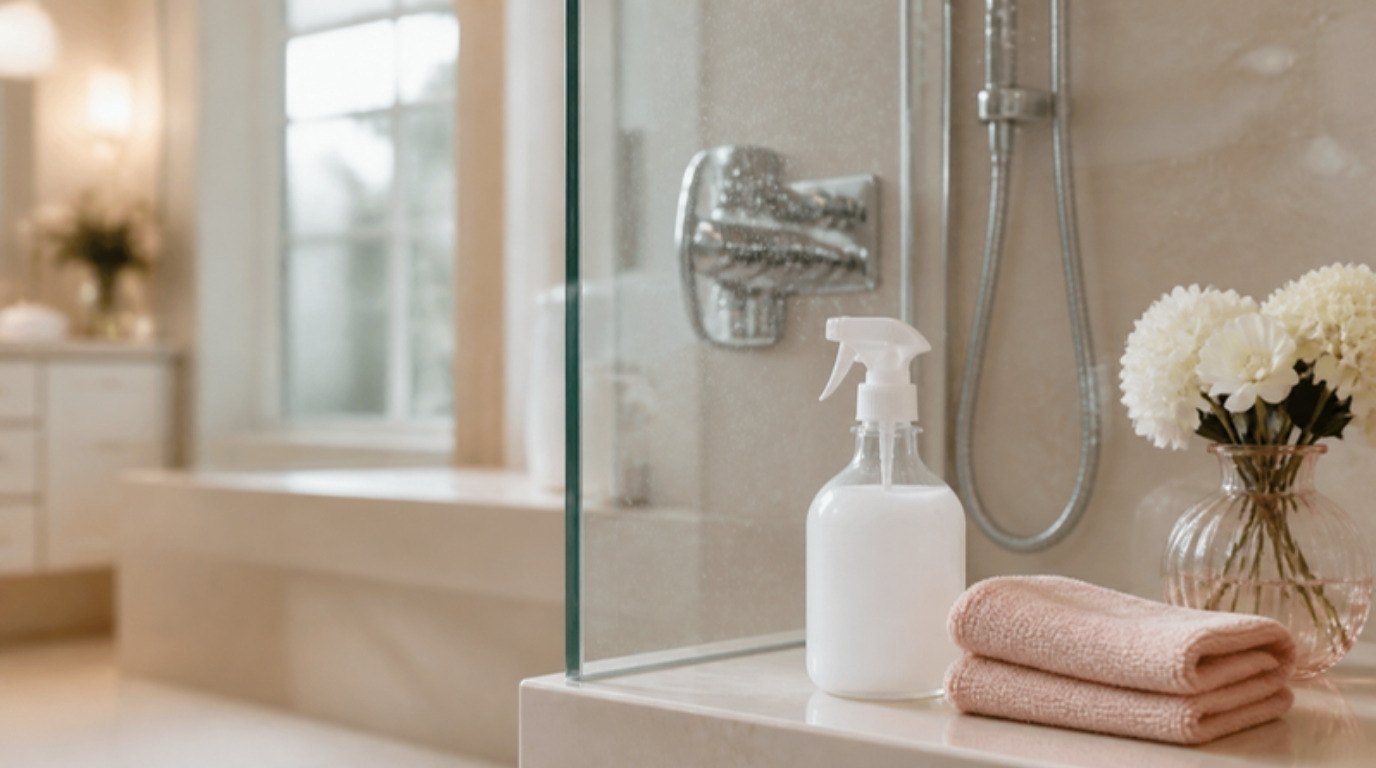
7. Keep a Squeegee in the Shower
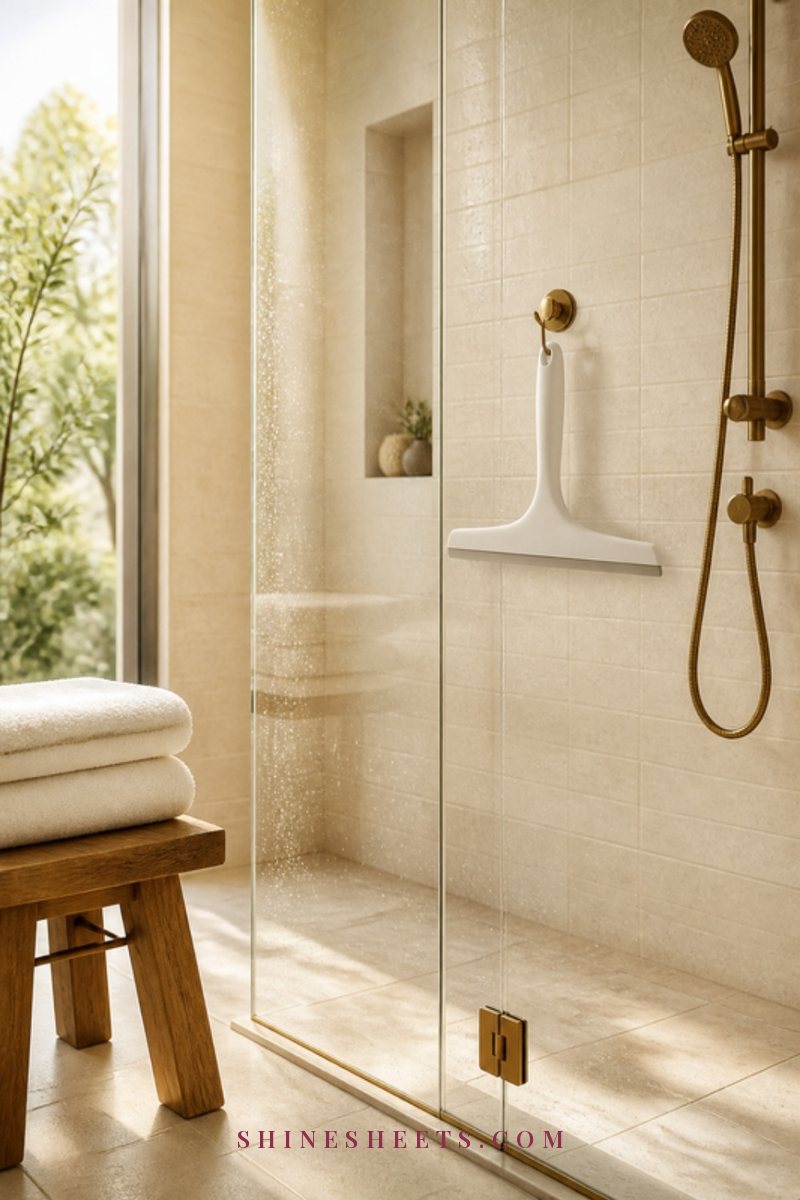
Water spots and soap scum build up because water dries on the glass and tiles, leaving minerals behind. If you pull that water off before it dries, there's almost nothing left to scrub. For the spots that already dried and stuck, I use these simple steps to remove hard water stains from glass, faucets and tiles.
Hang a white shower squeegee on a hook inside the shower and use it after every shower. Look for a soft, flexible silicone blade and a comfortable handle. The technique takes about thirty seconds:
- Start at the top of the glass and pull straight down.
- Overlap each stroke slightly so you don't leave stripes.
- Wipe the blade on a towel every few strokes.
- Finish with the tiles nearest the shower head, where splashes hit hardest.
Do this daily and your weekly shower clean becomes a quick wipe instead of a scrubbing session.
8. Clean While the Shower Warms Up
Most of us stand there for a minute waiting for the water to get warm. That's a perfect window for one tiny task: wipe the sink with a cloth, swish the toilet brush, or clear the shower shelf of empty bottles.
You can also keep a dish wand filled with a mix of water and a little dish soap in the shower. While you're in there with conditioner sitting in your hair, give one wall a quick scrub. One wall per shower means the whole shower gets done every few days without a separate cleaning session.
9. Let Steam Loosen the Grime
Right after a hot shower, the bathroom is full of steam, which softens soap scum and toothpaste splatter on every surface. That's the easiest moment to clean. Spray the sink and faucet, wait a minute, and wipe. The mirror will also clean up faster while it's slightly warm, as long as you wipe with a dry cloth afterward to prevent streaks.
For a full routine that keeps the bathroom guest-ready in minutes, my guide on how to clean your bathroom fast walks through it step by step.
10. Let a Spin Scrubber Handle the Grout
Scrubbing grout and tub corners by hand is the slowest, most tiring part of a bathroom clean. An electric spin scrubber does the same job in a fraction of the time and saves your wrists. Look for a cordless model with a few interchangeable brush heads and a long handle, so you don't have to kneel to reach the tub.
Use it with dwell time: spray the grout first, wait five to ten minutes, then let the brush do the work with light pressure. Pressing hard doesn't clean faster, it just wears down the bristles.
Kitchen Cleaning Hacks
The kitchen gets messy fastest, so the best hacks here fit into moments you already spend standing around.
11. Wipe While the Kettle Boils
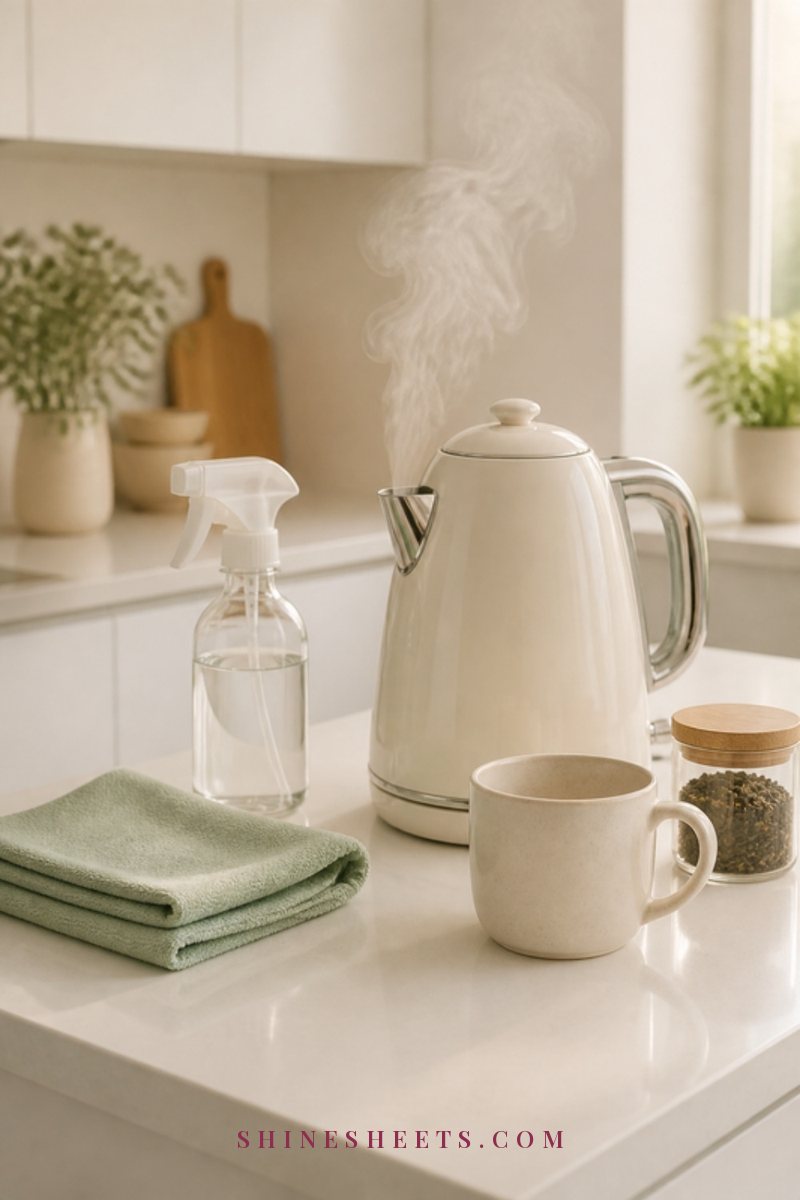
A kettle takes about three minutes to boil. That's long enough to wipe down one surface every time you make tea or coffee: the stovetop on Monday, the front of the fridge on Tuesday, the microwave handle on Wednesday. Spread across the week, the kitchen stays fresh without a big cleaning day.
The same works while you wait for toast, for the pasta water to boil or for the microwave to finish. Keep a cloth and a spray within reach of the counter so the habit takes no extra steps.
12. Steam-Clean the Microwave With Lemon Water
Dried-on splatters inside the microwave come off with almost no scrubbing if you steam them first. Put a microwave-safe bowl of water with a few lemon slices inside, heat it for three to four minutes until it steams, then leave the door closed for another five minutes.
Carefully remove the bowl (it will be hot, so use an oven mitt) and wipe the inside with a damp cloth. The turntable can go straight into the sink or dishwasher. The whole job takes less than ten minutes, and most of that time you're doing something else.
13. Let the Dishwasher Clean More Than Dishes
Plenty of small household items are dishwasher-safe and come out cleaner than any hand-scrubbing could get them. Always check the item first, but these usually do well on the top rack:
- Plastic and silicone sponge holders and soap dishes
- Toothbrush cups (rinse out the toothpaste first)
- Stainless steel range hood filters (check your manual first)
- Plastic hairbrushes and combs without wooden parts
- Silicone kitchen tools and fridge drawer dividers
- Glass light fixture covers
Skip anything wooden, cast iron, painted, glued, electronic or labeled hand-wash only. Heat warps and peels these quickly.
14. Start Every Morning With an Empty Dishwasher
Run the dishwasher at night and empty it first thing in the morning, while the kettle boils. When the dishwasher is empty during the day, every dirty dish can go straight in instead of piling up in the sink. A sink full of dishes makes the whole kitchen feel messy, and an empty one makes it feel finished, even if nothing else has changed.
If you want to go further on a weekend, my guide on how to deep clean your kitchen covers the bigger jobs like the fridge, oven and cabinet fronts.
Living Room and Bedroom Hacks
These rooms don't get as dirty as the kitchen and bathroom, but dust, hair and clutter make them feel tired quickly. A few smart tricks keep them fresh.
15. Keep a Lint Roller in Every Room

A lint roller is one of the most useful cleaning tools you can own, and it isn't just for clothes. A lint roller with refill sheets picks up pet hair, dust and crumbs in seconds. Look for one with extra-sticky sheets that tear off cleanly. Try it on:
- Fabric lampshades, which are hard to dust any other way
- Couch cushions and throw pillows
- Upholstered headboards
- Car seats and floor mats
- Drawer bottoms, to pick up crumbs and glitter
- Curtains near the floor, where dust collects
Keep one in the living room, one in the bedroom and one by the front door. A lint roller sitting in a drawer three rooms away might as well not exist.
16. Use a Pillowcase for Ceiling Fan Blades
Dusting fan blades with a cloth usually means a cloud of dust falls onto the bed or couch below. Instead, slide an old pillowcase over each blade and pull it back slowly. The dust stays inside the pillowcase. Shake it outside or straight into the trash, then wash it.
The same idea works for blinds: wear an old cotton sock on your hand, run your fingers along each slat, and change sides when one side is dusty.
17. Do a Ten-Minute Reset With a Basket
When a room looks messy, it's rarely dirty. It's usually just things out of place. Grab a basket, walk through the room and drop in everything that belongs somewhere else. Then walk through the house once and put each item away.
Set a timer for ten minutes. The timer makes it feel like a game, and you'll be surprised how much a room changes in that time. Pairing the reset with a weekly plan helps too: my cleaning schedule shows how to spread the bigger jobs across the week so nothing piles up.
Where Vinegar and Lemon Help (and Where They Don't)
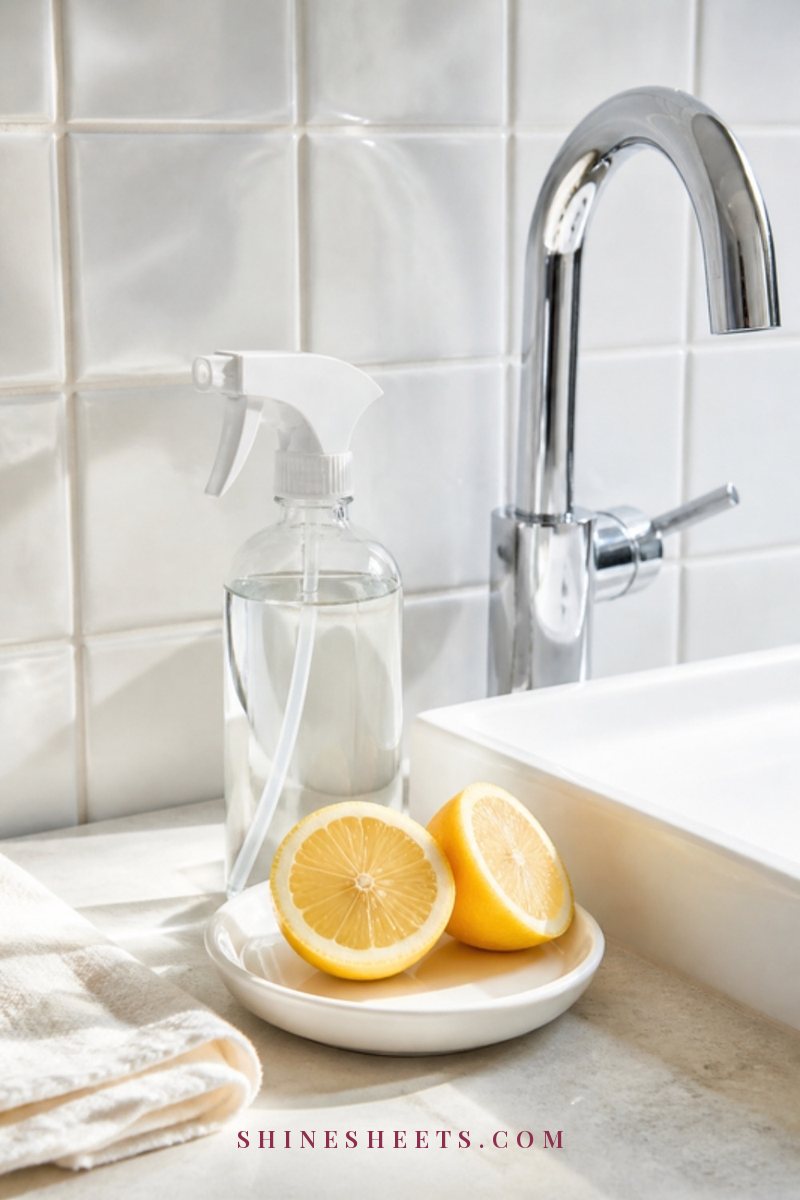
Vinegar and lemon are popular in cleaning hacks because they're acidic, which helps dissolve mineral deposits and soap scum. They can be really useful, but acid also damages some surfaces, and many hacks online leave that part out.
Good places to use diluted white vinegar or lemon:
- Glass and windows (a splash of vinegar in water)
- Chrome faucets and shower heads with mineral buildup
- Ceramic sinks and glazed tiles
- The inside of a kettle with limescale (rinse well afterward)
- Steaming the microwave
Places to avoid vinegar and lemon:
- Natural stone like marble, granite, limestone and travertine (acid etches and dulls the surface)
- Wood floors and wooden furniture (it can strip the finish)
- Grout, if you use it often (it slowly wears down cement-based grout)
- Cast iron and some metals
- Electronic screens
For stone and wood, a pH-neutral cleaner or warm water with a drop of mild dish soap is the safer choice. If you'd like a gentler cleaning routine overall, my guide to natural cleaning covers which simple ingredients work where.
A Quick Safety Note: Never Mix These
Some cleaning hacks suggest mixing products for "extra power." Please don't. Certain combinations create harmful fumes, even in small amounts:
- Bleach and ammonia (including some glass cleaners) create toxic gases.
- Bleach and vinegar (or any acid) release chlorine gas.
- Bleach and rubbing alcohol create harmful compounds.
Use one product at a time, rinse the surface with water before switching to another, and keep the room ventilated with a window open or the fan on. Store products in their original containers or in clearly labeled bottles, out of reach of children and pets. If you ever feel dizzy, short of breath or your eyes start to burn while cleaning, leave the room and get fresh air right away.
Cleaning Hacks at a Glance: Time Saved and Best For
Here's every hack in one place. Screenshot it, and pick two or three to start with this week.
| Hack | Time saved (approx.) | Best for |
|---|---|---|
| Top to bottom, dry to wet | 10–15 min per clean | Every room |
| Dwell time | 5–10 min of scrubbing | Showers, sinks, stovetops |
| One-touch rule | 10 min a day | Counters, entryways, desks |
| Cleaning caddy | 5–10 min per clean | Bathrooms, multi-level homes |
| Color-coded microfiber | 2–3 min, plus fewer products | Whole home |
| Monthly spray bottle refill | Fewer last-minute store runs | Anyone with lots of half-empty bottles |
| Daily shower squeegee | 15–20 min a week | Glass showers, hard water areas |
| Clean while the shower warms up | 10 min a week | Busy mornings |
| Clean after steam | 5 min per clean | Sinks, faucets, mirrors |
| Spin scrubber | 15–20 min per deep clean | Grout, tubs, tile floors |
| Wipe while the kettle boils | 20–30 min a week | Kitchens, tea and coffee lovers |
| Lemon steam microwave | 10 min of scrubbing | Splattered microwaves |
| Dishwasher for small items | 10–15 min a month | Holders, cups, filters |
| Morning empty dishwasher | 10 min a day | Households with a full sink |
| Lint roller in every room | 5 min per room | Pet owners, fabric decor |
| Pillowcase for fan blades | 10 min of re-dusting | Bedrooms, living rooms |
| Ten-minute basket reset | 15–20 min a day | Living rooms, shared spaces |
The time savings are rough estimates and depend on your home, but the pattern is clear: the hacks that save the most are the tiny daily ones, not the dramatic weekend tricks.
How To Make These Hacks Stick
Seventeen hacks at once is a lot, and trying all of them in one week is the fastest way to give up on all of them. A gentler approach:
- Pick one rule. Start with dwell time or top to bottom. They change every clean without adding anything new.
- Pick one tool setup. Fill a caddy or set up your microfiber colors this weekend.
- Pick one daily habit. The shower squeegee or the kettle wipe are the easiest to attach to something you already do.
- Add one more every two weeks. Once a habit feels automatic, choose the next one from the table.
And on days when nothing gets done, that's fine. A clean home is something you return to, not something you have to keep perfect.
Final Thoughts
Saving time on cleaning isn't about working faster or buying more products. It's about letting sprays sit, keeping tools close, cleaning in the right order and tucking tiny tasks into moments you already have. None of these hacks ask for perfection, only a slightly smarter way of doing what you're already doing.
Start with one or two, let them become automatic, and enjoy the extra time they give back to you. A calm, fresh home is so much easier to keep when the work is quietly built into your day.