Face taping can make a forehead or the space between your brows look a little smoother in the morning, and that part is real. What it can't do is lift your skin, rebuild collagen or erase wrinkles while you sleep. The softer look comes from holding the skin still for a few hours, and it fades not long after the tape comes off.
That doesn't make it pointless. For some people it's a calm little ritual, a nudge to stop frowning at a laptop, or a nice smooth-skin moment before a photo or an event. It just helps to go in with honest expectations, and with skin-safe tape and a gentle hand.
This guide covers face taping from every honest angle: what it is, what the evidence actually says, a claim-versus-reality table, how to tape and remove gently, which areas to skip, the real risks for sensitive skin, and the habits with much better evidence for fine lines. My own skin is combination and sensitive (hello, shiny T-zone), so I read every "overnight miracle" claim with a raised eyebrow and a patch test in mind.
What Is Face Taping?
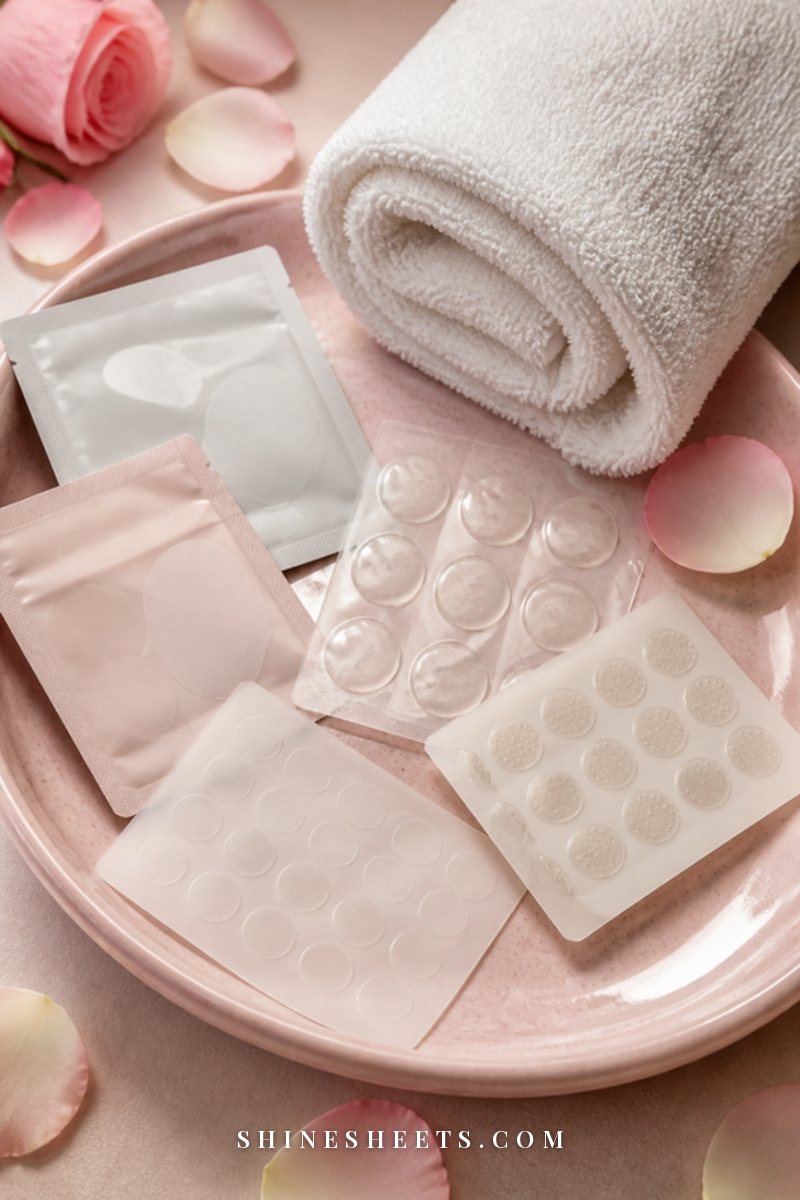
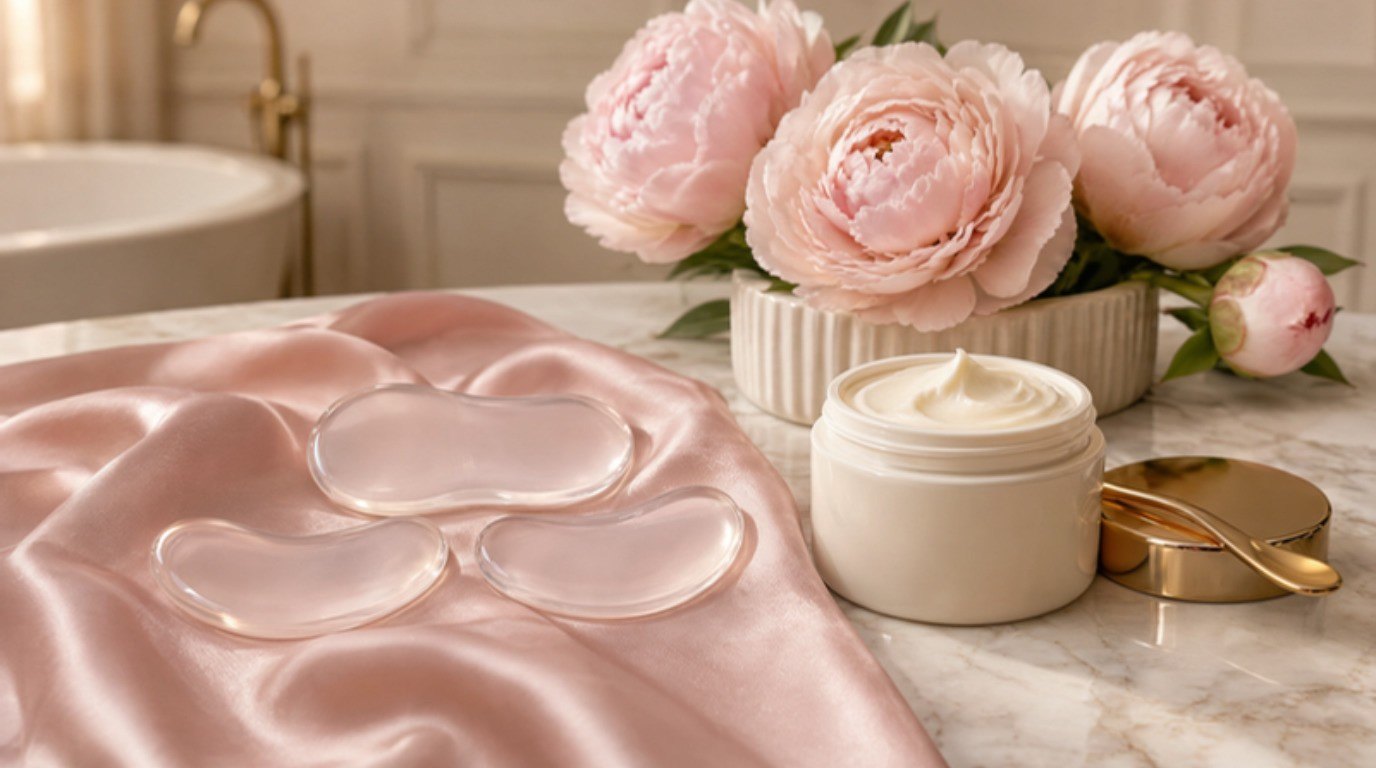
Face taping means placing adhesive patches or skin-safe tape over expression lines, usually overnight, so the skin underneath can't fold the way it normally does. Most people tape the forehead, the "11 lines" between the brows, or the area around the mouth.
There are two main types you'll see:
- Pre-cut patches: small shapes made of silicone or a hydrocolloid-style material, sized for the forehead, brows or smile lines. They're designed for faces, which usually makes them the gentler choice.
- Tape from a roll: medical paper tape or kinesiology-style tape cut into strips. These can be stronger and stickier than facial skin really needs, so they're easier to overdo.
The idea isn't new. Old Hollywood stars were said to tape their faces before close-ups, and frown patches have been around for about a century. (I'll admit that this bit of glamour history is exactly why the trend charms me.) What's new is the social media version, where taping gets presented as a "Botox alternative." It isn't one, and nothing in this guide is going to pretend otherwise.
Does Face Taping Actually Work?
Here's the short, honest answer: a little, for a short time, and for reasons that are less exciting than the videos suggest.
There's very little solid research on face taping for wrinkles. Most of what you'll find is personal experience, before-and-after photos taken in different lighting, and marketing. The small amount of science we do have about skin, movement and hydration points to a temporary effect, not a lasting change.
When you wake up after taping, two things have usually happened:
- Your skin was held still, so it didn't crease into its usual folds for several hours. Lines that come from movement look softer for a while.
- The tape or patch trapped a little moisture against the skin, so that area is slightly plumper and more hydrated than usual.
Both effects wear off as you move your face and the water balance settles, typically within a few hours. Deeper wrinkles that are there even when your face is relaxed don't change in any meaningful way.
If you enjoy the ritual and like how your forehead looks at breakfast, there's no reason to feel silly about it. Just don't spend money or skin comfort expecting a lift.
Face Taping Claims vs. What Actually Happens
Screenshot this table if you like. It's the quickest way to sort a realistic expectation from an online promise.
| Claim | What actually happens | How long it lasts | Evidence level |
|---|---|---|---|
| "Smooths wrinkles overnight" | Movement lines look softer because skin was held flat and slightly hydrated | A few hours after removal | Low: mostly personal reports |
| "Lifts sagging skin" | Tape can't change skin structure, fat pads or muscle; it only holds the surface | Only while the tape is on | None |
| "Rebuilds collagen" | No good evidence that tape stimulates collagen | Not applicable | None |
| "Trains you to stop frowning" | You may notice the pull when you frown, which raises awareness of the habit | While wearing it, and possibly as a habit cue | Low, but plausible |
| "Works like Botox" | Botox relaxes muscles for months; tape physically restricts skin for hours | Hours, not months | None for the comparison |
| "Plumps fine lines" | Trapped moisture makes the top layer of skin look a bit fuller | A few hours | Low, short-term only |
| "Prevents future wrinkles" | Not proven; sunscreen and retinoids have far stronger evidence | Unknown | Very low |
Why Tape Can Make Lines Look Softer for a While

Expression lines form where skin folds again and again: raising your brows, squinting at a screen, frowning while you concentrate. When you're younger, skin bounces back quickly. Over time, sun exposure and natural aging reduce collagen and elasticity, so the folds start to linger.
Tape interrupts the folding for one night. If your forehead normally creases a hundred times before lunch, but spends eight hours held flat, the morning version looks calmer. Add the moisture that builds up under a patch, and the area looks smoother still.
That's also why the result disappears. The first time you laugh, squint at your phone or lift your eyebrows in surprise, the skin goes back to its normal behavior. Nothing structural has changed underneath.
There's one potentially useful side effect: awareness. Some people notice for the first time how often they frown when they're focused or anxious. That awareness can help you relax your forehead during the day, which is gentle and costs nothing. (As someone who tends to carry worry between my brows, I find that idea more interesting than any overnight promise.)
Who Might Enjoy Face Taping

Face taping is a "nice to try" rather than a "need to do." It tends to suit people who:
- Have fine, movement-based lines on the forehead or between the brows that are more visible when the face is animated than when it's relaxed.
- Want a smoother look for a specific morning, such as before photos or an event, and understand the effect is short-lived.
- Like a calming bedtime ritual and enjoy a few minutes of slow, intentional skin care.
- Frown or squint out of habit and would like a physical reminder to soften their face.
- Have resilient skin that doesn't react easily to adhesives.
It's less likely to be worth it if your main concern is deeper wrinkles, loss of firmness or lines that are visible even when your face is completely still. Those respond better to the habits further down this guide, or to a conversation with a dermatologist.
How To Tape Your Face Gently, Step by Step

If you decide to try it, the goal is to protect your skin barrier first and chase smoothness second. Here's a gentle routine that takes about five minutes:
- Patch test first. Place a small piece of the tape or patch on your inner forearm or behind your ear for one night. If you see redness, itching or bumps, it's not the right adhesive for your face.
- Cleanse thoroughly. Remove makeup and sunscreen completely. A gentle cleansing balm followed by a mild cleanser works well, because any leftover residue weakens the stick and can irritate.
- Dry your skin completely. Pat (don't rub) with a clean towel and wait a couple of minutes. Tape won't hold on damp or oily skin.
- Skip heavy products where the tape goes. Apply your usual serum and moisturizer everywhere else, but leave the taped area bare or use only a very light, fully absorbed layer. Avoid applying retinoids or acids right under tape, since covering them can increase irritation.
- Smooth, don't stretch. Gently flatten the skin with two fingers so the line relaxes, then lay the patch on without pulling it tight. Stretching the skin or the tape is how you end up with redness and tugging.
- Press lightly and go to sleep. Run a fingertip over the edges once so they sit flat. Start with one area and a few nights a week, not every night.
A pick for beginners: look for clear silicone face patches that are labeled hypoallergenic, reusable or designed for facial skin, with soft rounded edges. Rounded corners are less likely to lift and catch on your pillow overnight.
Where To Place Face Tape (and Where Not To)
Placement matters more than people expect. These are the most common areas, from easiest to trickiest, plus the spots to leave alone.
The Forehead
The forehead is the most popular spot, because the skin is relatively thick and sits over bone. Place a patch horizontally across the lines, about a finger's width above your eyebrows, with your face relaxed and your brows down. Don't raise your eyebrows while applying it, or the tape will lock in the very crease you're trying to soften.
Between the Brows
For "11 lines," gently spread the skin between your brows with two fingers so the lines flatten, then place a small patch vertically or in a small X shape. Keep it well above the inner corners of your eyes and away from the delicate skin of the eyelids.
Smile Lines
Smile lines (the folds from your nose to the corners of your mouth) are the hardest area to tape, because your mouth moves even in your sleep. Results here are usually minimal, and the skin can get irritated more easily. If you want to try, use a small, soft patch and very light pressure, and don't tape across your lips.
Areas To Skip
- Around the eyes and eyelids: the skin is very thin and easily irritated, and any adhesive near the eye is a risk. For that area, my guide to softening fine lines around the eyes covers far gentler options.
- Over the lips or covering the mouth: never tape in a way that could affect your breathing or mouth movement.
- Anywhere with a breakout, rash, cut or sunburn: tape can trap bacteria and heat and make inflamed skin worse.
- Your neck: neck skin is thin and moves a lot when you turn in your sleep, so tape tends to tug.
How To Remove Face Tape Without Pulling Your Skin

Removal is where most irritation happens, so give it the same care as applying. Rushing to rip off tape in the morning is the quickest way to end up with red patches and a sore forehead.
- Go slowly and low. Hold the skin next to the patch flat with one finger and peel the tape back over itself, close to the skin, rather than pulling it straight up and away.
- Use oil if it sticks. If an edge resists, press a little facial oil or cleansing balm around it and wait a minute. The oil loosens the adhesive so it slides off.
- Remove it in the shower if you like. Warm water softens many adhesives, which makes removal gentler.
- Cleanse and moisturize afterwards. Wash off any leftover adhesive, then follow with a soothing, fragrance-free moisturizer.
- Check your skin. A faint pink mark that fades within an hour is common. Redness that lingers, stings or itches means your skin needs a few nights off.
If you'd like to soften puffiness after removing patches, a few minutes of gentle lymphatic drainage face massage with your fingertips and a little oil can feel lovely, as long as you keep the pressure light.
Risks of Face Taping and Who Should Skip It
Face taping is low-risk for most people when done gently, but "low-risk" isn't "no risk." These are the problems that come up most often:
- Irritation and redness: adhesives can cause irritant reactions, especially when used every night.
- Allergic contact dermatitis: some people react to the glue itself, with itching, bumps or a rash that can appear a day later.
- Dryness and flaking: repeated removal can strip the top layer of skin.
- Pulling on fragile skin: mature, thin or retinoid-treated skin can be more delicate, and strong tape can tug or even tear it.
- Breakouts: trapping oil and sweat under tape can lead to clogged pores, especially if you have a shiny T-zone like mine.
Skip face taping completely if you have active acne, eczema, rosacea flares, broken skin, a cut, a sunburn or any rash in that area. It's also wise to pause it if you've just had a peel, laser treatment or other professional procedure, and to ask your provider before starting again.
A kind safety note: stop taping straight away if your skin stings, itches or stays red. If a rash or irritation doesn't settle within a few days, or keeps coming back, please see a dermatologist. They can check whether it's an allergy and suggest what's safe for your skin.
What Has Better Evidence for Fine Lines
If your real goal is smoother skin over time, these habits have much stronger evidence than tape. None of them are glamorous on their own, but together they do the quiet, long-term work.
Daily Sunscreen

Sun exposure is one of the biggest drivers of fine lines, loss of firmness and uneven tone. Wearing broad-spectrum sunscreen every day, even when it's cloudy, is the single most proven anti-aging habit. A mineral sunscreen with SPF 50 is a good pick if your skin is sensitive, since zinc oxide formulas tend to be gentle. Most people use far less than they need, so my guide to how much sunscreen to use on your face is worth a quick read.
Retinoids
Retinoids (including over-the-counter retinol and prescription options) have some of the best research behind them for fine lines and texture, because they encourage skin renewal over months. They can be irritating at first, so start slowly, two or three nights a week, with a pea-sized amount. My retinol for beginners plan walks through a gentle start. Don't layer retinoids under face tape, and if you use both, keep them on different nights.
Moisturizer and Hydration

Well-hydrated skin reflects light better and makes fine lines less noticeable, which is part of what tape is doing for you anyway. You can get a similar look more gently: apply a hydrating hyaluronic acid serum to slightly damp skin, then seal it in with a moisturizer. It won't last forever either, but it's kinder to your skin barrier than an adhesive, and you can do it every day.
Your Sleep Position

If you sleep on the same side every night, your face presses into the pillow for hours, and those creases can become more visible over time. Sleeping on your back helps, but it's hard to change on command. A blush silk pillowcase creates less friction than cotton, which may reduce morning creases. I've written more about this in my guide to sleep wrinkles and pillow lines.
A Softer Forehead During the Day
Notice when you frown, squint or lift your brows. Bright screens, glare and worry all play a part. Sunglasses outdoors, a slightly larger font on your phone and a quick "drop your shoulders, soften your forehead" check a few times a day are small, free habits that help.
5 Common Face Taping Mistakes
If you do want to try tape, these are the mistakes that most often lead to irritation or disappointment:
- Using strong tape from a toolbox drawer. Duct tape, packing tape or heavy-duty athletic tape are not for faces. Use products designed for skin.
- Taping every single night from day one. Start with a few nights a week and give your skin rest days.
- Applying over thick creams or actives. The tape slips, and covering retinoids or acids can make them more irritating.
- Stretching the skin tight. Smooth gently instead. Tight tape tugs all night and leaves marks.
- Expecting a permanent change. Think of taping as a short-lived, optional extra on top of sunscreen and moisturizer, not a replacement for them.
Final Thoughts
Face taping is a sweet little ritual with a small, short-lived payoff. It can make your forehead look softer for a morning and remind you to unclench your brows, but it won't lift, tighten or permanently smooth your skin, and anyone promising that is overselling it.
If you enjoy it, keep it gentle: skin-safe patches, clean dry skin, no stretching, slow removal and plenty of rest nights. Then let the steady habits, daily sunscreen, a moisturizer you love and good sleep, do the real work in the background. Your face is allowed to move, laugh and show a little life, and that's a lovely thing.