Sunscreen only works as well as the amount you put on, and most of us put on far less than we think. That pea-sized blob you smooth over your cheeks before coffee? It feels like enough, it disappears nicely, and it is usually about half (or less) of what your face actually needs to get the protection printed on the bottle.
The good news is that the fix is not complicated or expensive. You don't need a new routine, a fancy device or a ten-step method. You need a simple way to measure, a smart way to spread, and a short list of spots you will never forget again.
This guide covers exactly how much sunscreen on face you need, how the two-finger rule works, how to apply sunscreen evenly without pilling, when to reapply, and why your SPF moisturizer or foundation can't do the job alone. There is also an area-by-area amount table you can screenshot and keep on your phone.
Why Most of Us Under-Apply Sunscreen
SPF numbers are measured in a lab, and the lab is generous. Sunscreens are tested at a thickness of 2 milligrams per square centimeter of skin. That is a visible, slightly shiny layer, much more than most of us would apply on a normal Tuesday.
Studies of real people show we tend to apply somewhere between a quarter and a half of that amount. And here is the part that surprised me: protection doesn't simply drop by half when you use half. It can drop by quite a lot more, because a thinner layer is also a patchier layer, with tiny gaps where the filters barely reach. So an SPF 50 applied thinly may behave like a much lower number in real life.
There are a few very understandable reasons we under-apply:
- Texture. A full dose can feel heavy, greasy or sticky, especially on oily or combination skin.
- White cast. Some mineral formulas look chalky when you use the proper amount.
- Makeup worries. A thick layer can make foundation slide or pill if you don't let it set.
- Habit. We were never shown how much is right, so we copy the amount we use for moisturizer.
- Cost. A small tube runs out fast when you use enough, so we quietly stretch it.
None of these mean you are doing anything wrong. They just mean the amount needs to be measured, not guessed. (My combination skin with its shiny T-zone made me a chronic under-applier for years, simply because more product felt like more shine.)
The Two-Finger Rule, Explained
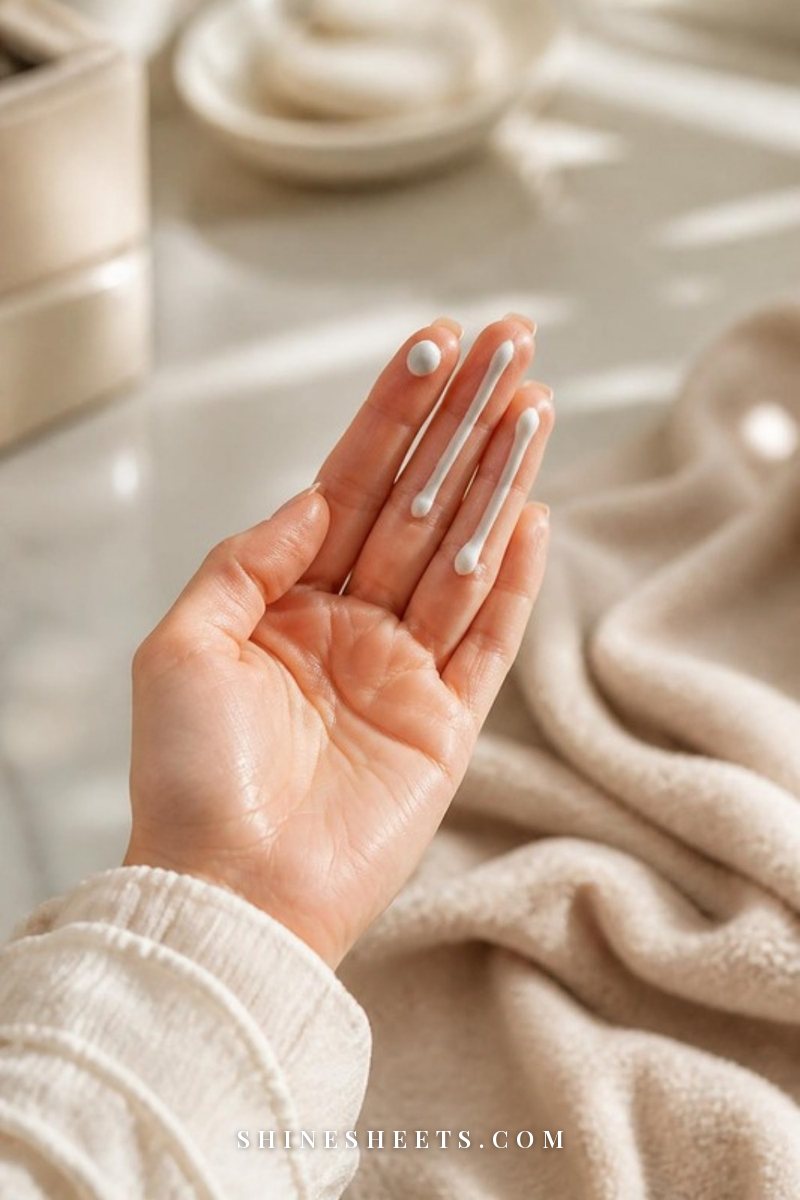
The two-finger rule is the easiest way to measure sunscreen without a spoon. You squeeze a line of sunscreen along the full length of your index finger and another along your middle finger, from the base of the finger to the tip. Those two lines together are roughly the right amount for your face.
What "Two Fingers" Actually Means
Two full finger-length lines come to about 1/4 teaspoon, which is roughly 1.2 ml. That lines up neatly with the 2 mg per square centimeter standard for an average adult face. A few details make the rule work better:
- Squeeze a line about as thick as the tube opening, not a thin thread.
- Go all the way from the knuckle crease at the base to the fingertip.
- Use the length of your own fingers. Smaller hands usually mean a slightly smaller face, so it scales nicely.
- If your sunscreen is a fluid or milk that runs off your fingers, pour it into your palm instead and aim for a pool about the size of a nickel (a little more than you think).
The first time you measure it out, it will probably look like too much. That reaction is completely normal, and it is exactly the point.
Face Only vs. Face, Neck and Ears
The two-finger rule covers your face alone: forehead, cheeks, nose, chin and the area around your eyes. Your neck and ears need their own share. As a rough guide:
- Face only: two finger-lengths, about 1/4 teaspoon.
- Face plus ears: add a short extra line, roughly half a finger-length.
- Face, ears and neck: about 1/2 teaspoon in total, or two finger-lengths for the face plus a separate full line or two for the neck and ears.
- Low neckline or chest showing: add one more finger-length for the upper chest.
If you'd like a quick visual reference, you can measure 1/4 teaspoon with a kitchen measuring spoon just once, squeeze it onto a plate, and compare it with your finger lines. After that, your eye remembers.
Sunscreen Amount Map: Face, Neck and Ears
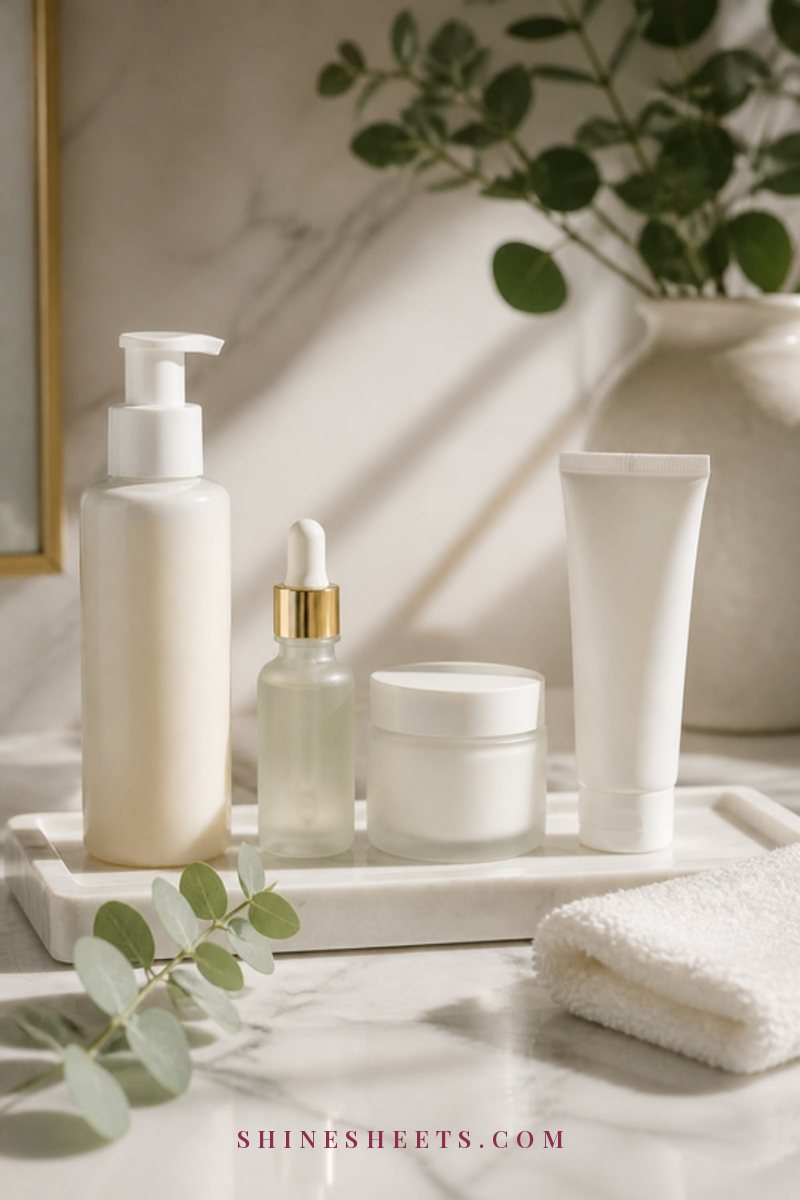
Here is the whole picture in one table. Amounts are approximate for an average adult and assume a lotion or cream texture.
| Area | Amount | Easy-to-miss spot | Tip |
|---|---|---|---|
| Forehead | About 1/2 finger-length | The hairline and temples | Pat a little into the first few millimeters of the hairline, where a part or baby hairs leave skin exposed. |
| Cheeks (both) | About 1 finger-length | The area in front of the ears | Spread outward toward the ears rather than stopping at the cheekbone. |
| Nose | A small dot | The sides of the nose and the bridge | Press, don't rub, so the layer stays even on the highest point of your face. |
| Chin and upper lip | About 1/4 finger-length | Under the jawline | Sweep along the jaw and just under it, where sun hits when you look up. |
| Around the eyes | A thin share of the face amount | The outer corners and eyelids | Use a ring finger and a gentle formula; a stick is easier here if your eyes sting. |
| Ears | About 1/2 finger-length for both | The tops and backs of the ears | Pinch a little between finger and thumb and smooth over the rim. |
| Neck (front and sides) | About 1 finger-length | The back of the neck | Especially important if your hair is up or short. |
| Upper chest | About 1 finger-length | The center of a V-neck | Add it whenever your neckline is open. |
| Lips | A swipe of lip SPF | The lower lip | Face sunscreen tastes unpleasant and wears off quickly here, so use a lip product. |
Screenshot the table, and after a week or two you won't need it anymore.
How To Apply Sunscreen Evenly, Step by Step
Measuring is half the job. The other half is getting that amount onto your skin as one even layer, without missing patches. Here is the method I'd recommend to anyone:
- Finish your skincare first. Sunscreen goes on last in the morning, after serum and moisturizer have sunk in for a minute or two.
- Measure two finger-lengths. Squeeze them out before you start so you aren't tempted to stop early.
- Dot it in five areas. Forehead, each cheek, nose and chin, spreading the measured amount between them.
- Spread outward with light strokes. Move from the center of your face toward the hairline, ears and jaw.
- Press in the rest. Once it is spread, gently press with flat fingers instead of rubbing back and forth.
- Do the extras. Use a separate measured line for ears and neck, then a swipe of lip SPF.
Dot, Then Spread
Dotting matters more than it looks. When you smear the whole amount from your palm, most of it ends up on your cheeks (where your hand lands first) and very little reaches your forehead or the sides of your nose. Five dots spread the product fairly before you even start blending. A lightweight, easy-to-spread broad-spectrum SPF 50 face sunscreen makes this much easier, because a thick cream drags and tempts you to use less.
Try Two Thinner Layers if It Pills
If a full dose feels heavy or starts rolling into little balls, split it in two. Apply one finger-length, let it sit for a minute, then apply the second finger-length over it. You still get the full amount, but each layer is thin enough to settle properly. Pilling often comes from layering on top of products that haven't absorbed yet, or from rubbing too hard, so give each step a moment and pat rather than buff. If you'd like more help with order and wait times, my guide on how to layer skincare products walks through it step by step.
The Spots Almost Everyone Misses
Even when the amount is right, a few areas are skipped again and again. These are also the spots that tend to show sun damage first, so they deserve a little extra attention:
- The hairline and part. Sunscreen often stops a finger-width before the hair. Pat it right to the edge, and use a stick or powder on your part if you wear it in the same place every day.
- The ears. The tops of the ears get direct sun and almost never get sunscreen.
- The jawline and under the chin. Light bounces up from water, sand and pavement, so this area is exposed more than you'd guess.
- The sides of the neck. Especially on the side that faces the car window.
- The eyelids and outer eye corners. Many of us avoid the eye area because of stinging. A gentle mineral formula or stick, plus sunglasses, covers it kindly.
- The sides of the nose. Easy to miss when you blend quickly from cheek to cheek.
- The lips. They need their own SPF product.
For lips, a simple SPF lip balm kept next to your sunscreen is the easiest habit. Reapply it after you eat or drink, because it wears off quickly.
When To Apply Sunscreen in Your Routine
In your morning routine, sunscreen is the last skincare step and the first step of protection. The order usually looks like this: cleanse (or just rinse), serum if you use one, moisturizer, then sunscreen, then makeup.
A few timing tips make a real difference:
- Give moisturizer a minute or two before sunscreen, so they don't slide around together.
- Let sunscreen set for a few minutes before foundation. Three to five minutes is a good habit; use it to brush your hair or make tea.
- Apply it before you leave the house, not in the car, so it has time to settle before you sweat or touch your face.
- Apply it every morning, even in winter. UVA rays are present all year and pass through clouds and window glass. My article on sunscreen indoors and on cloudy days explains when it really matters.
If your skin is oily or you have a shiny T-zone like mine, a lighter morning moisturizer (or skipping it on very humid days if your sunscreen is hydrating) can stop the whole thing from feeling heavy. Simplify before you reduce the sunscreen amount.
How Often To Reapply (and How To Do It Over Makeup)
Sunscreen breaks down with sunlight and wears off with sweat, water, touching your face and wiping your nose. That is why reapplying matters as much as the first layer.
- Outdoors: reapply at least every 2 hours.
- After swimming or sweating: reapply as soon as you towel off, even if the label says water resistant. Water resistance is tested for 40 or 80 minutes, not all day.
- Indoors, away from windows: your morning layer is usually enough for a normal day, though a midday top-up is a kind extra if you sit by a sunny window.
Over makeup, you have a few gentle options:
- A sunscreen stick. A clear sunscreen stick glides over makeup with less disruption. Swipe it slowly in several passes (a single quick swipe leaves a very thin layer), then pat with a clean finger or sponge.
- A cushion or tinted sunscreen. Pressing a little on with a damp sponge refreshes coverage and protection together.
- An SPF mist. An SPF setting spray is a lovely top-up between real reapplications, but it is hard to get a full, even dose from a spray, so treat it as a bonus layer rather than your only protection.
I've written a whole guide on how to reapply sunscreen over makeup without ruining it, including the blotting step most people skip.
Why Moisturizer or Foundation With SPF Isn't Enough
SPF in a moisturizer or foundation is genuinely helpful, but it is rarely enough on its own, and the reason comes straight back to amount. To get the SPF number on a foundation bottle, you would need to apply the same 2 mg per square centimeter that sunscreen is tested at. That is several times more foundation than anyone wears.
The same goes for moisturizer with SPF. Most of us apply a thin layer of moisturizer, which means the protection you actually get is a fraction of the label. A few gentle rules:
- Treat SPF in makeup as a bonus layer on top of real sunscreen, not a replacement.
- If you want a one-step product, choose a dedicated sunscreen with a hint of tint or moisture, and use the full two-finger amount.
- Layering two SPF products doesn't add their numbers together (SPF 30 plus SPF 15 is not SPF 45). You are protected roughly to the level of the better-applied one.
A tinted mineral sunscreen is a nice middle ground if you like light coverage: the tint evens out skin tone and helps hide any white cast, while you still apply it at a proper sunscreen dose.
How To Choose a Face Sunscreen You Will Actually Use
The best sunscreen is the one you're happy to apply generously every single day. If you dread the texture, you will under-apply it, no matter how good the formula is on paper. Look for these basics:
- Broad spectrum. This means it protects against both UVA and UVB rays.
- SPF 30 or higher for everyday use, and SPF 50 for long days outside.
- Water resistant if you'll be swimming, exercising or sweating.
- A texture your skin likes. Gel or fluid for oily and combination skin, cream for dry skin, a gentle mineral formula for reactive skin.
Korean sunscreens have earned their reputation for being light and comfortable at a full dose, which makes the two-finger rule far easier to stick to. A lightweight Korean daily sunscreen with a watery or essence-like texture is what I'd choose for a shiny T-zone. If you are deciding between filter types, my sister guide on mineral vs. chemical sunscreen compares the feel, finish and best skin types side by side, and this piece on how to choose the right active sunscreen ingredients goes deeper into what each filter does.
5 Common Sunscreen Amount Mistakes
- Using the "moisturizer amount." A pea-sized dot is right for many creams, but far too little for sunscreen.
- Stretching one layer across face, neck and ears. Measure the face first, then add a separate amount for the extras.
- Rubbing too hard. Vigorous buffing moves product away and can cause pilling. Spread, then press.
- Applying in a rush right before makeup. A few minutes of setting time helps both the sunscreen and the foundation stay put.
- Forgetting that a bottle should run out. If a 50 ml face sunscreen lasts you six months of daily use, you are almost certainly using too little. At a quarter teaspoon a day, it should last roughly five to six weeks.
That last one is my favorite reality check, because it needs no measuring at all. Just note the date you open a new tube.
A Gentle Note on Sensitive Skin and Patch Testing
Using more sunscreen means more contact with every ingredient, so if your skin is reactive (mine is sensitive, so I'm careful here), patch test any new formula first. Apply a small amount on the side of your neck or behind your ear once a day for a few days and watch for redness, itching or bumps. If it stings around your eyes, try a mineral formula or a stick for that area only.
If you notice a rash, persistent irritation or any changing spot or mole, please see a dermatologist. Sunscreen is one part of sun care, along with shade, a wide-brimmed hat and sunglasses on bright days.
Final Thoughts
Sunscreen doesn't need to be complicated to work beautifully. Two finger-lengths for your face, a little extra for your ears and neck, five dots, a gentle press and a top-up every couple of hours outdoors is a routine you can do half-awake.
The first week it will feel like a lot. By the second week it will feel normal, and your skin will thank you for years in the quietest way: by simply staying healthy, even and calm. That small daily kindness is so worth it.