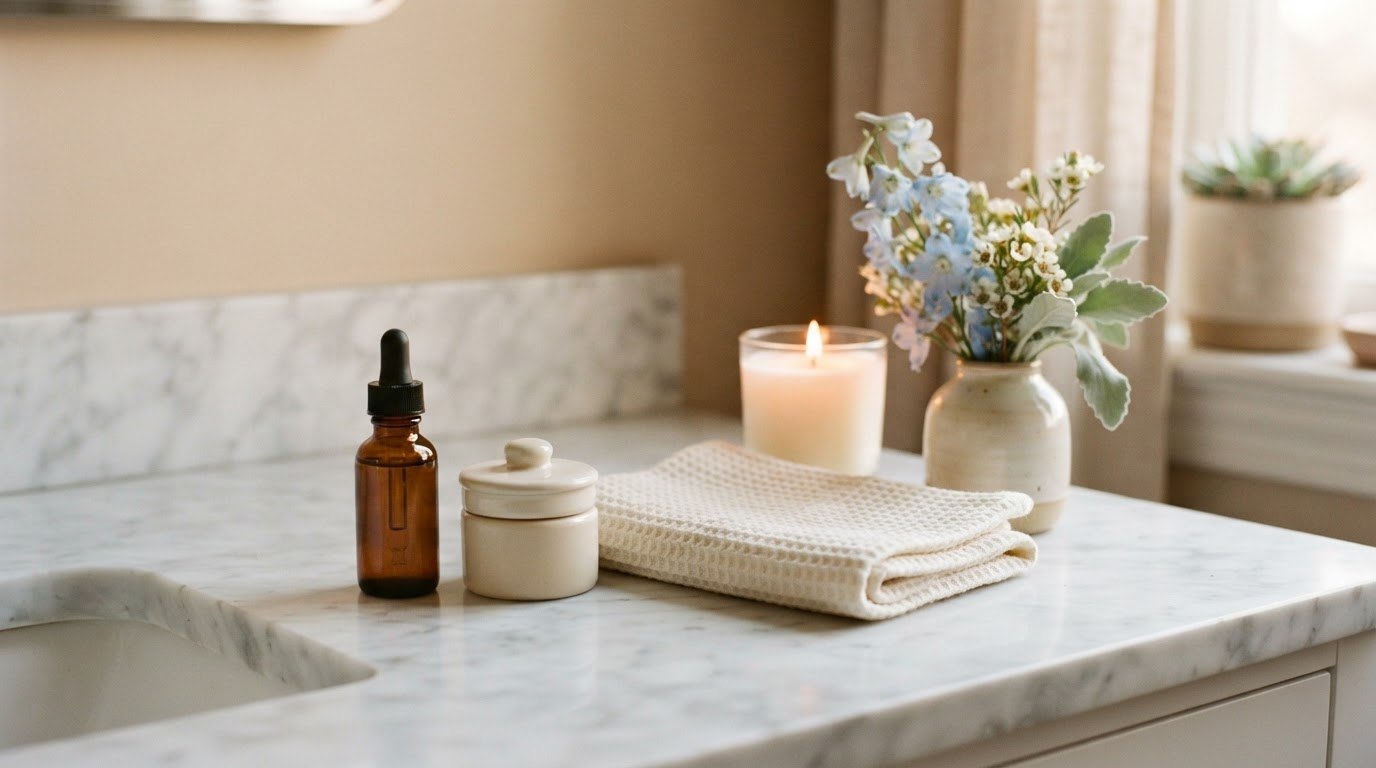
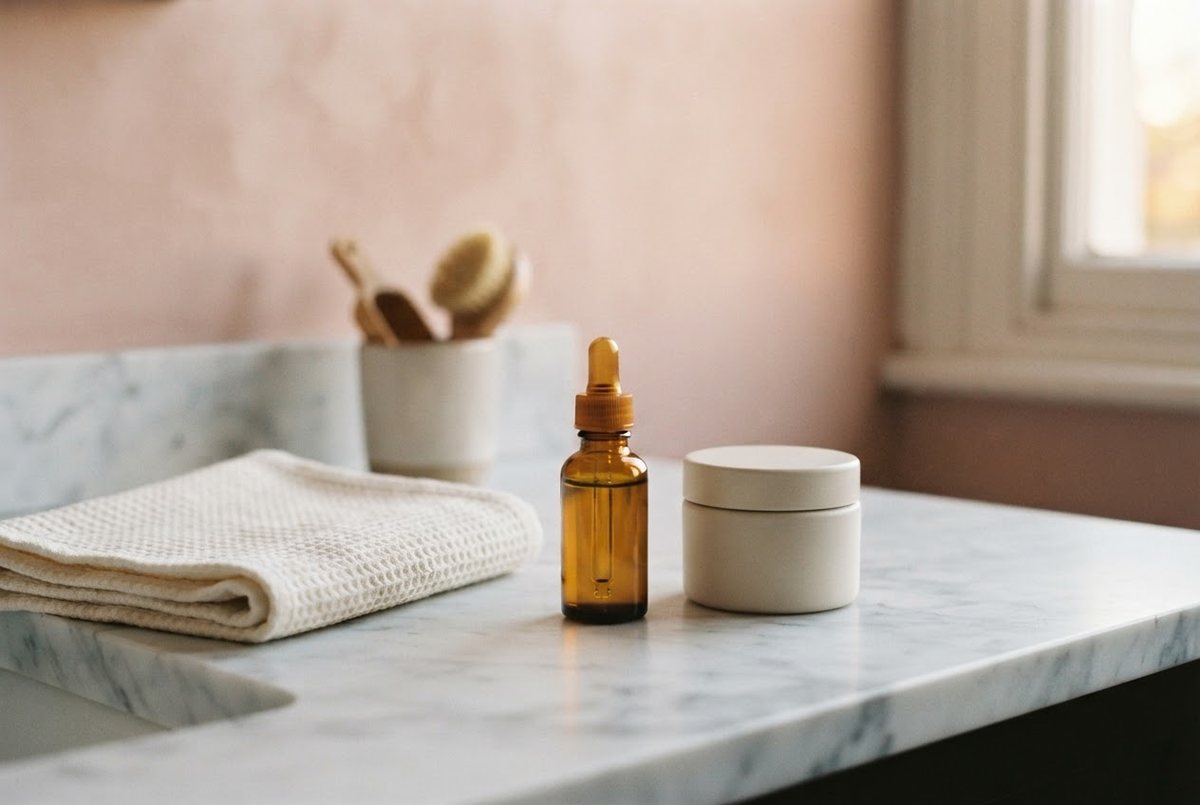
The first time I held a retinol serum in my hands, I treated it like it might bite. I'd read all the stories: peeling, redness, "retinol uglies," people whose skin went pink and flaky for weeks. I also had sensitive, combination skin that complains about almost everything new. So the little bottle sat on my shelf for a very long time while I worked up the courage.
If you're in that same spot, curious but a bit nervous, I completely understand. Retinol is one of the most researched skincare ingredients out there, and it can help with things like uneven texture, clogged pores, dullness and the look of fine lines over time. But it's also an ingredient that rewards patience and punishes enthusiasm. Too much, too often, too soon is where almost all the horror stories come from.
This guide is the slow, gentle version I wish I'd had: what retinol actually does, who should wait, how to choose a beginner strength, an 8-week start calendar that tells you exactly how many nights a week to use it, a "don't mix on the same night" table and the one sunscreen rule that makes the whole thing worthwhile. If you've been wondering how to use retinol for beginners, this is your calm, step-by-step plan.
What Retinol Actually Does
Retinol is a form of vitamin A. It belongs to a family of ingredients called retinoids, which also includes stronger prescription versions like tretinoin and gentler cousins like retinyl palmitate. Once retinol is on your skin, it gets converted into retinoic acid, the form your skin cells can actually use.
In simple terms, retinoids encourage skin cells to renew more regularly. Over weeks and months, that can help with:
- Smoother-looking texture, as the surface sheds more evenly.
- Fewer clogged pores, which is why retinoids are often part of acne care.
- A more even-looking tone and less dullness.
- Softer-looking fine lines over the long term, thanks to support for collagen.
What retinol won't do: work overnight, replace sunscreen or fix everything at once. Most people need about 12 weeks of consistent use to see a real difference, and some benefits take even longer. It's a slow, steady ingredient, and that's part of its charm.
Who Should Wait or Ask First
Retinol is a lovely ingredient for many people, but it isn't for everyone right now. Please hold off and talk to your doctor or dermatologist first if any of these apply:
- You're pregnant, trying to conceive or breastfeeding. Retinoids are generally avoided during pregnancy, so skip retinol unless your doctor specifically says it's okay for you.
- You have eczema, rosacea or a very reactive skin condition. Retinol can make these flare, so get personal advice first.
- You're already using a prescription retinoid or acne medication. Doubling up can be far too much.
- Your skin barrier is currently damaged (stinging with everything, red, flaky). Heal first, start later. My guide to the signs of a damaged skin barrier and how to restore it can help.
- You've just had a waxing, peel or laser treatment, or have one coming up. Ask your practitioner how long to pause.
How To Choose Your First Retinol
Walking down the skincare aisle, you'll see percentages from 0.01% all the way up to 1% and beyond. For a first retinol, lower really is better. The goal is to let your skin get used to vitamin A without a dramatic reaction.
Here's what I'd look for in a beginner product:
- A low strength, roughly 0.1% to 0.3% retinol. Some products say "encapsulated" or "time-release," which can feel gentler.
- A soothing base, with ingredients like ceramides, niacinamide, squalane, panthenol or centella.
- Opaque, airtight packaging, like a pump or a dark bottle, since retinol breaks down with light and air.
- No added fragrance, especially for sensitive skin.
- A texture you'll actually use, serum or lightweight cream, whatever feels nice enough that you'll keep going.
A sensible place to start is a beginner retinol serum around 0.2% from a well-known skincare brand. Once your skin has happily used it for a few months, you can think about moving up a strength, but there's no rush, and many people stay on a low strength for years.
How To Apply Retinol, Step by Step
Retinol is a nighttime ingredient. Light breaks it down, and your skin will be a little more sun-sensitive while you use it. Here's the gentle evening order:
- Cleanse gently. Use a mild cleanser and lukewarm water. A gentle, hydrating facial cleanser that leaves your skin comfortable is ideal. Skip scrubs and strong foams on retinol nights.
- Dry your skin completely. Wait about 10 minutes after washing. Retinol on damp skin can penetrate faster and sting more, which is exactly what you don't want as a beginner.
- Use a pea-sized amount. That's enough for the whole face. Dot it on forehead, cheeks and chin, then spread gently.
- Avoid the sensitive spots. Keep it away from the corners of your nose, the corners of your mouth and right under the eyes. These areas get irritated first.
- Moisturize on top. Wait a minute or two, then apply your moisturizer. This helps cushion the retinol and keeps your barrier happy.
For moisturizer, a pick for retinol nights is a ceramide barrier repair cream: rich enough to feel comforting, with ceramides and glycerin, but not so heavy that it feels greasy. If your skin is on the drier side, my skincare routine for dry skin shows how to build the rest of your routine around it.
The "Sandwich" Method for Sensitive Skin
If your skin is very sensitive (hello, me), try the sandwich method: a thin layer of moisturizer, then your pea of retinol, then another layer of moisturizer. It slightly buffers the retinol so it feels gentler. It may work a little more slowly, but a slow routine you can stick with beats a fast one that leaves you peeling.
Your 8-Week Retinol Start Calendar
This is the heart of the guide, so screenshot it. The idea is simple: start with very few nights, and only add more when your skin stays calm. If at any point your skin gets red, stingy or flaky, drop back to the previous week's rhythm and stay there a little longer.
| Week | Retinol nights | Example days | What to watch for |
|---|---|---|---|
| Week 1 | 1 night | Monday | Any stinging, warmth or redness the next morning |
| Week 2 | 1 night | Monday | Skin feels normal by the following evening |
| Week 3 | 2 nights | Monday, Thursday | Mild dryness is common; moisturize generously |
| Week 4 | 2 nights | Monday, Thursday | Flaking around nose or mouth? Hold here an extra week |
| Week 5 | 3 nights | Monday, Wednesday, Friday | Skin should feel mostly comfortable between nights |
| Week 6 | 3 nights | Monday, Wednesday, Friday | Texture may start to look a little smoother |
| Week 7 | 3–4 nights | Mon, Wed, Fri (+ Sun if calm) | Only add the 4th night if there's no irritation at all |
| Week 8 | Every other night | Alternating nights | This is a great long-term rhythm for many people |
A few notes on using the calendar:
- Every other night is a perfectly good destination. You don't have to work up to nightly use. Plenty of people get lovely results with three or four nights a week forever.
- Rest nights are part of the plan. On those evenings, keep it simple: cleanse, a hydrating serum, moisturizer.
- Slower is always allowed. If your skin needs two weeks at each stage instead of one, that's not failure. It's listening.
Don't Mix on the Same Night: Your Pairing Table
One of the most common beginner mistakes is layering retinol with other strong actives on the same night. Each ingredient might be fine on its own, but together they can overwhelm your skin. Here's a simple guide:
| Ingredient | Same night as retinol? | What to do instead |
|---|---|---|
| AHAs (glycolic, lactic acid) | No | Use on a separate night, and not more than once or twice a week while starting |
| BHA (salicylic acid) | No | Alternate nights, or use BHA in the morning cleanser only if your skin is calm |
| Benzoyl peroxide | No | Use in the morning or on alternate days; ask a dermatologist for acne plans |
| Vitamin C | Better not | Vitamin C in the morning, retinol at night |
| Other retinoids | No | Choose one retinoid product only |
| Scrubs, peels, at-home devices | No | Pause these while you're in the 8-week start phase |
| Niacinamide | Yes, usually fine | Can help skin feel calmer; apply before or after, whichever feels best |
| Hyaluronic acid | Yes | Lovely on rest nights or under your moisturizer on retinol nights |
| Ceramides, panthenol, centella | Yes | Your best friends while starting retinol |
If you'd like more on the friendly pairings, I have separate guides on how to use niacinamide and on using retinol and vitamin C together.
The Sunscreen Rule (Non-Negotiable)
Here it is, simple and firm: if you use retinol at night, you wear sunscreen every single morning. Cloudy days, winter days, days you're "barely going outside." Every morning.
Retinoids can make your skin more sensitive to the sun, and UV exposure undoes much of the good work retinol is doing for tone and texture. Skipping sunscreen while using retinol is a bit like mopping the floor with the door wide open in a rainstorm.
Choose a broad-spectrum SPF 30 or higher in a texture you genuinely like wearing. A lightweight Korean sunscreen with SPF 50 is a popular choice because it feels more like a moisturizer than a heavy cream. Use about two finger-lengths for your face and neck, and reapply if you're outdoors for long stretches. If you want help choosing filters, my guide on choosing active sunscreen ingredients breaks them down.
Your Simple Morning Routine While Using Retinol
Mornings get easier, not harder, when you start retinol. Your evening is doing the active work, so the morning is all about comfort and protection:
- Rinse or cleanse gently. A splash of lukewarm water is often enough, or a quick wash if your skin feels oily.
- Hydrate. A hydrating serum or niacinamide if you like it, on slightly damp skin.
- Moisturize. The same comforting cream from the night before works perfectly.
- Protect. Sunscreen, generously, as the very last skincare step.
That's it. Leave vitamin C, acids and anything strong out of the morning for the first eight weeks, so your skin only has one new thing to get used to.
What's Normal and What's Not
Some adjustment is normal when you start retinol, especially in the first four to six weeks. Here's how to tell the difference:
Usually normal (keep going, maybe slow down):
- Mild dryness or tightness the morning after.
- Light flaking around the nose or mouth.
- A little pinkness that fades within a day.
- A few extra breakouts in the first weeks, sometimes called purging, in areas where you usually break out.
Not normal (stop and rest, or seek advice):
- Burning, intense stinging or a raw feeling.
- Swelling, hives or a rash.
- Peeling that leaves skin cracked or sore.
- Breakouts in new areas where you never usually get them.
If your skin gets irritated, pause retinol completely for about a week. Use only a gentle cleanser, a soothing moisturizer and sunscreen. A Korean cica soothing cream with centella can feel lovely on stressed skin during a break. When your skin feels calm again, restart at the rhythm from two weeks earlier in the calendar.
Retinol by Skin Type
The calendar works for everyone, but small tweaks make it more comfortable depending on your skin.
Dry Skin
Dry skin often feels the "retinol dryness" first. Use the sandwich method from the start, choose a richer moisturizer on retinol nights and give your skin extra hydration on rest nights. Pressing a few drops of a hyaluronic acid hydrating serum into damp skin before your moisturizer on those in-between evenings helps a lot. My guide on using hyaluronic acid the right way explains the damp skin rule.
Oily and Combination Skin
Oilier skin usually tolerates retinol a little more easily, and many people notice fewer clogged pores over time. Still, follow the calendar. On combination skin like mine, the cheeks may get dry while the T-zone is perfectly happy, so add a second thin layer of moisturizer only where you feel tight.
Sensitive Skin
Go even slower. Spend two weeks at each stage of the calendar instead of one, always use the sandwich method and keep the rest of your routine extremely simple: a gentle cleanser, moisturizer and sunscreen. Some sensitive skin does best staying at two or three nights a week for good, and that's completely fine.
Breakout-Prone Skin
Retinoids are a common part of acne care, but they can bring a few extra breakouts in the early weeks. Don't add other acne actives on the same nights, and give it the full 12 weeks. If your acne is painful, deep or leaving marks, a dermatologist can suggest a prescription retinoid or other treatment that suits you better.
How Long Until You See Results?
This is where patience really pays off. Here's a realistic picture for most people using a beginner strength:
- Weeks 1–4: Mostly adjustment. Your skin is getting used to vitamin A, and you may notice mild dryness.
- Weeks 5–8: Skin often starts to feel smoother, and makeup may sit a little better.
- Weeks 12 and beyond: This is when changes in tone, texture and clogged pores usually become easier to see. Benefits for fine lines take longer still, often several months.
Take a photo in the same light at the start, then once a month. Daily mirror checks hide slow progress; monthly photos show it.
6 Beginner Retinol Mistakes
- Starting with a high strength. A stronger bottle doesn't mean faster results, just more irritation. Start low.
- Using it every night from day one. This is the most common reason people give up. Follow the calendar.
- Applying too much. A pea-sized amount for the whole face. More doesn't work better.
- Layering it with acids on the same night. Keep exfoliants on separate nights, and fewer of them while you're starting.
- Forgetting your neck and then overdoing it there. The neck is delicate. If you include it, use the tiny bit left on your fingers, not a fresh amount.
- Skipping sunscreen. This one undoes everything. Every morning, no exceptions.
A Kind Safety Note
Patch test your retinol before using it on your face: apply a small amount along your jaw or behind your ear on two or three evenings and watch for redness, itching or burning. Remember that retinoids are generally avoided during pregnancy and while trying to conceive, so please talk to your doctor before using retinol if that applies to you, and only use it if they say it's okay.
If you have a skin condition, use prescription treatments or simply aren't sure if retinol suits you, a dermatologist or pharmacist can give you advice for your skin. This guide is general information and isn't a substitute for personal medical advice.
Final Thoughts
Retinol isn't something to be scared of, and it isn't something to rush. Think of it as a slow, quiet ingredient that does its best work when you give it patience, a good moisturizer and sunscreen every morning.
Start with one night this week, follow the calendar at your skin's pace, and let the weeks do the work. In a few months, you might catch your reflection in a soft evening light and notice your skin looks smoother and calmer, and you'll be so glad you went slowly.