Shoe clutter almost never comes from having "too many shoes." It comes from shoes living in the wrong place: everyday sneakers buried at the back of the closet, summer sandals taking up prime space in winter, and boots slumped in a pile by the door because there's nowhere else for them to go.
Once every pair has a home that matches how often you wear it, shoe organization becomes surprisingly easy to keep up. Your favorites stay within reach, the special-occasion pairs stay protected, and the entryway stops looking like a shoe shop exploded.
This guide to shoe organization covers ideas for every space, from tiny entryways and small bedrooms to closets holding a big collection. You'll find how to declutter shoes without regret, a shoe storage by space table, seasonal rotation, how to keep shoes in good shape while they're stored, and how to keep smells away.
No matter how many pairs you own, there's a setup here that will work for your home.
Start Here: Declutter Your Shoes First
Organizing shoes you never wear is just a prettier version of clutter. Before you buy a single organizer, spend 30 minutes sorting.
- Gather every pair in one place: closet, entryway, under the bed, the car, the gym bag.
- Make four piles: wear often, wear seasonally or for occasions, needs repair, and ready to let go.
- Try on anything you're unsure about. Walk around for a minute. If it pinches, slips or makes you count the minutes until you can take it off, it goes.
- Be honest about "someday" shoes. If a pair hasn't been worn in two seasons where it would have made sense, it's probably not coming back into rotation.
- Take repairs to a cobbler this week, not "eventually." New heel tips and soles can bring a favorite pair back to life.
- Donate or sell pairs in good condition, and recycle worn-out athletic shoes if there's a program near you.
Then count what's left in each pile. That number tells you how much storage you actually need, and where. If you're planning a full closet clean-out too, my guide on how to organize a closet walks you through the whole process.
The Three-Zone Rule for Shoes
Before choosing organizers, it helps to think in zones. Every pair you own belongs in one of three, based on how often you reach for it:
- Zone 1, the daily zone: the two to five pairs you wear most weeks. These live closest to where you put shoes on, usually the entryway or the front of the closet. Easy to grab, easy to put back, no lids or boxes.
- Zone 2, the current-season zone: everything else you wear this season, including work shoes, going-out heels and weekend boots. These live in the closet, ideally where you can see them all at a glance.
- Zone 3, the storage zone: off-season pairs and once-a-year shoes like wedding heels or snow boots. These can live up high, under the bed or in boxes, because you only need them a few times a year.
Most shoe chaos happens when zones get mixed up: a pair of strappy sandals sitting in the daily zone in November, or your favorite sneakers boxed up on a high shelf. When each pair sits in the right zone, you'll find that even a small home has more room for shoes than it seemed.
A quick test: stand at your front door and look at what's there. If there's anything you haven't worn in the past week, it belongs in zone 2 or 3.
Shoe Storage by Space
Here's a quick overview of the best storage ideas for each area of your home, how many pairs they typically hold, and who they suit best. Use it to plan before you shop.
| Space | Idea | Typically holds | Best for |
|---|---|---|---|
| Entryway | Shoe rack bench | 6–9 pairs | Daily shoes, a spot to sit and put them on |
| Entryway | Slim tip-out shoe cabinet | 8–16 pairs | Narrow hallways, hiding visual clutter |
| Entryway | Boot tray | 2–4 pairs | Wet or muddy boots in rainy and snowy months |
| Closet | Clear stackable boxes | 1 pair per box | Heels, dressy shoes, dust protection |
| Closet | Angled or tiered shelves | 10–30 pairs | Seeing everything at a glance |
| Closet | Hanging fabric shelf | 6–10 pairs | Closets with rod space but no floor space |
| Bedroom | Under-bed storage bag | 12–16 pairs | Off-season shoes, small bedrooms |
| Any door | Over-the-door organizer | 12–24 pairs | Flats, sandals, sneakers in tiny spaces |
| Living area | Storage ottoman | 4–8 pairs | Studios, doubling as seating |
| Dedicated wall | Floor-to-ceiling shelves | 30+ pairs | Big collections, display pieces |
Most homes need two or three of these working together: one spot for daily shoes near the door, one for the rest of your current-season collection, and one for off-season storage.
Shoe Organization Ideas by Space
Now let's walk through each area of your home, with practical tips for making the most of it.
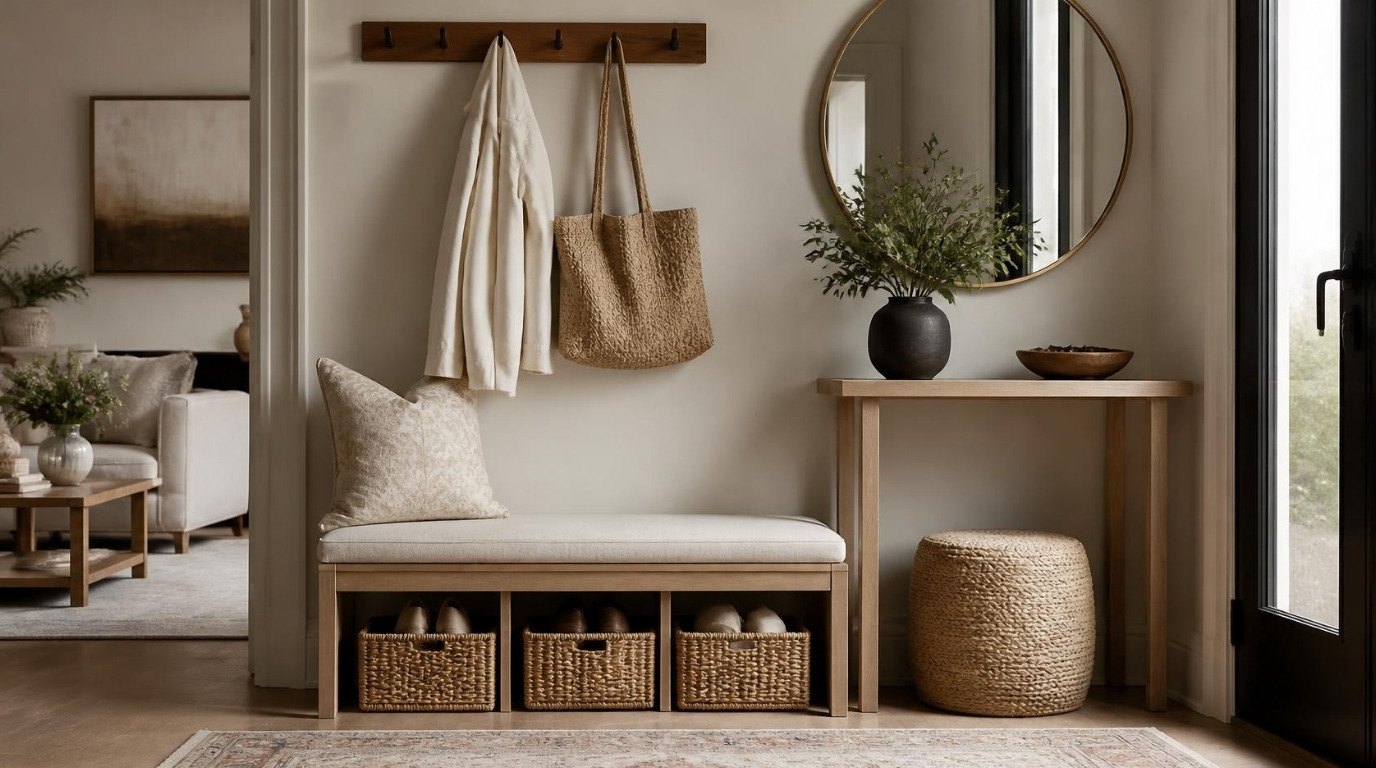
Entryway Shoe Storage
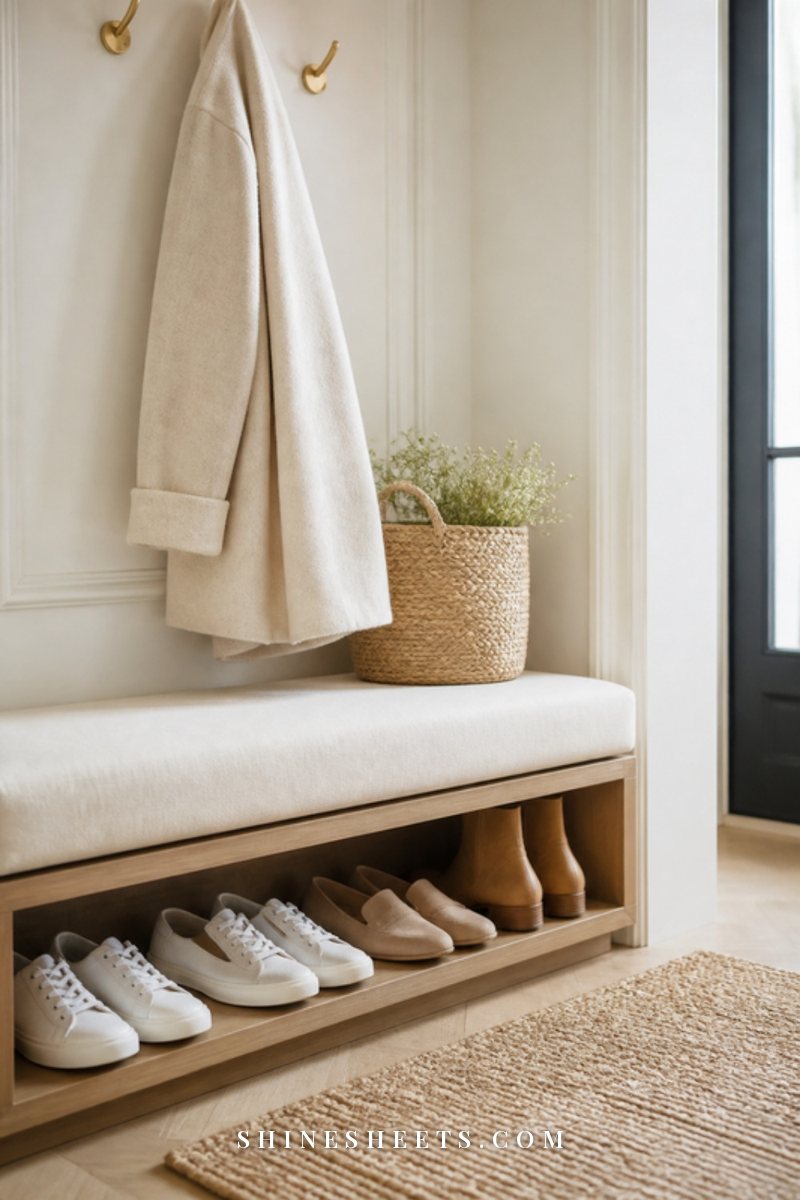
Your entryway should hold only the shoes you wear this week. That's usually three to six pairs per person, not twenty.
- A shoe bench gives you two things at once: a place to sit while you put shoes on and a shelf underneath to hold them. A shoe rack bench with an upholstered or cushioned top looks lovely and keeps the area welcoming.
- A slim tip-out cabinet is perfect for narrow hallways. It's only about 7 to 9 inches deep, and it hides everything behind closed doors.
- A boot tray catches water, slush and mud. Place it right inside the door so wet shoes never touch the floor or the rest of your collection.
- A basket or two on the bench shelf can hold slippers or flip-flops that don't stand neatly.
Set a simple limit, like "one shelf per person," and move extra pairs back to the closet every Sunday. For more ideas on making the front door area both pretty and practical, see my entryway ideas.
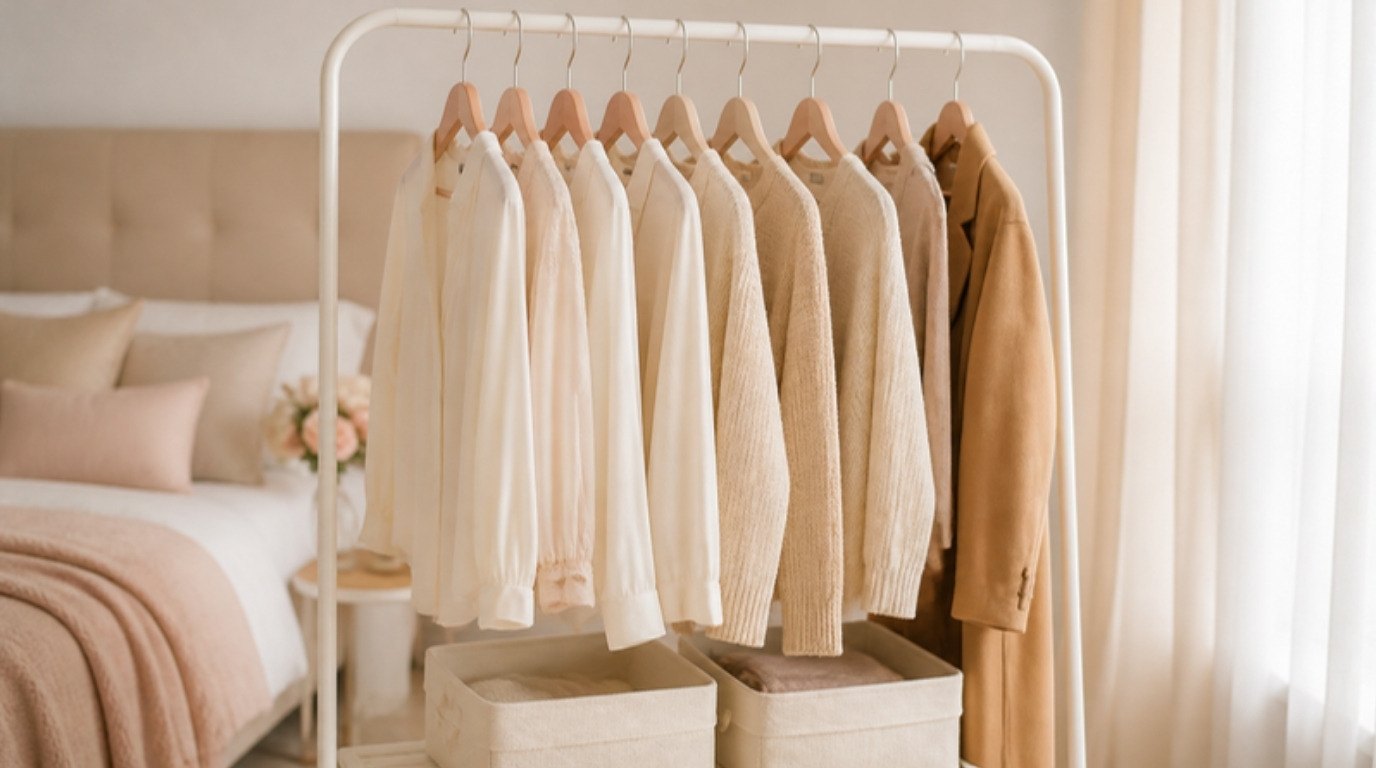
Closet Shoe Storage
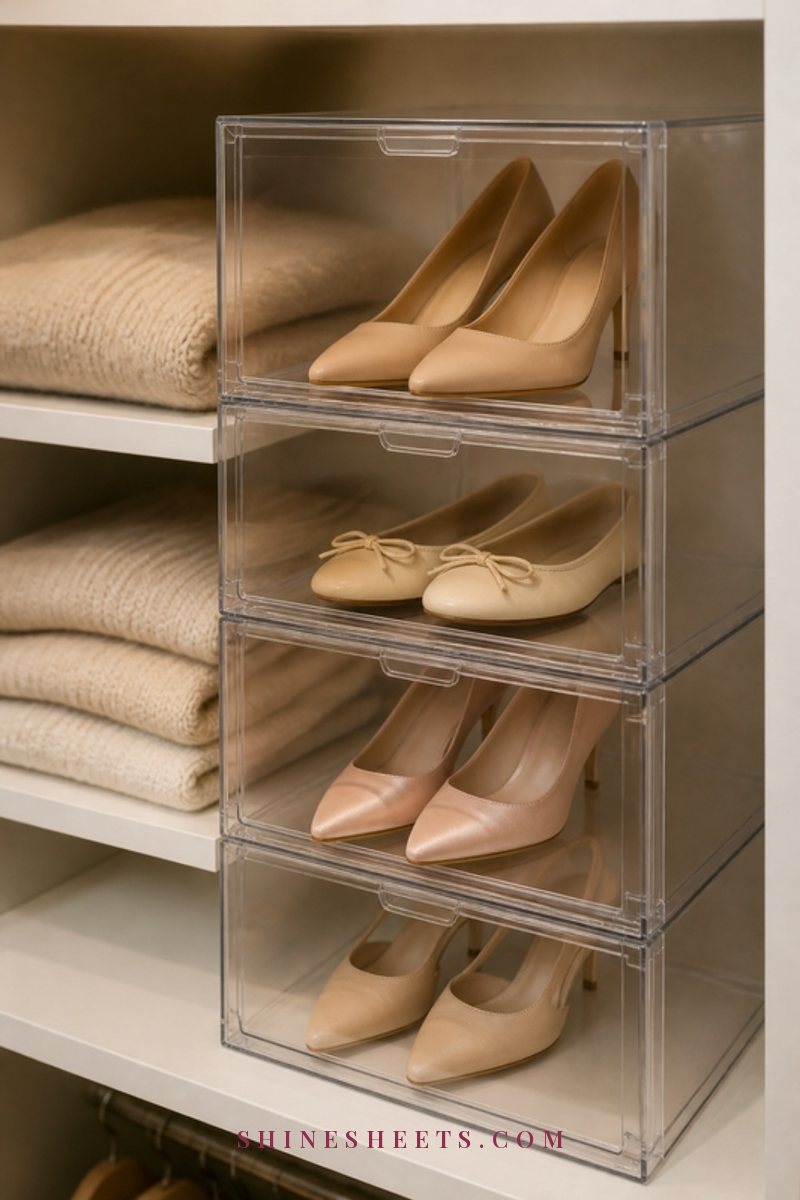
The closet is usually where most of your shoes live. The goal here is visibility: if you can't see a pair, you'll forget you have it.
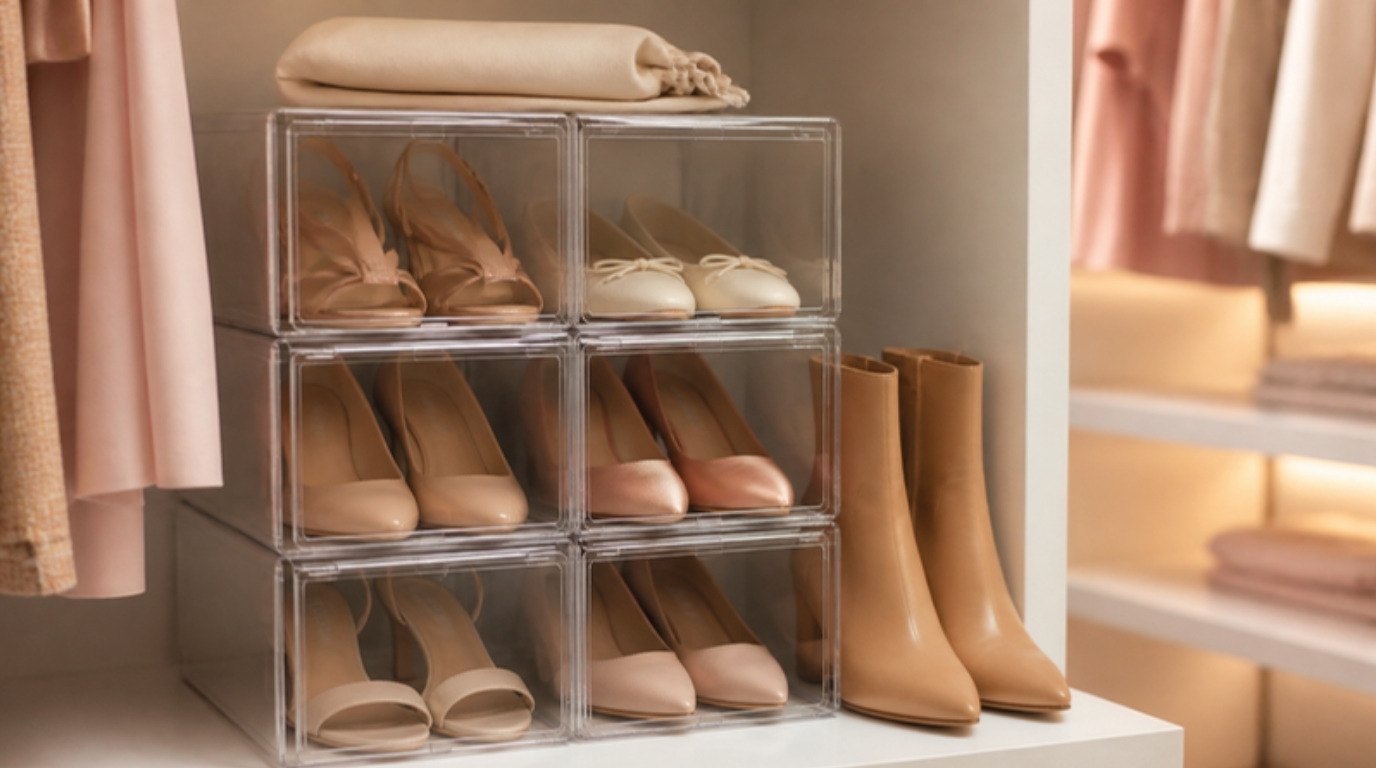
- Clear stackable boxes are my top pick for heels and dressy pairs. Clear stackable shoe boxes with drop-front doors let you see every pair and grab one without unstacking the whole tower. They also keep dust off.
- Tiered or angled shelves on the closet floor show off everything at once. Store heels with the toe facing out on one tier and the heel facing out on the next to fit more.
- A hanging fabric organizer on the closet rod uses vertical space when your floor is full.
- The top shelf is for occasional pairs: wedding heels, hiking boots, special-event shoes. Box them and keep them up high.
Store pairs by category (flats together, heels together, boots together) or by color, whichever way you naturally think about your outfits.
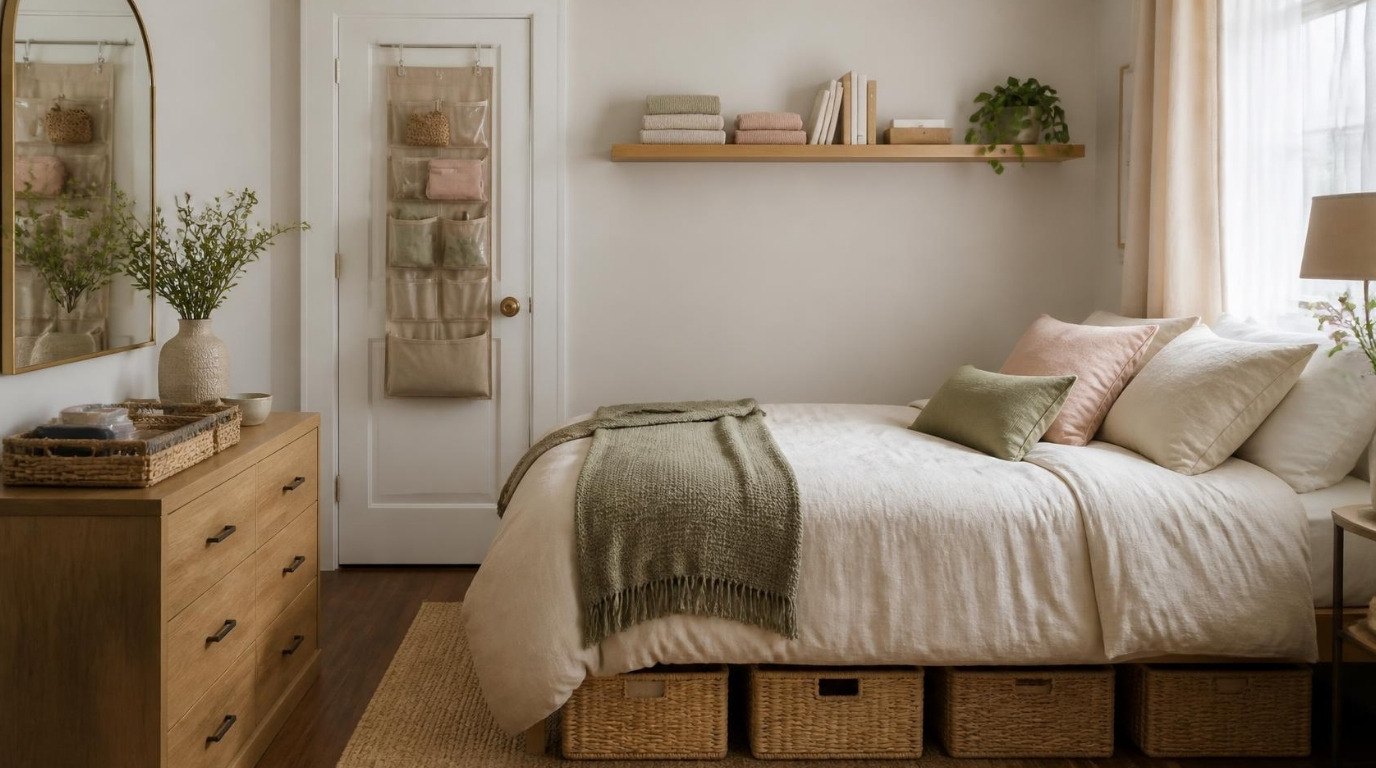
Under the Bed
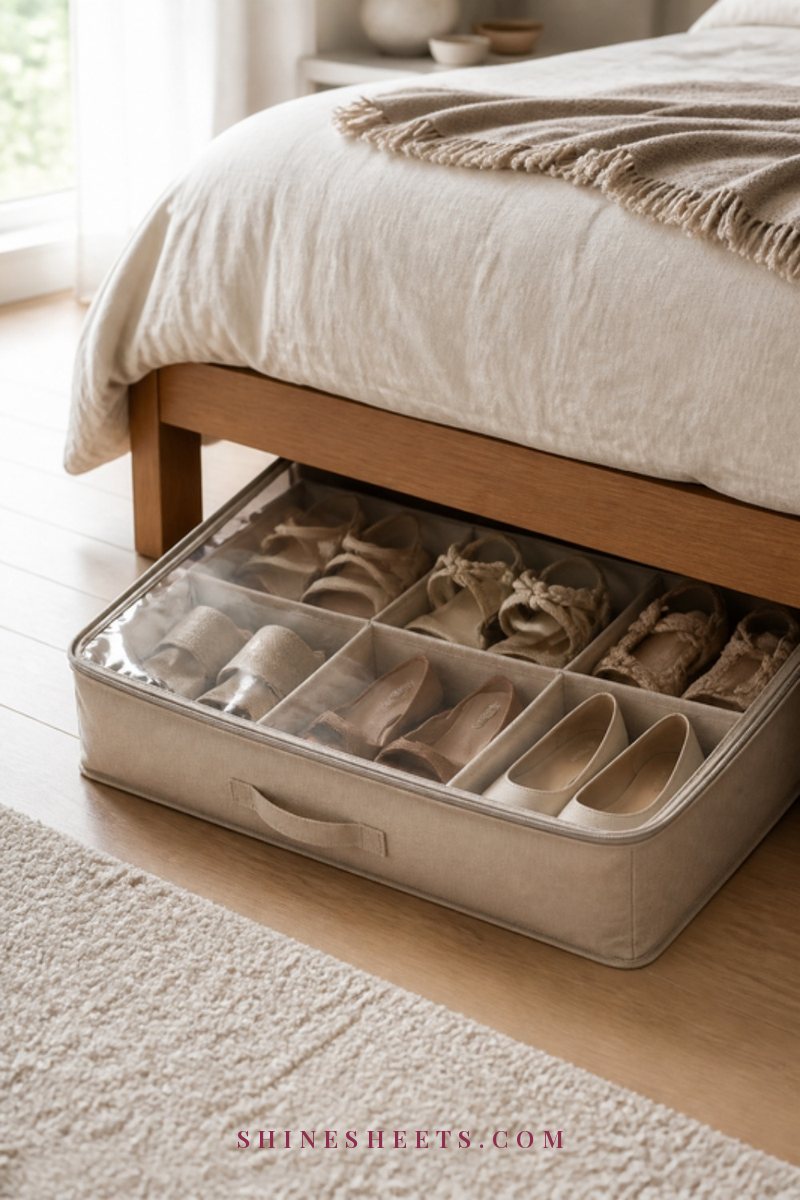
Under the bed is the most underrated shoe space in a small home. It's out of sight, but it's still easy to reach.
- Choose an under-bed shoe storage bag with a clear top and individual compartments, so you can see what's inside without pulling everything out.
- Measure the height under your bed first. Most bags need about 6 inches of clearance.
- Use under-bed storage for off-season shoes. Summer sandals in winter, ankle boots in summer.
- Vacuum under the bed before storing anything, and wipe the shoes clean first.
Over the Door
If you have zero floor space, look up. The back of a closet or bedroom door can hold a surprising number of pairs.
- An over-the-door shoe organizer with fabric pockets or wire shelves works best for flats, sandals, ballet shoes and sneakers. Heavy boots and tall heels don't fit well.
- Choose one in a soft neutral like beige or cream so it blends into the door.
- Check that the hooks fit your door and that the door still closes properly.
- Pockets that don't hold shoes can hold scarves, socks or small bags.
Small Bedroom and Studio Ideas
When your bedroom is also your closet, every piece of furniture needs to work twice as hard.
- A storage ottoman at the foot of the bed holds four to eight pairs and gives you a place to sit.
- A low bookcase can become a pretty shoe display. Keep the most beautiful pairs on the middle shelves and baskets on the bottom.
- Stackable cubbies fit into awkward corners.
- Bed risers give you more space underneath for storage bags.
The key in a small space is choosing pieces with closed storage, so the room still feels calm. My small bedroom ideas have more ways to fit storage into a tiny room without making it feel crowded.
For Big Collections
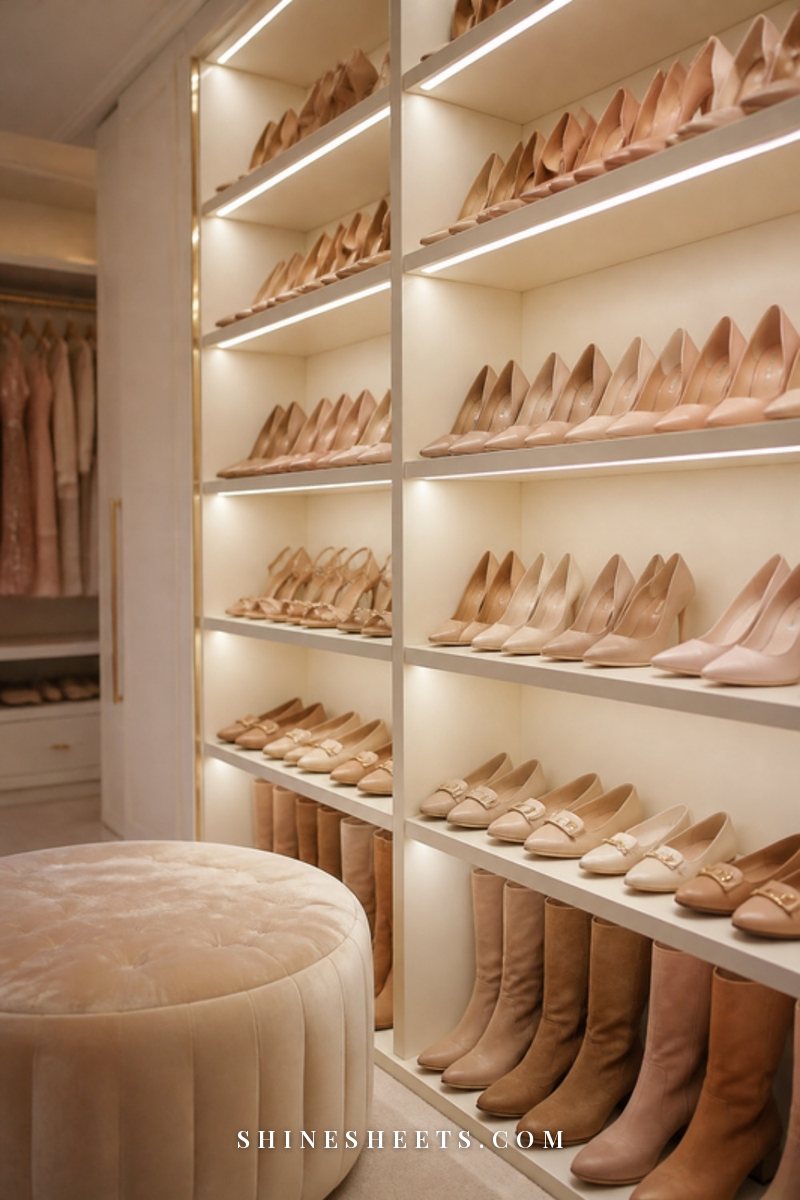
If you love shoes and have a collection to match, treat them like the beautiful objects they are.
- Floor-to-ceiling shelves along one wall turn your collection into a display. Leave about two inches of space above each pair so you can lift them out easily.
- Add soft lighting like LED strips under the shelves. It makes everything easier to see and looks gorgeous.
- Keep everyday pairs at eye level and occasion pairs on the top and bottom shelves.
- Take a quick inventory. A simple note on your phone listing your shoes by category helps you avoid buying a fourth pair of black ankle boots.
- Rotate by season (more on that below), so your main display holds only what you're wearing now.
How To Store Each Type of Shoe
Different shoes have different needs. Here's a quick guide to storing the most common types so they stay in shape:
- Heels: store them upright, side by side, never piled on top of each other. Stiletto heels can scratch other shoes, so give them a little breathing room or a box of their own.
- Flats and ballet shoes: these are flexible, so they're perfect for over-the-door pockets, baskets or nested in pairs inside drawers.
- Sneakers: store them where air can reach them, like an open shelf or rack, not a sealed box. Loosen the laces so they keep their shape.
- Ankle boots: line them up on a low shelf or the closet floor. A soft rolled-up towel inside helps if they tend to fold.
- Tall boots: stand them upright with shapers, or hang them with boot clips on a closet rod. Never fold them over.
- Sandals: they take up little space, so stack them heel-to-toe in a shallow box or basket during the off-season.
- Suede and satin: keep these away from dust and light in breathable bags, and brush suede gently before storing.
Seasonal Shoe Rotation
Rotating your shoes twice a year (once in spring, once in fall) is one of the simplest ways to free up space without getting rid of anything.
Here's how to do it:
- Pick a day when the weather has clearly turned. Late October is perfect for switching summer shoes out for boots.
- Clean every pair you're putting away. Wipe off dirt, brush suede and let everything air out for a day.
- Do any repairs now, so shoes are ready when you take them out again.
- Store off-season pairs under the bed, on the top closet shelf or in clear boxes.
- Bring the new season's shoes forward to the most accessible spots.
- Do a mini declutter while you're at it. Anything you didn't wear all season can go to the donation pile.
It takes about an hour, and it makes your everyday shoe space feel twice as big.
Shoe Organization on a Budget
You don't need to buy a whole new system to get your shoes in order. Some of the best solutions are already in your home:
- Original shoe boxes: keep them for occasion pairs. Snap a photo of the shoes and tape it to the outside of the box so you know what's inside without opening it.
- Tension rods: two tension rods placed one above the other inside a closet can hold a row of heels hooked over the top rod, resting on the bottom one.
- Bookshelves and crates: a simple wooden crate turned on its side becomes a shoe cubby in minutes. Paint it cream to match your room.
- Baskets: a large woven basket by the door holds slippers, flip-flops and sneakers without any assembly.
- Thrifted furniture: a small secondhand cabinet or bench with a fresh coat of paint can look like it came from a boutique.
Start with what you have, live with it for two or three weeks, and only then buy organizers for the spots that still don't work. That way you'll buy exactly what you need and nothing extra.
Sharing Space: Shoes for the Whole Household
If you share your home with roommates, a partner or family, shoe clutter multiplies quickly. A few simple rules help everyone:
- Give each person their own shelf or basket by the door, and agree on a limit (two or three pairs each is a good start).
- Add a boot tray for everyone in wet months, so muddy shoes don't end up on the clean floor.
- Keep guests in mind: a little empty space on the rack shows visitors where to put their shoes.
- Do the weekly reset together. Five minutes on Sunday evening, and the entryway starts the week fresh.
Caring for Shoes in Storage
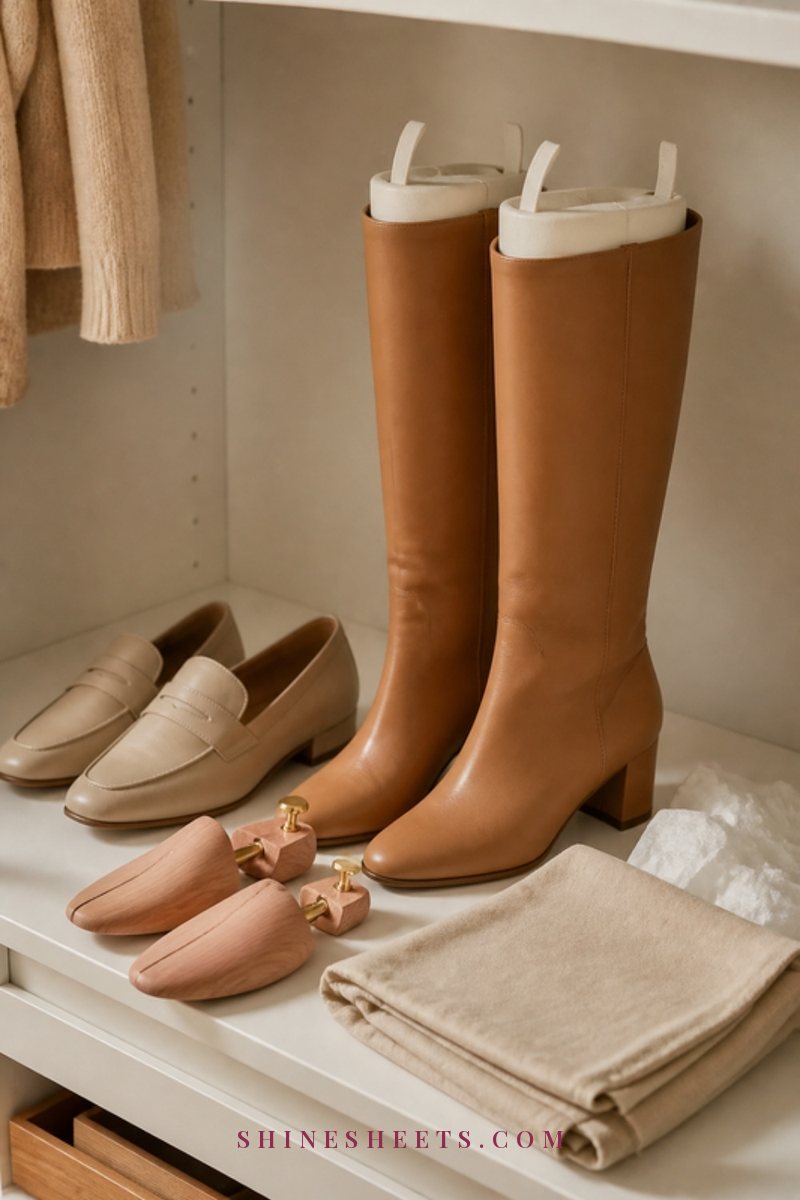
Good storage isn't only about saving space. It's also about keeping your shoes looking good for years. Here's how to protect them:
- Boot shapers: tall boots slump and crease when they're stored flat. Slip boot shaper inserts into each boot to keep the shaft upright and smooth.
- Shoe trees: for leather shoes, cedar shoe trees help keep their shape, absorb moisture and leave a light, fresh scent.
- Dust bags: store special pairs in breathable cotton dust bags, not plastic, which traps moisture.
- Tissue paper: stuff the toes of heels and flats with acid-free tissue to help keep their shape.
- Avoid heat and sunlight: don't store shoes near radiators or in direct sun, which can dry out leather and fade colors.
- Keep them clean: always store shoes clean and fully dry. Dirt and moisture can damage materials over time.
Keeping Shoe Smells Away
Nothing ruins a beautifully organized closet faster than a musty shoe smell. The good news is that it's easy to prevent:
- Let shoes air out for a few hours after wearing them before putting them away, especially sneakers and boots.
- Rotate your everyday shoes so each pair gets a day off to dry completely.
- Use cedar blocks or shoe trees, which naturally absorb moisture.
- Wash insoles regularly, or replace them when they start to smell.
- Keep the closet ventilated. Open the doors for a while every few days, and avoid storing damp shoes in closed boxes.
- Wear socks with sneakers and closed shoes when you can.
If your closet already has a stale smell, my guide on how to get rid of a musty smell has a gentle step-by-step plan.
Habits That Keep Shoes Organized
Even the best system falls apart without a few small habits. These are the ones that make the biggest difference:
- Shoes off and away at the door. Put shoes on the rack or in the cabinet as soon as you take them off, not "later."
- The Sunday shoe reset. Once a week, return any extra pairs from the entryway to the closet. It takes five minutes.
- One in, one out. When you buy a new pair, consider letting go of an old one.
- Give every pair a home. If a pair doesn't have a specific spot, it ends up on the floor.
- Clean as you go. Wipe shoes quickly when they're dirty, so you're not facing a big cleaning job later.
If you're organizing your closet anyway, it's a great time to sort your bags too. My purse storage ideas pair beautifully with a new shoe setup.
Final Thoughts
Shoe organization isn't about having the perfect walk-in closet or a matching set of expensive organizers. It's about making sure every pair you love has a home that fits how you actually live.
Start small: declutter, pick one space to tackle first, and build from there. Once your shoes are calm and easy to find, getting ready in the morning feels a little lighter, and your home feels a lot more like yours.