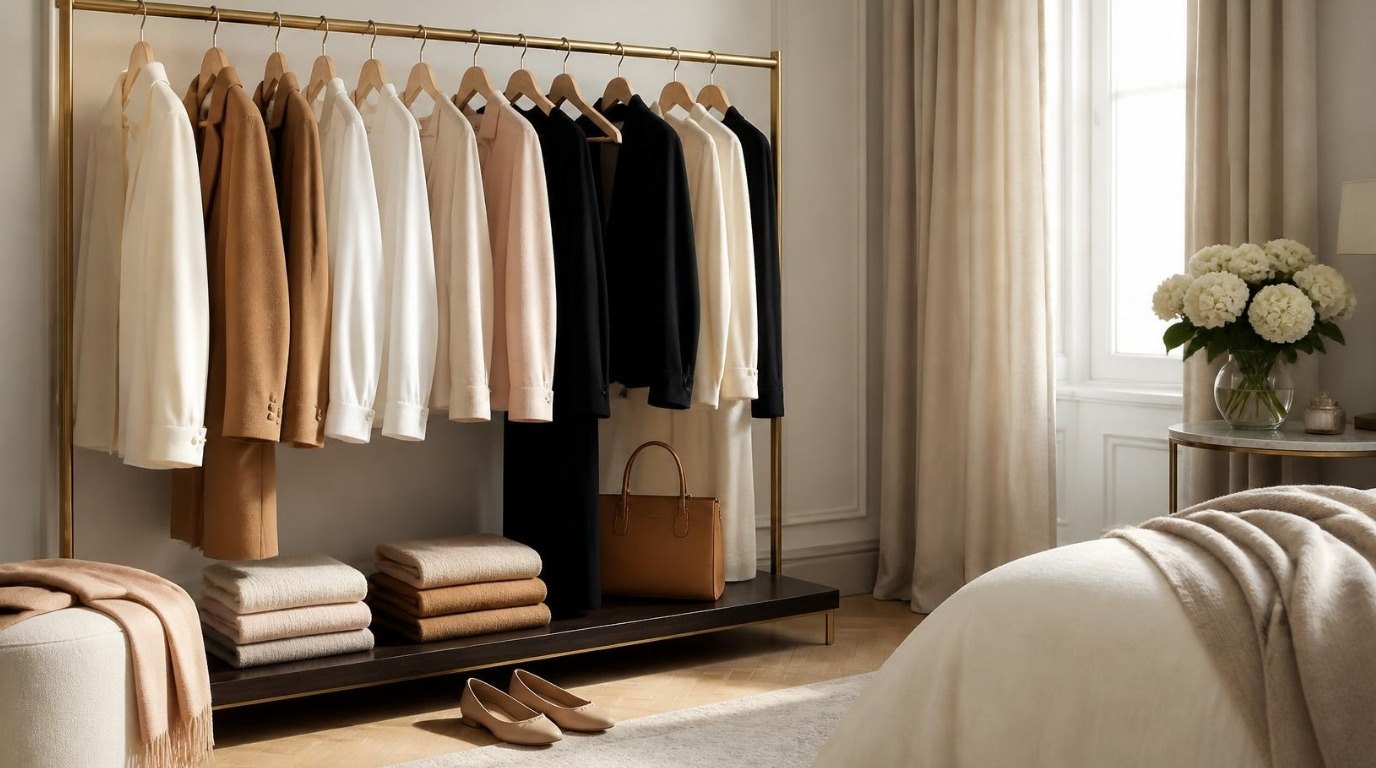
A full closet and "nothing to wear" usually go together. When every rail and shelf is packed, you cannot see what you own, the pieces you love get buried, and getting dressed turns into a daily negotiation. Decluttering your wardrobe is less about owning fewer clothes and more about being able to see, reach and enjoy the ones that actually work for you.
The trick is to make it calm instead of brutal. You do not need to fill twelve trash bags in a single frenzy or follow strict rules about how many items you are "allowed." You need a clear method, a few honest questions and a plan for keeping it tidy afterward.
This guide shows you how to declutter your wardrobe step by step: how to prepare, how to sort, the closet edit questions table that makes decisions easier, the hanger trick, seasonal rotation, the maybe box, where your clothes can go next and a set of simple "keep it" rules so the clutter does not creep back.
Put on a playlist, pour yourself something warm, and let's make your closet feel like yours again.
Before You Start: Set Aside One Afternoon
Decluttering a wardrobe takes longer than most people expect, so give it a proper block of time. For an average closet, plan on three to four hours. If you have a lot of clothes or several storage spots (closet, dresser, under the bed, the guest room), split it into two sessions on the same weekend.
A few small things make the afternoon smoother:
- Make your bed and clear its surface so you have a clean place to lay things out.
- Have five bags or boxes ready before you begin (more on those in a moment).
- Wear something easy to change in and out of, because you will be trying things on.
- Keep a glass of water and a snack nearby so you do not lose momentum halfway.
- Pick a time when you are not rushed or exhausted. Tired decisions are rarely good ones.
It also helps to think for a minute about what you want your wardrobe to feel like when you are done. Calm? Easy? A little more polished? Hold that picture in your mind, because it will make the harder decisions feel lighter.
Step 1: Take Everything Out
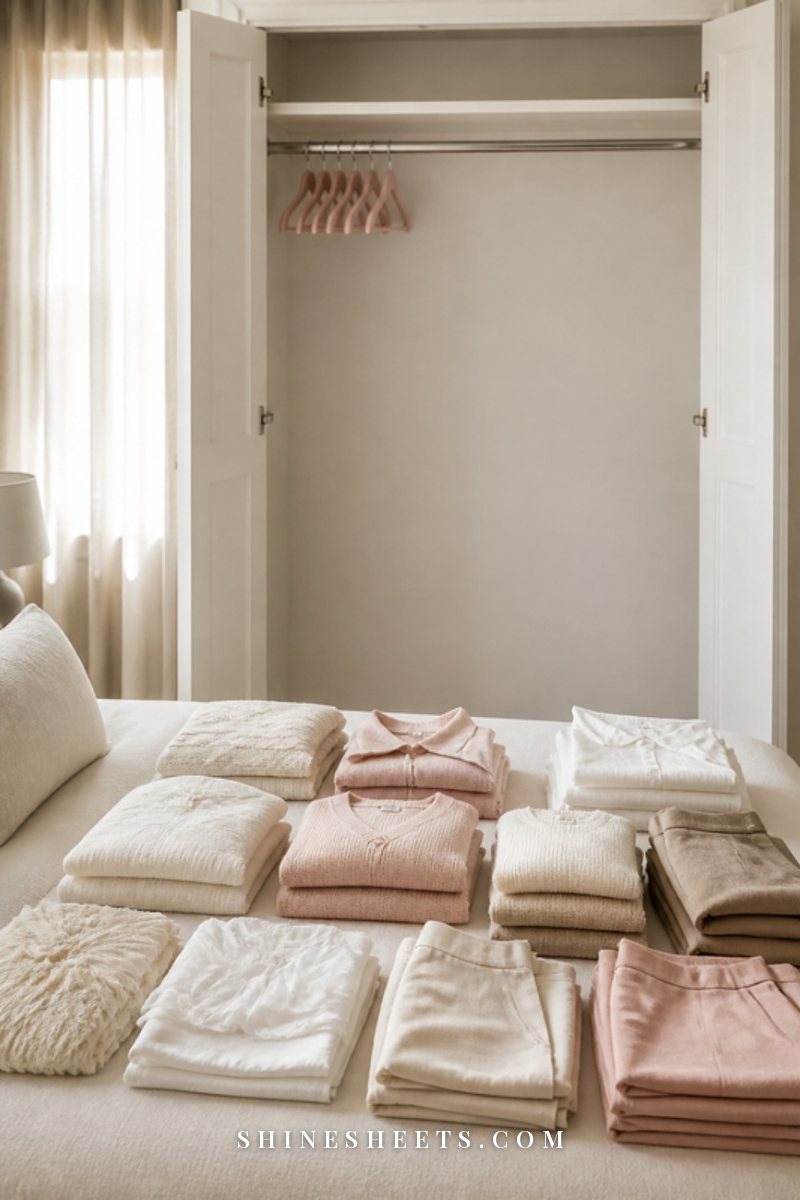
This is the step everyone wants to skip, and it is the one that makes the biggest difference. Take every single item out of the closet and lay it on your bed, grouped by category: tops, sweaters, pants, skirts, dresses, jackets, and so on.
Seeing everything in one place does two things. First, you finally see how much you own (often a surprise, and usually a helpful one). Second, you will spot duplicates instantly, like the four almost-identical black tank tops or the three cream cardigans you forgot existed.
While the closet is empty, give it a quick wipe-down and vacuum the floor. A fresh, clean space makes you want to put back only the things that deserve to be there. If you have a dresser too, you can do it in a second round. My guide to dresser drawer organization walks you through that part.
Step 2: Sort Into Five Piles
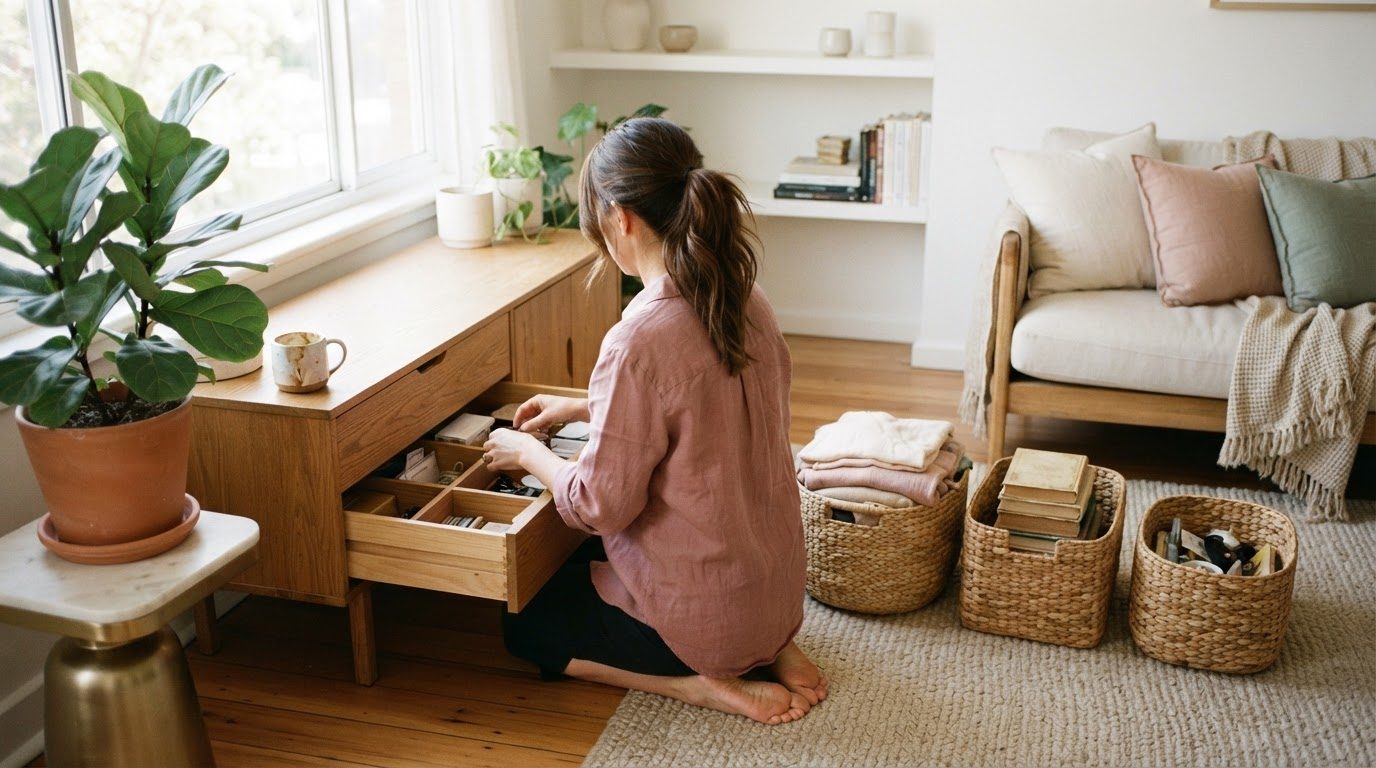
Go through one category at a time and put each piece into one of five piles. Five sounds like a lot, but having a place for every kind of decision stops you from getting stuck.
- Keep: You wear it, it fits, and you like how you feel in it.
- Maybe: You are genuinely unsure. This pile gets its own process later, so do not agonize now.
- Donate: It is in good condition, but it is not for you anymore.
- Sell: It is in great condition and worth enough to be worth the effort of listing.
- Repair: You love it, but it needs a button, a hem, a zipper or a good clean first.
A gentle rule for the repair pile: only put something there if you will actually fix it in the next month. If a skirt has been waiting for a new zipper for two years, it belongs in donate, and that is completely okay.
For the keep pile, give each piece a quick once-over with a lint roller as you go. It is a small thing, but it makes your kept clothes look instantly fresher and helps you see their real condition.
Step 3: Ask the Closet Edit Questions
When you hold a piece and cannot decide, a few honest questions do the work for you. This table is the heart of the method. Screenshot it and keep it open on your phone while you sort.
| Question | If the answer is yes | If the answer is no |
|---|---|---|
| Does it fit my body right now? | Keep going down the list | Donate or sell (not "someday") |
| Have I worn it in the last year? | Likely a keep | Maybe box or donate |
| Does it match my style today? | Keep | Donate, even if it was expensive |
| Would I buy it again today? | Definite keep | Let it go |
| Is it comfortable enough to wear all day? | Keep | Donate |
| Is there something similar in my closet I like more? | Keep the favorite, release the rest | Keep |
| Does it go with at least three other pieces in my closet? | Keep | Maybe box, or donate if it never gets worn |
| Is it in good condition (no pilling, stains, stretch)? | Keep | Repair if worth it, otherwise textile recycling |
| Am I keeping it out of guilt (price, gift, memories)? | Let it go or move it to keepsakes | Keep if it passes the other questions |
The question I lean on most is "would I buy it again today?" It cuts through all the stories ("but it was on sale," "but I might go to a wedding") and brings you back to the present.
If a piece is tied to a memory rather than to how you dress, it deserves its own kind of attention. The guide on how to declutter sentimental items covers that more tender process.
Step 4: Put Back Only What You Love
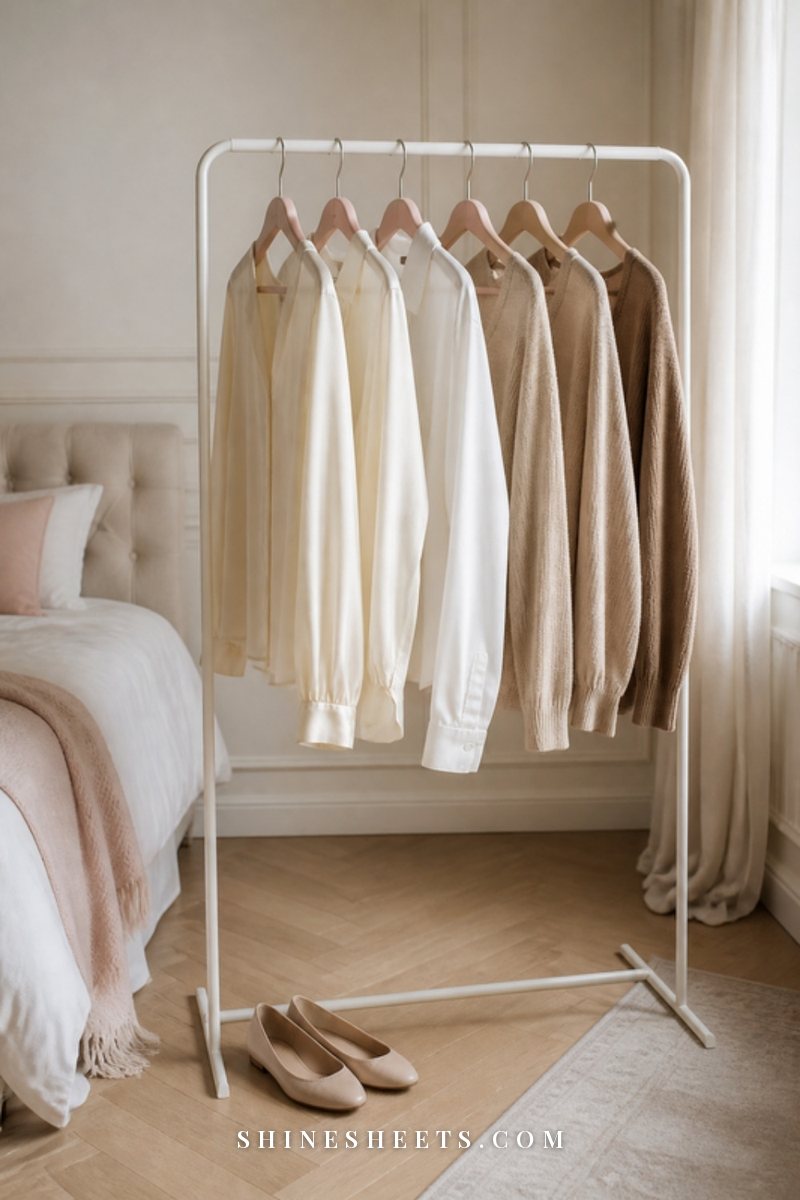
Now the fun part. Put your keep pile back into the closet, but do it intentionally. Group by category, then by color from light to dark within each category. It looks calm, and you will instantly see gaps and doubles.
This is also the perfect moment to switch to matching hangers. Slim velvet hangers are a pick for most closets, because they take up less space than chunky plastic ones and stop silky blouses from sliding off. Matching hangers also make even a small closet look like a boutique.
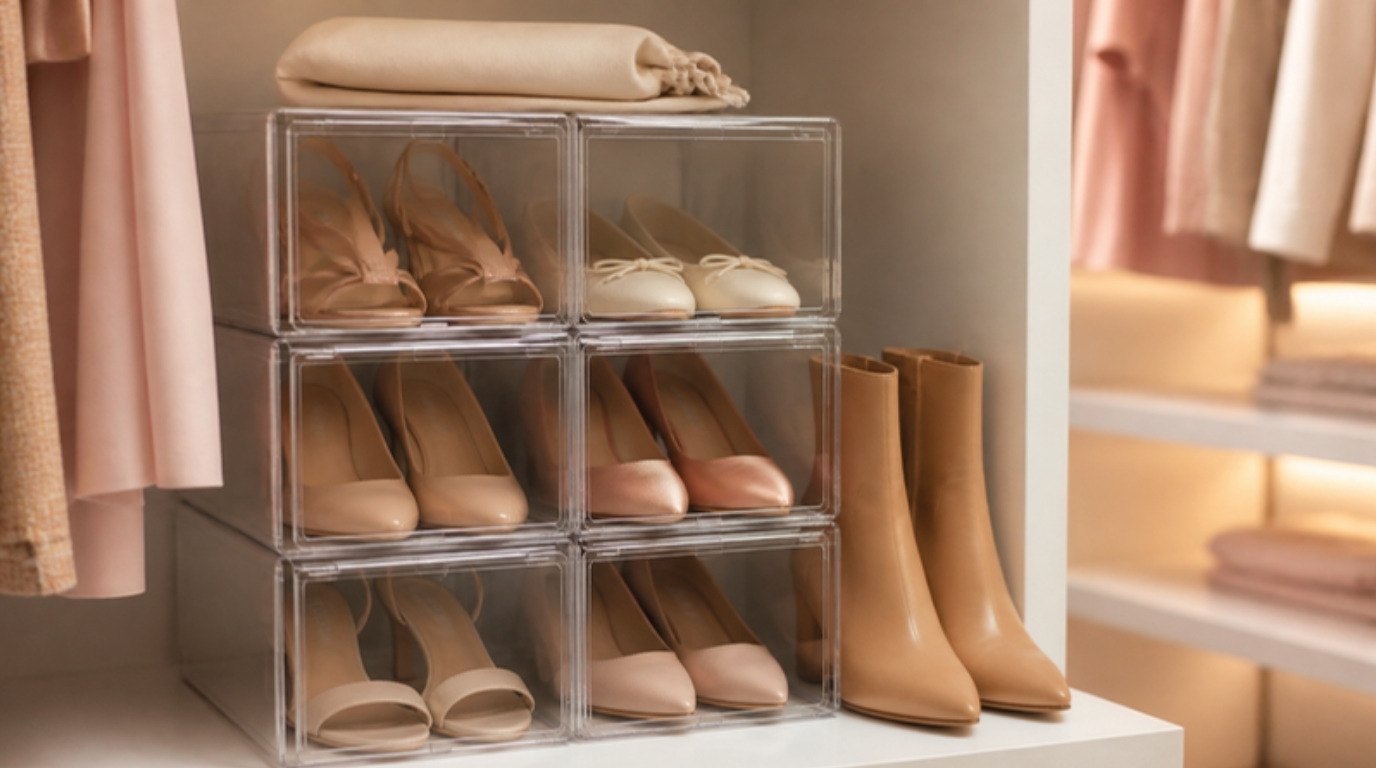
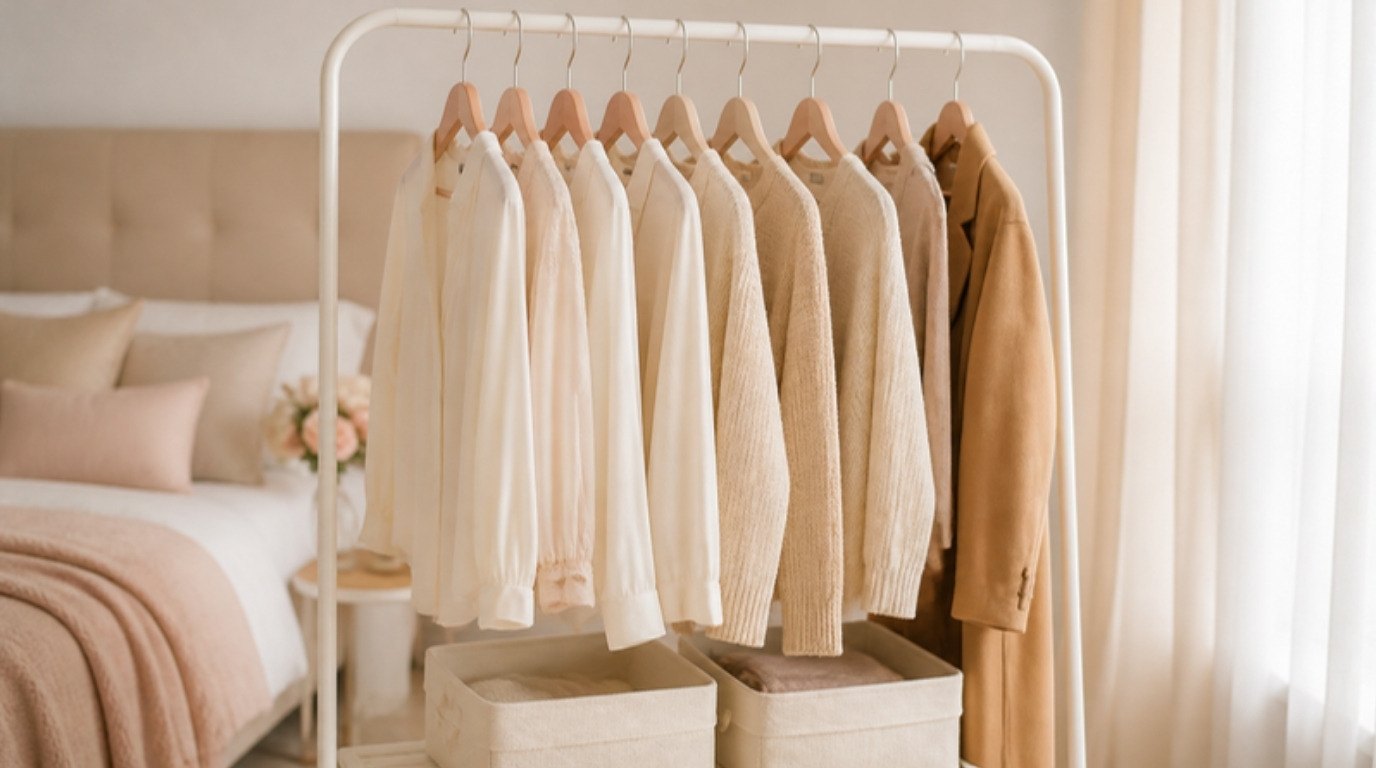
If you are short on hanging space, a freestanding white garment rack in the bedroom can hold your most-worn outfits for the week or your coats. Keep it edited, though: a rack only looks pretty when it is not overloaded. For shelf dividers, shoe spots and a full layout plan, my guide on how to organize a closet picks up right where this one ends.
If you are building toward a smaller, more mix-and-match wardrobe, my capsule wardrobe guide shows you how to choose pieces that all work together, and the wardrobe color palette guide helps you decide which colors to build around.
Step 5: Try the Hanger Trick
The hanger trick is a quiet way to find out what you really wear. Once everything is back in the closet, turn every hanger so the hook faces the opposite way, toward you. Each time you wear something and hang it back up, turn that hanger the normal way.
After six months (or a full season), look at the hangers that are still reversed. Those are the pieces you did not reach for once, even though they were right there. It is the most honest data your closet can give you, and it makes the next round of decluttering almost effortless.
For folded items, you can do the same thing with a small paper tag or a ribbon tied around the stack. Remove it when you wear something from that pile.
Step 6: Rotate Your Seasons
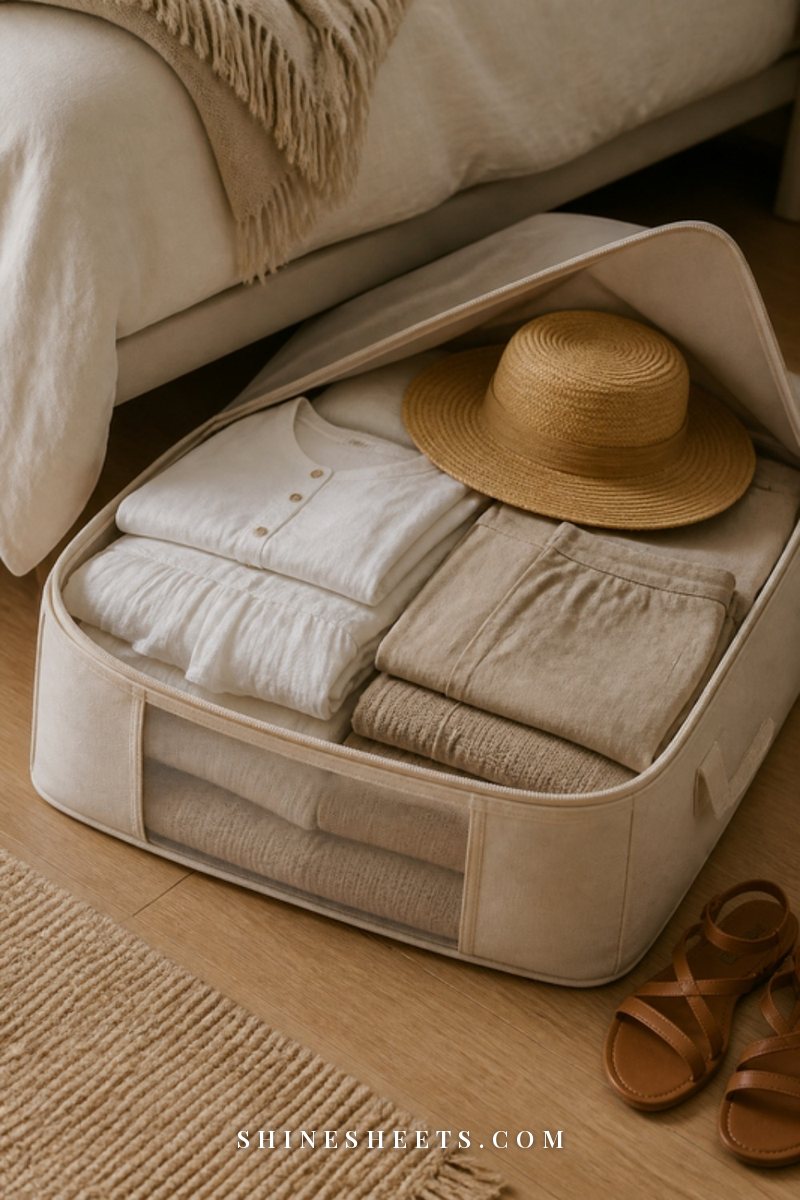
A lot of closet clutter is actually seasonal clutter. If your linen dresses and your wool coats share the same rail, everything feels crowded. Rotating your clothes twice a year frees up a surprising amount of space.
Here is how to do it simply:
- At the start of the colder months (right about now), pull out all the summer pieces: sandals, linen, swimwear, thin dresses.
- Wash or clean everything before storing it. Stains set and smells linger over months.
- Fold items neatly into breathable under-bed storage bags with a clear window so you can see what is inside.
- Before you pack each piece, ask the closet edit questions one more time. You will be surprised how often the answer has changed.
- Reverse the whole process when the warm weather comes back.
For shelves, a few fabric storage bins keep out-of-season knits, scarves and hats contained and dust-free. Choose one color and size for all of them, so the shelf looks tidy even when the bins are full.
Step 7: Give Your Maybe Box a Date
The maybe pile is where decluttering usually stalls, so give it a clear, gentle process instead of letting it live on your chair forever.
- Put all your maybes into one box or bag.
- Write a date on the outside about three months from today (six months if the pieces are seasonal).
- Store the box out of sight: on a top shelf, in the garage, under the bed.
- If you genuinely miss something and go looking for it, take it out and wear it. That is a keep.
- When the date arrives, donate whatever is still inside without opening it again.
That last step is the important one. If you open the box, every piece will tug at you. If you have not thought about them in three months, you already know the answer.
Where Your Clothes Can Go Next
Letting go is easier when you know your clothes are going somewhere good. Here are the main options and which pieces suit each one.
Donate
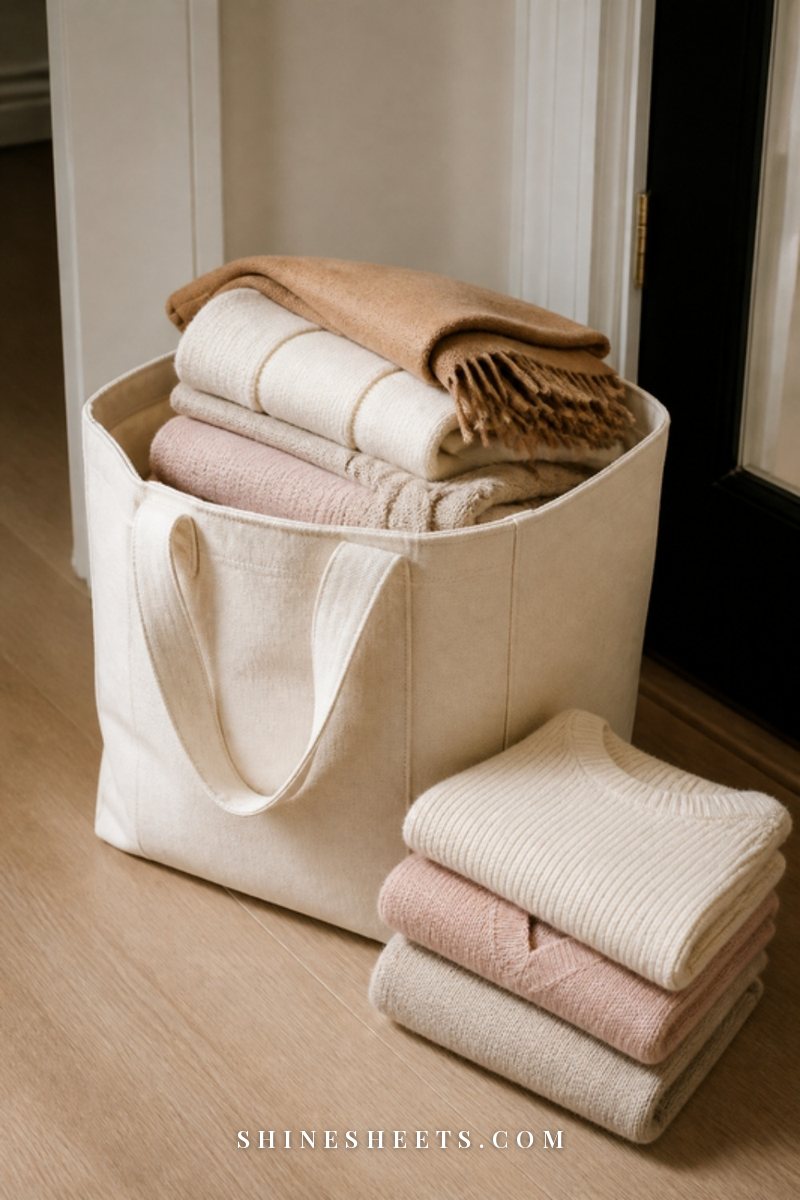
Clean, wearable clothes in good condition can go to local charity shops, shelters, women's organizations and community clothing drives. Many shelters especially welcome warm coats, work clothes and new socks. Fold everything neatly and check what each place accepts before you go. A quick call saves you a second trip.
Sell
Designer pieces, good-quality coats, shoes worn only a few times and anything with tags still on are worth selling. Resale apps, local consignment shops and seasonal swap events all work. Be realistic about your time: if listing an item would take an hour to earn a small amount, donating it might feel better.
Textile Recycling
Clothes that are stained, torn or worn out should not go to a charity shop. Look for textile recycling drop-off points in your area (many cities and some clothing stores run them). Old cotton t-shirts can also become cleaning rags, which is a lovely last job for a favorite tee.
Swap With Friends
A clothing swap is one of the nicest ways to declutter. Invite a few friends, ask everyone to bring pieces they no longer wear, and let people take what they love. Whatever is left goes to donation together. It turns a chore into a fun evening, and your old favorites get a second life with someone you know.
How To Keep Your Wardrobe Decluttered
A decluttered closet stays that way only if you change how things come in. These are my "keep it" rules. They are simple on purpose, because simple rules are the ones you actually follow.
6 Keep-It Rules
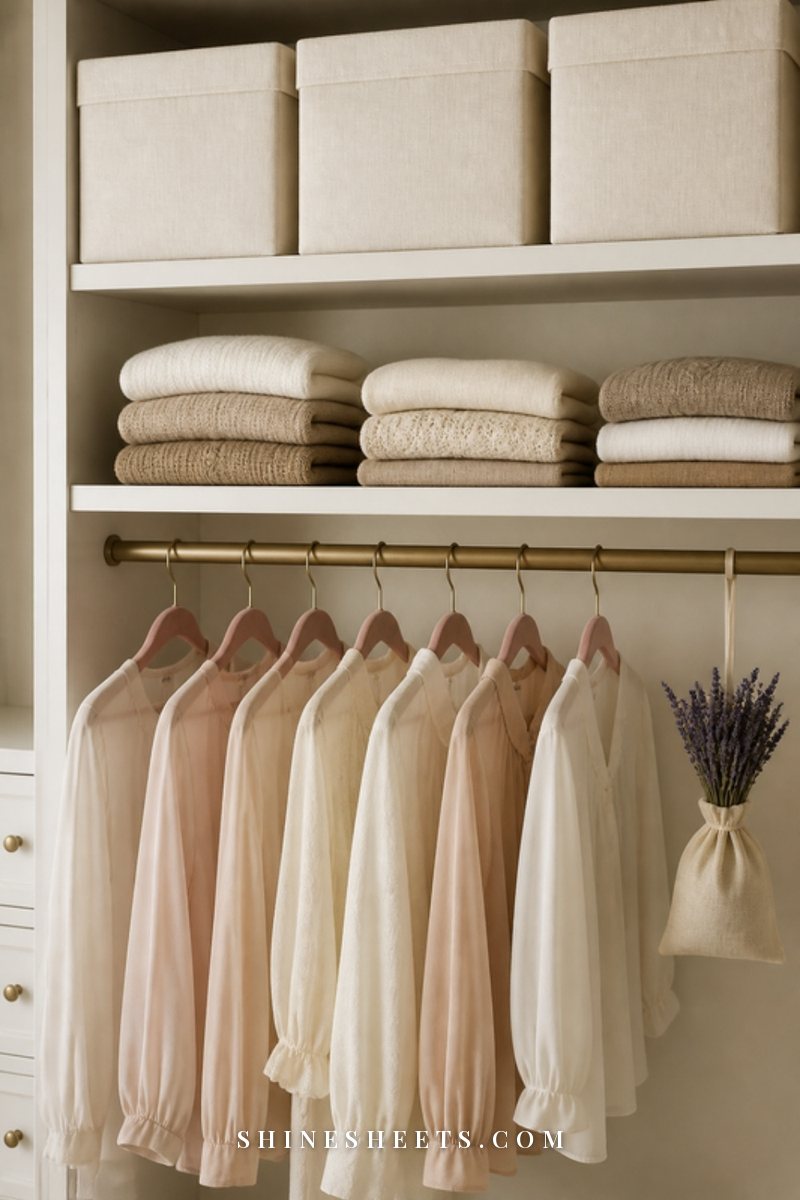
- One in, one out. Every new piece means one older piece leaves. It keeps your closet the same size and makes you think twice before buying.
- Keep a wishlist instead of impulse shopping. When you want something, write it down and wait two weeks. If you still want it and it fits your style, buy it.
- Do a five-minute monthly edit. Once a month, pull out anything that no longer fits, is damaged or simply did not get worn.
- Have a donation bag always ready. Keep one bag on the closet floor. Whenever you try something on and think "not anymore," it goes straight in.
- Store by season. Only what you can wear in the next few months lives in your main closet.
- Buy for the life you have. Shop for your real week, not for the imaginary one full of galas and beach holidays.
If you want a clear picture of the pieces that tend to do the most work in a closet, my list of wardrobe essentials is a good shopping filter. Use it to fill true gaps, not to start a whole new pile.
If You Feel Overwhelmed
Some closets are simply too full, or too emotional, for a single afternoon. That is not a failure. It just means you need a softer version of the method.
- Start with one category. Pick the easiest one, like socks, gym clothes or scarves, and do only that. Easy wins build momentum and teach your brain that letting go feels fine.
- Set a timer for twenty minutes. Declutter until it rings, then stop. Twenty minutes a day for a week covers most wardrobes without anyone ever feeling drained.
- Use a "five a day" rule. Pull out just five items each day that you know you will not miss. In a month, that is around a hundred and fifty pieces gone without a single dramatic weekend.
- Ask a friend with a kind eye. Choose someone who will be honest but gentle, and let them hold up pieces while you decide. Having someone there keeps you moving when you would otherwise freeze.
- Leave the hardest pieces for last. Wedding dresses, clothes from someone you lost, things from an important chapter of your life. They do not have to be decided today.
Feeling resistance while decluttering is normal. Clothes hold memories, money and versions of ourselves we once hoped to be. Be patient with that. Every piece you release with care makes the next one a little easier.
Common Decluttering Mistakes To Avoid
A few habits can quietly undo all your hard work. Watch out for these:
- Keeping "goal size" clothes. Clothes that do not fit your body today take up space and make you feel worse every time you see them. Your future body deserves future clothes.
- Buying storage before decluttering. Organize what is left, not what you started with. Otherwise you end up storing things you do not even want.
- Doing it all while exhausted. Tired decisions lead to either keeping everything or regretting what you gave away.
- Letting bags sit in the car for weeks. Schedule the donation drop-off within a few days, so nothing sneaks back into the closet.
- Decluttering other people's clothes. Stick to your own wardrobe. Everyone else gets to decide for themselves.
Final Thoughts
Learning how to declutter your wardrobe is really learning what you love to wear and giving those pieces room to shine. It does not have to happen perfectly or all at once. One calm afternoon, five piles and a few honest questions can change how every morning feels.
Keep the closet edit questions handy, trust the hanger trick, and let the maybe box do its quiet work. A wardrobe that fits your real life is one of the simplest everyday luxuries there is.