There was a week when I decided my skin needed to be "smoother," so I put an acid toner on in the morning, a grainy scrub in the shower, and a peeling gel on Sunday for good measure. By Wednesday my cheeks were shiny in a way that had nothing to do with oil. They were tight, pink and stung when I put on plain moisturizer. My T-zone, meanwhile, was still exactly as congested as before.
That's the funny thing about exfoliation. A little, done gently, can make skin look smoother, brighter and less congested. Too much, and you end up with the exact opposite: a stripped, sensitive face that takes weeks to calm down. And with combination, sensitive skin like mine, the line between "just right" and "too much" is thinner than any bottle admits.
So this is the calm guide to how to exfoliate your face without overdoing it: the different types of exfoliants in plain English, a frequency table by skin type (AHA, BHA, PHA, enzymes and gentle physical options), exactly how to do it step by step, the red flags that tell you you've gone too far, and a simple reset plan if you already have.
No harsh scrubs, no weekly peel marathons. Just smoother skin that still feels like yours.
What Exfoliating Actually Does
Your skin naturally sheds dead cells all the time. Sometimes, though, they linger on the surface a little longer than you'd like, which can make skin look dull, feel rough and contribute to clogged pores. Exfoliation simply helps that shedding along.
Done well, regular gentle exfoliation can help with:
- Smoother-feeling texture, especially on rough patches
- A brighter, more even-looking tone, as duller surface cells are cleared away
- Fewer clogged pores and blackheads, particularly with BHAs
- Better makeup application, since foundation sits more evenly on a smooth surface
- Serums that feel like they spread more easily on skin without a dry, flaky layer on top
What exfoliation won't do is fix everything at once, replace sunscreen, or make up for skipping moisturizer. It's one supporting step, not the whole routine.
The Types of Exfoliants, Explained Simply
There are two big families: chemical exfoliants (acids and enzymes that loosen dead cells) and physical exfoliants (something that removes them by touch). For most faces, especially sensitive ones, gentle chemical exfoliants are the kinder choice.
AHAs (Alpha Hydroxy Acids)
Glycolic, lactic and mandelic acid are the ones you'll see most. They're water-soluble and work on the surface, so they're great for dullness, rough texture and uneven tone. Glycolic acid is the smallest and strongest-feeling; lactic and mandelic are gentler and better for sensitive or dry skin. If you want to go deeper on the classic one, there's a full guide to glycolic acid and how it works.
BHA (Beta Hydroxy Acid)
Salicylic acid is the main one. It's oil-soluble, which means it can get into pores and help clear out the oil and debris that cause blackheads. This is the one oily, combination and breakout-prone skin usually loves most, especially on the T-zone.
PHAs (Polyhydroxy Acids)
Gluconolactone and lactobionic acid are larger molecules that work more slowly and stay mostly on the very surface. They're also hydrating. PHAs are the gentlest acid option and often the best starting point for sensitive, reactive or dry skin.
Enzymes
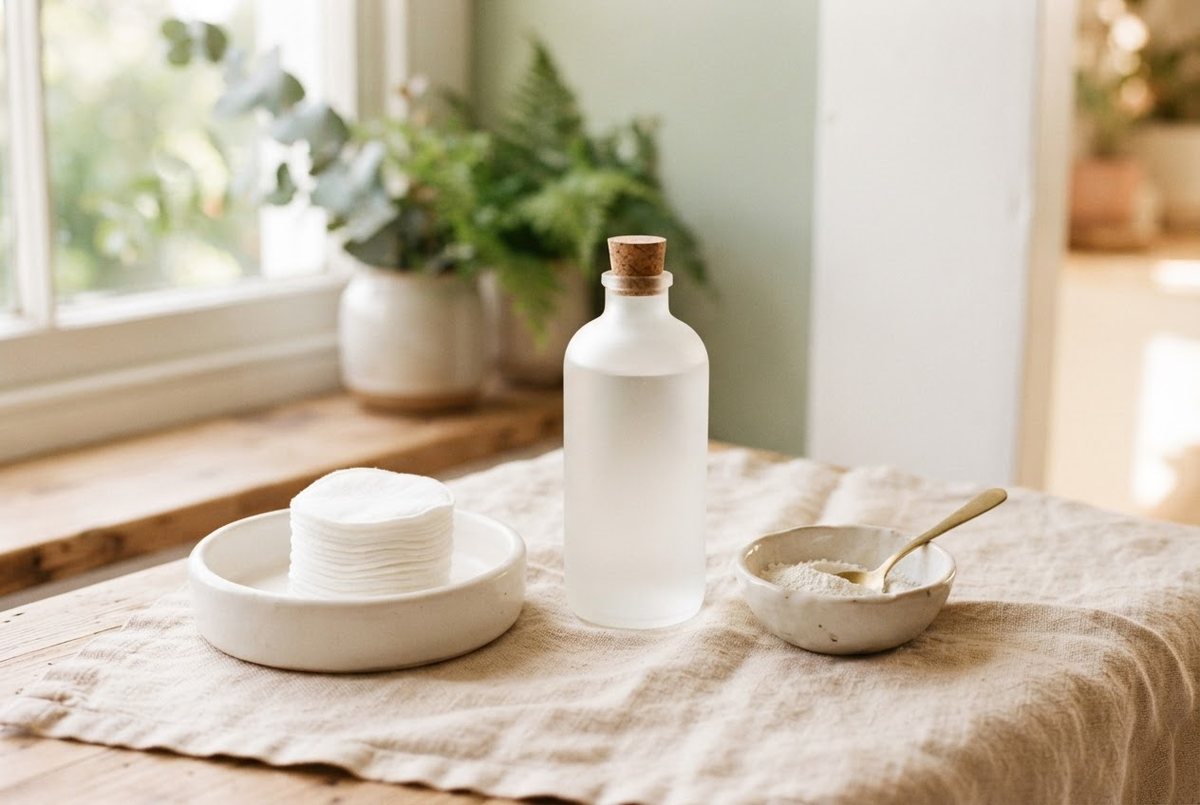
Fruit enzymes like papain (from papaya) and bromelain (from pineapple) gently digest the proteins holding dead cells together. Enzyme powders and masks feel very soft, and they're a lovely occasional treat. My guide on enzyme peel benefits explains more about how they work.
Gentle Physical Exfoliation
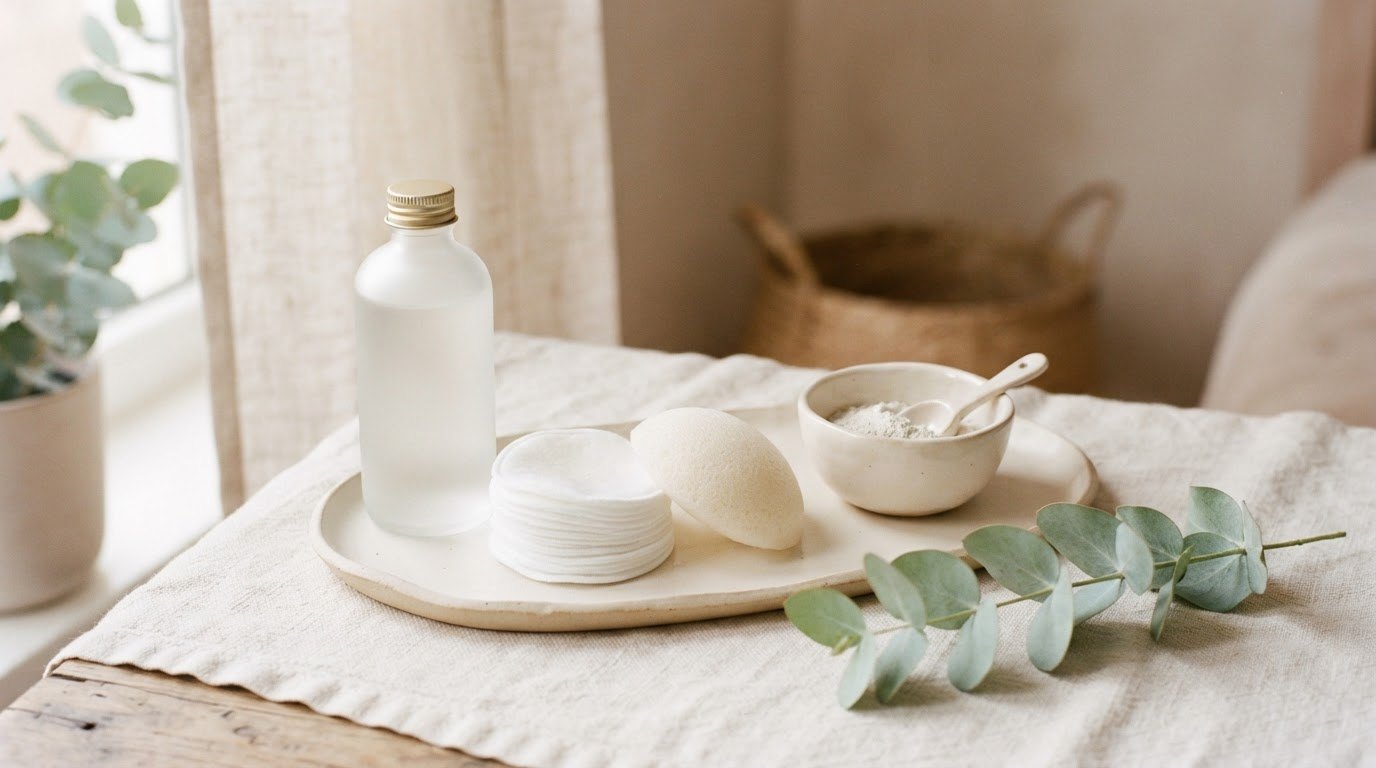
This means soft tools or very fine, round particles, not crushed shells or rough sugar scrubs on your face. A damp konjac sponge or a soft cloth used with light pressure can be enough. Harsh, gritty scrubs can create tiny tears and irritation, so I'd leave those out of a face routine entirely.
Your Exfoliation Frequency Table by Skin Type
This is the heart of the guide. Find your skin type, then read across to see how often each type of exfoliant is usually comfortable. These are starting points and upper limits, not targets. Pick one exfoliant to begin with, not all of them.
| Skin type | AHA | BHA | PHA | Enzyme | Gentle physical |
|---|---|---|---|---|---|
| Sensitive | Lactic or mandelic only, once a week at most | Once a week, spot use on the T-zone | 1–2 times a week (best start) | Once a week | Soft konjac sponge only, light pressure |
| Dry | Lactic acid, 1–2 times a week | Rarely needed; spot use only | 2 times a week | Once a week | Once a week, very gently |
| Combination | Once a week all over | 2–3 times a week on the T-zone | 2 times a week on cheeks | Once a week | Once a week |
| Oily | 1–2 times a week | 2–4 times a week | 2–3 times a week | 1–2 times a week | 1–2 times a week |
| Breakout-prone | Mandelic, 1–2 times a week | 2–3 times a week (often the best fit) | 2 times a week | Once a week | Avoid on active breakouts |
| Using retinol | On a non-retinol night, once a week at most | Once a week, never the same night | Once a week | Once a week | Skip |
A few ground rules that apply to every row: use one exfoliant per routine, never stack two on the same night, and choose evenings over mornings. If you have combination skin like me, it's completely fine to treat zones differently, for example a BHA on the nose and chin and nothing at all on the cheeks.
One more thing the table can't tell you: your skin changes. The frequency that feels perfect in a humid summer may be too much in a dry, heated winter, or during a stressful week when everything feels more reactive. I think of the table as a ceiling, not a schedule. If your skin feels calm, smooth and comfortable, you're doing enough. If it starts to feel tight or warm, drop back a step, even if the table says you could do more. Listening to your face always beats following a number.
How To Choose Your First Exfoliant
If you're starting from scratch, here's how I'd pick:
- Sensitive, reactive or dry skin: Start with a PHA. A gentle PHA exfoliating toner, used on a cotton pad twice a week, is a soft introduction that also hydrates.
- Oily, combination or blackhead-prone skin: Start with a BHA. A 2% BHA liquid exfoliant is the classic best-seller; begin twice a week on the T-zone only.
- Dull or rough skin without much congestion: Start with a gentle AHA. A 5% lactic acid serum is a kind first step that brightens without much sting.
- Want something you only use now and then: An enzyme powder wash, mixed with a little water in your palm, gives a soft polish once a week.
Look for lower percentages to begin with (around 5% for AHAs, up to 2% for BHA), no added fragrance, and soothing extras like panthenol, centella or glycerin.
How To Exfoliate Your Face, Step by Step
Here's a simple evening routine for an exfoliating night:
- Cleanse gently. Use a mild, non-scrubby cleanser and lukewarm water. If you wear sunscreen or makeup, double cleanse first.
- Pat completely dry. Acids can feel stronger on damp skin. Wait a minute or two.
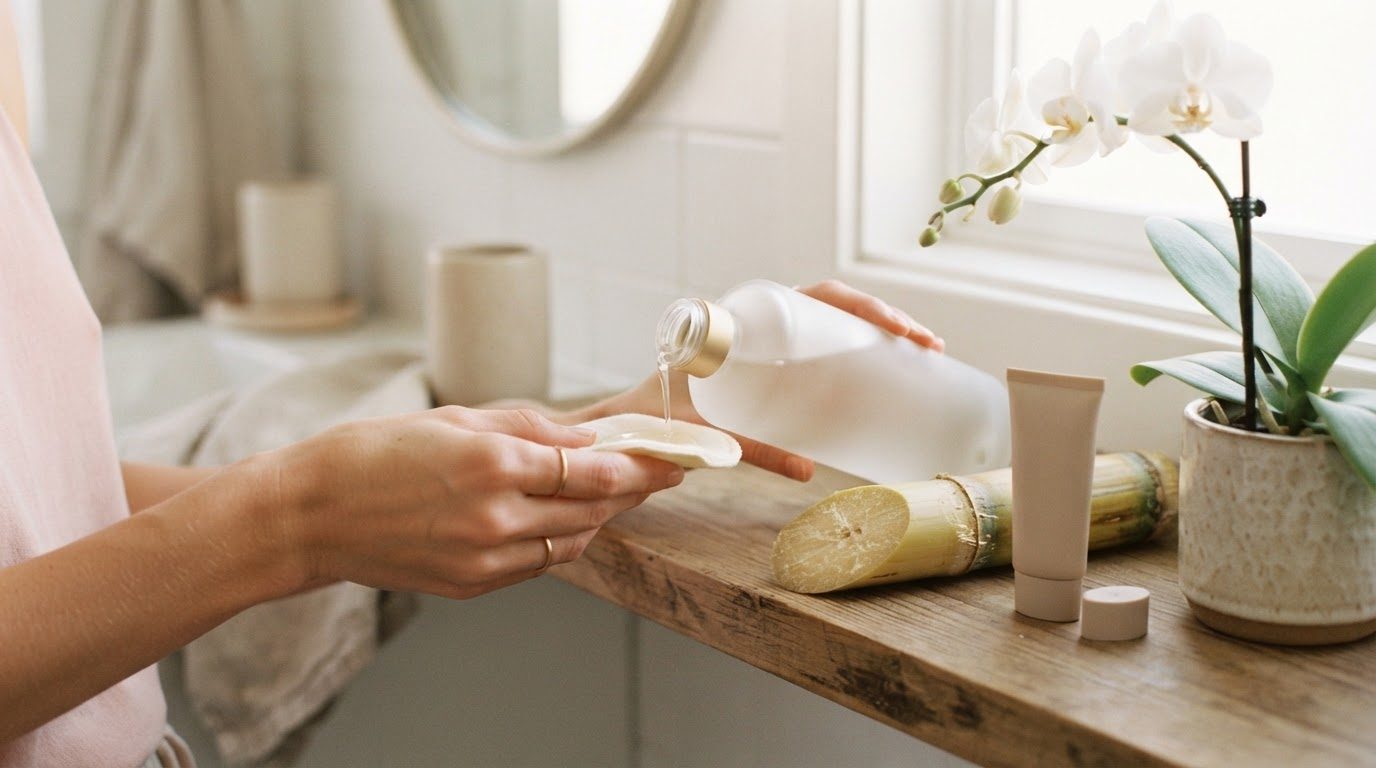
- Apply a thin layer of your exfoliant. A few drops of serum, or a cotton pad lightly soaked with toner, swept once over the area you're treating. Avoid the eye area, the corners of your nose and the edges of your lips.
- Wait about a minute. Let it absorb. Mild tingling for a few seconds can be normal; burning is not, so rinse it off if it hurts.
- Skip other actives tonight. No retinol, no vitamin C, no second acid.
- Moisturize generously. A calming cream helps your skin recover overnight. A centella soothing cream is a lovely match for exfoliating nights.
- Wear sunscreen the next morning. Exfoliated skin is more sensitive to the sun, especially with AHAs. Daily SPF is not optional here.
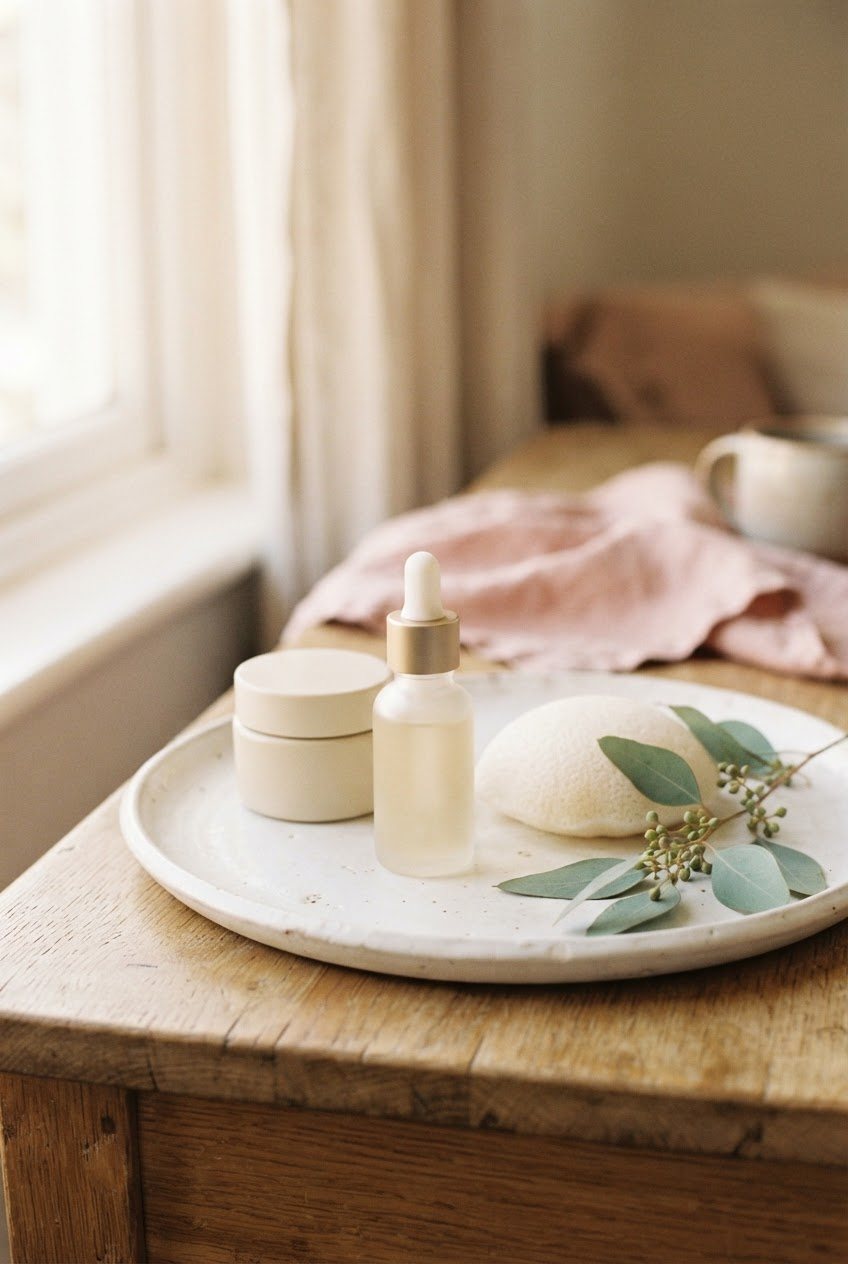
If you'd rather use a gentle physical option, wet a soft white konjac sponge until it's squishy, add your usual cleanser, and move it over your face in slow circles with almost no pressure for about 30 seconds. Rinse the sponge well and let it dry fully between uses.
Morning or Night?
Night is usually best. Your skin has hours to recover, you're not heading straight into sunlight, and it's easier to keep other actives separate. If you use a vitamin C serum in the morning, an evening acid keeps the two apart nicely; my guide to using vitamin C serum gently shows how that fits together.
Very gentle PHA toners can be fine in the morning for some people, but if you're new to exfoliating, keep it simple and stick with evenings.
How To Fit Exfoliation Around Retinol
Retinol speeds up cell turnover on its own, so using it alongside acids is where many people overdo it. The kindest approach is to separate them completely: retinol on some nights, exfoliant on another, and "rest nights" with just moisturizer in between.
A sample week might look like this: Monday exfoliant, Tuesday rest, Wednesday retinol, Thursday rest, Friday retinol, Saturday rest, Sunday rest. If you're just starting retinol, I'd pause acids for the first few weeks altogether. My gentle retinol plan for beginners walks through that start.
8 Signs You Over-Did It
Over-exfoliation can sneak up on you, because the first signs look a lot like the problems you were trying to fix. Watch for these red flags:
- A tight, "plastic" shine. Skin looks shiny but feels dry and taut, especially on the cheeks and forehead.
- Stinging with gentle products. Plain moisturizer or even water feels warm or prickly.
- Redness that lingers. Pinkness that doesn't fade within an hour or two of your routine.
- Flaking or peeling patches. Often around the nose, mouth or chin.
- Tiny bumps or new breakouts. A stressed barrier can look like sudden congestion.
- Itching or a hot, sunburned feeling. Even when you haven't been in the sun.
- Makeup suddenly looks patchy. Foundation clings to dry spots that weren't there before.
- Everything feels more sensitive than usual. Products you've used for months suddenly react.
If you recognize two or three of these, it's time to stop exfoliating and move to the reset plan below.
The 2-Week Skin Reset Plan
When skin is over-exfoliated, the fix is mostly about doing less. Here's how I'd calm things down:
Days 1–3: Stop Everything Active
- No acids, enzymes, scrubs, retinol or vitamin C.
- Cleanse once a day in the evening with a very gentle cream cleanser; rinse with lukewarm water in the morning.
- Apply a plain, fragrance-free barrier cream morning and night, and a little extra on any flaky patches.
- Wear a gentle sunscreen every day.
Days 4–10: Rebuild the Barrier
- Keep the same simple routine.
- Look for moisturizers with ceramides, panthenol, centella or squalane.
- Avoid hot showers on your face, rough towels and steaming.
- Skip new products completely, however tempting.
Days 11–14: Check In
- If skin feels comfortable, with no stinging and no tightness, you can reintroduce your exfoliant at half the frequency you used before.
- If it still stings or looks red, give it another week of the simple routine.
For more on recognizing and repairing a stressed barrier, my guide to the signs of a damaged skin barrier goes into more detail.
6 Exfoliation Mistakes To Avoid
- Using a harsh scrub on your face. Rough particles can irritate and create tiny tears. Choose acids, enzymes or a soft sponge instead.
- Stacking exfoliants. An acid toner, an acid serum and a peeling gel in the same week is a fast route to irritation.
- Exfoliating every day from the start. Begin once or twice a week and only build up if your skin is calm.
- Skipping sunscreen. Freshly exfoliated skin is more vulnerable to sun damage.
- Exfoliating over active irritation. Sunburn, windburn, open blemishes or broken skin need rest, not acids.
- Chasing the tingle. Stinging doesn't mean it's working. Comfort means it's working.
How Long Until You See Smoother Skin?
With gentle, consistent exfoliation, many people notice skin feels softer within the first one or two weeks. A brighter, more even-looking tone and fewer clogged pores usually take a bit longer, often four to eight weeks. The key word is consistent, not intense: twice a week for two months does far more than six times in one week.
Exfoliation Questions, Answered
Should exfoliating sting?
A faint tingle for a few seconds can be normal with acids, especially the first few times. Real stinging, burning or heat that lasts more than a minute is your skin telling you it's too much. Rinse with cool water, apply a plain moisturizer and try a gentler product or a lower frequency next time.
Can I exfoliate if I have breakouts?
Often, yes. A BHA can be especially helpful for clogged pores and blackheads. Just avoid any physical exfoliation over active, inflamed spots, and never pick or scrub at them. For painful, persistent or cystic breakouts, a dermatologist is the right person to ask.
Do I need a toner, a serum or a mask?
It mostly comes down to preference. Toners on a cotton pad are easy to sweep over just one area, like the T-zone. Serums give a more even, controlled layer. Rinse-off masks and enzyme washes are the gentlest because they only sit on your skin for a short time. Choose one format and stick with it for a few weeks before switching.
Should I exfoliate my neck too?
The skin on your neck is thinner and often more sensitive than your face. If you want to, use your gentlest exfoliant (a PHA or lactic acid) once a week at most, and always follow with moisturizer and sunscreen.
What about exfoliating in winter?
Cold air and indoor heating make many people's skin drier and more reactive, so it's often wise to drop your exfoliation frequency a little when the weather turns. Swap a stronger acid for a PHA or lactic acid, and lean on richer moisturizers. If your skin gets very dry, my gentle routine for dry skin shows how exfoliation fits in without tipping it over the edge.
Is it okay to take a break from exfoliating?
Absolutely. Exfoliation is optional, not a daily duty. Many people do beautifully with a two-week break every so often, especially after travel, a stressful stretch or time in the sun. Your skin will keep shedding on its own while you rest.
A Gentle Safety Note
Patch test any new exfoliant along your jawline for a few evenings before using it on your whole face. Stop if you get burning, swelling, itching or a rash, and speak to a pharmacist or dermatologist. If you have a diagnosed skin condition like eczema or rosacea, use prescription skincare, or are pregnant or breastfeeding, check with your doctor before adding acids. This guide is general information and isn't a substitute for personal medical advice.
Final Thoughts
Exfoliating your face isn't about how much you can handle. It's about finding the smallest amount that makes your skin look smoother and still feel comfortable. Pick one gentle exfoliant, use it a couple of evenings a week, moisturize well and wear sunscreen every morning.
And if you've already overdone it, be kind to yourself and to your skin. A couple of quiet weeks with a simple routine is usually all it needs to feel like itself again.