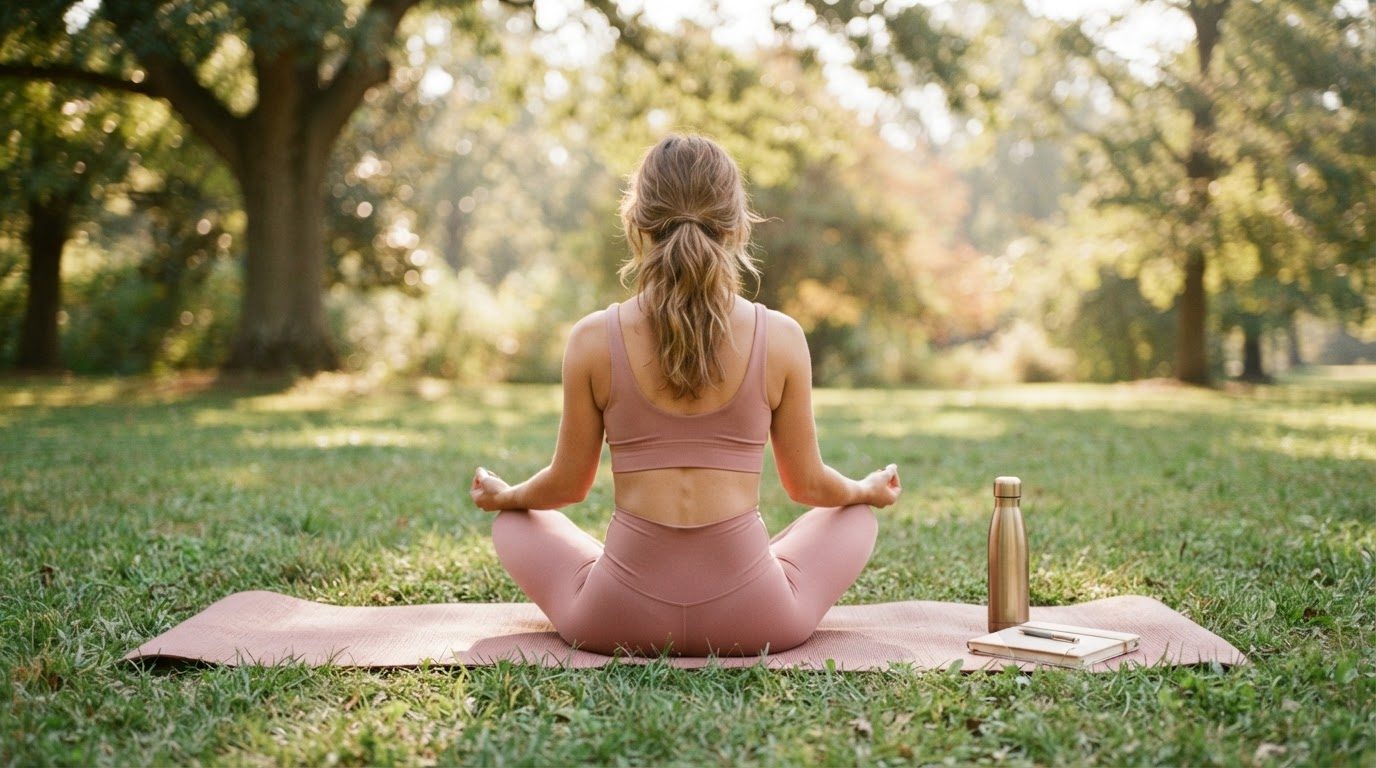
What can you do to help yourself when your brain is going 100 miles a minute?
When it’s hard to catch your breath?
When every thought you have is filled with worry? The very first thing: take a nice, slow breath.
Anxiety can feel overwhelming, but here’s the good news:
1) You’re not alone, and 2) there are lots of things you can do to ease your anxiety, starting right now!
Mindfulness is the act of being aware in the present moment. My own anxiety is always somewhere in the background, but these days I mostly manage it, and learning to be mindful is one of the things that helps me the most. I think it’s a tool everyone should try.
MINDFULNESS FOR ANXIETY?
ABSOLUTELY, YES!
What Is Mindfulness?
Mindfulness brings you back to the here and now.
It pulls you away from all the “what ifs” that float around an anxious brain.
It gives you a break from worrying thoughts, which is exactly why I love it for anxiety.
Mindfulness has been practiced for thousands of years.
But it wasn’t until 1979 that Jon Kabat-Zinn developed it into a structured program for stress reduction.
His original program was created for patients living with chronic illness and pain who weren’t getting enough relief from standard medical care alone.
That program, Mindfulness-Based Stress Reduction (MBSR), is still used today, and research since then suggests mindfulness can help many people feel less stressed.
The best part? Mindfulness activities can easily fit into your day, no matter how busy or stressed you are right now.
You can add them to your daily routine, your yoga practice, your walks, while you get ready in the morning, or even while doing chores.
Over time, they can help you improve your overall mental wellbeing and make your anxiety feel more manageable.
P.S.
Are you anxious RIGHT NOW and looking for a way to calm down?
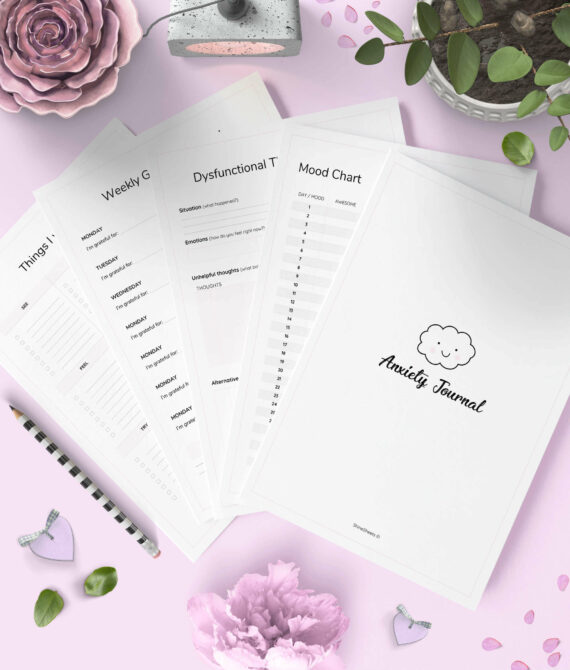
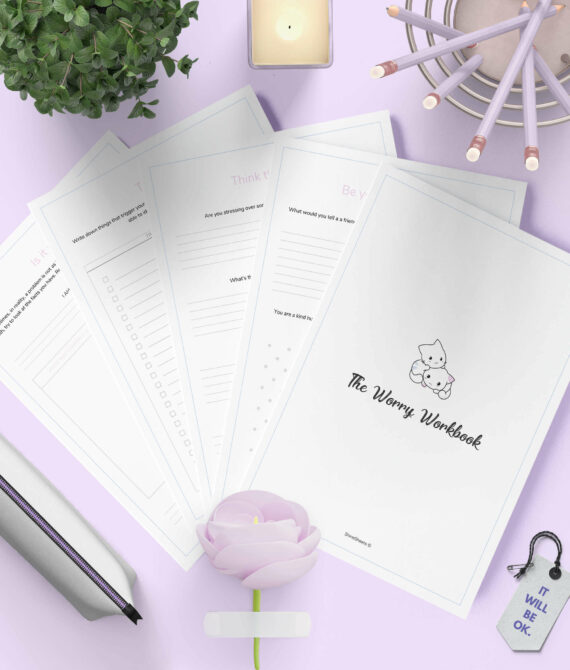
Try out my ShineSheets tools for anxiety:
They’re designed with Cognitive Behavioural Therapy principles that help you gently challenge your anxious thoughts and make them feel a lot less scary.
What Are Some Mindfulness Activities To Try When You Feel Anxious?
PART 1: Mindfulness Activities To Soothe Your Mind
1. Try Meditation
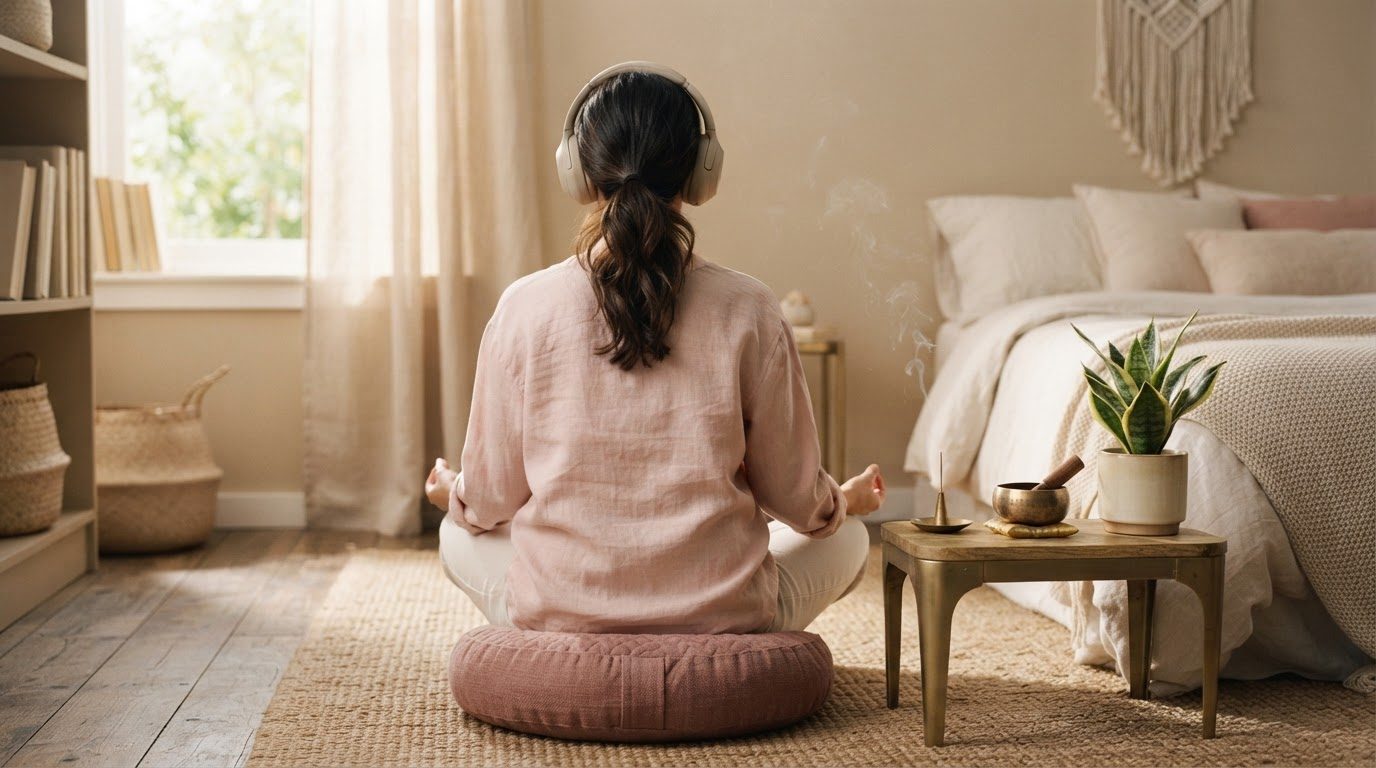
Meditation is about clearing your mind and gently bringing your focus back to your breath.
It’s easiest in a comfortable seated position.
Take a slow breath in while counting to 5, then breathe out slowly to a count of 5.
Repeat this three times.
Then go back to breathing normally.
Focusing on your breath and re-centering helps clear your mind and can ease stress and anxiety.
If you’re a beginner meditator, even 3-5 minutes can bring some relief.
If sitting on the floor makes your back complain, a meditation cushion lifts your hips just enough to keep those few minutes comfortable instead of fidgety.
If anxious thoughts pop up during your meditation, simply notice them and then return your focus to your breath.
Related: How to create a deeply relaxing meditation room
2. Read a Book
Reading a book instead of scrolling on your phone or tablet is especially good for winding down before bed.
Screens keep your brain busy and alert (the blue light they give off may not help either), which makes it harder to relax.
That’s especially true when it’s getting close to bedtime.
Try switching to a good old-fashioned book instead to help your brain power down more easily.
Books ease anxiety by taking you away from reality in small, bite-size pieces.
Choose books that are easy to get into, like poetry, comedy, or short stories.
Just 10 minutes of reading a day can expand your mind and help you feel calmer!
Related: Powerful books that make you stronger immediately
3. Get Creative: Doodle, Color or Paint
So many mindfulness activities involve being creative, because creating is a lovely way to leave some worry behind.
Creating can lift your mood and help you think more freely!
When you draw, doodle, paint, or color, you give your mind a gentle task to focus on.
Coloring also keeps your attention in the present moment, which is the most important goal of mindfulness.
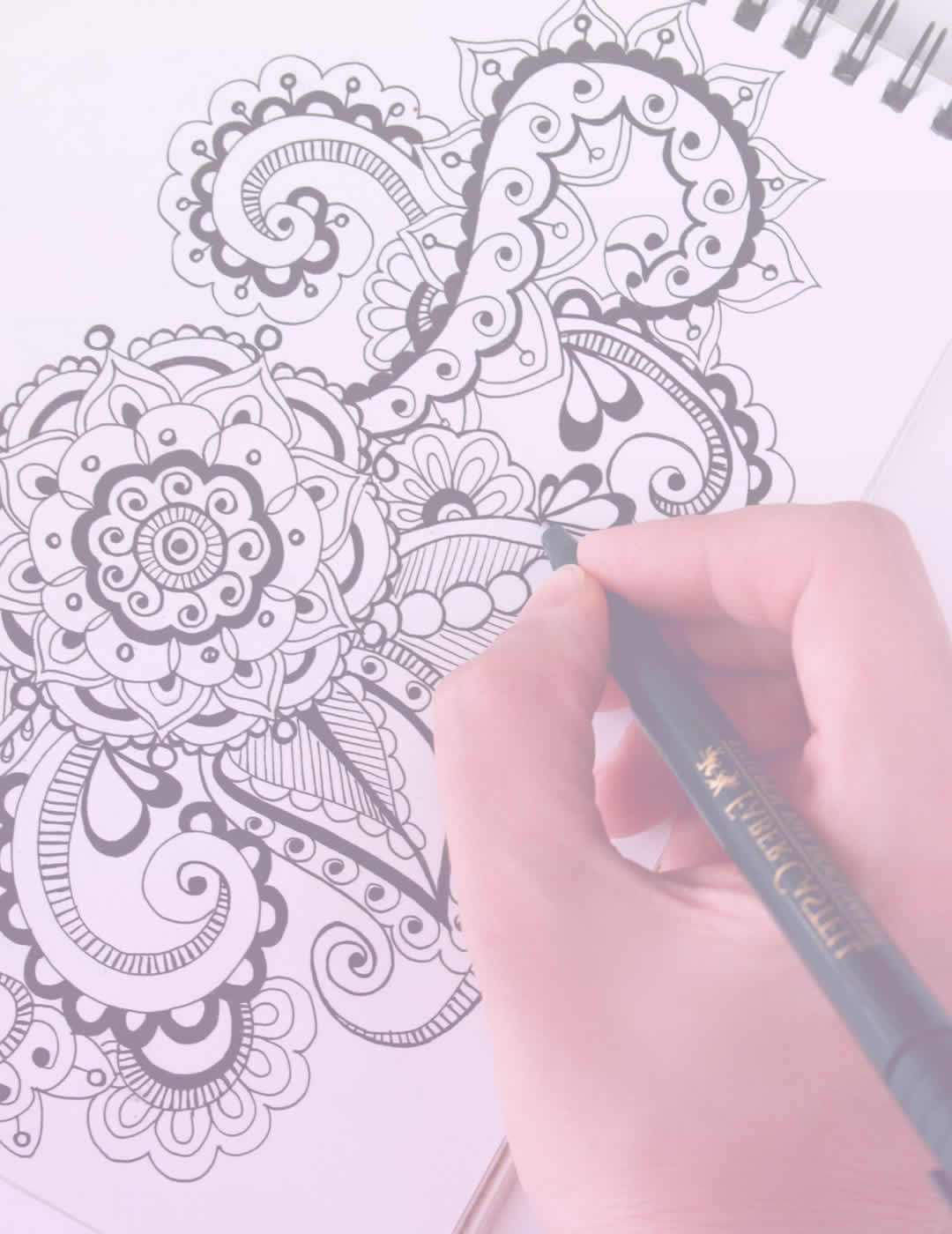
If you’re new to creating, that’s totally okay!
A coloring book or paint-by-number kit is a great way to start, because it gives you a template to follow.
I like keeping an adult coloring book and a few colored pencils on the coffee table, so it’s right there whenever my thoughts start spinning.
PART 2: Mindfulness Activities To Calm Down Your Thoughts
4. Create an Anti-Anxiety Affirmation
Affirmations are one of the mindfulness activities that work with words.
When you tell yourself “I am calm and free of worry”, you encourage your brain to follow that path and let go of the negative energy and thoughts around you in that moment.
You can write affirmations in a journal every day, say them out loud, or stick them on post-it notes on your bathroom mirror.
Whatever works for you!
Think of affirmations as your own personal cheerleaders.
Here are 5 great affirmations for anxious moments:
- I’m a natural problem solver and I can handle anything life throws at me.
- I love myself as I am, unconditionally.
- My anxiety does not define me.
- I release anxiety and become more peaceful with each breath I take.
- I am cool, calm and collected.
5. Write In a Gratitude Journal
Keeping a nightly gratitude journal is a beautiful way to appreciate the things around you.
A gratitude journal helps you focus on the good things happening right now, and feel thankful for them.
Before bed, choose five things you’re grateful for today and write them down.
Any notebook works, but a gratitude journal with little prompts makes the habit so much easier to stick with on tired evenings.
PART 3: Mindfulness Activities To Engage Your Senses
6. Go for a Walk
Getting outside is one of my favorite mindfulness activities.
Take a 20-minute walk and enjoy being outdoors.
Put your phone away.
Notice how your body feels as you walk.
Does anything ache or feel stiff?
Does the movement feel good?
What’s the temperature like?
Are there any sights or smells you particularly love?

7. Drink Herbal Tea (And Go Easy On Coffee!)
A warm drink is so soothing when you’re anxious.
It helps your body relax, and often your mind follows.
Cutting back on caffeine can also make a real difference. I’ve noticed this myself: some days coffee simply wakes me up, but other days it leaves me jittery and anxious.
Try swapping 1-2 cups of coffee a day for herbal tea. (Caffeine is one of the things I talk about in how to overcome anxiety without medication, too.)
Peppermint, ginger, or chamomile are all lovely, caffeine-free options if you’re new to tea.
If you want an easy start, a box of chamomile tea is a cozy, caffeine-free pick that tastes like a warm hug in a mug.
As you sip, try to notice the smell, the taste, the warmth, and even the sounds around you in that moment.

8. Water Your Plants
Caring for plants can do wonders for your mental health – it’s such a grounding little ritual.
Plus, mindfulness activities where you nurture something other than yourself feel so fulfilling.
If you’re a beginner plant keeper, something small and hardy like a succulent is a great way to start!
Learn what your plant needs and work its watering into your routine.
Talk to your plant.
Give it fertilizer.
Re-pot it when it gets too big.
Track how it grows.
On top of all the feel-good energy you get from caring for your plant, you’ll also bring a little more green and life into your home!

9. Eat Mindfully
The food you eat fuels you.
An anxious mind can forget to eat.
It can push you toward crazy cravings just for comfort.
And it can distract you from actually enjoying your food.
Food-related mindfulness activities can bring you back to a routine where you enjoy your food in a healthy way and properly nourish your body and soul.
Here are Three Ways to Eat Mindfully:
1. Relax and enjoy your meal. Savor each bite.
Chew your food slowly.
Pair it with a drink you love, like sparkling water with lemon or a cup of tea.
Take the time to notice the textures and flavors you enjoy.
How could you recreate this dish at home or in a new way?
2. Enjoy a meal with a friend or loved one sans cell phones or TV. Switch off distractions and have a sit-down meal with someone you love.
Talk about your day.
Share stories.
Enjoy each other’s company.
Talk about your meal.
Here, mindfulness is about focusing on the connection between you and your loved one while you enjoy a meal together.
3. Purposefully try a new healthy recipe. Dust off those recipe books and pick a simple, wholesome meal to make at home.
Use fresh, natural ingredients.
Notice how your body feels when you eat for health!
Related: How to eat your way to better mood
PART 4: Mindfulness Activities To Lower Your Stress
10. Intentionally Put Your Phone Away
“Huh, what did you say?
Sorry, I was just checking my phone.”
How often do you catch yourself looking at your phone?
Most of us do it even more when we’re worried or bored.
Try one of the simplest mindfulness activities there is – plug your phone in to charge in another room.
Use that time to really notice everything around you.
Keeping your phone out of sight also stops you from mindlessly checking it every few minutes. Using it less helps you focus and takes away the stress of constant distraction.
11. Take a Social Media Break
Social media can stir up anxiety like nothing else.
Looking at everyone else’s highlight reel has a way of making you feel further from your own goals.
Before you know it, your heart is racing and your worries are growing.
Take a break!
Log out of every social media app for a day, or even better, a whole week.
Hide the apps so they’re not so easy to open.
Ask a good friend to change your passwords if you need to.
A social media break can help you feel more present and less anxious.
It may even boost your productivity and help you enjoy the things around you more.
12. Declutter One Area
Clutter and mess add stress and make it harder to get things done.
One great way to ease anxiety is to declutter one small area.
Start with a closet or even just one drawer. Take everything out, wipe it down, add organizers or baskets for small items, and put it all back together.
A few simple drawer organizers turn that one messy drawer into a calm little corner you’ll actually enjoy opening.
Throw away any rubbish.
Donate anything you haven’t used in 6+ months.
Focusing on one small area at a time lowers stress and helps you improve slowly, without burning out.
Set a goal to tackle one small area of your home each day.
The more organized your space becomes, the less stress and anxiety you’ll feel around daily tasks.
Related: How to organize your life if you’re an anxious person
PART 5: Other Mindfulness Activities
13. Keep a Mood Tracker
Are there certain days or activities that seem to trigger your anxiety?
A mood tracker can help you understand your emotional patterns and work through them.
Mindfully take a few minutes each day to fill in your mood tracker and look back at how you felt throughout the day.
It helps you get a better handle on how your moods affect you.
And once you can spot your anxiety triggers, it’s much easier to manage them (or avoid them when you can).
14. Do a Task Batch
Ease the anxiety of having too much to do at home or at work by batching your tasks.
Group together tasks that happen in the same place.
If the post office, bank, and grocery store are close to each other, visit them all in one trip to save time, stress, and gas.
Do all your computer-related tasks at the same time.
You can also group tasks that need a similar kind of effort.
Try doing all your writing in one batch.
Edit it in another.
Batching like this lets you focus with less effort.
Block off time in your planner for your specific “task batches.”
Task batching makes you more mindful of how you spend your time and energy.
It also helps you get more done.
15. Make Your Bed
Making your bed each morning sends a little signal to your brain that the day is ready to begin.
It can help ease early-morning anxiousness.
It gently nudges your brain into tidying and getting organized early in the day.
It also creates a cozy sense of wellbeing and helps you feel safe and comfortable in your space.
Mindfulness Activities Can Make Your Anxiety Less Soul-Crushing
There are so many little things you can do to ease and manage your anxiety… and mindfulness activities are some of my favorites for lowering stress and feeling more in control.
You don’t need any special tools to start your mindfulness practice.
Most of the mindfulness activities above can be done with things you already have at home. If you want even more ideas, here are 7 ways to add more mindful moments to your day.
So you already have everything you need to start feeling calmer today. I really hope these ideas help you feel a little lighter. And if your anxiety ever feels like too much to handle on your own, please reach out to a doctor, a therapist, or a helpline – these activities are a lovely support, but not a substitute for professional help.
Scroll down for more content like this!