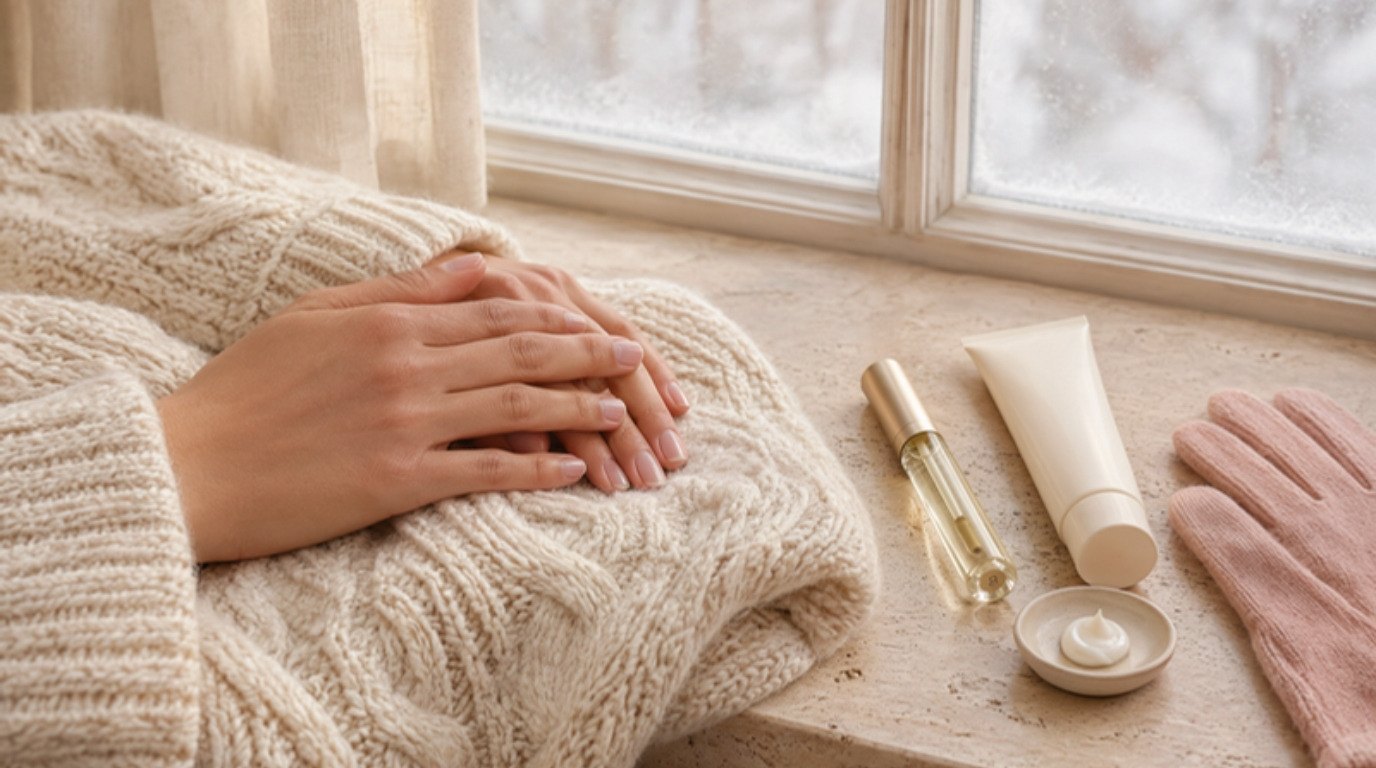
Winter nails don't split because they're weak. They split because they're thirsty. Nails and cuticles lose moisture fast when the air is dry, the heating is on and your hands are washed a dozen times a day, and once they dry out, they bend less and crack more. The good news: a few small habits, done consistently, make a bigger difference than any single miracle product.
The trick is to treat nails and cuticles as one team. Dry cuticles lift and tear, which leaves the nail edge unprotected; dry nails peel and split, which snags the skin around them. Care for both at once and the whole cycle calms down.
This guide covers winter nail care cause by cause: why cold months are so hard on nails, a quick table of common winter problems and their fixes, a simple weekly routine, the daily habits that do the heavy lifting, how to wear polish without making things worse, and the six mistakes I see most often. Everything here works all through the holiday season and well into early spring.
Nothing fancy, nothing complicated. Just calm, practical care for hands that work hard all winter.
Why Nails and Cuticles Struggle in Winter
Nails are made of layers of keratin held together by a little water and natural oils. When that moisture drops, the layers lose their flexibility, so instead of bending under pressure, they split, peel or break. Cuticles behave like any other skin: when they dry out, they tighten, crack and form hangnails. Winter hits both from several directions at once.
Dry Indoor Heat
Central heating, radiators and space heaters warm the air but also strip it of humidity. Indoor air in winter can be as dry as a desert, and your nails and cuticles slowly give their moisture to it all day and all night. This is the quiet, constant cause behind most winter nail trouble.
Hot Water
A long, hot shower or a sink of steaming dishwater feels lovely on a cold evening, but hot water dissolves the natural oils that keep nails flexible. Nails also swell when they soak and shrink again as they dry; repeat that several times a day and the layers start to separate, especially at the tips.
Frequent Hand Washing and Sanitizer
Winter is cold and flu season, so most of us wash our hands more often and reach for sanitizer constantly. That's a good habit for health, but soap and alcohol both pull oil from the skin. Sanitizer is especially drying for cuticles, because the alcohol pools right in the creases around the nail.
Wool Gloves and Rough Fabrics
Scratchy wool gloves, chunky knit scarves and rough coat pockets can catch on a tiny nail split and turn it into a tear. They also rub against dry cuticles and lift little flakes of skin that become hangnails. Soft, smooth linings make a surprising difference.
Low Humidity Outside
Cold air holds very little moisture, and wind speeds up how fast skin loses what it has. Going back and forth between cold, windy streets and warm, dry rooms is the perfect recipe for brittle tips and cracked cuticles.
Winter Nail Problems at a Glance
Use this table as a quick guide when something flares up. Find the problem, check the likely cause, start with the quick fix, then build the prevention habit so it doesn't keep coming back. Screenshot it if it helps.
| Winter problem | Likely cause | Quick fix | Prevention |
|---|---|---|---|
| Splitting or peeling tips | Dry air, hot water, nails swelling and shrinking | File the split smooth in one direction, then oil the tip | Short, rounded shape, gloves for dishes, oil twice daily |
| Dry, ragged cuticles | Sanitizer, soap, indoor heat | Cuticle oil plus hand cream, massaged in for 30 seconds | Cream after every wash, overnight balm once or twice a week |
| Hangnails | Cracked cuticle skin catching on fabrics | Snip only the loose tip with clean clippers, never pull | Keep cuticles moisturized, choose smooth glove linings |
| Brittle, snapping nails | Low humidity, harsh removers, long length | Trim shorter and apply a base coat for light protection | Humidifier, acetone-free remover, regular polish breaks |
| Small painful cracks at the fingertips | Very dry skin, cold wind, frequent washing | Thick balm, cotton gloves overnight | Gloves outdoors, lukewarm water, cream after every wash |
| White, chalky surface | Dehydration after polish removal | Oil and a rich hand cream; it usually fades within hours | Gentler remover, fewer removals, polish-free days |
If a crack bleeds, stays painful or the skin looks red and swollen, skip the quick fix and check the dermatologist section at the end.
Your Weekly Winter Nail Routine
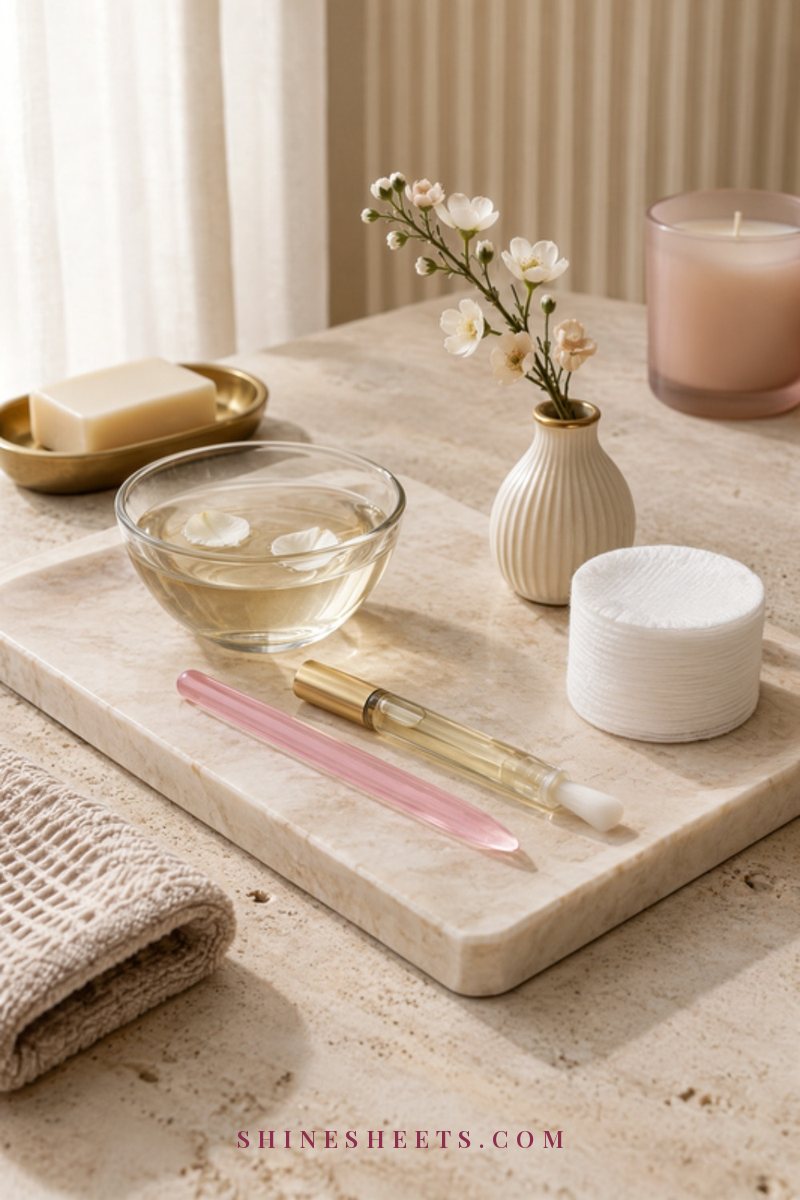
Once a week is plenty. A short, calm session, about 15 minutes, keeps nails smooth and cuticles tidy without over-handling them. Sunday evening works nicely for me, with a candle lit and a cup of evening tea nearby, but any quiet time is perfect.
Step 1: File Gently in One Direction
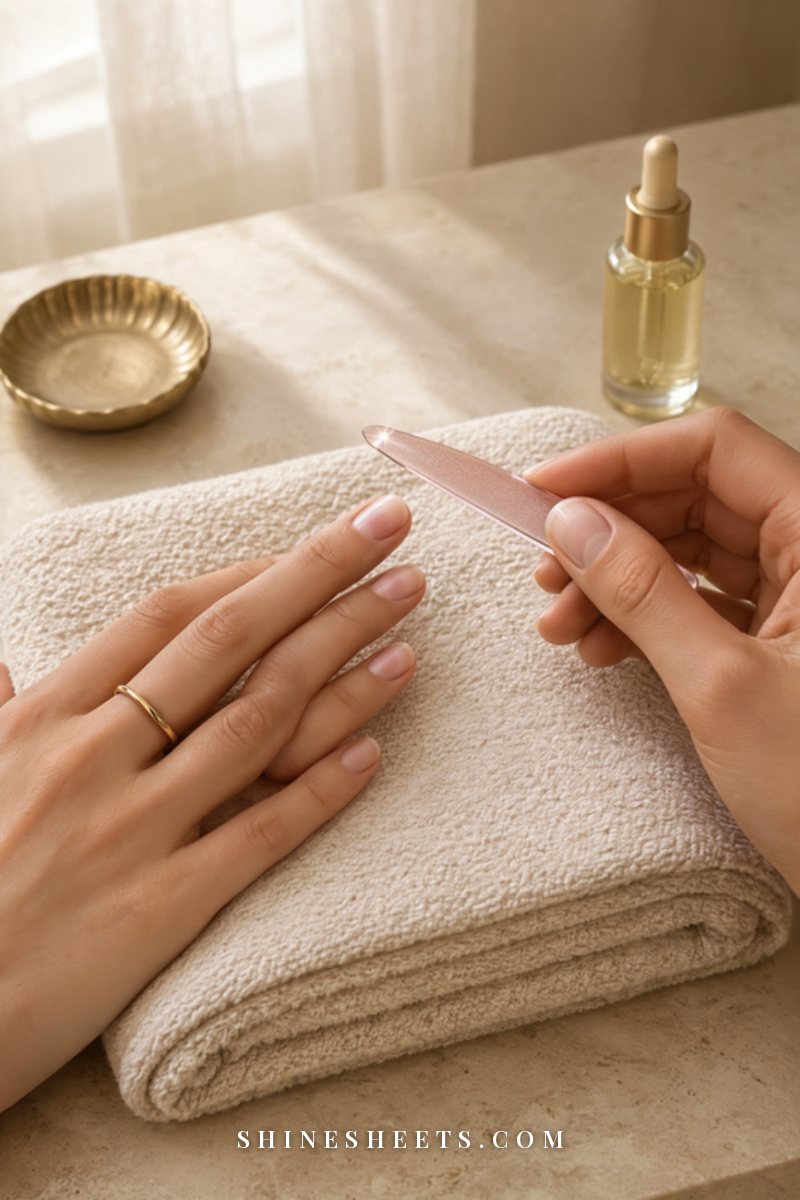
Sawing back and forth with a file roughs up the free edge and opens tiny layers, which is exactly how winter splits begin. Instead, file from the outer edge toward the center, lifting the file between strokes, in one direction only. Always file on dry nails, because wet nails are softer and tear more easily.
A fine glass nail file is a lovely pick for winter, because its fine surface seals the edge as it files and it lasts for years. Look for one with an etched (not glued) grit surface, and rinse it with warm water and soap after each use.
Step 2: Keep a Short, Rounded Shape
Winter is the season to go a little shorter. Long nails act like levers: the longer the tip, the more force goes into every tap, bump and snag. Trim nails just past the fingertip, then soften the corners into a gentle round or "squoval" shape. Sharp square corners catch on knitwear and split more easily.
If your nails tend to peel in layers, my guide on how to stop nails splitting in layers goes deeper into shaping and repairing a peeling edge.
Step 3: Push Back Softened Cuticles
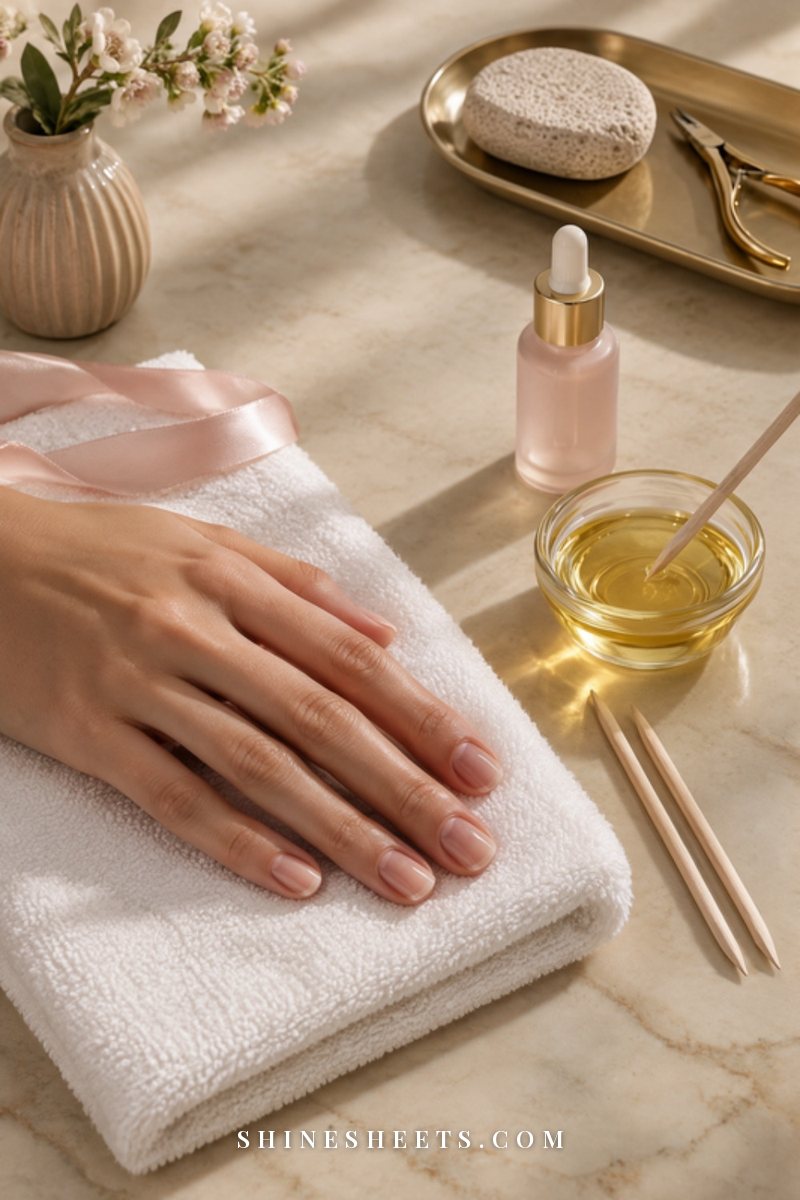
Soak your fingertips in lukewarm water for about three minutes, or do this step right after a shower. Pat dry, add a drop of cuticle oil to each nail, then use a soft wooden stick or a rubber-tipped pusher to ease the cuticle back with light, small strokes. You're only nudging, never scraping.
The goal is a clean, neat edge, not a bare nail plate. A little visible cuticle is healthy. If you want a full step-by-step, my cuticle care guide covers how to keep cuticles soft and neat without cutting.
Step 4: Never Cut Your Cuticles
The cuticle is a seal that protects the nail matrix (where new nail grows) from water, bacteria and irritation. Cutting it leaves a raw, uneven edge that dries out faster in winter and often grows back thicker and more ragged. It can also open the door to infection.
The only thing you should ever trim is a loose, dead hangnail tip, using clean, sharp clippers, and only the part that's already detached. My guide to getting rid of hangnails safely explains exactly how.
Step 5: Buff Lightly, If at All
Buffing can smooth small ridges and add a soft shine, but every pass removes a thin layer of nail. In winter, when nails are already fragile, keep it to the finest side of a buffer, a few light strokes per nail, no more than once every two weeks. If your nails feel thin or bendy, skip buffing entirely for the season.
Finish the weekly session with cuticle oil and hand cream, massaging each fingertip for a few seconds. That's it.
Daily Winter Habits for Nails and Cuticles
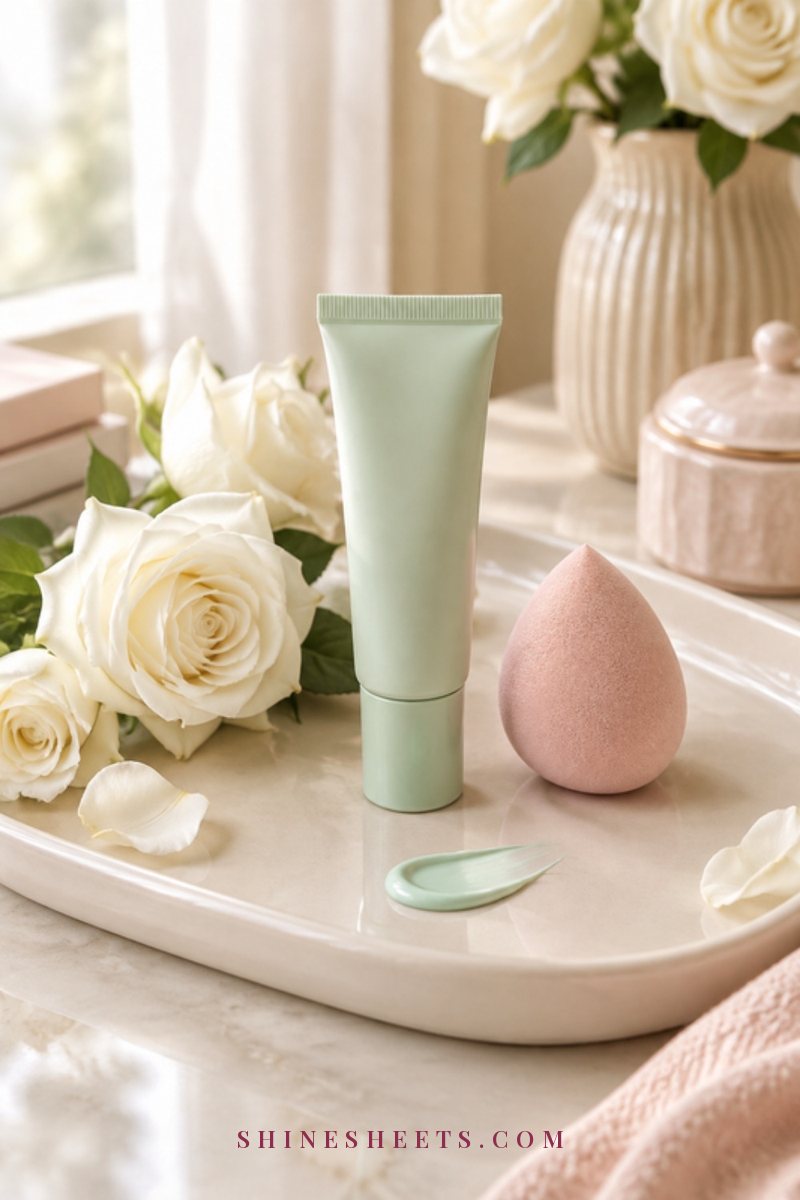
The weekly routine keeps things tidy, but the daily habits are what actually stop splitting and cracking. None of them take more than a minute.
Cuticle Oil Twice a Day
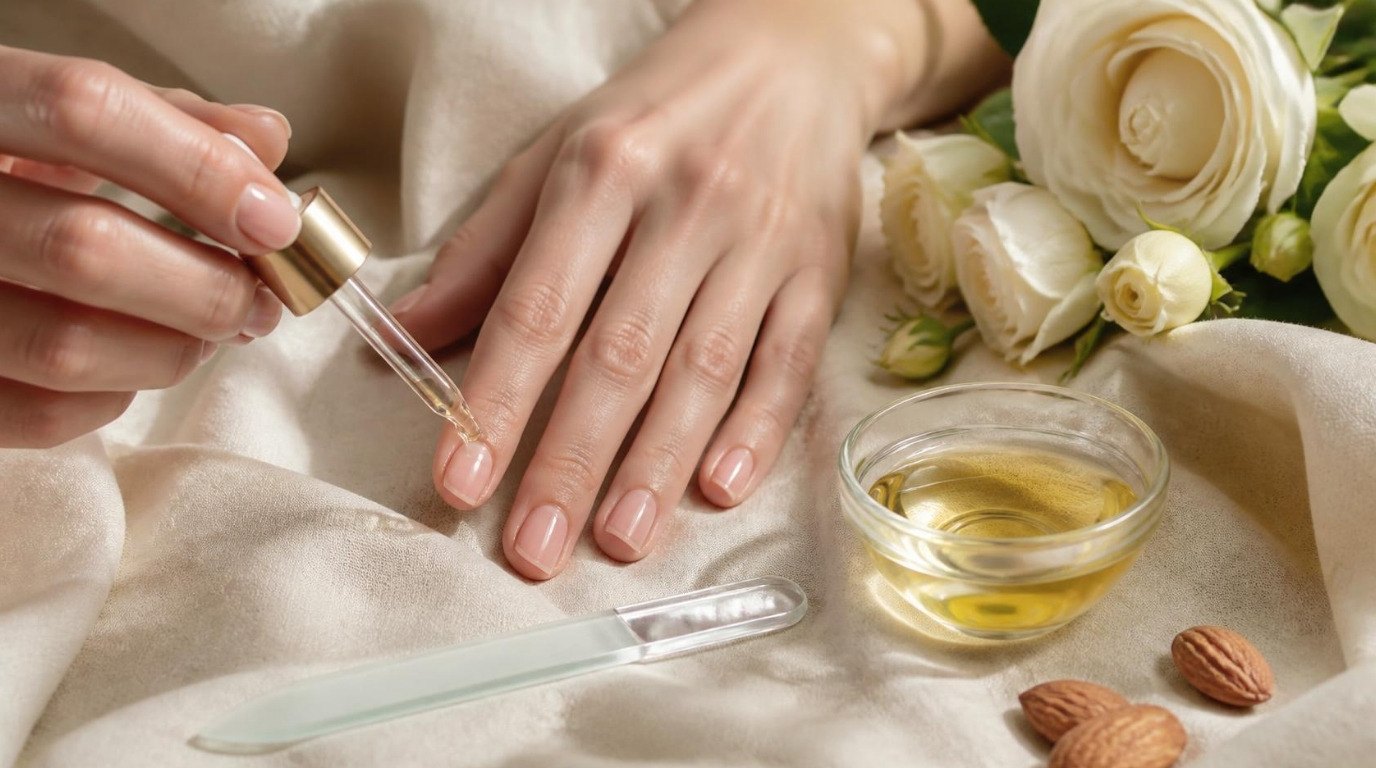
Apply cuticle oil every morning and every night: one small drop at the base of each nail, massaged in for about 30 seconds per hand. Oil softens the cuticle and slowly sinks into the nail plate, keeping the layers flexible. Look for jojoba, sweet almond or vitamin E in the ingredient list.
A cuticle oil pen is the easiest way to stay consistent, because you can keep one in your bag, at your desk and on your nightstand. The brush tip puts the oil exactly where it's needed, with no mess on your phone or keyboard.
Hand Cream After Every Wash
This is the single habit that changes winter nails the most. Every time you wash your hands or use sanitizer, apply a pea-sized amount of hand cream while your skin is still slightly damp, and rub it into the nails and cuticles, not just the palms.
Look for a rich, nourishing hand cream with shea butter, glycerin or urea, and keep a small tube next to every sink in your home. My winter hand care routine has more ideas for keeping the rest of your hands soft too.
Gloves Outdoors and for Dishes
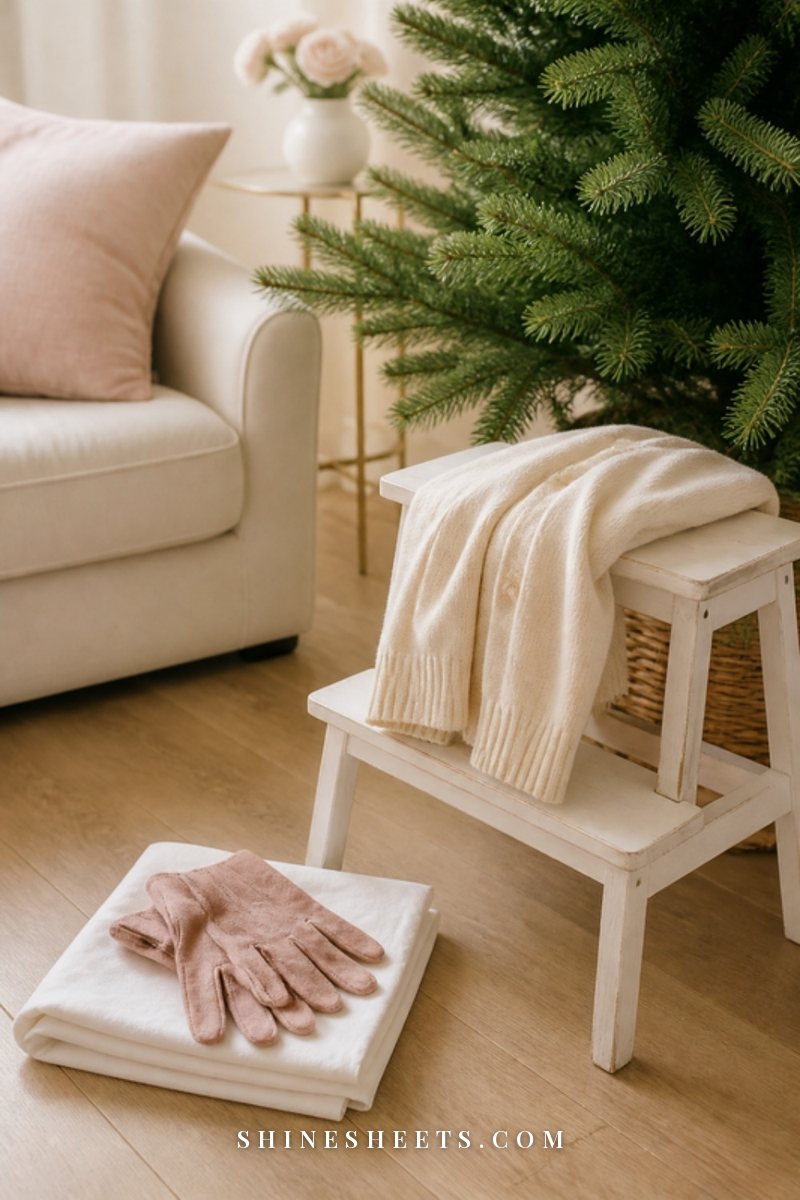
Wear gloves every time you go out in the cold, even for a five-minute walk. Choose a pair with a smooth lining, or slip thin cotton liners under wool gloves to stop rough fibers from catching. A pair of soft blush knit gloves with a fleece or cashmere-blend lining is a pretty, practical pick for winter.
For dishes and cleaning, put on cotton-lined rubber cleaning gloves. Hot water plus dish soap is one of the fastest ways to dry nails out, and the cotton lining keeps your hands from getting sweaty and clammy inside. Take them off as soon as you're done and add a little hand cream.
Lukewarm Water Only
Turn the tap down a notch for hand washing and keep showers warm rather than hot. Lukewarm water cleans just as well and strips far less oil. Pat your hands dry gently instead of rubbing, and pay attention to the skin between your fingers and around your nails, where moisture can linger and cause chapping.
A Sealing Balm Overnight With Cotton Gloves
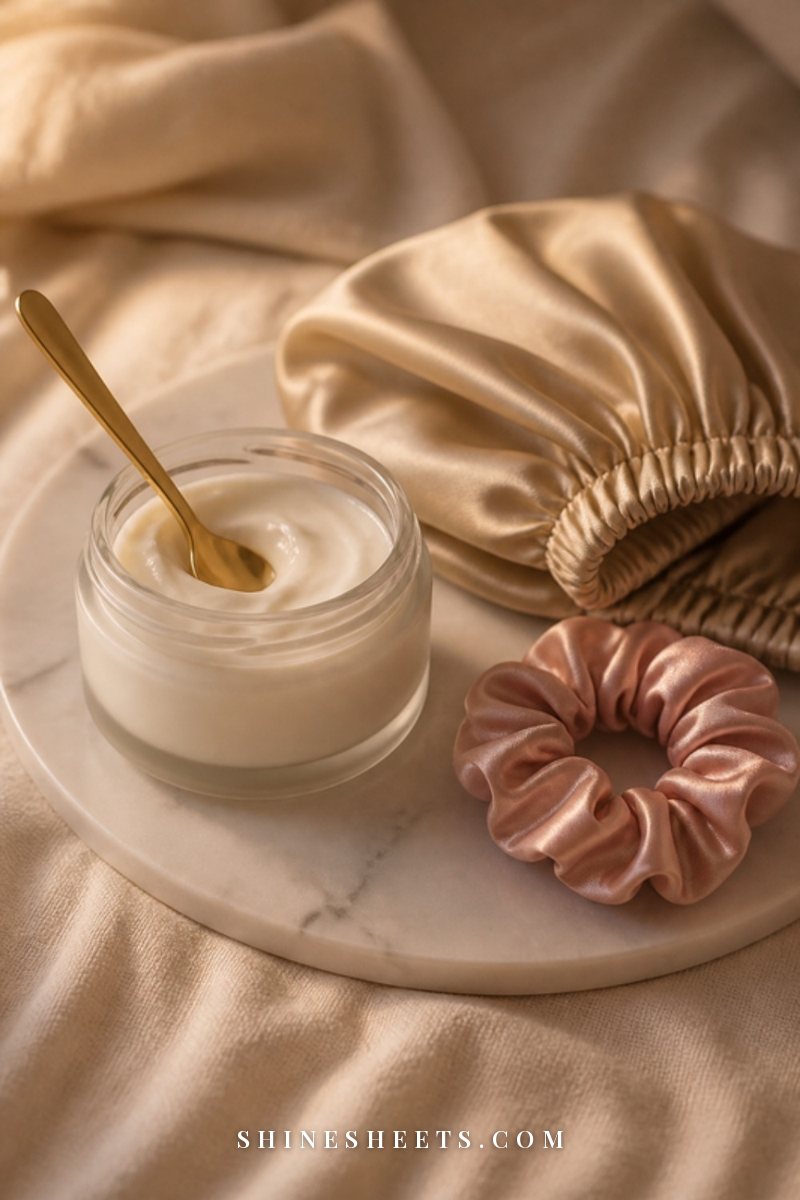
Two or three nights a week, give your hands an overnight treatment. Apply cuticle oil first, then a thick layer of a rich balm or ointment over your nails, cuticles and fingertips. Slip on a pair of soft cotton overnight gloves and go to sleep. The gloves keep the balm on your skin instead of your pillowcase and help it sink in.
In the morning, your cuticles will be noticeably softer. During the coldest weeks, or right after a busy holiday stretch of baking, wrapping and washing up, you can do this every night.
Add a Humidifier
A humidifier in your bedroom puts back some of the moisture that heating takes away, and you spend about a third of your day there. Aim for indoor humidity of roughly 40 to 50 percent. Clean the tank as the manufacturer recommends (usually every few days) so it stays fresh. If you don't have one, a bowl of water near a radiator helps a little too.
Protect Your Nails During Busy Holiday Tasks
The weeks around Christmas are surprisingly hard on hands. Wrapping paper and tape edges catch on nail tips, cardboard boxes dry out cuticles, decorating means handling rough ornaments and wire, and there's usually a lot more washing up after family meals. None of it is dramatic, but it adds up fast.
A few easy swaps help:
- Use scissors and a tape dispenser instead of tearing tape or prying at packaging with your nails.
- Keep a hand cream at your wrapping or decorating spot and use it every time you take a break.
- Wear thin cotton gloves when you handle cardboard boxes, wire ribbon or storage bins from the attic or basement.
- Put on rubber gloves for big post-dinner washing up, even if it feels like overkill for "just a few plates."
- Plan an overnight balm for the evening after a busy day of cooking, cleaning or hosting.
Think of these as tiny kindnesses for your hands during a season when they do a lot of giving. A minute of protection now saves weeks of waiting for a split to grow out.
Wearing Polish in Winter
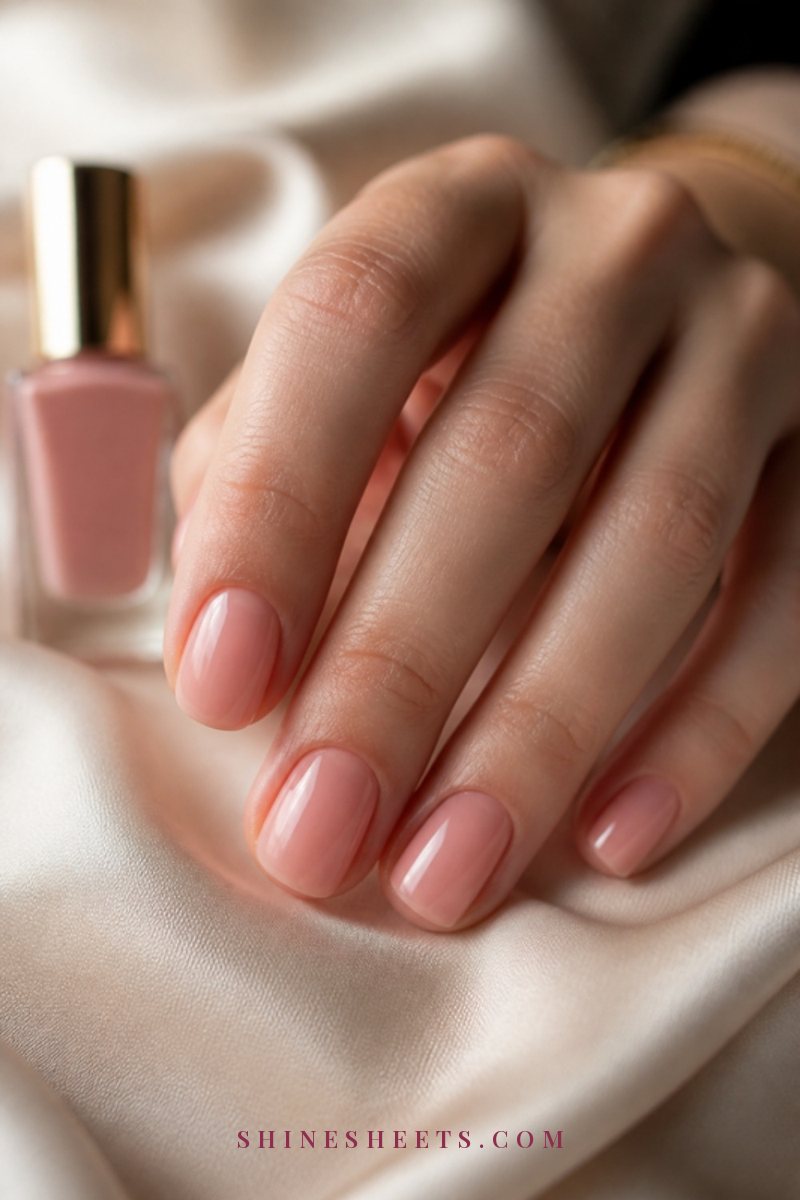
You don't have to give up polish in winter, especially with holiday parties on the calendar. A few small changes keep it from adding to the dryness.
- Always use a base coat. It creates a light barrier between pigment and nail, reduces staining and helps polish grip so you're not removing and reapplying as often.
- Give nails short breaks. Try two or three polish-free days between manicures, and use them for extra oil and an overnight balm.
- Choose an acetone-free remover for everyday polish. An acetone-free nail polish remover is gentler on dry nails and cuticles. Press a soaked cotton pad onto the nail for 10 seconds, then wipe in one stroke instead of scrubbing.
- Oil right after removing. Remover leaves nails thirsty. Apply cuticle oil and hand cream immediately.
- Keep it simple. Fewer layers dry faster and chip less. One base coat, two thin color coats and a top coat is enough.
If you'd like a festive look for the season, my guide to holiday nail ideas has simple at-home manicures that work beautifully with this routine. And if your nails feel weak no matter what, it may be worth reading about how nail strengtheners work and how to use them right before reaching for one.
6 Winter Nail Care Mistakes To Avoid
Most winter nail damage comes from small, well-meant habits. These are the six I'd stop first.
- Biting or peeling off splits. Pulling a split layer off tears into healthy nail. File it smooth in one direction instead.
- Cutting cuticles. It removes the protective seal and leaves skin that dries and cracks even faster.
- Moisturizing only the palms. Massage cream into the nails and cuticles every time; they need it most.
- Skipping gloves for "just a minute." A short dash outside in cold wind or a quick sink of hot dishwater adds up over a season.
- Using nails as tools. Opening cans, scraping labels and prying lids are a common cause of snapped tips. Reach for a coin or a spoon instead.
- Removing polish too often. Frequent removal dries nails out quickly. Choose longer-lasting manicures or enjoy bare, oiled nails for a while.
When To See a Dermatologist
Most winter dryness improves within two to three weeks of consistent care. Please see a dermatologist or doctor if you notice painful cracks that don't heal, redness, swelling, warmth or pus around a nail (possible signs of infection), or nail changes that persist, such as discoloration, thickening, lifting from the nail bed, or dents and lines that weren't there before.
These changes are usually not about winter at all, and they deserve a proper look rather than another bottle of oil. This article is general beauty information, not medical advice.
Final Thoughts
Winter nail care isn't about perfect nails. It's about giving dry, hardworking hands a little protection and a lot of moisture, day after day. Oil in the morning and at night, cream after every wash, gloves when it's cold, and a calm weekly session are enough to keep splits and cracked cuticles from taking over.
Be patient: nails grow slowly, and the healthier length you build now will show up in a few weeks. Keep your little tube of cream nearby, treat yourself to a cozy overnight balm, and let these small rituals carry your hands softly through the whole cold season.