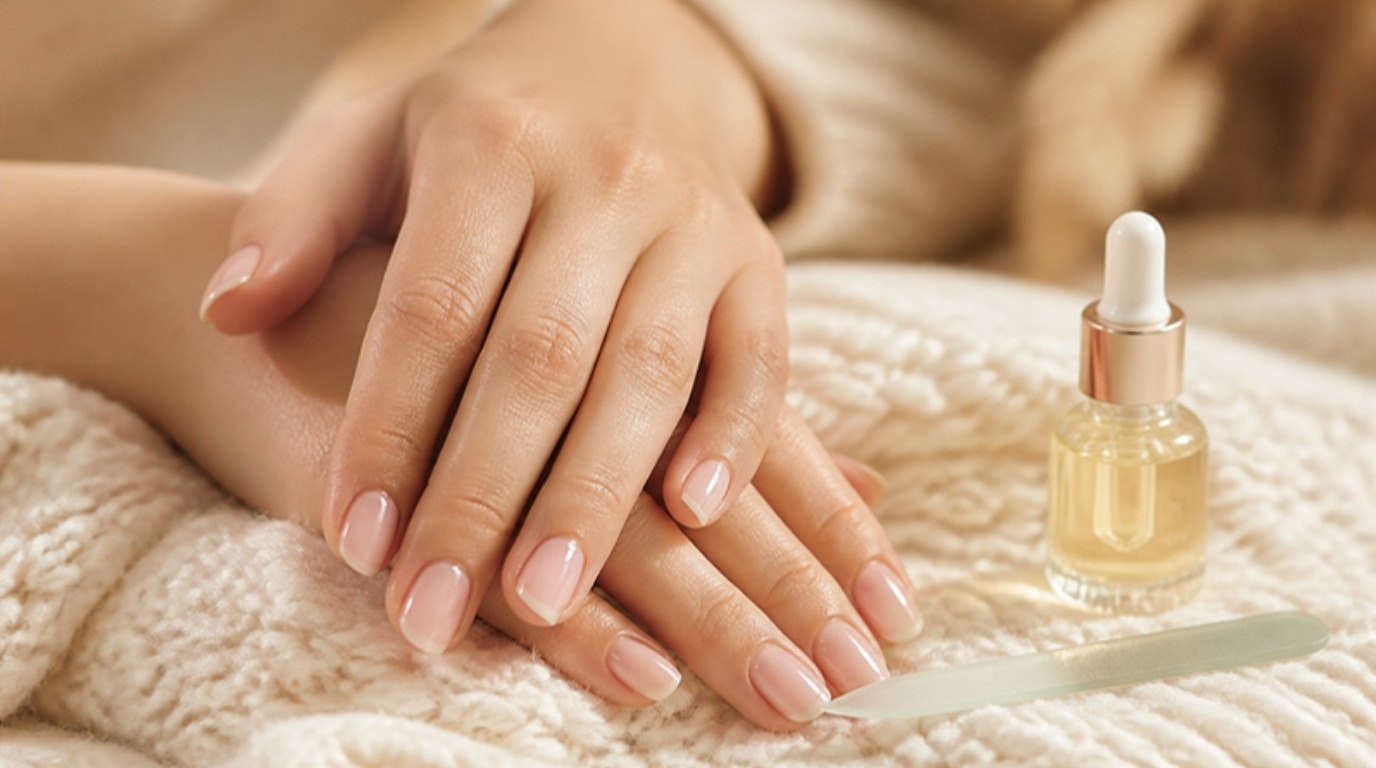
Nails don't need a miracle product to grow longer. They're already growing every single day – the real challenge is keeping them from breaking before they get anywhere. Growing your nails is mostly about protection: less water damage, gentler tools, more moisture and a little patience while the stronger new nail works its way up.
That shift in thinking makes everything easier. Instead of searching for the one serum that will add length overnight, you start noticing the small daily things that snap, peel and weaken your nails – and quietly removing them. It took me a while to accept that the boring habits (gloves, oil, a good file) beat every quick fix I'd ever hoped for.
This guide to how to grow your nails covers how fast nails really grow, the most common reasons they break, a simple daily and weekly routine, how to protect them during chores, why a shorter length helps at first, polish and gel breaks, a few nutrition basics and when it's worth seeing a dermatologist. There's also an 8-week nail growth routine you can follow step by step. We're keeping it to basic nail care only – clean, healthy, natural nails.
How Fast Do Nails Really Grow?

Fingernails grow slowly, roughly 3 millimeters a month on average – a little more than an eighth of an inch. Toenails are even slower. That means a fingernail takes around four to six months to grow out completely from the cuticle to the tip.
A few things shift that speed slightly. Nails tend to grow a little faster in warmer months, on your dominant hand and when you're younger, and they can slow down during illness or stress. But for most of us, the speed stays fairly steady. The difference between nails that "never grow" and nails that look long and healthy is almost always breakage, not growth rate.
This is why patience matters so much. The nail you see today was formed months ago. If you start caring for your nails now, the strongest results show up as the new nail reaches the tip, usually after two to three months. Anything promising dramatic change in a week is promising something nails simply can't do.
Why Your Nails Keep Breaking
Before adding anything new, look at what might be weakening your nails. Most breakage comes from one or more of these six everyday causes.
Too Much Water
It sounds surprising, but water is one of the biggest nail weakeners. Nails absorb water and swell, then shrink again as they dry. Doing this over and over (washing dishes, long showers, constant hand washing, cleaning) makes the layers of the nail loosen, which leads to peeling and soft, bendy tips that tear easily.
Harsh Polish Removers
Strong removers dry out the nail plate and the skin around it. Using them often, or scrubbing hard with them, leaves nails dry, chalky and more likely to split. Choosing a gentler remover, using it less often and following it with oil makes a real difference.
Peeling and Picking Polish
When you peel off chipped polish or gel, you pull away thin top layers of the nail with it. It's one of the fastest ways to make nails thin and weak, and it's a very easy habit to fall into when you're stressed or bored (I know this one well).
Using Your Nails as Tools
Opening cans, scraping off stickers, prying open packaging, picking at labels – nails aren't designed for any of it. Each little jolt can cause a tiny crack that turns into a break a few days later. Use a key, a coin or a small tool instead.
Dryness
Dry nails are brittle nails. Cold weather, central heating, hand sanitizer and frequent washing all strip moisture from the nails and cuticles. Brittle nails tend to split at the edges and snap instead of bending. If yours are especially fragile, my guide to brittle nails goes deeper into causes and care.
Filing the Wrong Way
Sawing back and forth with a rough metal file roughens the edge and leaves tiny tears that catch and peel. The right file and the right motion are a surprisingly big part of growing nails successfully.
The Daily Nail Growth Routine
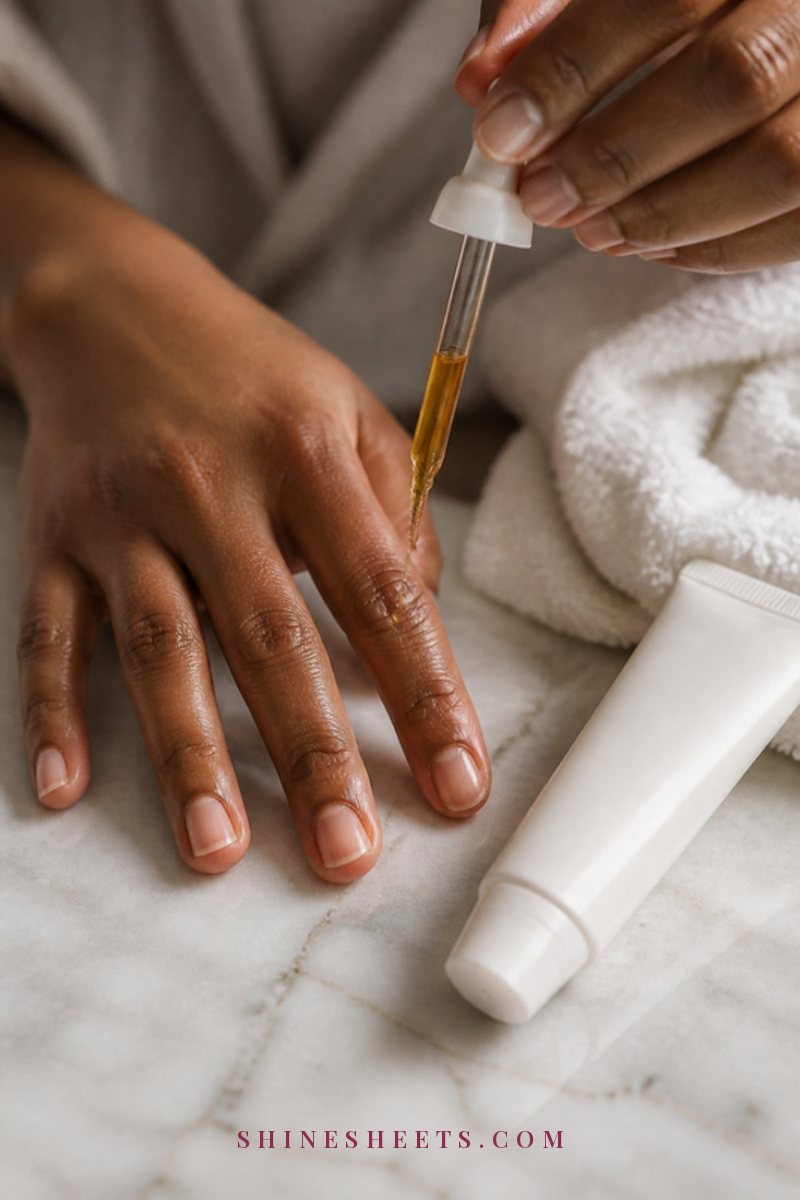
Your daily routine only needs two steps and about two minutes. Consistency is what makes it work.
1. Cuticle Oil Twice a Day
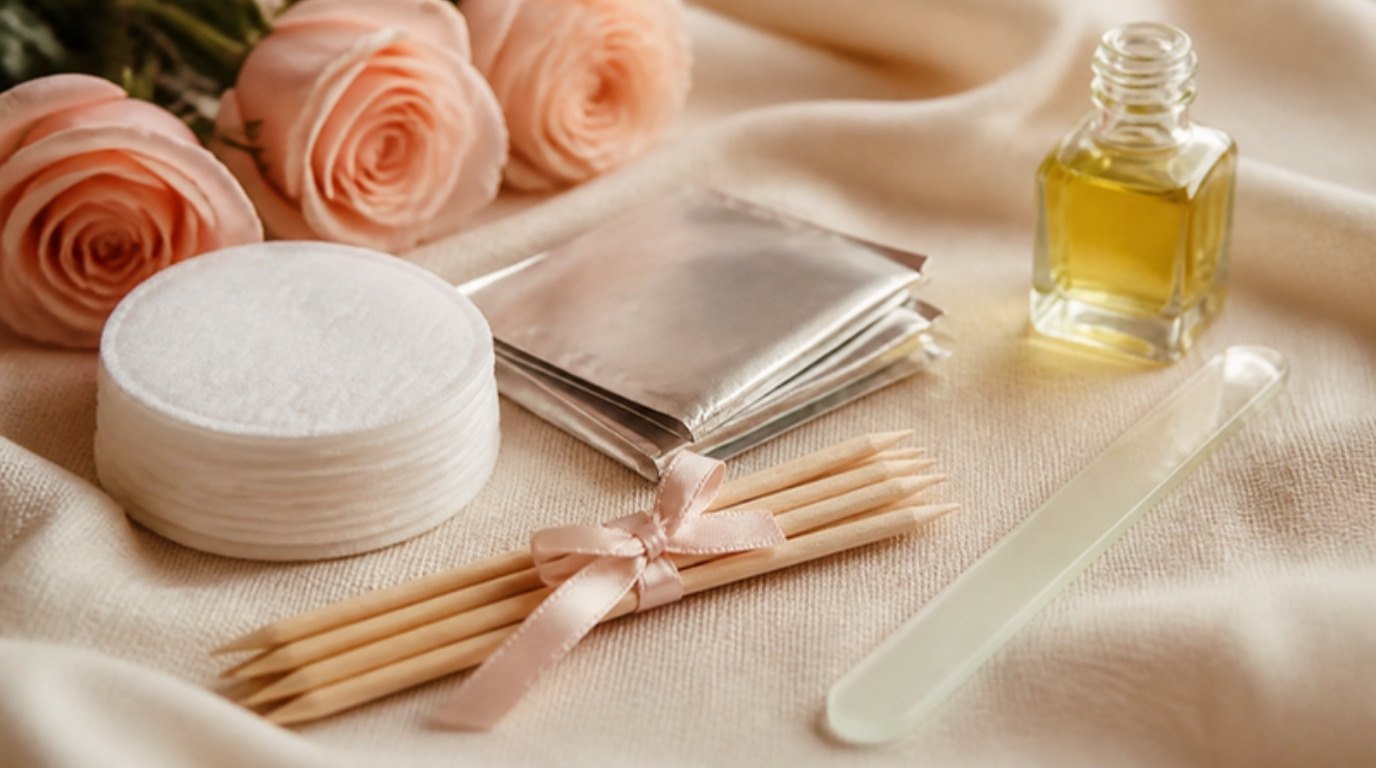
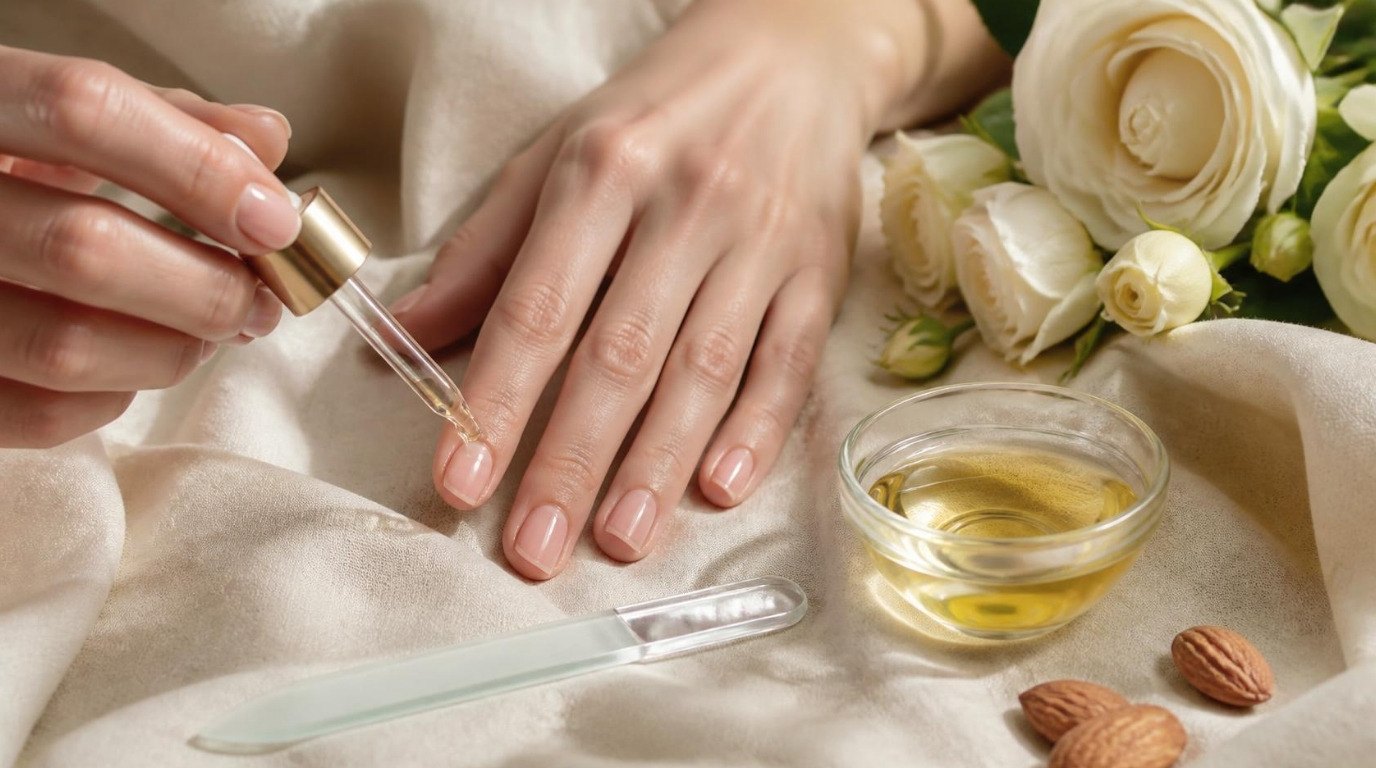
Cuticle oil keeps the nail plate and the skin around it flexible, which helps nails bend instead of snapping. Apply a small drop to each nail in the morning and before bed, and massage it into the cuticle and the nail itself for a few seconds. A cuticle oil pen is the easiest option to keep in your bag or on your desk, because you can swipe it on without any mess. Look for oils like jojoba, sweet almond or vitamin E in the ingredient list.
The best moment for oil is right before bed, when your hands won't be washed for hours. Apply it, then follow with hand cream.
2. Hand Cream After Every Wash
Every time you wash your hands, you lose some moisture from your nails and skin. Keep a rich hand cream by every sink and use a small amount afterward, rubbing a little extra into your nails and cuticles. Look for creams with glycerin, shea butter or ceramides, which help seal moisture in. If you'd like a full routine for your hands, not just your nails, my hand care routine has everything step by step.
The Weekly Nail Care Routine
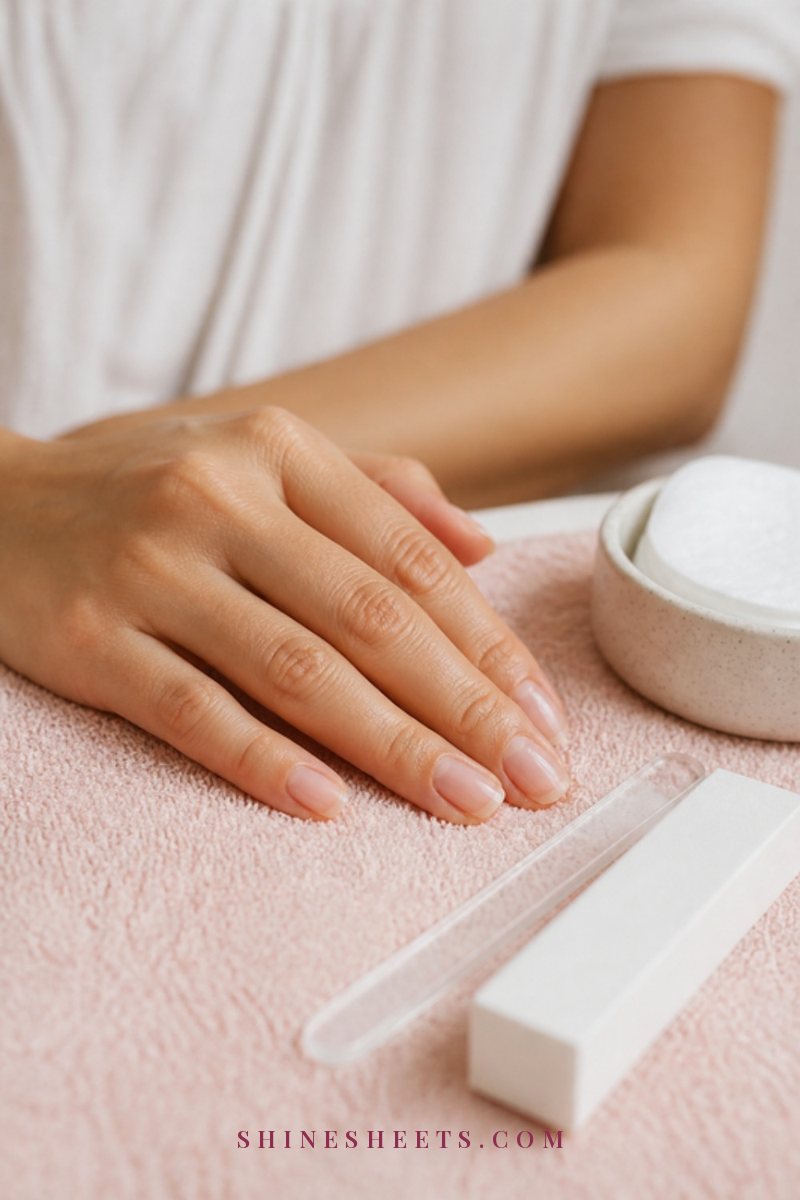
Once a week, give your nails ten to fifteen minutes of gentle maintenance. This is where you shape, smooth and check how things are going.
- Start with clean, dry nails. Remove any polish gently and wash your hands. Always file dry nails, because wet nails are softer and tear more easily.
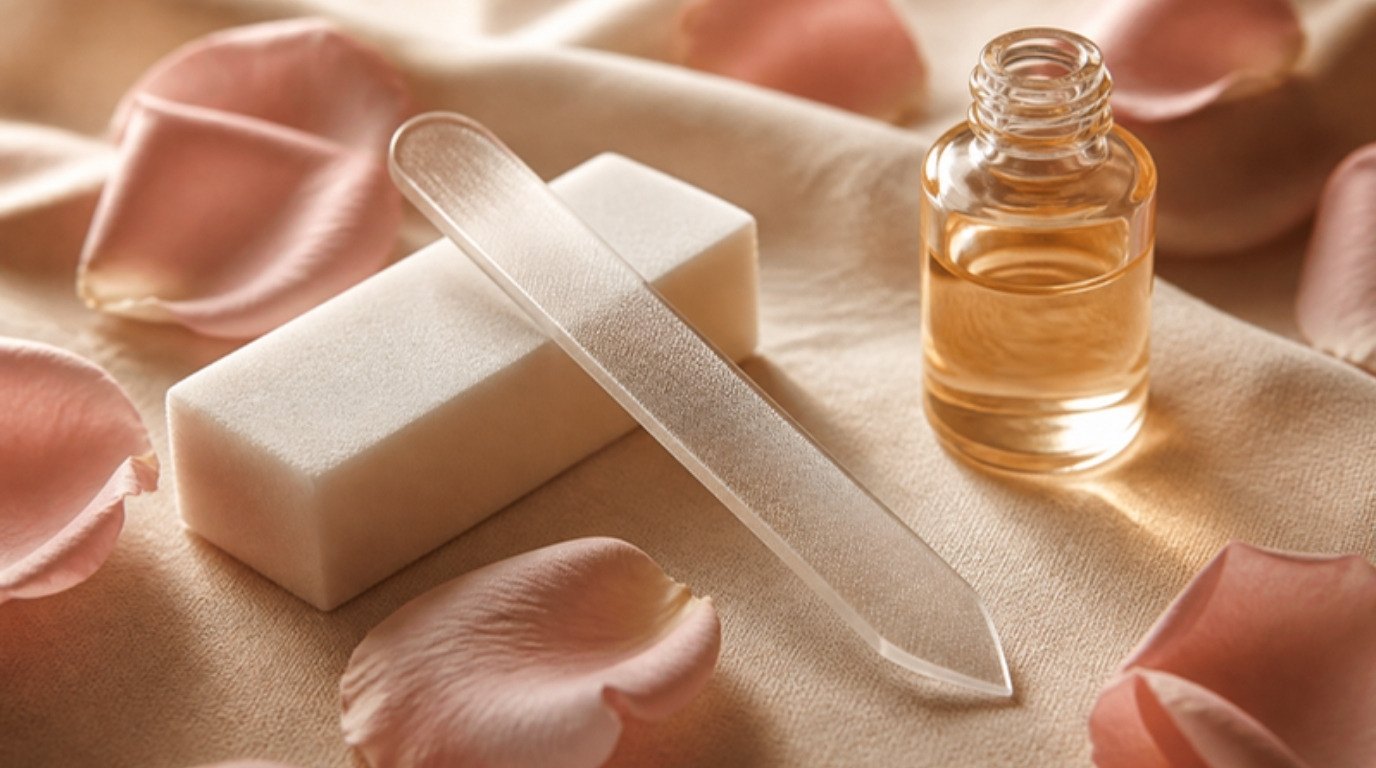
- File in one direction. Use a fine glass nail file, which seals the edge smoothly instead of leaving rough tears. Hold it at a slight angle and file from the side toward the center in one direction only. No sawing back and forth.
- Choose a strong shape. A soft square or oval shape is the sturdiest, because it supports the sides of the nail. Very pointed shapes break more easily while nails are still building strength.
- Smooth any ridges very gently. If your nails have small ridges or a rough surface, a few light strokes with a nail buffer block can smooth them. Keep it to once every week or two and very light pressure; over-buffing thins the nail.
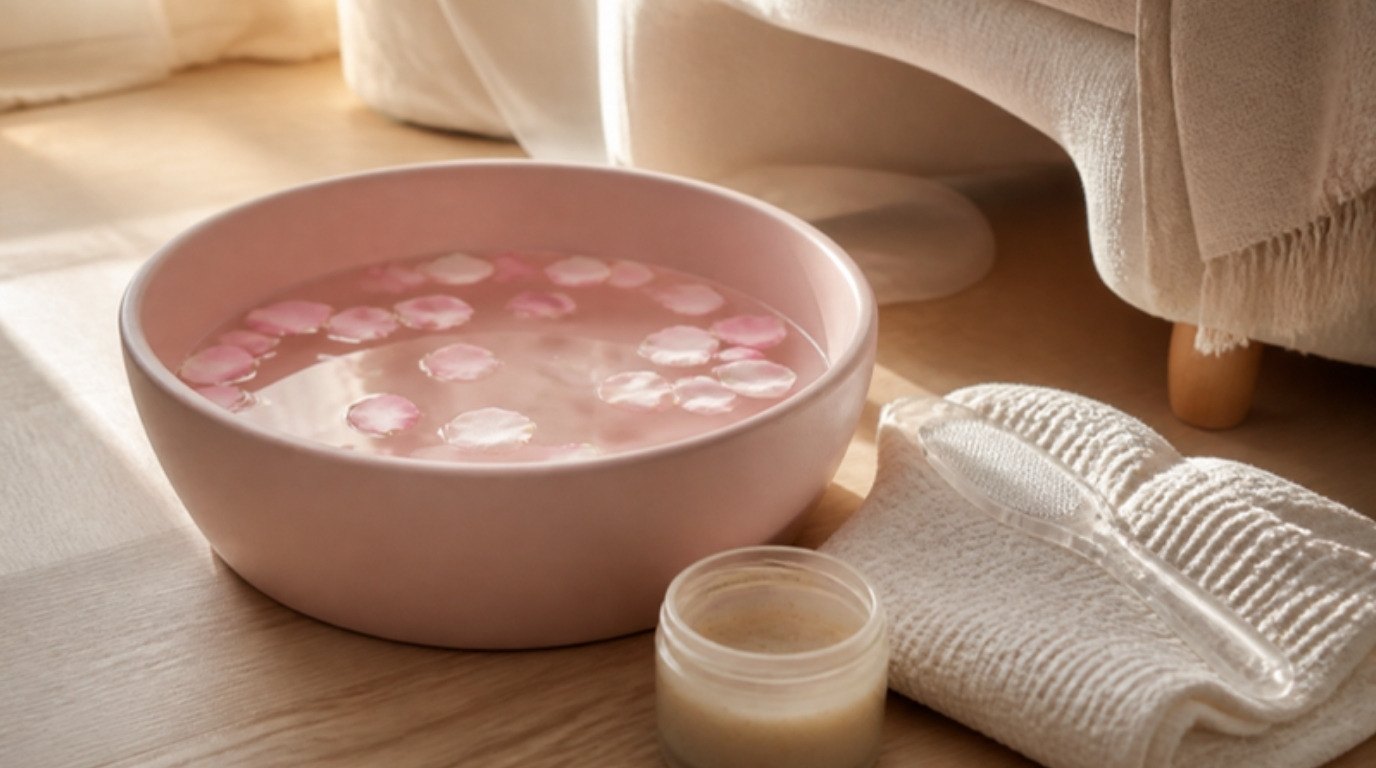
- Push back cuticles softly. After a shower or a short soak, gently push cuticles back with a soft towel or a wooden stick. Don't cut them – they protect the base of the nail from infection.
- Finish with oil and cream. A generous layer of cuticle oil and hand cream ends the routine.
If you'd like a deeper look at technique, my sister guide on how to file your nails walks through shapes, angles and grits in detail.
Protect Your Nails During Chores
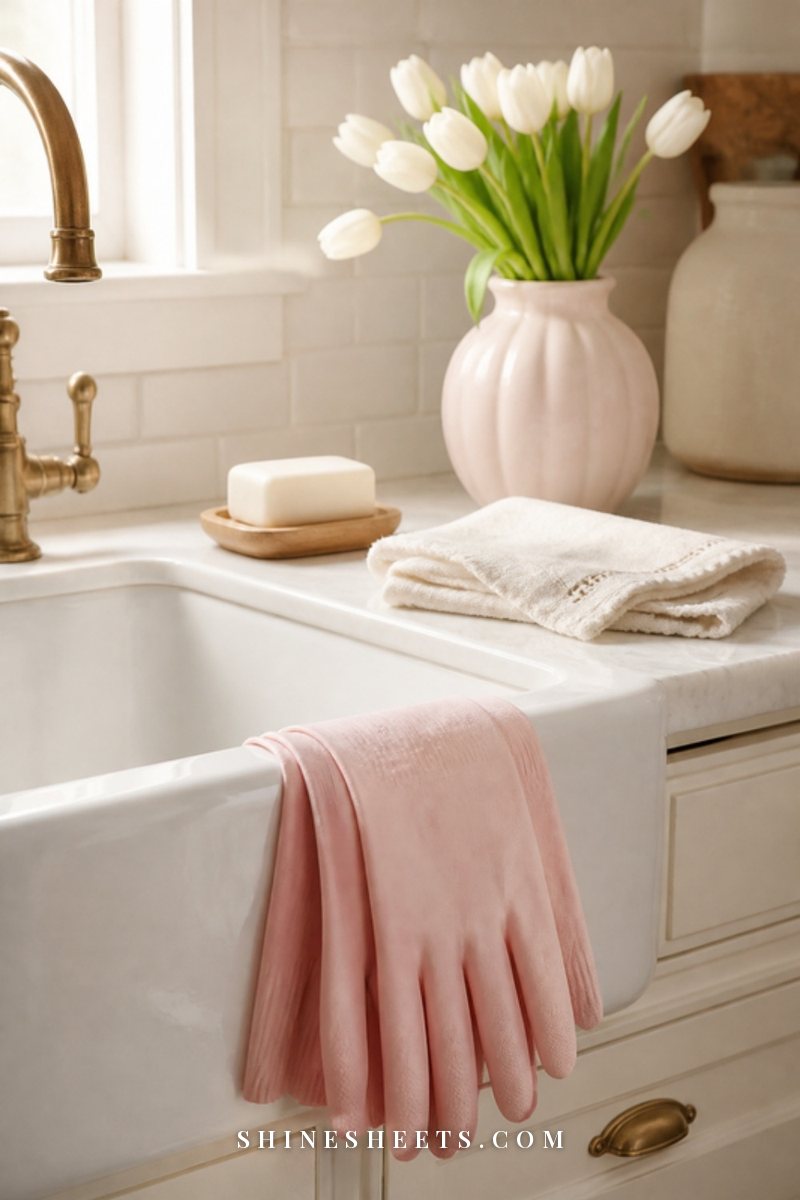
If there's one habit that changes everything, it's this one. Wearing gloves for wet chores protects your nails from repeated soaking and from harsh cleaning products. A pair of pink rubber cleaning gloves by the kitchen sink makes it easy to remember. Wear them for:
- Washing dishes by hand
- Cleaning the bathroom or kitchen
- Using any cleaning spray or bleach-based product
- Scrubbing pots or the oven
- Hand-washing delicate laundry
For dry, rough jobs like gardening or moving boxes, a pair of cotton or garden gloves helps too. A small extra tip: if your hands get sweaty inside rubber gloves, wear thin cotton gloves underneath. And whenever you take gloves off, a quick swipe of hand cream keeps everything soft.
Keep Them Short to Medium While They Strengthen
This feels backward when your goal is length, but it works. Long tips act like a lever – the longer the free edge, the more force goes into it every time you tap a keyboard or catch it on something, and the more likely it is to break.
While you're building strength, keep your nails at a short to medium length, just past the fingertip. File them every week to keep the edges smooth and even. As the stronger new nail grows in over the next couple of months, you can gradually let them get longer, a millimeter or two at a time. If one nail breaks, file the others down a little too so they grow evenly – it's frustrating, but it gives you a fresh start without one short nail looking out of place.
Taking Polish and Gel Breaks
Polish itself isn't the enemy, and a clear or sheer coat can actually protect the tip from small chips. The problem is the removal process, especially with gel, and the habit of peeling. A few small habits help that protective coat stay put, and I gathered them in this guide on making nail polish last longer.
A few gentle guidelines:
- Give nails a break between gel manicures. A week or two of bare, oiled nails between sets helps them recover.
- Never peel or pick off gel. Always remove it properly, gently and without scraping hard.
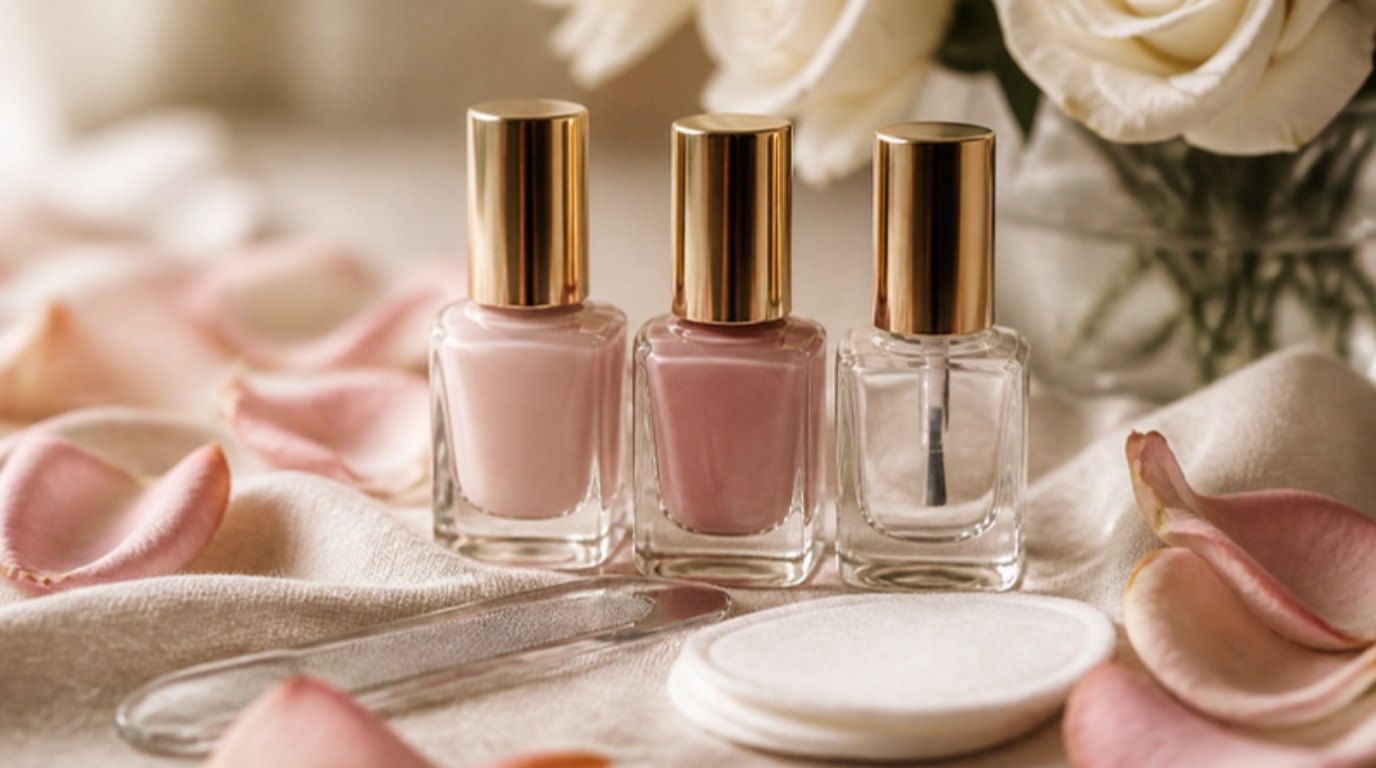
- Use a strengthening base. A clear nail strengthener can add a protective layer while your nails are fragile. Use it as directed and take it off every week or so to let nails breathe and to check how they look.
- Always use a base coat with colored polish. It protects nails from staining and makes removal easier.
- Moisturize after removal. Every time you take polish off, follow with oil and cream straight away.
If your nails already feel thin and damaged from years of gels or acrylics, my guide on how to rejuvenate weakened and damaged nails has a gentle recovery plan.
Nutrition Basics (Without the Supplement Hype)
Nails are made of keratin, a protein, and like the rest of your body, they're built from what you eat. A varied diet with enough protein, iron, zinc and healthy fats supports healthy nails over time. Drinking enough water helps your whole body, nails included.
What I'd be careful with are big promises. You'll see many supplements claiming dramatic nail growth, and the evidence for most of them in people who aren't deficient is limited. If you think you might be low in something (for example, if you also feel very tired or your hair is thinning), talk to your doctor and ask about a simple blood test rather than guessing. That way, you're treating a real need instead of hoping a pill does the work your routine already does.
7 Small Habits That Quietly Protect Your Nails
Beyond the main routine, a handful of tiny everyday habits make a surprising difference. None of them take more than a few seconds, and together they remove most of the little knocks that cause breaks.
- Use the pads of your fingers, not your nails. Press buttons, type and pick things up with your fingertips. It feels awkward for a week, then becomes automatic.
- Keep a file in your bag. When a nail snags, smooth it right away instead of picking or biting at it. A tiny snag left alone tends to become a tear by evening.
- Dry your hands fully. After washing, pat your hands and nails dry, especially around the cuticles, before applying cream.
- Go easy on hand sanitizer. When you can wash with soap and water instead, do. When you can't, follow sanitizer with a little hand cream once it dries.
- Keep showers warm, not hot. Very hot water dries out skin and nails faster. A slightly cooler, shorter shower is kinder to both.
- Give your hands something to do. If you pick at your nails when you're anxious or bored, keep a cuticle oil pen or a smooth stone nearby. Replacing the habit works far better than simply trying to stop.
- Sleep with a layer of moisture. On especially dry nights, apply oil and a thick layer of hand cream, then slip on soft cotton gloves. It's a small luxury that makes a visible difference by morning.
What To Expect as Your Nails Grow
Knowing what's normal along the way helps you stay patient. In the first two to three weeks, the main change is how your nails feel: cuticles look smoother, the skin around them is softer and the edges catch less. You might not see any extra length yet, and that's completely fine.
Around weeks four to eight, you'll start noticing fewer breaks, which means the length you gain actually stays. Look closely at the base of the nail near the cuticle – this is where the new, better-cared-for nail appears first, often looking smoother and less ridged than the tips.
By around three to four months, much of the older, weaker nail will have grown out, and you can start letting your nails get longer with more confidence. If one nail breaks along the way, don't take it as a sign that nothing is working. It's simply one nail, and the routine is still doing its job on the other nine.
The 8-Week Nail Growth Routine

Here's a simple plan that layers one new habit at a time. Screenshot it and work through it week by week. By week eight, you'll have a routine that runs on autopilot and nails that are visibly stronger at the base.
| Week | Focus | What to do |
|---|---|---|
| 1 | Reset | Remove all polish gently, file nails short and even, start cuticle oil twice a day |
| 2 | Moisture | Hand cream after every wash; keep a tube by each sink and in your bag |
| 3 | Protection | Gloves for every wet chore; stop using nails as tools |
| 4 | Technique | Switch to a glass file, file one direction only, choose a soft square or oval shape |
| 5 | Habits | Notice picking or peeling; keep oil nearby to give your hands something kind to do instead |
| 6 | Strengthen | Add a clear strengthening base if you like; keep up oil and cream |
| 7 | Grow | Let nails grow 1–2 mm longer; keep edges smooth with weekly filing |
| 8 | Review | Compare the base of your nails to week 1; keep the habits that helped most |
Don't worry if you miss a step one week. Just pick it back up – nail care is all about what you do most of the time, not perfectly every day.
When To See a Dermatologist
Most weak, peeling or slow-growing nails improve with gentle care. But nails can sometimes reflect other health issues, so it's worth seeing a dermatologist or your doctor if you notice:
- A dark streak or new discoloration under the nail that you can't explain
- A nail lifting away from the nail bed
- Pain, swelling, redness or pus around the nail
- Thick, crumbly or yellowed nails
- Pitting, deep grooves or sudden changes in shape
- Nails that stay very brittle despite several months of good care
Please don't be shy about asking. Nail concerns are a normal part of what dermatologists look at, and an early check gives you peace of mind. For more on everyday care between appointments, see my guide on how to take care of your nails.
Final Thoughts
Learning how to grow your nails is really about letting them do what they already do, without getting in the way. Protect them from water and harsh products, keep them moisturized, file gently, take breaks from gel and give the new, stronger nail time to grow all the way out.
It's slow, quiet work, but it adds up. A couple of months from now, you'll look down and notice nails that bend instead of snap, edges that stay smooth and a length you didn't have to fight for. That's worth every drop of oil.