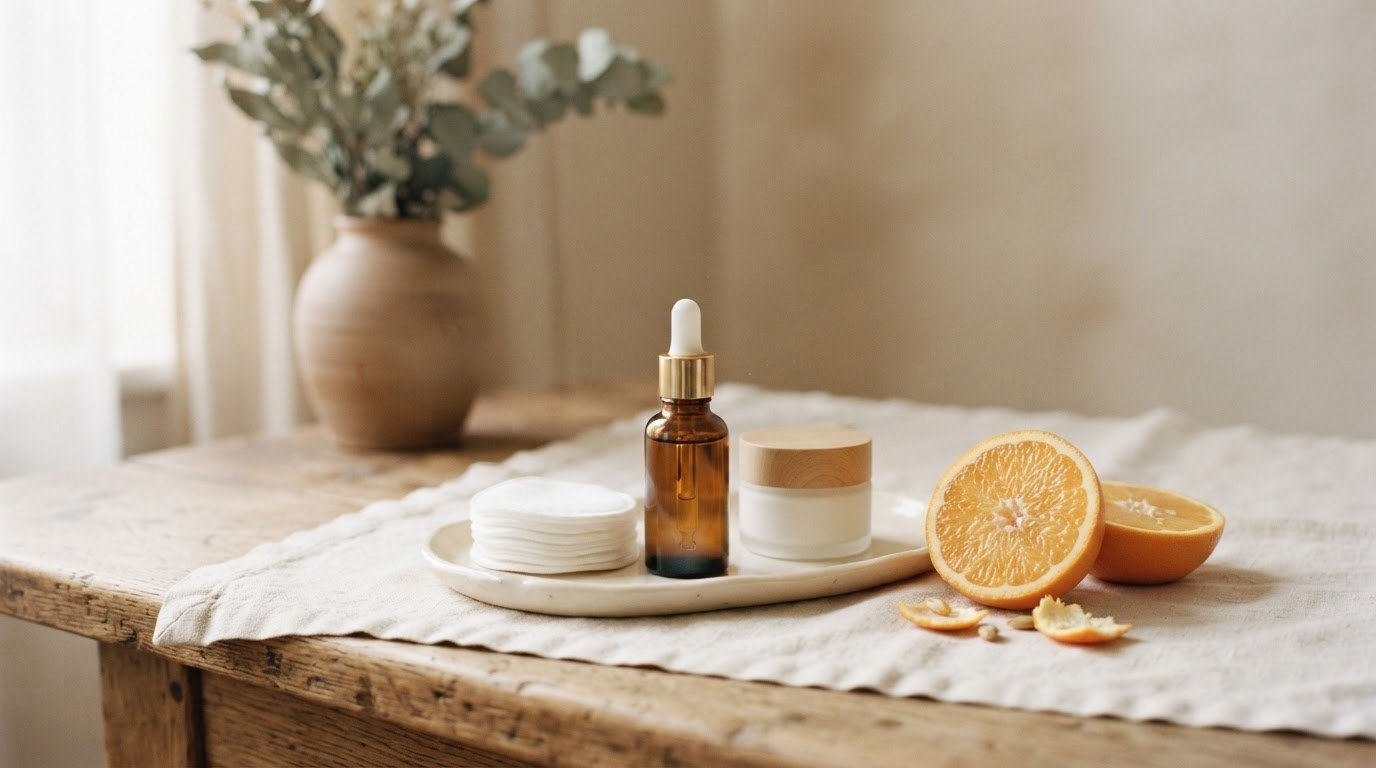
The first vitamin C serum I ever bought sat on my bathroom shelf in a pretty clear bottle, right next to the window, because it looked nice there. Within a month it had turned the color of weak tea, then the color of strong tea, and by the time I finally admitted something was wrong, it smelled faintly like a hot penny. I'd been patting oxidized serum onto my face every morning and wondering why nothing was happening.
Vitamin C is one of those ingredients everyone tells you to use, but very few people explain the details that make it actually work: which form suits which skin, how strong it needs to be, where it goes in your routine, and how to keep it fresh. Add combination, sensitive skin like mine (shiny T-zone, cheeks that flush if you look at them wrong) and it's easy to end up with either a tingly, irritated face or a bottle of very expensive brown water.
So this is the calm, practical guide to vitamin C serum: what it does, what it won't do, a "Vitamin C fit check" table to help you pick the right form for your skin type, the exact morning routine order, and a 4-week gentle start calendar you can screenshot and follow.
No hype, no 30% miracle bottles. Just the version that works on real, slightly moody skin.
What Vitamin C Serum Actually Does
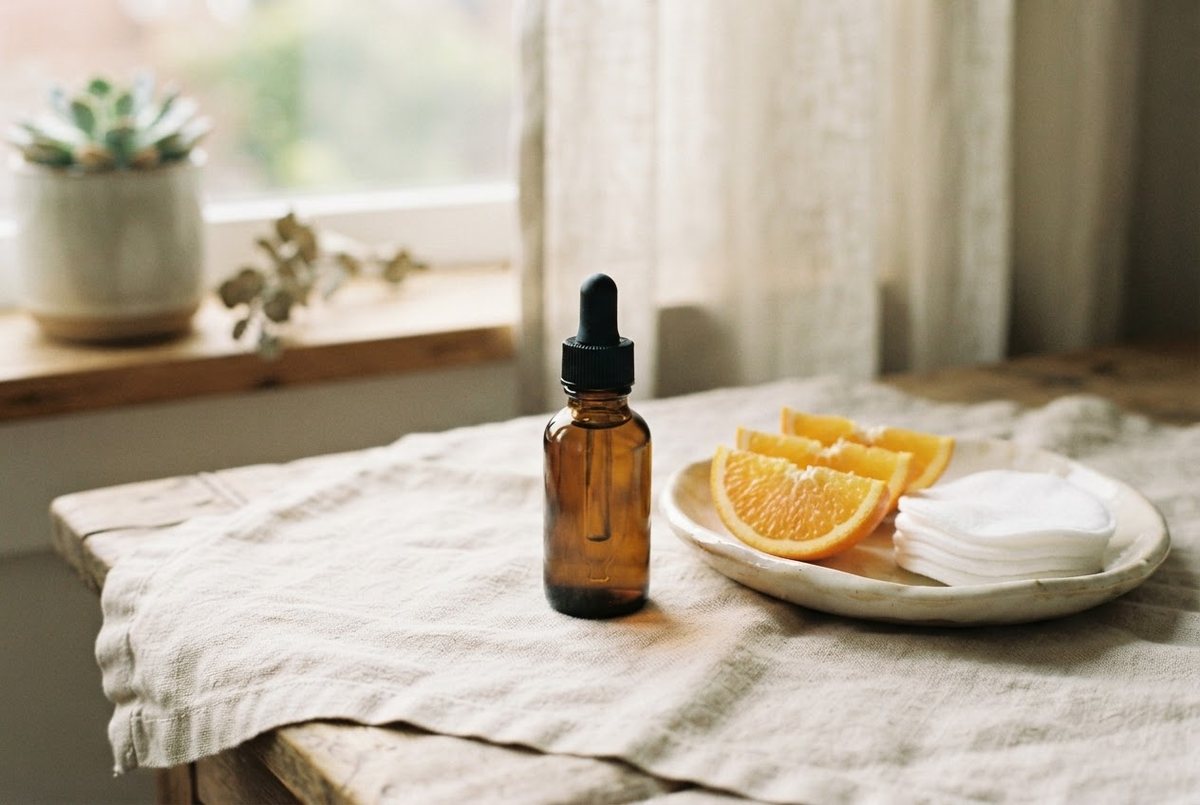
Vitamin C is an antioxidant. In plain English, that means it helps neutralize free radicals, the unstable molecules created by things like UV light and pollution that wear down your skin over time. Think of it as a little bodyguard that stands next to your sunscreen every morning.
Because of that, a well-made vitamin C serum can help with a few things most of us care about:
- A brighter, more even-looking tone. Vitamin C can gently fade the look of dullness and leftover marks over time.
- Support against daily environmental stress. Used under sunscreen, it adds an extra layer of antioxidant defense.
- Smoother-looking skin over the long run. Vitamin C plays a role in the skin's natural collagen production, which is why it shows up in so many "firming" routines.
- A fresher look on tired days. Many people simply notice their skin looks a little more awake after a few weeks.
These are cosmetic, gradual changes. Vitamin C is a supporting ingredient, not a treatment for any skin condition, and results vary a lot from person to person.
What Vitamin C Won't Do
It's just as useful to know the limits, so you don't end up disappointed (or reaching for a stronger bottle out of frustration):
- It won't replace sunscreen. This is the big one. Vitamin C supports your SPF; it doesn't do the SPF's job.
- It won't erase dark spots in a week. Expect weeks to months, and only with daily sun protection alongside it.
- It won't exfoliate. Some forms are acidic, but vitamin C isn't an exfoliant in the way AHAs or BHAs are.
- Stronger isn't automatically better. Above roughly 20%, you mostly raise the chance of stinging without clear extra benefit.
The Different Forms of Vitamin C, Simply Explained
This is where most of the confusion comes from. "Vitamin C" on the front of the bottle can mean several different ingredients on the back, and they behave very differently on your face.
L-Ascorbic Acid (the Classic)
This is pure vitamin C and the most researched form. It's effective, but it's also fussy: it needs a low pH to absorb well, which is exactly why it can tingle or sting, and it oxidizes quickly once exposed to air, light and heat. It's often paired with vitamin E and ferulic acid, a trio that helps keep the formula more stable. Great for resilient, normal or oily skin. Not usually the best starting point for sensitive skin.
Gentler Derivatives (Water-Based)
Look for names like sodium ascorbyl phosphate, magnesium ascorbyl phosphate, ascorbyl glucoside or 3-O-ethyl ascorbic acid. These are more stable and much less likely to sting. They're converted into active vitamin C in the skin, so they work more gradually, but for many people that's a fair trade for comfort.
Oil-Soluble Derivatives
Tetrahexyldecyl ascorbate (sometimes shortened to THD ascorbate) is the one you'll see most. It's oil-friendly, very stable and often found in creamier or oilier serums. It tends to suit dry and mature-feeling skin, and sensitive skin often finds it comfortable too.
Vitamin C in Moisturizers and Toners
Lower amounts of vitamin C (or its derivatives) show up in creams, essences and toners. They won't give you the full serum effect, but they're a lovely way to dip a toe in if your skin is very reactive.
The Vitamin C Fit Check: Which Form Suits Your Skin
Here's the table I wish someone had handed me before I bought that first bottle. Find your skin type, then look across for the form, the strength and where it fits in your day.
| Skin type | Form to look for | Strength to start | When in the routine |
|---|---|---|---|
| Sensitive or reactive | Gentle derivatives (sodium ascorbyl phosphate, ascorbyl glucoside) or THD ascorbate | Low to moderate; around 5–10% for derivatives | Morning, every other day at first, after cleansing and before moisturizer |
| Dry | THD ascorbate or a derivative in a hydrating, milky base | Around 5–10% | Morning, under a rich moisturizer and SPF |
| Combination | Ascorbyl glucoside or 3-O-ethyl ascorbic acid in a lightweight serum | Around 10% | Morning, all over or focused where you want brightness |
| Oily or breakout-prone | L-ascorbic acid or a watery derivative serum | 10–15% for L-ascorbic acid | Morning, on dry skin, before a light gel moisturizer |
| Normal and resilient | L-ascorbic acid with vitamin E and ferulic acid | 10–15%, up to 20% once tolerated | Morning, right after cleansing |
| Beginner, any type | A moisturizer or toner with vitamin C | Whatever the formula gives you | Morning, as part of a step you already do |
A quick note on percentages: derivatives aren't directly comparable to L-ascorbic acid. A 10% derivative serum is not "weaker" or "stronger" than a 10% L-ascorbic acid serum; they're simply different ingredients. Compare like with like.
Who Vitamin C Serum Suits (and Who Should Go Slowly)
Most skin types can enjoy vitamin C in some form. The question is which form and how often. Here's how I'd think about it:
- It suits you well if you want a brighter-looking complexion, you're bothered by dullness or leftover marks, and you already wear sunscreen daily (or want a reason to start).
- Go slowly if your skin is sensitive, you have rosacea-prone or easily flushed cheeks, or your barrier currently feels tight, stingy or flaky. A gentle derivative, used every other day, is the kinder path.
- Pause it if your skin is actively irritated, sunburned or recovering from a strong exfoliant or a professional treatment. Let it calm down first.
If you have sensitive skin like mine, I'd choose a gentle vitamin C serum made with a stable derivative for your first bottle. Look for a short ingredient list, no added fragrance and soothing partners like panthenol, centella or hyaluronic acid.
If your skin is oily or resilient and you want the classic, a good pick is an L-ascorbic acid serum with vitamin E and ferulic acid in a dark or opaque bottle. Start at 10–15% rather than jumping straight to 20%.
Morning or Night? Why Vitamin C Belongs Under Your SPF
Technically you can use vitamin C at any time of day, but the morning is where it makes the most sense. Its whole job is to help defend against daytime stress like UV and pollution, so it's lovely to have it on your skin while you're actually out in the world.
It also frees up your evening for other things. If you use retinol, keeping vitamin C in the morning and retinol at night is the simplest way to enjoy both without overwhelming your skin. My gentle retinol plan for beginners fits neatly alongside this, and if you want the full explanation of the two together, there's a whole piece on whether you can use retinol and vitamin C together.
And the most important part: vitamin C always goes under sunscreen, never instead of it. The two work as a team, and most of the brightening benefit depends on you protecting your skin from new sun damage every single day.
How To Use Vitamin C Serum, Step by Step
Here's the morning routine I'd suggest, in order:
- Cleanse gently. A splash of lukewarm water is enough for some mornings; otherwise, use a gentle hydrating facial cleanser that leaves your skin comfortable, not squeaky.
- Pat your face dry. L-ascorbic acid serums usually feel best on dry skin (damp skin can make the tingle stronger). Derivative serums are more forgiving.
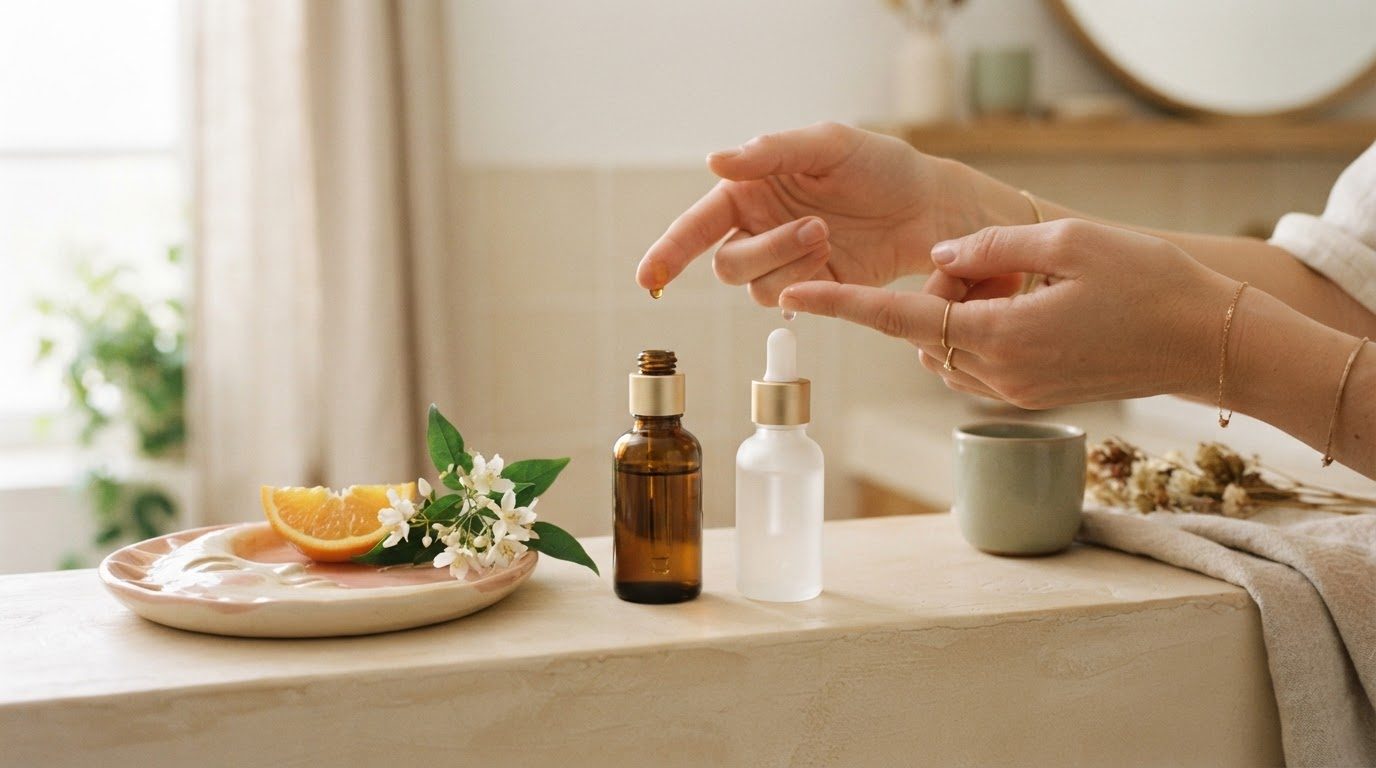
- Apply three to four drops of vitamin C serum. Warm them between your fingertips and press over your face and neck, avoiding the eye area and the corners of your nose and mouth.
- Wait a minute. Brush your teeth, make your tea, let it settle. This helps prevent pilling.
- Add any other serum (optional). A hydrating serum or niacinamide can go on next.
- Moisturize. A barrier-friendly cream helps buffer the serum. A ceramide moisturizing cream is a reliable match for almost every skin type.
- Finish with sunscreen. A lightweight Korean sunscreen with SPF 50 sits beautifully over vitamin C without feeling heavy or greasy.
If you're juggling several products and the order feels confusing, my guide on how to layer skincare products walks through it in more detail.
Your 4-Week Gentle Start Calendar
This is the part I'd screenshot. The goal is to let your skin get used to vitamin C before you ask it to do anything else new. Introduce it on its own, ideally not in the same month as a new exfoliant or retinol.
| Week | How often | What to do | What to watch for |
|---|---|---|---|
| Week 1 | 2–3 mornings (e.g. Mon, Wed, Fri) | Two drops only, followed by moisturizer and SPF. Patch test first if it's a new formula. | Mild, brief tingling can be normal with L-ascorbic acid. Burning, itching or blotchy redness is not. |
| Week 2 | Every other morning | Move up to three drops if week 1 felt calm. | Any tightness or flaking around the nose and mouth. If so, stay at week 1. |
| Week 3 | 5–6 mornings a week | Keep the rest of your routine exactly the same. No new products yet. | Skin should feel normal. Note whether makeup still sits well on top. |
| Week 4 | Daily, if your skin is happy | Three to four drops every morning. Take a "day 28" photo in the same light as day 1. | If daily feels like too much, every other day is a perfectly good long-term rhythm. |
If at any point your skin feels warm, tight or prickly for more than a few minutes, drop back a week. There's no prize for getting to daily use quickly.
What To Pair With Vitamin C (and What To Space Out)
Vitamin C gets a reputation for being difficult to combine, but most of the scary rules online are exaggerated. Here's the realistic version:
Lovely Partners
- Sunscreen. The best partner there is. Every morning, no exceptions.
- Vitamin E and ferulic acid. Often already in the formula, they help stabilize vitamin C and boost its antioxidant support.
- Hyaluronic acid and ceramides. Hydration and barrier support make vitamin C easier to tolerate.
- Niacinamide. The old warning about these two cancelling each other out comes from outdated research. Most people can use them together comfortably. If your skin is very sensitive, you can put them in separate routines. My guide to how to use niacinamide gently covers this pairing too.
Space These Out
- Retinol and other retinoids. Keep vitamin C in the morning and retinol at night.
- Strong AHAs and BHAs. Using a low-pH vitamin C and an acid exfoliant in the same routine can be a lot for sensitive skin. Exfoliate at night, and maybe skip vitamin C the morning after if your skin feels tender.
- Benzoyl peroxide. It can oxidize vitamin C. Use them at different times of day.
How To Keep Your Vitamin C From Going Off
This is the bit I learned the hard way. Vitamin C, especially L-ascorbic acid, breaks down when it meets light, air and heat. Once it oxidizes, it doesn't just stop working; it can also be more irritating.
- Check the color. Most fresh L-ascorbic acid serums are clear to pale yellow. Deep orange or brown means it's past its best.
- Keep it away from windows. A drawer or a cabinet is perfect. A steamy bathroom shelf in the sun is not.
- Close the cap straight away. Every minute the bottle is open, air gets in.
- Choose dark, opaque or airless packaging. Clear glass is pretty, but it's the worst option for this ingredient.
- Use it within about three months of opening. Smaller bottles you'll actually finish are better value than a big one that turns.
- Store it somewhere cool. Some people like to keep theirs in a cool cupboard or a little skincare fridge; anywhere stable and out of direct sun is fine.
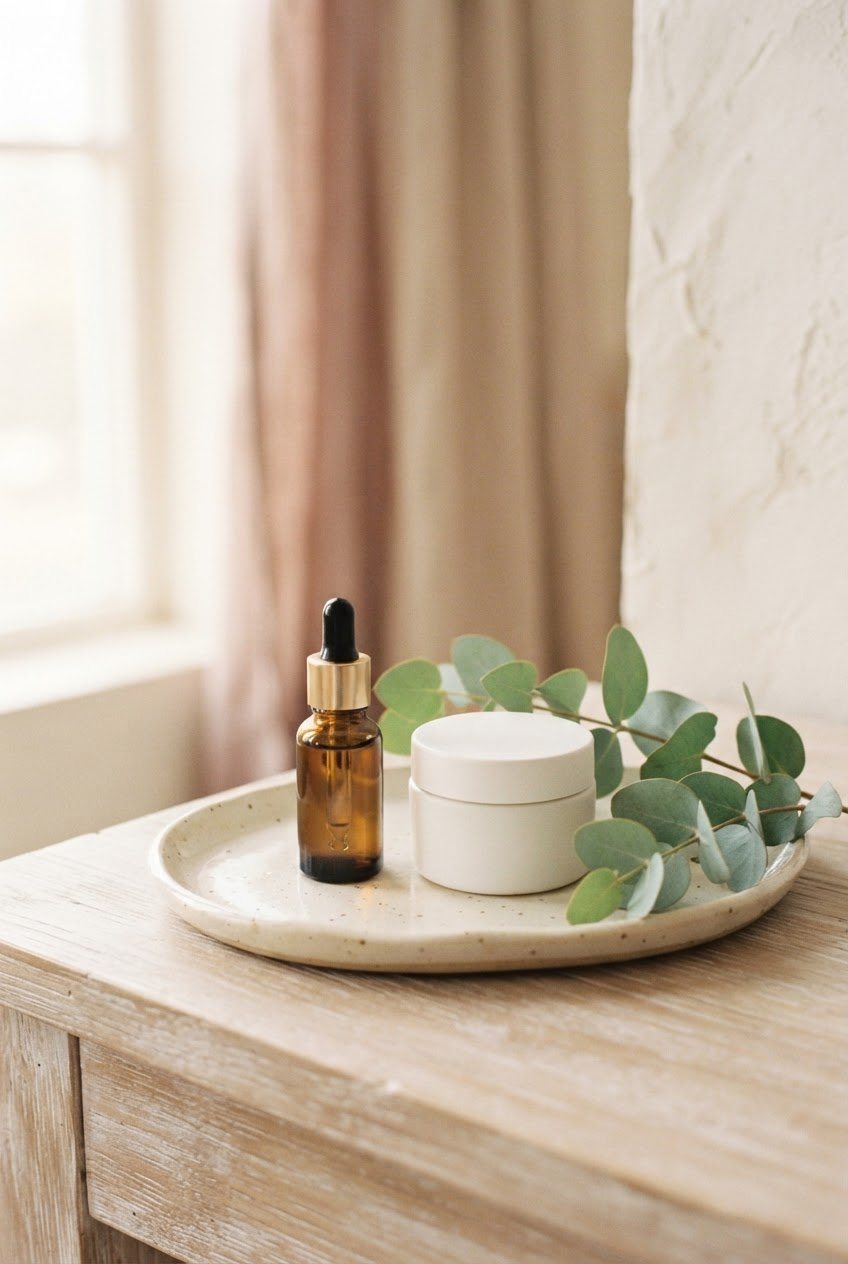
If you like an organized shelf, a white ceramic vanity tray inside a cabinet keeps your serum upright, out of the light and easy to grab in the morning.
6 Common Vitamin C Mistakes
- Starting at 20% L-ascorbic acid. A high-strength classic serum is not a beginner product for sensitive skin. Start with a derivative or a lower percentage.
- Using it instead of sunscreen. Without daily SPF, most of the brightening benefit simply can't show.
- Ignoring the color. If it has turned dark orange or brown, it's time for a new bottle.
- Introducing it alongside three other new products. If something irritates you, you won't know what it was.
- Applying too much. Three to four drops cover the face and neck. More just pills under makeup.
- Giving up after two weeks. Give a well-tolerated serum at least eight to twelve weeks before you judge it.
How Long Until You See a Difference?
Vitamin C is steady rather than dramatic. Here's a realistic timeline with consistent use and daily sunscreen:
- First few weeks: Mostly adjustment. Some people notice their skin looks a touch fresher.
- Around 8 weeks: A brighter-looking, more even tone often starts to show here.
- Around 12 weeks and beyond: Leftover marks may look softer, especially if you've been strict about SPF.
Day-to-day changes are almost impossible to spot in the mirror, so side-by-side photos in the same light are your best friend here.
What To Look For in a Vitamin C Serum
You don't need a luxury bottle. Some of the most-loved vitamin C serums are affordable drugstore and K-beauty best-sellers. When you're comparing, here's what I'd check:
- The exact form on the ingredient list. Match it to the fit check table above rather than trusting the front label.
- A realistic percentage. 10–15% is a sensible range for L-ascorbic acid; derivatives are often lower and that's fine.
- Protective packaging. Dark glass, opaque plastic or an airless pump.
- No added fragrance or essential oils. These irritate sensitive skin far more often than the vitamin C itself.
- Supportive extras. Vitamin E, ferulic acid, panthenol, glycerin or hyaluronic acid all make a formula feel kinder.
- A texture you'll actually enjoy. Watery serums layer easily under makeup; milkier ones feel more comforting on dry cheeks.
A Gentle Safety Note
Vitamin C serums are generally well tolerated, but every face is different. Patch test any new product first: apply a little along your jawline or behind your ear once a day for three to five days. If there's no redness, itching or burning, you're good to try it on your face.
A faint yellowish tint on your skin or pillowcase can sometimes happen with oxidized L-ascorbic acid; it washes off, but it's also a sign the serum may be past its best. If you have a diagnosed skin condition, use prescription skincare, or are pregnant or breastfeeding, check with your doctor or dermatologist before adding new actives. This guide is general information, not a substitute for personal medical advice.
Final Thoughts
Vitamin C doesn't need to be the strongest bottle on the shelf to be worth it. Choose the form that suits your skin, keep it in a dark cupboard, give it a slow four-week start and wear it under sunscreen every single morning.
Do that, and it quietly becomes one of the nicest little rituals of your day: a few drops, a minute to breathe, and skin that looks a bit brighter and more rested with every month you stick with it.