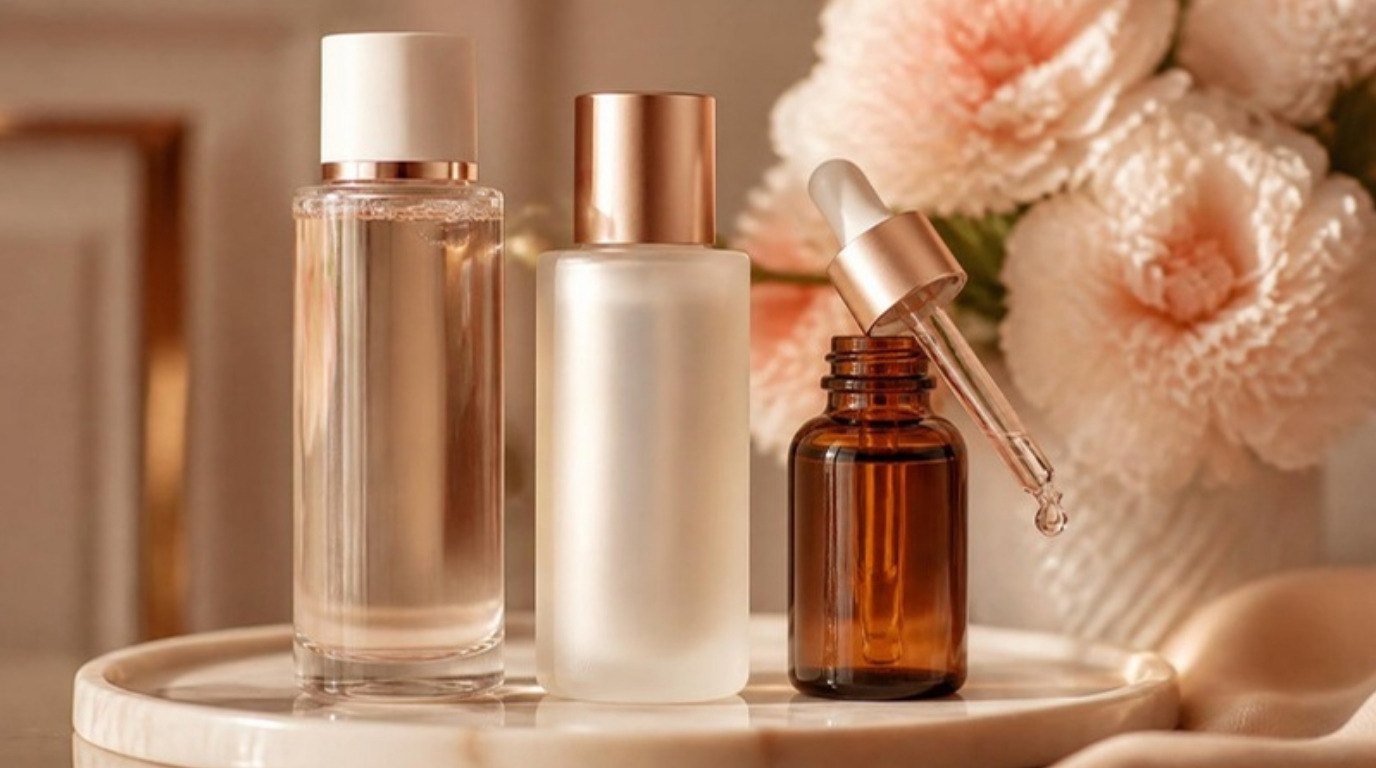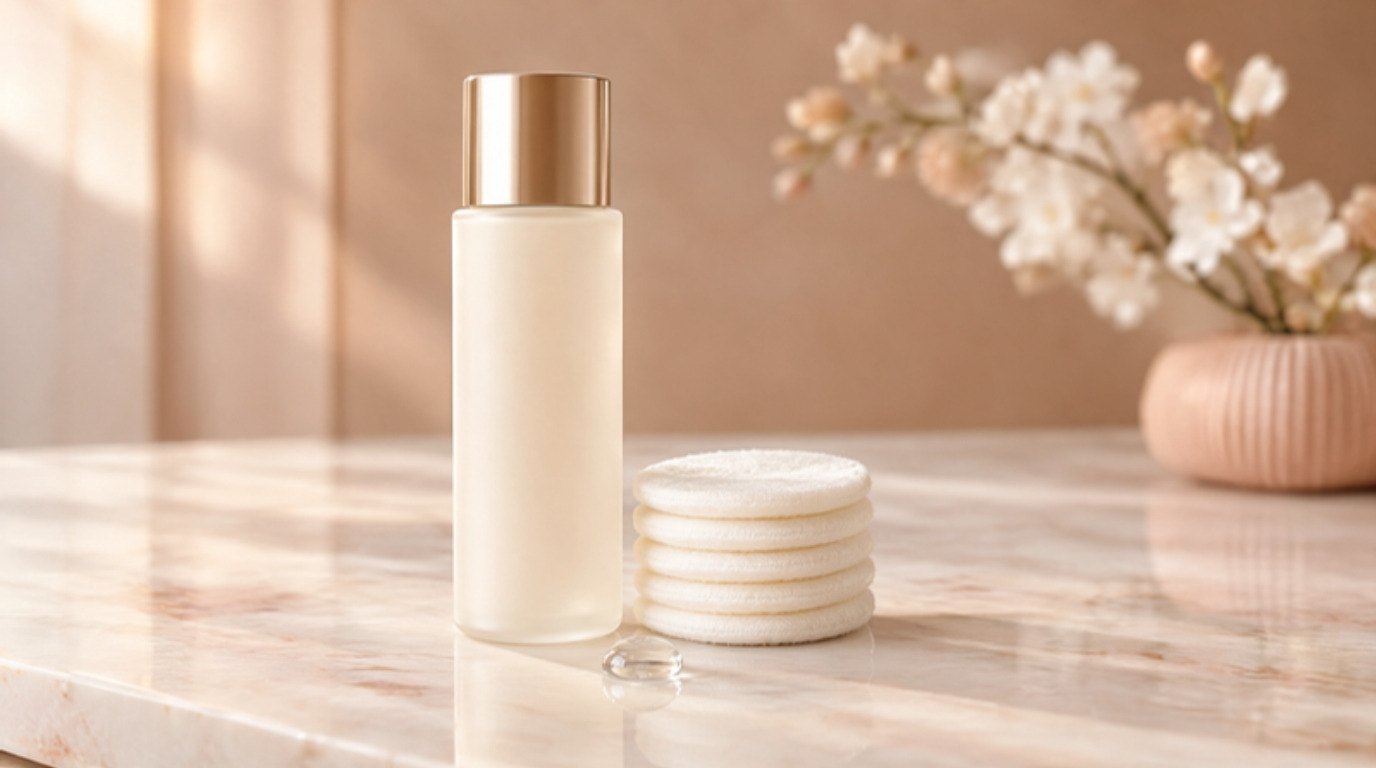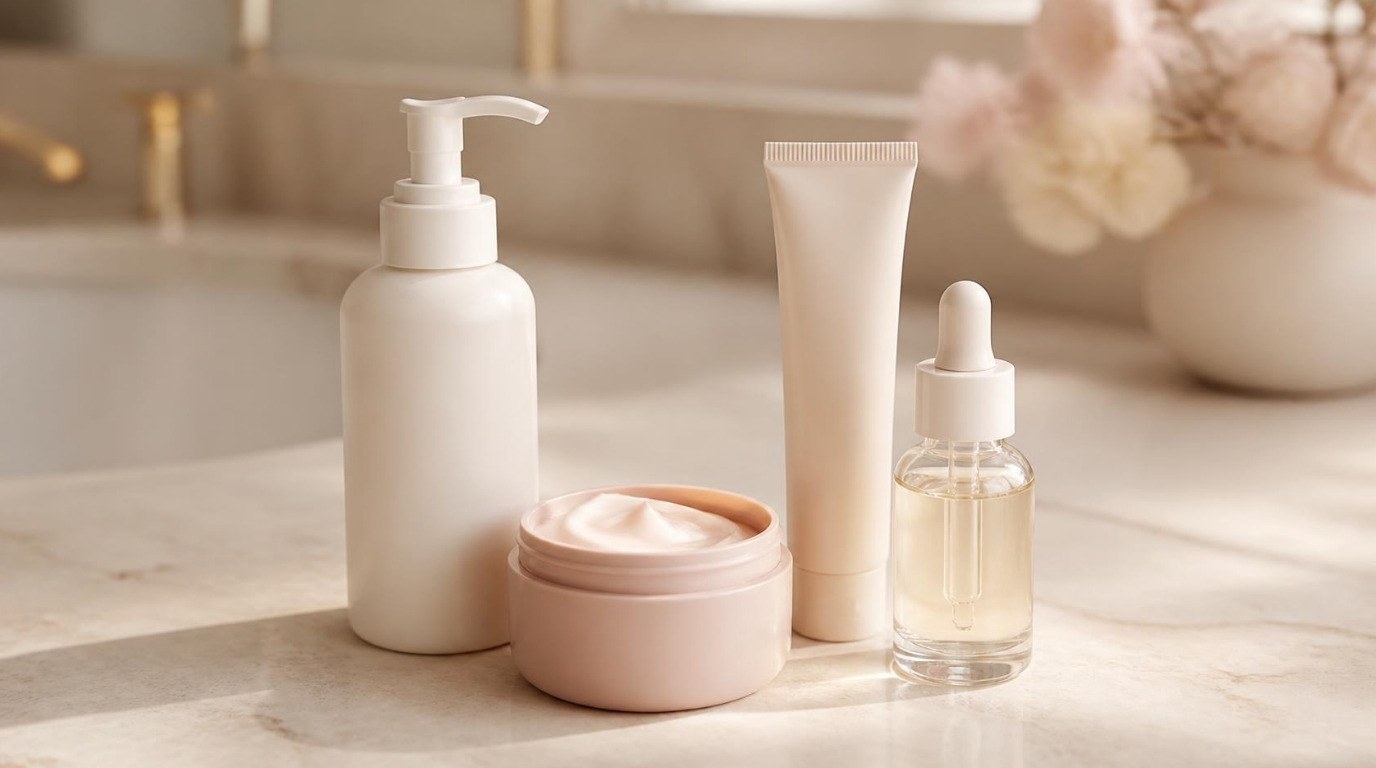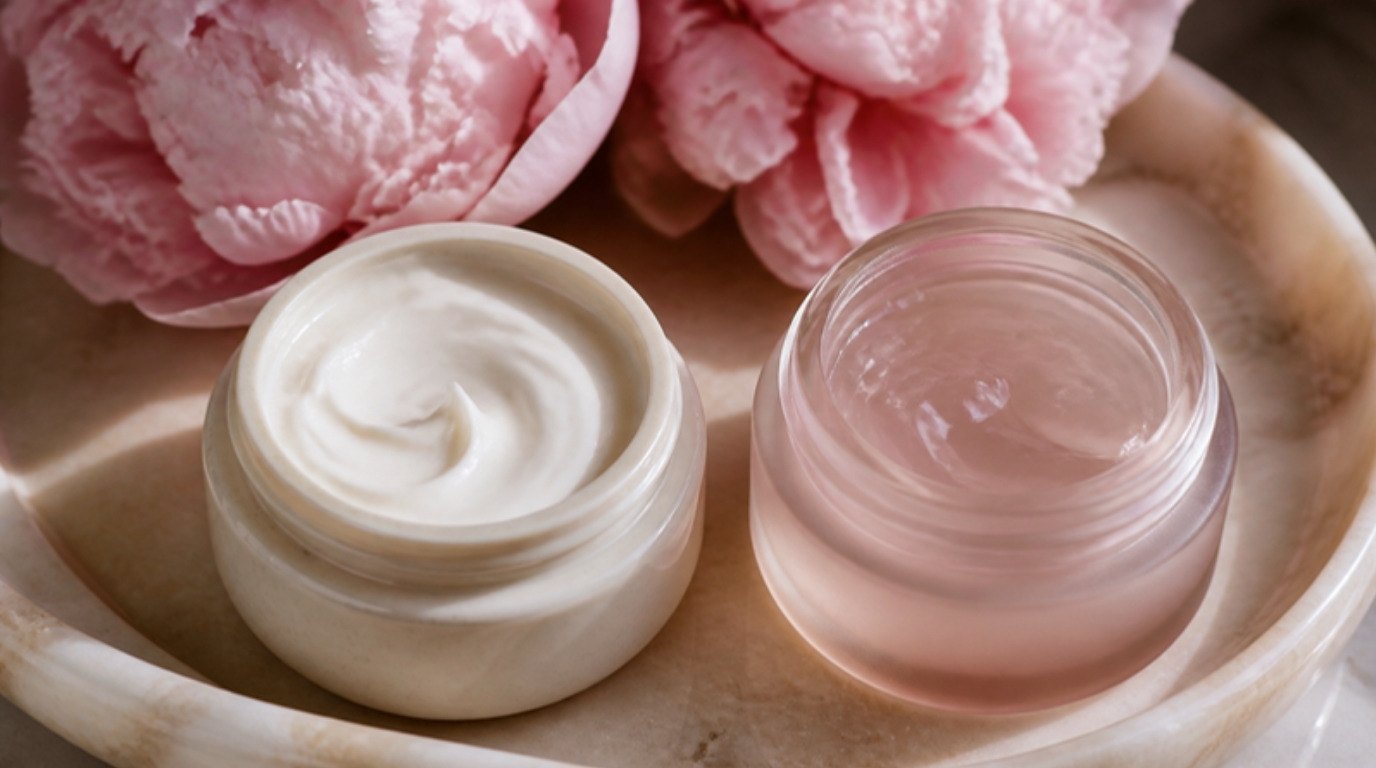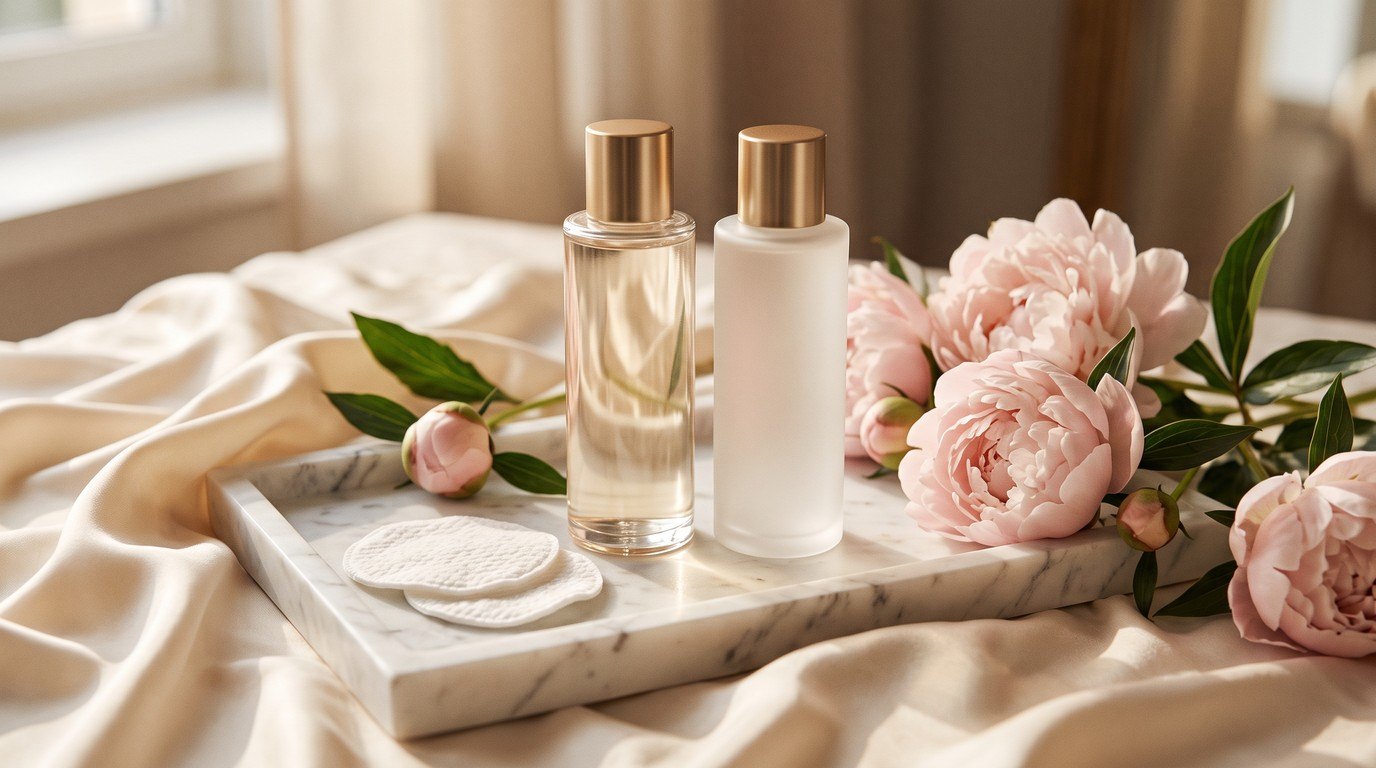
Choosing between a hydrating toner and an exfoliating toner is less about which one is "better" and more about what your skin is asking for right now. One adds water and softness. The other gently loosens dead skin cells so your skin can renew a little more smoothly. Both can be lovely. Both can also be the wrong pick on the wrong day.
The confusing part is that they often look almost identical on a shelf: a clear liquid in a bottle, applied after cleansing. But a toner full of glycerin and hyaluronic acid and a toner made with glycolic or salicylic acid behave very differently on your face, and mixing them up is one of the most common reasons skin ends up tight, stingy or suddenly breaking out.
This guide breaks down hydrating toner vs exfoliating toner in plain language: what each type actually does, the key ingredients to look for, who each one suits, five signs your skin needs hydration rather than exfoliation, a side-by-side table by skin concern, how to start an exfoliating toner safely, and how to spot over-exfoliation before it gets uncomfortable.
If you've been wondering whether a toner is even the right step for you, or how it differs from an essence or serum, start with my guide to toner vs essence vs serum. This article picks up from there and helps you choose between the two toner types.
What a Hydrating Toner Does

A hydrating toner is basically a drink of water for your skin, delivered right after cleansing. Its job is to replace some of the moisture your cleanser may have taken away and to give your skin a soft, damp base so the serum and moisturizer that follow can spread and sink in more comfortably.
Most hydrating toners are built around humectants, ingredients that attract and hold water in the top layers of the skin. The ones you'll see most often:
- Glycerin, the quiet, reliable workhorse. It's inexpensive, very well studied and gentle on most skin types. (My guide to glycerin for skin explains why it deserves more credit than it gets.)
- Hyaluronic acid or sodium hyaluronate, which can hold a lot of water and gives that bouncy, plumped feeling.
- Panthenol (provitamin B5), which hydrates and helps skin feel calmer and less tight.
- Soothing extras like allantoin, centella asiatica, aloe or beta-glucan, often found in Korean-style formulas.
Textures range from watery and almost weightless to slightly milky. Watery ones tend to suit combination and oily skin, while milky toners, which often contain a little oil or ceramides, feel more comforting on dry skin. A hydrating Korean-style toner in a clear bottle is an easy starting point: look for a short ingredient list, glycerin or hyaluronic acid near the top, and no added fragrance or high amounts of drying alcohol if your skin is sensitive.
What a hydrating toner won't do: it won't exfoliate, unclog pores on its own, or fade dark spots in any dramatic way. Its gift is comfort and bounce.
What an Exfoliating Toner Does

An exfoliating toner contains acids at leave-on strengths that loosen the bonds between dead skin cells on the surface, so they shed more evenly. Over a few weeks, that can mean smoother texture, a brighter look, and fewer clogged pores. Instead of scrubbing, the acid does the work quietly while it sits on your skin.
There are three main families of acids:
- AHAs (alpha hydroxy acids) such as glycolic, lactic and mandelic acid. They work on the surface and are usually chosen for dullness, rough texture and uneven tone. Glycolic is the smallest and strongest-feeling; lactic and mandelic tend to be milder.
- BHA (beta hydroxy acid), which almost always means salicylic acid. It is oil-soluble, so it can work inside the pore, which is why it's a classic pick for oily, congested or blackhead-prone skin.
- PHAs (polyhydroxy acids) such as gluconolactone and lactobionic acid. Their larger molecules work more slowly and gently, and they also attract water, which makes them a popular choice for sensitive skin.
For a deeper comparison of the first two, my article on AHA vs BHA walks through which exfoliant suits which skin type. If you're sensitive and nervous about acids, a gentle PHA exfoliating toner is the softest way in. I wrote a whole guide to PHA exfoliants if you'd like the details.
One important thing to know: AHAs in particular can make skin more sensitive to the sun, so daily sunscreen isn't optional once you start using them. More on that in a moment.
Who Should Choose a Hydrating Toner

A hydrating toner is usually the better first choice if your skin is:
- Dry, meaning it makes little oil and often feels rough or flaky.
- Dehydrated, meaning it's short on water (any skin type can be dehydrated, even oily skin). Not sure which one you are? My guide to dehydrated vs dry skin helps you tell the difference.
- Sensitive or easily irritated, especially if many products sting.
- Recovering from irritation, a harsh product, sunburn, wind or a period of over-exfoliating.
- Using strong actives already, such as a prescription treatment or retinol, where adding acids would be too much.
With my combination, sensitive skin, I'd lean toward a hydrating toner as the everyday base. It's the step that rarely causes trouble.
Who Should Choose an Exfoliating Toner

An exfoliating toner tends to make more sense if your skin is:
- Oily or shiny, especially through the T-zone, with visible pores.
- Congested, with blackheads, clogged pores or frequent small bumps (a BHA is often the pick here).
- Dull or rough, with a texture that makeup tends to cling to (an AHA or PHA is often chosen for this).
- Uneven in tone, with leftover marks from old breakouts that you'd like to look softer over time.
- Resilient enough to handle an acid without stinging, redness or flaking.
Exfoliating toners are not a treatment for skin conditions. If you're dealing with painful breakouts, rosacea, eczema or persistent redness, a dermatologist can tell you whether acids are a good idea and which ones.
Why Many People Can Use Both

You don't actually have to choose forever. Many people do well with a hydrating toner as their daily step and an exfoliating toner just two or three nights a week. On exfoliation nights, the acid toner replaces the hydrating one. On the other nights, the hydrating toner keeps things calm and comfortable.
Combination skin is a perfect example. A shiny T-zone with dry cheeks might enjoy a BHA toner swept only over the nose, forehead and chin a few nights a week, and a hydrating toner everywhere else. That's not complicated, it's just listening to different parts of your face.
The one thing to avoid is using both on top of each other every night, or adding an exfoliating toner to a routine that already has several other exfoliating products. More acid isn't more results. It's usually more irritation.
How To Use a Hydrating Toner for the Most Comfort
A hydrating toner is very forgiving, but a few small details make it work noticeably better:
- Apply it within a minute of cleansing. Skin that is still slightly damp holds onto hydration more easily than skin that has fully air-dried and started to feel tight.
- Use your hands for watery formulas. Pour a coin-sized amount into clean palms, then press (don't rub) it into your face and neck. Pressing is gentler than swiping and wastes less product.
- Layer it on dry days. Many Korean routines apply a thin hydrating toner two or three times, letting each layer sink in for about 30 seconds. It's a lovely trick for dehydrated or wind-chapped skin, and you can skip it on days your skin feels fine.
- Seal it in. Humectants pull in water, but they need a moisturizer on top to stop that water from evaporating. Follow with your serum, if you use one, and then moisturizer.
- Use it morning, night or both. Hydrating toners are gentle enough for twice-daily use for most people. In the morning, finish with sunscreen as always.
A Simple Weekly Toner Routine Example
If you'd like to use both types, here is one easy layout for combination skin that is new to acids. Adjust it to your own skin, and skip the acid nights entirely whenever your skin feels sensitive.
- Every morning: gentle cleanse or a splash of water, hydrating toner, moisturizer, sunscreen.
- Two evenings a week (not back to back): cleanse, exfoliating toner on one cotton pad, a minute's pause, moisturizer.
- All other evenings: cleanse, hydrating toner, any other treatment you use, moisturizer.
After a month with no irritation, you can try a third acid night if you feel you'd benefit. Many people find two nights is plenty and never need more.
Hydrating Toner vs Exfoliating Toner by Skin Concern
This table is the quick-reference heart of the article. Find your main concern and use it as a starting point, not a strict rule. Screenshot it if that helps you remember when you're standing in the skincare aisle.
| Skin concern | Hydrating toner | Exfoliating toner | How often |
|---|---|---|---|
| Tight, dry feeling after cleansing | Best pick: glycerin, hyaluronic acid, panthenol | Usually skip for now | Hydrating: once or twice daily |
| Dehydrated but oily skin | Yes, a light watery formula | Optional, gentle BHA or PHA | Hydrating daily; acid 1–2 nights a week |
| Sensitive, easily stinging skin | Best pick: fragrance-free, soothing extras | Only a PHA, very slowly | Hydrating daily; PHA 1–2 nights a week at most |
| Blackheads and clogged pores | Helpful as a daily base | BHA (salicylic acid) | Acid 2–3 nights a week to start |
| Dullness and rough texture | Helps skin look plumper | AHA (lactic or mandelic to start) or PHA | Acid 2–3 nights a week |
| Shiny T-zone, dry cheeks | All over, daily | BHA on the T-zone only | Acid 2–3 nights a week on oily areas |
| Irritated or over-exfoliated skin | Best pick, plus a simple moisturizer | Pause completely | Hydrating only until fully calm |
| Already using retinol or prescription actives | Best pick | Ask your dermatologist first | Hydrating daily; acids only if advised |
5 Signs Your Skin Needs Hydration, Not Exfoliation

It's very common to reach for an acid when skin looks rough or flaky, but sometimes that roughness is thirst, not buildup. If you notice these signs, try a few weeks of gentle hydration before adding any exfoliation.
1. Your Skin Feels Tight After Cleansing
If your face feels like it has shrunk a size a few minutes after washing, it's asking for water and comfort. Exfoliating on top of that tightness usually makes it worse. Try a gentler cleanser and a hydrating toner pressed in while your skin is still slightly damp.
2. Fine Lines Look More Obvious by Afternoon
Dehydration can make fine lines look deeper and makeup settle into them as the day goes on. If they look softer right after moisturizing and more noticeable by late afternoon, water is the likely missing piece, not dead skin.
3. Products Sting When You Apply Them
A gentle moisturizer shouldn't sting. If it does, your skin barrier may be stressed. That's a clear sign to put acids on hold and focus on soothing, hydrating steps until products feel comfortable again.
4. Your Skin Is Oily but Still Flaky
Shine and flakes at the same time often point to dehydrated skin that's producing oil to compensate. This is where many people over-exfoliate. A light hydrating toner often helps more than another acid.
5. Makeup Looks Patchy Even on Smooth Days
When foundation clings to dry patches or looks crackly, it's tempting to blame texture. Often, skin simply doesn't have enough moisture for makeup to sit evenly. A couple of layers of hydrating toner before moisturizer can make a visible difference to how your base wears.
How To Start an Exfoliating Toner Safely

If you've decided an exfoliating toner is right for you, a slow start makes all the difference. Here's a simple way to introduce one:
- Patch test first. Apply a little to a small area, such as behind the ear or along the jawline, for a few days. If there's no redness, itching or burning, you can move to the face.
- Start with two nights a week. Choose two evenings that aren't next to each other, for example Monday and Thursday. After two to four weeks with no irritation, you can try three nights.
- Apply to clean, dry skin. Soak a soft white cotton pad or one of your reusable cream bamboo pads and sweep it once over your face, avoiding the eye area and the corners of your nose and lips. One pass is enough. Don't rub.
- Never use it on broken skin. Skip any area with cuts, active irritation, sunburn, or freshly picked spots.
- Keep it away from retinol nights at first. If you use retinol, alternate nights rather than layering the two, at least until you know how your skin handles both. If you use prescription skincare, ask your dermatologist before adding an acid.
- Follow with a simple moisturizer. Wait a minute or so, then apply a plain, comforting moisturizer.
- Wear SPF every morning. Acids, especially AHAs, can increase sun sensitivity. A mineral SPF moisturizer is an easy daily habit, and it's a good pick for sensitive skin.
Give it time. Most people need around four to eight weeks of steady, gentle use to judge whether an exfoliating toner is making a difference.
Signs of Over-Exfoliation and How To Pause

Over-exfoliation happens more easily than you'd think, especially when an exfoliating toner is added to a routine that already includes scrubs, retinol, peel pads or acid serums. Watch for:
- Stinging or burning when you apply products that never bothered you before.
- Redness that lingers for hours, or patches that feel warm.
- A tight, overly shiny, almost waxy look on the cheeks or forehead.
- Flaking or peeling that keeps coming back.
- New small breakouts or bumps that appeared after you started the acid.
If you notice any of these, pause all exfoliating products, including the toner. For the next one to two weeks, keep your routine very simple: a gentle cleanser, a hydrating toner if it doesn't sting, a plain moisturizer and sunscreen in the morning. Once your skin feels completely comfortable again, you can reintroduce the exfoliating toner at one night a week and build up slowly.
If redness, burning or breakouts don't settle within a couple of weeks, or if your skin feels painful, please see a dermatologist. Persistent irritation deserves a proper look.
How To Pick the Right Toner for You
When you're standing in front of a shelf of toners, these quick questions can help you decide:
- How does my skin feel an hour after cleansing? Tight or itchy points to hydration. Shiny and congested points to a possible exfoliant.
- What else is in my routine? If you already have retinol, an acid serum or a scrub, you probably don't need an exfoliating toner too.
- Does it say the acid type? Look for the specific acid (glycolic, lactic, mandelic, salicylic, gluconolactone) so you know what you're getting.
- Is it fragrance-free? For sensitive skin, fragrance-free is a kinder bet in both types of toner.
- Do I want one product or two? If you'd like the simplest routine, start with a hydrating toner and add an exfoliating one later only if you feel your skin needs it.
There's no shame in keeping it simple. A good hydrating toner, a moisturizer and sunscreen is a complete, lovely routine for a lot of people.
Final Thoughts
A hydrating toner comforts and plumps, and an exfoliating toner smooths and refines. Neither one is the hero of every routine. The right choice is the one that matches what your skin is telling you this month, and that can change with the weather, your stress levels or the rest of your products.
Start gently, patch test anything new, protect your skin with sunscreen every morning, and give each change a few weeks. Your skin will thank you for listening instead of rushing.