A messy spice collection is rarely a space problem. It is usually a visibility problem: when you can't see what you have, you buy a third jar of cumin, the paprika from three moves ago hides in the back, and cooking dinner starts with a two-minute dig through a crowded cabinet.
The good part is that spices are small, so organizing them is one of the quickest kitchen wins there is. One afternoon, a few simple supplies and a sorting system that matches the way you actually cook, and that cabinet (or drawer, or door) can stay calm for months.
This guide is all about spice organization ideas that work in a tiny rental kitchen or a big family kitchen. You'll find how to sort and edit what you own, the freshness basics most people skip, 10 storage ideas with exact how-tos, a table to match the right idea to your kitchen size and budget, and the sorting and labeling systems that keep it neat.
Start Here: Gather Every Spice You Own
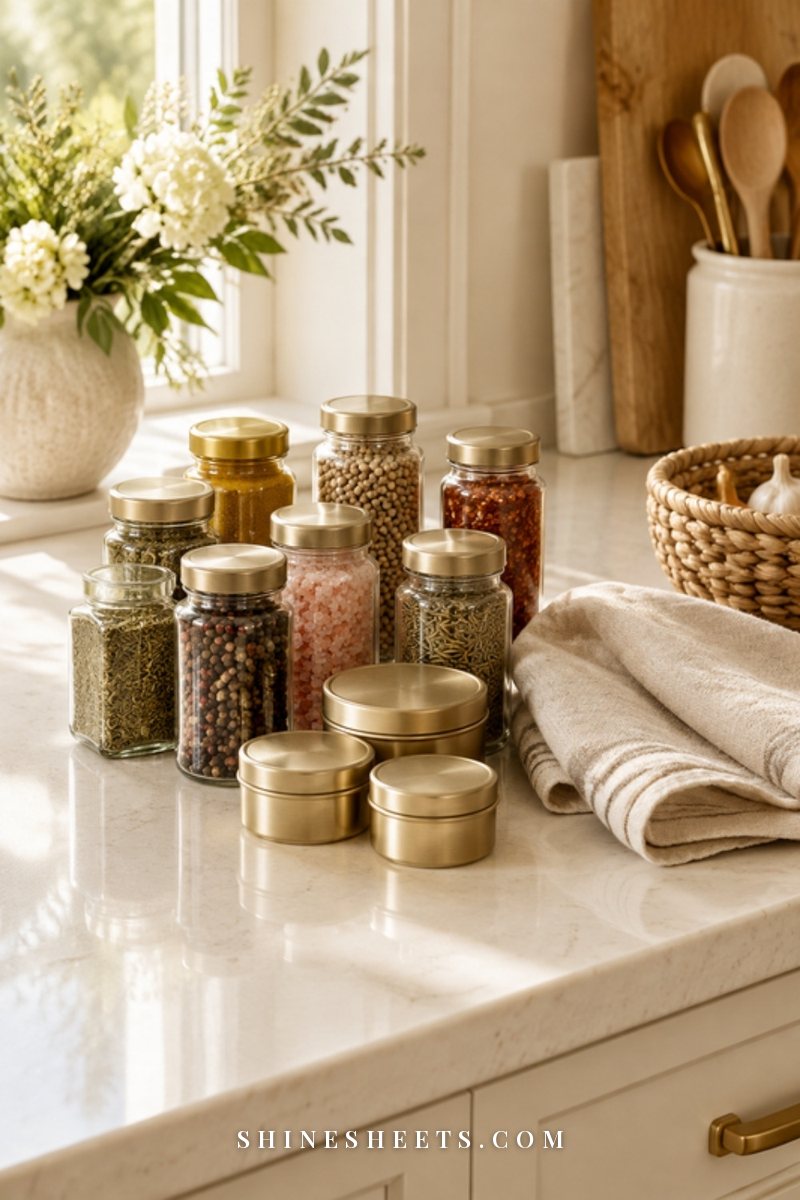
Before you buy a single organizer, take every spice out of every place it lives. Check the cabinet, the drawer by the stove, the pantry, the back of the counter, that one random box from the last move. Put it all on one clear counter or the dining table.
Seeing everything in one spot is the step that saves you money. Most people discover duplicates (often two or three of the same thing), a handful of jars they don't remember buying and a few they can't even identify anymore. That's normal, and nothing to feel bad about.
Now edit, in this order:
- Check the dates. Look for a best-by date on the bottom or the lid. If there's none, think about when you bought it. If you honestly can't remember, that's a clue.
- Smell and look. Rub a pinch between your fingers. A fresh spice smells strong right away and has a bright color. If it smells faint, dusty or like nothing at all, it has lost most of its flavor.
- Toss what is clumped, damp or faded. Clumps usually mean moisture got in. Anything with an odd smell or any sign of moisture goes straight in the trash.
- Combine duplicates. If you have two half-jars of the same spice and both still smell good, pour them into one container (the older one first, then the newer on top, so you use the older part next).
- Make a "use soon" pile. Spices that are a bit faded but still fine go in front, so you finish them before opening anything new.
Give yourself 20–30 minutes for this part. It is the least pretty step, and it is the one that makes everything after it easy.
Freshness Basics Before You Organize
Spices hate four things: heat, light, air and moisture. A good organization plan protects them from all four, which is why the prettiest idea isn't always the best one. A rack hung right above the stove looks lovely in photos, but the heat and steam from cooking quietly fade your spices (and the steam can make them clump).
- Keep them cool. Choose a spot away from the stove, oven, dishwasher vent and toaster. Even a cabinet one door over from the stove is better than the one directly above it.
- Keep them dark. A drawer or a closed cabinet is ideal. If you love open storage, use it for the spices you go through quickly.
- Close lids tightly. Air slowly flattens the flavor, so screw lids on fully every time.
- Never shake over a steaming pot. The steam rises into the jar. Shake into your hand or a small spoon first, away from the pot.
- Know the rough timelines. As a general guide, ground spices are at their best for about two to three years, while whole spices (like peppercorns, whole cloves and cinnamon sticks) keep their flavor longer. Dried leafy herbs fade the fastest. Your nose is always the final judge.
If your kitchen is small and the only cabinet you have sits near the stove, don't stress. Pick the lowest shelf of that cabinet (heat rises), keep the door closed and buy smaller jars more often.
10 Spice Storage Ideas for Any Kitchen
You only need one or two of these. Read through, think about where your spices live now and where you reach while you cook, and pick the idea that fits your space. Most of them are renter-friendly, and several cost very little.
1. A Drawer Insert With Angled Tiers
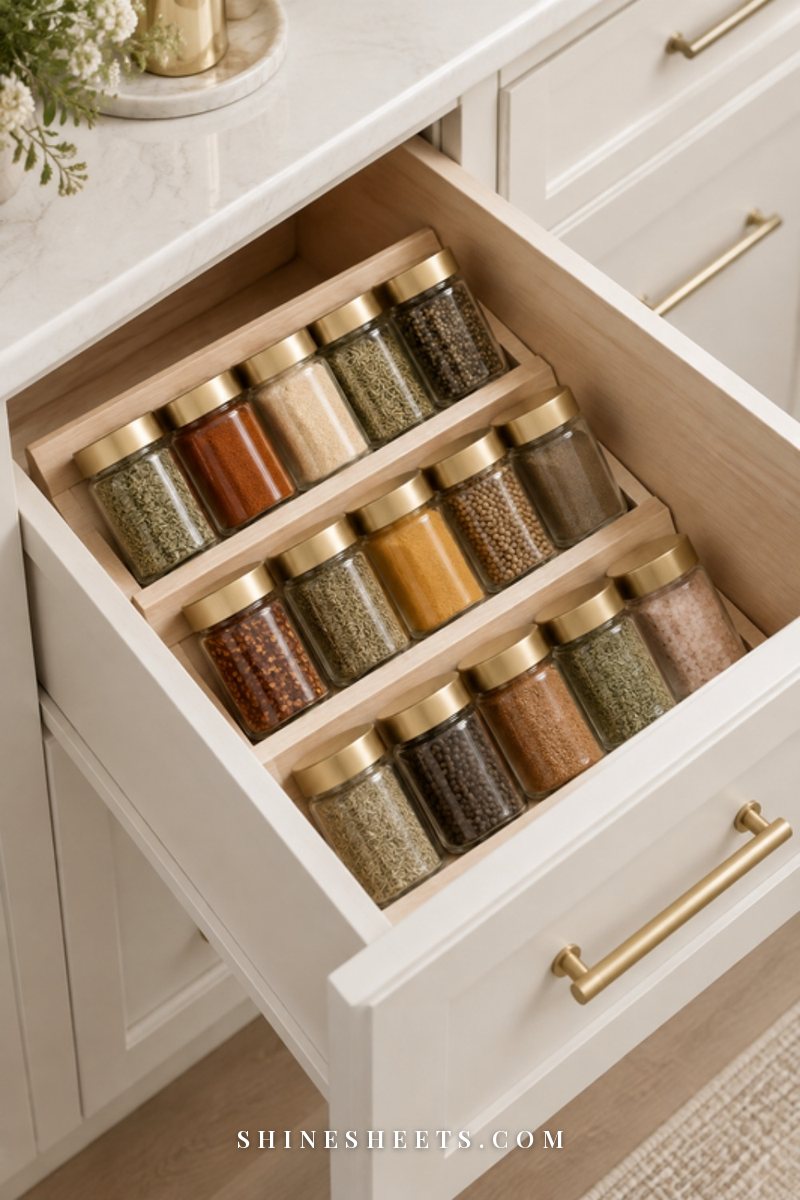
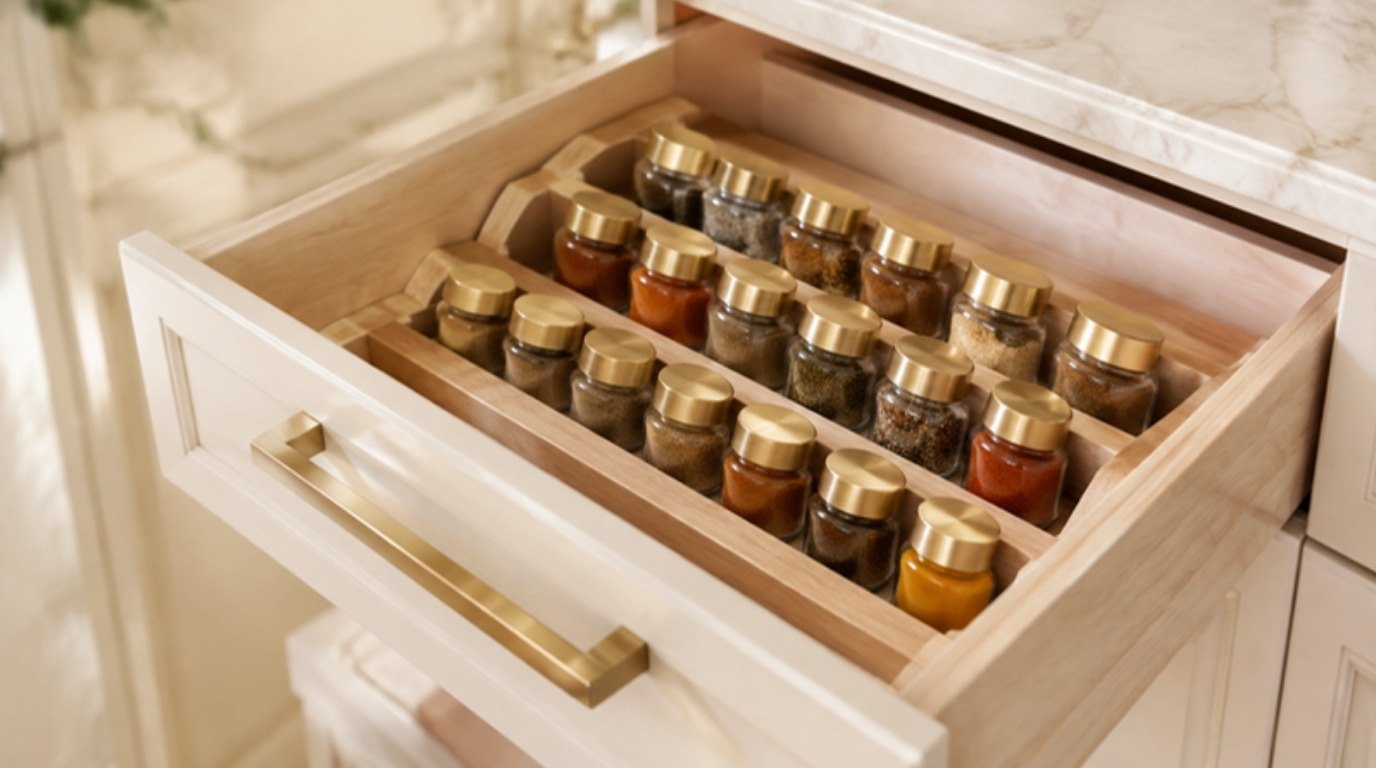
If you have one spare drawer near your cooking zone, this is the idea I'd choose first. Jars lie at a slight angle in stepped rows, so you read every lid at a glance and nothing ever hides behind anything else. Drawers are also dark and usually cooler than upper cabinets, which helps freshness.
How to do it: Measure the inside width and depth of your drawer (not the drawer front). Look for an expandable insert that adjusts to your width, or two smaller ones placed side by side. A tiered spice drawer insert with three or four steps usually holds 20–30 standard jars. Lay the jars lid-up and label the tops, since that is the part you will see.
For a deeper look at the rest of your drawers, my guide to kitchen drawer organization walks through utensil and junk drawers too.
2. Tiered Shelf Risers in a Cabinet
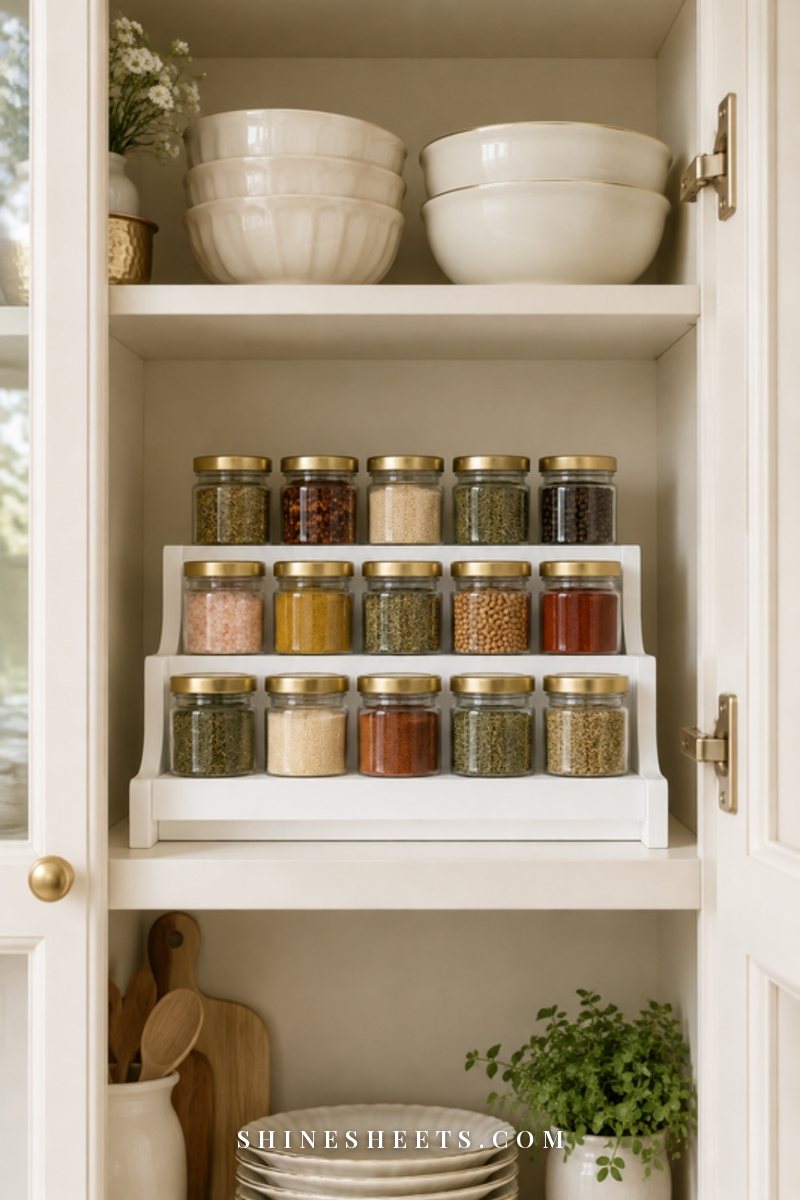
When spices live on a regular cabinet shelf, the back rows disappear. A step riser works like stadium seating: the back row sits higher, so every jar front is visible. This is the cheapest fix for the standard "jars in a cabinet" setup, and it needs no tools.
How to do it: Measure your shelf depth and the height between shelves. A three-step riser fits most cabinets that are at least 10 inches deep. Put the spices you reach for most on the lowest, front step, and the occasional ones on the top step at the back. A white expandable shelf riser slides wider or narrower to fit your exact cabinet.
Label the front of each jar here, not the lid, since you'll be looking at them from the front.
3. A Lazy Turntable
A turntable is perfect for deep corner cabinets and for anyone who doesn't want to commit to a whole system. One spin and the back becomes the front. It also works on a counter or an open shelf if you keep it away from the stove.
How to do it: Choose a turntable with a raised edge so jars don't slide off when you spin it. A 9–10 inch size holds around 12–15 jars; a two-tier version doubles that in the same footprint. A two-tier white lazy turntable is a nice pick for a corner cabinet. Sort by type in sections, like slices of a pie: baking spices in one section, everyday savory in another.
4. A Door-Mounted Rack
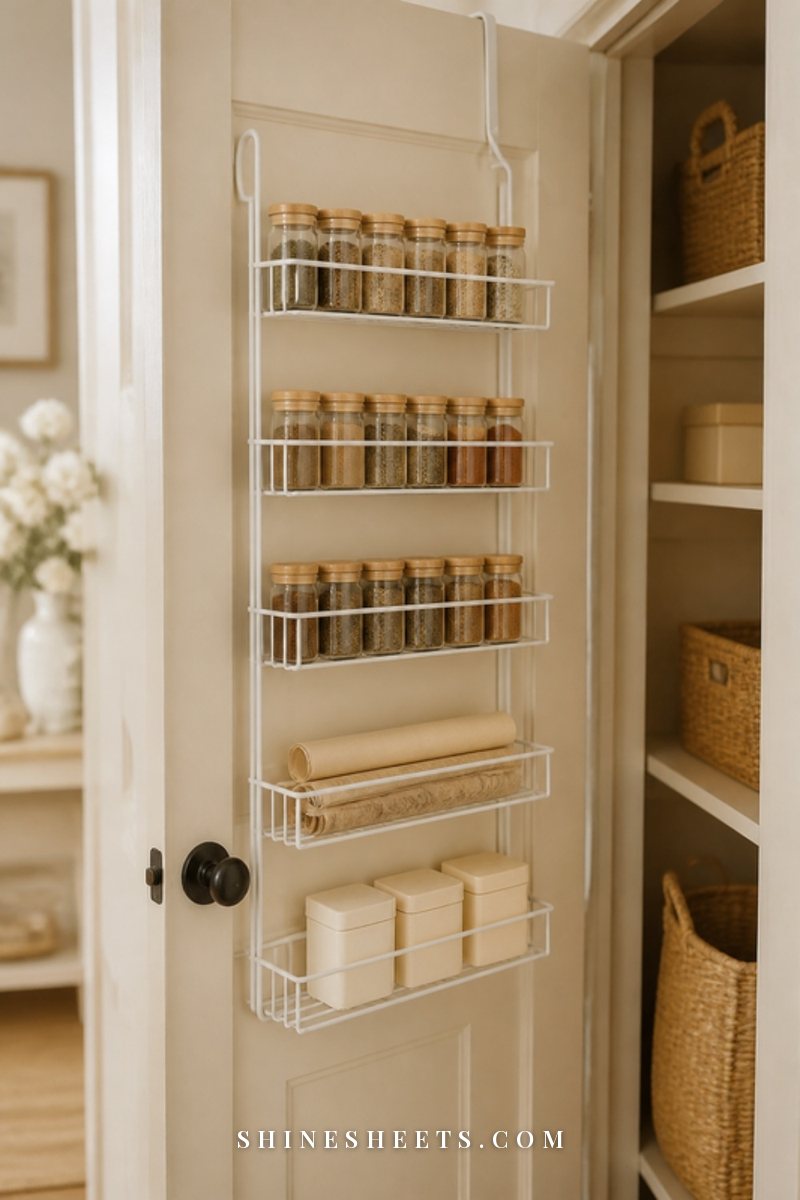
The inside of a pantry or cabinet door is the most overlooked storage in a small kitchen. A slim rack there turns empty space into a full spice wall, and it frees up an entire shelf for other things.
How to do it: Measure the door's inner width and check how deep the shelves behind it are, so the door still closes. Racks under about 3 inches deep fit most cabinet doors; pantry doors can take deeper ones. For renters, an adhesive door rack or an over-the-door hanging style avoids drilling. Press adhesive strips for 30 seconds and wait 24 hours before loading the rack, so the bond fully sets.
Keep heavy glass jars on the lower shelves of the rack, and lighter plastic ones higher up, so the door doesn't feel weighed down.
5. Magnetic Tins on the Side of the Fridge
If you have zero cabinet space left, look sideways. The side of the fridge (or any metal surface) can hold a whole set of magnetic spice tins, and it keeps them within arm's reach without taking up a single shelf.
How to do it: Choose the fridge side that faces away from the oven, and keep tins away from the top where warm air vents out. Look for magnetic spice tins with clear lids, so you can see the color of each spice, and arrange them in a simple grid. Three rows of five looks tidy and holds your 15 most-used spices. Make sure lids close firmly before you put them on a vertical surface.
6. A Wall Rail
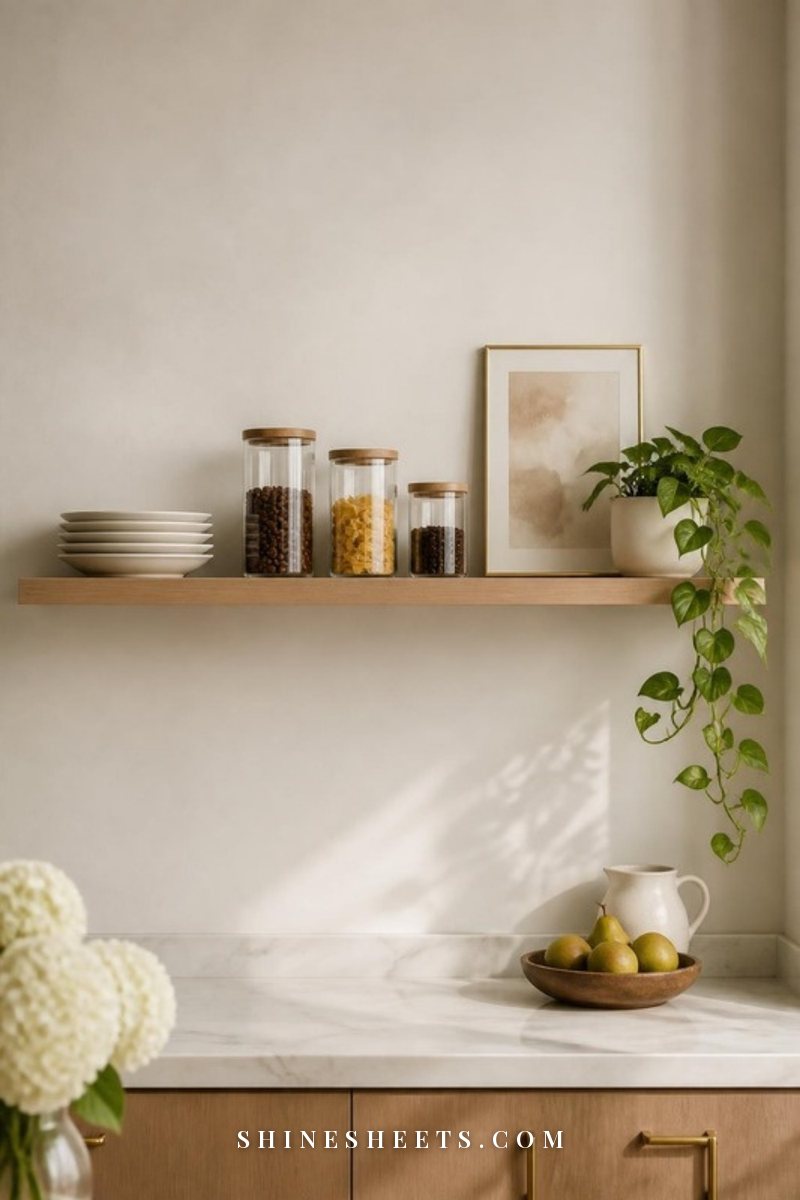
A wall rail or a slim floating ledge makes your spices part of the decor. It works best for a short, curated set of the jars you use every week, not for your whole collection, since open storage gets more light.
How to do it: Pick a spot on a wall that is not directly above or beside the stove, ideally out of direct sunlight. Rails with a front lip keep jars from tipping. If you rent, use a rail rated for adhesive mounting or ask about small nail holes (they are often fine and easy to fill when you move out). Keep it to 8–12 jars so it reads as styled, not crowded.
For more ways to make an open spot look calm instead of busy, my tips on open kitchen shelf styling cover spacing and color balance.
7. A Pull-Out Cabinet Organizer
That narrow gap next to the stove or beside the fridge is often 4–8 inches wide and completely wasted. A slim pull-out organizer slides into a cabinet (or a gap) and brings the whole spice collection out to you, like a tiny drawer on its side.
How to do it: Measure the cabinet opening, not the outside, and check the hinge side so the door can open wide enough. Many slim pull-out organizers sit on the cabinet floor and need no screws, which makes them renter-friendly. If it slides beside the stove, keep the lower shelves for spices and the upper shelves for oils you use quickly, and make sure nothing touches a hot surface.
8. Matching Glass Jars With Labels
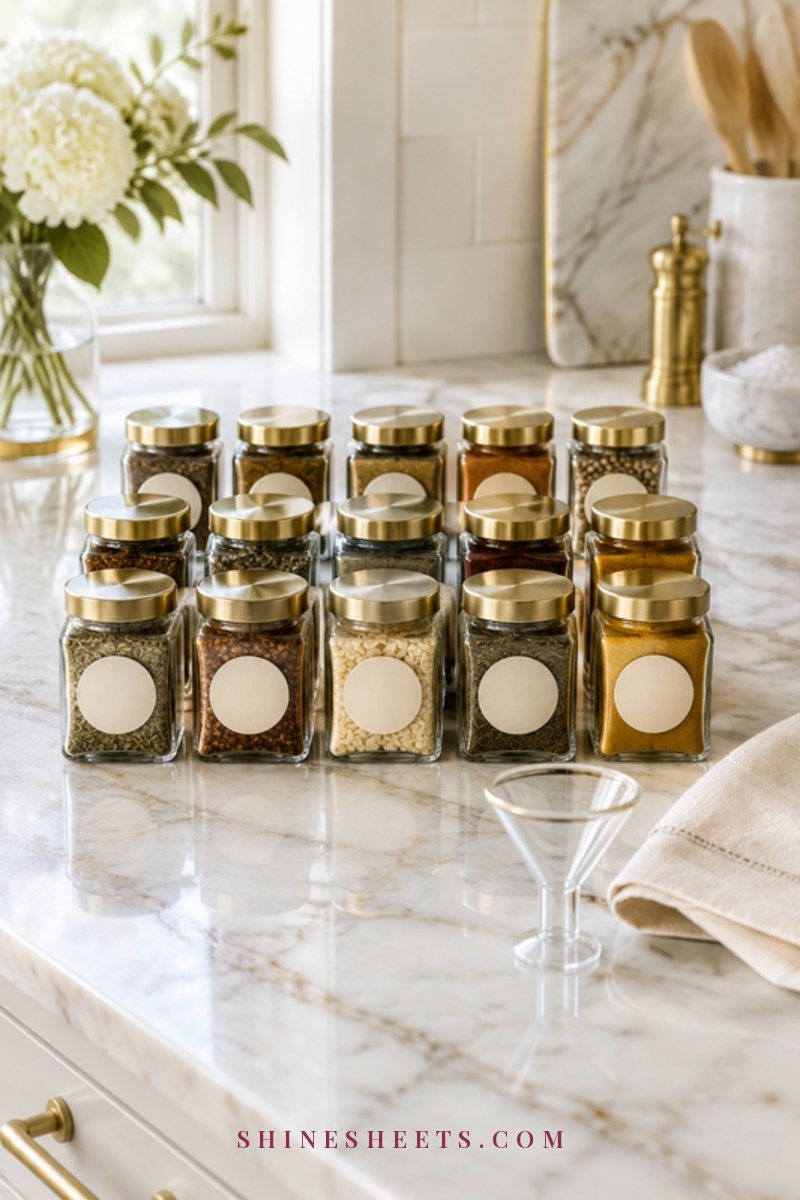
Matching jars aren't required, but they do make every other idea on this list look instantly calmer. Mismatched store containers come in different heights, shapes and colors, so even a tidy cabinet looks busy. Uniform jars line up neatly, stack evenly in a drawer and fit a riser perfectly.
How to do it: Choose one jar size and stick with it (around 4 ounces holds a standard store jar's worth). Glass spice jars with gold lids look warm and pretty in a white or cream kitchen. Use a small funnel to decant, and wipe the rim before closing so the lid seals. Add cream label stickers to the lid and the front. Write the name and the month you filled the jar in small print on the bottom, so you always know how fresh it is.
9. Small Baskets by Cuisine
If you cook a few kinds of food often, sort your spices into small baskets by cuisine or by dish. When you make a certain dinner, you pull out one basket and everything you need is in it. It is a quick fix for deep pantry shelves, where loose jars tend to wander.
How to do it: Use 3–5 small, shallow baskets or bins (around 4 inches tall is easy to see into). Give each a simple label on the front, like "Baking," "Everyday," "Mexican," "Italian," "Indian" or "Breakfast." Keep salt and black pepper out of the baskets and near the stove in a closed container, since you use them for almost everything. My pantry organization guide shows how to give these baskets a permanent home on the shelf.
10. Refill Pouches Stored in a Bin
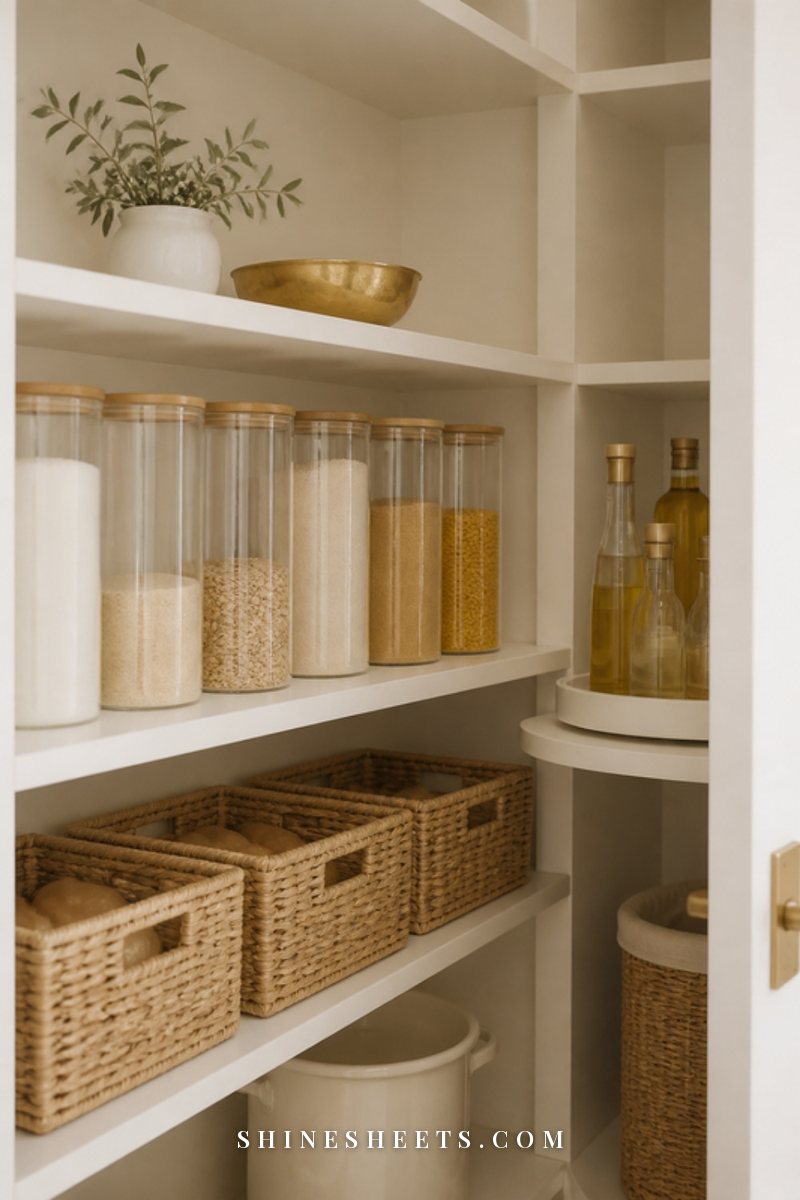
Buying spices in refill bags is usually cheaper than buying a new jar each time, but loose pouches quickly become a mess. A simple bin keeps them in one place, and it means your jars stay small and pretty while the backup supply waits quietly in the pantry.
How to do it: File pouches upright in a clear bin, alphabetically, like folders in a drawer. Squeeze out extra air and seal each one with its zip or a small clip after you refill a jar. Write the purchase month on the pouch. Keep the bin somewhere dark and dry, never above the stove or near the dishwasher.
Which Spice Storage Fits Your Kitchen
Not sure where to start? Find your kitchen in the first column and pick one idea. You can always add a second one later.
| Kitchen size | Best storage idea | Cost level | Pros |
|---|---|---|---|
| Tiny rental, no spare drawer | Door-mounted rack (adhesive) or magnetic tins on the fridge side | Low | No drilling, uses empty space, frees up a whole shelf |
| Small kitchen with one spare drawer | Angled tiered drawer insert | Low to medium | Dark and cool, every lid visible, nothing hides |
| Standard cabinets, average space | Tiered shelf riser | Low | Cheapest fix, no tools, works with jars you already own |
| Deep corner cabinet | Two-tier lazy turntable | Low | One spin brings the back to the front, easy to sort by section |
| Narrow gap beside stove or fridge | Slim pull-out cabinet organizer | Medium | Turns wasted inches into a full spice "drawer" |
| Big kitchen or walk-in pantry | Small baskets by cuisine plus a refill bin | Low to medium | Grab-and-cook baskets, backup stock in one place |
| Open, styled kitchen | Wall rail with matching glass jars (only your weekly set) | Medium | Looks like decor, everyday spices within reach |
Feel stuck between two rows? Choose the cheaper idea first and live with it for two weeks. Your cooking habits will tell you whether you need more.
How To Sort Your Spices
Storage is the "where," and sorting is the "how you find it." The right sorting system depends on how many spices you own and how you cook. Pick one of these three and use it everywhere, so your brain only has to learn one rule.
Alphabetical
Best for big collections (30 jars or more) and for anyone who shares the kitchen. Everyone knows the alphabet, so nobody has to ask where the oregano went. It works especially well in drawers and on door racks, where you scan in rows. The small downside: allspice and anise sit far from cinnamon even though you might use them together.
By Frequency
Best for small kitchens and quick weeknight cooking. Put your top 8–10 spices in the easiest spot (front of the drawer, lowest step of the riser, eye level on the rack) and everything else behind or above them. Not sure which ones are your top ten? For two weeks, put a jar back a little to the left each time you use it, and the busy ones will reveal themselves.
By Use: Baking vs. Savory
Best for anyone who bakes regularly. Keep cinnamon, nutmeg, ginger, cloves, vanilla and other sweet spices together, near the flour and baking supplies, and everything savory near the stove. Inside each group you can still go alphabetical. This system pairs beautifully with the basket idea above.
Labeling That Actually Lasts
Labels are what keep the system working when you're tired and cooking fast. A few small habits make a big difference:
- Label where you look. In a drawer, label the lids. On a riser, rack or rail, label the fronts. If you use both a drawer and a shelf, label both.
- Keep the font simple. Pretty script fonts are lovely, but a clear, plain font is faster to read with a pot boiling.
- Add a fill date. Write the month and year you filled the jar in small letters on the bottom. That is your freshness reminder.
- Use the same label style everywhere. Matching labels make even mismatched jars look intentional.
- Keep a few spare labels. Store blank labels and a fine pen in the refill bin, so a new spice gets labeled the day it arrives.
If you love a label maker, use one; a pack of pre-printed or blank stickers works just as well and costs less.
Budget Tip: Decant Only What You Use Often
Here's my small honest admission: the urge to pour every spice into a matching jar is strong, and it is usually where spice organization gets expensive and exhausting. You don't need 40 matching jars. You need matching jars for the spices you reach for every week.
A simple formula: decant your top 10–15, leave the rest in their original containers in a basket or bin. The everyday set looks pretty and is easy to grab, the rarely used ones stay neatly contained, and you save the cost of 25 extra jars and labels. When an original container runs out, you can decide then whether it has earned a jar.
Other low-cost moves:
- Reuse clean glass jars you already have for bigger amounts, like cinnamon sticks or bay leaves.
- Buy refill bags instead of new jars, and refill only when a jar is almost empty.
- Buy smaller amounts of spices you rarely use, so they don't go stale before you finish them.
- Use a shoebox lid or a shallow tray as a drawer divider until you know you love the drawer system.
If you rent and want more small changes like this that look custom without losing your deposit, my list of renter-friendly kitchen upgrades is a good next read.
How To Keep Your Spices Organized
The first organizing session is the big one. After that, a tiny routine keeps it neat:
- Put it back in its spot right away. A jar left on the counter is how chaos begins.
- Keep a running list. When a jar gets low, add it to your shopping list that same day, so you never buy a duplicate "just in case."
- Do a 10-minute reset every few months. Wipe the drawer or shelf, check the fill dates, smell anything older and move fading spices to the front.
- Refill from the bin, not the store. Check your refill pouches before buying anything new.
- One in, one out. If a new spice joins the collection and space is tight, finish or let go of one you never use.
When the spices are under control, the rest of the kitchen often follows. My guide to kitchen organization ideas has more small fixes for cabinets, counters and under the sink.
Final Thoughts
Organizing spices is a small project with a surprisingly big payoff. Every time you cook, you open one drawer or one door and find exactly what you need, without digging, guessing or buying a fourth jar of paprika.
Start with the edit, pick one storage idea that fits your kitchen and choose one sorting rule. That is enough for a calm, pretty spice spot that makes everyday cooking feel a little easier.