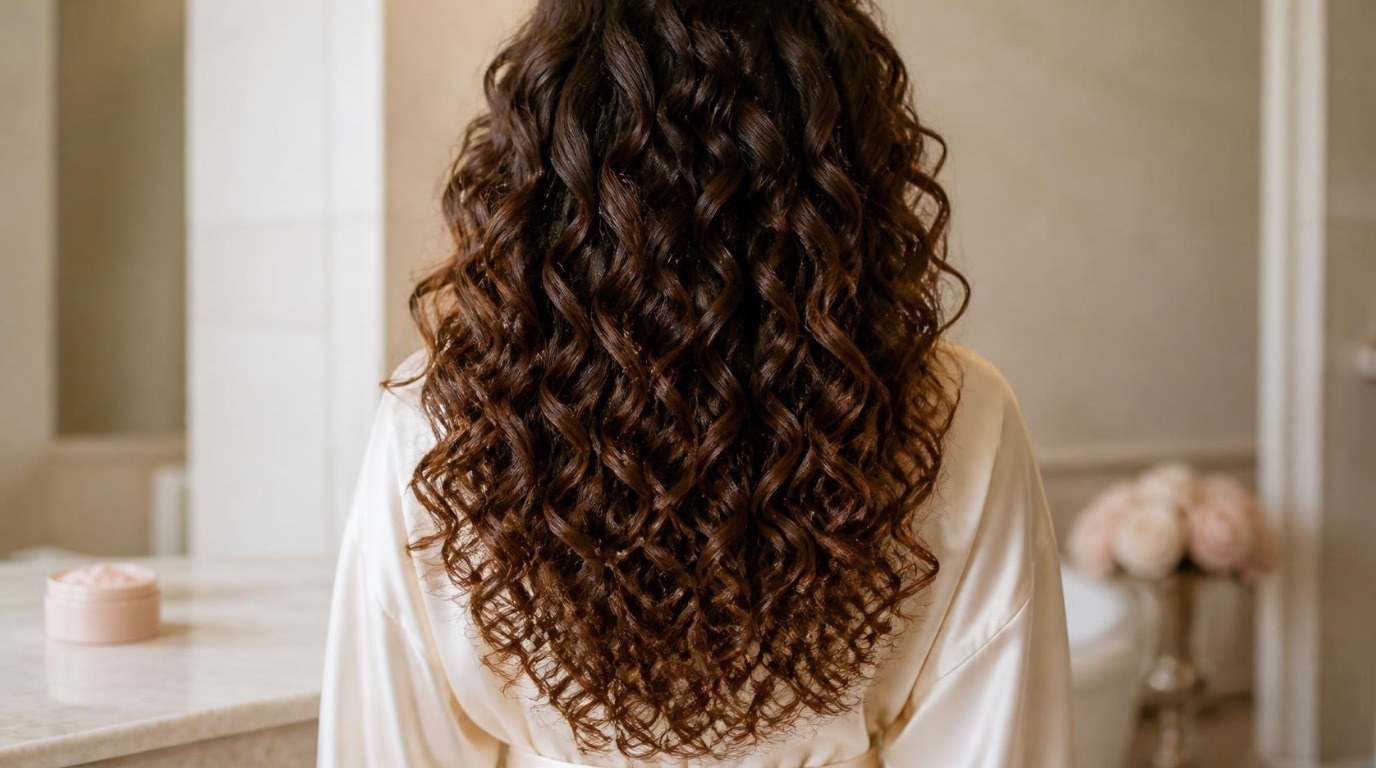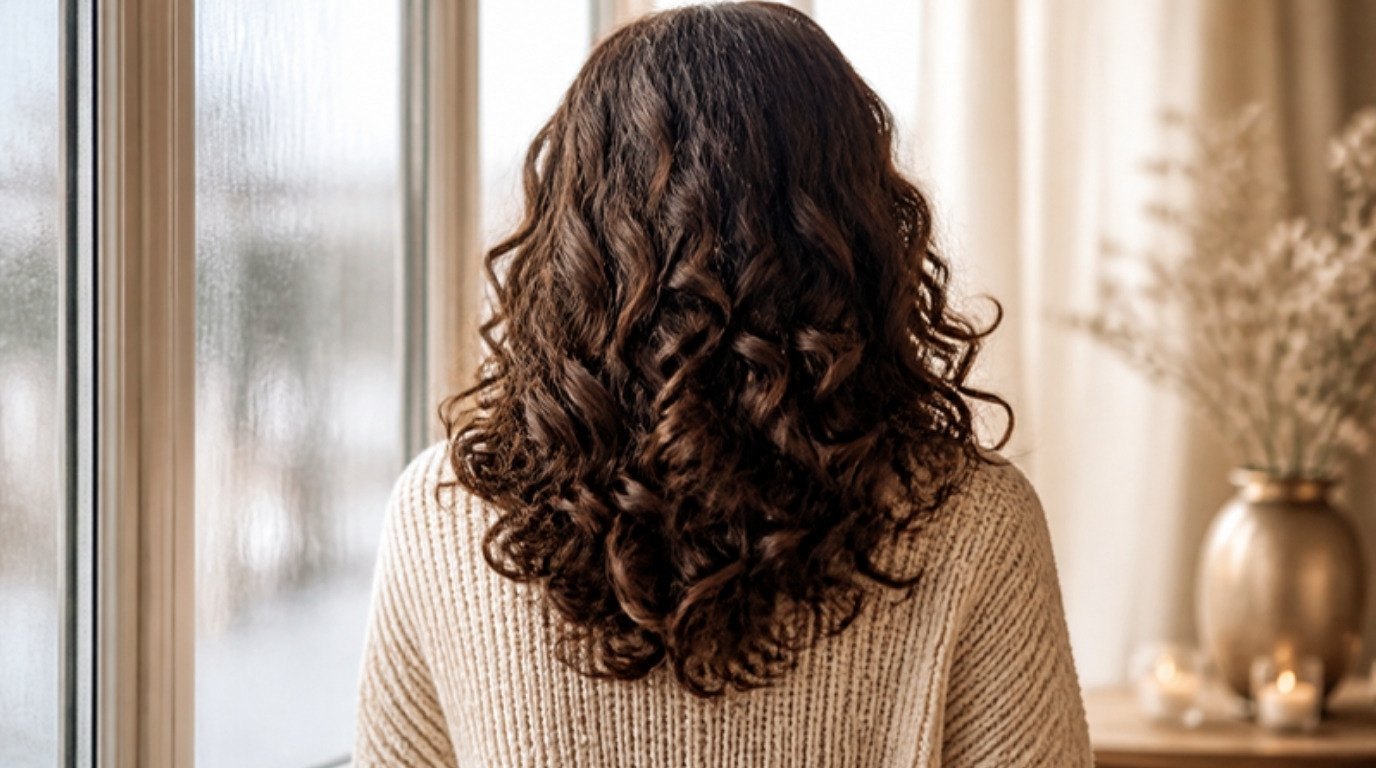
Your hair already knows what it wants to do. Left alone, without a straightener, a round brush or a heavy cream pulling it straight, it falls into a shape of its own, and that shape tells you a lot about how to care for it. Learning to read it is less about putting yourself in a box and more about finally speaking your hair's language.
That shape is what people mean by curl pattern. Some hair falls flat and silky, some bends into soft S-waves, some springs into ringlets and some forms tight, dense coils with incredible volume. Every single one of those is beautiful, and none of them is better than another. They just ask for slightly different things.
This guide walks you through the hair type chart from 1A to 4C: all 12 curl patterns explained in plain words, a quick reference table, how to find your own pattern on a calm wash day, and why most heads of hair have more than one. Keep a gentle wide-tooth comb in a soft cream shade nearby, because it is the one tool almost every texture on this chart gets along with.
One promise before we start: the chart is a helpful starting point, not a rule. If your hair doesn't match a description perfectly, nothing is wrong with your hair. The chart is simply incomplete, the way every chart is.
What a Hair Type Chart Actually Tells You
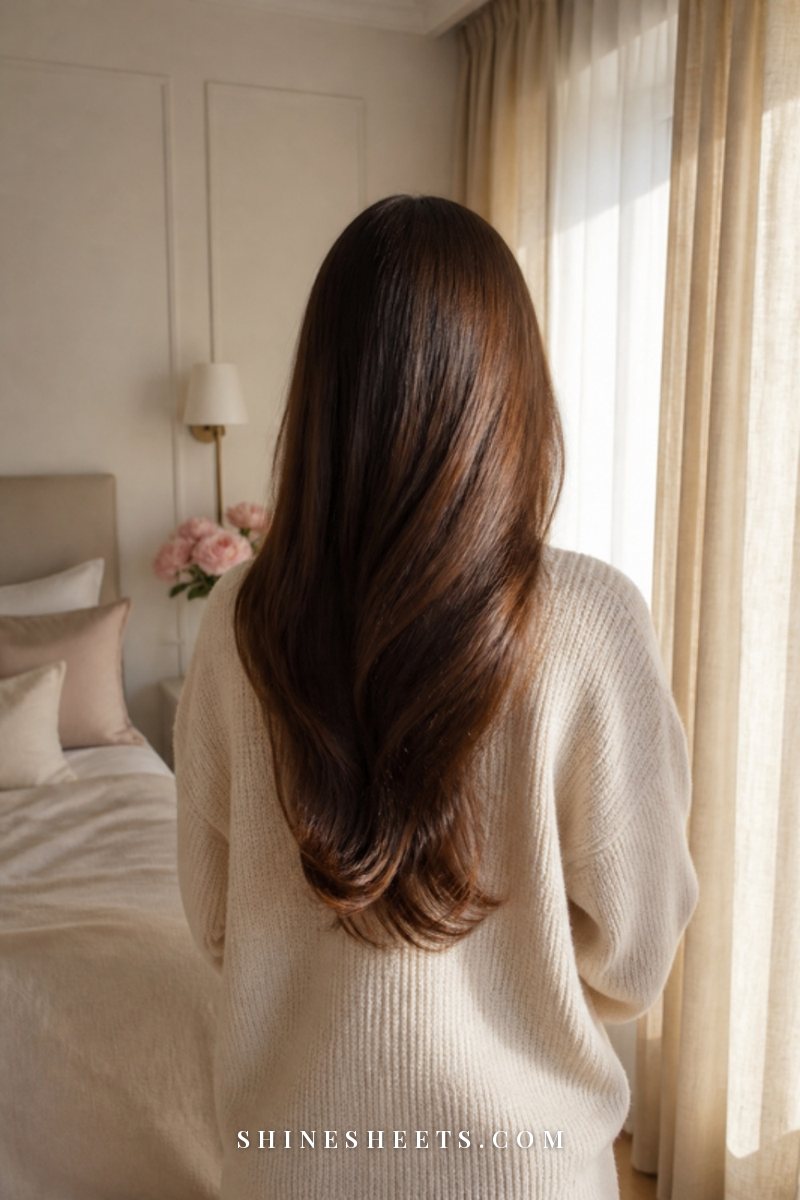
The most common hair type chart sorts hair into four numbers and three letters. The numbers describe the overall shape of a strand, and the letters describe how tight or loose that shape is within its group:
- Type 1 is straight.
- Type 2 is wavy.
- Type 3 is curly.
- Type 4 is coily.
Within each number, A is the loosest version, B sits in the middle and C is the tightest. That gives you 12 patterns in total. The system was popularized by stylist Andre Walker and later expanded by the curly hair community, which is why you will see slightly different descriptions depending on where you look.
What the chart is good for: giving you words for your texture, helping you find advice from people with similar hair, and nudging you toward gentler habits. What it can't do: tell you exactly which product to buy, how often to wash or how your hair will behave in humid weather. For that, a few other traits matter just as much.
Curl Pattern Is Only Part of the Picture
Two people can both have 3A curls and still need completely different routines. That's because curl pattern describes shape only. Three other traits shape how your hair drinks up moisture, holds products and dries:
- Porosity is how easily your hair absorbs and holds on to water. Low-porosity hair resists moisture at first, while high-porosity hair soaks it up quickly and loses it just as fast. My guide to finding your hair porosity and caring for it walks through simple ways to tell yours.
- Density is how many strands you have on your head. High-density hair looks full even when it is straight, and low-density hair can look sparse at the roots even when the strands are curly.
- Strand thickness (also called width) is how thick each individual hair is. Fine strands feel soft and get weighed down easily, while coarse strands feel sturdier and can handle richer products.
I like to think of curl pattern as the outline of a drawing and these three traits as the color. You need both to see the whole picture. If your waves keep going flat by lunchtime, for example, the reason is often fine strands rather than the wave pattern itself.
Hair Type Chart at a Glance
Here is the full chart in one place. Screenshot it if you want a quick reference on wash day. The care tips are gentle starting points that suit most hair of that shape, not strict rules.
| Type | Pattern shape | Common needs | Gentle care tip |
|---|---|---|---|
| 1A | Pin-straight, very fine and soft, almost no bend | Volume at the root, lightness | Condition mid-lengths to ends only |
| 1B | Straight with a little body and a slight bend at the ends | Lift without heaviness | Rough-dry roots first, then the lengths |
| 1C | Mostly straight, thicker, with a hint of a wave | Frizz control, smoothness | Use a light leave-in on damp ends |
| 2A | Loose, stretched S-waves that start below the ears | Hydration that doesn't flatten | Scrunch gently instead of brushing dry |
| 2B | Defined S-waves from mid-length down, flatter at the crown | Definition, frizz control | Blot with a microfiber towel, never rub |
| 2C | Deep S-waves from the roots, some loose spirals | Moisture, gentle definition | Detangle only while conditioner is in |
| 3A | Large, loose loops about the size of a sidewalk chalk stick | Moisture, shine, light hold | Apply products to soaking-wet hair |
| 3B | Springy ringlets about the width of a marker | Moisture, frizz control | Finger-detangle in sections |
| 3C | Tight corkscrews about the width of a pencil or straw | Rich moisture, gentle handling | Refresh with water mist between washes |
| 4A | Dense, tight S-shaped coils, visible pattern | Deep moisture, sealing ends | Layer water, leave-in and a little oil |
| 4B | Tight Z-shaped bends with sharp angles, fluffy | Moisture, very gentle detangling | Work in small sections with your fingers |
| 4C | Very tight zigzag coils, lots of natural shrinkage | Maximum moisture, protecting the ends | Sleep on satin and handle hair as little as possible |
Notice how the needs shift as you move down the chart. The straighter the hair, the more the natural oils from your scalp can travel down each strand, so straight hair often gets oily faster and needs less added moisture. The more bends and coils a strand has, the harder it is for those oils to travel, so curly and coily hair tends to feel drier and loves extra hydration.
Type 1: Straight Hair
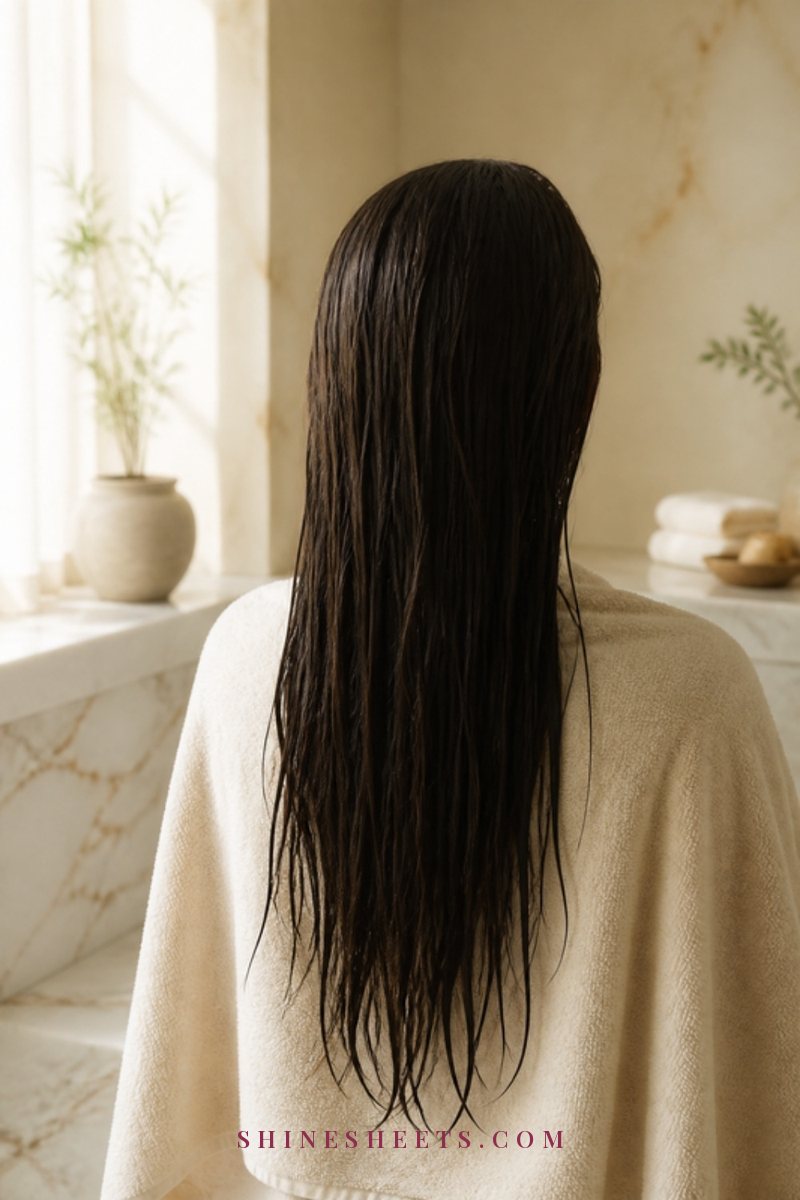
Straight hair has no natural curl. It lies flat from root to tip and usually reflects light beautifully, which is why it often looks shiny. Because scalp oils slide down it so easily, the most common concerns are flat roots and hair that looks greasy sooner than you would like.
1A: Pin-Straight
1A hair is completely straight, usually very fine and soft, and it won't hold a bend for long. It can feel silky but slips out of clips and looks limp when it is weighed down. Keep conditioner on the bottom half of your hair only, and choose lightweight formulas over rich masks. If this sounds like you, my guide to caring for fine hair without losing volume has more gentle ideas.
1B: Straight With Body
1B hair is still straight but has more body, often with a slight bend at the ends. Strands tend to be medium in thickness, so it holds shape a little better than 1A. Drying the roots first (with your fingers lifting them away from the scalp) gives soft lift without extra product.
1C: Straight With a Hint of Wave
1C hair is mostly straight but thicker and coarser, with a gentle wave that shows up in humid weather. It can frizz more than the other straight types. A few sprays of leave-in on damp ends, and air-drying or low heat, keep it smooth without making it flat.
Type 2: Wavy Hair
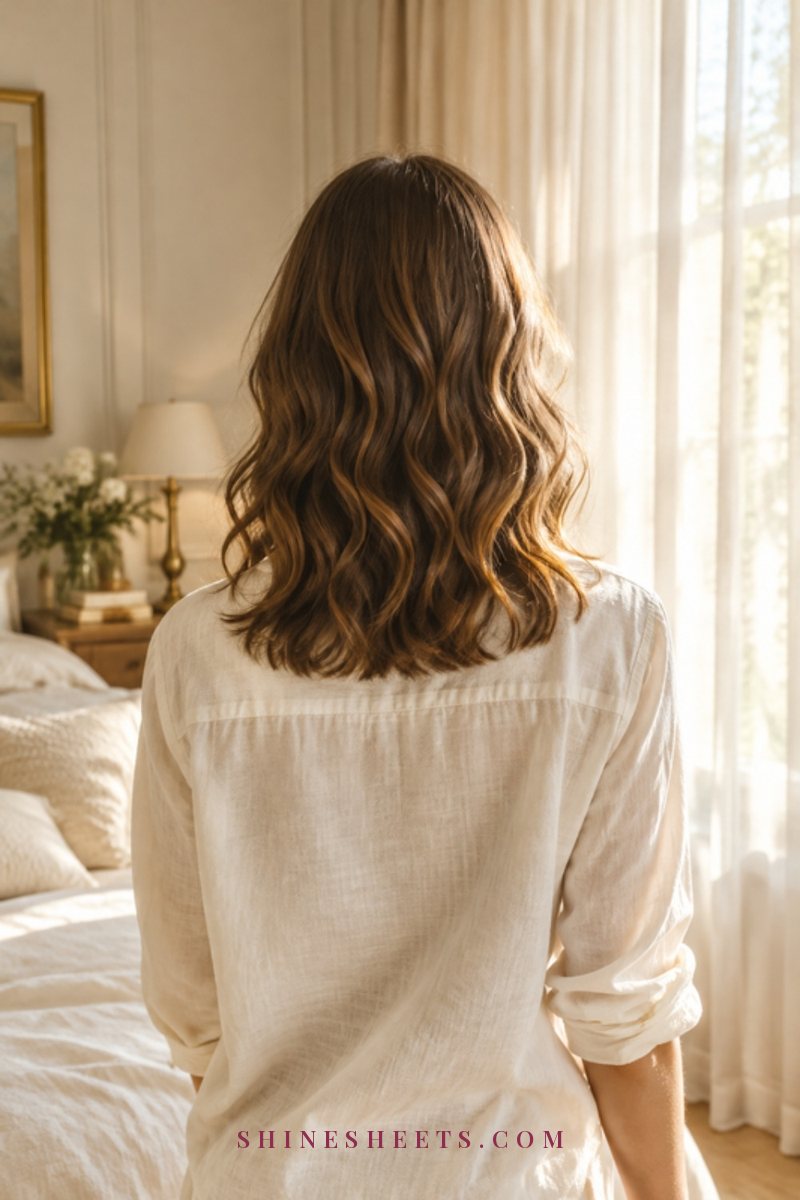
Wavy hair bends into an S-shape rather than full loops. It is the type people most often misread, because waves can be brushed out, flattened by heavy products or hidden under years of straightening. Many people who think their hair is "just frizzy" actually have waves waiting to show up.
2A: Loose Waves
2A waves are soft, stretched and loose, usually starting around the ears. Strands are often fine, so the waves fall flat easily. Light hydration is the key: a mist of leave-in and gentle scrunching (cupping the hair in your palms and pressing upward) helps the shape form without weighing it down.
2B: Defined S-Waves
2B hair has clearer S-shaped waves that start around mid-length, while the crown often stays flatter. Frizz is common, especially in humidity. Blotting instead of rubbing makes a real difference here. A soft white microfiber hair towel wrap lifts water without roughing up the waves the way a regular bath towel can.
2C: Deep Waves
2C waves are deep and well defined, often starting at the roots, with a few loose spirals mixed in. Strands tend to be thicker, and the hair can feel dry and frizzy. Detangle only while conditioner is in, then leave it alone while it dries. For a fuller routine, my wavy hair care guide walks through wash day for every kind of wave.
Type 3: Curly Hair
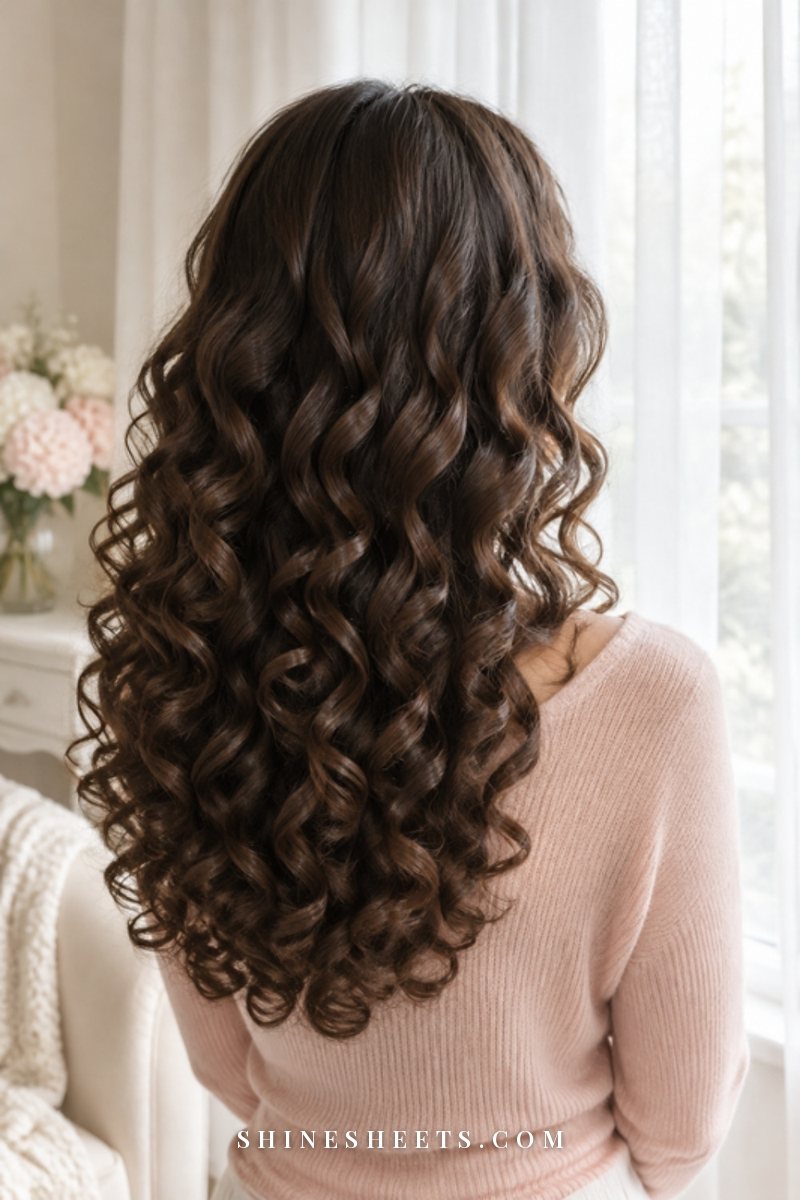
Curly hair forms real loops and spirals that spring back when you gently stretch them. It tends to have lots of volume, plenty of personality and a natural tendency toward dryness, because scalp oils struggle to travel around all those bends. Curls also shrink as they dry, so curly hair often looks shorter than it really is.
3A: Loose Curls
3A curls are large, loose loops, roughly the width of a stick of sidewalk chalk. They are shiny and soft but can lose definition if handled too much. Applying products while your hair is still soaking wet, then keeping your hands away until it dries, helps each curl hold its shape.
3B: Springy Ringlets
3B curls are springy ringlets about the width of a marker. They have lots of volume and can feel dry at the ends. Detangle with your fingers in four to six sections while conditioner is in, starting at the ends and working up toward the roots. My beginner curly hair routine breaks this into a simple wash-day order.
3C: Tight Curls
3C curls are tight corkscrews about the width of a pencil or a straw, densely packed and full. They shrink a lot and need generous moisture. Between washes, a light mist of water and leave-in revives them without starting over. A fine-mist white glass spray bottle spreads water evenly instead of soaking one spot.
Type 4: Coily Hair
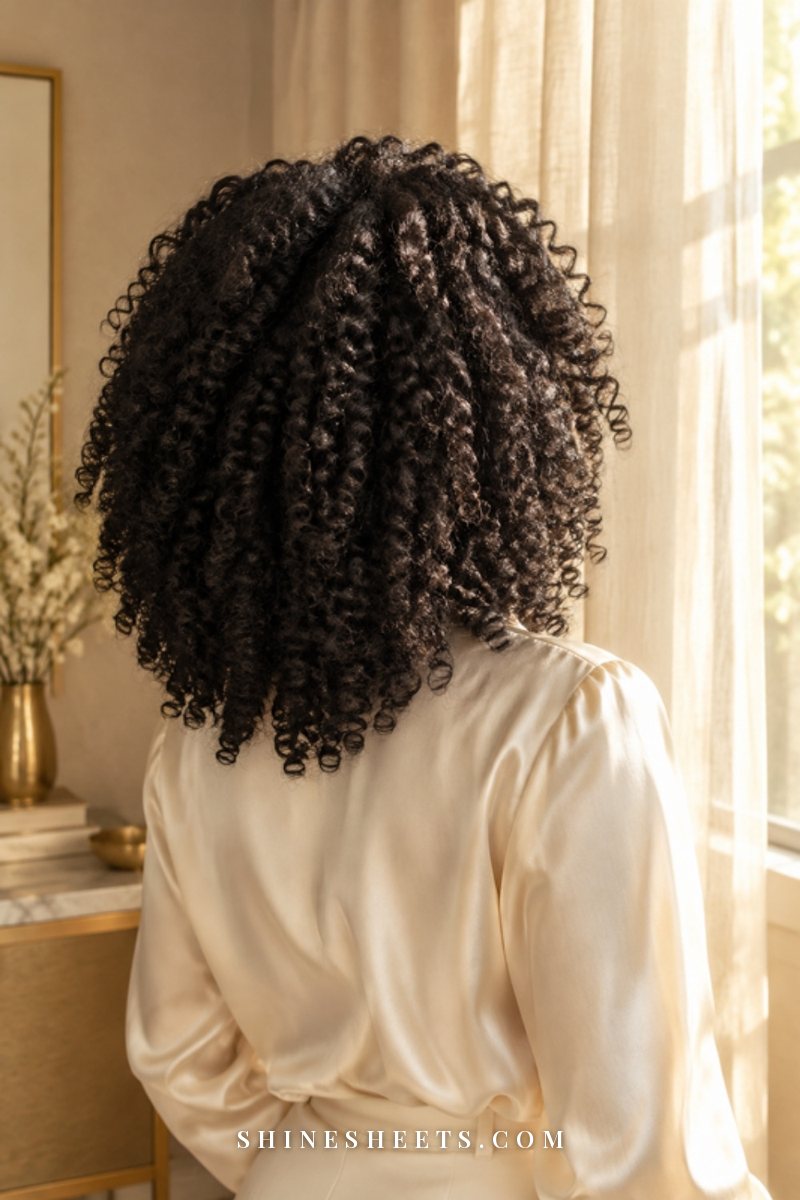
Coily hair has the tightest pattern on the chart, with dense coils, zigzags and amazing volume. It can shrink to a fraction of its true length as it dries, which is completely normal and a sign of healthy elasticity rather than a problem. Coily hair is often more fragile than it looks, because every bend is a spot where the strand can break, so gentleness matters more than any product.
4A: Soft Coils
4A hair forms tight, visible S-shaped coils, often springy and well defined. It loves moisture and holds it best when you layer it: water first, then a leave-in, then a small amount of oil or butter on the ends to help seal everything in.
4B: Z-Shaped Coils
4B hair bends in sharp, Z-shaped angles rather than round coils, so the pattern can look less defined and wonderfully fluffy. It tangles easily, so work in small sections and use your fingers before any tool. If your hair also feels dense and takes ages to dry, my guide to caring for thick hair has gentle tips on drying and detangling.
4C: Tight Zigzag Coils
4C hair has the tightest zigzag coils of all, with lots of shrinkage and a pattern that can be hard to see without stretching a strand. It is the most delicate type on the chart, so the gentlest habits help most: moisture on a regular schedule, minimal combing and protection from rough fabrics at night. A blush satin hair bonnet keeps cotton pillowcases from pulling moisture and catching on coils while you sleep.
How To Find Your Curl Pattern in 5 Steps
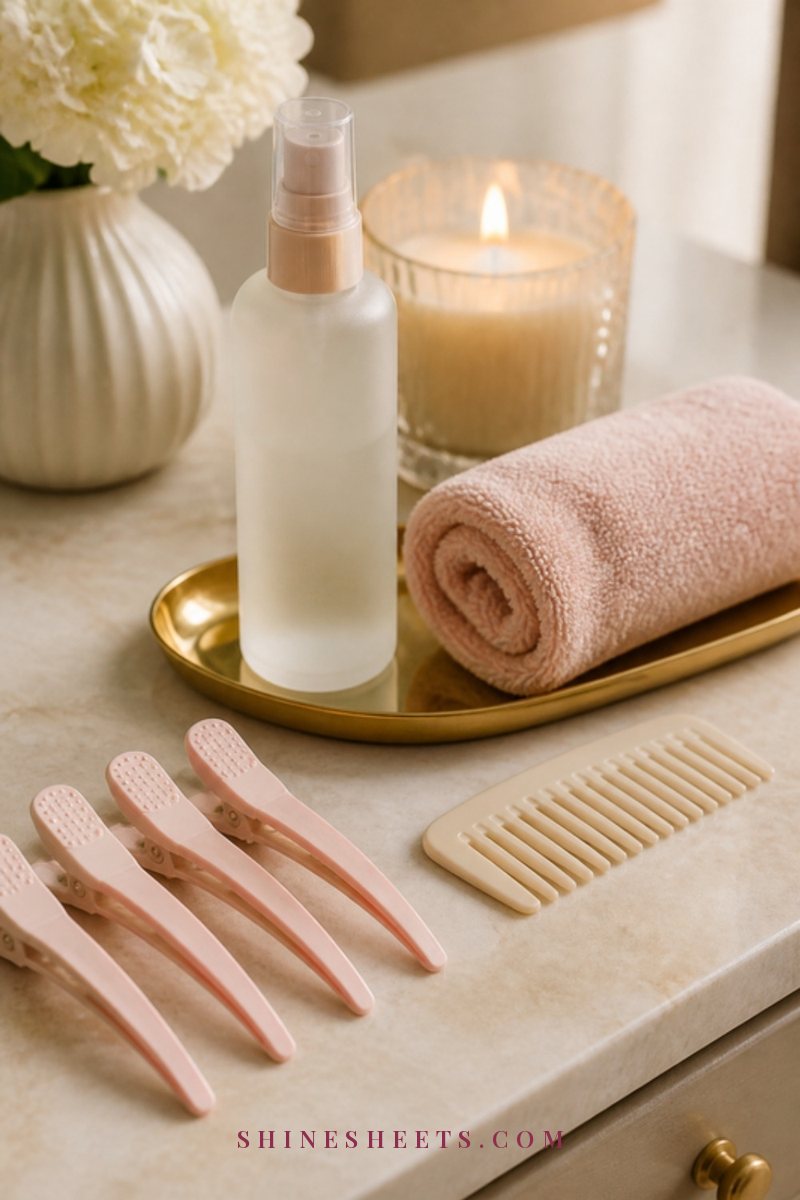
The best time to read your pattern is on a calm wash day, when you can let your hair do its own thing. Here is how I would do it:
- Wash and condition as usual. Use a gentle shampoo and your regular conditioner, and rinse well so nothing heavy is left behind.
- Skip styling products. No gel, cream, mousse or oil this time. Products can stretch, weigh down or clump your hair and hide its natural shape.
- Blot, don't rub. Squeeze out water gently with a soft towel or an old cotton T-shirt, then leave your hair alone.
- Let it air-dry completely. No brushing, no touching, no heat. Depending on your hair, this can take anywhere from one hour to most of the day.
- Look at several sections. Check the front, the crown, the sides and the nape separately, ideally in natural daylight. Pull out a single strand from each area and compare its shape to the descriptions above.
Write down what you see in each area (my journal is always nearby after evening tea, so mine ended up in there). You will probably notice that different sections lean toward different types, which brings us to the most freeing part of this whole topic.
Why Many People Have More Than One Curl Pattern
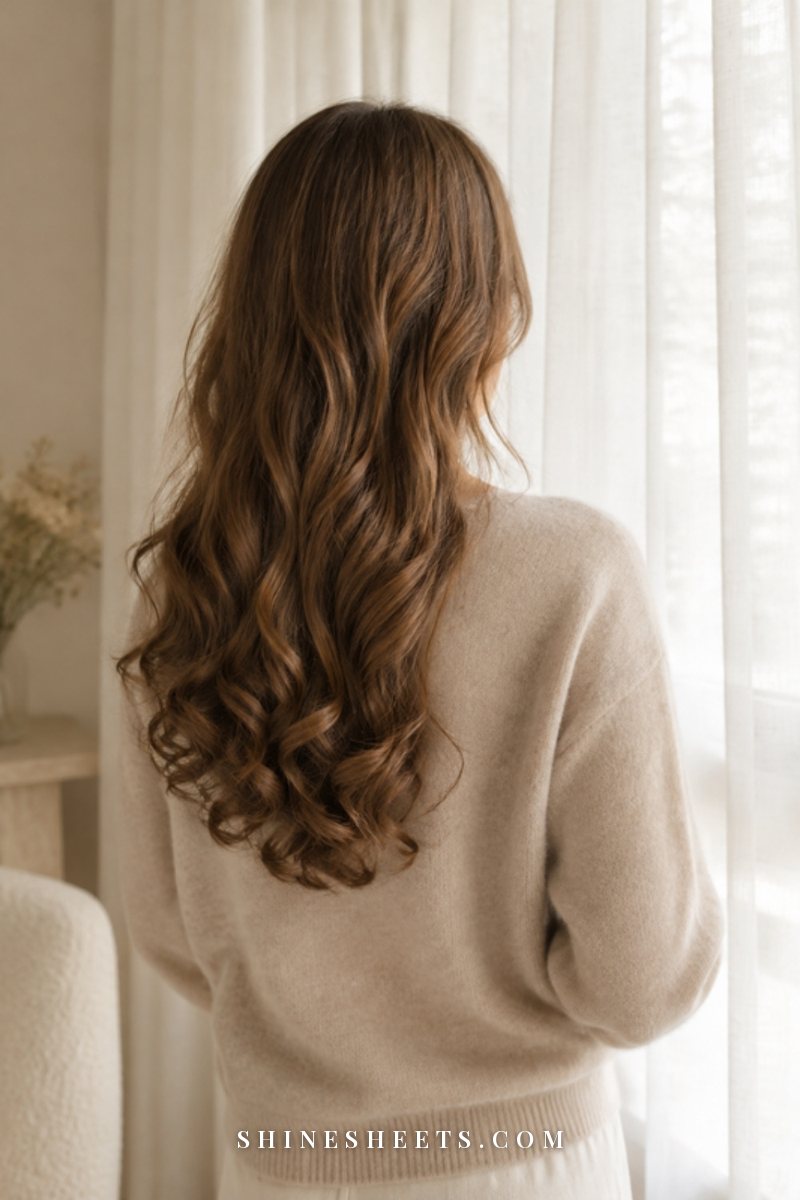
It is extremely common to have two or even three patterns on one head. Hair around the face and at the nape is often finer and looser, while the crown can be curlier, or the other way around. You might be 2C at the back, 3A at the sides and almost straight at the front.
This happens because each follicle has its own shape. Round follicles tend to grow straighter hair, and more oval or curved follicles grow curlier hair, and you can have a mix of both across your scalp. Damage also plays a part: lengths that have been colored or heat-styled for years often curl less than fresh growth at the roots.
If you have mixed patterns, care for the type that covers most of your head, then give the outliers a little extra attention. For example, you might use a touch more leave-in on a curlier crown or a lighter hand on finer front pieces. You don't need to pick one number and stick to it.
Why Your Curl Pattern Can Change Over Time
Your hair as a teenager and your hair years later may look quite different, and that is normal. A few common reasons:
- Hormones. Puberty, pregnancy, postpartum months and perimenopause can all make hair curlier, straighter, finer or drier. These shifts are usually gradual and often settle.
- Damage. Bleach, frequent heat and chemical straightening can loosen the natural pattern on the lengths. As healthy hair grows in, the original shape often returns.
- Age. Strands can become finer and drier over the years, which sometimes softens a curl or changes how it holds.
- Length and weight. Long hair is heavier, and that weight can stretch waves and curls near the roots. A trim sometimes brings back bounce you thought you had lost.
- Your routine and environment. Hard water, humidity and very heavy products can all change how your pattern looks day to day.
It is a good idea to check your pattern again every year or so, or after any big change. If you notice sudden thinning, patches of hair loss or a scalp that hurts, that's a reason to see a doctor or dermatologist rather than adjust your routine on your own.
Gentle Habits That Help Every Texture
Whatever your number and letter, a few kind habits help every pattern stay healthy:
- Detangle with care. Start at the ends and work up, ideally while your hair is coated in conditioner.
- Use less heat. Air-dry when you can, and use a heat protectant and lower settings when you can't.
- Add lightweight moisture. A lightweight leave-in conditioner spray suits most textures, from fine straight hair to coils, because you can build it up or keep it minimal.
- Protect hair at night. Satin or silk against your hair reduces friction, tangles and frizz.
- Patch test new products. Try anything new on a small area of skin first, especially if, like me, you have sensitive skin.
Most of all, notice how your hair feels rather than what number it is. Soft, bouncy and comfortable is the goal, whatever that looks like on you.
Final Thoughts
A hair type chart is a map, not a verdict. It gives you words for what your hair does naturally and helps you find advice that fits, but your hair is allowed to be a mix, to change over the years and to surprise you.
Straight, wavy, curly or coily, every texture on this chart is beautiful. Give yours a little patience, a gentle hand and the moisture it asks for, and it will reward you by looking more like itself every wash day.